TTG Asia
Asia/Singapore Monday, 22nd December 2025
Page 2083

Tash Tobias returns to InterContinental Singapore

0

INTERCONTINENTAL Singapore has announced that Tash Tobias would be returning to the hotel as its general manager plus taking on an expanded role as regional general manager for Singapore, Malaysia and Batam.

Tobias will be responsible for driving strategic growth and operational excellence for 10 hotels across four brands.

Bringing with her over 18 years of experience in the hospitality industry, Tobias was previously the area general manager of Bangkok and general manager of Crowne Plaza Lumpini Park.

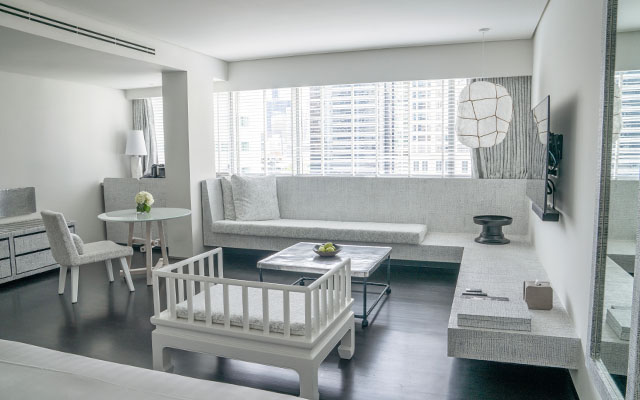
Tobias’s previous stint as general manager at InterContinental Singapore saw her leading the hotel through a refurbishment of its signature Shophouse rooms and suites as well as Man Fu Yuan Restaurant between January 2011 and July 2013.

Kerry Healy to lead sales for Accor in APAC

0

ACCOR has appointed Kerry Healy as vice president sales for the Asia-Pacific region.

In her new role, Healy continues to be based in Singapore and will spearhead strategic sales activities for the Asia-Pacific region. She will work closely with the sales offices across the region to support, define and develop client strategy.

Prior to this role, Kerry was director of sales Asia-Pacific for leisure, meetings and events in Accor’s Singapore office.

NTOs reflect on the past year and look ahead

0

What troubled tourism bureaus this year and what developments are poised to make waves in 2015?

19dec_story11

From left: Thailand plays up its cultural strengths; Malaysia Year of Festivals will kick off in 2015; Diving into waters teeming with coral reefs are some of the fun activities available in the Philippines; The Restaurant Australia campaign emphasises the abundance of fresh produce Down Under; Singapore, with its ever-changing skyline, is now leveraging arts to attract visitors

SINGAPORE
Lionel Yeo, chief executive, Singapore Tourism Board
Biggest challenge in 2014 Singapore’s tourism sector has had to adapt to a changing profile of visitors, as more FITs and tourists are coming to Singapore on mono-destination trips. This shift has been particularly evident in our 2014 arrivals from China.

For example, the number of Chinese visitors staying at least two days from January to August 2014 jumped 21 per cent year-on-year to 631,000. The average length of stay of Chinese visitors during the same period has also risen year-on-year from 2.9 to 4.4 days.

Significant developments in 2015 Next year, we look forward to the opening of the National Gallery Singapore, Singapore Pinacothèque de Paris and Southeast Asian Games, while Royal Caribbean International will offer year-round sailings from Singapore for the first time. These add to our tourism offerings and establish Singapore as the region’s leading arts, cruise and sports destination. We will also continue to strengthen our lead as a MICE city through the MICE2020 Roadmap.

As Singapore turns 50, we also celebrate our burgeoning creative scene and invite people to look at the city from a different perspective with Singapore: Inside Out, a multi-disciplinary travelling showcase featuring local contemporary creative talents and their works.

By Paige Lee Pei Qi

MALAYSIA
Mirza Mohammad Taiyab, director-general, Tourism Malaysia

Biggest challenge in 2014 Regaining the confidence and trust from Chinese tourists. Since MH370 went missing in March, we have lost nearly one-third of the tourists from China who cancelled or suspended their holidays up to early 2015. We hope that 2015 will see a full recovery. Tourism Malaysia has since May 2014 embarked on an aggressive mission to recover Chinese arrivals, striking up marketing partnerships with airlines and working with outbound operators in China to arrange for charters.

Most significant development in 2015 In 2015, we will launch the Malaysia Year of Festivals 2015 campaign, a continuation of the Visit Malaysia Year 2014. Themed Endless Celebrations, the year-long campaign offers many spectacular events related to cultural festivals, arts and music showcases, food promotions, shopping and sporting events. These events include Putrajaya Skyride Festival, International Festival of Shadow Plays, Truly Asian Street Food Festival and Kuala Lumpur Lake Gardens Festival.

By S Puvaneswary

THAILAND
Juthaporn Rerngronasa, deputy governor for international marketing (Europe, Africa, Middle East and the Americas), Tourism Authority of Thailand (TAT)
Biggest challenge in 2014 (Due to) the country’s political unrest, we were challenged to think creatively across the board to maintain visitor confidence and ensure Thailand’s brand image remains powerful and strong. Our visitor arrivals for 2014 are projected at 25.5 million, down 3.9 per cent from 2013, but we have kept our spirits up, worked closely with the private and public sectors, and made good use of social media to counter the negative images portrayed in the global media.

Significant developments in 2015 The advent of the Asean Economic Community and the new TAT marketing campaign, 2015 Discover Thainess, which will focus on the Thai way of life, culture and experiences as well as the 12 hidden gem cities. ASEAN integration will make us stronger as a region and build on the combined strengths of 10 countries, while the Discover Thainess campaign will help maintain Thailand’s individuality, character and identity by highlighting what makes us unique as a culture and society. We have also designed a calendar of monthly festivals and events through 2015.

By Greg Lowe

INDONESIA
Esthy Reko Astuti, director general of tourism marketing, Ministry of Tourism
Biggest challenge in 2014 While regional destinations’ awareness of the importance of tourism is getting better, their product development and marketing coordination with the central government are still lagging. The regency and municipal governments have the right to set priorities, however, there needs to be synergy between the central government and the regions to promote themselves (as part of Indonesia). Another challenge is for the destinations to enrich their potential products such as restoring heritage buildings, improving capacity of tour guides, etc.

Most significant development in 2015 The new stand-alone tourism ministry will offer a good chance to better develop destinations, products, people and infrastructure. In the last government we focused on 16 destinations and we are planning to add nine more destinations next year.

By Mimi Hudoyo

VIETNAM
Le Tuan Anh, director general, tourism marketing department, Vietnam National Administration of Tourism
Biggest challenge in 2014 Vietnam has a lot of good tourism products but arrivals are still limited. Difficulties lie in our marketing activities, which are not strong enough globally. We are getting more support from the government in recent years, but it is still small compared with neighbouring countries like Thailand, Malaysia and Singapore. Due to limited budgets, we are more focused on ASEAN, North Asia (China, Japan and South Korea) and traditional markets in Europe.

Most significant development in 2015 In 2015, we will launch the National Tourism Year with the theme of Connecting World Heritage in Vietnam in Thanh Hoa, a central province home to marine attractions, mountains and cultural attractions like the Ho Dynasty Citadel, which was recongised by UNESCO as a World Cultural Heritage Site.

At the same time, we will continue to leverage our successful Vietnam – Timeless Charm slogan, launched in 2012. We’re targeting more than eight million foreign arrivals in 2015.

By Xinyi Liang-Pholsena

PHILIPPINES
Art Boncato, Jr, assistant tourism secretary, Philippine Department of Tourism (DoT)
Biggest challenge in 2014 To accommodate the growing number of international and domestic tourists in the Philippines, there is a need to hasten infrastructure development that covers the construction, upgrade and expansion of airports, seaports and roads leading to destinations from north to the south. A successful initiative was the 30 billion pesos (US$668 million) Tourism Road Infrastructure Prioritization Project, which saw the development of roads and improved access to existing attractions.

Most significant development in 2015 It’s Visit the Philippines Year 2015, and the DoT has put together a programme to bring in first-time and repeat travellers to the country. Major events happening all over the country from January to December are clustered under lifestyle; music, arts and entertainment; history and culture; sports, adventure and eco-tourism; and business. These events fulfil the promise of fun in the Philippines.

By Rosa Ocampo

HONG KONG
Anthony Lau, executive director, Hong Kong Tourism Board (HKTB)
Biggest challenge in 2014 The HKTB had to move the venue of the Hong Kong Wine & Dine Festival from the Central Harbourfront to the old Kai Tak runway in just a few weeks’ time, which involved re-planning and re-deploying resources in venue set-up, promotional strategies and logistics arrangements. It turned out to be a very successful event, with attendance reaching almost 180,000.

Most significant development in 2015 Given the low penetration rate of cruise travel in Asia and a fast-growing middle class, Asia’s cruise market is expected to expand at a fast pace. Hong Kong can definitely be one of the region’s hubs with our strategic location. To fully tap the cruise market potential, the HKTB will continue to seek cooperation with more destination ports in the region by encouraging them to participate in the Asia Cruise Fund, launched earlier this year with Hong Kong and Taiwan as the two founding members.
– Prudence Lui

MACAU
Maria Helena de Senna 
Fernandes, director, Macau Government Tourist Office (MGTO)
Biggest challenge in 2014 Organising the 8th APEC Tourism Ministerial Meeting (TMM8) was among Macau’s top responsibilities for 2014. The success of TMM8 was a great opportunity for Macau to showcase its tourism uniqueness and ability to organise high-profile events, and particularly special this year as Macau marks its 15th anniversary (of return to Chinese sovereignty).

Significant developments in 2015 MGTO will soon be launching an international tender for the drafting of a Macau Tourism Master Plan, which will involve not only industry stakeholders but also the whole community.

Upcoming developments are the second-phase opening of Galaxy, which includes JW Marriott and Ritz-Carlton hotels with more than 1,300 keys; the Studio City, which will have a five-star hotel, shopping mall and multi-purpose entertainment studio; and the 3,000-room Parisian Macao, with recreated Parisian shopping streets and a half-size replica of the Eiffel Tower.

By Prudence Lui

JAPAN
KIyonori Ogawa, director, marketing & promotion department, South-east Asia and India, Japan National Tourism Organization
Biggest challenge in 2014 Some trade members were concerned that the capacity of hotels or chartered buses during the peak spring season would not be able to accommodate the fast-growing inbound traffic from South-east Asia. However, we have taken steps to deal with this. Japan is now promoting airline network expansion between South-east Asia and Japan. A lot of new hotels, both deluxe and no-frills, are due to open soon.

Most significant development in 2015 We expect more South-east Asian visitors as a result of the expanded aviation network or new access points in 2015. This year, we have focused on Kyushu as a new destination for Thailand after Jetstar Asia’s launch of direct flights between Bangkok and Fukuoka. Singapore Airlines will operate seasonal flights between Singapore and Sapporo this winter and SilkAir will operate charter flights between Singapore and Okinawa.

By Hannah Koh

TAIWAN
Lin Kun-Yuan, director of international affairs division, Taiwan Tourism Bureau (TTB)
Biggest challenges in 2014 The number of visitors to Taiwan reached eight million in 2013 but neighbouring destinations had introduced many special offers including visa-free entry to attract more tourists. The TTB continues to strive for visa exemption for the new developing market of South-east Asia.

We continue to focus on developing and upgrading the quality of Taiwan’s tourism and products, and rate hotels and bed-and-breakfast inns under the hotel star-rating and hospitable B&B evaluation and selection system. We have expanded Taiwan tourism’s international outreach through our Time for Taiwan brand, actively publicising our unique festivals and activities (on the global stage).

Significant developments in 2015 We are targeting 10 million visitors. We will promote regional cruise development by working with the Hong Kong Tourism Commission on the Asia Cruise Fund. We will also promote ‘caring tourism’ and construct obstacle-free tourism for senior citizens. We will strengthen the quality of the Taiwan Tourist Shuttle and Taiwan Tour Bus services, expand the iTravel Internet services, and implement the Taiwan Tourism Code of Ethics.

By Prudence Lui

SOUTH KOREA
Helen Shim, director, Singapore office, Korea Tourism Organization (KTO)
Biggest challenges in 2014 The majority of MICE events used to take place in convention centres, but with bigger incentive groups coming from the region it has become a challenge as more organisers are now seeking unique venues for their events.

Meanwhile, KTO has been trying to encourage visitors to travel out of their comfort zones and experience unique offerings in other provinces besides Seoul. For example, in June we received a 15,000-pax incentive group from Amway China. The biggest challenge was to locate the most suitable port of call for the cruise ship. The group arrived at Kwangyang in Yeosu City, where we arranged a massive welcome ceremony at the port.

Most significant development in 2015 The 85-floor Lotte World Tower will be the tallest building in the nation when construction is completed in October 2016. There will be an observatory, an art gallery, a hotel, offices, a medical centre and other amenities. The (adjoining) 11-storey Lotte World Mall will house over 1,000 local and global stores, including Lotte Mart, Lotte Cinema, Lotte Duty Free, Hi Mart and Lotte World Aquarium.

By Xinyi Liang-Pholsena

CHINA
Li Shihong, department of tourism promotion and international liaison head, China National Tourism Administration
Biggest challenge in 2014 We will need to do more to improve our service standards in China to project an appealing image to tourists. We are already improving that, which is a good step forward.

Most significant development in 2015 With the development of the Internet, it has become increasingly important to take advantage of new technologies to achieve the ‘multiplication effect’ to promote our destination. Aside from promotion via traditional media platforms, we will make better use of the new media to boost our online promotion.

By Paige Lee Pei Qi

AUSTRALIA
John O’Sullivan, managing director, Tourism Australia
Biggest challenge in 2014 This year’s key challenge remains the same, i.e. to stand out and cut through a fiercely competitive tourism landscape. This has been a great year so far for Australia tourism, with record international arrivals and visitor spending, and the launch of a new global campaign, Restaurant Australia, emphasising our country’s world-class food, wine and culinary experiences.

Most significant development in 2015 We are tapping into the growing appetite amongst international travellers for great culinary tourism experiences. We want to raise the profile of our country’s high-quality food and wine offerings and encourage more international visitors to come and sample these for themselves.

By Paige Lee Pei Qi

INDIA
Mahesh Sharma, minister of state for tourism, culture and civil aviation
Biggest challenge in 2014 The most challenging issue was to shed the country’s ‘unsafe’ image for female travellers and to restore confidence among foreign tourists, following a series of reported sexual assaults involving foreign female travellers that dented the image of India as a safe destination.

We will soon offer tourists the option of travelling by chip-enabled taxis from the airports, which would allow vehicle tracking and bio-data of the drivers.

Most significant development in 2015 India is liberalising its stringent visa regime by implementing the Electronic Travel Authorisation in phases. The first phase, comprising 30 countries including the US, Brazil, Japan, South Korea and Argentina, will be implemented by end-2014, and 2015 will see more countries added to the list. The Indian government is looking to extend the facility to 180 countries in the next two years.

By Rohit Kaul

SRI LANKA
Vipula Wanigasekera, general manager, Sri Lanka Convention Bureau
Biggest challenge in 2014 We are concerned about the impact of mass tourism. Striking a balance between development and sustainable tourism, getting the required investment for the sector, and promoting the country among primary and secondary markets were the most challenging tasks.

Significant developments in 2015 The speedy construction and upcoming completion of new mega hotels like Shangri-La, Sheraton, Movenpick and Marriott is eagerly awaited by the authorities to prepare for the flow of 2.5 million tourist arrivals by 2016.

Sri Lanka will market the country aggressively to boost arrivals from China and other emerging markets. New expressways would also increase accessibility to more locations.

By Feizal Samath

This article was first published in TTG Asia, December 12, 2014 issue, on page 12. To read more, please view our digital edition or click here to subscribe

Charting the ups and downs of aviation

0

Sim Kok Chwee offers a window seat on the airline world in 2014, tracking a year of significant breakthroughs and tumult

19-december-airplane-goodFOR far too long, hotels and airlines have levied hefty charges on Wi-Fi and Internet connection. Interestingly, small hotel chains were among the first to offer free connectivity and over time, the larger ones have followed – albeit mostly for “loyal premium guests”. In commercial aviation, it is an LCC – Norwegian Long Haul AS – that has extended complimentary Wi-Fi connection to its passengers and Emirates has followed suit.

Emirates is investing US$20 million to equip its Airbus A380s and Boeing 777-300ERs with Wi-Fi connection, and passengers will initially receive the first 10MB of data for free and a token charge of one US dollar levied on the next 600MB. But the best is yet to come – the airline’s ultimate objective is to offer unlimited Wi-Fi access to all passengers on board its planes.

Airlines that have for years been polling their passengers for hints of the service innovations they wish to see on board planes need look no further – this is it. Now that the precedence has been set by an LCC and a full-service carrier, it is about time others follow or be overlooked by the ever-so-connected customers.


THE aviation industry has been unfairly blamed for climate change, noise pollution and other environmental issues. Great strides have been made by aircraft and engine manufacturers, and in 2014 more A380s and B787 Dreamliners have been delivered to airlines worldwide. The Dreamliner did not get off to a dream start but with most of its woes behind it, these quiet and fuel-efficient airplanes are now criss-crossing the globe and will soon be joined by the first Airbus A350s in 2015. Together with the B777-300ER, these airplanes have been instrumental in allowing airlines to retire their less efficient workhorses like the B747-400s and MD-11s.

Perhaps it is time for the aviation industry to be better at articulating the fact that it is now responsible for far less emission than ever before but continues to facilitate valuable movement of trade, commerce and people.

19-december-airplane-badMALAYSIA Airlines’ loss of a B777-200ER along with 12 crew members and 227 passengers on March 8 mystified and intrigued the entire world for months, and the world is no closer to finding remains of the airplane and its passengers as 2014 comes to a close. All the satellites hovering above the Earth and radars along its flight path have not been able to definitively pinpoint its location. As governments and air forces deployed assets to search for the missing plane, first in the South China Sea and then the Straits of Malacca, Andaman Sea and Indian Ocean, valuable time was lost and with each passing week, hopes of finding any debris grew more remote.

The disappearance of an airliner this size is unprecedented and even as MH370 has gained more familiarity than any other flight number in history with the exception of Pan Am 103, there is a nagging and troubling fear that it may eventually prove more convenient and less costly to simply declare this B777 as lost.


SPACE travel has in recent years generated a significant buzz with much hopes riding on Richard Branson’s Virgin Galactic. Many have registered their interest and paid huge deposits to be among the first to skim the edge of Earth’s atmosphere, possibly as soon as in the spring of 2015.

On October 31, the space vehicle crashed on a test flight over the Mojave Desert killing its co-pilot. Although it was believed that human error might have been the cause of the crash, investigation could take more than a year. This could derail the planned launch of space travel but more importantly, it has shaken the confidence of some who have previously signed up for this bragging right. Unless the space craft is absolved of any form of technical failure and pilots are trained

to a level that bolsters the confidence of this segment’s high-profile and high net worth customers, the notion of space travel could once again be just a nebulous vision.

19-december-airplane-uglyON July 17, the ground war between Ukraine and Russian-backed rebels took an ugly turn when Malaysia Airlines’ (MAS) flight MH17 on a B777-200ER was shot down, taking with it the lives of 15 crew members and 283 passengers. Rescue efforts were hampered as the ground war continued unabated in spite of assurances that rescuers could enter the crash site to retrieve human remains and belongings. Even as late as November, retrieval of aircraft parts was ongoing.

MAS could not be faulted for flying over Ukraine as international bodies such as the International Civil Aviation Organization and the Federal Aviation Administration have only warned of potential risks and advised airlines to exercise caution, the air route over eastern Ukraine was never closed. In the week preceding the shotdown of MH17, about 900 international flights transited above eastern Ukraine.

Following the incident, international airlines have completely amended their flight routings and skirted around Ukraine. As 2014 comes to a close, nobody is any wiser about the origin of the missile that downed MH17, and the aviation industry – and MAS – may carry this mystery into the next year.


IN recent years, air rage and assault on airline personnel and properties have become more common. Even when flights were delayed by inclement weather (in China), passengers have staged sit-ins on board airplanes. In one instance, safety was severely compromised when passengers staging a sit-in on board an airplane in China ran onto the airport tarmac, but none faced charges and they instead received cash compensation from the airline.

In August, a United Airlines flight from Newark to Denver was diverted to Chicago after a lady passenger threw water on a male passenger behind her for using a Knee Defender, a device that enables a passenger to “lock” the seat in front and prevent it from being reclined. Both passengers were removed from the flight at Chicago and neither faced any charge as Chicago police and security agencies deemed this a “customer service issue”.

And just last month, The Cranberries singer Dolores O’Riordan wearing heavy boots stamped on the foot of a cabin attendant, causing the latter’s foot to swell significantly. During her arrest, she head-butted a law enforcement officer and spat in his face. The singer was subsequently released into the custody of her mother and the case is pending.

Unless governments and law enforcement agencies are more willing to exercise their vested power to protect airline employees and travellers, air rage in airports and on board planes are likely to be more common.

This article was first published in TTG Asia, December 12, 2014 issue, on page 22. To read more, please view our digital edition or click here to subscribe

Weil Resources launches flagship hotel in Malaysia

0

THE first Weil Hotel has opened in Malaysia’s transit hub of Ipoh, set in the city’s old heritage town and close to its historic and natural attractions.

Operated by Weil Resources, the hotel offers convenient access to the ETS train linking Kuala Lumpur and Ipoh. Guests can also access Ipoh Parade Shopping Centre through a link in the hotel lobby.

The Weil Hotel features 313 guestrooms and suites, a rooftop infinity pool, a gym and spa that will open early next year, and dining outlets serving Cantonese cuisines, tea, and gastro bar foods respectively.

Liew Yu-Wei, executive director, Weil Resources, explained that parent company Thong Fook Group has been diversifying its business from manufacturing into fast-moving consumer goods, wellness, and now, hospitality.

“With the opening of Weil Hotel, we have further extended our footprint in Perak, Malaysia and Asia. We bring about a new concept to the hospitality industry where we blend quality hotel services with premium amenities. We foresee Weil Hotel will bring about a change in the business, socio-economic and lifestyle landscape in Ipoh in particular and to the state of Perak in general,” said Liew.

The property’s total function space, spread over two levels, consists of the Weil Ballroom for up to 900 pax, a foyer and terrace space, and three meeting rooms on the sixth level. The second level is comprised of the Weil Conference Centre, which can take up to 600 guests in two meeting rooms.

In conjunction with its soft opening, Weil Hotel is offering a promotional room rate from RM260++ (US$74) onwards inclusive of breakfast, minibar and Wi-Fi Internet access.

Four Points by Sheraton adds inventory to Puchong, Malaysia

0

STARWOOD Hotels & Resorts has launched Four Points by Sheraton Puchong in Klang Valley, Malaysia.

The hotel is situated in Puchong, a major town in the Petaling district of Selangor and halfway between Kuala Lumpur and federal administrative capital Putrajaya. Twenty minutes away from the Kuala Lumpur city centre, a new LRT station due to be completed in 1Q2016 will be a short walk away from the hotel.

Offering 249 guestrooms and suites, Four Points by Sheraton Puchong features in-room flatscreen TVs, free Wi-Fi, a fitness centre and an outdoor swimming pool.

Signature restaurant The Eatery whips up local and international cuisines while the Lobby Lounge serves snacks and beers from Four Points by Sheraton’s Best Brew programme.

The hotel also comes with 1,358m2 of flexible events space across four venues such as the pillarless 760m2 Puteri Grand ballroom.

Corporate Travel World takes on China

0

TTG Events will debut the first instalment of Corporate Travel World (CTW) China in Shanghai next year with a curated programme of 11 China-focused conference topics.

To be held at the Shanghai Convention & Exhibition Center of International Sourcing from April 14-16, CTW China has secured the participation of some 100 corporate travel professionals to date.

Chinese corporate travel professionals make up the lion’s share of attendance, with international delegates making up the remainder. Around 60 per cent of the total number will be hosted.

CTW China will cover topics including cost-saving approaches to corporate travel, corporate cards, China’s legal landscape, travel technology and strategic meetings management.

Two case studies will be presented – the first on China’s anti-graft campaign and the second on travel cost savings. Supplier perspective sessions focusing on air and hotel components have also been scheduled.

Ooi Peng Ee, general manager, TTG Events, said: “The feedback garnered through a series of roundtable sessions that had been held over the year in various Chinese cities for Chinese corporate travel professionals affirms our decision that there is a clear need for the localisation of industry knowledge to suit attendees. The CTW China conference programme will focus on the specific needs of the Chinese market.”

The inaugural Corporate Travel World China is organised by TTG Events and Carlson Wagonlit Travel China.

Visit www.corporatetravelworld.com/china for more information.

Costa Cruises brings 3rd ship into APAC

0

COSTA Cruises says it will become the first international cruise operator with three ships in the region when it homeports flagship vessel Costa Serena in Shanghai from April next year.

Buhdy Bok, senior vice president, Pacific Asia and China, said the ship will join Costa Victoria based in Singapore and Costa Atlantica based in Shanghai to “increase our capacity in Asia by 74 per cent and make Costa Cruises the first international cruise company to deploy three ships in the region.”

All three ships will be deployed in China for the spring and summer seasons, where cruises are increasingly popular among the middle class.

Costa Serena will sail from Shanghai to various destinations in Asia including Fukuoka, Jeju, Busan and Incheon.

Bok explained: “We expect significant growth in the cruise market to continue in the foreseeable future due to a tremendous growing demand in Asia, and in particular, China.”

“According to Asian Cruise Association, its 2013 report showed that demand in Asia will nearly triple to 3.8 million annual cruisers in 2020, with 1.6 million from China.”

Marriott launches another Courtyard in Thailand

0

COURTYARD by Marriott South Pattaya opened its doors this week as the brand’s second property in Thailand, with 132 rooms located in the South Pattaya city area.

The seven-storey hotel is located a short walk from Pattaya Beach and Walking Street.

Karl Hudson, area vice president – Thailand, Philippines, Vietnam and Japan, Marriott International, said: “Pattaya has been growing (in) popularity, attracting both business and leisure visitors. Our continuous growth in Thailand is of great importance to Marriott International, and we look forward to expanding the presence of the Courtyard brand.”

Courtyard by Marriott South Pattaya’s rooms include upgraded pool view rooms and two-bedroom suites. Each room comes with an flatscreen TV with international channels, while there is free Wi-Fi both throughout the property.

Guests can make the most of hotel facilities such as the outdoor swimming pool, 24-hour gym and the Ananya Massage service that opens in 2015.

F&B options come in the form of the all-day dining MoMo Café on the first floor that serves both Western and Thai cuisines, as well as MoMo Bar for drinks, snacks and light music in the evenings.

The Tamnak Hill and multi-function room can accommodate up to 150 guests and is fully equipped with audiovisual equipment and Wi-Fi. The hotel also provides a dedicated events team for support.

Theresa Choo retires at Conrad Centennial Singapore

0

FORMER director of sales and marketing at Conrad Centennial Singapore, Theresa Choo, has retired from her position.

Choo was with Conrad Centennial Singapore for 18 years.

In her place, Leo Frankel takes on the mantel of director of business development.

The UK national brings to his new role almost 14 years of experience in hospitality, having started his career with Hilton Worldwide in 2000.

He has worked at hotels including Hilton Sydney, Hilton Singapore, Hilton Shanghai, and DoubleTree by Hilton Kuala Lumpur, and was most recently director of business development in Conrad Tokyo.

In his new role, Frankel will oversee the entire business development department which includes sales, marketing communications, reservations, and revenue management, with a focus increasing market share and enhancing client engagement to drive revenue, in line with organisational goals.