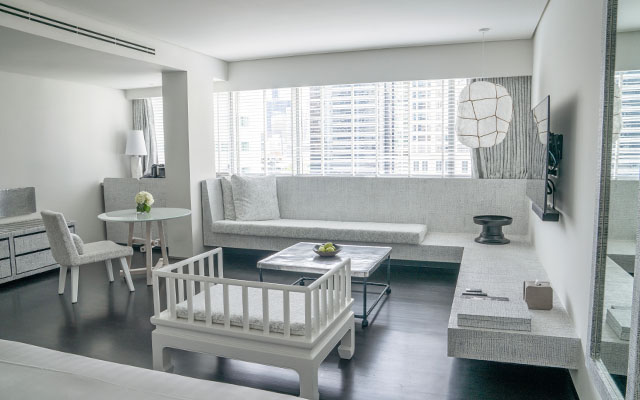
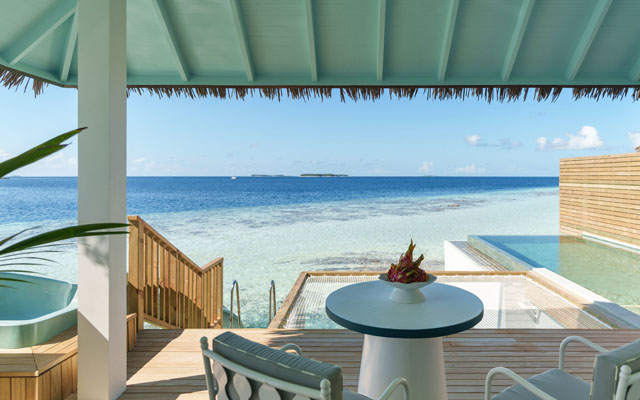
A new breed of airport hotels are evolving in parallel with the next-gen airports, shedding their utilitarian image in favour of sleek design, innovative services and lifestyle amenities
 Gone are the days where airport hotels are viewed as staid, characterless properties that generate business from flight crew, early fliers or stranded passengers. In the past decade, airport hotels have undergone a dramatic transformation, carving out a new accommodation style that caters to the bleasure-seeking corporate warrior on the road as well as leisure travellers drawn to its lifestyle and tech-savvy amenities.
A destination in its own right
With global business and leisure air travel set to soar, many airports are now spearheading redesign projects to expand their itinerant roles into the retail and lifestyle sectors, and this increasing focus on the destination experience has propelled a makeover of accommodation in the proximity of these transportation hubs too.
Best Western International (BWI), senior vice president of brand management & member services, Ron Pohl, noted: “This (airport hotel) trend matches the evolution of airports themselves. Many modern airports have turned into shopping and entertainment hubs, so travellers may prefer to stay at a nearby hotel to give themselves more time to sample these facilities.”
Ivan Tan, senior vice president, corporate & marketing communications, Changi Airport Group, said: “As the airport grows in capacity, the airport hotel is an essential offering that a discerning traveller would expect. This is especially so for a hub airport like Changi Airport. Not every passenger who arrives at Changi is visiting Singapore; about 30 per cent of Changi’s passengers are en route to another destination.
“Being directly connected and conveniently accessible, a passenger’s experience begins the moment they arrive. Being located in the vicinity of the airport means more time to rest and rejuvenate for passengers, making the overall airport experience even more enjoyable and memorable, easing the stress of travel.”
With Regal Airport Hotel, Hong Kong SkyCity  Marriott Hotel and Novotel Citygate Hong Kong already in its vicinity, Airport Authority Hong Kong has planned more airline hotels in the pipeline “to capture the continuous growth of airport users as well as the commercial opportunities presented by the opening of the Hong Kong-Zhuhai-Macao Bridge”, a spokesperson revealed.
As well, Asia’s booming budget aviation scene has fuelled the entry of the no-frills airport lodging in Japan.
“The emergence of domestic LCCs (in Japan) in 2012 has diversified the styles of travel,” Ayako Homma, a research analyst for Euromonitor, told TTG Asia. “To target such passengers, new concepts of hotels are entering the airport market, such as capsule hotels (see page 14).
“These capsule hotels are designed to provide hourly or overnight accommodations with basic amenities at more economical prices versus regular airport hotels,” said Homma. “Their concept attracts both leisure and business travellers, especially those who are waiting for connecting flights and/or early morning flights.”
From pit stop to full stop
Amid intense competition in the hospitality sector, airport hotels have been reinventing the cheerless layover stay experience, rolling out a full suite of services and activities to drive more room nights and meetings business.
Sunshine Wong, general manager at Crowne Plaza Changi Airport, observed: “(Airport hotels) were previously conceptualised out of practicality and used to serve a strictly functional purpose: providing travellers with a place to rest in between longhaul flights. This has changed as more airlines, flights, apps and services make travel even more accessible and affordable.”
Patrick Basset, COO for Accor Thailand, Vietnam, South Korea, Cambodia, Laos, Myanmar and the Philippines, said: “Airports hotels have evolved beyond their functional role of convenience. Today, they offer many of the amenities and comforts traditionally limited to city hotels and resorts; these include dining, fitness, spas and swimming pools. Guests now want to find complete leisure and business facilities at an airport hotel, expecting their experiences to mirror those of a city hotel or resort.
“We’ve also gained increased revenue from businesses located near the airport. Guests are willing to spend a bit more for the convenience of an airport hotel as they offer less risk. Their proximity decreases the likelihood of missing a flight, yet they offer the same facilities and comforts as city hotels and resorts,” he added.
Michael Gnaegi, general manager, Langham Place, Beijing Capital Airport, agreed: “We also have regular family guests. As most Chinese families travel by agencies with limited flight choices, these families will stay at our hotel the night before and enjoy a relaxing dinner at our Ming Court Chinese restaurant with views of the runway and lake. They are able to have a good night’s rest, park their car at the hotel garage and leave at their leisure to catch their flight instead of camping at the terminal.”
More airport properties are also playing up the wellness card, mirroring the growing wave of health-consciousness among travellers.
Citing Best Western Premier Amaranth Hotel Suvarnabhumi Airport in Bangkok as an example, Pohl commented: “This luxury resort offers multiple options for leisure travellers, including a spa, sauna an outdoor pool, and is close to local golf courses. This (property) has turned into more than just a one-night stopover for travellers – it has become a destination in its own right.”
Similarly, the JW Marriott Mumbai Sahar, which opened in April 1km from the Chhatrapati Shivaji International Airport, is the second property worldwide to feature the brand’s new Spa by JW concept with Ayurvedic, steam, make-up rooms and Jacuzzis.
John Alexander Girard, vice president development, area general manager, Regal Hotels International Hong Kong and general manager, Regal Airport Hotel Meeting & Conference Centre, highlighted the need for airport hotels to be “truly 24 hours in operation in all areas”, be it all-day dining or offering workout rental gear for guests to continue their healthy exercise practice any time during their stay.
According to Basset, The Novotel Bangkok Suvarnabhumi Airport has developed concepts such as the 24 Hour Flexi package, which allows guests to stay for a 24-hour duration irrespective of their check-in time, as well as the Flexi Meal programme that enables guests to choose the meal for which they wish to redeem their breakfast voucher.
Connecting the business, MICE crowds
More airport hotels are training their sights on the business and meeting crowds, as a sizable number of corporate travellers are increasingly keen to fly in, meet and fly home, instead of spending time to get to crowded downtown districts.
Langham Place, Beijing Capital Airport’s Gnaegi added: “We have regular business travellers flying from different cities in China to our hotel…(they) have business meetings such as signing of a contract within one hour, then take a return flight back to their own cities, saving time and cost.”
Sharing similar observations, Accor’s Basset added: “The rise and ease of regional air transport has led to more intra-regional meetings organised at airport hotels. People take an early morning flight, arrive for a full day of meetings and then fly out in the evening. Companies are able to bring together participants from the region for a one-day meeting, while saving on accommodation costs.”
Meeting facilities have become an important aspect of the business for Crowne Plaza Changi Airport, which often hosts trainings, seminars and events of companies located in its vicinity, shared Wong.
“Where we see great opportunity is in the niche market of meetings and events with attendees of up to about 100 to 120 people. We are looking at events held by Singapore-based MNCs here which require their delegates, representatives or clients to fly in,” he added.
“We do have corporate business and, contrary to popular belief that not many people would book or hold events at airport hotels unless they are on transit, we see more than 150 wedding events in our function spaces a year.”
Unlike downtown locations, which usually bustle with activity, airport hotels’ quieter atmosphere offers less distractions, which could be a benefit for meeting planners, added Wong.
The advantages of being located near Hong Kong International Airport are likewise apparent to Regal Airport Hotel. Said Girard: “MICE contributed to our room revenue with robust growth (in 2014), and remains the key driving factor…In the past two months, we got a few major MICE conferences in-house and experienced high traffic of check-in due to exhibitions and trade shows at AsiaWorld-Expo convention centre nearby.”
A transient or permanent trend?
While a new wave of airport hotels have brought out the design bells and gustatory whistles, some trade players point out that not all travellers are biting though, as a portion of their clientele seeks only a clean bed and easy access to their departure gates.
Acknowledging the more comprehensive service offered by a new crop of airport hotels, Destination Asia group business development director, Victoria Sertic, noted that airport accommodation is still perceived as a “functional choice” among her clients in the region.
“For early morning departures and sometimes arrivals, airport hotels are requested by our clients, but most clients would not chose to stay for long periods of time in an airport hotel,” she remarked. “Traffic and proximity to the airport in many countries is not an issue so both leisure and meetings clients and incentives opt for non-airport hotels.”
Jane Le Gall, product & marketing leader at FCm Travel Solutions Singapore, opined: “It really depends on the length of the layover, not many routes now have overnight layovers. The transit times have been drastically reduced by airlines. The First, Business and airport lounges now offer full shower and changing facilities, so business travellers will utilise these services.
“A traveller who is meeting another party whilst in transit would make use of an airport hotel from a meetings perspective. Often a business traveller might take an air route that factors in a longer layover in order to maximise his business travelling time to meet with a customer or company counterpart en route to his main destination,” she added.
However, the value of airport hotels remain underappreciated, several industry members remarked.
Todd Arthur, managing director, Asia-Pacific at HRS – The Hotel Portal, said: “The real value of airport hotels has long been underestimated by (travel) agencies and MICE planners – it is no doubt that the biggest advantage of airport hotels is convenience. Travellers can simply relax more easily and travel with far less stress.”
He continued: “Besides, being connected to the terminals, these hotels provide direct access to public transport services, which save the travellers from long taxi queues should they wish to visit local office or sightseeing.”
Go Vacation Thailand director business development, Tobias Fischer, believes that hotels in the neighbourhood of international aviation hubs, such as the recently launched Le Méridien Suvarnabhumi, Bangkok Golf Resort & Spa, which offers a golf course and proximity to the Bangkok International Trade & Exhibition Centre, has potential to attract FITs and groups.
“When people hear ‘airport’ they generally think the location is far with limited facilities, which is not true,” remarked Gnaegi, who pointed out that the Langham Place Beijing Capital Airport has over 400 pieces of contemporary artwork within its premises.
Additional reporting from Xinyi Liang-Pholsena, Paige Lee Pei Qi, Julian Ryall