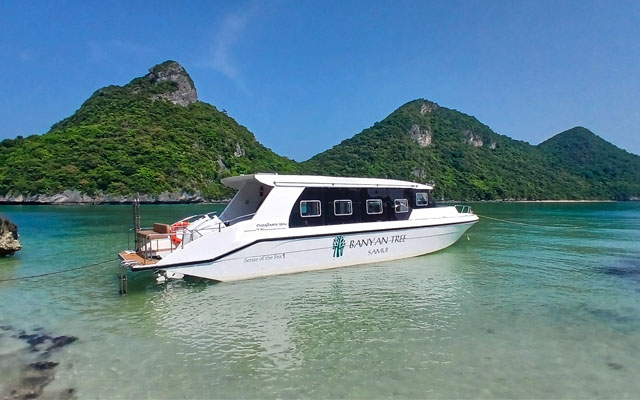
Travellers visiting Koh Samui can now explore the island’s surrounding waters by speedboat, with new tours launched by Banyan Tree Samui.
This new offering comes amid increased visitor interest in Koh Samui as a filming location, following the global popularity of The White Lotus.
Koh Samui resort offers day trips to islands and locations featured in the hit HBO series on its luxury speedboat
The hotel has introduced Sense of the Sea, a 12-metre, custom-built speedboat offering private charters and day trips to nearby islands, including filming locations from the third season of HBO’s The White Lotus.
Key among the destinations is Mu Ko Ang Thong National Marine Park, a 42-island archipelago where the show’s opening and final scenes were filmed. The full-day tour, which runs for eight hours, accommodates up to 15 guests and includes time for swimming, snorkelling, and island visits.
Other options include a four- to six-hour trip to Koh Phangan, made famous for its Full Moon Party scenes, and a shorter cruise to Koh Taen and Koh Matsum. The latter, often referred to as Thailand’s “Bay of Pigs”, is known for its population of beach-dwelling pigs.
All excursions are led by experienced crew and can be customised for private groups. Banyan Tree Samui’s location in a private bay on the island’s southeast coast provides direct access to the Gulf of Thailand and its surrounding marine ecosystems.
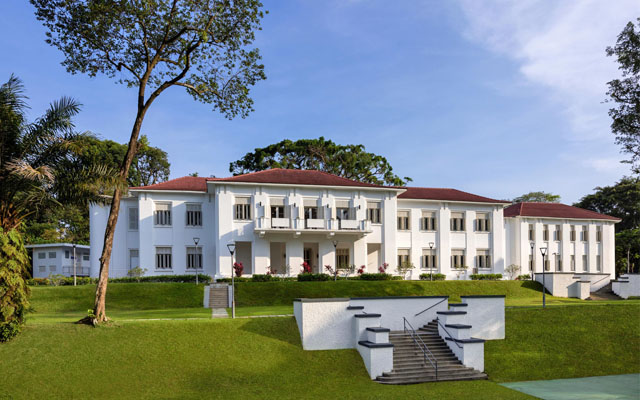
Artyzen Singapore has appointed Marcel NA Holman as general manager.
Holman brings over 35 years of global hospitality experience, having most recently served as managing director at infinitude Hospitality, where he provided strategic counsel to luxury hotels and resorts. He has also held senior leadership roles with Shangri-La Hotels & Resorts, Langham Hospitality Group, and The Sukhothai Hotels & Resorts.
In his new role, Holman will lead the strategic direction of Artyzen Singapore, focusing on growth, operational excellence, and guest experience.
The Portugal National Tourist Board and Portuguese Travel Agents Association (APAVT) have maintained their support for and presence at the annual Macau International Tourism (Industry) Expo (MITE) to promote destination Portugal to Macau and China as well as to raise Greater China’s profile among Portuguese-speaking travellers.
According to a spokesperson for the Portugal National Tourist Board, both organisations have participated in MITE for the past three years, with the support of the Macao Government Tourism Office (MGTO) and Macau Travel Agents Association.
Portugal and Macau deepen tourism collaboration at MITE, fostering new business opportunities
“With great support and extraordinary hospitality from Macau, we have hosted more than 30 Portuguese travel agents at each of the past editions. We follow closely MGTO’s strategy and some of their promotional actions; we can always learn a lot (from our Macau peers),” said the spokesperson.
The Portugal National Tourist Board expressed appreciation of its partnership with MGTO: “Macau represents five centuries of friendship, business, and mutual understanding, and (diplomatic ties are) extremely important between the two countries. Travel and tourism are no exception. The importance of tourism for both economies is critical, and we can benefit from each other’s good practices, innovation, and development.”
MGTO’s director, Maria Helena de Senna Fernandes, told TTG Asia that there are several areas of cooperation between Macau and Portugal, as well as various Portuguese-speaking markets. One of these areas is training, where student interns visit Macau for a two-week introduction to different aspects of tourism management.
“We intend to continue with this training programme while looking into other ways of working with these markets,” she added.
APAVT’s spokesperson told TTG Asia that Macau’s “historical proximity to Portugal” makes it a “fantastic gateway” to China, which is “currently one of the most important markets in the world”.
The Portugal National Tourist Board believes there is still more to be done, particularly in improving the understanding of Portugal in China. Efforts are underway to “boost the full potential of Chinese outbound travel to our country,” including marketing campaigns with OTAs and tour operators, enhancing the digital footprint on Chinese social media platforms through key travel influencers, organising roadshows in China to showcase Portuguese companies, and arranging fam trips for travel trade partners and media representatives.
Portugal’s presence at MITE is therefore a key step towards this goal.
The close Portugal-Macau relations will be underscored this year with Macau hosting the 50th National Congress of the APAVT in December, with between 800 and 1,000 delegates expected.
“It will be an extraordinary moment for the Portuguese and Chinese tourism communities,” said the APAVT spokesperson, adding that attendees will witness travel and tourism development undertaken by both Portugal and Macau, and grow demand for Greater China in the Portuguese market.
Altogether, congress activities will present new business opportunities for travel and tourism companies in both lands.
de Senna Fernandes expressed hopes that the congress would foster greater collaboration between Macau and Portuguese-speaking countries to advance travel and tourism.
Since reopening to international tourism, Macau has hosted a range of concerts that contribute to the city’s live events scene. The concert economy is one of the key pillars supporting the diversification of Macau’s tourism offerings.
Integrated resorts (IR) compete on star power and bring a variety of concerts to town. Melco Style’s Residency Concert Series will feature Joey Yung (April to May) and Leon Lai (June) at Studio City; Macao Londoner Arena will host Rain in the 2025 Rain Concert: Still Raining (April); The Venetian Arena will present You & Mi Sammi Cheng Live (May).
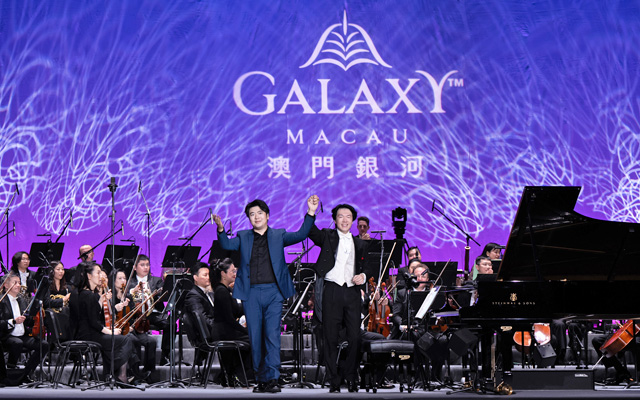
Lang Lang performed with the Macao Orchestra at the Galaxy Music Gala in January 2025
As a venue operator and organiser, Galaxy Macau hosts concerts at Galaxy Arena, the largest indoor arena in Macau, with 16,000 seats. In 2024, it hosted Andy Lau’s concert tour and the Galaxy Opera Gala with Plácido Domingo and guests. Recent events include the Galaxy Music Gala with Lang Lang and the Macao Orchestra (January), as well as Andrea Bocelli Live in Concert and Jisoo Asia Fan Tour 2025 (March). Coming up next are Wakin Chau World Tour Live in Macao (May) and Jacky Cheung 60+ Concert Tour (June).
A Galaxy Macau spokesperson said concerts are an important revenue generator for the destination. In 2023, Macau’s 240 concerts brought in around 1.1 billion patacas (US$137 million) in ticket sales.
She said such celebrity shows serve to enhance Macau’s global and regional visibility and reputation.
She added: “We have scheduled a number of shows and entertainment events for the coming year, including concerts, talk shows, opera, and sporting events. We believe these will be very popular. Post-pandemic, the age of visitors has gone down, and many young travellers are drawn to concerts.”
Sands China senior vice president of hotel operations, Kris Kaminsky, agrees on the branding effect live events have on Macau as a destination and on properties like those managed by his company.
“(Live events) enhance the city’s image as a vibrant cultural hub and complement our diverse offerings, leading to increased foot traffic in both our venues and the surrounding community,” said Kaminsky.
“Hosting concerts benefits our IR venues by boosting occupancy and restaurant sales. Additionally, local businesses, including nearby attractions and restaurants, experience increased patronage, stimulating the economy and promoting a thriving tourism ecosystem.
“In short, concerts create city-wide economic spill over. Local SMEs, including Taipa Village restaurants and Coloane attractions, reported a surge in footfall during event weekends,” he added.
A Melco spokesperson said mega star concerts demonstrate Macau’s capacity to host large-scale entertainment and strengthen its reputation as a centre for live events.
She said: “As Macau’s live events scene becomes increasingly competitive, venues and event organisers face the challenge of standing out in a crowded market. To address this, we focus on creating unique and exclusive experiences that set us apart.
“For instance, Melco’s Concert Series features A-list artists, while immersive events like WaveFest deliver captivating and one-of-a-kind experiences. These offerings ensure that our events remain distinctive and highly appealing to visitors.”
Another challenge lies in meeting the high expectations of international and regional audiences. Melco addresses this by curating a diverse line-up of acclaimed artists and performers, paired with entertainment, dining, and leisure experiences.
Pamela Chan, managing director of Taipa Village Destination, told TTG Asia that the concert economy is contributing to a thriving Macau.
Chan observed that concerts are bringing a “strong influx of visitors” to Macau and ringing the tills for retailers, restaurateurs, and small businesses in the community.
She recalled that when Hong Kong-based crooner, Jacky Cheung held a concert series with 12 shows between June and July 2023, he drew 100,000 fans to Macau.
She shared that some local businesses in Taipa Village are creative with maximising star power. Some would organise fans gatherings, using shop entrances and props to entice photo opportunities and drive up merchandise sales.
PATA hosted the PATA Annual Summit 2025 (PAS 2025) from April 21 to 23 at the CVK Park Bosphorus Hotel in Istanbul, Türkiye. The event was organised in partnership with the Türkiye Tourism Promotion and Development Agency and Turkish Airlines.
Themed Timeless Wisdom for a Sustainable Future, the event attracted over 260 delegates from 35 destinations. These included senior government officials, private sector leaders, academics, and youth representatives from across the Asia-Pacific and beyond, including participants from Guam, Palau, Japan, South Korea, China, Azerbaijan, Saudi Arabia, South Africa, the US, and Europe.
PATA chair Peter Semone addressing the audience during the PATA Annual Summit 2025
The summit was not only a platform for dialogue but also marked a defining moment for PATA’s internal development. It began with a series of meetings, including the ratification of a new Vision and Mission for the Association, the approval of the PATA Executive Board and Board members, and strategic discussions to advance the PATA 2030 Strategy.
Opening the main conference on April 22, PATA chair Peter Semone emphasised the need for a more purposeful and impact-focused approach to tourism. He urged the industry to prioritise peace, nature, and community: “In an era of climate instability and rising polarisation, the tourism sector must go beyond growth metrics and become a vehicle for empathy, humility, and peace.”
PATA CEO Noor Ahmad Hamid also highlighted the deeper value of tourism: “Tourism is an emotional economy. What we truly take away from travel are the moments, memories, and human connections. PAS 2025 is our opportunity to commit to tourism that uplifts, heals, and endures.”
The summit featured over 40 speakers from organisations such as UN Tourism, BBC, Mastercard, Skyscanner, Amadeus, Airbnb, GSTC, and Tripadvisor. Sessions covered a range of topics, including sustainability, climate change, global travel trends, and the future of aviation. A new feature, Ask the PATA Experts, allowed delegates to book one-on-one consultations with specialists on topics such as climate adaptation and workforce development.
In keeping with the theme, delegates also experienced Türkiye’s culture, with activities like simit (Turkish bagel) baking, Turkish coffee brewing, and Ebru marbling. After the conference, attendees took part in post-event tours of Istanbul’s landmarks, including the Hagia Sophia and Topkapı Palace, and explored other regions like Antalya, İzmir, and Cappadocia.
The event also supported the PATA Kind Hearts Initiative, with delegates donating children’s books to the Rami Library in Istanbul, promoting literacy and community impact.
PAS 2025 was organised with sustainability in mind, with the event’s carbon footprint fully offset through contributions to the Kınık Wind Power Plant in Türkiye’s İzmir Province, supporting clean energy and reinforcing PATA’s environmental commitment.
EHL Hospitality Business School has introduced the Tourism Leadership Excellence & Advancement Program (T-LEAP) in collaboration with the Singapore Tourism Board (STB). This executive programme supports senior executives and business leaders in the tourism sector by strengthening leadership, sustainability and technology capabilities relevant to the sector’s future.
The five-day programme, held at EHL Campus in Singapore, equips professionals with the knowledge to manage change and contribute to innovation in Singapore’s tourism landscape. Developed jointly with STB, the curriculum responds to the changing needs of tourism professionals.
T-LEAP, a new programme designed to strengthen leadership, sustainability and technology capabilities in Singapore’s tourism sector, will be conducted at the EHL Singapore Campus; photo by EHL
T-LEAP comprises three core modules. The first, Leadership Excellence & Strategic Growth, focuses on Singapore’s tourism priorities, strategic planning and business partnerships. The second, Sustainability & Innovation, addresses sustainability practices within tourism, circular approaches and sustainability reporting. The third, Technology & Digital Transformation, explores digital developments, AI-enabled operational efficiency and the role of technology in the sector.
Participants develop leadership capabilities, explore sustainability approaches, apply technological solutions and build professional networks through engagement with sector experts. They also join the Singapore Leaders Network, a platform supporting collaboration and knowledge exchange.
The launch of T-LEAP marks a step in EHL’s growth in Asia-Pacific and its aim to serve as a centre for hospitality and tourism education. It is also EHL’s first SkillsFuture-funded programme, reflecting its alignment with Singapore’s workforce development needs.
Following the successful delivery of a pilot programme in February this year, STB has endorsed the initiative for further runs, signalling confidence in its impact on the sector. The first two runs are scheduled for May and from October to November 2025, with the potential for additional iterations based on demand and participant feedback.
“Tourism leadership development is critical in navigating our rapidly evolving industry. Through T-LEAP, we aim to build a future-ready tourism sector and nurture a new generation of tourism leaders capable of driving innovation and forging strategic collaboration,” said Melissa Ow, chief executive, STB.
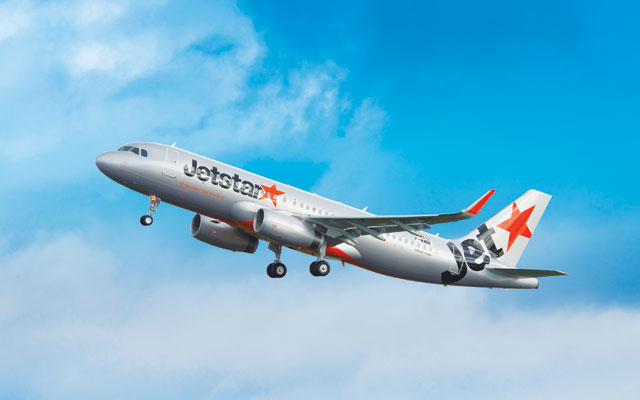
Jetstar debuts Christchurch to Cairns route
Jetstar’s first direct flight from Christchurch to Cairns took off on April 2, marking a milestone in the airline’s expansion. The route will operate three times a week year-round, providing more affordable travel options between New Zealand’s South Island and North Queensland.
This launch is part of Jetstar’s broader expansion, with more routes from Hamilton to Sydney and the Gold Coast, and Dunedin to the Gold Coast, coming soon. Additionally, Jetstar will receive seven new aircraft in 2025, including an Airbus A320 based in Christchurch.
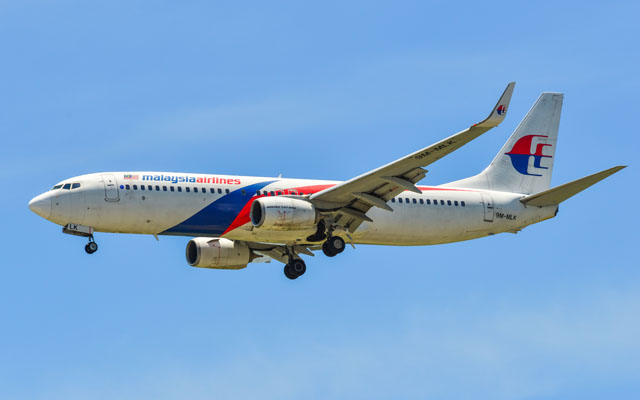
Malaysia Airlines
Malaysia Airlines resumes Kuala Lumpur-Brisbane connection
Malaysia Airlines will resume direct flights between Kuala Lumpur and Brisbane from November 29, restoring a key connection between Malaysia and Queensland.
This marks Brisbane’s 33rd direct international route, bringing its network back to pre-pandemic levels.
The airline will operate five weekly services using Airbus A330-300 aircraft, providing 75,000 inbound seats annually. The route is supported by the Attracting Aviation Investment Fund, a joint initiative between the Queensland Government and the state’s international airports.
Vietjet
Vietjet launches direct flights to Con Dao from Hanoi and Ho Chi Minh City
Vietjet has introduced two new direct routes linking Hanoi and Ho Chi Minh City with Con Dao. The new services expand the airline’s domestic network and improve access to the southern island.
The Hanoi-Con Dao route operates two return flights daily, with each flight taking approximately two hours and 10 minutes. From Ho Chi Minh City, Vietjet also offers two daily return flights to Con Dao, with a flight time of around 40 minutes.
Philippine Airlines and Qatar Airways
Philippine Airlines, Qatar Airways sign codeshare deal for Manila-Doha service
Philippine Airlines (PAL) and Qatar Airways have joined forces to enhance connectivity between the Philippines and Qatar. Starting June 16, PAL will operate daily non-stop flights from Manila to Doha, with Qatar Airways codesharing on the service.
The service will be operated using an Airbus A330-300 aircraft with both Business and Economy Class cabins.
This new partnership aims to improve access for travellers between the Philippines and more than 170 destinations in the Qatar Airways network, with onward connectivity via Hamad International Airport. Further collaboration between the two airlines is expected in areas such as frequent flyer programmes and additional route development.
The Singapore HeritageFest 2025 will run from May 1 to May 25, featuring over 100 programmes across the island. Organised by HeritageSG, it focuses on celebrating Singapore’s Intangible Cultural Heritage.
This year’s SG60 edition highlights a wide range of cultural practices, with events such as workshops, tours, and exhibitions that explore community traditions, performing arts, crafts, food heritage, and nature-based knowledge.
Over 100 programmes showcase crafts, food, and rituals passed through generations; The Intan Kebaya Tea Experience, pictured
Over 90 partners, including cultural practitioners and heritage businesses, will collaborate on various activities, including Out of the Red Box – a showcase blending Chinese opera and getai (songs on stage), and the Creative Hub @ Peranakan Museum, which offers hands-on heritage workshops where participants can learn heritage practices such as jamu-making, flower garland tying, and more.
Festival-goers can also engage in traditional craft sessions – for instance Rattan Knot Weaving x anothersole and Making Traditional Lanterns, explore food heritage through events like the Nasi Ulam crafting workshop and learning about the history of bak kut teh, and immerse in local performing arts.
A key feature of SHF 2025 is the return of signature programmes such as Homeground and Ride & Discover, which bring heritage to public spaces.
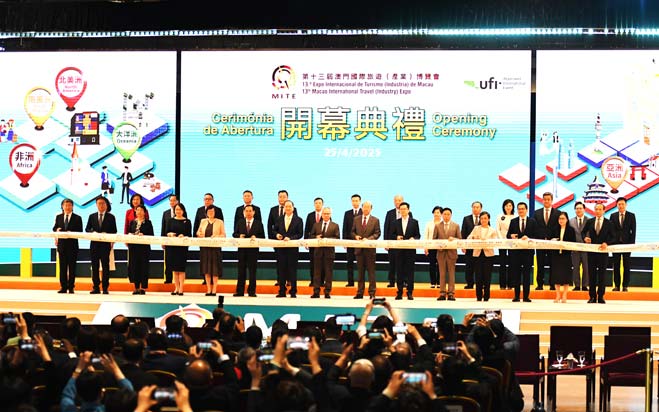
The 13th Macao International Travel (Industry) Expo opened this morning at the Venetian Macao convention and exhibition centre, with a 50 per cent spike in attendance – its strongest turn-out ever.
The event has drawn 755 tourism-related enterprises and governmental entities from 70 countries and regions, resulting in a total of 1,502 booths.
MITE 2025 has its largest attendance ever; photo by Caleb Richard Lai
There are 316 booths in the Mainland China zone, 411 in the Macau zone, 14 in the Hong Kong zone, 343 in the international zone, and 418 in other specialty zones, such as the Belt and Road Products Pavilion, Foodie Market, Coffee Station, and The Cellar.
MITE 2025 also welcomes about 500 hosted buyers from different markets around the world.
In her welcome speech, Maria Helena de Senna Fernandes, director of Macao Government Tourism office, said MITE 2025 continues the progress achieved through Greater China’s 14th Five-Year Plan as well as Macao Special Administrative Region’s second Five-Year Plan.
“Upon this backdrop, MITE 2025 embraces the vision to attain innovative and quality enhancement. Unleashing Macau’s unique strengths and functions as a platform, MITE builds an effective professional platform for exchange and cooperation among tourism and related industry operators from Macau and around the world, as all of us come together to explore business opportunities and appeal to different visitor markets,” she said.
She added that the expo supports Macau in reaching “a new breakthrough” in tourism progress, facilitating “adequate economic diversification, and enriches our city’s development as a world centre of tourism and leisure”.
She also referenced Chinese president Xi Jinping’s “four expectations” for the Macau leadership at the end of 2024, where he made diversification of Macau’s economy a top priority alongside the establishment of Macau as a platform for high-level connections with the world.
“As a professional travel trade fair, MITE keeps enhancing its role as a bridge that connects Macau, Mainland China, and the international travel trade,” remarked de Senna Fernandes.
Besides a lively show floor, MITE 2025 also packs in more than 70 destination presentation sessions, forums and other activities to provide attendees with updates on industry trends and tourism resources.
Philippine Airlines (PAL) has appointed Richard Nuttall, a British national with extensive experience in the airline industry, as its new president, effective May 29, 2025.
Nuttall will report to Lucio C Tan, chairman and CEO, and Lucio C Tan III, president and COO of PAL Holdings, the parent company of PAL.
Nuttall brings a wealth of experience from leadership roles in airlines across Asia, Africa, Europe, and the Middle East. Most recently, he served as CEO of SriLankan Airlines, where he successfully led the airline’s turnaround, returning it to operational profitability and contributing to the growth of Sri Lanka’s tourism sector.
He also served as an executive board member of the SkyTeam Alliance, where he played a key role in reforming its governance structure to enhance decision-making and collaboration.
Nuttall will be supported by Carlos Luis Fernandez, who will take on the role of executive vice president and COO, also effective May 29, 2025.



 In his new role, Holman will lead the strategic direction of Artyzen Singapore, focusing on growth, operational excellence, and guest experience.




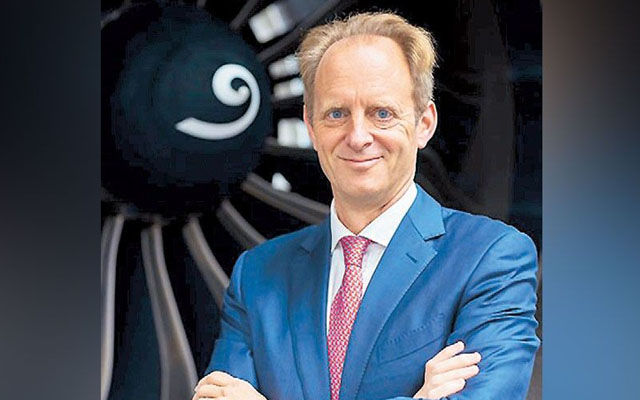
 Nuttall brings a wealth of experience from leadership roles in airlines across Asia, Africa, Europe, and the Middle East. Most recently, he served as CEO of SriLankan Airlines, where he successfully led the airline’s turnaround, returning it to operational profitability and contributing to the growth of Sri Lanka’s tourism sector.