Mövenpick Hotels & Resorts’ ninth edition of it Kilo of Kindness initiative has brought together over 75 hotels and resorts across 30 countries to support their local communities through meaningful acts of kindness.
The 2024 Kilo of Kindness initiative invites guests, Heartists (Accor staff), and local communities to contribute food, clothing, school supplies, toys, linen, furniture, books, sports equipment, and second-hand electrical equipment such as computers, from now to November 15 at participating Mövenpick hotels.
Heartists at Mövenpick Hotel Melbourne on Spencer prepare to accept contributions to the Kilo of Kindness initiative
All donations will then be distributed to local charity partners.
The donations will support the work of organisations around the world which celebrate food for good, supporting people with nutritious meals and essential food supplies, as well as initiatives that inspire connection and discovery through educational materials, books, and art supplies. Each participating hotel selects a local charity partner, ensuring that there is a positive impact in the neighbouring community.
This year, Mövenpick hotels across Australia and New Zealand are supporting the initiative in the following ways: Mövenpick Hotel Melbourne on Spencer has partnered with Uniting Food for Families, with every kilo the hotel collects going towards feeding a family in crisis; Mövenpick Hotel Hobart is supporting the Hobart Women’s Shelter, who provide safe, emergency accommodation, support and housing to women and children affected by family violence and those experiencing homelessness; Mövenpick Hotel Auckland has teamed up with Auckland City Mission to introduce a guest donation box in the hotel lobby to further support the mission’s work; while Mövenpick Hotel Wellington is supporting their local community by partnering with Wellington City Mission, contributing 100kg of food to their food support programme.
Benoît Racle, global president of premium brands at Accor, commented: “By fostering genuine human connections, we’re not just providing support; we’re inspiring others to carry forward this spirit of giving. This tradition of kindness is more than a moment; it’s a movement that reflects the very heart of who we are as a brand.”
AI systems have the potential to reduce energy consumption by up to 30 per cent, which could help hotels improve both sustainability and operational efficiency, claimed World Sustainable Hospitality Alliance.
According to the latest insights by EHL Hospitality Business School, up to 60 per cent of a hotel’s carbon emissions are driven by systems such as HVAC and lighting.
Karčiauskas: any unplanned maintenance can affect guest experience, so predictive maintenance offers a valuable way to keep operations running smoothly while avoiding costly downtime
The latest AI-based platforms can automatically adjust energy usage in real-time based on factors like occupancy levels, guest check-ins and check-outs, and even weather conditions, catering to the 24/7 energy needs of the sector.
While Exergio’s core expertise is in commercial buildings such as offices and shopping centres, the lessons from these projects apply well to the hospitality sector. A JLL report recently compared buildings that have the highest energy savings potential, with hotels taking the sixth spot, surpassing offices and retail properties.
Donatas Karčiauskas, CEO of Exergio – a company that creates AI tools for energy performance in buildings – shared that in one case in Poznan, Poland, Exergio’s AI-driven platform achieved a 20 per cent reduction in energy waste over nine months in an office building, showcasing how real-time energy optimisation can translate to almost €80,000 (US$87,431) savings.
Looking ahead, trends in the hospitality industry point towards an increasing reliance on AI-driven solutions for managing energy use. The EHL insights note that sustainability is no longer optional for hotels, with both regulators and consumers expecting higher standards of environmental responsibility.
Karčiauskas pointed out that hotels need to maintain consistent comfort for guests while managing fluctuating occupancy and constant energy demand – one of the unique challenges faced by the hospitality industry.
“AI tools could enable hotels to manage energy far more efficiently by tailoring systems to actual demand in real-time, rather than running at a constant, wasteful level. We’ve seen it happen to all kinds of commercial buildings, and the hospitality sector is no exception.”
Beyond basic energy management, AI platforms can predict maintenance needs, identifying when equipment like HVAC systems or lighting may require servicing before an issue disrupts operations,” said Karčiauskas.
He concluded: “As AI continues to advance, we expect that energy management systems will become increasingly sophisticated. We are already developing systems that allow human-AI interaction. It will be easily integrated with other hotel technologies to optimise every aspect of operations – from guest comfort to back-end systems. AI will become a core tool for hotels seeking to balance sustainability, cost-efficiency, and superior guest experience in the years to come.”
Philippine Airlines connects to US cities, expands Australian network Philippine Airlines (PAL) now operates non-stop services to Seattle from Manila, flying thrice weekly using the Boeing 777-300ER aircraft.
The new route is the first and only non-stop link between the Philippines and the US. Seattle now joins San Francisco, Los Angeles, New York, Guam and Honolulu as PAL’s sixth US destination.
In addition, PAL continues its interline partnership with Alaska Airlines, the Seattle-based mainline US carrier, to offer more convenient connections to cities across the US, including Chicago, Las Vegas, Washington DC, Houston, Portland, Anchorage and other destinations served by Alaska Airlines.
PAL has also strengthened its Australian presence with an offering of 22 weekly flights to Australia.
The airline will introduce a seventh weekly non-stop frequency from Manila to Brisbane from October 27, adding to its current daily flights to Brisbane, daily flights to Sydney, five weekly flights from Melbourne and three weekly flights from Manila to Perth.
Batik Air
Batik Air introduces new Kunming-Penang service
Batik Air has started its weekly charter service from Kunming in China to Malaysia’s Penang, operated on the Boeing 737-8 aircraft which holds a capacity of 189 passengers.
This new route is expected to significantly drive further growth of Malaysia’s tourism sector and attract more visitors from China.
Hong Kong Airlines
Hong Kong Airlines now flies to Sendai in Japan
Hong Kong Airlines will start a new direct route to Sendai from December 18, its ninth destination in Japan.
Operating three times a week on Mondays, Wednesdays and Saturdays, the new Sendai service offers convenient access to the heart of Tohoku region.
In addition to the new Sendai route, Hong Kong Airlines will also increase its Sapporo service to daily flights and its Tokyo (Narita) service to five times daily this winter.
Scoot
Scoot adjusts network for Northern Winter season
Scoot, the low-cost subsidiary of Singapore Airlines, will be making adjustments to its network in anticipation of stronger demand during the Northern Winter season.
From November, extra weekly flights will be mounted to Chiang Mai and Hanoi, increasing services from 10 to 11 times weekly and five to six times weekly respectively.
From December, services to Perth will increase from 13 to 14 times weekly. Services to Melbourne will also increase from 12 to 13 times weekly, and subsequently to twice daily from January 2025.
In addition, three more weekly flights will be mounted to Seoul (Incheon) via Taipei, making it a daily service, and services to Tokyo (Narita) via Taipei will also increase from 12 to 14 times weekly.
Scoot will be increasing flights to destinations operated by the Embraer E190-E2 aircraft, such as to Davao, which will increase from seven to nine times weekly, as well as Balikpapan and Makassar, which will each increase from three to four times weekly.
Meanwhile, services to Ningbo in China will be suspended, with its last flight on October 26 this year.
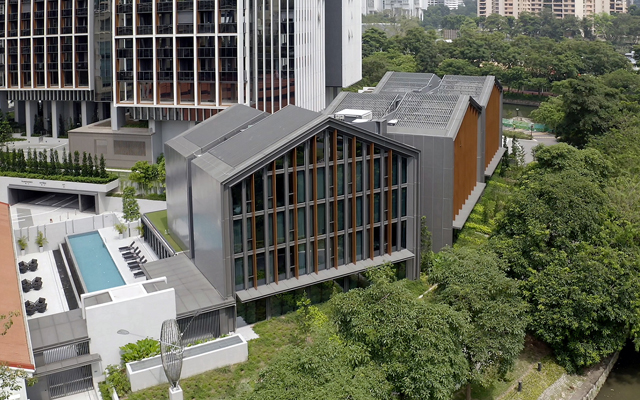
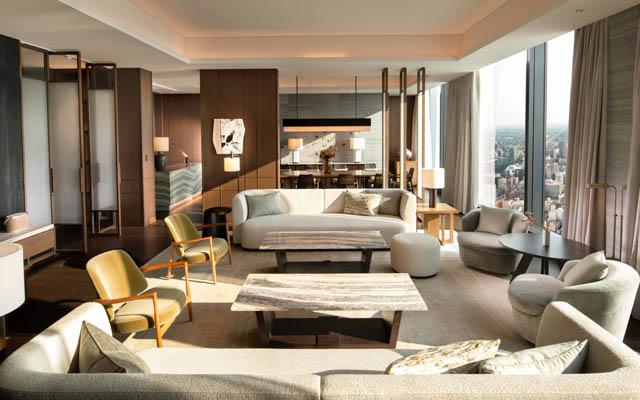
We are sitting here in your brand-new Quincy House Singapore. It is so stylish and welcoming. How would you describe the character of this serviced residence and what is the profile of guests it targets? To answer you, I need to take a step back to give you a picture of the changing trend in the extended stay market.
Not too long ago, serviced residences catered to expatriate families arriving primarily from G7 countries. They would come on a very generous package from their employer and stay for a month or two in a serviced residence while waiting for their furniture to arrive and sorting other things out, like securing an international school for their kids.
As such, our serviced residences are more or less all the same – multi-bedroom apartments that are located in the heart of town, close to workplaces and international schools.
That customer profile has changed. Firstly, they are no longer all coming from G7 countries; they are coming from a very diverse range of geographies, like Eastern Europe, China, India, South Korea and Taiwan.
We also see the advent of the solo traveller. Companies have found it increasingly expensive to offer the traditional expatriate package, so many are picking the younger and more upwardly mobile staff who do not have a family relocating with them. These customers are also staying for a shorter duration, no longer for years.
So, demand for larger apartments is becoming less and seasonal.
Another important change is in location preference. While in the past location is very important, customers today prioritise accessibility. Their offices are no longer in the CBD, but in Singapore’s business parks. Customers want to be able to travel easily to the business parks, instead of staying there, and to be able to get around other parts in Singapore.
As a result, we are competing precinct to precinct, no longer block to block where differentiated layout (influences the customers’ decision).
In order to compete by precinct, we have to ensure the attractiveness of the area our serviced residences are in; they must be incredibly well integrated with their surroundings.
There are very few places in Singapore where locals and foreigners can agree on being a great place to be. I think Holland Village is one of the very few such places, so this is where Quincy House Singapore is.
At the same time, we know that the human touch and local experiences are important to extended stay customers. Upon arrival, they have to figure out their neighbourhood and essential services. They could do this themselves over time, or we could help them with information and to identify experiences they would like. Some argue that there is really no need to do this for extended stay customers because they would eventually figure it out themselves. But we think not – we know that people will appreciate their hosts for curating experiences according to their preferences.
So, this leads us to what Quincy House Singapore has to offer. One, it is different; it is not just for families but also for solo travellers, and we have different configurations to choose from. Two, it is not only in a great location, but also a very accessible one. Three, it has a very articulate level of service that would be relevant to the extended stay customer that is evolving.
If you plan on differentiating your product through curated experiences for residents, then you need to rely heavily on people who are curious about their neighbourhood, passionate about wanting to find the coolest things around, and willing to serve. How do you find such people? Recruitment is horrendously difficult these days, but it helps when the organisation has a foundation and reputation of a culture that is endearing as well as a track record of creating noteworthy and award-winning experiences.
Far East Hospitality has built a reputation of both an endearing culture and a track record of award-winning experiences through our properties like Amoy, The Clan Hotel, The Barracks Hotel, The Outpost, and Village Hotel Sentosa. This makes it easier for us to recruit people with a particular profile.
Now, it obviously took us a long time to build this reputation and what we stand for. I would suppose being able to find these good people is testimony to the successful employer branding that we have worked for many years to establish.
I’ve always believed that organisations at the end of the day always get the employees they deserve.
So, where do we find these people? Is it from our existing staff? Is it from schools? Well, we must have a core team from the organisation going out to schools to engage with people who are graduating and want to do tourism. Another source is Singapore Workforce Skills Qualifications courses, which are taken by people who are in mid-career but wanting to switch to hospitality. The third source is fresh job seekers.
I see that Quincy House Singapore distributes a handy booklet that captures experiences in the Holland Village neighbourhood. How often is the content refreshed so that there is always something new for extended stay customers to discover? We intend to critically review our Quincy Qurate Neighbourhood Guide every quarter. While we will obtain guest feedback on our curated experiences, we will do so with confidence and not with great sensitivity to polling. What this means is that we will not change something just because a guest said this and that. We know what the market is like, and which experiences are relevant.
You spoke of how Quincy House Singapore was created to serve this new breed of extended stay customers. What is the future for Far East Hospitality’s traditional service residences then? Let’s talk about chicken rice for a moment. If you have a stall selling tasty chicken rice in a well-located hawker centre, you have a first call advantage and you are always full at lunchtime. But, if you are oblivious, you will not know that actually the market for chicken rice is declining over time, as more and more people are wanting to eat something else. You will probably only get a sense of that when people start to quibble with you over the price of your chicken rice.
What I am saying is, there is always demand for our traditional serviced residences, but we find that certain products are beginning to face price sensitivity. Is this price issue simply seasonal? We have to take a step back to find out.
Every now and again we have to come up with new products in order to get insights on market trends. If we were to only act when the trend becomes so clear because there is empirical data, we would be too late.
Did Far East Hospitality try out curated destination experiences for guests at its traditional serviced residences? We did that when we launched the Adina brand of apartment hotels and serviced apartments. We refurbished the Regency House for Adina Serviced Apartments Singapore Orchard in 2022 and created something a bit more experiential to see whether the market was prepared to pay.
We built a network of partner merchants around the area to offer residents discounts and perks when they flashed their Adina keycard. We found that, yes, they responded well to such services. One of the most popular perks that our guests have responded positively to are F&B deals, especially those nearby the property.
So, we were emboldened and decided to try something a little more dramatic with the Quincy House Singapore.
Will you bring the Quincy House concept to other destinations, perhaps to Melbourne where your stylish Quincy hotel is doing so well? It is our aspiration, but at this point in time we don’t have a specific plan. We have to see how Quincy House Singapore works, and then watch for a combination of opportunity and preparedness.
Well, Quincy House Singapore has now been opened for more than a week. How well is it doing? It opened on October 1 and has beaten our own expectations. It is doing double the volume of what we had when we opened Oasia Residence in 2016.
This achievement is noteworthy because in terms of size, Quincy House Singapore has 255 rooms while Oasia Residence has 140.
The vast majority of customers here are booked for between a week to a several months, although we have a couple of bookings that stretch across years. We are really grateful and wish for more customers like that.
The luxurious Oriental Residence Bangkok offers fully furnished serviced apartments with modern comforts
The plush, sophisticated lobby of the Oriental Residence Bangkok invites guests to enter a world of exclusivity and exceptional service
A leading player in Asia’s hotel landscape, ONYX Hospitality Group offers a diverse portfolio of brands tailored to meet the needs of modern travellers.
At the forefront is Amari, known for its upscale hotels and resorts carefully planned to bring out the destination it is in, and caters to both business and leisure guests.
OZO appeals to savvy midscale travellers with its focus on restful sleep and essential conveniences, while Shama provides stylish serviced apartments, perfect for short- and long-term stays in key urban destinations.
One of the group’s standout properties, Oriental Residence Bangkok, has recently been awarded the prestigious Michelin Key, a testament to its excellence among hotels. The property has also joined the esteemed Small Luxury Hotels of the World (SLH) community, further elevating its status in the luxury hotel market. This distinction provides travellers with the assurance of exclusivity and exceptional service.
Get more for less
1 of 6
OZO North Pattaya offers a panoramic ocean view from the comfort of one's room
Amari Bangkok offers modern comfort in a central location
Take a dip in the pool at Amari Phuket while admiring the sunset over the ocean
Shama Petchburi 47 Bangkok offers modern furnished service apartments
At OZO Chaweng Samui, the pool beckons
Amari Pattaya can be transformed into an elegant set up for functions and gatherings
With its diverse portfolio of brands offering exceptional experiences for all types of travellers, ONYX Hospitality Group further enhances guest loyalty through its comprehensive rewards programme – ONYX Rewards – designed to offer enhance convenience and flexibility for guests within the programme.
Rewards designed for the ultimate guest experience
With four categories of membership — Silver, Sapphire, Gold, and Platinum — each tier offers various perks. Silver is the entry tier and free to join; Sapphire is the next level, while Gold and Platinum are elite tiers.
Members of all tiers enjoy exclusive benefits, starting with guaranteed best available online rates plus 10 per cent on public room rates. Loyal guests will be able to enjoy the benefits of the programme designed to enhance guest experiences by making every stay as smooth and convenient as possible.
Platinum members get 24-hour check-in and check-out at their convenience, offering ultimate flexibility especially for guests travelling in from long international flights or for those with packed schedules, ensuring a relaxed and stress-free stay.
Additionally, Platinum members can share the benefits of their membership by gifting Gold membership to friends or colleagues, which gives them instant access to perks such as automatic room upgrades, early check-in, and late check-out.
Both Platinum and Gold members have exclusive access to executive lounges where they can unwind after a busy day with a quiet breakfast, afternoon tea, or evening cocktails, in a cozy, private setting – a perfect spot for some much-needed relaxation.
Further benefits include an exciting new rewards section launching by end 2024, offering more redemption options, including dining and spa vouchers, branded merchandise, and exclusive services, giving members even more ways to indulge.
To make life even easier, the ONYX Rewards app allows members to customise their stay. Whether it’s arranging airport transfers, having a favourite meal prepared upon arrival, or booking a spa session, members have full control at their fingertips, making their stay feel more like a warm welcome home than a hotel check-in.
Members also enjoy exclusive perks across ONYX’S portfolio of hotels, resorts, and serviced apartments, with exclusive discounts from partner companies, further elevating their experience.
ONYX’S partners include industry-leading brands such as Thai Airways, KrisFlyer, and Sixt, offering members exclusive benefits across categories such as airlines, transportation, and lifestyle. By booking with ONYX, members can earn miles for their future trips with partners airlines, enjoy discounted car rentals, and savour a culinary feast at reduced rates, enhancing their travel adventures and creating lasting memories.
Ready to be rewarded? ONYX’s new awards section launching soon will offer even more exciting perks — from rejuvenating spa treatments to exquisite dining experiences, each stay is about to get even more rewarding.
Want to enjoy these exclusive benefits? Join ONYX Rewards today.
Japan is leading the recovery of international tourism in Asia-Pacific, with visitor numbers so far in 2024 exceeding pre-pandemic levels, according to Harry Hwang, regional development for Asia and the Pacific at UN Tourism.
Speaking at Tourism Expo Japan, the country’s leading travel event, Hwang pointed to the country’s “record-breaking numbers of international tourist arrivals in the last few months, which is contributing significantly to the country’s economic revival”.
UN Tourism’s Hwang says Japan’s tourism industry has successfully navigated the challenges created by the pandemic
Japan attracted 31 million tourists between July 2023 and June 2024, making Japan the best-performing destination across the region in terms of visitor arrivals compared to 2019, according to the Central European Institute of Asian Studies, a think tank focused on Europe-Asia relations and developments in the Indo-Pacific region.
In July 2024, international arrivals to Japan numbered 3.3 million, 10.1 per cent up on July 2019 and the highest number of inbound tourists per month ever recorded, according to the Japan National Tourism Organization. August was also record-breaking, with inbound visitors totalling 2.9 million, 16.4 per cent more than the same month pre-pandemic.
With Japan’s tourism industry successfully navigating the challenges created by the pandemic, “the significance of tourism is more evident than ever,” Hwang continued, noting tourism’s potential to “drive future development and growth” in Japan.
Expo 2025 in Osaka, Kansai is also likely to act as “a new milestone” in the advancement of tourism in the country, he opined.
Luxury travel company Scenic Group has established a new office in Singapore to capitalise on the growing demand for luxury travel in the Asia-Pacific region.
The new office, trading as Scenic Tours APAC, will be led by Constance Seck, who brings over 20 years of experience in the luxury travel industry. As the regional director, sales & marketing APAC, Seck has been tasked with implementing the company’s strategy in China, Japan, Taiwan, India, Hong Kong, Singapore and other key South-east Asia markets.
From left: Constance Seck; and Lim Yee Sher
Seck joins Scenic Group from Norwegian Cruise Line Holdings (NCLH), and will report to Anthony Laver, Scenic Group general manager of sales & marketing APAC.
Seck will be supported by Ally Grueter, business development manager APAC, who has built strong relationships over the past seven years; and Lim Yee Sher as the marketing & services manager APAC. Lim brings with her a wealth of expertise from previous marketing, product and sales roles with NCLH and Citystate Travel.
From left: Ally Gruter; and Quoc Huy To
Joining the team is Quoc Huy To, accounting manager APAC. Prior to this move, he was the financial controller of Vietnam-based Asia River Cruises for eight years. He will relocate to Singapore this month, and will be the key contact for all finance-related matters.
Glen Moroney, chairman & founder of Scenic Group, said: “We are excited to open our new Scenic Group APAC office in Singapore as part of our ongoing global expansion. With the growth of our Scenic and Emerald Cruises luxury river cruise ships and innovative ultra-luxury yachts, this provides us with the foundation to meet the increasing demand from affluent consumers in the fast-growing markets across this region.”
Construction of the World Expo 2025 venue on Yumeshima Island in Osaka Bay is progressing steadily, where the man-made island is being transformed into a major international event site expected to attract a projected 28 million visitors from around the world.
When TTG Asia paid a site visit on October 10, the wooden platform – with a circumference of two kilometres and a height of 12 metres – encircling the Expo was already up. Called the Grand Ring, it would be the world’s largest wooden structure upon completion, and stand as a symbol of “connecting” all life.
View of the Expo site from the Osaka Prefectural Government Sakishima Building; photo by Rachel AJ Lee
For the 2025 event happening over six months from April 13 to October 13, eight of Japan’s leading filmmakers, media artists, and professors will have their own pavilions under the theme of “life”. There will also be 13 pavilions taken by private sectors, such as a Mitsubishi Pavilion and Gundam Next Future Pavilion, alongside domestic pavilions such as the Osaka Healthcare Pavilion, and a Women’s Pavilion in collaboration with Cartier.
More than 160 countries and regions have signed up to showcase their unique cultures and technological innovations, as well as nine international organisations such as the Red Cross.
A variety of events will take place daily on-site, ranging from water shows to fireworks displays, to orchestral music and manga and anime-related events.
Organisers will be building a Forest of Tranquillity in the middle of the Expo site, and guests will be able to ride in electric buses to get around.
Matsuda Hirokazu, deputy director of the global public relations and promotions division, Japan Association for the 2025 World Exposition, shared that a new train station, the Yumeshima Station, was specially built to help transport visitors to and from the Expo.
When asked what would happen to the station after the Expo, Hirokazu shared that there is a possibility it would continue operations in light of the upcoming integrated resort.
While there are discussions about repurposing the Expo site for large-scale events, the possibility of dismantling it also remains on the table.
The Japan Association for the 2025 World Exposition is a special-purpose association that was formed five years ago – and staffed by various Japanese government organisations – when Osaka won the bid to host the World Expo.
Osaka last hosted the World Expo in 1970, which attracted 64.2 million visitors from 76 participating countries. This will also mark Japan’s third time hosting a World Expo, following the 2005 event in Aichi Prefecture.
The global tourism industry is roaring back to life in 2024, with international arrivals up 16% compared to 2023 – a resurgence largely fuelled by the Asia-Pacific region, which is finally hitting its stride after a delayed post-pandemic reopening, shared ForwardKeys during the WTTC 24th Global Summit in Perth.
ForwardKeys is the Knowledge Partner of the WTTC.
Double-digit growth in arrivals to China, Malaysia, Japan, Thailand and Indonesia will lift regional travel and tourism performance this year
While the region still lags behind pre-pandemic levels, the current pace of year-on-year growth signals continued recovery and highlights the pent-up demand for travel within Asia-Pacific. This positive trend is set to continue through the end of the year, with double-digit growth in arrivals to China, Malaysia, Japan, Thailand and Indonesia fuelling a projected 19% overall increase.
Meanwhile, Oceania sees a 10% upswing, with arrivals to New Zealand and Australia being key drivers.
Increased connectivity boosts arrivals to Australia
Australia’s success story is particularly noteworthy, with a remarkable surge in arrivals from the US. In particular, bookings from US families (3-5 people) are up 43%, a positive indicator for the Australian economy, as families tend to spend more during their trips. Continued growth from China, projected at 25% through the end of 2024, further strengthens this positive trajectory.
A key factor in Australia’s tourism boom is the significant expansion of air connectivity. Airlines have increased overall capacity on international routes into the country by 8% for the latter part of 2024 – with higher growth in capacity from regional hubs like Thailand, Japan, Hong Kong, Vietnam, China, and Singapore.
Data on seasonality is key to sustainable growth
Australia’s tourism industry experiences a distinct seasonal ebb and flow. While the end-of-year holidays mark a peak period for travel, the southern hemisphere’s winter months see a significant dip in tourist activity. This pronounced seasonality contrasts sharply with destinations like Japan, which enjoys a more consistent flow of visitors throughout the year.
New Zealand, similar to Australia, experiences a pronounced peak season during the end-of-year holidays, with an even sharper decline during its winter months, highlighting the challenges and opportunities presented by seasonal variations in tourism.
“Destinations like Australia and New Zealand, with a distinct peak season, face the challenge of balancing demand throughout the year. Effective data-driven strategies are crucial for mitigating the negative impacts of seasonal fluctuations, such as overcrowding during peak periods and underutilised resources during the off-season. By diversifying source markets and promoting year-round attractions, destinations can ensure long-term, sustainable growth,”said Olivier Ponti, director of intelligence & marketing at ForwardKeys.
The story of Sheraton Hong Kong Hotel & Towers started on February 18, 1974, when it opened in the Tsim Sha Tsui tourism zone. It was a grand moment, as it was the second Sheraton branded hotel in the whole of Asia-Pacific. At that time, there were also not many international chain hotels in Hong Kong.
General manager Michael Müller said the hotel is the longest serving Sheraton property in the region and bears witness to the “transformation of Hong Kong in the 70s to the international metropolis it is today”.
A celebration befitting a hotel that has transformed along with Hong Kong; photo by Prudence Lui
Müller added: “In 1990s, the Towers concept was introduced, thus leading to a name change. Elite guests could enjoy private check-in at Towers Reception and personalised service from the Towers Concierge Team.”
To mark its Golden Jubilee celebration this year, Sheraton Hong Kong Hotel & Towers launched a series of campaigns that engaged all stakeholders. There were themed promotions for rooms and F&B for customers, and a series of Sheraton Stories that drew inputs from internal and external associates.
Celebrations peaked in late September 2024, when the property unveiled its renovated Grand Ballroom and hosted a 50th Anniversary cocktail party.
That was followed by a progressive makeover and the addition of new function spaces that will be ready in December 2024. More transformations are scheduled for 2025.
Stunning harbour views remain even as hotel hardware is transformed and kept up to date with travellers’ expectations
Müller said both hardware and software must be constantly updated to keep up with changes in consumer expectations.
Throughout the decades, the hotel has changed with its customers. Guestrooms have been updated to be in line with the Sheraton brand, for instance.
“We have to be open-minded and accept innovative ideas and new ways of service,” he said.
Yet, some great things remain the same. The fascinating harbour view, the iconic twin bullet lifts, and the company’s promise to place people at its core.
“With our prime location and consistency in service standards as well as quality product delivery, Sheraton Hong Kong Hotel & Towers shall always be one of the leading global branded hotels in the Tsim Sha Tsui area. This lasting legacy will nurture well-rounded and confident hospitality professionals who will shape the future of this highly dynamic industry,” said Müller.