TTG Asia
Asia/Singapore Saturday, 11th April 2026
Page 2036

Rosewood to open in Clearwater Bay, Hainan in 2018

0

HOSPITALITY group Rosewood Hotels & Resorts is set to launch its second Rosewood resort on Hainan island in 2018.

Appointed by Taiwan’s CMT Group, Rosewood will debut the Rosewood Clearwater Bay, Hainan on a secluded bay with 1.6km of pristine beach.

“By topography, design and intention, Rosewood Clearwater Bay will be a private and sophisticated sanctuary on the island,” says Sonia Cheng, CEO of Rosewood Hotel Group. “Its concept is timeless yet contemporary, melding strong architecture with breathtaking landscape, offering discreet yet superb service.”

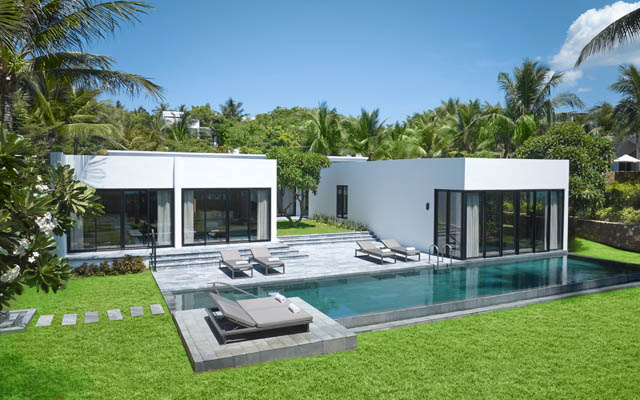
The resort will feature 116 villas with full ocean views, with 95 units set within low-rise buildings. Each floor of the building will host two sky villas each, served by private elevators and enhanced by an outdoor terrace and private swimming pools.

Another 21 stand-alone beach villas offer 165m2 in space and equal-size outdoor space encompassing an arrival courtyard, garden, large private pool and high walls to ensure privacy. The 695m2 Presidential Villa will come with three bedrooms.

There will also be 47 villa residences of up to six bedrooms in size available for purchase.

When complete, Rosewood Clearwater Bay, Hainan will also offer a bistro, a beachside grill and bar, a high-end specialty restaurant, a 320m2 residential-style Pavilion meeting and event space, as well as outdoor function areas.

These are further complemented by a spa with six treatment rooms, gym, tennis court, open-air tai chi and yoga deck, recreation centre, lap pool and children’s pool.

Rosewood Clearwater Bay, Hainan is the group’s fourth property on mainland China after the Rosewood Beijing opened last year. The Rosewood Sanya and Rosewood Guangzhou are both due to open in 2017.

Hong Kong authorities reject application for Jetstar Hong Kong

0

JETSTAR Hong Kong was met with resistance from Hong Kong-based carriers when plans for the LCC were first announced in 2012. Another spanner has been thrown in the works as its application for a licence to operate scheduled flights has been denied.

The city’s Air Transport Licensing Authority rejected Jetstar Hong Kong on the grounds that the carrier’s majority foreign ownership make-up meant its main place of business was not in Hong Kong, reported The Australian.

An airline is only allowed an operating licence if Hong Kong is made its principal place of business and decision-making centre, according to Hong Kong law.

Jetstar Hong Kong is a joint venture between Hong Kong’s publicly listed Shun Tak Holdings, China Eastern Airlines and the Qantas Group, each holding one-third of the shares.

A Qantas Group press release said Shun Tak ultimately holds control of the airline with 51 per cent of voting rights, while 70 per cent of the Jetstar Hong Kong board is from Hong Kong.

Reacting to the news, Qantas said it “will work with its fellow shareholders in Jetstar Hong Kong to review the enterprise”.

Meanwhile Qantas Group CEO, Alan Joyce, said: “It’s the travelling public who have lost out, because the message from this decision is that Hong Kong appears closed to fresh aviation investment even when it is majority locally owned and controlled.

“At a time when aviation markets across Asia are opening up, Hong Kong is going in the opposite direction. Given the importance of aviation to global commerce, shutting the door to new competition can only serve the vested interests already installed in that market.”

Kazakhstan adds more countries in visa-free programme extension

0

ASTANA is extending its pilot programme offering visa-free entry for 10 countries in a bid to grow inbound tourism and reduce tourism trade deficit.

Piloted in 2014, the year-long scheme offered to 10 countries – France, Germany, Italy, Japan, Malaysia, Netherlands, South Korea, the UAE, UK and US – would have expired on July 15.

Under the new extension, the 10 countries initially given the visa-free entry will continue to enjoy the facility until 2016*. Kazakhstan is also including OECD countries and Singapore into the programme, though these markets will be brought on board gradually between now and 2016.

Timur Duisengaliyev, director of the Tourism Industry Department, said at a press conference yesterday that the pilot project had been reviewed and found to be most beneficial to business tourists.

“One year is not enough to benefit leisure inbound tour operators who need a longer duration to see results from their marketing efforts,” he said.

The Tourism Industry Department is looking at setting up overseas marketing representation offices in China, India and Russia, possibly by the end of 2015, as these three countries have the capability of “generating high volumes of inbound tourists” for Kazakhstan.

Duisengaliyev said the department is looking at Malaysia as a model to develop standards for halal tourism as well as international promotions.

Tourism is still a new industry in Kazakhstan and contributes about 1.5 per cent of the nation’s GDP.

[CLARIFICATION] Kazakhstan’s Tourism Industry Department has clarified that the visa free policy has been extended for only one year from July 15, 2015, and not up to 2017 as stated earlier

Browns Group expands out of Sri Lanka with 2 Maldives properties

0

SRI Lanka’s Browns Group is developing two properties in the Maldives, including the transformation of the iconic Nasundhara Palace, one of the oldest hotels in Male.

Browns Hotels and Resorts CEO, Thilak Selviah, said the 34-year-old Nasundhara Palace, closed earlier this week for reconstruction, will be converted into a four-star hotel with 150-rooms and 100 apartments.

The 31-room, previously government-controlled hotel was a popular convention and meetings place in the city.

Last October the company signed an agreement with Nasundhara’s owner, Alpha Kinam Holdings and NPH Investment, under which Browns’ is investing US$9.5 million in the development and eventual control of the property.

Meanwhile, the company will also develop Bodufaru Finolhu in Raa Atoll to develop a resort, which it acquired from Bodufaru Beach Resort in a US$1.5 million transaction in January. The Maldivian company has a 50-year lease for this island.

Browns, relatively new to the Sri Lankan leisure sector, has three properties in Sri Lanka, totalling 308 keys. This includes an agreement with Starwood Hotels and Resorts to manage the five-star, 172-room Sheraton Kosgoda Turtle Beach Resort property on the southern coast, due to open later this year.

Discovery Kartika Plaza Hotel has new GM

0

JACQUES Clarijs has been picked to lead Discovery Kartika Plaza Hotel as general manager.

A Capetonian by birth, Clarijs has been working in hotels all over the globe for the past 18 years, including the Cotton House Hotel in the Caribbean and Nyaman Villas Bali.

Lifestyle and design: Aren’t they the same?

0

Where do you draw the line between a ‘lifestyle hotel’ and a ‘design hotel’? How can design hotels stay edgy as new brands keep entering?

New ‘lifestyle’ brands such as Radisson Red, Venu, Vib and Jen are joining earlier entries such as W Hotels, CitizenM and Indigo to attract Millennial-minded customers. They look and feel like design hotels. In this roundtable, designers and design hotels discuss with Raini Hamdi the future of design hotels amid new concepts such as ‘lifestyle’ hotels:

Design-oriented, technology-savvy and culturally-attuned, aren’t ‘lifestyle’ hotels competition for design hotels?
NERI Professing is different from reality. We obviously have to see the result before making an opinion.

SCHWALIE The guest profile is constantly evolving, so hotels and brands need to adapt their strategies to meet societal and lifestyle trends. This new crop of lifestyle brands is doing just that, targeting the customer who has an eye on technology, who wants to be among like-minded people through networking spaces, etc. We at Design Hotels have always had our pulse on trends right from the beginning. Design is not a superficial marketing tool, and it is an element that breathes and grows with its environment.

AICHER Having realised modern travellers’ yearning for a point of differentiation and unique hotel stay experience, it has become a strong trend among established, big hotel chains to create brand clusters which exude a lifestyle feel, or are design-oriented. We believe that while each brand has a potential to succeed, being an individual hotel property which constantly reinvents its service promise, seeks ground-breaking service propositions – handy smartphones, electric eco-friendly limousine transfers, creative thematic coffee breaks – keeps us at the forefront of the competition.

NAGATA Unfortunately these new brands do not represent competition for design hotels. Design hotels will always be design-focused while lifestyle brands have been created to capture segments of the market that chains are unable to attract with their more traditional brands.

BECK Definitely there are more ‘lifestyle’ choices available than a few years back… We’re quite excited to see how other brands interpret this concept and how they will distinguish themselves from the current players. Competition, yes for sure, but isn’t that what makes the design world exciting and pushes quality?

How do design hotels stay ahead of the new ‘lifestyle’ breed?
SCHWALIE They push the boundaries of design, experience and technology. For example, the growing movement in beacon and other mobile technology allows them to customise a guest visit. Knowing in advance what the guest’s preferences are allows for a more intelligent and personalised service. In terms of the experience, authenticity is the key. Whether for business or pleasure, lifestyle travellers seek places where the architecture, design and ambience reflect the local environment and offer an authentic experience. The challenge is proving that you have a vision, that there is some substance behind the glossy marketing, that differentiates your hotel from the copycats. It is all about individuality, personalisation, recognition, self-education and sustainability.

One of our new member hotels in Umbria, Eremito, is encouraging travellers to make time for themselves and truly get away from it all. With single rooms that evoke the cells of monasteries and an atmosphere that encourages contemplation and soul-searching, they are pushing

the boundaries of solo travel. They have silent dinners in the restaurant; there is no Wi-Fi, TV or phone – the experience is truly about digital detox and self-discovery.

Hotels have also started to immerse their properties within a village environment. Examples include Hotel Hotel in Canberra and Ham Yard Hotel in London. A guest is only a few steps away from the local community and activities, from a haircut, cinemas and theatres to flower shops, a bowling alley or library.

AICHER Both individual travellers and meeting organisers expect certain services to be included in their stay. The Mira Hong Kong has been offering free Wi-Fi since its opening in 2009 – imagine, there are still hotels out there charging you for Wi-Fi or limiting the number of devices you can connect! We listen to our guests and we regularly meet up with department heads to discuss their needs. It’s not always easy to predict what the next step is, but in most cases it’s about the basics.

Who are the current trendsetters in design hotels?
NERI We think André Balazs is always pushing the boundary especially with the Chiltern Firehouse. He has the notion of a winter garden, so he placed a bar in the middle of a space that is usually given to a lounge area. His rooms are large and eclectic.

Also, the Soho (House club) and its community of creative individuals. Edition by Ian Schrager is also interesting. In Asia, Alila as a group is bringing a lot of sophisticated products and The Unlisted Collection has an eclectic mix.

SCHWALIE Eremito, as mentioned above, is right in the heart of the trend towards digital detox and self-discovery. The Firmdale Hotels is also the group to watch.
Georgia is becoming a popular destination and we have two new member properties there, Rooms Hotel Kazbegi and Rooms Hotel Tbilisi. A new opening that is on everyone’s radar this year is Les Bains in Paris, a hybrid development encompassing a club, performance space, a restaurant and bar, and 39 luxury rooms and suites.

BECK The Indigo brand has been successful and is one of the first design hotels in Asia. We’re thrilled that HBA recently completed Indigo Bangkok Wireless Road, the first Indigo in South-east Asia. The vibrancy and bright colours of Bangkok really suit the concept of Indigo and we found lots of inspiration around its energetic neighbourhood to integrate into the design. We are looking forward to more Indigo hotels opening in Asia, but it will also be interesting to see how other brands, for instance, CitizenM, adapt to the local style.

But it seems there are more trendsetters outside Asia.
NAGATA The current trendsetters are primarily in the US. But brands like Ace Hotels, CitizenM and Thompson Hotels are all looking to expand into Asia where there is huge demand. While we see many Millennial-focused restaurants like Potato Head, no one has successfully created a Millennial-focused design hotel.

SCHWALIE Europe continues to be our strongest market, both for new hotels in the pipeline and (as market source).
Overall we are targeting a 10 to 15 per cent growth this year for Design Hotels. In 2014, room revenue into our hotels closed at 189 million euros (US$208 million) compared with 160 million euros in 2013, both through distribution performance and a portfolio net growth of 20 hotels. For 2015, we expect room revenue to surpass 220 million euros and for us to reach a portfolio of over 300 hotels.

What trends are design hotels embracing and why?
NERI A strong social agenda. You see it in Ace Hotel in New York, the Camper hotels in Berlin and Barcelona, Amanpuri in Phuket, Eet Heim in Stockholm, Chiltern Firehouse in London, etc.

Amanpuri, for example, creates a courtyard surrounding the pool and all activities are held in this courtyard. With Eet Heim, the domesticity of the hotel makes interaction easier.

NAGATA Creating new experiences and locally relevant interiors. As hotel guests are inundated with so many experiences, it is becoming harder to curate unique experiences. Fairmont Sanur, for example, has outdoor living rooms and a submerged spa to create such new experiences.

The other trend is to create spaces as if they were born out of the land through the innovative use of local materials and textures. The floor of the guestroom at Fairmont Sanur, for example, is laid out in a handmade grayish green ceramic tile. The colour and texture of the tile, along with the local sandstone walls, help in creating a design respectful of its location.

BECK The lobbies are undergoing the biggest change, from large halls that people just pass through, to smaller, intimate spaces that invite people to stay, lounge, work and socialise. The traditional set-up of people working from their office desk is shifting; people want other spaces to work where they can order a coffee, sit on a comfortable lounge chair and socialise with other travellers while working on a laptop or tablet. The traditional reception desk will soon be merely a part of the lobby, especially with the introduction of self check-in stations and mobile check-in.

Rooms are also changing. Guests like to get the most flexibility out of the room, to be able to work not only from their desk but various locations. They love to have a comfortable bed but would not want to pay for unnecessary things. As a result, some brands omit the bathtub for a more spacious, luxurious shower, for example.

What is the biggest challenge facing design hotels?
NERI So many similar hotels. The challenge is to go beyond the buzz and the opening hype.

NAGATA Brand recognition. In today’s society, where we have so many choices, the recognition of design hotels as a strong brand versus the international chains is often a challenge.

BECK Initially, design hotels were created out of a desire to change the way the
hotel industry works. To not follow one design scheme where all hotels look and feel alike, but to create identities, to rethink what hotels need to be, how to respond better to guests’ evolving needs and build a product that’s based on the people using it. The 21st century guest was the main focus and the concept of the hotel included design, but also technology and service. The challenge will be not to forget that.

Great design does not only look good but is practical and comfortable, making guests feel good when they are using it. Technology should be user-friendly with switches and power sockets in the right place and is easy to understand.

In some cases, we put design above everything; we forget what it’s all about originally. As lifestyles change, we must constantly reflect on who we’re designing for.

AICHER We believe that the most successful design hotels keep guests not only comfortable during their stay, but in a constant state of awe with the hotel designer’s creative vision. And so, style, comfort and functionality are all important factors which need to be fitted in perfect proportions into the overall concept. Being intuitive and user-friendly cannot be forsaken. This often boils down to simple things like light controls, connectivity, etc.

As a hospitality service provider we love delighting customers, we are passionate about design and we connect like-minded people in fond memories.

26jun-arno

26jun-clint-sabine

26jun-lyndon-gerhard

Kuala Lumpur as haven for foodies

0

Kuala Lumpur is striving to become the region’s gastronomic hub, calling enthusiasts’ attention to its first food festival and F&B standards rating system, among other initiatives.

29jun_malaysia

Think food, think Kuala Lumpur! That’s the message Kuala Lumpur City Hall’s tourism unit and the mayor of Kuala Lumpur hope to drive across to tourists, with intensified efforts to position the Malaysian capital into a gastronomic haven of South-east Asia and to develop a comprehensive standards framework, as outlined in the Tourism Master Plan 2015-2025.

Many initiatives were thus introduced in 1H2015. The tourism unit organised Malaysia’s first-ever gourmet food festival, Kuala Lumpur Big Kitchen Festival 2015, in the city from May 29 to 31 at Dataran Merdeka (Independence Square). Food trucks and stalls served all kinds of local, fusion and gourmet items, offering visitors plenty to sample. A hotel dining section satisfied those seeking a finer dining experience.

Kuala Lumpur’s food ambassador,  Norman Musa – who is also the executive chef and co-founder of Ning restaurant in Manchester, UK – as well as other local celebrity chefs conducted cooking workshops and demonstrations to ‘edutain’ attendees on the variety of Malaysian dishes. One of the highlights was the KL Big Kitchen, Big Race, in which 12 pairs of participants raced between Merdeka Square and Chow Kit wet market to retrieve ingredients missing from recipes, drawing on clues provided at different legs of the race.

In fact, in conjunction with ITB Berlin in early March, Norman had given a cooking demonstration to the travel trade and international media at Berlin’s Kochatelier. That was part of his 2015 European tour covering also Paris, Amsterdam and London to demonstrate the art of Malaysian cooking and promote the city’s gourmet scene through a series of hands-on cooking ateliers.

Kuala Lumpur City Hall’s tourism unit has also recently produced a Food Trails map in association with popular lifestyle publication, TimeOut Kuala Lumpur, for FIT  travellers and tour operators to include in their itineraries.

“The map is a great way for travellers to navigate their way through the food streets of the city,” said Noraza Yusof, head of tourism, Kuala Lumpur City Hall.

The idea is to give exposure to and highlight the culinary attractions in five areas, namely Kampong Bharu, Old Kuala Lumpur, Jalan Alor, Jalan Pudu and Brickfields, covering cuisines of the city’s main ethnic communities of Malays, Chinese and Indians.

The Kuala Lumpur Food & Beverage Quality Assurance rating programme, introduced in February, was part of the tourism unit’s efforts to develop a comprehensive standards framework for dine-in establishments. It is also intended to allay food hygiene concerns among foreign tourists. Food outlets that have been rated will sport ‘Quality Assured Restaurant Kuala Lumpur’ stickers.

Ahmad Phesal Talib, mayor of Kuala Lumpur, said: “This new initiative is meant to raise the standard of F&B establishments and facilitate service excellence. Food outlets are audited based on global industry standards and accreditation is valid for two years and renewable.”

Targeted at dine-in establishments such as fine dining restaurants, café, bistros and fast food chains, the audit covers areas such as hygiene, cleanliness, facilities and amenities, customer service, food variety and presentation, as well as safety and security.

Ahmad Phesal added: “Those who have not yet met the minimum standards required will be provided with a report identifying areas of improvement, in order for them to upgrade themselves to reach the minimum score for accreditation.”

Chaîne des Rôtisseurs Malaysia Chapter president, Jagjit Singh Sambhi, suggests that City Hall also provides a listing of accredited restaurants to make it easy for locals and tourists to identify them.

Meanwhile, the city’s iconic street food paradise of Jalan Alor is set to get a major facelift for a more pleasant ambiance. City Hall will invest RM12 million (US$3.4 million) to upgrade the food street through improvements in the drainage system, landscaping and cleanliness. The project is expected to commence in July and be completed within a year.

Luxury Tours Malaysia senior manager, Arokia Das, opined: “It is great that City Hall is taking efforts to improve Jalan Alor, which is so well known among Singaporeans and Thais. Every kind of local food can be found there to suit all palates.

“Food is very important for tourism. Asians and Westerners love to try the local cuisine, and this is one great way of promoting the city – through people’s stomachs. This initiative should have been carried out a long time ago, and it is great that City Hall is putting so much passion into it!”

This article was first published in TTG Asia, June 19, 2015 issue, on page 21. To read more, please view our digital edition or click here to subscribe.

Hutchison parts ways with Priceline

0

FORMER Hutchison-Priceline Travel has come into its own and is now called Hutchison Travel.

Parent company CK Hutchison Holdings repurchased the equity interest from US-based Priceline Group, effectively bringing Hutchison Travel completely under its wing.

Hutchison Travel has two brands under its umbrella – the international OTA and recently rebranded hutchgo.com, and full-service business travel management division, Hutchison Corporate Travel.

Despite the rebranding, Hutchison will remain unchanged in terms of management structure, business practice, day-to-day operations, office location, contacts, etc.

Starting June 27, all visits to priceline.com’s Asian websites will be redirected to the www.hutchgo.com website.

CK Hutchison Holdings was one of the pioneers in offering online travel services as part of e-commerce operations in Asia in 2002, said a Hutchison statement.

Khao Yai upscaled

0

Nature is no longer Khao Yai’s only draw as high-end accommodation and other offerings keep being added to the national park.

29jun_thai

High-end hotel openings and new attractions are drawing more Asian travellers to Khao Yai, as well as helping put the destination on the radar of those with big budgets. However, travel consultants say most longhaul tourists continue to be drawn to the area by the abundant nature and treks that can be experienced in and around the national park.

Dong Phayayen-Khao Yai Forest Complex, in which the park is located, is a UNESCO World Heritage Site which spans 230km east of the Thai-Cambodia border and is home to some 800 species of birds, mammals and reptiles, including a number of endangered animals. This, and its proximity to the capital – about a two-hour drive on a good day – makes Khao Yai a popular extension to a Bangkok trip or longer tour of the country.

Andre van der Marck, vice president of Khiri Group, said recent hotel openings have helped the destination move upscale.
“The recent development of five-star properties has helped us sell the destination to upper-market clients who were not interested in the destination before due to the lack of five-star accommodation,” he said, adding that most of Khiri’s clients who opt for Khao Yai are nature enthusiasts, active tourists and repeat visitors focused on the environment and are not overly bothered about staying at high-end resorts.

“(A key reason) why we like to include Khao Yai in packages, apart from its ideal location, is the variety of hikes and treks and levels of difficulty. There are dozens of varied jungle trails that can be offered to hikers from first-timers to experienced trekkers. (Our) treks are always conducted by a local ranger from the national park.”

Khiri offers a number of one- to four-day packages in Khao Yai, and van der Marck said the destination can also be incorporated with a trip to Ayudhaya or to the company’s tented camp in Banteay Chhmar in nearby Cambodia.

Beyond the national park and surrounding area, Khao Yai’s longstanding attractions include Farm Chockchai, which runs educational tours, as well as a number of wineries and golf courses dotting the hills. A diverse range of smaller-scale products have also entered the market, such as Secret Art Garden and Khao Yai Art Museum. More recently, educational farm and equestrian centre, Farm Mor Por, as well as integrated amusement park, water park and mall, Scenical World, have come online.

The destination has also become increasingly popular with the domestic market, in particular Millennials from Bangkok. This has fuelled the groundswell of design-focused hotels and contemporary restaurants which have opened along Thanarat Road in Pak Chong district.

Tourism Authority of Thailand (TAT) has also been more actively promoting Khao Yai over the past two years, both to support the local industry currently suffering from low occupancy during the week and to relieve the pressure on Bangkok from the influx of arrivals from China and Russia.

TAT said its efforts have netted significant results. “Over the last two years, Khao Yai has attracted an increasing number of foreign visitors, including golfers from South Korea, Taiwan, Malaysia and Indonesia,” said a spokesman from TAT’s Nakhon Ratchasima office, which is responsible for the area.

“The tourism promotion of Khao Yai focuses on positioning the area as a single destination, but with an option of onward travel to Phimai Historical Park or vice versa. The length of stay is about two days/one night or three days/two nights.”

He too, said the addition of new hotels has also provided a boon for business.
However, the upswing in domestic tourism and groups from China and Russia is not without challenges, opined van der Marck. “Loads of local tourists can be quite disturbing for our clients, who usually travel as couples or in very small groups. They are not prepared to see so many people at the park entrance. But once inside under the lead of the ranger, expectations are always exceeded.”

Khao Yai also has to compete with more established Thai destinations such as Chiang Mai in the north and Khao Sok in the south. Tobias Fischer, business development director of Go Vacation Thailand, said while the park has long been part of its tour programme, most of his European clients still prefer Kanchanaburi “because of the border to Myanmar, the history, the Mon hilltribes and the river”.

He added: “But Khao Yai National Park is closer to Bangkok. It’s also the perfect gateway to Isaan. With a growing offer of activities, hotels and golf courses, we see growing demand mainly from our repeat clients.”

This article was first published in TTG Asia, June 19, 2015 issue, on page 24. To read more, please view our digital edition or click here to subscribe.

Paradise Cruises gives fleet a luxury facelift

0

dn250515_paradiseluxury_paradisecruises
Source: Paradise Cruises

HALONG Bay cruise operator Paradise Cruises is renovating its fleet to refresh its look and feel.

Renovation of its four Paradise Luxury boats commenced in May and is expected to finish in August.

Each of the 17 cabins will be installed with new wooden floors, ceilings, curtains, carpets and beds, while most of the new furnishings, including the Asian-inspired tables and chairs that adorn the dining rooms, are handmade.

“We’re calling the beds ‘dream beds’ because they have eight different layers (of cushion),” said Edgar C Cayanan, general manager of Paradise Cruises. “The goal was to make them feel more like home than your home, and I’m confident guests will find that we’ve achieved that.”

Each four-deck Paradise Luxury vessel is 41.5m long and features restorative amenities, including a spa, bar and public Jacuzzi.

In addition to the Luxury line, Paradise Cruises operates three other lines – Privilege, Peak and Explorer. While the Paradise Explorers are primarily day boats, the Paradise Privilege boats have three cabins each while the Paradise Peak is designed to hold up to 16 passengers.

The company intends to renovate the Privilege and Peak lines next year.