Hong Kong Airlines
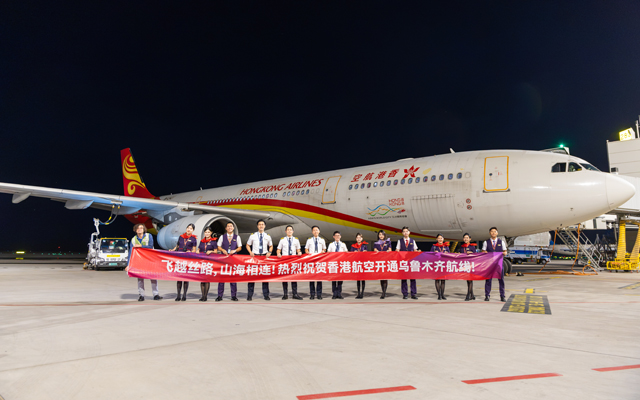
Hong Kong Airlines launched its first direct service between Hong Kong and Urumqi on August 29. Operated by an Airbus A330 wide-body aircraft, the twice-weekly service will further strengthen connectivity between Hong Kong and Northwest China. Hong Kong Airlines flies from Hong Kong to Urumqi every Tuesday and Saturday; the return flights are every Wednesday and Sunday.
Malaysia Airlines flies to Fukuoka five times a week
Malaysia Airlines
Malaysia Airlines has resumed its Kuala Lumpur-Fukuoka services on September 2. The service is operated on a Boeing 737- 8 and offered five times a week. With this, Malaysia Airlines now flies 26 flights weekly to three gateways in Japan, with the others being Tokyo (via Narita) and Osaka.
Strong demand turns Etihad Airways’ service to Gothenburg into a year-round arrangement
Etihad Airways
Etihad Airways will turn its new Abu Dhabi–Gothenburg service into a year-round operation in response to strong market demand. Originally introduced three weeks ago as a winter-only service, the new Abu Dhabi–Gothenburg flights witnessed intense demand from both ends of the route. The Abu Dhabi–Gothenburg operations will begin on December 17, 2026 with four flights a week, operated by on the Airbus A321LR with two First Suites, 14 Business seats, and 144 in Economy.
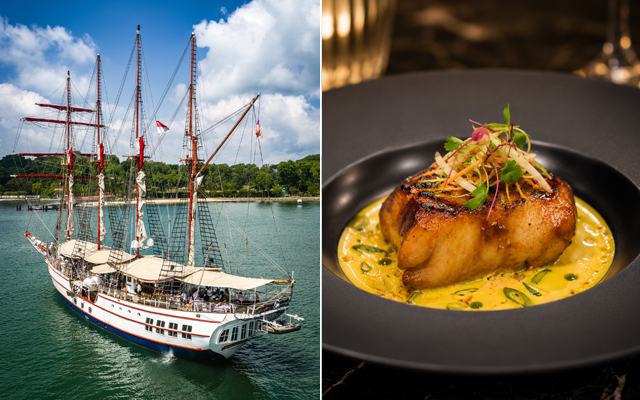
Visitors can now combine a three-course lunch aboard the Royal Albatross with a speedboat journey through Singapore’s Southern Islands, as Tall Ship Adventures launches a new dine-and-sail experience.
The new Albatross Island Restaurant (AIR) sees the Royal Albatross operate as a daytime restaurant while continuing its evening sunset dinner cruises. Guests can travel by Albatross Speedboats from Marina South Pier, Singapore Oceanarium at Resorts World Sentosa or Siloso Beach before boarding the ship, which is anchored off Lazarus Island.
MasterChef Singapore winner Inderpal Singh curates the menu at the new Albatross Island Restaurant
Following lunch, guests may continue exploring Singapore’s Southern Islands using the same speedboat network, to neighbouring islands such as St John’s Island, Kusu Island and Sisters’ Islands.
Tall Ship Adventures aims to create an integrated marine lifestyle destination around the Royal Albatross, combining dining, marine transport and island exploration.
At the helm of the new restaurant is MasterChef Singapore winner Inderpal Singh, who has developed a lunch menu inspired by the region’s spice routes and regional flavours, and with families and leisure travellers in mind. A vegetarian set menu is also available.
Albatross Speedboat Adventures (ASA) has begun daily scheduled hop-on, hop-off services connecting Marina South Pier, Resorts World Sentosa and Siloso Beach with the Southern Islands.
AIR is Singapore’s first tourism product to integrate scheduled marine transportation with destination dining aboard a permanently anchored hospitality venue.
The ship is also available for themed themed events, brand activations, corporate functions, celebrations and community experiences.
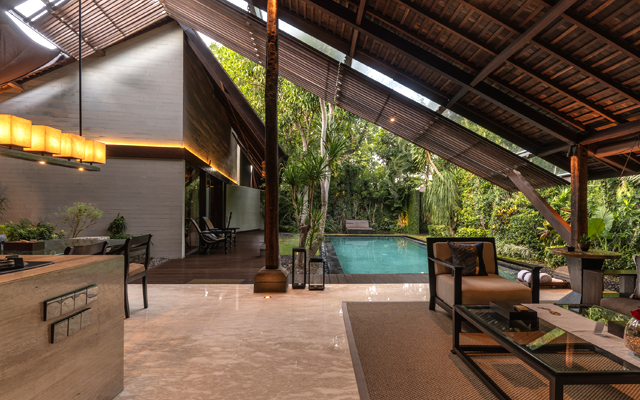
Preferred Hotels & Resorts has added four hotels in Bali to its global portfolio, bringing its total number of member properties in Indonesia to five.
The additions – Ametis Villa Bali in Canggu, Nuju Uluwatu in Uluwatu, Samsara Ubud in Ubud, and The Meru Sanur in Sanur – take the group’s South-east Asian portfolio to 25 properties across seven countries.
Ametis Villa Bali in Canggu is among the latest additions to Preferred Hotels & Resorts’ portfolio
“We are pleased to strengthen our presence in Indonesia with the addition of four distinctive independent hotels in Bali,” said Christine Tan, area managing director, Southeast Asia, Preferred Hotels & Resorts.
“As demand for authentic, experience-driven luxury travel continues to grow in the region, these new member properties enhance the diversity and competitiveness of our regional portfolio while providing travellers and our industry partners with greater choice in one of Asia-Pacific’s most sought-after destinations. Their addition reflects our long-term commitment to expanding our footprint across key growth markets in South-east Asia, including Indonesia, Thailand, and Vietnam.”
The four properties span different segments of Bali’s hospitality market, from private villas and boutique retreats to beachfront resorts.
They participate in the group’s I Prefer Hotel Rewards programme.
Series presents real action taken by tourism organisations to support long-term social, cultural, environmental and economic outcomes
Responsible tourism has evolved towards creating a net-positive impact on the environment, communities and culture
Successful social media use in tourism should be defined by positive tourist behavioural change, conservation contributions, ecological impact, and other non-traditional KPIs
Films examine approaches to destination stewardship, climate action, community participation, responsible innovation, workforce development and regional cooperation
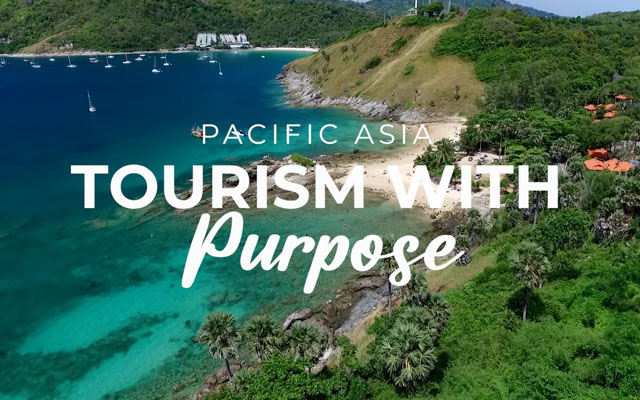
PATA has partnered with Content With Purpose to create a new digital series that looks beyond tourism recovery and visitor numbers alone, to explore what meaningful, long-term tourism growth across Asia-Pacific needs to look like.
Named Pacific Asia: Tourism with Purpose, the content initiative coincides with PATA’s 75th anniversary.
The films examine approaches to destination stewardship, climate action, community participation, responsible innovation, workforce development and regional cooperation.
Content partners include Hainan University-Arizona State University International Tourism College, Hawai‘i Tourism Authority, Hong Kong Metropolitan University Lee Shau Kee School of Business and Administration, Marianas Visitor Authority, Song Saa, The Luxury Signature, and Travelife.
The series also brings together perspectives from tourism leaders, policymakers, academics, entrepreneurs and practitioners, including PATA CEO Noor Ahmad Hamid; Korea Tourism Organization’s executive director for the Americas Insook Lee; TTG Asia Media’s group editor Karen Yue; PATA Nepal Chapter’s advisor Deepak Joshi; PATA ambassador for Greater China Soon-Hwa Wong; and Booking.com’s head of public affairs, Asia Pacific Yang Li.
The series reflects PATA’s commitment to advancing a meaningful Pacific Asia tourism economy – one in which tourism supports long-term social, cultural, environmental and economic outcomes.
PATA CEO Noor Ahmad Hamid said: “As PATA celebrates its 75th anniversary, Pacific Asia: Tourism with Purpose reflects our ongoing commitment to sharing knowledge and showcasing practical solutions that support the future of tourism across the region. Through inspiring stories from destinations, businesses and communities, this series highlights how collaboration, innovation and responsible leadership can create lasting benefits for both people and places. We are proud to partner with Content With Purpose on this initiative and hope it inspires others to help shape a stronger, more resilient visitor economy.”
Additional films and supporting content will continue to be released following the main launch on September 8, allowing the series to build over the coming months.
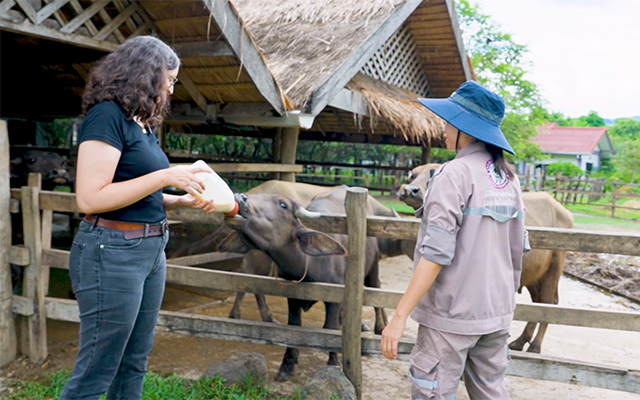
Laos Buffalo Dairy improves the life of the local farming community and provides Khiri Travel’s guests with an opportunity to enjoy fresh dairy produce
Principles in practice: beneficial tourism With Khiri Travel, the series presented an example of how tourism can create local economic opportunity while supporting conservation, culture and community. The episode traces Khiri Travel’s partnership with Laos Buffalo Dairy in Luang Prabang, which rents some 200 female buffalo from local farmers. The farm feeds, vaccinates, and looks after both the buffalo and their calves as the buffalo are milked daily for about six months. Fresh dairy products from the farm draws Khiri Travel’s guests who come for fun and interactive tours as well as to enjoy an all-natural menu. The collaboration allows tourism to contribute to the farm’s efforts in raising healthier herds, establishing rental income for families, and providing practical experience for teachers and students from the Northern Agricultural College in Luang Prabang.
Reflecting on Khiri Travel’s long-term contribution to responsible tourism development, Willem Niemeijer, founder of Khiri Travel and CEO of Yaana Ventures, which incubates, grows, and operates brands in sustainable tourism, impact hospitality, and travel technology, told TTG Asia: “From the beginning, we wanted to make our workforce and supply chain as local as possible. Tourism is all about people: it is people who make both the destination and the experience.”
Niemeijer shared that his team recognised the “importance of sidestepping the trajectory of extractive tourism” right from the early days of tourism in Cambodia, Laos and Vietnam. Thus, Khiri Travel focused on developing experiences that celebrate cultural traditions, contribute to the conservation of the natural environment, and improve local livelihoods.
“We have always operated with the optimistic belief that tourism, when practised properly, can be a force for good,” he said.
“Over the years, responsible tourism has not only become more mainstream; the ambition has evolved towards creating a net-positive impact on the environment, communities and culture. It is not a simple journey, but it is an inspiring one. Along the way, we have also built a fabulous, aligned and loyal global client base, proving that doing things the right way makes solid business sense,” he added.
Bricker: destinations need to stop judging social media success primarily by impressions, followers, or arrival numbers
Principles in practice: purposeful social media content With Hainan University-Arizona State University International College, the series explores the impact social media has on visitor growth and how destinations can keep local culture and communities at the centre of tourism development.
Kelly Bricker, associate dean of Hainan University-Arizona State University International College, challenged the assumption that the purpose of social media is simply to generate more visitors.
Bricker said: “Good destination marketing should generate the right visitation, in the right places, at the right times, and with the right behaviours. Social media is extraordinarily powerful at creating demand, but we have seen how quickly a beautiful trail, beach, village, or cultural site can become overwhelmed once it goes viral. So, destination marketers need to think of social media as a visitor-management tool as much as a promotional tool.”
She urged marketers to use social media for dispersing visitors geographically and seasonally, by introducing lesser-known places with the capacity and community desire to receive visitors, promote shoulder seasons and different times of day, and connect social content with reservation systems, transportation information, capacity limits, and real-time visitor information.
“Ultimately, I would like destinations to stop judging social media success primarily by impressions, followers, or arrival numbers. I would much rather see KPIs around visitor dispersal, length of stay, local expenditure, resident sentiment, conservation contributions, behavioral change, and ecological impact,” she added.
When asked for best examples of destination marketing that was built around local culture and communities, Bricker pointed to the initiatives of Indigenous Tourism British Columbia and Palau.
Indigenous Tourism British Columbia positions indigenous people as storytellers. Content explicitly emphasises experiences through indigenous stories, indigenous-owned businesses, living cultures, and relationships with the land.
“That distinction is tremendously important. Authenticity isn’t something a marketing agency manufactures. Authenticity comes from giving communities agency over how their cultures, traditions, landscapes, and stories are represented,” stated Bricker.
Meanwhile, Palau’s Palau Pledge campaign is tied to environmental and cultural behaviour, and is integrated into the visitor experience rather than existing simply as an advertising slogan.
“What makes that campaign so powerful is that the destination story comes from Palau’s own values and particularly from its children and future generations. Visitors are essentially told they are welcome here, but visiting this place takes responsibility,” she stated.
The common thread linking these two powerful examples is that “the destination is not the hero of the story, the people and the place are”, Bricker told TTG Asia.
The way forward Both Bricker and Niemeijer have practical advice for Asia-Pacific’s travel and tourism industry to truly uphold responsible tourism development.
Niemeijer warned that short-term thinking, the concentration of development around established hubs, fragmented standards, and the perception that sustainability is an additional cost rather than an essential part of building a resilient business are the biggest hurdles to responsible tourism develop in the region.
He said: “Travellers generally support responsible tourism in principle, but their willingness to pay significantly more for it remains limited. This is where organisations such as The Long Run can be tremendously helpful. Its members share valuable knowledge and experience, with the understanding that a rising tide lifts all boats. No business becomes perfectly sustainable overnight; what matters is making measurable progress, being transparent about shortcomings, and continuously improving.
He believes that enforcement and encouragement are distinct and relevant concepts in responsible tourism development.
He explained: “Governments must enforce clear, consistent minimum standards in areas such as environmental protection, waste management, labour practices and land use. Visitor dispersion is also critical to sustainable tourism growth. Governments and the industry should actively encourage international, as well as domestic, travellers to venture beyond the established tourism hubs.
“But regulation alone will not create genuinely responsible tourism. Industry associations, the wider supply chain and travellers must also reward businesses that go beyond the minimum. Credible, proportionate certification can help, particularly when it is accessible to smaller businesses and does not become an expensive box-ticking exercise available only to the larger players.”
Both Niemeijer and Bricker believe that the time has come for responsible tourism to be normalised as a concrete part of business.
Bricker said: “I would like to see recognised sustainability requirements increasingly incorporated into planning approvals, tourism concessions, government procurement, destination investment, financing, licensing, and public-private partnerships. We already have international frameworks such as the GSTC Criteria that establish baseline expectations for sustainable tourism. The next stage is moving much more consistently from commitment to measurement, verification, reporting, and accountability.”
She also urged the adoption of a nature-positive tourism model, with a focus on ensuring that tourism contributes to biodiversity conservation, ecosystem restoration, climate resilience, cultural preservation, and improved community livelihoods. In addition, the definition of tourism performance needs to move away from arrival numbers to considerations such as tourism’s positive impact on host community’s quality of life, conservation of values, assets and sense of place, and the ability tourism has to lift the natural environment.
What gap in the market was Far East Hospitality (FEH) originally seeking to fill with Oasia, and how has the brand’s ethos evolved since then?
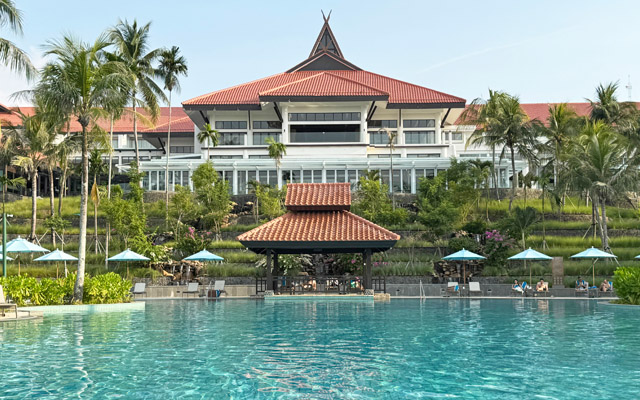
When we opened Oasia Hotel Novena in 2011 as the first Oasia property, the opportunity was to create a restorative respite within an urban environment, making Oasia a destination of choice for wellness-conscious travellers. Over the years, our core purpose remains: Empowering our guests to maintain a sense of balance while travelling. What has evolved is how these pillars are expressed across the Oasia properties, responding to each property’s setting and the needs of our guests.
In what way is the well-being experience different across the different Oasia hotels?
We don’t believe this should be delivered through a standardised set of programmes. Each development responds to its own context, locale and guest profile, while maintaining
Oasia’s focus on helping guests “Refresh, Refuel and Recharge”, with well-being integrated into the overall stay.
At Oasia Hotel Downtown, the building’s award winning biophilic design with its vertical greening and open-air spaces creates a sense of respite within the business district. Even passers-by stop to admire its “green skin”, which I personally find therapeutic. Oasia Hotel Novena takes a quieter urban approach through natural materials, calming interiors and wellness-focused touches.
Oasia Resort Sentosa, by contrast, offers a more immersive, leisure-led stay, with the resort setting giving guests greater physical and mental separation from the city and a menu of activities they can choose from. This is also where we launched Oasia Spa, our first hotel spa brand, as we felt a dedicated spa was integral to the resort experience. We made a deliberate decision to manage it internally, to have greater control over quality and facilities.
How does Oasia Resort Sentosa make wellness available without prescribing a fixed programme?
This is shifting from an optional activity within a trip to becoming part of the decision about where to stay. This is changing how value is defined. Beyond room size, location or price, travellers are also considering whether a stay will help them rest well, enhance their overall travel experience, or return home simply feeling better.
The opportunity is therefore to build a proposition that remains relevant across different guest profiles, trip purposes and lengths of stay, rather than designing around a narrowly defined “wellness traveller”.
Sentosa guests stay an average of two to three nights, so flexibility matters. At check-in, we explain what is available, then let them decide: bath bomb-making, self-guided meditation, in-room yoga, fitness activities, Wellness Lounge workshops or Oasia Spa. For parents, well-being may be the sense of quiet after their children are asleep, so we offer discounted spa treatments during off-peak hours.
Can you share how Oasia Resort Sentosa incorporates wellness into the stay in an intuitive way beyond spa treatments and fitness classes?
For me, holistic wellness means making well-being a part of the stay itself, rather than just being something guests have to book as an activity. It should be felt in the spaces we create, how we help guests rest and recharge, the choices we offer and the way we look after them.
The resort’s neutral hues, natural wood finishes and integrated greenery create a calmer setting, while the minibar includes options such as coconut water and home-made dehydrated fruit to support a healthier stay.
Rest and recovery are also increasingly important across the portfolio. For example, Oasia has a collaboration with Woosa Sleep where selected suites are fitted with Woosa’s sleep innovations, including mattresses with premium memory foam and adjustable bed bases, designed to address common sleep disruptors in hotels and support deep rest.
How do you see wellness hospitality in Asia-Pacific evolving?
Personalisation will become more important because guests are increasingly more specific about what they want. It may be about sleep and recovery, movement, quiet moments or even having fewer demands on their time. The implication for hotels is that programmes will need to become more flexible and responsive, rather than built around a fixed regimen.
At the same time, I expect mental restoration and self-care to become a bigger part of the conversation. Physical wellness can be implemented through gyms, spas and fitness activities. Supporting mental well-being is more complex because it depends on the overall environment, how a space feels, how much friction there is in the guest journey, and whether the experience genuinely gives people room to slow down and reset.
For FEH, this means continuing to evolve as expectations become more nuanced. The priority is to distinguish lasting shifts in guest behaviour from short-term trends and translate those with enduring relevance into meaningful experiences across our spaces, partnerships and service.
This includes continued investment in sleep quality through pillow menus and our Woosa partnership. We are also open to collaborations such as a recent partnership with Glow Festival by Prudential in Sentosa to broaden what is available to guests.
In an open letter to the travel and tourism community, PATA chairman Henry Oh and PATA Foundation chairman Andrew Jones have underscored the impact of accurate destination updates on Nepal tourism’s road to recovery.
Oh and Jones expressed: “As the situation continues to develop, it is important that we provide travellers and tourism stakeholders with an accurate picture of what has been affected – and what has not.
Vast majority of Nepal remains unaffected and continues to welcome visitors; Machapuchare, located north of Pokhara, pictured
“The impact of the floods is significant, but it is geographically concentrated. The vast majority of Nepal remains unaffected and continues to welcome visitors. Kathmandu Valley, Pokhara and the Annapurna region, the Everest and Khumbu region, Chitwan, Bardiya, Lumbini and the Terai, as well as Nepal’s airports and major tourism infrastructure, continue to operate. The affected areas are concentrated along specific corridors, including parts of Rasuwa, Langtang and the Bhote Koshi, where search and rescue and recovery operations are ongoing.
“For international travellers and the tourism industry, this distinction matters. Nepal is a country of extraordinary geographic and cultural diversity, and conditions in one river corridor should not be taken to represent the situation across the entire country.
“We therefore encourage travel businesses, media, travellers and other tourism stakeholders to rely on verified information and to assess travel plans based on the specific destination or route concerned.”
The open letter emphasised that “continued responsible travel to unaffected destinations” will sustain livelihoods for the people of Nepal who depend on tourism.
Oh and Jones defined two courses of action that the travel and tourism community could take to support Nepal.
One, monetary contributions can be made to the PATA Foundation’s Nepal Tourism Recovery Fund, which will go live shortly. It is focused on the recovery of tourism livelihoods – the guides, drivers and porters, and the families running the homestays, lodges, teahouses and small hotels along the affected corridor.
“Many of these families have lost their premises and their equipment as well as their homes, and with them the income they would have earned this season. Helping them rebuild is how income returns to the affected communities, and it is work our industry is well placed to support. This is where we are asking members, their customers and their networks to direct support,” they wrote in the letter.
Two, careful presentation of destination information is priority. Oh and Jones ask travel professionals to “review what their own organisations are publishing about Nepal – destination pages, travel advisories, itineraries and customer service guidance – and to correct anything that describes the country as a whole as affected”.
“This is the main planning and booking season for travel to the country, which makes the accuracy of published information particularly important at this moment,” they stated.
PATA has identified some reliable sources of information: Nepal Tourism Board’s live travel information page via nepalnow.travel; Nepal Police and the NDRRMA; and PATA Nepal Chapter via · www.pata.org.np.
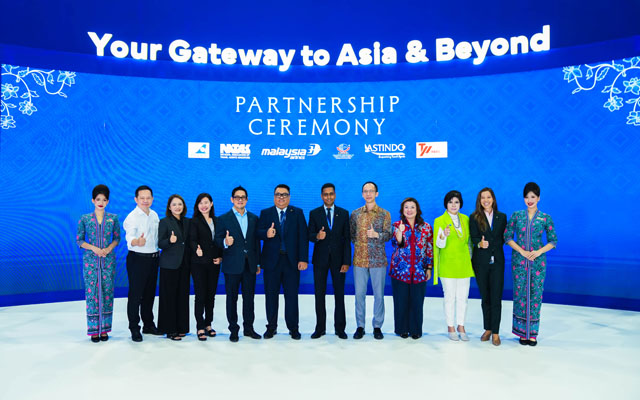
Malaysia Aviation Group (MAG) has inked several partnerships with major travel trade associations across Malaysia, Singapore, Indonesia, Thailand, and the Philippines to position Kuala Lumpur as a primary gateway to Asia.
The parent company of Malaysia Airlines and Firefly aims to boost regional ticket sales, launch joint marketing campaigns, and expand cross-border travel through these targeted alliances.
MAG’s Dersenish Aresandiran (centre), with representatives of South-east Asian travel industry partners at the signing ceremony during MATTA Fair
On home soil, MAG renewed a three-year agreement with the Malaysian Association of Tour and Travel Agents (MATTA), continuing as the Official Airline Partner and Premier Sponsor for all national and state-level MATTA Fair events. In Singapore, the carrier established a partnership with the National Association of Travel Agents Singapore to drive connections and promotional offers through its trade network.
The group also expanded its footprint in Indonesia through a one-year deal with ASTINDO running through August 2027. This collaboration includes both Malaysia Airlines and Firefly to promote regional destinations via the ASTINDO Travel Fair.
In Thailand, MAG signed a one-year agreement with the Thai Travel Agents Association to leverage the Thai International Travel Fair to stimulate outbound demand through Kuala Lumpur. Meanwhile, in the Philippines, a partnership with Travel Innovators via the Travel Madness Expo will target corporate travel, business events, and general passenger growth.
Dersenish Aresandiran, MAG’s chief commercial officer of Airlines, noted that uniting South-east Asian travel associations under a shared framework will strengthen regional connectivity and drive traffic through Kuala Lumpur.
The initiative also aligns with the Visit Malaysia 2026 campaign, using trade networks to build inbound tourism momentum.
Phong Nha-Ke Bang National Park is now attracting visitors who are game for trekking, camping, kayaking and cycling in the area
A growing appetite among younger travellers for nature, soft adventure and meaningful cultural experiences is driving demand for Vietnam’s lesser-known destinations, with domestic tourism helping to pave the way for more international visitors.
“The younger generation is more focused on relaxing and being at one with nature, which is benefitting rural areas and communities. We’re becoming more and more popular with international visitors,” Pham Nhat Nguyen, head of marketing at An Chiang Retreat and Spa in remote northern Ha Giang province, told TTG Asia at ITE HCMC 2026.
Phong Nha-Ke Bang National Park is now attracting visitors who are game for trekking, camping, kayaking and cycling in the area
“Young international visitors are very eager to visit rural areas because the majority grew up in or live in cities,” she said, adding that Ha Giang offers opportunities to experience the cultures and traditions of different ethnic groups, alongside mountain landscapes and nature.
Nhat Nguyen said the visitor mix has shifted from being predominantly domestic to largely international, with travellers from the UK, US and Europe now accounting for the bulk of visitors. Asian markets make up about 30 per cent of the total.
Hien Pham, inbound deputy director at Vietluxtour, also noted growing interest among younger travellers from the US, Australia, Japan and Singapore in destinations beyond Vietnam’s traditional tourist circuit.
She said the growth of community-based tourism in recent years had initially been driven by domestic demand, but the segment is increasingly resonating with international visitors seeking more authentic experiences.
“They are seeking more remote areas where they can engage with local communities, have a cultural exchange and more meaningful experience,” Hien said.
Phong Nha-Ke Bang National Park is also attracting a new generation of visitors looking beyond its famous caves, according to Anh Nguyen of the Phong Nha Tourism Authority.
While the park in Central Vietnam is home to some of the world’s largest caves, including Son Doong and Phong Nha, she said visitors from Australia, New Zealand, the US and the Netherlands are increasingly seeking soft adventure activities, such as trekking, camping, kayaking and cycling.
“Visitors have always come for the caves, but now we have more adventure activities, and are seeing an increase in international markets wanting to stay more nights and explore the wider area,” she said.
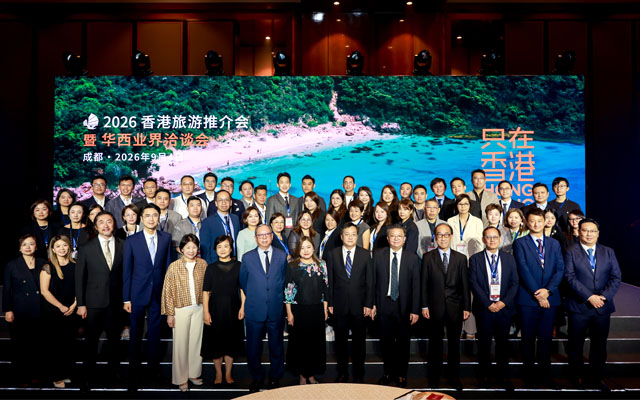
Hong Kong Tourism Board recently concluded the Hong Kong Tourism Networking Event to Chengdu 2026 in China’s Sichuan province, where the Only in Hong Kong global campaign took centre stage.
Key mega events in the second half of 2026 – such as Hong Kong Wine & Dine Festival and Hong Kong WinterFest – as well as new tourism offerings were presented to more than 100 travel trade and media representatives from across Western China.
Hong Kong tourism businesses and professionals join Hong Kong Tourism Board’s mission to Western China
Peter Lam, chairman of Hong Kong Tourism Board, said Western China has long been one of Hong Kong’s key source markets in the Mainland. He hopes that collaborative exchanges between Hong Kong and Western China travel trade would attract more Chinese travellers to Hong Kong and build stronger repeat visitation.
Rosanna Law, secretary for culture, sports and tourism, sees “tremendous potential to promote multi-destination tourism featuring the two cities, attracting more international visitors to explore Hong Kong, Chengdu and other Chinese Mainland cities”.
Besides the networking event, Hong Kong Tourism Board also led a large-scale travel mission in Chengdu, connecting Hong Kong’s tourism professionals with nearly 100 industry representatives from Sichuan, Chongqing, Shaanxi, Guizhou and Yunnan, as well as online travel platforms such as Ctrip and Meituan, through business matching and networking.
The tourism board will continue to grow the Mainland market through various promotional platforms and industry collaborations.
Thailand's revised visa exemption reduces the standard visa-free stay to 30 days from September 15, 2026, under Ministry of Interior announcements published in the Royal Gazette on August 31, 2026. (Photo Credit: Markus Winkler)
Thailand is halving its standard visa-free stay to 30 days and reducing the list of eligible nationalities to 60 countries and territories, under four Ministry of Interior announcements published in the Royal Gazette on August 31, 2026 which will take effect 15 days after their published date, coming into effect on September 15, 2026.
The announcements include a clause repealing the special 60-day visa exemption introduced on July 15, 2024, which covered 93 countries and territories and allowed entry for tourism, short-term work and business contact. The new 30-day exemption applies to tourism only, meaning short-term business and work visitors from affected markets will require a visa from September 15, 2026.
Thailand’s revised visa exemption reduces the standard visa-free stay to 30 days from September 15, 2026, under Ministry of Interior announcements published in the Royal Gazette on August 31, 2026; photo by Markus Winkler
The Cabinet approved the revised framework on July 14, 2026, and the announcement was signed by Anutin Charnvirakul in his capacities as prime minister and minister of interior.
An official statement from the Thai government’s public relations department said the update reflected concern for national security, promotion of tourism and economic interests along with reciprocity and the reduction of overlapping visa exemption privileges – which “could create confusion for foreign visitors” – as well as convenience currently being provided by the e-Visa system.
India will fall under the new 30-day tourist exemption, having been added after the travel industry pushed back over its absence from the original 54-country list the Cabinet approved in May.
A new restriction limits visa-exempt travellers entering through land border checkpoints to two entries per calendar year. Nationals of Malaysia, Brunei, Indonesia and Singapore are exempt from the cap, as are other nationalities the minister may designate.
In the announcements, Thailand has also cut the visa-on-arrival list down to only three countries, covering Azerbaijan, Belarus and Serbia, while Seychelles and Mauritius move to a 15-day exemption. Previously, 31 countries had been placed on the visa-on-arrival list in 2024.
Separate bilateral visa exemption agreements are unaffected, including 30-day arrangements with China, Russia and Vietnam.
The current 60-day scheme remains valid for entries through September 14, 2026.
Travellers entering Thailand from markets that do not appear on any of the new lists will need to obtain a Thai visa to enter from September 15, 2026.
Travellers should check the entry conditions that apply to their nationality before travelling.






 What gap in the market was Far East Hospitality (FEH) originally seeking to fill with Oasia, and how has the brand’s ethos evolved since then?