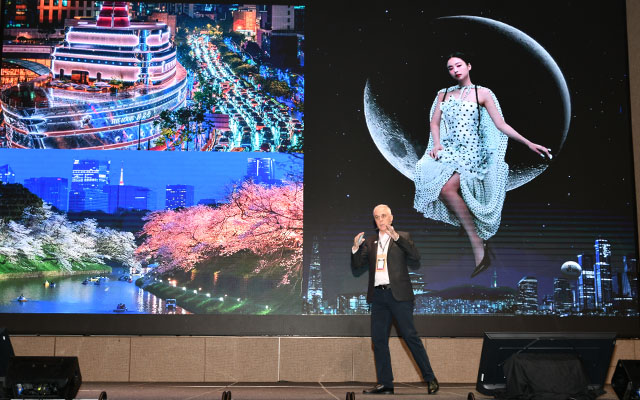
Bangkok will host the Digital Transformation in Hotel Technology (DHT) APAC 2027 conference on April 5-6, 2027, bringing together more than 100 hospitality executives, technology providers and industry specialists from across Asia-Pacific.
Organised by World BI Group, the two-day event will focus on digital transformation, AI, revenue management and sustainable hotel operations.
DHT APAC 2027 will bring together hospitality executives and technology providers in Bangkok next April
The conference comes as hotel operators across the region continue to invest in technology to address rising operating costs, labour shortages and changing guest expectations.
The programme will cover topics including AI-powered guest personalisation, revenue management, smart hotel technology, contactless services, cybersecurity, sustainability, energy efficiency, workforce optimisation and robotics.
The first day will focus on hospitality technology trends, investment priorities and the adoption of generative AI, alongside discussions on labour shortages and evolving traveller expectations. The second day will examine revenue strategies, sustainability, cybersecurity and the future of hospitality in Bangkok.
Delegates will also participate in structured networking sessions and more than 150 one-to-one business meetings.
According to the organiser, the event is aimed at senior executives from hotel groups, independent hotels, technology companies and consulting firms. Previous editions have attracted participants from companies including Radisson Hotel Group, Aminess Hotels & Resorts, PortoBay Hotels, Sarova Hotels and ZO The Med Resort.
Registration is open, with complimentary passes available for hotel representatives and other qualifying non-service providers. Technology companies, consultants and service providers can register through paid delegate, exhibition or sponsorship packages.
Skyscanner has introduced new AI-powered planning tools and updated several traveller features as it expands its travel discovery platform.
The latest additions include two beta AI tools – Explore with AI and Road Trip Planner – alongside enhancements to its Drops fare alert feature and Flight Tracker.
Skyscanner has introduced new AI-powered travel planning tools and enhanced flight tracking as part of its latest product update
Explore with AI allows travellers to search for destinations using natural language prompts rather than fixed dates and locations. Users can enter requests such as finding affordable flights to a country during a particular month and receive destination recommendations with information on fares, weather, flight times and seasonal travel trends. The feature is currently available in English-speaking markets.
Road Trip Planner generates personalised driving itineraries based on travellers’ preferred routes and interests, while also recommending car hire options. Users can choose itineraries focused on scenic drives, cultural attractions, adventure activities or relaxed journeys. The tool is currently in beta on desktop across all markets.
Skyscanner has also expanded its Drops feature, which highlights flights that have fallen by at least 20 per cent over the previous seven days. According to the company, the update increases the number of daily fare alerts available through the app.
The Flight Tracker feature has also been enhanced to provide additional real-time information, including departures, arrivals, gate numbers, terminals and baggage belt details.
Bryan Batista, CEO of Skyscanner, said: “At a time when travellers are navigating an increasingly complex travel landscape, we’re focused on building tools that help them plan and book with confidence. We’re experimenting with how AI can make every stage of the journey simpler and more intuitive, from discovering new destinations to road trip planning.”
Qantas is honouring Singapore’s Wing Seong Fatty’s Restaurant as the family-run institution closes after a century in business.
To mark its legacy, the Australian carrier is introducing two of the restaurant’s signature dishes to its Changi Airport lounges: crispy spring rolls in the First Lounge and fiery nuclear chicken in the Business Lounge.
Qantas chefs prepare signature dishes from Singapore’s Wing Seong Fatty’s Restaurant for the airline’s Changi Airport lounges
The relationship dates back to World War II, when founder Au Yuen and his son, Au Chan Seng – affectionately known as “Fatty” – quietly fed prisoners of war at great personal risk. The restaurant later became a regular stop for generations of Australian servicemen, Royal Australian Air Force pilots and Qantas crew travelling the Kangaroo Route.
At a media lunch yesterday, journalists sampled the heritage menu, which also featured the restaurant’s popiah.
Nick McGlynn, Qantas executive vice president for Asia, said the airline has been flying through Singapore for 90 years and that the city-state remains an important hub for the carrier.
Aman at Sea has unveiled the first itineraries for Amangati’s inaugural Caribbean season, with voyages scheduled from November 21, 2027, to January 2, 2028.
Following its debut Mediterranean season, Amangati will sail five- to eight-night itineraries across the Leeward Islands, Windward Islands and Dutch Caribbean, departing from Saint John’s, Antigua and Bridgetown, Barbados.
Amangati will make its Caribbean debut in late 2027 with voyages across the Leeward Islands, Windward Islands and Dutch Caribbean; photo by SINOT
Ports of call include Saint Barthélemy, Saint Kitts and Nevis, Virgin Gorda, Saba, Montserrat, Dominica, Martinique, Saint Lucia, Canouan, Grenada, Aruba, Bonaire and Curaçao, alongside dedicated beach and marina days.
The season concludes with a two-night New Year’s celebration anchored at a private resort in Nevis.
Ahead of the Caribbean deployment, Amangati will complete its inaugural Mediterranean season with four additional voyages between October and November 2027, followed by a 13-night Atlantic crossing from Malaga to Antigua featuring a wellness-focused programme.
The yacht’s Caribbean itineraries will include overnight stays, late departures and anchorage-based visits, complemented by cultural, culinary and nature-led shore experiences.
Amangati features 47 ocean-facing suites, four restaurants, an onboard spa and marina, with each suite assigned a dedicated host.
Kardia Seoul is a modern venue amongst the historic Joseon era Gyeonghuigung Palace
National Museum of Modern and Contemporary Art brings modern art and Korean heritage
Centre Pompidou Hanwha is a space for contemporary art in Asia
The expectations of business event delegates are evolving. While world-class venues and seamless connectivity remain essential, delegates increasingly want destinations that can also support wellbeing, creativity and meaningful engagement beyond the meeting room.
Seoul delivers on both fronts. As one of Asia’s leading business capitals, the city combines modern event infrastructure and seamless convenience with opportunities for cultural discovery, wellness and relaxation. It is a destination where delegates can move seamlessly between productive business sessions and have enriching experiences that leave a lasting impression.
Meetings with a sense of place
Seoul’s event landscape reflects the city’s ability to blend heritage with innovation.
A prime example is Kardia Seoul, located on the historic grounds of Gyeonghuigung Palace, one of the five grand palaces of the Joseon Dynasty. Reinterpreting the site’s architectural legacy through a contemporary lens, the venue combines modern design, Korean aesthetics and advanced event technology.
With bespoke catering services and flexible indoor and outdoor event spaces, Kardia Seoul offers organisers an environment where business meetings are enhanced by a strong sense of place. It exemplifies how Seoul’s venues increasingly integrate culture, hospitality and technology to create memorable delegate experiences.
Beyond formal meeting programmes, Seoul offers delegates opportunities to engage with the city’s rich cultural landscape.
At the Deoksugung branch of the National Museum of Modern and Contemporary Art, visitors can view exhibitions about Korean heritage and contemporary creativity. Located within the grounds of Deoksugung Palace, the museum provides an environment for reflection and inspiration while encouraging a deeper appreciation of Korean culture.
Nearby, the Korean Heritage Store presents a curated collection of contemporary products inspired by Korea’s royal heritage, offering delegates another way to connect with local culture.
The city’s contemporary creative energy is further showcased at Centre Pompidou Hanwha, which opened in June 2026 within the iconic 63 Building and overlooks the Yeouido Hangang Park. The museum will present exhibitions from the original Centre Pompidou in France.
Together, these cultural experiences provide delegates with opportunities to gain fresh perspectives, stimulate creativity and enrich their overall event journey.
Moments of wellness and hospitality
1 of 2
Grand Hyatt Seoul offers views of the city's iconic Namsan Tower
The Mondrian Seoul in Itaewon is a chic stylish venue for after work relaxation
While Seoul is known for its dynamism and energy, the city also offers opportunities to slow down and recharge.
Along the Han River, delegates can experience a quieter side of the capital. Against the backdrop of the city’s skyline, the riverfront provides a natural setting for relaxation and reflection between meetings and networking engagements.
At the same time, Seoul’s evolving hospitality scene continues to upgrade the delegate experience.
At Mondrian Seoul Itaewon, contemporary design, creative energy and personalised service create an atmosphere where conversations can continue long after the formal agenda has concluded.
Meanwhile, Grand Hyatt Seoul provides sweeping views of the city and a sense of calm above the urban landscape. As evening falls, delegates can unwind while taking in panoramic vistas, creating a fitting end to a productive day.
These hospitality experiences reflect a broader shift in business travel, where hotels are no longer simply places to stay but integral components of the overall event journey.
By combining world-class meeting infrastructure with cultural depth, wellness opportunities and sophisticated hospitality, Seoul offers the perfect balance for business travellers.
Communications and engagements with destination and operations partners through coordination meetings as well as onsite process trials and orientation have intensified in the final months leading up to the relocation of the Harbourfront Passenger Terminal to its new Singapore Cruise Centre (HarbourFront) terminal.
With the former Harbourfront Passenger Terminal being in operations since 1991 and widely known to travellers using both ferry and cruises services from the facility, clarity of the new location is paramount to ensure smooth operations as the new Singapore Cruise Centre (HarbourFront) terminal begins service on July 7.
The new Singapore Cruise Centre (HarbourFront) terminal enjoys the same prime location of the former terminal, but with even closer access to the Singapore Cable Car station that takes visitors to Mount Faber Peak and Sentosa
The new Singapore Cruise Centre (HarbourFront) terminal stands just 70m away from its former site, allowing passengers to continue to enjoy convenient access to HarbourFront MRT Station, Vivocity shopping mall as well as recreational centres in the area.
In fact, with the new location, cruise passengers disembarking in Singapore can immediately access the Singapore Cable Car Station at Harbourfront Tower Two, where services will bring them to Mount Faber Peak and Sentosa.
Batam Fast Ferry will be the first operator to commence operations from the new terminal from July 7. All remaining ferry operators – Horizon Fast Ferry, Majestic Fast Ferry, Sindo Ferry and Indo Falcon Shipping & Travel – as well as cruise operations will follow from July 15.
Jacqueline Tan, CEO of Singapore Cruise Centre (SCC), told TTG Asia that her team had started to engage taxi operators, private hire vehicles, and Google Maps over the last two months to communicate the relocation. The new terminal is now visible on Google Maps.
Several open houses have also been conducted throughout June to introduce the new terminal to direct partners. Direct partners are also encouraged to gather their channel partners for a site walk-through.
Tan added that engagement with cruise line partners had started even earlier on, to allow SCC to find out “what is important and what experiences they would want for their passengers and customers”. One of the outcomes was the creation of a stylish passenger lounge to welcome guests of premium cruise lines.
She emphasised: “It is important for us to ensure that passengers show up at the correct terminal. However, we know that despite all our best efforts to engage with necessary partners as well as the media to inform the public of the new location, some passengers might still miss the announcements. It is inevitable because the former Harbourfront Passenger Terminal is such an icon for three decades; there is the natural tendency for frequent cruise and ferry passengers to just go where they are familiar with.
“So, we will have way-finding signs at Harbourfront Centre to lead passengers from the old building to the new terminal. We will also have staff in many positions across the first and second floors (of the former facility) to point lost passengers in the right direction. Our ferry operators will put up appropriate signage and have staff to help guide passengers too.”
As tourism interest in Vietnam’s Phu Quoc island spikes, Regent Phu Quoc has chosen to capture the attention of guests with a series of expert-led art, wellness and culinary programmes that promise meaningful engagements.
These residency programmes feature different visiting artists, health care practitioners, and chefs throughout the year. A recent residency was led by Angie Tourani, a distinguished holistic health care practitioner, from March to April, coinciding with the International Women’s Month. Her menu of bespoke one-to-one healing experience was designed to offer guests the opportunity to slow down, reconnect, and honour both inner balance and the inspiring stories of women leading with purpose.
The Gallery at Regent Phu Quoc welcomes rotating artists in residence, offering guests a chance to see Vietnam through various art forms
Ongoing now is an art residency, Discover The Memory of Flowers, a solo exhibition by Vietnamese visual artist Pham Tuan Ngoc. Guests are invited to explore the natural cycle of a flower’s life through the lens of the ancient lumen print technique. This art engagement ends on October 31, 2026.
Bastien Pucheu, area director of commercial, IHG BIM Estate Vietnam, whose portfolio includes the luxury Regent Phu Quoc, said the specialist residency programmes were newly launched this year to “bring inspiring moments to our guests during their stay”.
The residency programmes also provide an opportunity to connect guests with local specialists in their craft, be it art or food, and discover Vietnam through different points of view.
“The travel and tourism industry talks a lot about experiential travel, and we agree that there is a trend of high-end clientele wanting to stay on longer in a hotel while exploring or living out a variety of experiences,” said Pucheu.
These residency programmes join Regent Phu Quoc’s immersive seasonal activities that are tailored to the island’s tropical climate. For example, during the June to October wet season – a time when the island gets “renewed through rain and beautiful weather”, according to Pucheu – guests activities adopt an unhurried pace and feature indoor experiences that range from guest chef showcases, printing workshops, and serene spa treatments.
When the dry season settles from June to October, activities take guests outdoors through Embrace the Sun programmes, such as morning cruises aboard its Serenity yacht.
Bruno Anon, resort manager at Regent Phu Quoc, told TTG Asia that guests typically stay for 3.5 days during the rainy season and five days during the dry, high season.
“Regent Phu Quoc is considered a destination resort, where our guests stay in almost all their time in Phu Quoc. We offer a lot of activities that are designed for all ages. Our restaurants boast a highest capture rate because our guests who stay in all day also dine a lot with us,” Anon shared.
When asked if Regent Phu Quoc’s ever-changing calendar of activities had helped to build high repeat visits, Pucheu replied in the affirmative, but declined to cite numbers that define the proportion of repeat guests.
While the seasonal and limited edition activities are a strong magnet for repeat guests, Pucheu said “genuine and elevated service elements, the sense of space, and the sense of belonging” are what mattered most.
“We’ve got lots of team members and associates who are constantly named by our guests (for their outstanding service), and I know these are proud moments for Juan Losada, the general manager, as well as Bruno,” Pucheu said.
Regent Phu Quoc was recently honoured with a regional Virtuoso award in Greater China for having shown the highest annual growth.
The long-held stereotype of Gen Z consumers as screen addicts, uninterested in traditional luxury, passive travellers and prone to impulsive trips has been challenged by Luxury Group by Marriott International APEC’s (Asia-Pacific excluding China) latest Beyond the Gen Z Myth and the State of Luxury Travel in APEC report.
Rather than viewing Gen Z as a single traveller segment, the report identifies four distinct traveller profiles with different travel motivations, spending priorities and behaviours.
Connoisseur Traditionalists make up the largest Gen Z segment and place strong emphasis on classic luxury markers
Decisive travellers The study challenges the assumption that Gen Z consumers rely on others to plan and finance their trips. Findings show that more than half of Gen Z respondents fund their own trips entirely, while nearly half plan everything.
They take an average of 3.2 domestic trips and 2.9 international trips every year. For short getaways, 3.3 nights and 3.7 nights are favoured for domestic and international trips respectively. For longer holidays, Gen Zs tend to spend 7.1 nights on domestic trips and 8.8 nights on international trips.
Gen Zs increasingly want to explore the world together – immediate family are their favourite travel companions (51%). Trips with small groups of friends are up 17%, while larger friend gatherings are up 8%.
Precise expectations Safety, impeccable service, personalisation, prestige and high-quality accommodation are non-negotiables for this demographic, but new expectations are emerging.
The State of Luxury Travel report notes that engagement with local communities and cultural immersion represent the most important factors in their choice of travel destinations, at 87%. Close behind are discovering new food or culinary experiences (86%), proximity to nature (86%) and restorative wellness experiences (85%).
Other influencing factors include thoughtful architecture and design, and the ability to purchase locally made products.
Gen Zs dislike potential friction in travel, citing “wasted time” and “communication gaps” as their key pet peeves.
Different identities Instead of being a single profile, Gen Z consumers span four distinct traveller tribes: Connoisseur Traditionalists (34% of Gen Z); Future Proofers (30% of Gen Z); Quiet Luxurists (20% of Gen Z); and Cultural Reclaimers (16% of Gen Z).
Connoisseur Traditionalists make up the largest Gen Z cohort in APEC, and are most concentrated among travellers from Singapore and Thailand, and least among those from Vietnam.
They pay close attention to classic luxury markers, such as a hotel’s brand and reputation, Michelin-starred restaurants, butler service and storied brand names.
They find satisfaction in everything being precisely organised, with 46% conducting their own research to help shape their itineraries, while 45% use online travel platforms and 40% choose professional planners. The majority (66%) book trips at least one to two months ahead, and show relatively little appetite for spontaneity.
They are drawn to new hotels and restaurants, value loyalty programmes, favour trips with immediate family, and gravitate towards Asian destinations.
Next up, Future Proofers form 30% of the Gen Z demographic, and are most concentrated among travellers from Australia and India, and least represented in Japan and Thailand.
They regard travel as an investment in wellness, restorative health and preventative care. Hence, 92% expect in-room wellness facilities, 97% make use of wellness facilities in hotels, and 95% value the availability of in-house healthcare experts. Hotel pools, spas and gyms influence hotel selection, while 93% say that non-alcoholic drinks at bars are important.
They travel solo or in small groups of immediate family or friends, and their destination choice is shaped by access to advanced wellness infrastructure and pre-booked specialist appointments. Their preferred holidays include dedicated spa retreats (56%), beach holidays (53%) and city breaks (43%). A strong connection to nature also underpins their travel decisions, with 95% saying it is important.
Luxury hotels and private villas are preferred (61% and 55% respectively), while exceptional design is also key.
They draw travel recommendations from social media (41%), classic online search (37%), and word-of-mouth recommendations (33%).
The third segment, Quiet Luxurists, make up 20% of the Gen Z demographic, and are strongly represented in Indonesia and least among travellers from Thailand.
They gravitate towards privacy, nature, restorative retreats, low-friction travel and low-technology interaction. They are spontaneous, with 98% having booked a trip within two weeks of departure, and favour less-discovered regions, with 86% wanting somewhere new.
They tend to book longer stays, prioritise sleep and wellness programmes, select accommodation that offers genuine privacy, and travel alone or with small groups of friends.
They are also highly engaged with hotel brands, as 50% book directly through loyalty programmes and 41% book direct.
Finally, Cultural Reclaimers make up 16% of the Gen Z demographic, and are most strongly represented among travellers from Vietnam and Japan, and least among those from India.
They prioritise Asian heritage, family time, place-based discovery and local culture. This tribe leads in family trip planning (100% will do so, compared with 43% of all Gen Z respondents), and 65% are the primary paymaster, compared with 36% of all Gen Z.
They are slow and immersive travellers, preferring to spend extended periods away to get the most from every experience.
The majority (89%) are inspired by places they have seen online, while other sources include private travel planners (31%), online travel agencies (29%), AI tools (29%) and social media (28%).
Most lean towards luxury hotels (74%), with spending priorities focusing on hotel design (26%), location (26%), and authentic local experiences (25%). They also rely on hotel facilities to enhance their trip experience – 92% expect wellness offerings, 91% want award-winning restaurants or bars, and 88% want immersive experiences.
Cultural Reclaimers value what they learn about a place more than social media likes
Impact on luxury hospitality Oriol Montal, Marriott International’s regional vice president for luxury in Asia-Pacific (excluding China), told TTG Asia that it was important to understand Gen Z consumers, as the findings provide guidance for hotel developments over the next five to 10 years.
The demographic is widely recognised as the next major consumer market, with a report by NielsenIQ, GfK and World Data Lab noting that Gen Z’s spending power is expected to grow to US$12 trillion by 2030.
The four distinct Gen Z identities will help the Luxury Group by Marriott International APEC determine the products, services and experiences that would best resonate with each group.
“With Future Proofers, we know that the JW Marriott brand’s Mindful Rooms and Suites, which we debuted at JW Marriott Hotel Tokyo earlier this year, will be something that is relevant to them. With Cultural Reclaimers, the Luxury Collection brand would speak to them, as properties are opened in remote destinations,” Montal said.
At the same time, a single brand could also cater to all Gen Z tribes. He pointed to The Ritz-Carlton Reserve collection, where properties boast spacious wellness facilities that appeal to Future Proofers, immersive destination programmes that Cultural Reclaimers value, a high level of space and privacy that is suited to Quiet Luxurists, and a reputation for service excellence and luxury that Connoisseur Traditionalists demand.
He noted that with seven different brands across the Luxury Group by Marriott International APEC, the company is well positioned to “cater to all the different Gen Z tribes”.
However, Montal believes that no single Gen Z consumer will sit within one tribe, as their travel preferences and consumption priorities could change depending on the purpose of their trip and their travel companions.
“The traveller could show characteristics of the Quiet Luxurists segment when travelling solo, but would display Future Proofers tendencies when on a wellness retreat with close friends,” explained Montal.
Hence, it is more important that hospitality brands and operators understand the many layers that make up the Gen Z consumer, tailor dedicated experiences for the four Gen Z tribes, and move beyond a single luxury proposition.
Montal underscored the importance of hyper-personalisation in winning over Gen Z guests, saying that “the secret of success would come from pre-arrival processes” that allow hotels to capture as much information as possible on the guest’s travel intentions.
Forward decisions Montal shared that findings from the 2026 State of Luxury Travel report are now being considered in discussions about upcoming infrastructure changes.
“We are having conversations about the gym of the future, and believe that these facilities should be 30% larger because of what our guests are demanding today. We also recognise the growing importance of the family room product, so that is something we are working on today,” he said.
These changes will take time, as the company will first create a prototype, which will then be refined before being rolled out across properties.
Japan’s tourism industry should adopt greater flexibility in service while preserving the values at the heart of its hospitality as international visitor expectations evolve, panellists said during the Traditions in Translation: Japanese Hospitality’s Global Dialogue on June 29, 2026 at ILTM Asia Pacific 2026.
“Respectfulness will never change. That is the foundation of Japanese hospitality,” said Manabu Kusui, general manager of Hotel The Mitsui Kyoto. “What I’m trying to add is flexibility.”
Panellists discussed how Japan can adapt to changing visitor expectations while preserving the values that define its hospitality
He said empowering front-line staff to make thoughtful decisions, such as allowing guests to check in early when rooms are ready rather than rigidly following set rules, helps bridge Japanese tradition with Western expectations.
Aki Komiya of destination management company Wundertrunk & Co. said the foundation of Japanese hospitality lies not only in omotenashi (wholehearted hospitality), but also omoiyari – empathy and consideration for others.
“As we become more international, we can adapt to make travellers feel comfortable. But I hope the Japanese people themselves don’t change. Our culture, our values and the way we care for others are what make Japan unique,” she said.
The discussion also explored how social media has reshaped travellers’ perceptions of Japan. Komiya said the challenge is to balance meeting visitors’ expectations while introducing them to places they may not have otherwise discovered.
“At the end of the day, what matters is that they go home loving Japan,” she concluded.