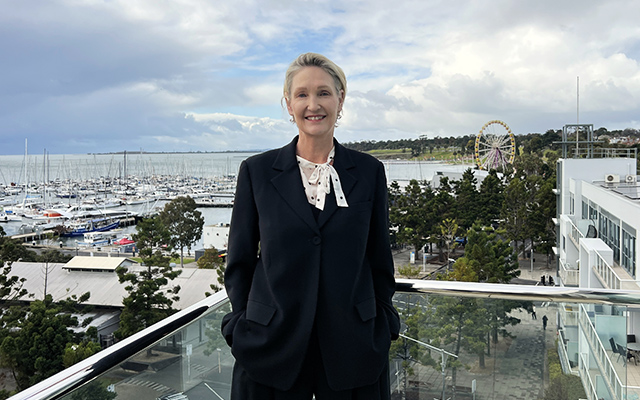
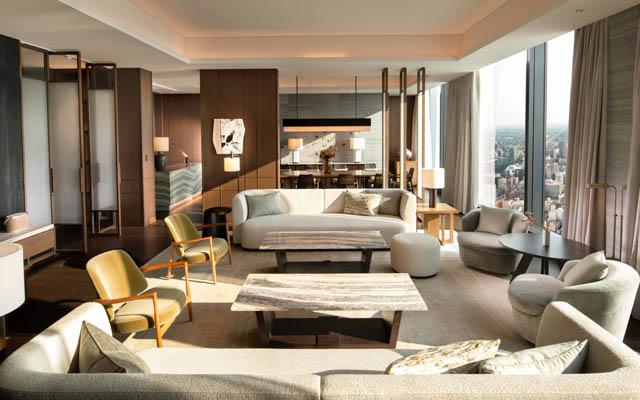
25hours Hotels has appointed Jesper Soerensen as general manager of the upcoming 25hours Hotel Jakarta The Oddbird, set to open in November 2024.
With over 23 years of experience in lifestyle and luxury hospitality, Soerensen brings a wealth of knowledge and a global perspective to this vibrant new addition in Jakarta’s landscape.
Fluent in German, Danish and English, he joins 25hours Hotel Jakarta The Oddbird from SO/ Maldives, where he also served as general manager.
The Japan Sports Agency is aiming for martial arts to become a greater tourism resource with the launch of new experiences and activities under its Budō Tourism programme.
Part of Japan Sport Tourism, which also promotes snow sports, outdoor pursuits like cycling and kayaking, and urban activities such as skateboarding and BWX biking, Budō Tourism aims to offer journeys into the heart of Japanese martial arts, budō, which translates to ‘martial way’.
Japan is inviting visitors to explore its world of martial arts through unique experiences and activities
Experiences are available across Japan, in martial arts as varied as judo, kendo, karate, sumo, aikido, kyudo (archery) and iaido (the art of swordsmanship). Some include tours in picturesque, cultural or historical places, and unique dining, to offer visitors “an increased sense of Japan”, according to Japan Sport Tourism.
The kendo experience, available in Tokyo, Yokohama, Osaka, Kyoto, Sapporo, Fukuoka and Okinawa, features an introduction to samurai, a traditional ceremony, striking instruction, practice and a match. One two-hour session is available for up to 200 pax, at 18,000 yen (US$120) per person and includes a professional guide/instructor, rental of kendo armour and other equipment and a towel.
In Okinawa, the birthplace of karate, the Okinawa Karate Kaikan offers a 30-minute tile-splitting experience twice daily, either in front of the facility’s historic dojo or inside. For 3,000 yen per person, a tour of the Okinawa Karate Museum is included.
Visitors who prefer to watch can choose from several options including the Iai Shrine Samurai Show in Yamagata Prefecture. Up to 40 pax can enjoy a demonstration of iaido for 50,000 yen per person.
Generative AI (Gen AI) remains a central focus for the travel technology sector looking ahead to 2025 – but challenges are emerging as initial optimism begins to dissipate.
That is according to a new report released by Amadeus, Navigating the Future: How Generative Artificial Intelligence is transforming the travel industry, which surveyed experts in the field from across the travel ecosystem.
Digital assistants, tailored recommendations, and content generation are the top use cases for Gen AI
Among the 300+ industry leaders questioned, Gen AI was cited as a top priority for the coming year by 46 per cent – ahead of any other technology. This figure rose to 61 per cent in Asia-Pacific, suggesting the region may be ready to take the lead in this transformative technology.
Other technologies cited as a top priority for 2025 included data management (38 per cent), cloud architecture (36 per cent), non-generative AI IT infrastructure (34 per cent), and biometric technology (23 per cent).
Globally, over half of travel technology leaders (51 per cent) argue Gen AI already has a ‘significant presence’ in the travel industry in their country. A further 36 per cent expect this presence to emerge over the next year, while 11 per cent expect the process to take one to two years. Just two per cent of travel technology leaders think it will take three or more years for Gen AI to have a significant presence on the travel sector where they are.
Today, 41 per cent of travel companies say their organisation has the budget and resources in place to implement Gen AI, while 87 per cent are open to working with a third-party vendor to develop Gen AI-powered applications.
While support for the rollout of Gen AI in the travel technology sector remains undimmed, the study finds a number of challenges are emerging.
These comprise data security (35 per cent); lack of Gen AI expertise and training (34 per cent); data quality and inadequate technological infrastructure (33 per cent); ROI concerns, lack of use cases, or difficulty in estimating value (30 per cent); and difficulty in connecting with partners or vendors (29 per cent).
Today, Gen AI specialists are grappling to recruit experts and train existing workforces to bridge a skills gap, while working to secure data and convince senior leaders of the value of Gen AI investments.
How is Gen AI being used? While the process of experimentation continues with the deployment of Gen AI, several use cases have emerged in the travel technology sector.
These are led by digital assistance for travellers during booking (53 per cent) and followed by recommendations for activities or venues (48 per cent), content generation (47 per cent), helping staff to better serve customers (45 per cent), and collecting and condensing post-travel feedback (45 per cent).
Study respondents were looking for, in ranked order, return on investment, customer satisfaction, efficiency and productivity improvements, performance metrics (accuracy, precision and relevance) and increases in key performance indicators.
Sylvain Roy, chief technology officer, Amadeus, said: “(Gen AI) is a technology that has the potential to transform every facet of what we do across the travel ecosystem, significantly enhancing the passenger experience at every step of the journey.
“While technology will be a key focus for the next year, questions are rightly being asked whether Gen AI will deliver sufficient returns on investment, while talent shortages are also coming under the spotlight.
“It is crucial that we use this new technology responsibly, ensuring data security, privacy, and content reliability. It is time for Gen AI to prove it can live up to the hype.”
Navigating the Future: How Generative Artificial Intelligence is transforming the travel industry can be viewed here.
Changi Airports International (CAI) has entered into a joint venture agreement with Hainan Meilan International Airport Co. to manage the non-aeronautical commercial operations at Haikou Meilan International Airport (HAK) – it includes exclusive rights to retail, food and beverage, advertising, leisure, and commercially important-person (CIP) airport services at the Chinese airport for a period of 10 years, starting from January 2025.
The joint-venture – where Hainan Meilan International Airport Co. owns 51 per cent and CAI 49 per cent – aims to transform HAK into an integrated consumer hub and level up consumer spending to enhance its commercial revenue. It will leverage Changi Airport’s brand reputation and expertise in airport commercial management to optimise passenger experience, increase retail offerings, and introduce new digital services such as e-commerce and loyalty programmes.
The partnership will see Changi Airport manage the transformation of Haikou Meilan International Airport into an integrated consumer hub
Through this partnership, the CAI-Meilan joint venture will enhance the airport’s ability to cater to both international and domestic travellers, foster better passenger satisfaction, drive revenue growth and strengthen its position as a top regional hub.
Located in Haikou city, the capital of Hainan Province, HAK serves as a vital gateway for both domestic and international travellers. As of October 2024, the airport connects 116 domestic destinations and 30 international destinations, solidifying its position as a key player in China’s aviation industry.
HAK has shown significant growth over the years, with a passenger throughput of 24.34 million passengers in 2023, ranking 18th among all airports in China’s mainland. In addition, the airport houses offshore duty-free shops where domestic travellers are able to purchase duty-free merchandise, which is a key component of non-aeronautical revenue growth potential.
Eugene Gan, chief executive of CAI, said: “Our collaboration with Meilan Airport stems from the shared vision of creating a world-class airport environment that supports both passenger experience and economic development. It marks a key milestone in the expansion of CAI’s global footprint and we look forward to working closely with HAK to transform the airport into a hub of choice for travellers and retailers alike.”
Emirates, the official global airline partner of the National Basketball Association (NBA) and inaugural title partner of the Emirates NBA Cup, is celebrating the arrival of the 2024-25 NBA season with a nose-to-tail livery dedicated to the league.
The airline’s NBA-themed livery is one of only four aircrafts in the airline’s fleet with full nose-to-tail bespoke designs, and will begin making its way across Emirate’s global network with flights starting next week.
Emirates is ushering in the 2024-25 NBA season with a bold nose-to-tail livery designed specifically for the league
The new look showcases a bold blue gradient on the fuselage, highlighted by the NBA logo. Emirates’ lettering has changed from gold to red, accompanied by an illustration of a basketball bouncing between the two logos, and the vibrant red engine cowls feature the Emirates logo in white calligraphy.
From November 1 to December 17, customers will also experience onboard NBA-inspired products and services on flights when travelling to and from 14 points in the US and Canada, such as sports-inspired dishes and drinks across all cabin classes as well as a limited NBA-themed menu at Emirates’ lounges in Dubai, New York JFK, San Francisco, Los Angeles and Boston.
The Anam Cam Ranh has unveiled a variety of new packages perfect for couples seeking a proposal, wedding, honeymoon, or vow renewal. Set against the enchanting backdrop of Vietnam’s Cam Ranh peninsula, these offerings feature stunning views of the beach and turquoise waters.
Since its 2017 grand opening, the 12-hectare resort has celebrated countless proposals, weddings and honeymoons.
The Anam Cam Ranh’s new romance packages are tailored for couple celebrations like proposals, weddings, honeymoons and vow renewal
The Anam Cam Ranh’s proposal experience is anchored by a private candle-lit dining set-up on the resort’s beach, by one of its three swimming pools or in the privacy of a private-pool villa. A four-course menu is cooked by a private chef, with two Asian menus and two Western menus to choose from.
Weddings range from an intimate ceremony for two on the beachfront or lawn to a larger formal dining arrangement for up to 500 family and friends. The package includes a live guitarist and violinist during the ceremony, flower arrangements, and a three-tier wedding cake.
Inspired by Vietnam’s Indochine era, the 180m² Honeymoon Villas are set on of lush hillside land located adjacent to the grounds of the resort’s spa. The one-bedroom villas each feature a separate living room, jacuzzi, steam and sauna room and private terrace with sun loungers overlooking a 40m² private pool. A private BBQ in the villa, a romantic ritual at The Anam Spa including a body scrub, facial and milk bath, and movies on the beach are among the honeymoon experiences on offer.
The Honeymoon Villas come with complimentary daily afternoon tea, served either in the privacy of the villa, at The Colonial fine dining restaurant.
Like the wedding packages, the renewal of vows packages also feature a night’s stay in a Premium Room or Garden View Villa, with free upgrades depending on availability.
Hotel Indigo Bangkok Wireless Road has named Nicolas Mercier as its general manager.
The French national has amassed over 20 years of experience in South-east Asia’s international luxury hospitality landscape, and was most recently the hotel manager at InterContinental Hotel & Residences Jakarta Pondok Indah.
Mercier will work on developing creating guest experiences, keeping sustainability goals and responsibility towards the community, as well as strengthening the hotel’s position in the competitive Bangkok market, such as culinary experiences.
Langham Hospitality Group (LHG) has appointed Angela Zhou as its new senior vice president – finance. She will also serve as a member of LHG’s Executive Committee.
Stationed at the company’s headquarters in Hong Kong, Zhou will oversee its global hotel finance operations, corporate finance, legal, and financial planning and analysis functions.
Bringing a wealth of experience in the hospitality industry to her new role, she was most recently vice president of finance at Rosewood Hotels & Resorts.
Tourism Australia is expanding its outreach to Muslim travellers in Indonesia with its first consortium of travel agencies, providing tour packages and itineraries that feature Australia’s array of Muslim-friendly experiences.
The consortium launches with four travel partners in Indonesia: AntaVaya Umroh, As-Salam by Dwidaya Tour, Cheria Holiday, and Ramah Umroh & Halal Tour. As part of this campaign, the agencies have launched a collection of itineraries across Australia featuring Muslim-friendly experiences, tailored for different traveller styles, seasons and Australian destinations – both familiar and undiscovered.
Tourism Australia aims to introduce more Muslim-friendly offerings in the destination with the launch of its first Muslim consortium in Indonesia
Travellers can enjoy stargazing in the Blue Mountains, get up close to the alpacas of Port Stephens, ride the iconic Puffing Billy in Melbourne, experience the Australian Gold Rush era in Ballarat’s Sovereign Hill, cruise along Sydney Harbour and indulge in retail therapy at Chadstone Shopping Centre – Australia’s largest shopping mall.
Itineraries depart next year on February 19, April 2, April 23 and May 28, with flights by airline partner Qantas Airways.
Tourism Australia has been marketing Muslim-friendly visitor experiences for more than 20 years, bringing the latest offerings and promotions to Muslim travellers through travel guides, media hosting programmes and key distribution partners who specialise in Muslim-friendly tourism.
Agitya Nuraini, country manager for Indonesia, Tourism Australia, said: “Indonesia is one of Australia’s top five recovery markets in rebuilding back to 2019 arrivals and trip expenditure levels. In the past financial year, Australia welcomed 213,000 Indonesian travellers – 96 per cent of 2019 levels – who collectively spent A$1.1 billion (US$737.36 million) which was 26 per cent more compared to 2019.
“Furthermore, Muslim travel from Indonesia is a huge segment for Tourism Australia. Around 80 per cent of Indonesia’s middle class is Muslim, and this population has a high discretionary income, a strong desire to travel, and are looking for authentic cultural experiences.”
She explained that tourism in Australia is focused on providing a diverse range of multicultural experiences, and with Islam as the second-largest religion in Australia, “visitors will find major supermarkets offering halal-certified products”.
She continued: “Our consortium is another leap in our ongoing efforts to extend Australia’s many Muslim-friendly experiences to Indonesians planning their next holiday – whether it’s their first time Down Under, or if they are looking for their next Aussie adventure. We will continue to work closely with our on-ground partners to uncover new destinations for our customers wanting to experience Australia’s Muslim-friendly travel offering.”