TTG Asia
Asia/Singapore Wednesday, 6th May 2026
Page 1964

Not a clash of titans

0
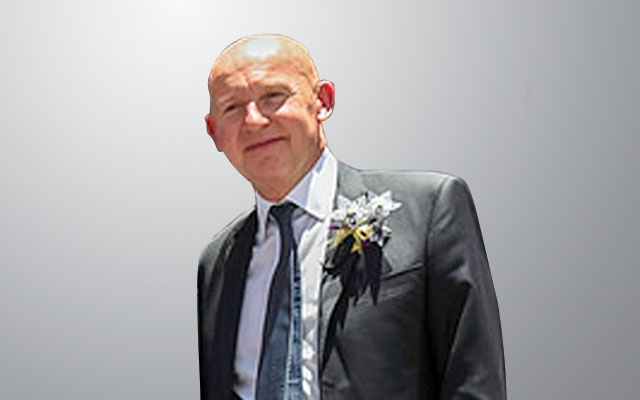
Trevor Horwell

Why take brand Nobu from restaurants to hotels?
Nobu started over 20 years ago and we now have 35 restaurants in five continents. Nobu revolutionised Japanese cuisine and a lot of hoteliers were coming to us (to have the restaurant in their hotels) as a means to draw customers.

We could expand Nobu into secondary cities but we wanted to take the brand to a whole new level, so we decided to move from restaurants to hospitality, which is now the core business. We have a clientele base of three million around the world – (akin to) a clientele base of a hotel company with 25 hotels. We can now provide them with a 24/7 Nobu experience when they stay with us, rather than just a few hours when they dine with us. The 24/7 includes the restaurant experience, the Nobu room service and other aspects of what the shareholders felt represent a Nobu hotel.

Yes, but the cast of shareholders includes celebrity chef Nobu Matsuhisa, actor Robert de Niro and movie producer Meir Teper. No clash of egos?
If you break down a Nobu hotel, the creativity of the F&B is really Nobu, who is the founder of the concept. But, like a fashion house, say Christian Dior, there are creative directors who work under the founder. So Nobu too has creative chefs who work alongside him.

When it comes to the hotel, naturally Robert de Niro, who has done his own hotel (the Greenwich New York), brings his experiences to the table, while Meir Teper, who is very much into the art world, brings a lot of style.

Don’t forget they have been partners for 22 years (since Nobu Restaurants started in 1993) – you have to get along with each other if you’ve been together that long.

Why Nobu Hotels, not ‘de Niro Hotels’?
A Nobu hotel is largely a boutique luxury experience. At the same time, we wrap the F&B around the hotel. Other hotels, on the other hand, have a huge issue with F&B – they lose money on F&B, owners give them a hard time because the F&B is bland, etc. But with a Nobu restaurant, we have a high margin business. In some locations, we make as much money on a seat than on a room.

Consider too that a lot of hoteliers today are leasing their restaurants to a third party. The challenge with that is they can’t control the creativity of the F&B, or the service quality, whereas Nobu has proven itself a consistent global brand, operating restaurants in five continents for over 22 years and building a loyal base of three million clientele in the process.

With Nobu, we also attract the locals to come into the hotel. We bring in all age groups. And customers want to be in a hotel where the action is.

Are you still growing Nobu Restaurants then?
Selectively. We will go into markets where we can’t do a hotel potentially with a restaurant – if it makes sense (to open the restaurant). Why spend time and effort in a location doing a restaurant when we can do a hotel and a restaurant? We don’t want to commoditise the brand. A lot of hotel companies are stock market-driven; so many of them go to secondary locations to fulfil the numbers they promised shareholders.

But your first hotel in Asia in Manila (opened 3Q2014 in City of Dreams; see page 28) is not exactly an ‘it’ gateway.

When we started in Asia, we were opportunistic. We went into Manila because, one, it has a great service culture, two, because we knew the partners Lawrence Hill and James Packer (co-chairman of Melco Crown Entertainment, which runs the City of Dreams in Macau and is one of the companies behind the Manila offshoot). James is our partner in Australia with (two) Nobu restaurants in Crown Hotels and Casino. (Editor’s Note: As TTG Asia went to press, Packer had bought a 20 per cent stake in Nobu Hospitality – see TTG Asia e-Daily, October 30, 2015.)

Plus, we are going into what we believe is going to be the number one destination in Manila, the City of Dreams.

Our approach when we started was to establish a flagship in America, followed by Europe and the Middle East, which we have done. We now have 12 hotels opened or opening over the next two years. So now we are looking at Asia and we’ll be selective.

Where are you looking at and what are your thoughts on the market?

Hong Kong, Singapore, Korea, Taipei, Bangkok, Jakarta, Macau, but the fundamentals have to be there in terms of both restaurant and hotel.

A lot of hotels in Asia are still traditional, but Asia is becoming niche-driven. In future, a lot more niche concepts like ours will be coming to Asia.

We’ve seen names like Missoni, Bvlgari, Armani, transposed to hospitality, but with varying degrees of success. Why?
They sell design and once that design is dated, what’s left? We are F&B-led, it’s not just about design.

Few celebrity chefs, if any, go from fork to pillow, on a global chain scale. Why?
Just ask: How many of our competitor brands in restaurants have been around for 20-years plus? Not one. How many of them have achieved consistent growth in 20 years? Not one. How many of our competitor chefs have had their restaurants opened for more than five years? Although they are still celebrity chefs, some of their restaurants have closed.

Nobu, on the other hand, has delivered consistently, whether the restaurant is in New York, London, Dubai or Manila. And this is our approach in growing Nobu Hospitality.  It is not just about consistency in operation but consistency in growing the hotels side.

If there is a Nobu restaurant in a city – as at the InterContinental Hong Kong (in Kowloon) – won’t you be competing with it if you open a Nobu Hotel in Hong Kong?
We would do a hotel on the Hong Kong side, not Kowloon. It is important that we are loyal to our partners. And they (InterContinental) have been great partners.

This article was first published in TTG Asia, November 13, 2015 issue, on page 8. To read more, please view our digital edition or click here to subscribe.

Sekercioglu trades Kuok for Kwek

0

sekercioglu-trades-kuok-for-kwek

AFTER 21 years with Shangri-La Hotels & Resorts, during which he rose from F&B director to executive vice president, Cetin Sekercioglu has moved on to join Millennium & Copthorne International Ltd (MCIL) as president-Asia, a position which MCIL has been trying to fill since last year.

Headquartered in Singapore, MCIL is the Asian arm of Millennium & Copthorne Hotels plc (M&C).

Reporting to Aloysius Lee, M&C’s CEO based in London, Sekercioglu will provide leadership and strategic direction for the entire Asia team, with the objective of delivering maximum business growth and profitability for the group.

The role was previously filled by Franz Zeller, but in the capacity of senior vice president and was short-lived. Sekercioglu’s president-Asia position “reflects his wider experience and the expertise he brings to the group”, a spokesman said.

With more than 30 years of experience in the hospitality industry, Sekercioglu has lived and worked in many parts of the world including Singapore, Turkey, America, China, Hong Kong, Indonesia and Thailand. His last position at Shangri-La Hotels and Resorts was as executive vice president South-east Asia and Oceania.

New prices for Hong Kong Disneyland admission tickets

0
DISNEYLAND , HONG KONG - JULY 8 : Tourists unite the family a walking tour and the playing fun park. Some popular souvenirs to take home. at Disneyland on July 8,2014 in Hong Kong.

DISNEYLAND , HONG KONG - JULY 8 : Tourists unite the family a walking tour and the playing fun park. Some popular souvenirs to take home. at Disneyland on July 8,2014 in Hong Kong.

HONG KONG Disneyland Resort has adjusted its general admission ticket prices and will dish out special trade offers until January 10, 2016.

A one-day ticket for general admission and child admission now costs HK$539 (US$69) and HK$385 respectively, while a two-day option is priced at HK$739 and HK$525 respectively.

However, the resort is offering a two-month grace period to the travel trade to enjoy the former ticket prices, valid until January 10, 2016.

“The resort evaluates and adjusts pricing based on a variety of factors including the value of the resort’s attractions and entertainment offerings as well as future development needs,” said a Hong Kong Disneyland spokesperson.

“Hong Kong Disneyland has been delivering countless magical and memorable experiences to our guests in the past decade with the strong support from travel trade industry. We will continue to work hand-in-hand with our travel trade partners to explore business opportunities together and sustain our win-win partnership for more years to come.”

Queenie Borromeo passes away from heart attack

0

THE travel trade is mourning the passing of Grand Holidays Travel and Tours’ general manager, Adrienne Macrina “Queenie” Borromeo. She succumbed to heart attack yesterday morning. She was 63.

Well-loved for her “super bubbly” personality and “the way she treated her people well”, Borromeo has been in the industry for four decades, starting first as a sales representative for Northwest Airlines around the same time that Maucie Cuna, one of her closest friends, was also the sales rep for Japan Airlines.

“She’s a good manager, a good friend for 40 years,” said Cuna, who is currently Philippine Travel Agencies Association (PTAA) secretary general and Pan Malayan Express’ general manager.

“Queenie never missed a PTAA meeting regardless of wherever she was. She’s a very strong supporter, she’s always active although she was never an officer,” added Cuna.

Bookings for Marriott International hotel rooms made easy for Alitrip users

0
Landmark Agreement Between Alitrip and Marriott International Brings New Travel Options to Chinese Consumers (PRNewsFoto/Marriott International, Inc.)

Landmark Agreement Between Alitrip and Marriott International Brings New Travel Options to Chinese Consumers (PRNewsFoto/Marriott International, Inc.)

MARRIOTT Hotel International has become the first major global hotel chain to sign an agreement with Alitrip, an independent online travel booking platform previously known as Taobao Travel, to allow users to book rooms through a directly operated online flagship store.

“With 19 Marriott International brands, including JW Marriott, The Ritz-Carlton and Marriott Hotels, and over 4,000 hotels available through Alitrip, Chinese travellers will see a major increase in the number of rooms they can book through Alitrip,” said Craig S Smith, president and managing director of Marriott International, Asia Pacific.

Both parties are also looking to enhance user experience with the “Post Post Pay” service by Alitrip, which allows qualified customers to reserve rooms without paying a deposit and enjoy express checkout service.

This partnership was announced just two months following an agreement between Marriott International and Ant Financial Services Group to roll out Alipay to Marriott International’s hotels and resorts.

Best Western charts steady growth for two new brands

0

best-western-charts-steady-growth-for-two-new-brands

SINCE launching its two new brands Vib and Glo in Asia recently, Best Western Hotels & Resorts has signed up three Vib hotels in urban locations in Yangon, Vientiane and Seoul, and is confident of prospects for Glo in many suburban spots throughout the region.

Both managing director, international operations-Asia, Olivier Berrivin, and regional director, revenue & marketing Paul Suvodip, said while growth was important, it was critical at this stage to ensure that properties signed up would accurately reflect the values of the new brands.

“For instance, we’re looking only at new-builds for Vib. The specs for Vib strongly focus on (enabling guest) networking in public areas, for one, and it is a challenge in Asia to find old properties that suit the specs. Their rooms are either too small or too big, whereas Vib’s room size ideally is 20-22m2,” said Berrivin.

The first Vib to operate in Asia will be in Gangnam, Seoul, which is expected to open in 2017, followed by the Yangon and Vientiane properties. Other locations which are being explored in South-east Asia are Bangkok and Singapore. “We’re confident there will be at least one Vib in most of the major cities in Asia,” said Berrivin.

Suvodip added there was no confusion among owners over the two brands since their launch. While Vib (“for vibrance”) is the chain’s answer to the so-called ‘lifestyle’ brand of global hotel chains targeting millennials with chic design, social lobby area, grab-and-go snack station, a zen zone for relaxation, technology and location in downtown, Glo is “the new-generation Best Western hotel ”, offering its original tenet of great value and comfort but in a reinvented hip, boutique environment. Unlike Vib, its path to growth mirrors that of a Best Western hotel, i.e., in secondary locations, suburban areas and near highways.

“This is why it is called Glo. LED lighting (on the side of the building) symbolises a beacon for travellers,” said Suvodip.

Unlike Vib, Glo has additional facilities like a hot kitchen. It also has a cost-effective innovation: the floor plan is designed such that the adjacent guest room baths are centre-loaded, saving about 3.7-4.6m2 in construction costs. “In the US, the cost of construction is only US$65,000 per room,” said Berrivin. “North America has showna lot of interest; it has had a long history with us with roadside motels and takes to the Glo concept easily.”

Asked if Glo would then cannibalise Best Western itself, Suvodip said there was room to grow both, particularly as Glo tends to be smaller. “Accor has 20 brands, Wyndham 18, we only have seven. There’s a huge space for development,” said Suvodip.

Melbourne wins 2018 stem cell meeting bid

0

COME June 2018, Melbourne will be the place to be for the world’s leading stem cell researchers, physicians and government and health officials.

“Securing this meeting is a major coup for Melbourne and for Victoria and recognition of our expert community of stem cell researchers,” said Melbourne Convention Bureau (MCB), CEO, Karen Bolinger.

The 16th Annual Meeting of the International Society for Stem Cell Research (ISSCR) will be held at Melbourne Convention and Exhibition Centre in Victoria. It will last four days in June, contribute about A$13 million (US$9.2 million) to the state’s economy and attract some 3,000 delegates.

According to associate professor Caroline Gargett, immediate past president for the Australasian Society for Stem Cell Research, the annual meeting is the “largest forum for stem cell and regenerative medicine professionals from around the world” and is a place where delegates can “discuss innovations, trends and new perspectives and benefit from collaboration across disciplines”.

The CEO of the International Society for Stem Cell Research, Nancy Witty, said that both she and her colleagues were looking forward to meeting in Melbourne.

Melbourne’s winning bid was a testament to the successful collaboration between MCB, the government and industry partners.

Bolinger said: “We take a ‘Team Melbourne’ approach to both bids and the business events themselves, with such success that Melbourne is renowned globally as a destination that goes above and beyond to deliver.”

Hyatt crosses 10th hotel mark in Japan with Park Hyatt Niseko

0

AS speculated in our Overheard dispatch on Hyatt Hotels Corporation adding two hotels in Japan (TTG Asia eDaily, November 1, 2015), the chain has officially confirmed one of them – a management contract with Pacific Century Premium Developments (PCPD) for a Park Hyatt in the ski resort destination of Niseko.

This brings the number of hotels Hyatt operates in Japan to 11, and the second Park Hyatt after the one in Tokyo.

Expected to open in 2019, the 100-room Park Hyatt Niseko, Hanazono will also offer 100 branded residences, the first Park Hyatt residences in Japan, which participating owners can rent out as guest accommodation.

Robert Lee, PCPD’s deputy chairman and CEO, alludes to developing the area “into a world-class resort destination”, saying there is strong interest among tourists and investors in Japan.

PCPD is majority-owned by PCCW Hong Kong.

Park Hyatt Niseko, Hanazono and its residences will be a pivotal part of PCPD’s resort and residential development in Niseko, added David Udell, group president, Asia-Pacific, Hyatt Hotels Corporation.

The entire development, which will be undertaken in phases, has a site area of area 789,000m2 and a developable gross floor area of approximately 620,000m2.

Situated in Hanazono, one of the four ski areas of Niseko, guests will be within walking distance to ski trails in nearby Mount Annupuri with convenient ski-in and ski-out access.

State of emergency lasts barely a week in the Maldives

0

MALDIVES’ Attorney general Mohamed Anil announced yesterday the lifting of the 30-day state of emergency, just six days after it was imposed, following concerns from the international community and the tourism industry.

Anil added that the government wanted to minimise the adverse effects it might have on the Maldivian economy and its vital tourism industry.

“They (tourists) are specifically concerned about the words ‘state of emergency’ and what it means to (their) security,” an official at the Maldivian Association of Yacht Agents (MAYA) said, adding that “tourists are safe”.

Earlier, newspapers and social media reported that travellers who were planning to visit had raised concerns. Several neighbouring countries like Sri Lanka also expressed concern and urged the authorities to lift the state of emergency.

Last Wednesday, president Abdulla Yameen granted the police sweeping powers to arrest suspects and carry out raids without court sanction, following the arrest of vice president Ahmed Adheed on October 24. Adheed was accused of plotting against the president.

Nearly 75 per cent of the country’s revenue comes from tourism, via the 100-plus top end resorts, and cheaper guesthouses and a string of hotels in the capital.

The crisis seems to have affected guesthouses more, just as demand for mid- and lower-end rooms have risen. Official data showed that resort occupancy dropped by 3.5 per cent in September while guesthouse occupancy increased by 7.2 per cent.

A few passenger cruise liners, which represent a small percentage of arrivals, also cancelled stops to the country last week.

Boyen takes SLH forward with five-year plan

0

THE new CEO of Small Luxury Hotels of the World (SLH) has drawn up a five-year plan that will focus on five key activities to take the business forward, just as the company turns 25 this year.

The areas of focus will be on seeking hotel members in existing and new destinations that will deliver unique experiences to SLH guests; ensuring consistently high quality across the SLH collection through a more robust Quality Assurance programme, improving the SLH Club loyalty programme come September 2016; investing in technology through new smartphone apps and new and improved websites; and implementing new and updates distribution tools for member hotels.

In an interview with TTG Asia e-Daily, Filip Boyen, who has assumed leadship of the company from Paul Kerr, said a collaborative approach was taken in shaping the plans, with inputs sought from hotel members, customers and staff.

“Everyone’s point of view and expertise is valuable. Our Board of Directors consists of hotel members elected by their peers and they are empowered to make decisions that represent the best interests of the business from the hotels’ standpoint. By the time we launch any new initiative we are confident that it is a positive way forward (for) all stakeholders – and the reaction we received at our International Conference in Marbella in October to this new direction was unanimously positive,” said Boyen.

To mark SLH’s 25th anniversary, the company had earlier this year launched a refreshed brand and new strapline, ‘Independently minded’.

“The very existence of SLH is to match independently-minded people with independently-spirited hotels,” said Boyen, who added that while the independently minded mindset “is nothing new as we have long been the champions of small and independent”, it allows SLH to better “communicate to our guests and potential customers exactly what sets SLH apart from the rest”.

To support the independently minded mindset, several new initiatives targeted at guests, member hotels and travel partners will be introduced throughout 2016.

This month also saw the debut of SLH’s first travel agent recognition programme, Small Luxury Heros, which sought to reward top-producing agents with Amazon gift cards, SLH Gift Certificates and complimentary reward nights.