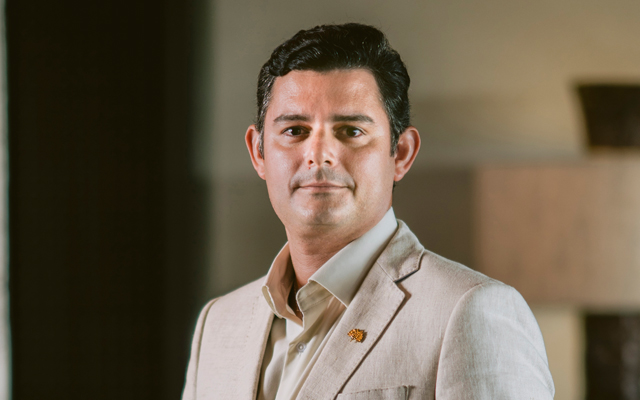
Raffles Bali has named Henri Arnulphy as its general manager, who brings nearly 20 years of international hospitality experience to the role.
Arnulphy has held senior leadership positions at resorts across the globe, including Jade Mountain in St Lucia, Constance Moofushi in the Maldives, and Sandy Lane Yacht Club in the Grenadines.
His experience spans resort transformations, new openings, and initiatives focused on sustainability and community engagement – values that align with Raffles Bali’s approach to conscious luxury.
Conrad Bengaluru has appointed Sunil Kumar as director of operations and Ashu Hattar as director of catering & events, marking a step forward in Conrad Bengaluru’s focus on strengthening its leadership capabilities and driving continued growth.
Kumar joins Conrad Bengaluru with over 17 years of experience in luxury hospitality, having started his career with IHCL. Most recently, as director of food & beverage at The Ritz-Carlton, Bangalore, he led strategic initiatives centred on brand repositioning and enhancing the dining experience. At Conrad Bengaluru, he will focus on improving operational cohesion, developing teams, and refining service standards.
From left: Sunil Kumar and Ashu Hattar
Hattar began her career at Hyatt Regency Delhi and has since held leadership positions with brands such as Pullman & Novotel New Delhi Aerocity, W Goa, and Le Meridien Gurgaon.
She most recently served as associate director of sales at The Ritz-Carlton, Bengaluru, where she led the group segment and contributed to key strategic projects.
Women are driving major changes in travel preferences across Asia, accounting for 82% of travel decisions worldwide. Reflecting this influence, Agoda has released new insights on women’s travel habits in the region, offering timely guidance for hoteliers looking to better engage this powerful demographic.
According to Agoda’s latest report, 60% of women in Asia prefer exploring lesser-known and culturally immersive destinations. Women from India and Indonesia lead the trend, with 80% and 69% respectively seeking experiences beyond traditional tourist paths.
Women are reshaping Asia’s travel landscape with a growing demand for immersive, flexible, and female-focused experiences
Family, friends, and female-focused travel
Group travel is another strong preference. Some 40% of women across Asia say they prefer travelling with family, compared to just 28% of men. In Indonesia, that figure jumps to 68%. Travelling with friends is also more popular among women, particularly in Japan and India.
While men still take more solo trips – 24% versus 15% – there are signs of growth in solo female travel, especially in Hong Kong and Thailand. Younger women aged 18 to 25 are showing the most interest in solo adventures, viewing them as a chance to break out of their comfort zones. Japan, New Zealand, Australia, Nordic countries, Spain, Singapore, and the UK rank among the safest destinations for solo women travellers.
Shorter, more frequent getaways gain momentum
The data also reveals a shift toward shorter, more frequent getaways. In 1Q2025, 35% of women reported taking two trips, up from 18% in early 2020. Many are taking advantage of long weekends and off-peak periods to travel more often, rather than saving leave for one extended holiday.
What this means for hoteliers
Agoda’s findings point to several ways hotels can respond. Properties can highlight local experiences, develop women-only tour products, and ensure enhanced safety features – such as secure access floors and trusted airport transfers. Stocking rooms with popular personal care amenities and beauty tools also caters to growing expectations around comfort and self-care.
“It’s clear that women are playing an increasingly influential role in all travel decisions,” said Andrew Smith, senior vice president, supply at Agoda. “Armed with data on women’s booking behaviours and preferences, hospitality leaders have a timely opportunity to reassess their approach to guest management.
“By proactively tailoring offerings to women travellers’ preferences, hotels can deliver exceptional guest experiences and secure loyalty from a demographic that is set to reshape travel in Asia. Embracing these trends can help position your business in a fast-moving travel landscape.”
NTUC LearningHub (NTUC LHUB) and the National Association of Travel Agents Singapore (NATAS) have officially launched the Certified Travel Professional (CTP) programme following the signing of a memorandum of understanding (MoU) at the NATAS Travel Fair 2024.
The three-year partnership aims to upskill Singapore’s travel workforce through targeted training, combining NTUC LHUB’s training capabilities with NATAS’ extensive industry network. The CTP programme, the first certification of its kind for the local travel sector, is designed for both new and experienced travel professionals, including career switchers and those interested in areas such as eco-tourism or corporate travel.
The new CTP programme aims to strengthen Singapore’s travel workforce through targeted skills training
The curriculum features a mix of core, general, and specialised modules, with a focus on sales, sustainability, emerging tech, wellness, and service excellence. Learners earn certification upon completing three modules and can choose from tracks in corporate, leisure, or combined travel. Recertification is required 18 months after completion.
All modules will be conducted in person and led by industry professionals. The pilot intake of 10 learners is set to begin in June 27, 2025. NTUC LHUB will manage the programme, while certification will be issued by NATAS.
Editor’s note: The article has been updated to reflect the correct pilot intake date, which will begin on June 27, 2025, instead of the previously stated March 2025.
Millennium Hotels & Resorts (MHR) has selected Amadeus’ digital media solution to support its digital media strategy and increase bookings.
Amadeus’ marketing tools and data insights will help MHR reach targeted audiences through search engine optimisation (SEO), social media, display advertising, and metasearch. The approach aims to reach travellers through various channels at relevant points in the booking journey.
Millennium Hotels & Resorts teams up with Amadeus to strengthen its digital media approach and increase global bookings
The two companies already have an existing relationship, with MHR using Amadeus’ global distribution system, travel intelligence tools, and Delphi solution for its group events business. These tools support Millennium’s commercial and operational efforts.
Anthoney Jayasekara, vice president, global digital marketing, CRM & Platforms, MHR commented: “This partnership has been instrumental in enhancing our digital presence and connecting with our guests more effectively. We look forward to continuing this journey of innovation and excellence in the years to come.”
Jan Tissera, head of international, hospitality, Amadeus, added: “We are proud to mark ten years of strategic partnership with Millennium Hotels & Resorts across many of our products. This collaboration has demonstrated the impact of strategic media solutions in boosting brand visibility and driving profitable demand. As we look ahead, we are excited to continue innovating and leveraging our data-driven marketing expertise, along with our BI suite, to better inform our digital marketing strategy and help customers connect with travellers in meaningful ways.”
Pan Pacific Hotels Group (PPHG) has launched Every Stay, a Local Discovery, a collection of staycation experiences to mark Singapore’s 60th National Day. The campaign includes six of PPHG’s hotels and serviced suites in Singapore: Pan Pacific Singapore; Pan Pacific Orchard; Pan Pacific Serviced Suites Beach Road; Parkroyal Collection Marina Bay; Parkroyal Collection Pickering; and Parkroyal on Beach Road.
Guests can explore Singapore through different stays, from garden escapes to city views and cultural neighbourhoods. Members of Pan Pacific Discovery can add extra value with experiences such as food tours, workshops, wellness activities, and heritage walks.
Celebrate SG60 in style with Pan Pacific Singapore’s Family Fun Together package
Pan Pacific Orchard offers a club and suites stay with food and wellness benefits. Pan Pacific Singapore has a Family Fun Together package from August 1 to 31, 2025, with interconnecting rooms, breakfast, children’s play area access, and discounts to nearby attractions. Guests can also watch National Day fireworks from their rooms.
Parkroyal Collection Marina Bay offers 10 per cent off the best available rates, rooms with private balconies and views, breakfast for two, and dining credits.
Parkroyal Collection Pickering includes National Day-themed room amenities, lounge access, and views of the nearby parade grounds.
Pan Pacific Serviced Suites Beach Road provides spacious suites near Kampong Glam, suitable for longer stays. Parkroyal on Beach Road offers rooms close to Arab Street and Haji Lane, encouraging guests to explore local shops and cafés.
Bookings are open for stays until August 31, 2025. Pan Pacific Discovery members earn Discovery Dollars to redeem on future stays.
The Chinatown Business Association will present the Chinatown Dragon Boat Festival 2025 from May 31 to June 1, taking place daily from 13.00 to 19.00 along Smith Street in Singapore.
The festival aims to bring residents, visitors, and businesses together in a shared celebration of tradition, food, and local culture in the heart of Chinatown.
Celebrate the Dragon Boat Festival in Chinatown with live performances, hands-on workshops, festive treats, and even a land-based Dragon Boat Rowing Race
Celebrating one of the oldest traditions in Chinese culture, the event will bring together a variety of activities centred around heritage, food, and community. Visitors can explore cultural workshops including a bookmark painting session and the Dragon Boat Canvas Voyage, where participants create dragon boat-themed artworks guided by facilitators.
At the Nyonya Chang Workshop, attendees will learn the traditional method of preparing and wrapping rice dumplings, and take home two uncooked pieces.
A land-based Dragon Boat Rowing Race will offer a chance for friendly competition, with individuals and teams aiming for the highest stroke count in timed rounds using dragon-inspired rowing machines. Traditional Lantern Riddles will also engage visitors in a test of wit and cultural knowledge.
Throughout both days, live performances will animate Smith Street, featuring lion and dragon dances, drum performances, traditional Chinese dance, face changing, harmonica music, and Teochew opera – showcasing various forms of Chinese performing arts.
Furthermore, there will be a quiet Art Corner offering books on seasonal traditions, symbolic items such as mugwort bundles and festive bookmarks, and a journal where visitors can pen messages or thoughts.
In addition, businesses along Smith Street will join the celebration with exclusive promotions, such as discounts on Nyonya Kebaya rentals, promotional prices on festive rice dumpling bundles, dragon boat-shaped banana split desserts, as well as chicken rice with dumpling-shaped rice to mark the occasion.
Ongoing tariff negotiations between global trade markets and the US as well as economic volatility will likely be a blip in the long-term forecast for the aviation industry, which maintains a positive outlook for 2025, especially in the Asia-Pacific region.
This view is conveyed through the newly published Aviation Outlook 2025 report by Alton Aviation Consultancy, a global firm with offices in New York, Dublin, Dubai, Hong Kong, Beijing, Singapore and Tokyo.
Asia-Pacific is projected to remain the largest market for air travel, driven primarily by increasing long-term demand from China and India
The report echoes IATA’s projection of more than five billion air passengers in 2025 and total industry revenues breaking the US$1 trillion mark for the first time in history.
The consultancy states that the aviation industry is expected to continue its long-term growth trend of four per cent per annum from 2024 to 2034, supported by a 2.7 per cent annual growth in global GDP. The Asia-Pacific region is projected to remain the largest market for air travel, with an anticipated growth rate of 5.1 per cent per annum, driven primarily by increasing long-term demand from China and India.
While Alton’s researchers agree that expectations are high for the aviation industry this year, they highlighted four conditions that could impact eventual performance.
First, supply chain issues continue to put pressure on aircraft production and delivery. Despite being able to ramp up production in early 2025, Boeing continues to see delivery delays, disrupting airlines’ fleet plans and limiting airlines’ network growth. Additionally, airworthiness directives grounding over 600 Pratt & Whitney Geared Turbofan (GTF) aircraft, combined with lower-than-expected durability of GTF and CFM International LEAP engines, are likely to remain an issue, as labour and material shortages continue to limit airline growth.
Second, airline yields are normalising, as increasing capacity and adjustments in leisure demand put pressure on top-line revenues.
Third, despite moderating revenues, cost inflation – particularly in labour and maintenance – will remain a key concern for airlines and the broader aviation ecosystem, as supply chain issues persist. Geopolitical tensions in Europe and the Middle East are also adding further strain to airline profitability.
Fourth, the growing risk of a global trade war is likely to reduce air cargo demand, putting additional pressure on the aviation industry and its profitability.
While there is a need to bear these conditions in mind, Alton Aviation Consultancy’s managing director Singapore, Mabel Kwan, told TTG Asia that air travel demand throughout past crises over recent decades was able to rebound after a period of adjustments.
“Unless there’s a fundamental shift that permanently dampens the desire to travel, I believe that you will see a slow adjustment back to the longer term demand curve,” she stated.
Kwan pointed out that airlines are also maintaining business confidence, evident in continued announcements of new aircraft orders despite economic woes.
Indeed, Vietjet, Vietnam’s largest private airline, announced on May 27 its order of 20 more Airbus A330-900 widebody aircraft to support its ambition to expand long-haul routes across Asia-Pacific and Europe in the next 10 years.
In the same week, Qatar Airways also put in an order with Boeing for 210 widebody aircraft.
Earlier in May, International Airlines Group, owner of British Airways, announced plans to buy 71 longhaul aircraft from Airbus and Boeing.
Kwan said airlines view the tariff negotiations as a “short term disruption” that would be sorted out before orders are delivered.
“There is a huge backlog in fleet orders and delivery of both narrow body and widebody aircraft. It may take close to 10 years to clear the backlog of narrow body aircraft, while for widebody aircraft, it could take five to six years,” she explained.
She added that “competitive tension” is also motivating airlines to order ahead, even in uncertain times, to facilitate growth in the next decade.
The long planning and development lead time adopted by airports also means that such facilities necessary for tourism development are insulated from cost fluctuations and global tensions.
“Master planning for airports takes 20 years,” stated Kwan, adding that this length of time allows authorities to lay down basic infrastructure – from electricity and sewage to roads and highways – far ahead to support the future air hub.
As the aviation industry navigates opportunities and challenges today, Kwan said there is a need for players to pay attention to technology, sustainability and resilience requirements.
Technology investments today will help address intensifying manpower constraints, which will determine efficiency and productivity.
“More importantly, in order for the aviation ecosystem to work as an integrated whole, there has to be an integration of technology platforms which will also move our industry up the productivity curve,” she said.
A sustainability mindset is essential, as the aviation industry aims for net zero by 2050 but remains far from meeting its targets.
Finally, a strategic approach to improved resilience is necessary, as the aviation industry has “undergone quite a few shocks” and more volatility can be expected.
Timor-Leste is set to join ASEAN as its newest member, a development expected to bring new opportunities for the region’s tourism sector.
The New Straits Times recently reported that Malaysia’s minister of foreign affairs, Mohamad Hasan, said ASEAN will begin domestic legal procedures to finalise Timor-Leste’s accession by the 47th ASEAN Summit and Related Summits in October 2025.
Timor-Leste gears up for ASEAN membership, opening new paths for regional tourism; Timor-Leste’s capital city, Dili, pictured
He made the announcement on the sidelines of the recent Association of Southeast Asian Nations summit in Kuala Lumpur.
Adam Kamal, director of Suka Travel & Tours in Malaysia, remarked that ASEAN membership could be a turning point for Timor-Leste’s tourism sector.
He said: “With strategic planning, support from ASEAN mechanisms and infrastructure development, the country can position itself as the last undiscovered jewel of South-east Asia.
“Blessed with pristine dive sites, unspoilt natural beauty and a rich cultural heritage, Timor-Leste holds strong appeal for adventure seekers and well-travelled Malaysians in search of new destinations to holiday.”
Suka Travel & Tours is currently exploring Timor-Leste’s tourism potential and planning to develop travel packages for the Malaysian market.
Adam said air connectivity is not a barrier, with Batik Air and AirAsia operating direct flights between Kuala Lumpur and Dili.
Apple Vacations Malaysia co-founder and group managing director, Koh Yock Heng, shared: “Our outbound customers are always looking for new and unique destinations to visit. We are currently researching Timor-Leste to understand its tourism offerings and assess what kind of travel packages we can develop.”
He added that Timor-Leste’s ASEAN membership may open opportunities for cross-border collaboration in the regional tourism sector.
Preferred Hotels & Resorts has released its first Luxury Travel Report, a consumer trends study conducted in partnership with The Harris Poll. The findings show that demand for travel remains steady, with luxury travellers planning an average of eight leisure trips in 2025, including three international journeys. More than half of respondents expect to spend more on travel than in 2024.
The report indicates that affluent travellers are placing importance not only on cost but also on meaning. These travellers are seeking curated experiences that feel personal and enduring, and are actively avoiding standardised options in favour of those rooted in authenticity and emotional engagement.
Luxury travel shifts focus from standardised comfort to personalised, meaningful journeys; Lefay Resort & Spa Dolomiti, pictured
The study reveals a shift away from uniformity in hotel design, service, and experience, with nearly 70% of respondents stating that luxury hotels have become too standardised. This trend has contributed to what the report calls “destination disillusionment,” where many destinations and hotel stays feel interchangeable. Almost 75% of respondents said they would not pay for luxury accommodation that feels generic.
Travel for affluent consumers is increasingly focused on rare and meaningful experiences rather than material accumulation. Over four in five respondents said that access to insider knowledge leads to the most memorable travel moments – 64% prefer guidance from local residents over recommendations from AI or digital sources.
Curation has become a key measure of quality in travel. Over 90% of respondents said the best trips feel seamless but are carefully arranged, and 89% expressed a desire to see local character reflected in hotels. Trusted travel advisors were valued more than online research by 84% of respondents.
There is also growing interest in history-based travel. Over 90% of those surveyed said they seek experiences that immerse them in cultural and historical contexts, with many preferring heritage-rich accommodation. The demand for larger spaces is also increasing, as 71% are planning multi-generational trips in 2025.
Loyalty programmes are gaining new relevance as travellers look for consistency and tailored service. For 82% of respondents, loyalty programmes are important in ensuring hotel quality, and nearly two-thirds said a good previous stay was the main reason for repeat bookings. Loyalty today is based less on transactions and more on customisation, human interaction, and reliable service.
Lindsey Ueberroth, CEO of Preferred Hotels & Resorts, said the report enhances understanding of traveller expectations and reinforces the group’s commitment to offering curated stays across its global portfolio. She added that Preferred Hotels & Resorts remains focused on enabling meaningful travel through its Believe in Travel approach.
The report was conducted by The Harris Poll from February to March 2025 among over 500 affluent US travellers. Respondents met criteria including an annual household income of more than US$250,000, at least US$1 million in total assets, and a minimum annual leisure travel spend of US$10,000.


 His experience spans resort transformations, new openings, and initiatives focused on sustainability and community engagement – values that align with Raffles Bali’s approach to conscious luxury.