AmaWaterways has appointed Melvyn Yap, a familiar face in the luxury travel sector, as its new business development director for South-east Asia, Hong Kong, Taiwan and South Korea.
Yap brings over two decades of expertise in the travel and hospitality industry to his role with AmaWaterways. With a strong background in international business management and tourism, he has held key positions within the luxury travel sector.
His experience includes serving as a regional director at a luxury ocean cruise line for over 15 years, where he partnered with travel agency communities in more than 10 Asian countries, developing regional initiatives and providing support to help travel advisors meet their sales goals.
With AmaWaterways, Yap will drive business growth and foster strong relationships with clients and partners in Asia.
Dusit International is making its mark in cinema as a key sponsor of The Maverick Academy, a high-energy reality cooking competition that premiered on Netflix on November 8.
Hosted by celebrity chef Alvin Leung, the show blends culinary mastery with entrepreneurial flair, challenging eight chefs from across South-east Asia – including one chef from Dusit Thani College (DTC) – to compete for the opportunity to join Leung as his apprentice and business partner.
Showcasing a blend of cooking challenges and business acumen, The Maverick Academy brings together eight talented chefs from across South-east Asia; photo by Dusit International
Adrian Rudin, managing director of Dusit’s reimagined flagship hotel, Dusit Thani Bangkok, also stars as a judge in one of the episodes.
John Lohr, executive director of external affairs at DTC, emphasised the show’s dynamic approach: “What I love most about The Maverick Academy is its energy and fun – it breaks away from the serious, elite image often tied to hospitality.”
He added that the series reinforces Thailand’s global culinary reputation while presenting Bangkok as a hub for hospitality education.
“Hospitality, at its core, should be about discovering passions and exploring the world, not just adhering to rigid, high-level ideals. That’s exactly what this show captures, and it’s why I wanted to be involved. It positions our school as a place where students can turn their passion into a profession while immersing themselves in the vibrant, modern environment of Bangkok – a city that defies outdated perceptions and offers a wealth of opportunities.”
The series highlights Dusit’s contributions to hospitality education, with key scenes filmed at DTC and sister facility The Food School.
Contestants also stayed at ASAI Bangkok Chinatown, a Dusit lifestyle property, while additional challenges featured Baan Dusit Thani, a culinary destination showcasing Thai gastronomy.
The show was also sponsored by the Tourism Authority of Thailand and several other prominent Thai corporations.
With its unique focus on culinary arts and entrepreneurship, The Maverick Academy not only entertains but also showcases Dusit International’s vision for the future of hospitality.
“It’s exciting to see DTC featured as, quite possibly, the first hospitality school ever on Netflix,” he remarked.
Hong Kong Airlines recently celebrated its 18th anniversary by unveiling its strategic development plan, which includes a return to the longhaul market in early 2025.
Following a successful restructuring last year, the airline has demonstrated strong recovery through strategic planning, optimising its route network and fleet structure. Hong Kong Airlines now serves over 30 destinations.
Hong Kong Airlines marks its 18th anniversary with a strategic plan for growth, including a return to the longhaul market in 2025
In 2024, Hong Kong Airlines has fully recovered to pre-pandemic flight levels, with an 85 per cent passenger load factor – it expects to exceed five million passengers for the year.
As part of its longhaul expansion, Hong Kong Airlines will resume its Gold Coast direct service on January 17, 2025, operating four times weekly. This will provide enhanced connectivity between Hong Kong, the Greater Bay Area, and Australia’s Gold Coast. Additionally, the airline will resume its Vancouver route on January 18, 2025, operating twice weekly, marking its official return to the international longhaul market.
Bookings for the Christmas and Lunar New Year period are strong, with ski resort routes in North-east Asia at 90 per cent capacity. To meet demand, the airline will increase flight frequencies in December, like launching its Sendai route and increasing flights to Seoul (twice daily) and Tokyo (five times daily), with Sapporo becoming a daily flight.
To support its growth, Hong Kong Airlines has expanded its fleet in 2024, adding multiple Airbus A330-300 wide-body aircraft for medium to longhaul routes. The airline has also introduced its first A321, configured with 220 all-economy seats, to boost capacity and operational efficiency. By year-end, the fleet is expected to grow to around 30 aircraft, with further expansion planned to increase capacity. Additionally, the airline will continue strengthening its codeshare network through partnerships.
Other airline enhancements include recruitment efforts, optimisation of aircraft cabins and airport lounge services, and an upgraded in-flight dining experience for business class passengers through collaborations with Michelin-starred restaurants. Additionally, in-flight entertainment systems are being restored on multiple A330 aircraft, with full service expected by 2025.
Hong Kong Airlines also reopened its VIP lounge, Club Autus, in 2023 at Hong Kong International Airport’s midfield concourse. The lounge offers exclusive services such as massage chairs and traditional Hong Kong-style delicacies.
Hilton has teamed up with Zhong Ding Guo Sheng to introduce its first LXR Hotels & Resorts property in China. The LXR property will be situated in the heart of Xi’an city and is scheduled to open in 2027.
Located within Datang Everbright City, and adjacent to eminent landmarks such as the Great Wild Goose Pagoda, Dayan Pagoda and Daci’en Temple, the hotel will feature 118 guestrooms, a fitness centre, swimming pool, and F&B venues.
The first LXR Hotels & Resorts property in China will be located in Xi’an city
Since LXR Hotels & Resorts’ debut in 2018, the brand has grown to a collection of 13 luxury properties around the world, each featuring a distinctive design, bespoke personal service, cultural experiences, and more. The new LXR Hotels & Resorts property in Xi’an joins Hilton’s existing luxury brands in China, Waldorf Astoria and Conrad Hotels & Resorts.
“Building on the success of Waldorf Astoria and Conrad Hotels & Resorts in China, the arrival of LXR Hotels & Resorts marks an exciting milestone as we continue expanding Hilton’s portfolio of luxury brands in the region,” said Candice D’Cruz, vice president of luxury brands, Asia Pacific, Hilton. “Introducing our first LXR property in a destination rich in culture, cuisine, and art underscores our commitment to curating immersive, story-filled stays that connect discerning travellers with the heart of the locale.”
Zhong Ding Guo Sheng chairman Li Cheng Ping added: “This new hotel will offer guests the perfect fusion of distinctive cultural characteristics, diversified accommodation choices, and unique tourism experiences. With Hilton’s expertise in luxury travel and global hotel management, we believe that LXR will become a new tourism landmark of this city, attracting more visitors thus contributing to the high-quality development of tourism in Xi’an.”
Star Alliance has opened its first lounge in Asia at Guangzhou Baiyun International Airport (GBIA) in Guangzhou, China, which is available to First and Business class passengers, and Star Alliance Gold status customers on member airline flights departing from Terminal 1.
The new Star Alliance branded lounge is located on the upper level of the existing GBIA lounge in the Terminal 1 international area, offering exclusive access to Star Alliance member airline guests. Ideally situated close to the departure gates for Star Alliance member airlines, the lounge features an open layout and offers 750m² of space which can accommodate up to 100 guests and is open around the clock.
Star Alliance has unveiled its first lounge in Asia at Guangzhou Baiyun International Airport in China
The lounge features a glass facade offering tarmac views, filling the space with natural light. It also includes amenities such as shower suites, workstations and seating areas, with a 100m² VIP room ideal for group or private business meetings available upon request.
Offering a sense of connection to Guangzhou and the Pearl Delta River region, the lounge is adorned with art pieces by local artists, and has an exclusive Tea Appreciation Corner that will be available on special occasions. Guests can also enjoy a range of food options, with light bites and regional delights featuring local cuisine served throughout the day, as well as enjoy drinks at the dedicated bar counter.
Given Guangzhou’s growing importance as a major travel hub in Asia, Star Alliance also plans to open a new branded lounge in the upcoming Terminal 3 of GBIA.
Qi Yaoming, deputy general manager of GBIA, said: “The fact that Star Alliance has chosen to open its first branded lounge in Asia at Guangzhou Baiyun International Airport is not only a sign of trust and support for us, but also an acknowledgment of the status of Baiyun Airport as an important international hub.”
“As a key strategic hub in Asia, Guangzhou serves as an important gateway for our guests. We are excited to inaugurate our first lounge in Asia, given the significance of the continent to aviation growth today and in the years to come,” shared Star Alliance CEO Theo Panagiotoulias.
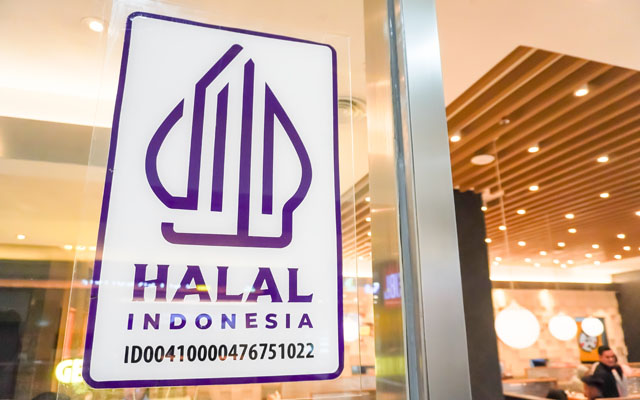
Indonesian hoteliers have raised concerns about the effectiveness of the mandatory halal certification enforced by the Indonesia Halal Product Assurance Agency (BPJPH) under the Ministry of Religious Affairs.
The policy, which took effect on October 18, applies to most businesses across the country.
Hotel industry leaders question the practicality and cost of the strict halal certification requirements; photo by Rizky Ade Jonathan
BPJPH chairman Haikal Hassan stated “all products circulating and traded in Indonesia must have clear boundaries between halal and non-halal”, adding that sanctions would be imposed to those failing to comply.
BPJPH has begun nationwide Halal Product Assurance supervision to ensure that medium and large businesses obtained the required halal certification.
Following the announcement, the Indonesian Hotel General Managers Association (IHGMA) and the Indonesian Hotel & Restaurant Association (IHRA) met with BPJPH to highlight the challenges the hospitality industry faces if the government continues to enforce this strict regulation.
Erick Erlangga, head of legal affairs at IHGMA, told TTG Asia that the meeting aimed to clarify the definition of products that must be certified under the law.
Referring to the government regulation, the mandate applies to three categories of products produced by medium and large businesses: food and beverages, raw food materials and additives, and slaughtered products and services.
Erick explained that the regulation focuses on the meat cutting and processing procedures, meaning certification applies to food products and suppliers. He added that hotels not declaring themselves as halal properties are not affected by the new regulation.
He added that the most affected hotels, however, are those that have declared themselves as halal hotels, as they now need to comply with new derivative regulations.
Maulana Yusran, secretary general of IHRA considers the new derivative regulations burdensome and unnecessary.
Giving the example of halal certification for food menus, which hotels are required to apply for each item, he said: “If a hotel has three restaurants and each has 20 food and beverage items on the menu, that means the hotel must have 60 halal certifications.”
In addition, the regulation is becoming increasingly irrelevant because hotel menus often change and are seasonal, while the certification process takes time.
Maulana continued: “The menu may have changed by the time the certificate is issued. So, should we sell the same menu for years? This impacts sales and stifles the creativity of F&B services in hotels.”
For IHRA chairman Hariyadi Sukamdani, the biggest burden of the new regulation lies in the cost and certification procedures. He said: “Previously, certifying one restaurant cost a hotel between US$314 and US$627. Now, the cost ranges from US$1,883 to US$4,393 per menu. Just imagine how much it costs to become a halal hotel.”
The certification process is also becoming more complicated. In addition to registering with the Food, Drug, and Cosmetics Assessment Institute of the Indonesian Ulema Council, applicants must now also register with the government’s BPJPH.
“Although it is all digitalised, the prerequisites and procedures are piling up,” Haryadi added.
Concerned that most hotels will choose not to apply for a halal hotel label, while those already certified may opt not to renew their certification, Maulana said: “(Hotels that) initially wanted to add value with a ‘halal label’ are now burdened with costs and regulations.”
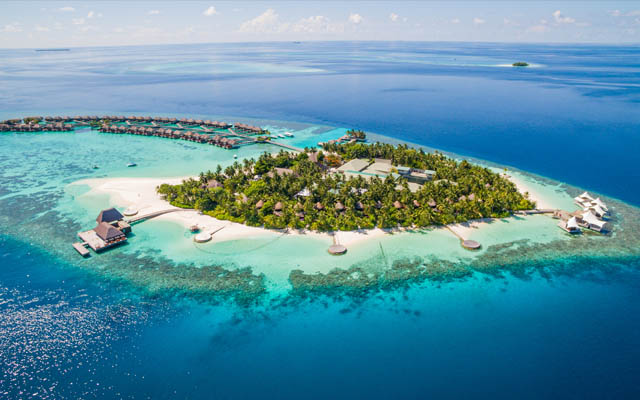
A surge in taxes and the compulsory exchange of foreign currency to local currency for resorts in the Maldives has raised concerns among operators, especially as the industry continues to recover from the effects of the Covid-19 pandemic.
Starting December 1, the airport tax for foreign passengers will rise to US$50 for economy class, up from the current US$30. For business class passengers, the tax will double to US$120 from US$60, while first-class passengers will see an increase to US$240 from US$90. The increase for local passengers is lower in comparison.
Maldives resorts face challenges with rising taxes and currency exchange rules
From July 2025, the Tourism Goods and Services Tax (T-GST) goes up to 17 per cent from 16 per cent while from January 2025, the green tax – a daily fee levied on each tourist – will double to US$12 per day from US$6 for resorts of over 50 rooms and to US$6 from US$3 for resorts less than 50 rooms. In January 2023, this tax went up substantially from 12 per cent to 16 per cent, which had a significant impact on tourism in the Maldives.
In another move, prompted by a foreign exchange crisis faced by the government, resorts will be required to exchange US$500 per tourist into local currency starting in January, for resorts with an average daily rate (ADR) over US$800. This policy also applies to fam trips for travel agents and journalists, even though no revenue is generated from these activities. The Maldives Association of Tourism Industry (MATI) has raised concerns and reportedly urged the government to revise the rule, suggesting it apply to 10 per cent of total revenue instead. The government has yet to respond to this proposal.
Resort owners, speaking to TTG Asia on condition of anonymity, expressed concerns that the high taxes and compulsory foreign currency exchange would affect all aspects of their operations. “All our expenses, including food imports, loan repayments, fuel, utilities, salaries, and service charges, are paid in dollars, and we don’t have enough dollars for the compulsory exchange. The high taxes will kill the industry,” remarked one local owner.
In October this year, the Maldives Monetary Authority (MMA) announced plans to implement a new foreign exchange regulation which requires all foreign currency earnings from the tourism sector to be deposited in banks.
For several months, the country has been battling weakening foreign reserves and rising external government debt, and struggling to service its foreign debt. Fitch Rating stated in a report that the decline in foreign reserves to US$492 million in May 2024 from US$748 million a year ago reflects a persistently high current account deficit. Furthermore, Moody’s Ratings showed the country’s total external debt obligations are at about US$600 million to US$700 million in 2025 – this figure could rise to US$1 billion by 2026.
In a letter to the IATA on August 31, the finance minister informed the association of the increase in airport tax, stating that while such charges typically require four months’ notice, “…we urgently need to move forward as proposed given the challenging fiscal and external position of the country.”
The proposed departure tax increase puts a lot of pressure on tour operators as bookings have already been made until April 2025, resort owners said, adding that they may have to bear the loss.
An international chain CEO, who declined to be named, said: “We are urging the government (in a letter to the Ministry of Tourism) to delay these taxes and give the industry time to adjust to these changes as we have contracts running for more than six months. We are not opposed to the increased taxes but we are concerned about the timing of these changes.”
Despite these challenges, the Maldives remains optimistic, aiming for 2.2 million tourist arrivals in 2025, up from over 1.5 million in 2024.
SiteMinder has revealed that Indian travellers are emerging as the most influential change-driving force in the global hotel industry in its SiteMinder’s Changing Traveller Report 2025, the largest survey globally on accommodation.
The report, based on a survey of over 12,000 respondents across 14 key tourism markets, including India, underscores how Indian travellers, through their online and on-site preferences, are reshaping expectations and fuelling the rise of the ‘everything traveller’ – a new guest set to blend emerging and traditional behaviours in 2025.
The report shows that more Indian travellers are expecting to spend a significant amount of time enjoying the activities and facilities at their hotel
SiteMinder’s data highlights five key areas where Indian travellers are prompting hotels to evolve:
Online booking experience
For their 2025 stays, Indian travellers will demand top-tier digital experiences. Nearly 65% have abandoned an online booking before, rising to 80% among Gen Zs (aged 18-27), the most globally. Website load times (30%), complicated payment processes (26%) and concerns about security (25%) are the main drivers of website abandonment.
Digital presence and reputation management
Indian travellers are rapidly becoming more reliant on online forums (19%) and social media (12%) to start their hotel search, and are now seven times more likely to use these channels than seek hotel tips from family or friends (4%).
Room sale strategies
Only 30% of Indian travellers will book a Standard (basic quality) Room in 2025, ranking them among the lowest globally for basic room selections. However, their room preferences and needs are quickly evolving. Nearly 79% are now more likely to purchase their room as part of a travel package, while 92% are open to paying more for an eco-friendly option and 61% plan to work on-site.
Events and dynamic pricing
Driven by family celebrations (51%) and weddings (33%), 89% of Indian travellers are more likely to travel for an event in 2025. As they do, a strong majority (84%) support hotels being able to adjust their prices during busier periods, with only 3% opposed to this concept.
Revenue maximisation per guest
Indian travellers are projected to lead all travellers globally for time on site in 2025, with 80% expecting to spend most or a significant amount of time at their hotel. Additionally, 74% intend to spend more money on their accommodation, offering hotels an opportunity to capitalise on those seeking to make the most of their stay – for example, the 44% likely to seek yoga classes or the 40% expected to take cultural cooking classes.
SiteMinder’s regional vice president of the Asia-Pacific, Bradley Haines, says hotels in Australia, the US, the UAE, Canada and the UK – the five destinations Indian travellers intend to travel to most next year – should take particular note of these findings.
“Our data confirms the need for technology to meet the demands of an increasingly multifaceted traveller next year, and no one is pushing the hotel industry to change faster than the savvy Indian traveller,” noted Haines.
“Hotels today are operating in an era where guests hold increasing influence over their stays, and it’s clear that the evolving needs of those guests are both broad and deeply specific. This is what the everything traveller personifies – the need to be both impulsive and considered, to travel locally as well as overseas, and to have a clear demand for control.
“Hotels looking to find success in 2025 would do well to accommodate these nuanced preferences, using data-driven insights to anticipate guest needs and deliver the stay they envision. This will be especially important when targeting and welcoming the Indian traveller, who is set to arrive at hotels with greater complexity and in higher numbers than ever before.”
Mandarin Oriental Hotel Group has teamed up with Sommet Education to advance the hospitality industry by nurturing future talent, promoting diversity, and offering innovative learning and development programmes.
The partnership is focused on three pivotal goals: providing immersive real-world learning opportunities for students, enhancing the skills of Mandarin Oriental colleagues through bespoke training programmes, and opening career pathways for high-potential individuals.
The partnership will provide scholarships, mentorship, and tailored initiatives to underrepresented talent, offering access to education and career opportunities
The alliance will draw on Sommet Education’s network of globally recognised institutions – Les Roches, Glion, École Ducasse, Invictus Education, Indian School of Hospitality as well as Sommet Education Foundation – alongside Mandarin Oriental’s emphasis on quality experiences.
By integrating the Mandarin Oriental industry expertise into Sommet Education academic programmes through workshops, leadership talks, and exclusive on-site visits, students will gain invaluable practical experience. Simultaneously, bespoke training initiatives tailored to Mandarin Oriental’s people-centric ethos will enhance the skills of its colleagues, ensuring they are equipped to deliver quality service at every level.
Laurent Kleitman, group chief executive of Mandarin Oriental, remarked: “We are proud to be partnering with Sommet Education which has produced many of our top talents across their various educational institutions already today and is developing the talent of tomorrow. Together we will foster exceptional learning, to promote career opportunities in our profession.”
Benoît-Etienne Domenget, CEO of Sommet Education, added: “This collaboration extends beyond traditional boundaries, offering invaluable career and learning pathways in hospitality for young students, colleagues and underserved talented individuals. Together, we aim to foster a new generation of leaders who will shape the future of hospitality experiences.”
Beijing’s Niding International Travel Agency (NITA) is banking on sister company QIan Liang Technologies Co. (QLTech) to develop AI and Large Language Model (LLM) applications to expand into inbound travel and beef up its business events segment.
Kang Rui, founder and CEO, said the companies founded in 2012, specialise in personalised outbound travel services for mid- and high-end customers through a reverse-customisation model.
Kang (second from right) was a speaker at ITB Asia; photo by Caroline Boey
He noted: “Tourism is a long-tail market with a vast audience and addresses users’ fundamental emotional needs. I believe generative AI is best suited for the leisure segment due to low standardisation of products and services and the diverse nature of leisure travel demanding highly customised solutions, making it difficult to standardise offerings.”
AI makes time-Intensive processes such as designing and planning leisure itineraries more efficient and addresses high knowledge and creative experience requirements to cater to a wide range of customer preferences.
“However, the development and application of generative AI will provide significant support and opportunities for the entire tourism industry, including FIT, MICE, and all facets of the travel ecosystem,” Kang added.
QLTech, he shared, will develop AI and LLM applications tailored to business events and corporate travel scenarios in the near future.
The company’s internal system Fullroutes will also be offered to travel suppliers in the next phase with the primary function of generating and storing data of customised travel products and providing a structured framework for collaboration with travel suppliers.
NITA has a base of more than 600,000 middle- and high-end customers, with an annual revenue of more than US$500 million, split into US$30 million for MICE, US$250 million for small leisure groups, and US$220 million for FIT.
It covers destinations in nearly 200 countries and regions globally.



 Yap brings over two decades of expertise in the travel and hospitality industry to his role with AmaWaterways. With a strong background in international business management and tourism, he has held key positions within the luxury travel sector.