The 2025 edition of Pair’d Margaret River Region x Range Rover (Pair’d) will take place from November 20 to 23, featuring more than 30 events across the region combining food, wine and cultural programming.
Argentine chef Francis Mallmann will return to Australia for the first time in over a decade to headline the festival with an open-fire dining event. Known for his Netflix appearance on Chef’s Table and cookbooks Seven Fires and Mallmann on Fire, Mallmann focuses on wood-fire cooking and outdoor dining experiences.
Nature’s Table offers an outdoor setting where international chefs prepare meals over fire, using local produce against the backdrop of the Margaret River landscape
He will be joined by chefs from Michelin-starred restaurants including Julien Royer (Odette), Rishi Naleendra (Cloud Street), and Dave Pynt (Burnt Ends) from Singapore; and Nathan Outlaw (Outlaw’s) from the UK. Additional participants include Tom Parker Bowles, Josh Niland, ArChan Chan, Kirk Pengilly, Layne Beachley, Silvia Colloca and Matt Moran.
The 2025 programme builds on the 2024 debut and includes 30 ticketed experiences such as fire-led dinners and performances in natural settings. The schedule also features Tasting Notes: Sound of a Region, a sonic wine experience by sensory researcher Jo Burzynska.
Pair’d will follow the World’s 50 Best Vineyards awards, which will also be held in the region.
Range Rover has joined as the 2025 presenting partner.
People around the world are becoming increasingly health conscious, and their needs are fuelling impressive growth in wellness products and services. According to the Global Wellness Institute, there was a 26.4 per cent leap in demand between 2022 and 2023, valuing the segment at US$41 billion.
Factors driving wellness pursuits include an aging population that is focused on healthspan, increasingly congested urban hubs and hurried pace of life that demand a deliberate deceleration, and improved education around holistic wellness.
It is, therefore, of little surprise that public and private sectors in the travel and tourism industry are responding eagerly to health and wellness trends. From government-led curation to private sector experience development, health and wellness offerings in Asia-Pacific are flourishing.
Indonesia, for example, has been raising the standards of its traditional treatments while working with destinations and private sector players to introduce more modern, science-backed programmes, so as to cater to a wider range of health-focused travellers.
Competition among destinations in Asia-Pacific is burning hot. Singapore is expanding its calendar of high-profile wellness events while Western Australia initiated its Wellness Tourism Strategy last year, with an ambition to use the wellness sector to drive higher value, year-round visitation.
The expansion of health and wellness experiences and products not only benefits overseas visitors, but locals as well.
While tourism leadership may sound the intention to develop a health and wellness specialisation, private sector players must also come to the party with ideas and investments. At the same time, relevant government agencies must step up with systems to facilitate talent acquisition, licensing, and cross-border training because the health and wellness business is labour intensive and continuous innovations demand ongoing education led by experts who may hail from overseas.
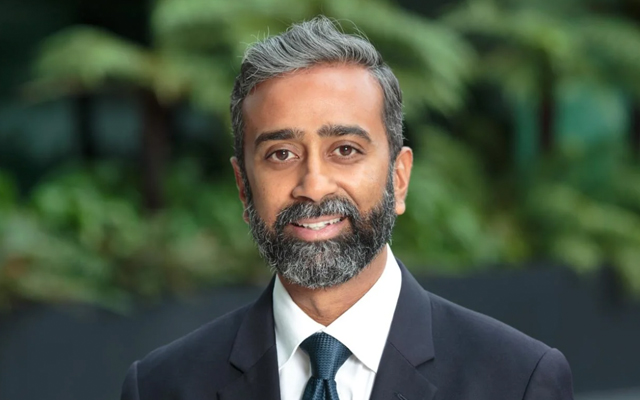
Air New Zealand has appointed Nikhil Ravishankar as its next CEO, effective from October 20, 2025.
He will replace Greg Foran, who is stepping down after nearly six years in the role.
Ravishankar is currently Air New Zealand’s chief digital officer and has been with the airline for almost five years. In that time, he has led improvements across the airline’s technology systems, loyalty programme, and customer experience.
Before joining Air New Zealand, Ravishankar held senior roles at Vector and Accenture.
Feria Kazemi has been named director of communications at The Peninsula Hotels.
She joined the company’s global headquarters in Hong Kong earlier this year after relocating from the UK. In her new role, she will lead global communications efforts, including earned media, content development and brand partnerships, while also serving as a representative of the nearly 100-year-old hospitality group.
Kazemi brings more than 12 years of international communications experience across the travel and technology sectors. She was most recently reputation and industry relations manager, EMEA, at Google in London.
ASEAN tourism leaders are calling on member states to present a unified front to tap the full potential of India’s booming outbound travel market, positioning the region as a culturally rich, seamless destination.
The call was made during the ASEAN-India Forum in Bangkok, hosted by the Tourism Authority of Thailand (TAT) in celebration of the ASEAN-India Year of Tourism 2025 and under the ASEAN-India Cooperation Work Plan 2023–2027 – of which Thailand has been designated the lead country for promotion and marketing.
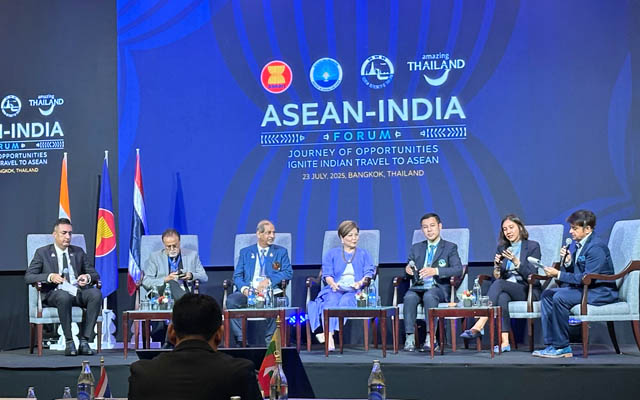
The ASEAN-India Forum brought together industry leaders to explore ways to boost Indian travel to the ASEAN region; photo by Tourism Authority of Thailand
“India is now one of the fastest-growing source markets for ASEAN, with over five million travellers recorded in 2024,” said Verna Esmeralda C Buensuceso, chair of ASEAN NTOs and assistant secretary at the Philippines Department of Tourism.
“This growth is being fuelled by economic trends, policy changes, and evolving travel preferences,” she added.
Thailand alone welcomed more than two million Indian arrivals in 2024, placing India among its top three inbound markets, shared Pattaranong Na Chiangmai, TAT’s deputy governor for International Marketing (Asia & South Pacific).
She noted that Thailand, Singapore, Malaysia, and Indonesia all ranked among the top 15 destinations for Indian travellers in 2023.
Buensuceso highlighted recent visa liberalisation measures by ASEAN countries.
“Thailand, Malaysia, Vietnam, and Indonesia have led the charge, offering visa-free or simplified entry processes to Indian visitors,” she observed, mentioning that air capacity from India to South-east Asia is projected to surpass pre-pandemic levels by 2025.
The forum also spotlighted cruise tourism as a growth opportunity. In June, the inaugural ASEAN-India Cruise Dialogue in Chennai brought together all 10 ASEAN nations to discuss the creation of a regional cruise network.
ASEAN secretary-general Kao Kim Hourn urged the region to shift perception from a cluster of destinations to “one incredible region – connected, diverse, and culturally rich”.
He called for co-branded campaigns that appeal to Indian sensibilities, such as “Bollywood-style escapes, spiritual trails, and multigenerational family holidays”, and outlined a three-pronged strategic focus: connectivity, inclusivity, and sustainability.
“We must collaborate on new city-pair routes, ensure culturally inclusive tourism experiences, and promote low-carbon, climate-smart travel. Tourism is not just an economic driver – it is a bridge for deeper connection. Every journey taken strengthens our regional bonds,” he summarised.
The forum concluded with a roundtable between ASEAN NTOs and Indian travel stakeholders to discuss best practices, operational challenges, and future collaboration. A technical visit to Pattaya followed on July 24, showcasing Thailand’s readiness to serve the Indian market and adapt its offerings to high-yield segments.
At the ASEAN-India Forum, the session titled Emerging Trends in Demand and Travel Experiences that Attract Indian Travellers explored ways for the region to tap India – the world’s fastest-growing outbound travel market.
Last year, ASEAN as a region welcomed six million Indian tourists. Thailand alone drew nearly 2.1 million Indian tourists in 2024 – a record number – making India one of its largest source markets.
Six industry leaders join a Tourism Authority of Thailand forum to discuss trends in high-spending Indian travel to ASEAN countries; photo by Anne Somanas
“India currently sends nearly 30 million outbound travellers annually; that’s just two per cent of our population. Once airlift improves, ASEAN can expect a surge,” commented Shreyash Shah, commercial director at Destination Hospitality Management.
“Tier II and III cities are where the next wave will come from,” underscored Santosh Kumar, country head, Indian Subcontinent & Indonesia at Booking.com.
He added that destinations should move beyond massive blanket campaigns to consider micro-targeting secondary destinations.
“Regional influencers often outperform Bollywood stars or national celebrities in building trust and engagement,” he advised.
Vathanachai Vathanakul, vice president of the Association of Thai Travel Agents (ATTA), highlighted the group’s 2024 road shows to Hyderabad and Chennai – cities that have historically received less attention.
“During this two to three year period, we’re focusing on South India. North India has already seen many road shows, but South India has been left behind,” he said.
Vathanakul notes this is shifting, driven by direct flights from both Thai Airways and budget carriers such as Nok Air. ATTA road shows in September 2025 will target Cochin and Andhra Pradesh, with Cochin already ranked among Thailand’s top 10 Indian source cities.
“India is performing,” said Nikhil Sharma, managing director and COO, South Asia at Radisson Hotel Group, highlighting a rise in premium hotel stays, group travel and multi-generational family travel.
“Guests are willing to pay more for larger rooms and upgrades. They travel with extended families and want rooms in the same corridor, vegetarian food options, and high-speed Wi-Fi. Personalised service is essential – they’re used to being pampered at home and expect that abroad,” he underscored.
Even small details like seeing Hindi channels or having Hindi-speaking staff can foster loyalty. He also pointed to the distinct mindsets, customs, and preferences of North, South, and West Indians.
“Indians are diverse – that’s why true personalisation matters – whether it’s during check-in, dining, or respecting religious practices,” he observed.
Shivya Nath, travel writer and founder of The Shooting Star, pointed to a mindset shift among younger Indian travellers. She said: “They’re done with traditional marketing. They want immersive, conscious travel that tells stories – not just photo ops. They’re seeking value – not in terms of price, but in meaning.”
She encouraged destinations to move away from performative culture and instead offer authentic community engagement and emotional storytelling.
“Reintroduce known places with fresh angles. Offer bespoke itineraries. Give them something real,” she commented.
Sharma added: “Social media is leading the way for this market – get the value for money, family-friendliness and food choices right and you win.”
Chuan Thakar, president of the Indian Association of Thailand, called on ASEAN governments to think bigger, especially with sports tourism: “If you want to bring Indians to ASEAN, bring cricket. It’s a religion in India. Just one Indian Premier League event could bring 10,000 visitors and a billion baht in value. Why should Dubai host it all?”
He added that Dusit Thani Hua Hin is one of the few Thai hotels with a cricket ground – a missed opportunity in his view.
Panellists agreed that simplifying travel, particularly through visa relaxations, has been highly effective in attracting Indian travellers.
Sharma also noted a strong preference for last-minute deals and bundled experiences: “They’re looking for curated packages that agents are well-positioned to deliver, along with shorter trip durations and priority access.”
Meanwhile, improved regional airlift remains a critical enabler.
“Airlines are the bridge,” said Krid Pattanasan, head of government relations at Thai AirAsia.
He noted that as of November 2024, only 36,759 weekly seats were allocated between major Indian metro cities and Thailand.
Sharma also suggested that India should actively look to attract more travellers from ASEAN markets.
“India sent six million travellers last year to ASEAN countries, but we only received 700,000. Cultural exchange and greater understanding will happen once India starts to receive more ASEAN travellers,” he concluded.
With the recent climbing accidents, including a fatality and multiple falls along Mount Rinjani’s extreme Lake Segara Anak route, the Rinjani National Park Authority has temporarily closed the Pelawangan Sembalun–Segara Anak trail from July 18. All six routes on the mountain will be fully closed for 10 days from August 1 to allow for corrective measures.
The accidents include a Brazilian tourist who died on June 24, followed by injuries to a Malaysian hiker on June 29, a Swiss hiker on July 16, and a Dutch hiker on July 17.
Mount Rinjani closes all routes for 10 days from August 1 as authorities implement new safety measures following a series of climbing accidents
In a statement, the Rinjani National Park Authority said a coordination meeting led by the Coordinating Ministry for Political and Security Affairs and the Ministry of Forestry on July 22 decided on the temporary closure of all Mount Rinjani trails to strengthen safety protocols.
Ahmad Nur Aulia, head of the West Nusa Tenggara Tourism Office, said new standard operating procedures (SOPs) would be set during the 10-day closure and implemented from August 11.
Travellers who have purchased climbing tickets will be allowed to reschedule their bookings.
Tourism industry leaders have expressed mixed reactions to the closure. Dewantoro Umbu Joka, chairman of the ASITA West Nusa Tenggara Chapter, acknowledged that Rinjani’s trails have always carried risks, and while the recent incidents gained viral attention, countless safe climbs often go unnoticed.
While it offers an opportunity to address shortcomings, the immediate impact on porters’ incomes is a significant concern, necessitating alternative solutions.
Vicky Gosal, founder of Karash Adventure Indonesia, said the local communities, especially porters, depend on daily wages from Rinjani, particularly during the peak climbing season of July and August. He stressed the need for solutions that allow the community living around the foothill to continue earning income and prevent tourist disappointment.
“All mountains (have the elements of) danger. Mountain climbing is challenging, but the fact that hundreds to thousands of people pass through every day (proves that) they are actually safe,” he said.
Vicky said existing SOPs from the National Park and tour operators are already designed to prevent emergencies and ensure climber safety and comfort. However, he questioned the implementation and monitoring of these SOPs, including trail maintenance, signage, and operator compliance.
Sahlan M Saleh, head of the West Nusa Tenggara Regional Tourism Promotion Board, however, stated existing SOPs needed further improvements to make them more responsive to critical situations. He remarked: “Mount Rinjani is not for beginners due to its high difficulty and risk.”
He said discussions were ongoing with the central government, the Mount Rinjani Conservation Centre, and the National Search and Rescue Agency to establish new, stricter requirements for climbers, ensuring all individuals meet certain standards before ascending. This includes educating the market about SOPs, the importance of insurance, and the necessity of thorough preparation.
Vicky emphasised the need for routine risk mitigation and consistent monitoring of SOP implementation by management. He also highlighted the disparity between certified mountain guides, who follow strict ethical standards and possess advanced competencies, and uncertified individuals who may lead hikes after only a few personal climbs.
Dewantoro suggested practical measures such as improving trail conditions, deploying officers at key guard posts, and enforcing limits on guide-to-climber ratios during open trips. This, he said, would ensure that if a climber falls ill, one guide can stay behind while the others continue safely.
Despite the incidents that recently went viral, industry players noted that demand for travel to Lombok has seen minimal impact.
A new passenger terminal has opened at Velana International Airport in the Maldives on July 26, increasing capacity and expected to drive further growth in tourist arrivals to the island nation.
At the evening event, Maldives president Mohamed Muizzu welcomed guests, including representatives from funding countries Saudi Arabia and Abu Dhabi, and described the development as a bold step forward in the country’s development.
The new terminal boosts Maldives airport capacity and readies nation for more tourist arrivals
“The new passenger terminal will not only serve as a catalyst for growth in tourism but also to its economy,” he said. Tourism accounts for nearly half of the country’s revenue and is one of its largest employers, with close to 200 resorts. The new terminal is expected to help the Maldives reach its 2025 target of 2.3 million tourist arrivals.
A country manager from a global DMC noted the improvement to capacity and service. “This airport expansion was needed if not overdue. I believe once all the airlines move it will provide the best experience guests can expect when they arrive,” the official, who declined to be named, told TTG Asia, adding that the old terminal during peak times was a challenge.
The new terminal, the largest building in the Maldives, can handle 7.5 million passengers annually, up from the previous 1.5 million. It was developed alongside a runway expansion to accommodate larger aircraft such as the A380.
Initially, only narrow-bodied aircraft will use the terminal, with wide-bodied aircraft expected to follow by September after facility audits are completed by airline operators. The facilities have been developed in line with standards from the International Civil Aviation Organization and the International Air Transport Association.
The terminal cost nearly US$585 million, with construction beginning in 2016. Funding came from concessional loans provided by Abu Dhabi, Saudi Arabia, Kuwait, and OPEC, along with contributions from the Maldivian government. Repayment is scheduled over 15 years.
Currently, 34 international airlines operate flights from 36 destinations. The new capacity is expected to attract additional carriers. The Maldives also operates the world’s largest seaplane network, with 86 aircraft and around 9,000 seaplane movements daily, in addition to 11,000 aircraft movements.
The terminal includes 12 aerobridges – absent from the previous terminal – six contact gates, an automated baggage system that can process 3,000 bags per hour, 90 check-in counters, and six self-service kiosks, with plans to expand to eight.
Its exterior design draws inspiration from the movement of ocean waves.
Wyndham Hotels & Resorts and Ovolo Group have partnered to bring five Ovolo hotels in Australia and Hong Kong under the Wyndham brand.
Under the agreement, Ovolo will continue to own and operate the properties while working exclusively with Wyndham to support new development across Asia-Pacific.
Five Ovolo hotels in Australia and Hong Kong will join Wyndham’s portfolio later this year
The partnership comes as demand for experiential travel grows globally, a segment estimated to be worth around US$1 trillion, particularly among younger travellers including Gen Z. The five hotels – located in Sydney, Brisbane, Canberra, Melbourne and Hong Kong – will be added to Wyndham’s portfolio later this year, representing over 450 rooms. Each property will be integrated into Wyndham’s sales, marketing and distribution platforms. They will also become part of the Wyndham Rewards loyalty programme, which has approximately 120 million members.
The hotels reflect Ovolo’s distinctive design and service approach. In Hong Kong, Ovolo Central is a 41-room hotel located near Lan Kwai Fong and SOHO, offering modern interiors and natural light. In Canberra, Ovolo Nishi is an 85-room hotel in the CBD, featuring a mix of vintage and contemporary design. Ovolo South Yarra in Melbourne includes 123 rooms styled with mid-century elements and is located near dining and nightlife options. In Brisbane’s Fortitude Valley, the 103-room Ovolo The Valley is close to bars, galleries and venues. Ovolo Woolloomooloo in Sydney is a 100-room hotel on the Finger Wharf, offering waterfront views and access to key attractions.
The move will expand Wyndham’s lifestyle hotel offering while giving Ovolo access to a broader commercial network.
“The future of travel isn’t about sameness – it’s about spaces with soul, brands with a point of view and experiences that don’t blur into the background,” said Joon Aun Ooi, president of Wyndham Hotels & Resorts Asia Pacific.
Shivang Jhunjhnuwala, chief of staff at Ovolo Group, added: “Ovolo isn’t just a hotel brand, it’s a lifestyle, a creative force that fuses fashion, art, music and entertainment. Now through our partnership with Wyndham, we’re flipping the script to unlock bold new growth opportunities by franchising a lifestyle brand without diluting its DNA.”
Fairmont Hotels & Resorts is marking International Dog Day on August 26 with a selection of pet-focused offerings available across selected properties. These complement its year-round pet services, which are designed to accommodate guests travelling with dogs.
A number of Fairmont hotels feature Canine Ambassadors – resident dogs that interact with guests and offer companionship in the lobby or on short walks. These include Serene at Fairmont Tokyo, Calla at Fairmont Jasper Park Lodge, Cori Copley at Fairmont Copley Plaza in Boston, Georgie at Fairmont Washington, Ella and Elly at Fairmont Hotel Vancouver, and Chardonnay at Fairmont Sonoma Mission Inn & Spa.
Fairmont welcomes four-legged guests with world class hospitality and adorable Fairmont Canine Ambassadors across the globe
Several properties offer dog-specific amenities. Fairmont Jasper Park Lodge and Fairmont Copley Plaza provide in-room dog menus with protein-rich meals, such as codfish and caviar. Other hotels, including The Plaza in New York and Fairmont Olympic in Seattle, offer welcome packs with items like dog beds, feeding bowls, and bathrobes.
Some locations waive size or weight restrictions and do not charge additional pet fees.
Dog-walking services can be arranged at select properties, including Fairmont Waterfront and Fairmont Olympic. Fairmont also provides dog-friendly city guides at locations such as Banff Springs, Hotel Vancouver and Waterfront, highlighting nearby parks, patios, and trails.
At Fairmont Sonoma Mission Inn & Spa, guests can commission custom pet portraits through a local artist.
These services are available at selected Fairmont locations. Travellers are advised to check with individual properties for availability, pricing, and terms.





 Ravishankar is currently Air New Zealand’s chief digital officer and has been with the airline for almost five years. In that time, he has led improvements across the airline’s technology systems, loyalty programme, and customer experience.
 Kazemi brings more than 12 years of international communications experience across the travel and technology sectors. She was most recently reputation and industry relations manager, EMEA, at Google in London.