TTG Asia
Asia/Singapore Sunday, 26th April 2026
Page 1807

Noku Kyoto unveils special hot spring package

0

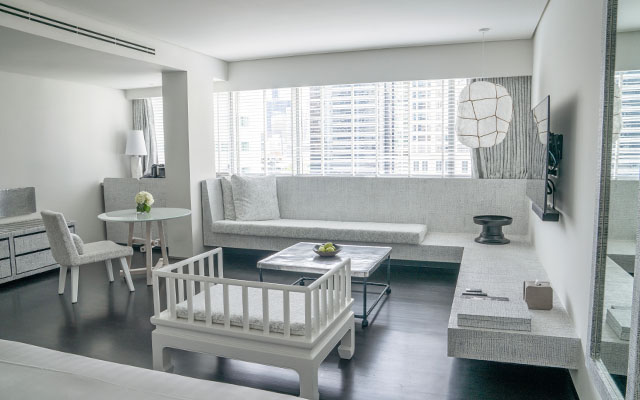
noku-kyoto-deluxe-room
Noku Kyoto’s Deluxe room

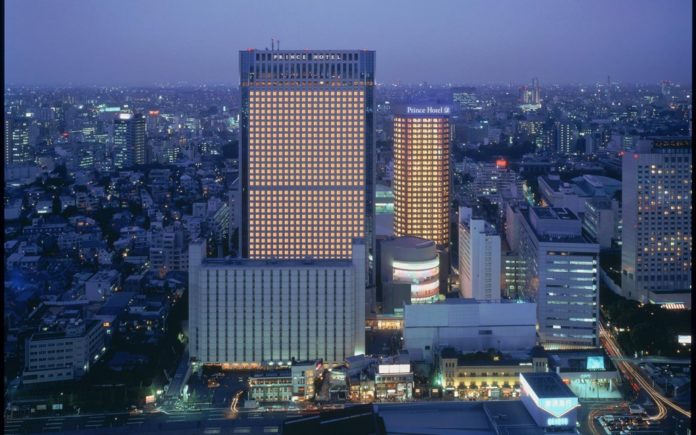
NEWLY-opened upscale boutique hotel Noku Kyoto is now offering an onsen package in collaboration with Kyoto’s renowned hot spring hotel Sumiya Kiho-An.

The two-to-go package, priced at 48,000 yen (US$470), is available till October 7 and comprises a two-night stay in the hotel’s Deluxe room, private car transfer to-and-from Sumiya, a private onsen session, and a traditional seasonal lunch set.

Noku Kyoto opened at the end of 2015.

Lure of a bucolic town

0

Can Yangshuo seek a place among busier rivals in South China Karst? Prudence Lui finds out

aug129_china2

Nestled among karst peaks and rivers, Yangshuo is already an established destination for domestic visitors and foreign backpackers, but the government’s tourism infrastructure push and entry of global hospitality chains in recent years have raised the appeal of the tourist town to a wider segment of international visitors.

“The local area is benefitting in tourist numbers from new infrastructure and improved roadways,” said Glen Cook, general manager of Banyan Tree Yangshuo, which was the first international branded hotel to debut in the destination in 2014.

“Our hotel has had visitors from the US, Europe and Australia, who are attracted to the karst mountains and Li River.”

While it is well known among backpackers, Yangshuo’s novelty on the international tourism stage still offers growth opportunities for the destination, Cook posited.

“International travellers have seen Shanghai and Beijing, while Chengdu and Xi’an are already included on basic tour itineraries in China,” he remarked.

Yangshuo, located 65km from Guilin, is also growing in popularity among Hong Kong travellers. The high-speed transit from Shenzhen has reduced travel time to Guilin to 3.5 hours, making it easier to access Yangshuo too.

However, Yangshuo’s hospitality scene needs to reflect a greater variety in segmentation and prices before the destination can hold its own against the more-popular Guilin, said Hong Kong outbound agents.

“We observed more clients from Hong Kong doing a day tour in Guilin and then staying two nights in Banyan Tree Yangshuo,” noted Eliza Li, senior manager of  marketing and products, Wincastle Travel (HK). “It’s not cheap to travel to Yangshuo for FITs so there wasn’t much demand.

Hong Thai Travel Services, deputy general manager, Daniel Chan, shared similar sentiments: “Yangshuo is a must-visit destination for Hong Kong travellers visiting Guilin. However, (demand) remains stable despite new international five-star hotels because it’s still an expensive destination for group travellers.

“The Banyan Tree is located outside downtown so it’s a bit inconvenient for Asian travellers who like exploring around,” he added.

This article was first published in TTG Asia, August 5, 2016 issue, on page 26. To read more, please view our digital edition or click here to subscribe.

Corporates can now pay for Didi Chuxing rides using Concur

0

didi-chuxing

CHINA’s leading private car hire service Didi Chuxing has partnered with business travel expenses solutions provider Concur to integrate ride transactions with the platform’s payment processes.

With this, Didi Chuxing users can connect their account with Concur. Once travellers arrive at their destination, an e-receipt will automatically be sent to the linked Concur account, where they can then manage ride expenses and submit for reimbursements.

“China is the third largest international market when it comes to Concur business traveller spend, and we’re seeing a dramatic increase in Didi Chuxing usage which is contributing to that spend,” said Mike Eberhard, president of global distribution at Concur.

“This integration not only simplifies the expense reporting process for the growing number of Concur users booking rides with Didi, but also helps travel managers and administrators effortlessly keep track of employee spend.”

Users can choose to integrate Didi Chuxing from the Concur App Center.

Riu Hotels expands into Asia with Sri Lankan resort opening

0

riu-sri-lanka

SPANISH operator Riu Hotels & Resorts has made its foray into Asia with a Sri Lankan property, the first in a pipeline of resorts to open in Maldives and the United Arab Emirates.

The 501-room Riu Sri Lanka is a beachfront property located in the small coastal town of Ahungalla. It offers 24-hour all-inclusive services and opened earlier this month.

Facilities include three adult pools and one for children, a spa, health centre, a range of Asian and European restaurants, and one of Spain’s leading discotheques, Pacha.

“It’s the first stone in the company’s future expansion in the continent. This includes three more hotels; two in the Maldives and one in the UAE,” said a Riu spokesperson.

“After studying various proposals, Riu sees this as the ideal opportunity for starting its Asian operations. Sri Lanka is a tourist destination that attracts not only European clients, but also from markets like India, China and Australia.”

The Maldivian properties, namely the Riu Palace and Riu Classic, will open in 2018. They will be located in the Dhaalu Atoll offering 422 rooms together.

Its UAE property is scheduled to open the following year on the Deira Islands in Dubai. “With its 750 rooms it will be the biggest built there and the first to offer 24-hour all-inclusive service,” stated Riu in a release.

China’s Varitrip launches tours and activities GDS

0

tourists-great-wallTourists at the Great Wall of China

TRAVEL technology company Varitrip has unveiled a new GDS that distributes tours and activities available domestically.

The product is designed to connect and integrate with distributors to provide tours and activities inventory as well as enable operators of airlines, cruises and hotels to upsell, according to Dylan Zhang, CEO of Varitrip.

Zhang added the product is being launched on the back of increased inbound traffic in China, with the China National Tourism Administration expecting more than 137 million international visitors to China this year, a nine per cent increase over 2015.

“Traditional operators haven’t been able to keep up with the new demands,” he said.

“Varitrip’s technology connects and integrates with the distribution partners, operators and all possible resources to fulfill new growing demand.”

Costa to debut Aida Cruises in China next year

0

aida-china
From left: Michael Ungerer, COO, Carnival Asia; Felix Eichhorn, president, AIDA Cruises; Michael Thamm, CEO, Costa Group; Christine Duffy, president, Carnival Cruise Line; and Buhdy Bok, president, Costa Group Asia President, at the Aida launch in China

COSTA Asia has begun a marketing offensive in China in anticipation of the launch of its Aida Cruises brand there come April 2017.

The AidaBella will be deployed year-round in China after a dockyard refit of the cruise ship in spring next year. According to a statement by Costa, the ship will be customised to the needs of Chinese guests while at the same time feature authentic German hospitality.

For instance, a spicy hot pot restaurant and Oktoberfest beer festival will both be introduced on the ship. New on board as well are German retail brands Rimowa, Fissler and Hugo Boss.

“With our Costa Asia brand, we have pioneered the way into China since 2006 and were the first international shipping company to develop the cruise market there,” said Michael Thamm, CEO of the Costa Group.

“The expansion of our product portfolio to include an Aida Cruises ship in the fastest-growing market in the world is a strategic step for the further successful development of Costa and Aida.”

Flights to UK surge following Brexit vote

0

brexit

FLIGHT bookings to the UK rose significantly in the aftermath of Britain’s referendum vote to leave the EU, according to research data released by ForwardKeys.

In the 28 days before the June 23 poll, flight reservations were running 2.8 per cent behind the same period last year. In the month after the Brexit decision, bookings were up 4.3 per cent, resulting in a 7.1 per cent increase in the period under observation.

Most of the traffic is driven by demand coming from the US and Asia-Pacific, buoyed by the pound’s fall against the Euro following the referendum.

Bookings from Europe were up 5 per cent while non-European arrivals were up by 8.7 per cent on average.

Hong Kong bookings to the UK rose most by 30.1 per cent while flights from the US was up 9.2 per cent. Meanwhile, traffic from Canada was up 7.4 per cent and from the UAE by 7 per cent.

Flights from China to the UK remained steady however, likely due to the need for visas to travel to the UK.

“It’s now confirmed that Brexit had an immediate, positive impact on inbound tourism to the UK, which is converting into better than anticipated arrivals,” said Olivier Jager, ForwardKeys co-founder and CEO.

“In the months ahead, our data will show whether this post-Brexit bounce is sustained.”

Direct room booking value nearly twice that of indirect channels

0

online-hotel-booking

THE average booking values derived from hotel websites are nearly double that found on third-party booking channels such as OTAs and metasearch engines.

Research conducted by hotel booking solutions provider SiteMinder revealed that the average reservation made on indirect channels amounted to US$340 over a 12-month period ending June 2016. Over the same period, the average cost of bookings made on direct sites was US$600.

According to Mike Ford, managing director of SiteMinder, the finding means that hotels should be investing heavily in ensuring they have a balanced approach to distribution with a focus on direct booking strategies in order to maximise direct conversions and therefore profit.

“Our data shows that hotels globally are achieving 1.8 times more, on average, for accommodation booked via their own direct website than via OTAs and other third-party channels,” said Ford.

“While we can’t forget the reach these third-party sites provide to hotels, it’s important to note that direct bookings are not only achieving higher value overall but there is no commission payable on them so they are very much more profitable.”

He added that “hotels need to ensure that they are at least at parity with OTAs and other third-party channels in order to compete effectively. Too many hoteliers are giving OTAs better rates than their own websites which is not smart given the profitability of direct bookings”.

SiteMinder’s finding is based on 43.5 million reservations that passed through the company’s Channel Manager and TheBookingButton solutions between June 2015 to June 2016.

Clark sees light of day

0

The new Philippine president has put infrastructure projects back into the spotlight, reigniting hope that the potential of Clark as a gateway and travel destination could finally be unlocked

aug-19-clark-shutterstock_456300250

A fresh presidential directive could provide the impetus for the Clark Freeport Zone in Pampanga, a former US military airbase, to get serious about developing its tourist infrastructure and emerge out of the shadows of neighbouring Manila.

Newly-elected Philippine president Rodrigo Duterte recently stressed the importance of completing projects such as the fast rail linking Clark Freeport Zone and metro Manila, which will help to decongest the overcrowded Ninoy Aquino International Airport (NAIA) and attract more airlines to Clark International Airport (CRK).

The rail link plan had failed to materialise under the previous administration, leaving the potential gateway airport in Clark underutilised and several international carriers such as AirAsia, Emirates and Etihad Airways to cease flying there several years ago due to low passenger volume.

The urgent need to develop CRK as an alternative airport was again underscored last month when a pothole on NAIA’s runway led to the massive diversion of flights to Clark.

Now with hopes of the inter-city rail project on the rise, Philippine Airlines has announced it will move some of its domestic flights to CRK to help decongest Manila’s NAIA.

Cebu Pacific is currently the only domestic carrier that operates in Clark although foreign carriers include Emirates, Asiana, Cathay Pacific, Dragonair and Tigerair.

Having moved its hub to NAIA’s terminal 4, AirAsia had repeatedly said it would return to Clark if the rail or road link to Makati was built. It recently resumed flying from Kuala Lumpur to Clark.

Emirates, which pulled out from Clark in 2014, returned to CRK in March this year with daily Dubai-Clark-Cebu services. The circular service saw “strong load factor”, with 150 to 200 passengers (of the 400-seat capacity) flying from Clark, said Emigdio Tanjuatco III, president and CEO of Clark International Airport Corporation.

The airport chief wants to show international airlines that CRK “is willing to take them back” by offering incentives such as reduced taxi and landing charges.

Explaining the strategy to attract more airlines, he added: “Some of our rates are 30 per cent lower than NAIA. We will help airlines in marketing their flights.”

Works on a new terminal to increase passenger capacity has begun this year, in addition to recent upgrades that increased the number of check-in counters from six to 32, immigration counters from four to 16 and VIP lounges to three, with plans to bring in more duty free concessionaires.

Favouring a dual airport strategy, Tanjuatco believes CRK can be positioned as a gateway to the Philippines through northern and southern Luzon, while NAIA serves visitors to metro Manila (National Capital Region) and southern Luzon.

Due to the size of the northern and southern Luzon catchment area, 10 million passengers fly out of the region annually but only a fraction of it was captured by Clark.

“It’s a ripe market,” said Tanjuatco, commenting on the prospects for CRK and tourism in the area.

Adding to Clark’s allure is its booming supply of new hotels, investment incentives and lower cost of doing business, luring more businesses and investors pushed away by the lack of space in heavily congested metro Manila.

Foreign investors choose Clark for its safety and security; proximity to metro Manila; green and unpolluted environs; English-speaking skilled workers; and resilience against natural disasters, protected by its 158m location above sea level among mountain ranges, explained Irineo Alvaro, immediate past president and chair of BB International Leisure and Resort Development, and who, at press time, is touted to become chief of Clark Development Corporation.

International-branded hotels that have opened in the area include the 268-key Hilton Clark Sun Valley Resort; newly minted 111-room Midori Clark Hotel and Casino, which is in the first phase of a 40 billion pesos (US$850 million) integrated resort development; and the 164-key Park Inn By Radisson. The 260-key Marriott at Clark is set to open next year.

More room keys are driving arrivals into Clark, said Malu Parungao, junior branch supervisor of Filipino Travel Center in Angeles City, Pampanga. In particular, tourists from Europe and the Middle East are increasing in numbers since Emirates started flying to Clark again.

Parungao said tourists are mainly attracted to Clark’s four golf courses, often combining it with the sun and sea in Subic just 45 minutes away.

While some remain doubtful of Clark’s appeal as a leisure travel destination, Tanjuatco insists there is much to see outside its perimeter, including the Mount Pinatubo crater and the Hot Air Balloon Festival every February.

Some hotels do not even have the capacity to cope with the influx of tourists during the Hot Air Balloon Festival, pointed out Othie Maninang, inbound tours supervisor at Mango Tours.

She also suggested ramping up the standards of existing attractions, such as Nayong Pilipino and Air Force City Park, and promoting go-karting and ultralight aircraft flights, which is unique to the area.

Beyond leisure, business tourism could also flourish as the destination spruces up its MICE hardware.

“Clark has a lot of MICE potential,” remarked Angel Ramos Bognot, president and managing director, Afro Asian Travel and Tours, who has chosen Clark as the base for the annual B2B Travel Business Exchange introduced last year.

This article was first published in TTG Asia, August 5, 2016 issue, on page 4. To read more, please view our digital edition or click here to subscribe.

New Guangzhou-Adelaide flights a boon for events, incentives

0

adelaide

CHINA Southern Airlines will commence thrice-weekly service from Guangzhou to Adelaide starting December, the second airline to fly direct to the Australian city this year, with Qatar having started a daily service in May.

“This presents a huge opportunity for Adelaide with the Chinese market,” said Damien Kitto, CEO of Adelaide Convention Bureau.

“Over the past 18 months, our focus on China has been increasing with a dedicated Mandarin speaking staff member joining our team. Relationships (are also) being developed and strengthened via more regular in-market visits and showcase events such as Dreamtime.”

The Adelaide Convention Bureau stated that they will be channeling resources towards the wider Asian region as well as sending its director of sales and marketing to Qingdao in tandem with the Adelaide City Council’s trade mission happening this week.

The bureau is also positive that incentive groups will be lured by the nonstop service coupled with the prospect that South Australia produces 80 per cent of the country’s premium wine, allowing Chinese travellers the chance to visit the notable wine region while passing through nearby destinations such as Kangaroo Island and Port Lincoln.

Kitto added: “Adelaide’s offering of an abundance of fresh food including some of the best seafood in the world, premium wine, ease of accessibility and convenience with an enviable environment and lifestyle has, based on feedback from both delegates and those visiting on familiarisations, proven popular with the Chinese market.

“The direct flights by China Southern Airlines, along with flights from Asia by Singapore Airlines, Malaysia Airlines and Cathay Pacific further increase our opportunities within the Asian market and China.”