TTG Asia
Asia/Singapore Tuesday, 7th April 2026
Page 1801

Divided over investment rules

0

Indonesia’s fragmented governance policy is weighing on tourism investment, just as the sector is picking up steam

aug-12-indonesia-governance

The multivalence of regulations and taxation imposed by Indonesia’s regional governments, if not handled properly, could offset recent strides made in the country’s current positive tourism investment climate.

Tourism investment surged 17 per cent to US$268.5 million in 1Q2016, 95.5 per cent of which were foreign investments, according to Henky Manurung, head of tourism business investment division, Indonesia Ministry of Tourism.

“Favoured destinations are not only Bali and Jakarta, but also West Nusa Tenggara, Central Java and Yogyakarta,” he shared.

Investment opportunities are also growing as the central government is channelling efforts into developing the infrastructure in 10 secondary and tertiary destinations such as Lake Toba, Tanjung Kelayang (Belitung) and Tanjung Lesung (Banten).

While Indonesia’s decentralisation policy − which started in 2005 − has in some ways stimulated regional business and demand for hotels, several industry players also pointed to downsides arising from the political and economic devolution.

Ida Bagus Ngurah Wijaya, a hotel owner and former chairman of Tourism Industry Association Bali, said: “(Previously), hotel licences were set by the central government, so there was more uniformity in the requirements. Today, each regency government can set their own rules.”

Maulana Yusran, vice chairman – research, information technology and organisational affairs at Indonesia Hotel and Restaurant Association (IHRA), added: “The overlapping rules, regulations and taxation imposed by the regional governments have added burden to hotels’ operational revenue.”

For example, Papua’s ban on alcoholic distribution and consumption has aroused concern among hoteliers catering to the international community.

Elsewhere in the country, a hotel is required to obtain its own permits for location and environment impact assessment even if it sits in a designated area that already has the equivalent permits.

Krishnadi, chairman of IHRA Jakarta chapter, said: “Spa and entertainment spaces should be considered part of the hotel facilities, but (the Jakarta tax office) applied different tax rates for these (on top of) the hotel tax.”

He added the Regional Revenue Office of Jakarta had implemented a new rule that taxes promotions based on rack rates instead of discounted rates. In other words, a 10 per cent tax will still be slapped on a room priced at 500,000 rupiah (US$37.64), even when it is sold at 400,000 rupiah after a 20 per cent discount.

Maulana lamented: “The regional governments are finding ways to increase their income and hotels have become their targets.”

Ng Suwito, president director at Red Planet Indonesia, was less cynical about the government’s regional autonomy policy but urged the better implementation of regulations.

“For an investor and operator like us, regulation changes are part and parcel of doing business, but we do not like surprises. We need to plan and manage (costs).”

A further consequence, Ng said, is that the tax incidence would fall on the end-consumer.

“At the end of the day, we have to pass (the additional cost) on to somebody else. We have no choice but to increase the ADR and the consumer will (have to) bear it.”

This could compound the challenges already faced by hotels, such as an oversupply of rooms in some destinations.

The Bali Hotel & Branded Residences Report 2015 issued by Horwath HTL and C9 Hotelworks noted that slower demand in 2015 resulted in the market struggle to maintain both occupancy and rate.

Meanwhile, Bali’s supply is still increasing, with the same report projecting the addition of 115 new hotels and 15,000 rooms by 2019, taking the total key count to around 55,000.

Arief Yahya, Indonesia Minister of Tourism, agreed that government regulations had hampered Indonesia’s development, including the hospitality sector.

He said: “One of our weaknesses as a country is that we are very slow. Regulations have slowed us down.”

Arief added that Indonesian president, Joko Widodo, has set 2016 as the year to accelerate deregulation, and he invited IHRA to submit a list of regulations which they believe were stumbling blocks for businesses.

The ministry has also set up a working group to come up with ways to help the industry to better compete with neighbouring countries.

This article was first published in TTG Asia, August 5, 2016 issue, on page 6. To read more, please view our digital edition or click here to subscribe.

Photo of the Day: TTG Asia editor wins business journalism award

0

puvanes-awardTTG Asia’s Malaysia and Brunei editor S Puvaneswary

S Puvaneswary, the editor for TTG Asia in Malaysia and Brunei, took home an award last week for Business Events Journalism Excellence, Print/Online, given by the Sarawak Convention Bureau. She won the prize for an article published on TTGassociations in April 2015, titledWatching And Waiting, which was a profile of Ravi Chandran, congress president of the 24th Asian & Oceanic Congress of Obstetrics and Gynaecology, a convention held in Sarawak last year.

Pokémon Go a no-go for travel businesses in Japan

0

jigglypuff-shibuya

IN ITS cultural home of Japan, Pokémon is big business. Firms cater for all with offerings of the fictional creatures ranging from TV programmes and movies to cards, books and toys.

Not so Pokémon Go, however, with companies in Japan admittedly playing catch up to their counterparts abroad. Unlike businesses in other nations, such as in Hong Kong and Australia, Japanese companies show little interest in leveraging the popularity of the augmented reality game.

Instead, the focus is on safety. Tourist sites have appealed for users in their facilities to respect off-limit areas, those around them, and avoid accidents.

The government, too, is nervous. The National Centre for Incident Readiness and Strategy for Cybersecurity released nine safety tips. These include not playing while walking; avoiding strangers and less-frequented places; and protecting personal information.

Still, some establishments remain enterprising. Triple Lights, a Japanese inbound operator, is cashing in with a Pokémon Go walking tour in Tokyo. It features famous sites such as Sensoji Temple and Shibuya’s Scramble Crossing. Company representative Emi Izawa said the aim is to combine tourists’ interests in both traditional and modern Japan, such as anime.

“Since everyone is having fun playing Pokémon Go all over the world, and Japan is the home of Pikachu, we thought, ‘Perfect! Why not create a tour,” she said, adding that it has been successful so far.

Meanwhile, a small hot spring in Tokyo has also started offering users a special deal to refresh themselves after a Pokémon search. It may not be long before other businesses follow suit.

Bleak economy, terror attacks a drag on global air travel

0

air-travel

EVEN though demand for air travel is on the rise worldwide, it is elevating at a slower pace than before due to headwinds from economic uncertainty, political factors and terror threats, according to the latest report by IATA.

Global passenger traffic in June rose by 5.2 per cent compared to the same period a year ago, and up slightly from the 4.8 per cent increase recorded in May.

However, the upward trend in seasonally-adjusted traffic has moderated since January. June capacity increased by 5.6 per cent and load factor slipped 0.3 percentage points to 80.7 per cent.

“The demand for travel continues to increase, but at a slower pace. The fragile and uncertain economic backdrop, political shocks and a wave of terrorist attacks are all contributing to a softer demand environment,” said Tony Tyler, director general and CEO at IATA.

June international passenger demand rose 5 per cent compared to June 2015. All regions recorded growth, led by airlines in Latin America. Capacity climbed 6.4 per cent, causing load factor to slide 1.1 percentage points to 79.4 per cent.

Asia-Pacific airlines’ June traffic increased 8.2 per cent compared to the same period last year. However, most of the growth relates to the strong upward trend in traffic seen in the final months of 2015 and into 2016, with June demand barely higher than in February.

According to IATA, this could be a natural pause, but could also be a sign that Asian passengers are being put off travel by terrorism in Europe.

European carriers saw demand rise 2.1 per cent, the smallest increase among regions, reflecting the negative impact of recent terrorism. While demand tends to recover reasonably quickly after such events, the repeated nature of the attacks may have a more lasting impact.

Meanwhile, Middle Eastern carriers posted a 7.5 per cent traffic increase in June, which was well down on the double-digit growth recorded earlier in the year. In part this could be owing to the timing of Ramadan, which tends to depress traffic growth.

North American airlines’ demand rose 4 per cent compared to June a year ago, which was well up on the 0.5 per cent year-over-year growth recorded in May.

“The latest figures show that aviation and aviation related tourism delivers US$2.7 trillion in economic impact and supports some 62.7 million jobs worldwide. It is a powerful force for good in our world,” commented Tyler.

“It is too soon to know whether recent terrorist attacks will have a long-term negative influence on demand, nor what will be the impact of Brexit and the events in Turkey. But it is vital that governments recognise and support aviation’s ability to contribute to global economic well-being and better understanding across cultural and political borders.”

HNA to launch first-ever China-Las Vegas flight

0

hainan-airlines-las-vegas-toast
Top executives from Hainan Airlines and LVCVA toasting to the launch of the new route

CHINA’s Hainan Airlines (HNA) will be operating a direct flight between Beijing and Las Vegas come December 2, the first nonstop service to connect Mainland China with the US city.

The announcement was made yesterday by the Las Vegas Convention and Visitors Authority (LVCVA), after HNA filed an application with the US Department of Transportation to launch the flight.

Once the approval is received, travel agents and OTAs, as well as direct sales channels will start selling the service, stated LVCVA.

The flight will be operated by Boeing 787 Dreamliners in a two-class (34 business and 177 economy) configuration, departing thrice-weekly on Mondays, Wednesdays and Fridays.

Flights depart Las Vegas McCarran International Airport at 12.30 and arrive at Beijing’s Capital Airport at 17.30 the subsequent day. Return flights leave Beijing at 14.20 and arrive at Las Vegas at 10.30 the same day. The nonstop flight time is approximately 13 hours westbound and 12 hours eastbound.

“We are extremely proud to welcome Hainan Airlines to Las Vegas with their convenient, premium-service for Chinese visitors,” said Rossi Ralenkotter, president and CEO of LVCVA.

“China is an area where we have seen steady growth in visitation and we will continue to focus on experiences and amenities that cater to our Chinese guests. With these first-ever flights from China to Las Vegas, we are anticipating more than US$33.5 million in annual economic impact.”

Seatfrog wants to make last-minute ancillary sales a reality

0

seatfrog

TRAVEL technology startup Seatfrog has teamed up with Amadeus Next to develop a mobile platform allowing customers to purchase flight ancillaries in the 48-hour window before departure.

Once developed, it will allow travellers to transparently bid and pay for an upgrade in real-time, and receive a new boarding pass directly on their smartphone to scan at the gate. Travellers can choose to do this right up to the last minute of their departure time.

No launch date for Seatfrog on mobile has been given.

Recent research by Amadeus suggests that airlines should focus their efforts on mobile-first strategies within 48 hours of a flight, as it is the peak of a passenger’s intent for ancillaries.

“Seatfrog has aligned today’s always-connected mobile passengers with the challenge faced by airlines around the globe – selling seats that would otherwise fly empty, at the exact time that passengers think about upgrades,” said Simon Akeroyd, vice president, corporate strategy and business development at Amadeus Asia-Pacific.

The Amadeus partnership provides Seatfrog access to the travel solutions giant’s global customer base of more than 130 airlines as well as access to Amadeus technology.

“The team at Amadeus really understood the challenge facing airline partners and worked with Seatfrog to solve many of the friction points that stand in the way of the deployment of an effective ancillary revenue strategy,” said CEO and co-founder of Seatfrog, Iain Griffin.

“Ultimately, our platform is bringing a new level of intelligence to market in delivering the right product, in the right channel at the right time.”

APAC corporate travel proves resilient as room rates rise

0

corporate-travel-1

EVEN as the world endured heightened economic uncertainty and increased terrorism threats, business travel in the Asia-Pacific region proved the most resilient, having attained the biggest share of corporate travel spend ahead of North America and Western Europe.

According to the Hotel Price Radar Q2 2016 report released by end-to-end hotel solutions provider HRS, the cities of Tokyo, Sydney and Singapore still lead in terms of average room rates per night, standing at US$280, US$244 and US$254 respectively.

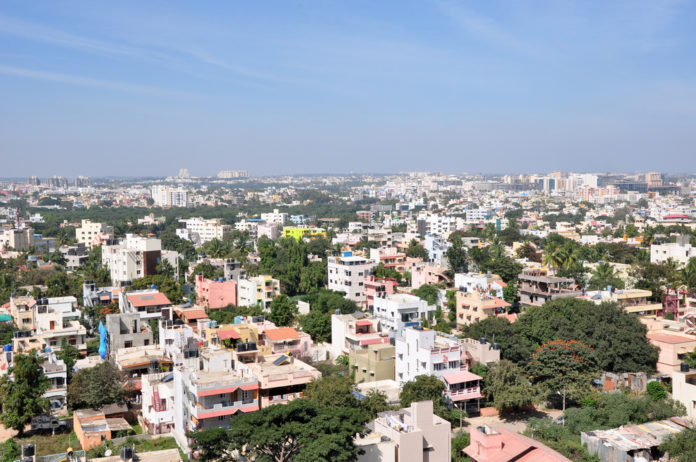
Meanwhile, Bengaluru saw the largest spike in room rates over the past year, with a rate development increase of 22.9 per cent.

The HRS research also points to positive movements in the MICE industry over the past quarter, with Kuala Lumpur exhibiting exceptionally strong interest in partnerships with both local and international players.

This is particularly evident with the Kuala Lumpur Convention Centre strengthening its ties with the International Association of Professional Congress Organisers (IAPCO), Kuala Lumpur Tourism Bureau (KLTB), InvestKL and the Malaysian Association of Convention and Exhibition Organisers and Suppliers (MACEOS).

Hotels and tour operators have also taken interest in packaging products and services complementary to MICE development efforts, according to HRS.

Jakarta too is experiencing a per-night room rate increase over Q1 numbers. Business travel to the city is likely to improve, predicts HRS, as the Indonesia Convention and Exhibition Bureau (Inaceb) established in late March begins to strengthen Indonesia’s MICE facilities.

“The top business travel destinations in the region have remained broadly consistent for the past few quarters now,” said Kimi Jiang, vice president Asia-Pacific at HRS.

“An intensely competitive MICE climate will dictate further growth in the business travel sector, with countries like Kuala Lumpur and Jakarta developing aggressive strategies to grow their MICE industry.”

How much are travellers willing to pay to save air travel time?

0

air-travel-time

TRAVEL metasearch engine Skyscanner has revealed in a study the amount air travellers are willing to pay to save an hour of time on longhaul flights.

The study showed that the global average of US$8 is the amount that people around the world are willing to pay in order to shave off each hour of air travel.

Whether the route is more popular for business or leisure, and the presence of alternative flights appear to play a key role in how much value passengers are willing to pay, the study also found.

Skyscanner added that passengers were willing to pay more – US$1 to US$2 on average – on journeys which form part of shorter trips of less than seven days.

On the Bahrain to Kuala Lumpur route for example, which is popular but has no direct route, passengers pay on average US$26 per hour to shorten their journey.

Meanwhile, passengers flying between Los Angeles and Buenos Aires, where more choice from carriers exists, people pay on average of US$2 per hour saved, showing the value per route can vary significantly.

“In this day and age, time is an increasingly valuable commodity,” said Faical Allou, head of business development for Skyscanner analytics.

“Looking into the value of reducing journey time involved in taking a flight, particularly a long-distance one, reveals interesting insights and shows that there are several factors involved in how much value passengers attribute to reducing travel time, such as whether the trip is for business or leisure, the length of the trip and the choice of carriers and itineraries on offer.”

New hotel openings: August 1 to 5, 2016

0

The latest hotel openings and announcements made this week

melia-makassar-junior-suite-room

Meliá Yangon
Meliá Hotels International has marked its entry into Myanmar with the opening of the 430-key Meliá Yangon located on Kaba Aye Pagoda Road, a 15-minute drive from Yangon International Airport. Room sizes start from 48m2 with many boasting views of the nearby Inya Lake. The hotel currently features three dining establishments with a bar to be added by end-2016. Other facilities include an outdoor pool, fitness center, its signature Yhi spa and over 2,000m2 of convention space.


best-western-okinawa-kouki-beach-japan

Best Western Okinawa Kouki Beach
Best Western Hotels & Resorts has opened a 10-storey beachfront resort in Okinawa, Japan. All 56 rooms at the Best Western Okinawa Kouki Beach boast balconies with views of Nago Bay. Rooms range from 30m2 to 60m2 in size, with the larger ones capable of catering to families of six and offering private cooking facilities. Guests can dine at the hotel’s Kouki beachfront restaurant and take part in watersports at the beach.


angsana-laguna-phuket

Angsana Villas Resort Phuket
Banyan Tree Hotels & Resorts has unveiled the Angsana Villas Resort Phuket, which takes over the property formerly operated by Outrigger Laguna Phuket Resort and Villas. The resort’s 48 rooms and suites come in a multitude of configurations, with the larger ones featuring private gardens and pools. Three F&B outlets are available onsite, as well as a fitness centre, kid’s club, swimming pool and meeting venues. Guests also gain access to the nearby Angsana Laguna Phuket’s amenities.


sanctum_inle_abbey_suite

Sanctum Inle Resort
The 94-room Sanctum Inle Resort, located by the shores of Myanmar’s famed Inle Lake, is set to open on October 1. The upscale property features an Olympic-sized swimming pool overlooking the lake, a 150m2 presidential Sanctuary Suite, and F&B establishments The Refectory and Cloister Bar. Other amenities include a 170m2 spa complex and recreational room Chapter House, which can be used to hold events. The resort also offers eight tour itineraries for guests.

Christopher Bong named GM of Sunway Putra Hotel Kuala Lumpur

0

VETERAN hotelier Christopher Bong has been appointed general manager of Sunway Putra Hotel Kuala Lumpur, effective since July 18.

In his new role, Bong is tasked with steering the hotel’s business growth, financial performance, guest experiences and employee enrichment programmes.

christopher_bong_soon_bee

The Singaporean national brings with him over 30 years of experience in the industry, including stints in hotel pre-opening, market activation, operational and financial management positions.

Prior to joining Sunway Putra Hotel, Bong served as general manager for the Fraser Residence Sudirman Jakarta, leading all pre-opening and operational tasks.