TTG Asia
Asia/Singapore Thursday, 12th February 2026
Page 180

Marriott International strikes gold with another record year of signings in 2024

0
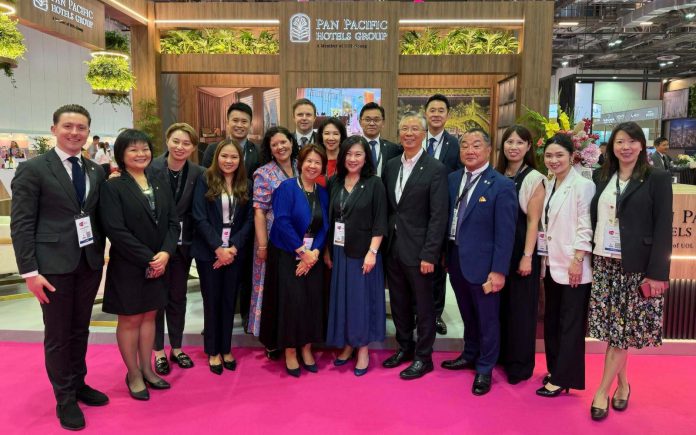
Marriott International’s Asia Pacific excluding China region leadership share the company’s performance report for 2024; from left: Oriol Montal, John Toomey, Shawn Hill and Rajeev Menon

Marriott International has reported another record year of deals for 2024, following on from its stellar record-breaking year in 2023. This time, it scored 109 deals across 11 markets in the Asia Pacific excluding China (APEC) region – up from 80 in 2023. These deals add 21,439 rooms to the region’s development pipeline and close the year with 77,532 rooms in the pipeline ­– a 12 per cent increase over 2023.

Addressing journalists at a briefing in Singapore on February 6, Shawn Hill, chief development officer, APEC, Marriott International, said the company had achieved two milestones with 2024’s performance.

Marriott International’s Asia Pacific excluding China region leadership share the company’s performance report for 2024; from left: John Toomey, Shawn Hill, Oriol Montal, and Rajeev Menon

“This is the first time we have ever crossed 100 deals and 20,000 rooms in a single year,” said Hill.

Hill attributed the energetic signings to “trust and confidence” among owners and partners in Marriott International.

“Thirty-five per cent of our signings in 2024 were with existing owners and partners. They choose our brands, they believe in us, and choose us to grow with them.

“At the same time, 40 per cent of 2024 deals were conversions – owners taking their old flags and brands and converting them into Marriott brands and hotels,” he said, adding that the team was also proud of acquiring 7,000 rooms through portfolio or large multi-unit transactions.

India, Japan, and Indonesia were the biggest growth markets for the company in the region, comprising 72 per cent of the region’s deal signings in the year. These countries also saw “all-time record-high signings”.

Signings in India last year resulted in 7,000 additional rooms, followed by Japan with 5,000 rooms, and Indonesia with more than 2,000 rooms. Inventory in Vietnam (plus 2,000 rooms), Malaysia (plus 1,000 rooms) and Thailand (plus 1,000 rooms) also expanded on the back of fresh signings.

Marriott International has made growing its luxury portfolio a key focus in APEC, with 19 per cent of signed deals in 2024 belonging to this category. A record 21 agreements were signed, representing 4,600 rooms in the region across six Marriott International Luxury Group brands. These signings will result in debuts of the Edition brand in Jakarta, Indonesia, and Mumbai, India; The Ritz-Carlton in Jaipur and Udaipur, India; a second W Hotels in Singapore, and more.

Luxury properties in APEC now form a third of Marriott International’s global luxury pipeline.

Oriol Montal, managing director luxury, APEC, said the luxury travel outlook is bright due to strong spending intentions among Generation Z consumers, who have indicated in a Marriott International study that they would “put their savings on a luxury vacation before buying a luxury good”.

Montal added that Marriott International is in a leading position to respond to travel trends among high net worth individuals. These travellers are prioritising transformative adventures and experiences, and the company has gone into new areas of business that allow it to satiate these desires. Citing examples, he pointed to Marriott International’s first tented camp that opened in Kenya last year, expansion into luxury cruising with Luminara, and partnerships that bring “lifetime experiences” onto properties.

However, the hottest brand for 2024 signings was the midscale Four Points Flex by Sheraton. This was made possible by Marriott International’s portfolio deal with US private equity firm, KKR, which gave it 14 conversion projects across Japan. The first Four Points Flex by Sheraton in the deal opened in Osaka in November 2024.

“We have since gone on to sign a few extras with KKR, also for Japan,” Hill told TTG Asia, adding that Marriott International is looking to take the brand out of Japan and into South-east Asia, India and Australia.

“Four Points Flex by Sheraton is by far the number one brand for 2024 in terms of both hotel units and rooms. Number two is the Courtyard by Marriott brand, followed by Marriott, JW Marriott, and Sheraton in fifth place,” he shared.

In 2023 signings, the Fairfield by Marriott brand led the way among owners, followed by Marriott, Courtyard by Marriott, and JW Marriott; The Luxury Collection and Westin tied in fifth place.

The year 2024 also saw the company entering Papua New Guinea with Marriott Executive Apartments Port Moresby and bringing the lifestyle-focused Moxy Hotels brand to more cities in APEC.

Meanwhile, the company’s loyalty programme, Marriott Bonvoy, has acquired more than 219 million members worldwide – a 60 per cent growth since 2019. John Toomey, chief commercial officer, APEC, noted that more than 70 per cent of bookings originated from the Marriott Bonvoy app in 2024.

Toomey said the programme has evolved successfully from a traditional loyalty programme into a lifestyle platform with amazing partnerships, such as with Rakuten, Gojek, and more.

He later told TTG Asia that Marriott Bonvoy is able to secure such a high level of engagement and bookings by being functional and by offering benefits that members value.

Rounding up the performance briefing, Rajeev Menon, president, APEC, Marriott International, said 2025 would bring “really good growth opportunities across South-east Asia and South Asia” despite global geopolitical challenges. This is because US and western companies are following a China-plus-one diversification strategy while China itself is aggressively investing in “our part of the world”.

Also fuelling his confidence is a “shift” in spending priorities towards travel, where even though international arrivals are not yet back to 2019 levels for some countries, tourism receipts are “at an all-time high”.

Further East prepares for an even more fruitful edition in 2025

0

Following the landmark success of Further East 2024, the organisers are eager to “double down” on serving Asia-Pacific travel in the next edition, which has been announced for Bali from November 3 to 6, 2025.

The team regards the event as the only B2B community that gathers regional brands and global leaders for an exchange of luxury travel visions.

Further East luxury travel tradeshow is known for its “barefoot luxury” way of connecting buyers and sellers that result in strong business relationships

It takes pride in the event’s extended commitment to sustainability, which it acknowledges is “a headline issue in Asia-Pacific, considering how many developing economies and long-haul flight paths have sprung up in the region over the last several decades”.

At Further East 2024, recycled lanyards, bags and bracelets were distributed instead of disposable collateral. The event team was able to cut PVC usage by 95 per cent while investing in more structures to repurpose for many years. Part of the Further East brand’s Asia-Pacific mission is to show what is possible with the right partners and planning.

Last year’s show also coincided with a rebrand. The theme, Around The World in 72 Hours, developed language and imagery around The Circle – an emblem of  intimacy, infinite progress, and mutual influences from the region’s past and future.

Further East’s associate event director, Sophia Asghar, said: “The Circle symbolises our tight-knit community, as well as high-end travel discovering its new centre. We’ve used it across FE – from banners and signage to email templates and sign-offs. I’m so proud of our creative team for tackling this concept from so many angles!

“Delegates loved our new look in 2024. This year, we’re making The Circle a permanent fixture of our messaging and visual palette. The challenge now is to conjure another theme that says as much about what the industry needs today, and how we’re serving it.”

While last year’s event welcomed a larger geographical scope, with the debut of South Korean exhibitors, organisers expect an expanded South Korea presence in 2025, which will cement the country as a bucket list destination.

Additionally, the show has strengthened its venue partnerships – chiefly with Desa Potato Head, which hosted the previous registration and opening party as well as ideas festival Open House, which recorded its highest attendance rate in 2024.

Serge Dive, founder and CEO of parent company This is Beyond, emphasised Further East’s ability to offer “close-knit, casual connections”.

“We’re creating a freer environment on the edge of the ocean and it pays off. In just a week here, our attendees can develop more useful relationships than they might at much bigger events, because they share the same mission and have the time and space to pursue it.”

Renewed optimism as India, China plan to restore direct air links

0

Direct passenger flights between India and China are set to resume after suspension due to the Covid-19 pandemic and geopolitical tensions. The breakthrough came after Indian foreign secretary Vikram Misri and Chinese vice foreign minister Sun Weidong met in Beijing recently, where both governments agreed in principle to restart direct air services.

Stakeholders in the tourism and aviation sectors are optimistic about the impact of this development.

The resumption of direct air links between China and India is expected to lift business travel and business events first

“Some airlines like IndiGo are waiting for more details from the government before restarting services. Overall, this is a positive step towards improving tourism and connections between the two nations,” said industry veteran Subhash Goyal, chairman – STIC Travel & Air Charter Group.

In 2019, there were 2,589 direct flights connecting major Indian cities including Mumbai, Delhi and Kolkata to five major Chinese cities, Beijing, Shanghai, Guangzhou, Kunming and Chengdu, according to OAG Aviation.

Mayur Patel, head of Asia, OAG Aviation, told TTG Asia that while the direct market between India and China was relatively small compared with other country pairs, it is a strategic contributor to student and business travel.

“Additionally, transfer traffic via Beijing and Shanghai provided crucial connectivity to North America. However, with limited trans-Pacific flights currently available, transfer connectivity will remain constrained once new flights resume. As a result, restoring direct flights would enhance convenience by eliminating the need for connections through connecting hubs such as Hong Kong, Singapore and Bangkok,” added Patel.

Goyal expects business travel and business events to rebound the quickest on the back of direct flight resumption, while leisure tourism, both inbound and outbound, will grow steadily as travel confidence improves.

“As major trade partners, India and China will see enhanced business connectivity, fostering stronger economic ties. Key industries such as IT, manufacturing, pharmaceuticals and textiles will experience increased movement of professionals attending meetings, exhibitions and corporate events,” projected Harjit Singh, founder and chief of guest experience, Travel Twist.

Even though Chinese carriers dominated connectivity between the two lands in the past, Indian carriers like IndiGo and Air India that have placed record aircraft orders would have an opportunity to up the ante.

Moving forward, Patel believes that both IndiGo and Air India can expand their footprint by exploring secondary cities with high student and business travel demand.

“This expansion can also strengthen India’s aviation industry by increasing market share on international routes, enhancing brand recognition, and boosting revenues from premium segments like corporate travel,” concluded Goyal.

Alipay sees spending surge among travellers during the Spring festival holidays

0

Alipay’s digital payment channels heated up with a significant increase in China’s outbound and inbound travel spending over the 2025 Chinese New Year period, with the number of transactions made by Alipay users in overseas destinations from January 28 to 30 rising by 30% compared to the same period last year. Between January 28 and February 1, travellers across Chinese spent 150% more using Alipay compared to 2024.

The spike in overseas transactions was a result of a Chinese New Year campaign with global Alipay+ merchants to entice travellers during China’s longest national holiday as well as friendlier visa policies in major destinations that led to strong outbound travel flows.

Chinese tourists are increasingly seeking more personalised and local experiences, with spend rising on activities beyond shopping and entertainment

In Singapore, total spending of Alipay rose by 56% year-on-year, making the Garden City the most popular destination. Japan also emerged as a favoured spot, with a 40% increase in Alipay spending, driven by eased visa policies and a weakened yen. Malaysia, Hong Kong, and South Korea also rank among the top five destinations.

With demand for long-haul travel on the mend, Alipay users made 30% more transactions in Europe this Spring festival compared to the last. In addition to traditionally popular destinations like the UK, France, and Italy, emerging destinations such as Switzerland, Austria, and Türkiye also saw a notable rise in the number of transactions.

Alipay+ data showed that expenditure beyond shopping and entertainment among the Chinese is on the rise. Cosmetic surgery spend rose by 449% year-on-year while spend on meals, snacks, and desserts scaled up by 33%, 36%, and 54%, respectively.

Greater interest in immersive local travel trends also drove local transportation usage. Total Alipay spending on overseas bus, subway and ride-hailing trips grew by 139% year-on-year.

Inbound travel review
With China’s recent visa-free policy updates, Alipay has launched new campaigns to double the number of Chinese merchants accepting payments with international card-enabled Alipay accounts and a total of 13 overseas e-wallets.

Through Alipay’s expanded partnerships with Visa, Mastercard, JCB, Discover, Diners Club International, and UnionPay International, travellers can link their international credit or debit card to their Alipay e-wallet for seamless payments and diverse digital services such as ride-hailing, hotel bookings, and purchasing plane and train tickets in China.

Between January 28 and February 1, travellers spent 150% more using Alipay at merchants across China over 2024. Spending from visa-free origins rose by 200% year-on-year.

New hotels: Four Points by Sheraton Bangkok, Sukhumvit 22, Mercure Garut City Center and more

0
Four Points by Sheraton Bangkok, Sukhumvit 22

Four Points by Sheraton Bangkok, Sukhumvit 22, Thailand
The stylish new hotel in Bangkok’s buzzing Sukhumvit district offers guests easy access to the Thai capital’s best retail options, including three world-class malls, as well as corporate offices, cultural attractions, and nightlife.

Queen Sirikit National Convention Centre is less than 3km away, and the BTS SkyTrain stations at Phrom Phong and Asoke, and MRT Sukhumvit put the entire city within easy reach.

Four Points by Sheraton Bangkok, Sukhumvit 22 has 333 rooms and suites. Guests are invited to dine well at The Mesh, a casual all-day dining place that is also a modern beer house and sports bar come evening. Recreation facilities include a 24/7 fitness centre and a rooftop pool.

For groups, the hotel’s Mesh Lounge welcomes corporate meetings and social gatherings with up to 20 guests, while boardrooms can seat up to 10 people.

Mercure Garut City Center

Mercure Garut City Center, Indonesia
Mercure Garut City Center enjoys a strategic location in West Java’s Garut, placing guests within reach of key business districts, government offices, and banks, while Ciplaz Garut, one of the city’s premier shopping centres, is just steps away.

Garut, known as the “Swiss van Java”, offers a cool climate and scenic mountain surroundings, and provides a welcome escape for holiday-makers as well as business travellers.

There are 160 well-appointed rooms and suites, a swimming pool, a fully equipped gym, Antara restaurant where local and international cuisines are served, and four versatile meeting spaces, including two ballrooms for up to 450 guests.

Radisson Collection Resort, Galle

Radisson Collection Resort, Galle, Sri Lanka
Radisson Collection Resort, Galle is nestled on Sri Lanka’s southern coast, in the storied city of Galle. The seafront property offers 70 guestrooms and 36 suites, all boasting bright and contemporary interiors as well as breathtaking views of the Indian Ocean through panoramic windows.

For truly indulgent stays and special occasions, the 1,200m2 Grand Penthouse features five bedrooms, a spiral staircase, and an infinity pool.

Facilities include a beachfront pool, a kids’ club with a soft play zone, Taboo Beach Club, and a variety of F&B outlets.

SureStay by Best Western Iconic Ari-Jatujak, Bangkok

SureStay by Best Western Iconic Ari-Jatujak, Bangkok, Thailand
BWH Hotels has opened a new SureStay hotel in the trendy Ari district of Bangkok. A short walk from the main Phahonyothin Road and a short walk from Saphan Kwai BTS skytrain station, the newly rebranded hotel is in close proximity to popular tourist attractions including the Chatuchak Weekend Market and downtown Siam.

The hotel features 157 contemporary rooms, an outdoor swimming pool with serene relaxation areas, a fitness center, a specialty coffee roaster and eatery, and an on-site restaurant for breakfast.

Recharge and rejuvenate with these wellness retreats at Avani+ Hua Hin Resort

0

AvaniWell, the well-being clinic at Avani+ Hua Hin Resort, has launched new two- and four-night signature wellness retreat packages, exclusive to the resort.

These multi-day Reset and Recharge packages are designed to provide a holistic wellness journey and include accommodations, healthful meals and curated activities ranging from physical to aesthetic and meditative.

The two-night Reset Retreat is ideal for a weekend getaway, while the four-night Recharge Retreat provides a more comprehensive experience, ideal for planning out a personalised wellness roadmap and achieving long-term health goals.

Both packages combine relaxation for restful sleep and exercise for better physical and mental health. Each day will see healthy meals, tailored based on a body composition analysis, served for breakfast, lunch and dinner. The daily schedule comprises activities designed to maximise guests’ time as they flow from yoga, to reformer pilates, to muscle-burning workouts, while leaving ample free time. Recharge Retreat attendees will also benefit from a raw juice detox and a wellness cooking class focused on wholesome dishes.

Guests will be treated to rejuvenating full-body massages and JetPro facials amid a serene sound bath, while also getting to experience western physiotherapy and traditional Thai medicine sessions, including medicinal Chae Ya power baths, that can address chronic conditions.

The Reset Retreat package starts from 17,040 baht (US$505) per person or 28,680 baht for two. It includes two nights in an Avani Deluxe Room with all meals, consultations and activities included. The Recharge Retreat package starts from 35,980 baht per person or 66,160 baht for two. Both packages offer the option to upgrade to a private Avani Pool Villa.

For more information, visit Avani+ Hua Hin.

Cost, quality remain top considerations for travellers even amid sustainability concerns

0
xx

Cost and quality remain the dominant priorities for travellers, outweighing sustainability considerations, according to the latest report by the WTTC.

In a survey of more than 10,000 respondents, more than 50 per cent said cost was the most important factor influencing purchasing decisions, while around 30 per cent prioritised quality.

Travellers care about sustainability, but prioritise cost and quality still

Only a small minority (from seven to 11 per cent) said sustainability was a primary factor. More than 10 per cent of respondents indicated they had no exposure to sustainability messaging or information.

Julia Simpson, WTTC president and CEO, said: “Travellers care about sustainability but when buying travel, cost and quality are king. Customers expect businesses to create affordable sustainable options. But many WTTC companies inspire change – whether that is regrowing coral reefs or reducing food waste. Customers engage with brands that have strong values.”

The report – Bridging the Say-Do Gap: How to Create an Effective Sustainability Strategy by Knowing Your Customers – explored the disconnect between what travellers say about sustainability and the choices they ultimately make.

It offers seven recommendations to help the industry bridge this divide, calling on businesses to lead by example, and partnering with other businesses and governments on sustainability initiatives.

They include highlighting the economic and personal benefits of sustainable travel, ensuring eco-friendly options are simple and convenient for consumers, and introducing tiered reward programmes to motivate action at all levels.

Tailored marketing that connects to the values and needs of individual consumers has been shown to significantly increase engagement across different segments, while making sustainability the default choice can facilitate consumers’ decision-making process and improve the overall experience.

Stuart-Wayne Douglas takes the helm at The St. Regis Macao

0

The St. Regis Macao has appointed Stuart-Wayne Douglas as general manager.

Douglas began his hotel career in 1996 at the Sheraton Airport Hotel in Fort Lauderdale, Florida. In 1999, he became director of rooms at the Hilton Longboat Key Resort in Florida. He later moved to The Ritz-Carlton Rose Hall in Jamaica, where he served as executive assistant manager starting in 2007. In 2017, he became resident manager of The Ritz-Carlton Jeddah.

Before moving to The St. Regis Macao, Douglas held the position of hotel manager at The St. Regis Shanghai Jingan in China.

Air Busan to disallow power banks in overhead bins after airplane fire

0

South Korea’s Air Busan will no longer allow passengers to keep power banks in luggage stored in overhead cabins – a cautious move following a fire that devastated one of its airplanes last week.

Only bags cleared of power banks and tagged at the boarding gates will be allowed to be stored in overhead cabins

Starting this February 7, all passenger carry-on bags will be inspected at the boarding gates. Those not containing power banks will be tagged and allowed for storage in overhead cabins. This measure will begin on trial routes before being expanded to all flights.

The airline will require power banks to be kept with passengers so overheating, smoke or fire incidents can quickly be dealt with immediately.

Furthermore, crew will undergo additional fire training and aircraft will carry additional fire containment equipment.

Tet celebrations ring in prosperous days for Vietnam tourism

0

The Vietnam National Authority of Tourism (VNAT) has recorded a sharp rise in tourist numbers across various provinces and cities during the country’s nine-day Tet Lunar New Year holidays starting January 25 and ending February 2. Both domestic and international tourist numbers were up for that period over the 2024 holidays.

There were 12.5 million domestic visitors, up 19 per cent over 2024, while international visitor arrivals rose by some 30 per cent. The latter was attributed to friendlier visa policies and targeted tourism promotions led by the tourism authorities and private sector players.

Tet celebrations lift Vietnam’s tourism business, with eight provinces and cities surpassing one trillion Vietnamese dong (US$39.6 million) in tourism earnings this year

Access to Vietnam was also boosted ahead of Tet, with Vietnam Airlines adding three wet-lease A320 aircraft to operations from January 13 to February 12. These aircraft flew domestic routes and contributed approximately 75,000 seats, equivalent to over 400 flights, during the Tet holiday period.

The country’s other dominant airline player, Vietjet strengthened its fleet through four additional wet-leased aircraft that were deployed on both domestic and international routes. Priority was given to high-traffic journeys from South to North Vietnam, as well as routes catering to passengers travelling for Tet celebrations.

According to the Civil Aviation Authority of Vietnam, domestic flights during Tet reached a booking rate of 90 per cent to 100 per cent.

VNAT data showed that Quang Ninh, Danang, Quang Nam, Hanoi, Ho Chi Minh City, Kien Giang were most popular among international travellers.

A report by Vietnam Briefing noted that Tet 2025 was particularly successful for Vietnam’s tourism industry, as eight provinces and cities were able to surpass one trillion Vietnamese dong (US$39.6 million) in earnings – something only Ho Chi Minh City, Hanoi, and Danang were able to achieve in 2024.

Official data shows that Ho Chi Minh City recorded an estimated tourism revenue of 7.7 trillion Vietnamese dong, up 17 per cent over Tet 2024. Hanoi has 3.5 trillion Vietnamese dong, up eight per cent.

Coastal province Quang Ninh, which is loved for scenic Halong Bay and many natural spots, enjoyed an earnings surge, with 2.7 trillion Vietnamese dong on record, up 71 per cent over the same period in 2024.