TTG Asia
Asia/Singapore Saturday, 17th January 2026
Page 1783

Minor Hotels rebrands former Centara Hotel & Convention Centre Khon Kaen

0

avani-khon-kaen-hotel-convention-centre-exterior

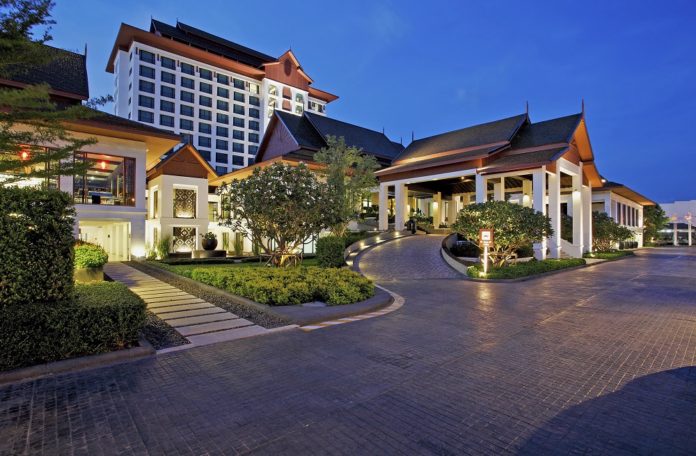
CENTARA Hotel & Convention Centre Khon Kaen has been rebranded under Minor Hotels’ Avani flag since July 1, 2016.

According to a statement, Avani Khon Kaen Hotel & Convention Centre is “uniquely positioned to meet the needs of business guests”, boasting 4,000m2 of meeting space.

In addition to having 196 guestrooms across five room types, the property also features an outdoor pool, a fitness centre and a spa.

The property is a 15-minute drive from the Khon Kaen Airport and located close to a number of leisure attractions such as the Dino Park water park and a nearby shopping district.

With this rebranding, Minor Hotels will have 16 properties under the Avani brand in operation in Thailand, Sri Lanka, Vietnam, Malaysia, the Seychelles, Mozambique, Botswana, Lesotho, Namibia, Zambia and the UAE, with a pipeline of further openings in Asia and the Middle East.

Malaysia Airlines names COO Bellew new group MD and CEO

0

peter-bellew-mas
Peter Bellew (pictured) will replace Christoph Mueller as group managing director and CEO

CHIEF operating officer at Malaysia Airlines, Peter Bellew has been appointed the new group managing director and CEO effective today (July 1).

He will replace the current group managing director and CEO, Christoph Mueller, who is serving his notice period until September 9 following his resignation on March 10. Mueller will remain available to the company until the end of his notice period to help ensure a smooth leadership transition.

The leadership changes have been approved by Khazanah Nasional, the sole shareholder of Malaysia Airlines.

Malaysia Airlines said in a statement: “Bellew’s appointment follows a comprehensive search for a new CEO conducted by Khazanah and the Malaysia Airlines board. The process, which commenced in April 2016, involved internal and external, as well as local and foreign candidates.”

Bellew has been a member of Malaysia Airlines’ senior management team since the first day of its full operations on 1 September 2015.

The statement read: “His appointment will ensure continuity in the execution of the Malaysia Airlines’ turnaround plan and further progress of the overall restructuring effort, as set out by Khazanah in its 12-point MAS Recovery Plan. It also allows for an accelerated and seamless leadership transition from Mueller.”

An Irish national, Bellew has over 20 years of experience in the aviation industry. He joined Malaysia Airlines from Ryanair, where he served in various roles with increasing responsibility since 2006, leaving the airline as the director of flight operations responsible for 72 bases operating a total of 320 aircraft. In this role, he ensured cost-effective operations and punctuality at more than 150 airports in over 30 countries, created a training organisation for 600 new Boeing pilots, built employee representative council structures in 19 countries, opened 61 new overseas bases, and introduced new technologies to reduce costs across the airline.

Tigerair launches Singapore-Zhengzhou service

0

tigerair-zhengzhou-singapore-launch
Leslie Thng, CCO for Tigerair and Scoot (left) and Lim Ching Kiat, Changi Airport Group senior vice president of market development celebrating the launch of the service

TIGERAIR has inaugurated flights from Singapore to Zhengzhou, the capital of China’s Henan province, becoming the world’s first carrier to offer direct flights on this route.

The service operates every Tuesday, Thursday and Sunday on Tigerair’s Airbus A320 aircraft. Flights depart Singapore at 01.10 and arrive in Zhengzhou at 07.00. They return from Zhengzhou at 08.00, landing in Singapore at 13.40.

With the launch, Tigerair’s network in China now spans 10 cities – Guangzhou, Haikou, Jinan, Nanning, Ningbo, Quanzhou, Shenzhen, Wuxi, Xi’an and Zhengzhou.

TTG Asia e-Daily team recharges to serve you better

0

TTG Asia e-Daily is taking a break from July 4 to 5 when our whole office goes on a company retreat, and on July 6, which is Aidilfitri public holiday.

We would like to take this opportunity to wish our Muslim readers from all over the world a joyful Aidilfitri celebration.

For really urgent matters, we are contactable on our cellphones. Otherwise, we shall reply to your email when we are back in office on July 7, when we’re re-energised and all charged up to serve you better.

Air Astana brings Iran closer to Asia with Tehran service

0

air-astana

AIR Astana is launching direct thrice-weekly flights from Almaty, the largest city in Kazakhstan, to Tehran, Iran’s capital, which its senior vice president sales and marketing Ibrahim Canliel said would provide convenient connections to Iran to Air Astana’s CIS and Asian network, in particular to the cities of Beijing and Urumqi.

The flights will be served by Embraer 190 aircraft with nine business seats and 88 economy seats. The journey takes about 3.5 hours.

Lead-in return economy class fares, including all taxes, start at US$290, with return business class fares starting at US$930 based on the current rate.

The new service will offer added ease of travel and enhance business and cultural links between the two countries. According to the Ministry of Foreign Affairs of The Republic Kazakhstan, the approximate value of trade between the two countries was US$1 billion in 2015. In addition, there are a number of Kazakh-Iranian joint enterprises in Kazakhstan, as well as cultural and scientific ties between the countries, which will benefit from the new service.

Iran, one of the oldest civilisations in the world which boasts outstanding architectural monuments, is also an up-and-coming destination since the recent end of economic sanctions.

New hotel openings: June 27 to July 1, 2016

0

The latest hotel openings and announcements made this week

holiday-inn-express-singapore-katong-facade1

Holiday Inn Express Singapore Katong

The new 451-room hotel is the third and largest Holiday Inn Express in Singapore and promises a refreshing, affordable and hassle-free stay in Singapore’s first heritage town in Joo Chiat. Amenities include free and fast Wi-Fi throughout the hotel, free Express Start breakfast or a Grab & Go option; high quality bedding with a choice of firm or soft pillows; power showers with a three-function massage showerhead and fluffy towels; 24-hour fitness room and a self-service business centre, Internet stations and laundry stations. The hotel is offering a special opening rate starting from S$121.00++(US$90++) per night for bookings from now until August 31.

Club Med Tomamu Hokkaido

Club Med is opening a ski resort in Tomamu in December 2017. Guests are entitled to free ski lessons and access to 28 ski slopes of varying difficulty levels with facilities like ski lifts and gondolas. Children’s club facilities, a fitness centre and Ofuro tubs are also available on site. The resort will be open in off-ski seasons, offering a golf course and tours such as to the Unkai Terrace attraction. In addition, a water chapel can be booked for weddings. The property is a 90-minute bus ride or 50-minute JR express train ride from New Chitose Airport.

shama-xiangnanli-chengdu_rendering02

Shama Xiangnanli Chengdu

This 252-key serviced apartment under Onyx Hospitality Group’s Shama brand is scheduled to open in Chengdu in 2017. The property will be located within the upcoming Tianfu New Area development zone in Sichuan and near the Xiangnanli retail district, also slated for completion in 2017. Apartment types range from studios to three-bedrooms, all of which will include living and dining spaces, fully-equipped kitchenette and Wi-Fi access. Facilities include a guest lounge; a breakfast space serving tea and pastry; a play area for kids; a gymnasium; and a swimming pool. The property will also offer personalised services including housekeeping, daily breakfast, round-the-clock security, on-site management and concierge services. As well, a programme named “no boundaries” will facilitate social/settling-in activities for tenants such as tours and networking events.

six_senses_krabey_island_hires_1

Six Senses Krabey Island

Six Senses’ new resort is expected to open on Cambodia’s Krabey Island in 2017. Each of its 40 villas will include a private plunge pool and deck. A full-service boutique will be available on site. Also being planned for the property are a poolside outdoor cinema and an observatory complete with stargazing sessions and expert talks. As well, Six Senses will offer a broad range of its wellness offerings. F&B options include an elevated bar offering sea views and specialty restaurant Indochine, while an all-day restaurant and a deli with an ice-cream parlour can be expected. The new resort will be a 10-minute drive from the mainland jetty and 3.5-hour drive from Phnom Penh International Airport.

fraser_suites_tokyo

Fraser Suites Tokyo

Frasers Hospitality Group, in partnership with property and real estate developer Sekisui House, will open a new serviced residence in time for the 2020 Summer Olympics. The property will be redeveloped from a four-storey commercial building to a 23-storey residence with a total of 223 studio apartments and one-bedroom apartments ranging 35m2 and 60m2. Each unit will feature living, dining and bedroom areas. Facilities include a fully-equipped 24-hour gym, a golf simulator, an alfresco dining restaurant with beer garden and a 140m2 conference and meeting facility.

Roxy-Pacific grows own brand, Noku Roxy, in Asia

0

noku-roxy-entranceEntrance to Noku Kyoto

ROXY-PACIFIC Holdings, which owns the 500-room Grand Mercure Roxy Hotel Singapore, is expanding beyond the Lion City with its own upscale boutique brand, Noku Roxy, which has one hotel in operation in Kyoto and two others that are being developed in Phuket and the Maldives.

After opening the first Noku Roxy in Kyoto recently, the Singapore homegrown public-listed property and hospitality group has acquired 10 villas and additional land in Phuket which it will redevelop as a Noku Roxy hotel with 90 rooms and five villas, for completion in 2018.

In the Maldives, its designers are re-working an existing property with 50 villas, 45 minutes away from Male, into another Noku Roxy.

The brand is the brainchild of Roxy-Pacific’s executive director and managing director Chris Teo, whose stints with Amanresorts and Mandarin Oriental Hotel Group before helming Roxy-Pacific’s hotel ownership business helped shape his vision for a brand that could offer deep local insights and personalised service but at affordable prices.

To do that, Teo keeps Noku Roxy hotels small in roomcount, in strategic locations, with artisanal yet modern design and offering personal recommendations on the hidden gems of the place. Noku Kyoto, for example, has only 81 rooms, with handpicked art unique to each room, is located directly across the Kyoto Imperial Palace and has its own map of the Kyoto city centre that recommends favourite local haunts and restaurants, access into exclusive artisanal houses and the best sightseeing spots, many of which Teo has himself tried and tested. Guests can also reserve personalised walking tours with in-house guides, and receive itineraries or day-trip recommendations from Noku Kyoto’s staff.

Rates start from 20,000 yen (US$194.4).

mr-chris-teo-noku-roxy_online
Teo: bringing ‘the local experience’ back to hotels

“I always have in mind the upper-scale four-star boutique hotels as I believe there is still a lot of room in Asia for a product that offers the local character and personalised service, but at non-luxury prices,” said Teo.

A true believer of giving guests the authentic local experience, Teo said: “As a hotel, we have to be responsible and respectful of local cultures and traditions. Sometimes we lose the plot; we are so high-tech and connected all the time that we lose touch of people. In Asia especially, everyone and everything is so fast-paced.

“So we want to try and bring back the local experience. Why do you think Airbnb is booming? They do connect tourists to the place and create local experiences.”

Teo said independent hotels had more room than chains to be authentic. “The big chains have better scale and efficiencies, but the independents, being smaller, are in touch with the local environment, can make quicker decisions and are more nimble,” he said. “As a company we are not that big but we know our staff, our suppliers and we build relationships and look at things in a more in-depth fashion.”

On further expansion, he said he was always on the look-out for the right projects. It took him four years, for example, to clinch Noku Kyoto, a gem of a deal he said because of its location across the Kyoto Imperial Palace and next to Marutamachi subway station, its opening at a time Japan tourism is booming and its manageable size, being the first hotel venture outside Singapore for Roxy-Pacific.

“In selecting where to invest, I look first at the destination, as I believe people travel not to stay in a hotel unless it is  a destination hotel, but to experience a place.

“Next comes the software – the people, how you run the hotel and what value add you bring. Today, you can create an authentic hardware anywhere as you can bring in the materials and hire great craftsmen, but at the end of the day it’s trained people who will make the difference,” said Teo.


Marwood worries CWT which urges corporates to rethink negotiations

0

scott-brennan
Scott Brennan, CWT’s executive vice president and head of global supplier management

MARRIOTT International’s acquisition of Starwood Hotels & Resorts worries Carlson Wagonlit Travel (CWT) which has urged corporate travel buyers to think how it will change their travel programmes.

It pointed out that in 14 of the world’s top 20 cities, the new hotel group will have nearly a third of the corporate travel hotel spend, rising to half in some places. Also, CWT’s analysis suggests Marriott, more than any other chain, has chosen not to take part in corporate travel RFP processes, it said.

Scott Brennan, CWT’s executive vice president and head of global supplier management, said: “The implications are potentially huge. We think the new Marriott/Starwood group is going to have a lot of say in the market, which could alter the way corporate rooms are bought and sold. We don’t yet know the full impact and because the new group won’t be finalised in time for the negotiations this year, we won’t know until the 2017 negotiating season, in September next year.”

A further consideration is travel policy compliance, travel buyers’ key negotiating tool as they can drive volume to preferred properties. However, CWT’s analysis shows 22 per cent of non-compliant spend is with Marriott and nine per cent is with Starwood.

Brennan continued: “According to a 2015 GBTA survey of corporate travel managers, hotel chain loyalty programmes is one of the underlying reasons for non-compliant hotel spend. We don’t yet know what changes, if any, the new Marriott will make to its and Starwood’s loyalty programme. But whatever happens, the new group already accounts for a large share of non-compliant spend.

“The combination of the new Marriott’s increased market share and the pulling-power of its loyalty programme means it will be in a very strong position. After all, volume drives the discussion in the hotel industry. On top of that, where a player the size of the new Marriott goes, others will follow.”

CWT suggests corporate travel buyers take four steps now to start building their negotiating position:

  1. Assess key markets: look at share by top chain within key cities or areas within a city, assess alternative hotels and potential savings
  2. Prepare to have a more flexible approach for 2017, incorporating alternative suppliers as required
  3. Adapt your travel policy to ensure compliance
  4. Communicate to travellers, engage them in corporate objectives and create shared ownership in the results.

Corporate Traveller launches Singapore operation

0

CORPORATE Traveller, a subsidiary of Flight Centre Travel Group (FCTG), has launched operations in Singapore, targeting a growing small and medium enterprise (SME) market.

It said with close to 200,000 SMEs in Singapore, contributing to almost 50 per cent of the nation’s gross domestic profit, it saw a rising need for SME owners and employees to embark on overseas business trips on a regular basis. It is competing to offer them corporate travel services such as getting the best value out of flights, accommodation and ground transportation.

Established in 1993, Corporate Traveller operates across Australia,New Zealand, South Africa, the UK, Canada and US. It is also concurrently launching in China, Hong Kong, UAE (Dubai) and India.

Who says Chinese travellers are more trouble than they are worth?

0

china-tourists-in-egypt

A NEW study by management consulting firm Oliver Wyman seeks to dispel common misconceptions about Chinese outbound travellers, including views they are more trouble than they are worth, or group travel is being replaced by FIT.

Based on a survey of 1,750 Chinese people who had travelled abroad in the past year, it hopes the findings will help global destinations sharpen their appeal to the changing market.

And the common myths:

Myth 1: “They go abroad only to shop”
While nearly all travellers shopped during their trip, less than 15 pe rcent of Chinese travellers it surveyed cited shopping as the main reason for their trip, in contrast to 63 per cent who specified sightseeing as their top motivation.

In Hong Kong, where slow growth in Chinese travellers and their spending has seen retail sales fall 12.5 per cent in the first quarter of 2016 and a slump in 2015, the city will need to become less dependent on shopping by mainland visitors and encourage spending on other activities, pointed out Hunter Williams, Oliver Wyman partner and author of the report.

Myth 2: “They spend indiscriminately”

Chinese travellers relatively spend large sums while abroad, on average, US$3,000 per person, roughly the equivalent of a month’s household income. It is also true that they spend a lot on shopping – about US$1,200 – which may have helped to fuel the misconception that they spend indiscriminately. However, only around half of the spending is on themselves. More than 32 per cent is to purchase gifts for others, and 19 per cent is for resale back home. “Chinese travellers have sophisticated needs, so retailers need a segmented approach that emphasises unique value – it’s no longer enough to offer a blanket approach,” said the report.

Myth 3: “They are always in groups” or “Independent travellers are quickly replacing groups”

Both the number of tour group travellers and independent travellers are on the rise, showing both individuals and groups will continue to be important segments for some time to come.

Independent travellers are not replacing group travellers, but are complementing them. For example, Hong Kong and Macau rank close to the top for the percentage of independent trips, while Taiwan ranks close to the bottom. At the same time, over the past few years group travellers have actually accounted for a larger share of all travellers, dispelling the misconception that groups are gradually being replaced by individual travel. However, Chinese travellers surveyed considered tour operators to be the single least useful source of information, showing tour operator relationships are no longer enough.

Myth 4: “Chinese travellers are more trouble than they are worth”

As a result of cultural misunderstandings, Chinese tourists can often be misjudged. For example, there is no tipping culture in China and it is often socially acceptable to eat food on public transport. Explaining service charges upfront and the proper usage of facilities can reduce miscommunication. Similarly, rules, and penalties for breaking them (such as cleaning fees for smoking in non-smoking rooms), should be clearly communicated. Open two-way communication is the surest way to avoid misunderstanding.

“Today there is no such thing as the archetypal Chinese traveller as this group is complex and multi-faceted,” said Williams. “If consumer-facing businesses make broad generalisations and buy into the misconceptions, they will miss key opportunities. Businesses need a cohesive Chinese traveller strategy, where the realities of each region and destination must be considered separately.”