The first Kerala Wedding and MICE Conclave, organised by the Kerala Travel Mart (KTM) Society and the state’s department of tourism, is under way in Kochi from August 14 to 16.
The tourism department has identified the segment as a priority as it seeks to restore international tourist arrivals to pre-pandemic levels.
Delegates gather at the opening ceremony of Kerala’s first Wedding and MICE Conclave in Kochi; photo by Rohit Kaul
“Kerala holds immense promise for both weddings and MICE markets. Our inbound tourist arrival numbers are close to 700,000 but we have not reached the pre-Covid level. I hope that this event acts as a trailblazer in getting more international tourists in the state,” said K Biju, secretary, tourism, government of Kerala while speaking at the inaugural function of the event that took place in Grand Hyatt Bolgatty, Kochi on August 14.
A total of 610 domestic buyers and 65 overseas buyers registered for the event. Participating international buyers are from markets including the UK, Germany, the US, Australia, Brazil, Canada, Hungary, Israel, Italy, Malaysia, Oman, Poland, Romania, Russia, Singapore, South Korea, Sri Lanka, Turkey, Ukraine, the UAE and Vietnam.
“The Wedding & MICE Conclave is part of our approach to look at innovative ways to promote Kerala as a tourist destination,” said S Swaminathan, secretary, KTM Society.
Biju stressed that while India presently has one per cent share in global MICE business, Kerala can play an important role in helping to grow this share to five per cent.
“We have a robust infrastructure for MICE and diverse natural backdrops like heritage buildings and hill stations for weddings. Kerala is the first state in India to have four international airports which are well connected to the Middle East and beyond. We have the largest number of five-star hotels in the country too. We will work closely with wedding planners and focus on promoting our beautiful beaches as wedding venues,” said Biju.
Before the pandemic, Kerala received about 1.19 million international tourists in 2019, according to India’s Ministry of Tourism.
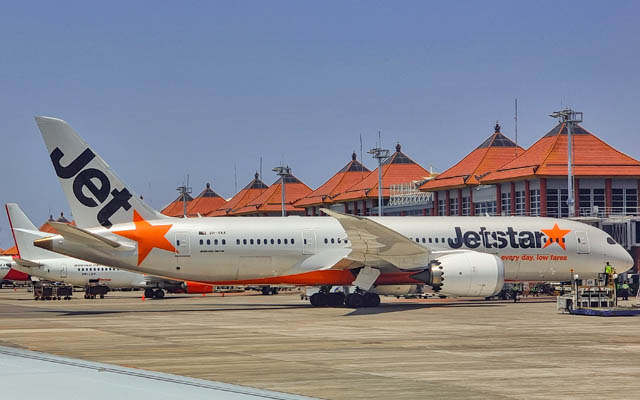
Jetstar launches new direct flights between the Gold Coast and Bali; photo by jonsbernardus
Jetstar expands Queensland network with two new flights
Jetstar is expanding its Queensland network with new international routes, including Brisbane-Rarotonga flights starting in May 2026 and the launch of Gold Coast-Bali services. The additions are part of a broader growth strategy that has seen six new overseas connections from Queensland announced or launched in the past six months.
The Brisbane-Rarotonga service will operate three times a week on Jetstar’s A321neo LR aircraft, providing more than 50,000 seats annually. It will be the airline’s second direct route from Australia to the Cook Islands, after Sydney-Rarotonga, and Jetstar remains the only carrier flying direct from Brisbane, Sydney and Rarotonga.
The new Gold Coast-Bali service operates three times a week, adding more than 58,000 seats annually. It is Jetstar’s first direct connection between the Gold Coast and Bali and is operated with the Airbus A320neo, one of two now based at the airport to increase capacity on other domestic and New Zealand routes.
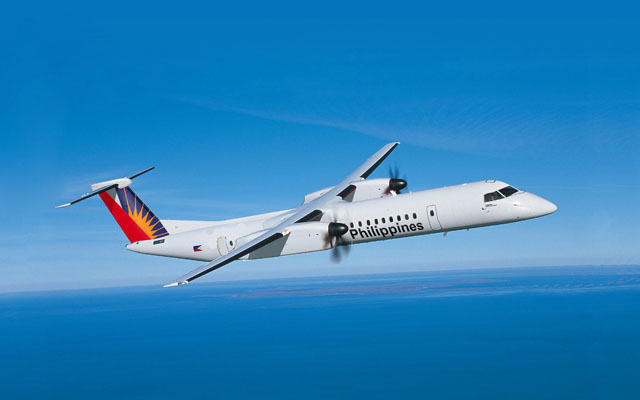
Philippine Airlines
Philippine Airlines shifts select domestic routes from Manila to Clark and Cebu
Philippine Airlines (PAL) will move some domestic turboprop routes from Manila’s Ninoy Aquino International Airport (NAIA) to Clark International Airport (CRK) and Mactan Cebu International Airport (CEB) from October 26, 2025, following a government mandate.
Flights from Clark to Busuanga and Basco will increase to twice daily, while Clark-Siargao will continue daily. From Cebu, services to Busuanga and Siargao will run three times daily, and a new Cebu-Calbayog route will operate four times weekly, replacing Manila-Calbayog flights. Passengers from Manila can connect via Cebu.
Manila-Siargao and Manila-Busuanga flights will continue daily but at reduced frequencies, while Manila-Antique and Manila-Catarman services will remain unchanged.
The government began reducing turboprop flights from Manila in March, cutting 30 per cent of services.
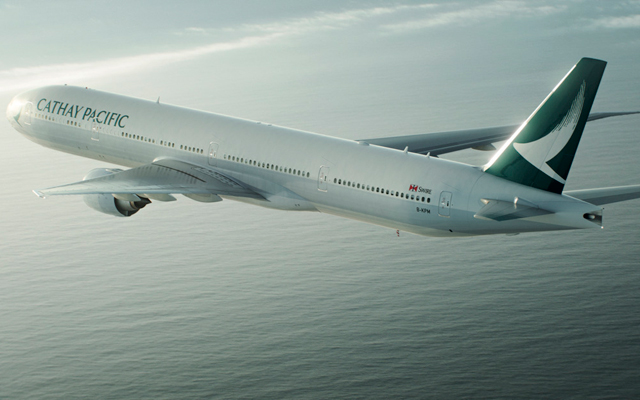
Cathay Pacific
Cathay Pacific resumes Hong Kong-Brussels services
Cathay Pacific has reinstated direct flights between Hong Kong and Brussels, operating four-times-weekly services since August 3. The route restores a key link between the airline’s home city and the Belgian capital, providing greater choice and connectivity for passengers.
The Hong Kong-Brussels flights are operated with the airline’s Airbus A350-900, featuring fully flat beds in Business, spacious Premium Economy seating, and extended comfort in Economy. All passengers have access to in-flight entertainment and Wi-Fi, with Business class travellers and Cathay Diamond members receiving complimentary Wi-Fi.
With the return to Brussels and increased frequencies on other European routes, Cathay Pacific now operates nearly 100 return flights per week between Hong Kong and Europe this summer, including five daily flights to London, daily flights to Amsterdam, Frankfurt, Manchester, Milan, Paris and Zurich, four weekly flights to Barcelona, Brussels, Madrid and Munich, and three weekly flights to Rome.
The Hong Kong–Brussels service departs Hong Kong at 23.50 and arrives in Brussels at 07.20 the following day on Mondays, Wednesdays, Fridays and Sundays, while the return service leaves Brussels at 13.25, arriving in Hong Kong at 06.55 the next day on Mondays, Tuesdays, Thursdays and Saturdays.
Passengers travelling from Europe can also connect seamlessly via Hong Kong International Airport to over 100 destinations worldwide, including 23 in mainland China, and reach other cities in the Greater Bay Area through direct air-to-sea and air-to-land services via the SkyPier Terminal.
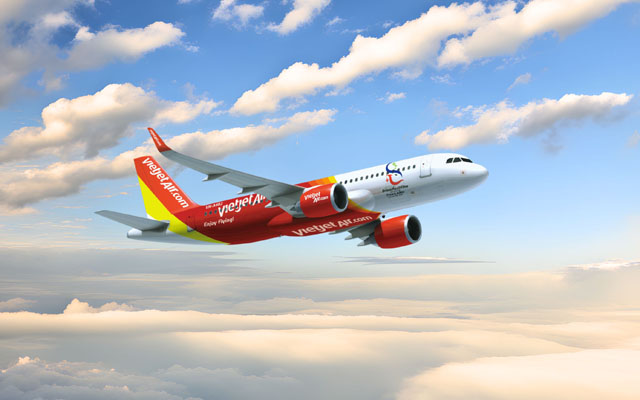
Vietjet Thailand
Vietjet Thailand adds new Asia routes for 2025
Vietjet Thailand will launch several new direct routes to major cities across Asia in 2025 as part of its international expansion.
From Bangkok, flights to Seoul (Incheon) will begin on October 1, to Osaka (Kansai) on December 1, and to Tokyo (Narita) on December 15. The airline will also expand services to India, with Phuket-Mumbai flights starting on August 14, Bangkok-Kolkata on November 16, and Bangkok-Ahmedabad on December 4.
The new services are aimed at increasing connectivity with key markets in Japan, South Korea, and India, boosting inbound tourism to Thailand and meeting growing two-way travel demand.
Vinpearl Joint Stock Company has signed a memorandum of understanding (MoU) with three South Korean travel companies: Hanatour, Marketing Highlands, and HKG Co. (formerly Hank Golf), as part of its strategy to enter the South Korean market and promote Vietnam as a destination for South Korean travellers.
The signing took place at the Vietnam-South Korea Business Forum, attended by general secretary To Lam, South Korean prime minister Kim Min Seok, and other officials.
Representatives from Vinpearl and South Korean travel firms sign the MoU at the Vietnam-South Korea Business Forum
Under the MoU, the companies will coordinate promotional activities and expand marketing and distribution networks in South Korea, aiming to attract five million South Korean visitors by 2025.
The partnership will introduce new destinations to more than 7,500 travel agencies in South Korea, providing over 46,000 golf members access to Vinpearl’s international-standard courses across Vietnam.
Vinpearl operates in key coastal destinations including Nha Trang, Phu Quoc, Danang, Hanoi, and Ho Chi Minh City, offering resorts, entertainment, and shopping. The agreement marks a step in Vinpearl’s international expansion and strengthens Vietnam–South Korea relations.
Ngo Thi Huong, deputy CEO of sales and marketing, Vinpearl, stated: “We are confident that by leveraging Vinpearl’s exceptional infrastructure and services alongside our partners’ widespread distribution capabilities, we will develop compelling tourism products and reinforce Vietnam’s status as the preferred destination for travellers from South Korea.”
Intrepid Travel is expanding its destination management network with a new country office in Uzbekistan, scheduled to open later this year.
This move reinforces Intrepid’s Central Asia network as demand grows, with bookings to Kazakhstan, Kyrgyzstan, Uzbekistan and Turkmenistan up 70 per cent year-on-year in 2025.
The new office will support locally managed trips and community-connected experiences across the region
The Tashkent-based office will operate as a DMC, led by a country general manager and supported by a small operational team and regional trip leaders. It will be Intrepid’s 32nd office worldwide and reflects the company’s 2030 strategy to scale locally managed DMCs and offer community-connected experiences.
Intrepid recently launched two new trips in the region. The 10-day Kyrgyzstan: Trekking the Tien Shan Trails itinerary follows nomadic paths through the western Tien Shan mountains, including overnight stays in traditional yurts and alpine lake views. The 16-day Highlights of Central Asia journey travels by train through Kyrgyzstan, Kazakhstan, Uzbekistan and Turkmenistan, with stops including a yurt stay near Issyk Kul Lake, a home-cooked meal with a local family in Uzbekistan, and wine tasting at a family-run winery in Almaty.
Intrepid’s managing director Asia and head of global operations Natalie Kidd said: “This is a natural next step in our strategy to grow where we’re seeing momentum and to support that growth with strong local teams. Central Asia is an exciting region for Intrepid, and having our own DMC in Uzbekistan means we can better support our leaders, partners and travellers on the ground.”
“Uzbekistan has seen a huge surge in interest, with its rich culture, welcoming communities and incredible landscapes. We’ve had strong relationships with partners here for many years, and we’re excited to build on that foundation with a dedicated local team,” added Ashish Verma, regional general manager North and South Asia, Intrepid.
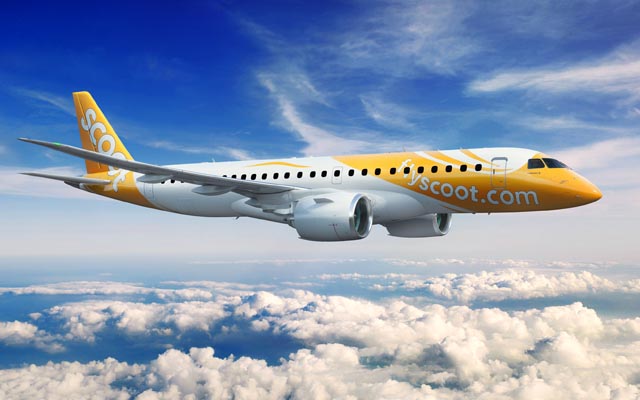
Scoot has introduced a new KrisFlyer award chart, allowing members to redeem flights with miles at fixed rates. One-way Economy class redemptions start from 1,500 KrisFlyer miles, giving members more options to travel at lower mileage costs.
The award chart applies to popular destinations including Bangkok, Hangzhou, Ipoh, Jeju, Taipei and Vienna. KrisFlyer members can redeem Scoot Saver or Scoot Advantage seats on a first-come, first-served basis. Additional fees, such as taxes and add-ons, can be paid separately, and members earn one KrisFlyer mile per Singapore dollar spent on add-ons for Scoot-operated flights.
KrisFlyer members can now enjoy fixed-rate redemptions and extra perks on Scoot flights
Since joining KrisFlyer in 2015, Scoot has expanded its offerings for members, providing more flexibility in redeeming miles. The new award chart reinforces the airline’s commitment to member benefits while continuing to offer PPS Club, KrisFlyer Elite Gold, and KrisFlyer Elite Silver members additional privileges, including extra baggage allowance, complimentary seat selection, priority boarding and one-time flight change fee waivers.
Award flights using KrisFlyer miles are now available through Scoot’s official website and mobile app, giving members an easy way to plan travel using their accumulated miles.
Scoot’s chief commercial officer Calvin Chan said: “We believe that travel should be accessible and rewarding and launching Scoot’s award chart is our way of providing greater value for KrisFlyer members. With Scoot’s award chart, KrisFlyer members can now get more out of their miles through redemption to travel to cities including Hangzhou, Jeju, Taipei, and Vienna at attractive redemption rates. This way, members can maximise their miles to explore more destinations across the SIA Group’s network.”
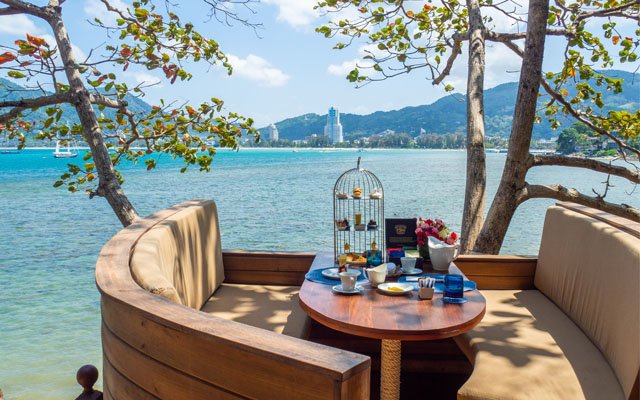
Amari Phuket has introduced a new afternoon tea experience in its TreePods, boat-shaped dining cocoons set among the hillside trees with views of the Andaman Sea.
The TreePods, made from eco-friendly materials and positioned for privacy, are open to hotel guests and non-residents. The tea set includes freshly baked scones with clotted cream and preserves, smoked salmon and egg sandwiches, shrimp and avocado brioche, chocolate-dipped strawberries, mango panna cotta, cheesecake, and brownies, served with a choice of traditional teas.
Amari Phuket launches afternoon tea in treetop TreePods with views of the Andaman Sea
Available daily from 08.00 to 20.00 with one-day advance booking, the afternoon tea is priced at 1,100 baht (US$31) for two people.
Set on a hillside at the southern tip of Patong Beach, Amari Phuket offers direct beach access and sea views, while remaining close to Patong’s markets and nightlife. Facilities include Italian dining at La Gritta, Breeze Spa, and rooms with private balconies starting from around US$100 per night for a Superior Balcony King.
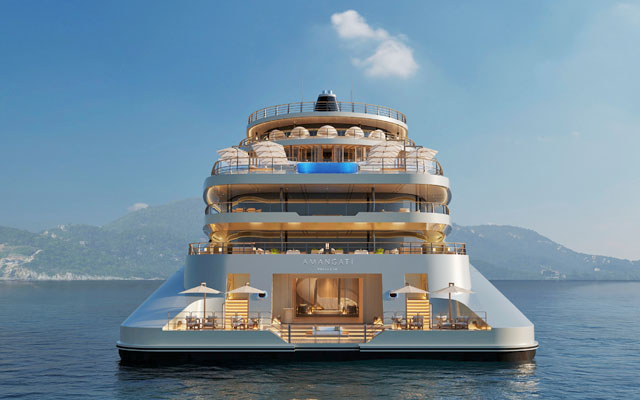
Aman at Sea has unveiled the suite concept for its inaugural vessel Amangati and opened reservations for private charters and events ahead of its 2027 summer debut.
The 183-metre ultra-luxury motor yacht, created in partnership with Sinot Yacht Architecture & Design and under construction at T.Mariotti S.p.A in Genoa, will host up to 94 guests across 47 suites, each with a private terrace and some with plunge pools.
Amangati will feature 47 ocean-view suites with private terraces and customised itineraries for charters
Suites will range from 49.4m² to 183.2m², with interiors inspired by Japanese ryokan homes, featuring timber finishes, travertine bathrooms, and full-height windows for ocean views.
Amangati will offer bespoke itineraries and a dedicated crew for charter groups.
Later this year, Aman at Sea will release its curated Mediterranean itineraries for booking.
Disney Cruise Line is leading the next wave of family cruising in Asia ahead of the Disney Adventure’s maiden voyage from Singapore on March 10, 2026.
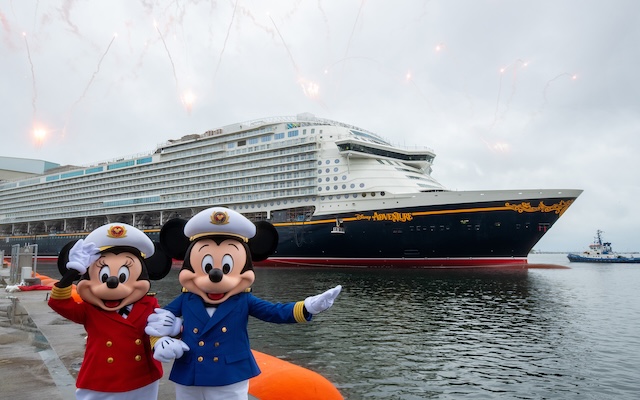
From her first float out in April this year from the Meyer Werft construction hall in Wismar, Germany, to the reveal of both Captain Mickey Mouse and Captain Minnie Mouse on her stern, the Disney Adventure has been making waves ahead of her maiden voyage in Singapore come December 15.
Set to be the largest vessel in the Disney Cruise Line fleet with an approximate gross tonnage of 208,000 and capacity for around 6,700 guests, the Disney Adventure is leading the next wave of multi-generational cruising in Asia, bringing the brand’s signature hallmark experiences to the region.
Combining uniquely Disney activities, food and beverage, and flair with exceptional service and immersive storytelling, guests onboard the Disney Adventure will discover a world of many Disney firsts that they can enjoy together regardless of age and create unforgettable memories together.
Captain Mickey Mouse and Captain Minnie Mouse launch the float out of the Disney Adventure in Germany
Dazzling entertainment
Remember, a brand new Broadway-style show set to dazzle and captivate guests
As part of its signature world-class entertainment offerings, guests on board the Disney Adventure will be the first to experience three brand new shows. Duffy and The Friend Ship, features crowd favourite characters and original songs as they bring the Garden Stage at Disney Imagination Garden to life, while Captain Jack Sparrow & The Siren Queen, a new action-packed swashbuckling show which will see the pirates battle a giant squid in their hunt for rare treasure.
There will also be brand-new stage production – Remember, an all-new musical held at the Walt Disney Theatre, designed exclusively for the ship. Be the first to catch a dazzling Broadway-style show at sea.
Experience it first To further immerse guests in their favourite Disney stories, step into the Marvel Style Studio and into the shoes of popular Marvel Super Heroes. A fun, family-bonding time for all ages, guests can suit up in their favourite Marvel costume and get their hair and makeup done for the full transformation.
Guests can also take home a piece or more of Disney magic home with them should they wish to buy something from the extensive shopping precinct destined for the Disney Adventure.
1 of 3
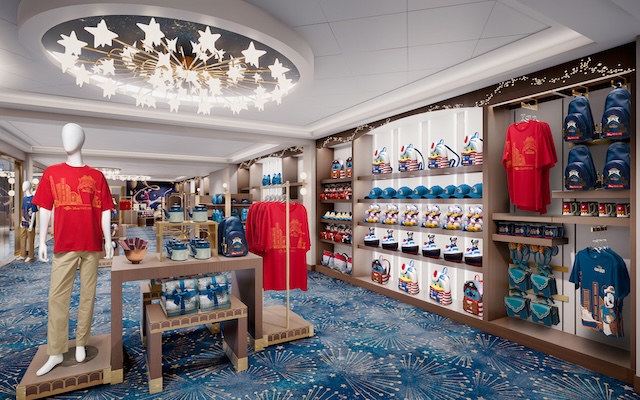
Take home your favourite souvenirs from the first-ever Duffy and Friends Shop at sea
The World of Disney® store brings a massive collection of merchandise including special designs inspired by the heritage of the region
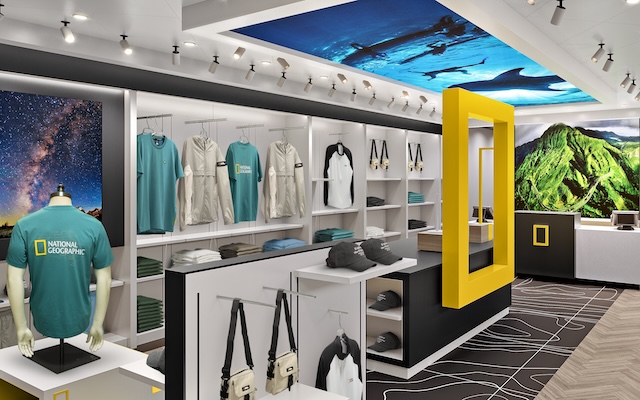
The first National Geographic Store at sea brings the spirit of exploration and offers a new co-branded collection available exclusively on board
With nearly 1,580m² dedicated to retail, the new ship will introduce several first-of-their-kind retail experiences, including Disney Cruise Line’s first World of Disney® store, the first National Geographic Store at sea, and the first-ever specialised Duffy and Friends Shop, a dedicated space for Duffy and Friends merchandise.
And specially for the Asian market, the Disney Adventure will feature exclusive product designs that reflect the region’s rich diversity and artistry with a series of new merchandise ranging from apparel and accessories to homewares and toys.
The iconic Disney Parks shopping destination, World of Disney, will also make its first Disney Cruise Line appearance on the Disney Adventure with a vast collection of merchandise. Specially designed collections will pay homage to Singapore’s iconic skyline and local flora and fauna, while others will draw inspiration from the distinctive architecture and vibrant patterns found across South and South-east Asia.
Meanwhile, the National Geographic Store is set to provide an immersive retail environment, complete with vivid photography, and offering an exclusive co-branded collection of apparel and outdoor accessories. Purchases go toward supporting the global non-profit National Geographic Society in its work to protect and illuminate the world through exploration, research, and education.
Making its debut on the ship as well is the Duffy and Friends Shop, featuring a collection of sought-after plush toys, apparel, souvenirs, including a brand-new line featuring Duffy and his friends exclusively on board.
Be among the first to sail on the Disney Adventure – make a booking with Disney Cruise Line now!
Agoda, in partnership with ASEAN, has launched the A Destination for Every Dream campaign to promote travel within the region.
Running until the end of 2025 and timed with ASEAN Day celebrations, the campaign offers exclusive deals and curated insights into the region’s festivals and cultures. Agoda’s festival-focused travel guides highlight cultural events across ASEAN Member States, encouraging travellers to explore and experience the region’s diversity.
The new campaign offers discounts and festival guides to inspire journeys across South-east Asia; Bali in Indonesia, pictured
The campaign includes discounts of up to 18 per cent on accommodation, along with savings on flights and activities booked through Agoda.
Damien Pfirsch, chief commercial officer at Agoda, shared: “A Destination for Every Dream is about making it easier and more affordable for travellers to explore the festivals and traditions that make South-east Asia so special.”
Oliver Chong, assistant chief executive (designate) of the Singapore Tourism Board’s International Group and chair of the ASEAN Tourism Marketing and Partnership Working Group, added: “This campaign reflects ASEAN’s commitment to showcasing South-east Asia as a unique and interconnected destination. By partnering with Agoda and AirAsia, we aim to make it easier for travellers to discover the vibrant festivals, diverse cultures, and authentic experiences that define our region. Together, we are opening doors to unforgettable journeys across our region.”
H World Group will enter Laos with the signing of four hotel management projects that will bring three of its brands – Intercity Hotel, Ji Hotel, and Orange Hotel – to the destination.
This move is in line with H World Group’s growth ambition in South-east Asia through what it terms an “asset-light and internationalisation strategy”. It opened its first South-east Asian hotel in Singapore – Ji Hotel Orchard Singapore – in 2019.
H World Group is set to open four hotels in Laos by 2027
The new hotels in Laos will be located in prime areas in Vientiane and Luang Prabang. They will be developed with three investment partners – Lao Kunpeng Industrial Co., Yuting Hotel Investment Management Co., and KP Construction Sole Co..
Both Intercity Hotel Vientiane and Ji Hotel Vientiane Mekong Riverside will open in early 2026 while Orange Hotel Vientiane International Airport will welcome first guests in 3Q2026.
Intercity Hotel Luang Prabang will join the network in 2027.
These openings will also mark the Orange Hotel’s brand debut outside of China and Ji Hotel’s second flag in South-east Asia.
Zhu Xiaogang, president of H World Asia Pacific, said the four projects would be “highlights” in the company’s expansion in the region.