Bangladesh dreams of one million arrivals by 2018. It needs all the willpower.
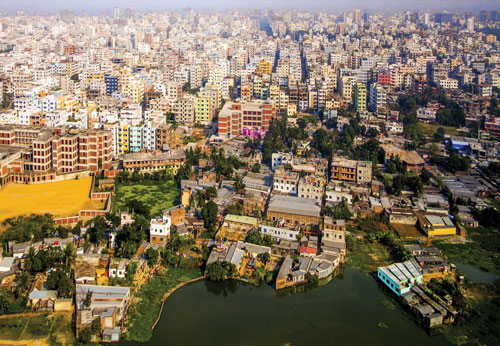
 The travel and tourism industry of Bangladesh is trying hard to bounce back from last July’s terrorist attack in the capital city Dhaka.
On its part the government is planning a host of initiatives to boost tourism in the country. A masterplan, and the development of beach destination Cox’s Bazar for tourism, are integral to its strategy of attracting one million international arrivals by the end of 2018, from around 600,000 in 2015.
Last year’s attack, the worst in the history of Bangladesh, decimated the industry.
“We lost about 90 per cent of inbound business after the terrorist attack,” said Taufiq Rahman, chief executive, Journey Plus.
“Our overseas associates stopped communicating with us. A company that we were working with since 2002 removed Bangladesh from its website and brochures. Travel advisories issued by markets like Japan, the UK and Germany added to the woes.”
Rahman said business started to look up from November and his company recently handled a few tourist groups from markets like the UK and Poland.
Japan, the UK, the US, China, Spain and France are the major international source markets for Bangladesh. But a section of tour operators said the tourism industry has been ailing for a long time in the absence of world-class infrastructure, adequate marketing budget and awareness about its tourism attractions.
Said Syed Qadir, managing director, Wonder Ways: “The government of Bangladesh has been trying to promote tourism but there is no long-term planning. Bangladesh is also not ready as a destination in infrastructure. Majority of the hotels that are opening are in Dhaka while the other destinations lack accommodation options.
“Dhaka, being the business hub, attracts a lot of international tourists but there is a need to develop tourism activities in other parts of the country.”
International hotel chains including Starwood Hotels & Resorts, InterContinental Hotels Group and Carlson Rezidor Hotel Group have recently entered the market but most of the hotels are in Dhaka. Some hoteliers in the region agreed that supply in the capital city has surpassed the demand.
“The hospitality market in Dhaka is saturated,” said Nasser Rahman, chairman & managing director, Dusai Hotel & Resorts.
“Before 2007 there were only two five-star properties in Dhaka. But over the years many international chains have opened their hotels in the city. Four Points by Sheraton has just opened and JW Marriott is soon entering the market. These hotels largely cater to the business segment.
“Beyond Dhaka, the demand for five- star properties is limited,” he pointed out, observing that the five-star resorts catering to leisure tourists that have opened in other parts of the country like Cox’s Bazaar are facing a tough time.
The middle and upper-middle class is limited in Bangladesh. Moreover, the local market is very price sensitive so most resorts are finding it difficult to make money, he said.
“We desperately need to attract high-end international leisure tourists. But we have yet to brand our country as a tourist destination internationally,” said Rahman.
Of late, however, the government has started to show interest in raising awareness of the country as a tourist destination. It hosted the PATA New Tourism Frontiers Forum 2016 recently and will also host the UNWTO Joint Commission Meeting in May.
PATA CEO Mario Hardy said: “Bangladesh has potential but there is work to be done in infrastructure. The first step is to create confidence among locals that they have something to offer and at the same time the government has to put in money to make the destination ready to welcome more tourists. It is not going to happen overnight and will need a series of activities to make it possible.”
According to Bangladesh tourism minister, Rashed Khan Menon, a national policy for tourism was declared in 2010 with the objective of promoting Bangladesh in the overseas markets. However, the political turmoil that ensued in the country had made it difficult to achieve the vision.
Nevertheless, the government is building infrastructure for tourism, said Menon.
Initiatives
“We are expanding the airport in the world’s longest unbroken beach, Cox’s Bazar, for international operations, which is likely to come up by the end of 2017. We are also developing a railway line that will connect Chittagong to Gundum, on the border with Myanmar.
“Bangladesh is home to important Buddhist destinations like Paharpur, which is a UNESCO World Heritage site, and this a market we are looking to tap,” said Menon.
International airlines like China Eastern have expressed interest to operate flights to the airport, he added. Bangladesh is looking to achieve a target of one million international tourist arrivals by the end of 2018, he said.
The government is also coming up with a masterplan that will focus on investment opportunities to develop tourism across the country, which is a first for Bangladesh.
The masterplan will also advise the tourism ministry about the new tourism destinations and attractions in the country that can be promoted domestically as well as internationally.
As well, it will detail the economic and employment benefits that can be drawn through tourism.
One of the plans is to develop an exclusive tourist zone in Cox’s Bazar that will be spread over an area of more than 440 hectares.
The tourist zone will have hotels, restaurants and an amusement park. The government is presently trying to attract potential investors to invest in the project.
“We will provide land to the interested entities on a long-term lease basis,” said Akhtaruz Zaman Khan Kabir, CEO, Bangladesh Tourism Board.
“All the clearances, including environment clearances, will be provided by the government. We expect that within two years after finalising who the investors are, a major part of the tourist zone will be ready.”
This article was first published in TTG Asia February 2017 issue. To read more, please view our digital edition or click here to subscribe.




.jpg?x58225)
.jpg?x58225)
.jpg?x58225)

 Taiwan was seeing steadily surging arrivals from China in recent years until a political stalemate between Taipei and Beijing sent arrivals in a nosedive. This was allegedly due to a politically-motivated move in Beijing to limit the flow of Chinese tourists to certain parts of Taiwan after new president Tsai Ing-wen – who does not endorse the ‘one China’ policy – took office.