TTG Asia
Asia/Singapore Sunday, 11th January 2026
Page 1725

Sunway opens new regional sales office in Shanghai

0

sunway-resort-hotel-spa

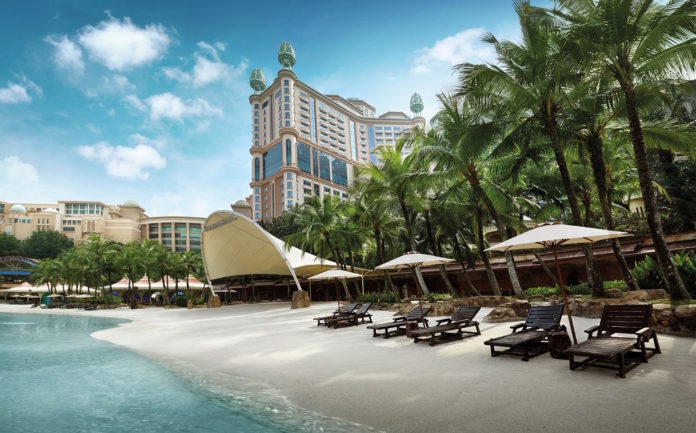
MALAYSIA’s Sunway Hotels & Resorts has opened its first regional sales office in Shanghai in an effort to better serve the Chinese market.

The office, opened on August 1, is developed in partnership with Century Holiday International Travel Group and will be responsible for Sunway’s key corporate accounts in China and to represent the hospitality group’s 11 properties in Malaysia, Cambodia and Vietnam.

“Our presence in China affirms Sunway’s commitment to further strengthen the brand’s footprint, catering to the robust Chinese outbound corporate travel and leisure tourist markets,” said Albert Cheong, CEO of Sunway Hotels & Resorts.

“Working alongside Century Holiday will provide Sunway the platforms to capture a significant share of a growing number of Chinese outbound travellers across all segments of the market,” he added.

Following the opening of the regional sales office, Sunway organised a three-city roadshow from September 19-23 to promote several of Sunway’s facilities as a major tourist and convention destination.

The roadshow, done in collaboration with Tourism Malaysia, Malaysia Airlines, AirAsia and Century Holiday, toured the major cities of Beijing, Shanghai and Guangzhou before concluding at the 3rd Sichuan International Travel Expo (SCITE) in Emeishan, China.
Travel industry leaders commit to accessible tourism

0

world-tourism-day-2016

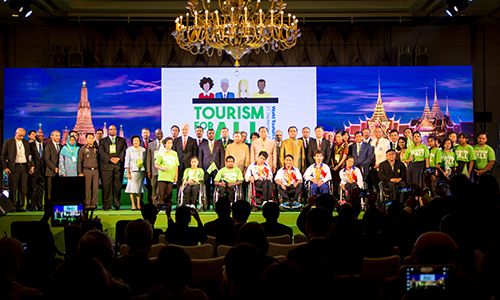
SOME 500 delegates from 60 countries convened in Bangkok from September 26-28 to take part in the annual World Tourism Day. The theme this year was Tourism For All: Promoting Universal Accessibility.

During the two-day event, policy frameworks, capacity building and business strategies were discussed. National delegates also exchanged best practices and experiences on accessible tourism, and declared their commitment to advance universal accessibility to ensure that all citizens enjoy the benefits of travel regardless of their abilities.

Prayut Chan-o-Cha, Thailand’s prime minister who presided over the official celebrations on September 27, said: “One billion people across the globe have some kind of disability, (hence) accessibility becomes and will continue to be a major concern for us all.”

This sentiment was echoed by Kobkarn Wattanavrangkul, Thailand’s minister of tourism and sports. She added that “no one should be left behind” and more was needed to be done to better understand the needs of such groups.

Also in attendance was Ivor Ambrose, director of the European Network of Accessible Tourism, who said that by 2050, as much as 22 per cent of the world population will be over 60 years old and thus have specific access needs.

UNWTO’s secretary-general Taleb Rifai, added: “People with disabilities, aged citizens, families with children and many more find obstacles when they travel. As tourism is a human right, the sector should advance to ensure that all citizens enjoy seamless travel in an equal manner.”

“All of us have somebody who finds difficulties when travelling: family members, friends and colleagues, so we all are affected and can benefit from accessible travel measures,” emphasised Mario Hardy, CEO of PATA.

But making the world more accessible also bodes well for business. David Scowsill, president and CEO, WTTC, said: “Products and services aiming to increase the accessibility of travel add value to destinations and constitute an immense opportunity for the business sector.”

Next year’s World Tourism Day will be held in Qatar with the theme Sustainable Tourism – a Tool for Development.

Thai tour agents forced to reinvent packages after crackdown

0

bangkok-market

CRACKDOWNS on zero-dollar tours have caused package prices to double, forcing operators to reinvent their products, according to the Tourism Authority of Thailand (TAT).

TAT has revealed that the price of a China-to-Thailand package now exceeds 3,000 yuan (US$450). It is now close to the price of a package from China to Japan, which starts at around 4,000 yuan.

It is hard for tour agents serving the Chinese market to woo clients as most agents had relied on zero-dollar tours for more than a decade.

“We must create value-for-money packaged tours. Beaches and food must be core products to compete with Japan because beaches in Thailand are more popular than those in Japan,” Chuwith Sirivajjakul, the director of TAT’s Shanghai office, said in his video call to the monthly meeting of the Association of Thai Travel Agents (ATTA) on Thursday.

As package prices rise, Thailand’s tour agents must now aim for higher-end tourists with higher purchasing power.

On the same occasion, ATTA president Charoen Wangananont said association members were hoping for minimum package prices to be set at 2,500 yuan in order to be competitive. They will propose the pricing to TAT and the details of will be finalised in October.

TAT accepted that package tour sales for the Golden Week (October 1-7) significantly dropped. During the holidays, it projected that arrivals from some Chinese cities to Thailand would decline around 30 per cent. Bangkok, Pattaya and Phuket will be the most affected.

“It is a difficult time for Thailand’s tourism industry but it will be short. Our image will be better (in time),” said Charun Chuennaitom, TAT’s director in Chengdu.

Charun added that even though Thailand has lost market share to neighboring countries, Chinese tourists and agents in general reacted positively to the crackdown on zero-collar tours because they knew that they would not suffer maltreatment anymore.

ATTA reported that as of September 20, international tourist arrivals via its members increased 12.7 per cent to 4.37 million visitors. Its top three markets were China, Russia and Vietnam.

Arrivals from China grew 24 per cent year-on-year to 2.79 million visitors. Those from Vietnam increased by 20 per cent to 193,398 visitors while Russian visitors decreased by 20 per cent to 266,017 visitors.

Photo of the Day: IT&CMA/CTW APAC opening packs a punch

0

itcma-ctw-openingWelcoming IT&CMA/CTW 2016 delegates are Royal Paragon Hall’s Talun Theng, TCEB’s Supawan Teerarat, Nopparat Maythaveekulchai and Weerasak Kowsurat, and TTG Asia Media’s Darren Ng. Photo credit: Eugene Tang
IT&CMA/CTW 2016 delegates got a kick out of Tuesday night’s opening ceremony and welcome reception, Siam Spice Night, which featured spicy food and showcased talented Thais, including kickboxers and The Voice Thailand Season One’s Keng Thachaya. The event was held at the Royal Paragon Hall and hosted by Thailand Convention & Exhbition Bureau (TCEB).

New APAC MICE association being formed

0

THE Korea MICE Association (KMA) is putting itself in the driver’s seat to unite Asia-Pacific’s MICE associations into a combined regional entity, tentatively named the Asia-Pacific Federation of MICE Association.

KMA is taking a step-by-step approach, first collaborating with the individual Asia-Pacific counterparts in the various nations. From one MoU it signed with the Japan Convention Management Association back in 2013, it now has an MoU with the Singapore Association of Convention and Exhibition Organisers and Suppliers, signed in 2014, and another with the China MICE Committee, signed in 2015.

KMA is signing this afternoon an MoU with the Thailand Incentive and Convention Association (TICA). It hopes to continue signing one MoU a year in the hope of achieving its goal of forming the regionwide MICE association for Asia-Pacific in the near future, said Kyuree Kim, assistant manager of KMA.

Kim added that KMA might sign an MoU with Malaysia or Taiwan next year.

According to Kim, the major MICE associations in South Korea, China, Japan, Taiwan, Thailand and Malaysia have agreed to the massive undertaking during a kickoff meeting held in February this year.

KMA has set a rough timeline by 2020 for the new federation. “This (regionwide MICE association) is a long-term project to serve Asia-Pacific countries,” she said.

Currently, there is already the Asian Federation of Exhibition and Convention Associations (AFECA) although it is more focused on these two segments than the meetings and incentives segments. Separately there is also an attempt to set up an Asia-Pacific society of association executives.

TICA’s general manager Prapaphan Sungmuang said TICA is already a member of AFECA, but it is not saying no to the idea of the new MICE association. Meanwhile, the MoU with KMA will enhance collaboration between the two countries, especially in the areas of professional education, training and marketing.

Last year, for example, under KMA’s MoU with China, 30 Chinese buyers visited South Korea to meet MICE sellers.

International flights from China cheapest worldwide

0

hainan-airlines

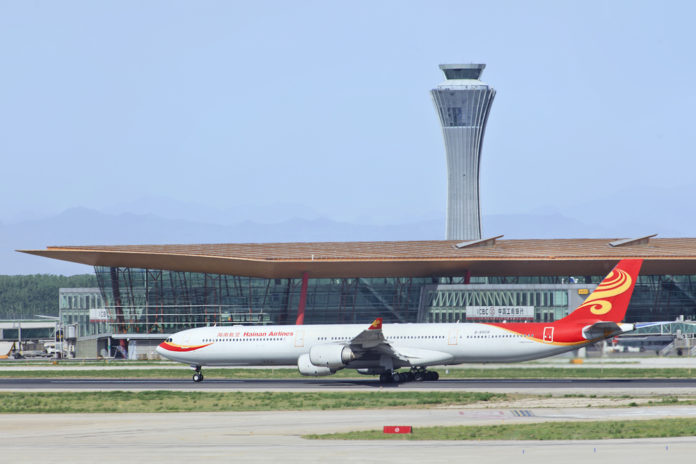
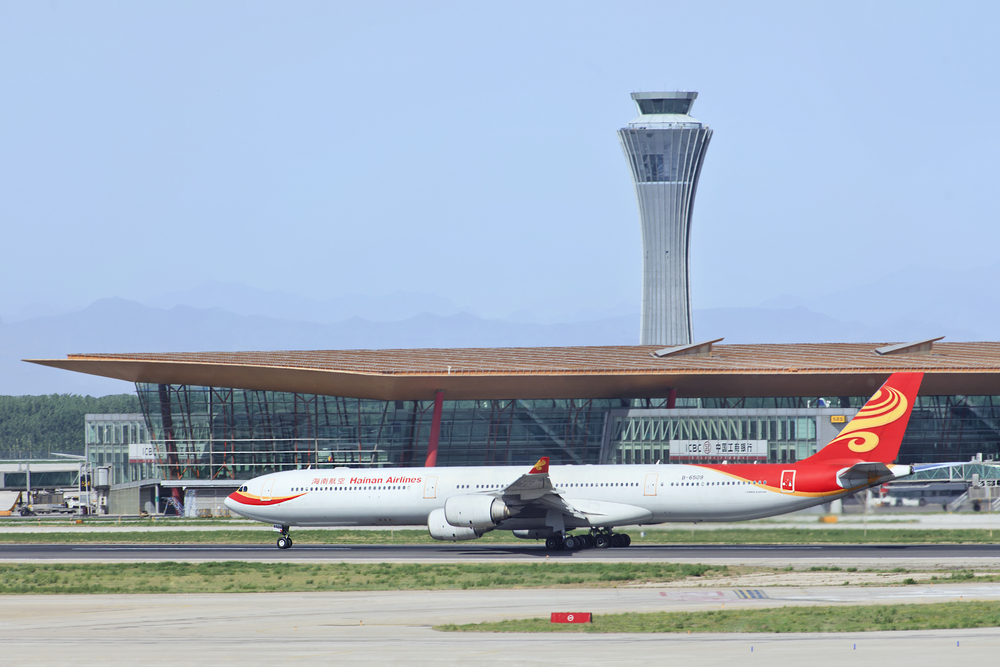
OVERSEAS flights from China is found to be the most affordable in the world, according to a recent study by kiwi.com.

The study showed that international flights from China on average are the cheapest of the world’s 75 most frequently visited countries at US$1.22/100km for low-cost international flights and US$2.84/100km for full-service international flights.

Compared to the most expensive, which is Canada, costing on average US$43.70/100km for low-cost international flights and US$94.66/100km for full-service international flights.

Chinese tour company Sublime China added that foreign travellers buying flights from China may not see as much savings as they should if they use a Western flight booking website.

Rather, using Chinese sites like Ctrip.com can save travellers more than 20 per cent on identical flights. “Many factors may cause this such as lower agency fees, commission charges, and the inclusion of low-cost local airlines in these websites,” said Monica Guan, marketing representative for Sublime China.

She further explained: “China’s major cities are international transportation hubs to other major cities around the world and include many low-cost airlines that fly around Asia. Not only does this give travellers more options, but allows China to offer cheaper flights because of the high supply.”

Best Western launches white label franchise company

0

best-western

BEST Western Hotels & Resorts have launched SureStay Hotels, a subsidiary company that plugs hotel owners into the company’s infrastructure and distribution channels while allowing them to retain their branding.

SureStay will have three brands under its umbrella, namely SureStay Hotel, SureStay Plus Hotel and SureStay Signature Collection, that caters to the premium economy, lower midscale and midscale segments respectively.

“In North America, there are currently 17,000 branded hotels and another 12,000 unbranded, in the economy and midscale segments. The white label approach allows Best Western to tap into this tremendous potential without compromising its brand image,” said David Kong, president and CEO of Best Western Hotels & Resorts.

“Currently, many of these hotels have little to no consumer relevance. Their brands have very little potential to drive superior revenue, and the owners are incurring high franchise fees from brands that don’t provide the necessary support, service or value.”

Hotel owners will have access to Best Western’s preferred OTA commission rates, its scale and global distribution, desktop and mobile platforms and and global sales support. They will also be provided a cloud-based property management system and utilise a digital platform featuring Google 360 virtual reality tours and enhanced SEO support.

To qualify for SureStay, hotels will need to achieve and maintain a TripAdvisor score of 3.5 or higher. They will also need to adhere to the SureStay Service Promise, which will be a key point of emphasis.

The first 100 hotels to join SureStay will get waived royalty fees for 5 years, a regional manager to kick-start their sales and marketing efforts, and hotel-level training support.

According to a statement by Best Western, nearly 20 SureStay letters of intent have already been signed since a soft launch to Best Western members earlier this month. Initial projections for SureStay’s growth is to have 150 hotels online within three years and 800 by 2026.

“We believe SureStay creates a win-win-win situation – the consumers win through superior customer care, the hotels win through superior ROI and the brand wins through a new revenue stream,” added Kong.

New scheme aims to drive traffic to Hokkaido’s rural regions

0

hokkaido-cottagesCottages in Hokkaido

TRAVELLERS to Hokkaido’s rural regions will receive discounts on accommodation, shopping, dining, and activities under a new pilot scheme run by Japan’s Ministry of Land, Infrastructure, Transport and Tourism (MLIT).

Available from October 1 to November 30, the Hokkaido Driving Coupons scheme is designed to boost travel to central and eastern areas of the island, which are difficult to access by train or bus.

“About 10 per cent of Japan’s arrivals visit Hokkaido, but their economic impact does not extend to rural regions,” said a spokesperson for MLIT, adding that in fiscal 2015, 72.6 per cent of tourists stayed in urban areas, while 7.6 per cent stayed in rural areas.

Tourists can register for the scheme at Hokkaido’s car rental offices or tourist information centers, and then exchange coupons for free items or discounts.

Watanabe Experience Farm, a participating facility, has had increasing numbers of visitors from Singapore, China, Hong Kong and Taiwan in recent years, according to Iori Watanabe, a staff at the farm.

But she is keen for more people to see the beautiful place where she lives. “We offer very rare experiences,” she said, pointing out that visitors can milk cows as well as make ice-cream and butter.

Another participant and business owner, Yasuyo Goda, also wants to welcome more overseas guests to her youth hostel and café Shiokari Huette. Located deep in a forest, its clientele are mostly domestic tourists who want to “photograph the railway, enjoy the tranquillity, or do activities such as hiking,” she said.

After running Hokkaido Driving Coupons in fiscal 2016 and 2017, the MLIT plans to analyse feedback and discuss plans for private sector groups to offer the scheme in the future.

Airbnb continues push into corporate travel sector

0
Processed with Snapseed.

Processed with Snapseed.
Kevin Hoong

HOMESHARING giant Airbnb is continuing its aggressive push into the business travel market despite indicators showing that its foray into the corporate travel world is seeing mixed results so far.

The services Airbnb has developed for business travellers have found an uptake among companies like Autodesk, which introduced Airbnb for Business in March to provide more options for its employees, said Asia-Pacific travel manager Adriana Nainggolan.

“There is no preference from one to the other as each (vendor) has its own unique offering,” she said, adding that it took some time for Autodesk to integrate the Airbnb tool, including training employees and assimilating the process across various departments.

But Manulife Indonesia, despite using sharing economy options for several years now, is still adopting a wait-and-see stance to enrol Airbnb for Business, travel manager Flora Josephine told TTG Asia.

“We need to (analyse) it deeply since this is new. We have not yet used Airbnb as our vendor and put it in our travel policy,” she said.

According to a survey of 68 travel managers conducted by TTG Asia Media’s Events Group in partnership with Oakwood Worldwide, only 23.4 per cent of respondents will use sharing economy providers, while the rest indicated either negatively (35.9 per cent) or are unsure.

Tobias Ragge, CEO of HRS, said: “Airbnb is a great concept for leisure travellers but their properties are not a real alternative to a hotel, at least for the business traveller with a travel pattern of one- to two-night stays.”

But an Airbnb property “makes a lot of sense” for long-term stays or in cities such as San Francisco where hotel inventory is limited and rates are inflated, he opined.

Ragge also thinks Airbnb is unlikely to create any “tectonic shift” in the corporate travel landscape. “I see maybe 10-15 per cent of the market taken by shared economy providers at some point, but hotels are here to stay.”

But since launching the Airbnb for Business suite of tools in July 2015, Airbnb has done a number of initiatives to position itself as a credible alternative accommodation provider for corporate travellers.

This includes its recent move to integrate with major management systems like BCD Travel and Carlson Wagonlit Travel to “marry with the gold standards of corporate travel”, said Kevin Hoong, business travel lead, Asia-Pacific at Airbnb.

“Another thing we did is to integrate our platform with top duty of care providers like International SOS and iJET,” added Hoong, signalling Airbnb’s willingness to address duty of care concerns to better serve corporate travellers.

Hoong said Airbnb business-ready options now number in the “tens of thousands” out of its total inventory of 2.5 million homes.

“We encourage our hosts to make their home business-ready (by) providing them with free carbon monoxide and smoke detectors. We also partner with providers of automated key locks under the Host Assist programme,” he shared.

Hoong said the company plans to “double down” on existing TMC partnerships and raise awareness of Airbnb for Business. “Sponsoring CTW Asia-Pacific is one example how we want to be more proactive in this region,” he said.

Calls for ASEAN to be a single MICE destination

0

asean

WHILE ASEAN has been extensively marketed as a single destination for leisure travel, the same cannot be said for MICE, prompting buyers to call for more visible efforts from governments and stronger public-private partnerships to make that a reality.

This is especially when ASEAN already has what it takes to reach the ideal of a single MICE destination, including good air connectivity and the rise of new destinations within the region, they said.

Twin-country itineraries are especially relevant to the longhaul MICE market as travellers want to maximise their time in South-east Asia, said Susan Soong, assistant general manager of Borneo Destination Management.

“Combined destinations can be arranged for meetings and incentives of between 50 and 100 people. (We can) organise the meeting in one destination and a post tour in another.”

Increasing intra-region links have opened up opportunities for DMCs to spotlight emerging countries like Cambodia and Vietnam in multi-country incentive programmes.

“Since Turkish Airlines opened services from Istanbul to Hanoi and Phnom Penh a year ago, there has been growing interest in these destinations,” said Murat Ayar, general manager of Travel Dreams, Turkey.

“For new destinations like Cambodia and Vietnam, combining both countries is more attractive and make clients’ trips worthwhile,” said Ayar.

Unlike Thailand, whose competitive prices and diverse attractions make it a strong mono destination for his corporate clients, Cambodia and Vietnam need to be combined to attract participants, he said.

Taufiq Rahman, chief executive of Journey Plus, Bangladesh, has also witnessed a growing interest from clients for new ASEAN destinations for corporate meetings and incentives.

“Thailand, Malaysia, Singapore and Indonesia have been (top destinations) for us, but Vietnam, Cambodia and Laos are new windows (of opportunities).”

To promote ASEAN as a single MICE destination, buyers urged governments to lend greater support to DMCs.

Association events can also be leveraged to promote ASEAN MICE, according to Andang Prasmiko, business development manager of PACTO Convex.

“The main event can take place in one destination, while the post tours, technical visits, etc, can be conducted in other countries in the region.”

What is needed is better coordination between the involved associations and the local governments, although profit sharing poses a challenge.

“Splitting an (association) event means having to balance the value of the whole event (across the host countries),” acknowledged Andang.