TTG Asia
Asia/Singapore Tuesday, 7th April 2026
Page 1711

HKTB’s guide to 12 fortune hotspots in Hong Kong

0

Chinese zodiac enthusiasts seeking an adventure would be glad to know they can put their almanacs aside and take a trip to Hong Kong instead. Hong Kong Tourism Board (HKTB) recommends 12 auspicious spots matched with the 12 zodiac animal signs.

For Roosters: The Peak
Birth years: 1933, 1945, 1957, 1969, 1981, 1993, 2005

As a general rule, having the same sign as the one reigning for the year does not bode well. Combat this by ascending to Hong Kong Island’s highest point of Victoria Peak and taking in the commanding vistas from there.
lung-yeuk-tau-heritage-trail

For Dogs: Lung Yeuk Tau Heritage Trail, Fanling
Birth years: 1934, 1946, 1958, 1970, 1982, 1994, 2006

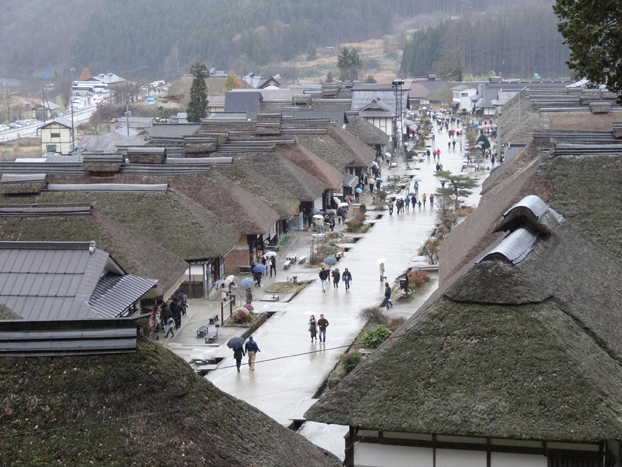
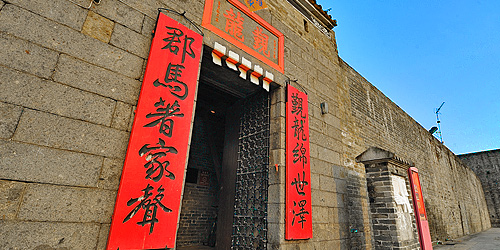
You are susceptible to insecurity and anxieties this year. Alleviate the negative energy along the Lung Yeuk Tau Heritage Trail – where legends have it that a dragon was once seen – and learn about the history of the Tang Clan, one of the five largest clans in the New Territories. The ancient wisdom may even rub off you and help your career!

For Pigs: The Big Buddha, Wisdom Path
Birth years: 1935, 1947, 1959, 1971, 1983, 1995, 2007

Since the star of Yi Ma, which represents travel, is affecting your zodiac this year, you are likely to find yourself on the move more frequently. Climbing the steps for a closer look at the Big Buddha statue and the large Heart Sutra scriptures could help temper the speed of change.

For Rats: Flower Market, Bird Garden
Birth years: 1936, 1948, 1960, 1972, 1984, 1996, 2008

This is a great year for you, especially if you’re in search of love. To further boost your luck in love, visit these two spots and be enveloped in the fragrance of flowers and the singing of birds.

For Oxen: Sky100 Hong Kong Observation Deck
Birth years: 1937, 1949, 1961, 1973, 1985, 1997, 2009

Three lucky stars are shining on you this year, and it may help to get as close to these stars as possible by visiting the observation deck on the 100th floor of the International Commerce Centre.

For Tigers: Murray House, Stanley, Repulse Bay
Birth years: 1938, 1950, 1962, 1974, 1986, 1998, 2010

Recuperate from the instability that plagued Tigers in 2016 with a calming trip to Repulse Bay. Traditionally, the Chinese believe that spending money can stave off bad luck, so shop away at Murray House, Stanley Plaza and the surrounding streets!

For Rabbits: Chi Lin Nunnery
Birth years: 1939, 1951, 1963, 1975, 1987, 1999, 2011

This is a year of change in various aspects of your life – including relationships, career and accommodation – but rest assured this would all work out for the best. During the tough times, an ideal place to visit is the Chi Lin Nunnery, where you can mediate or simply take in the serenity of the environs alongside Tang Dynasty-inspired architecture.

For Dragons: Dragon’s Back
Birth years: 1940, 1952, 1964, 1976, 1988, 2000, 2012

During the Rooster year, Dragons come very close to the divine dragon-phoenix pairing. To take your fortunes up a notch, head to the hiking trails at Dragon’s Back and enjoy the views of the South China Sea, Shek O, Big Wave Bay, Stanley and Tai Tam.
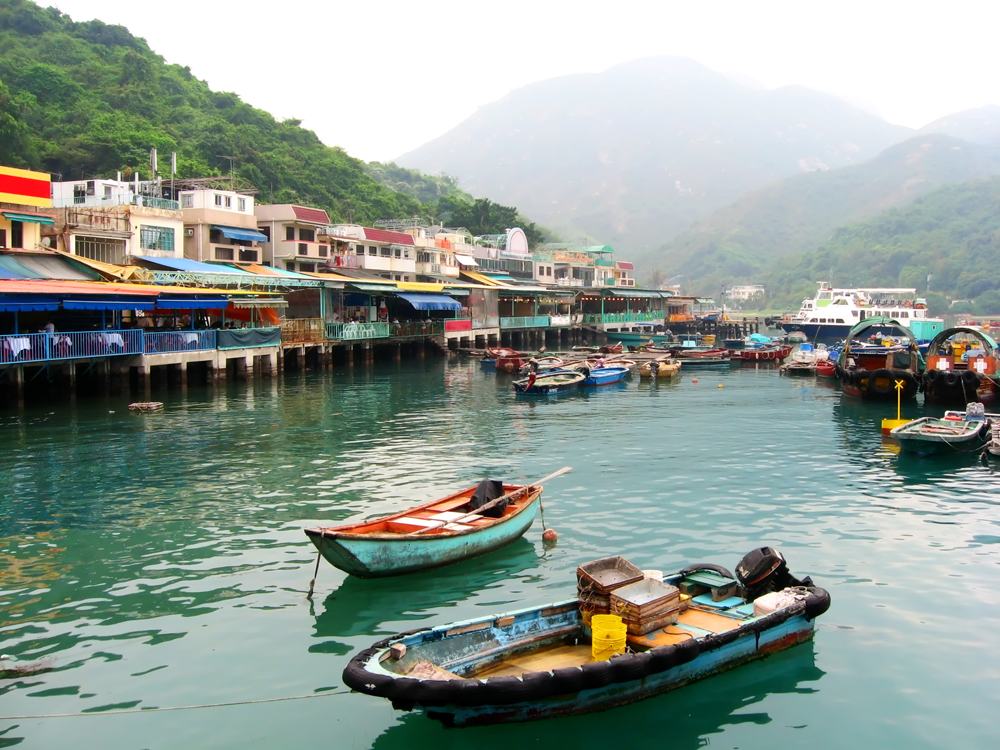
For Snakes: Lamma Island
Birth years: 1941, 1953, 1965, 1977, 1989, 2001, 2013

Head in the auspicious south-west direction to Lamma Island. The mountains and rivers surrounding the island could help amplify all areas of luck in your life, including work and wealth.

For Horses: Happy Valley Racecourse
Birth years: 1942, 1954, 1966, 1978, 1990, 2002, 2014

You have the best luck with money among the 12 zodiacs this year, so it may be a good idea to try your luck at the Happy Valley Racecourse. Stake some money on your favourite horse, feel the excitement as hooves thunder down the racetrack, and it could be your day!

For Goats: Victoria Habour
Birth years: 1943, 1955, 1967, 1979, 1991, 2003, 2015

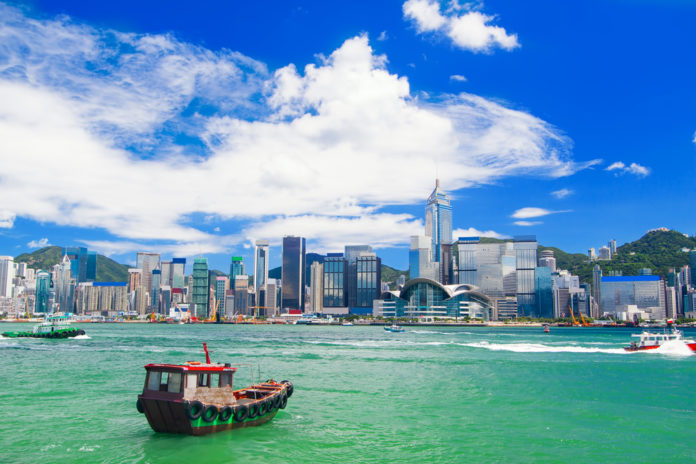
Good luck is pooling for you right in the centre of Hong Kong. Take an evening harbour cruise to enjoy the spectacular views and take in some good luck while you’re at it.

For Monkeys: Lan Kwai Fong
Birth years: 1932, 1944, 1956, 1968, 1980, 1992, 2004

Your romance factor is through the roof this year. Take this opportunity to plunge into the heart of Hong Kong’s nightlife – synonymous with clubs, fine food, drinks and all thinks celebratory – and who knows, you may find the one!
Emerging APAC countries to dominate outbound travel growth

0

passengers-msia-airport

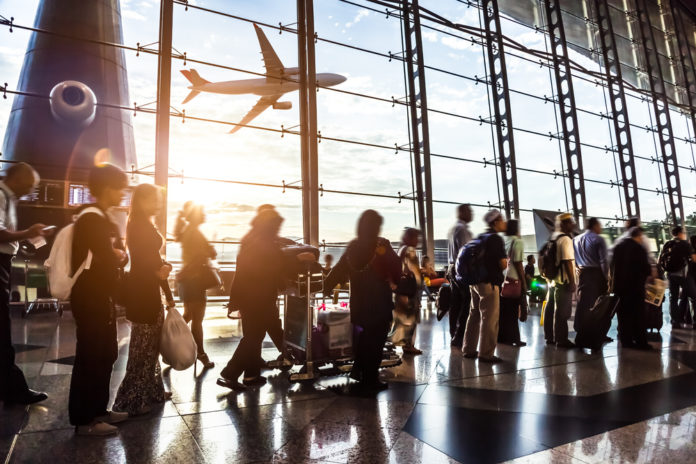
Outbound travellers from emerging Asia-Pacific markets currently outnumber those from developed Asia-Pacific market by 1.5 times, and this figure is poised to grow more than twice as fast over the next five years (7.6 per cent vs. 3.3 per cent CAGR), according to the Future of Outbound Travel in Asia Pacific (2016 to 2021) report by Mastercard.

As a region, Asia-Pacific markets are expected to grow by six per cent annually from 2016 to 2021.

Emerging Asia-Pacific countries are China, India, Malaysia, Thailand, Indonesia, the Philippines, Vietnam, Bangladesh, Myanmar and Sri Lanka, while developed Asia-Pacific countries refer to Japan, South Korea, Taiwan, Hong Kong, Singapore, Australia and New Zealand.

The largest outbound travel market in 2021 is expected to be China with 103.4 million trips, which will constitute 40 per cent of all Asia-Pacific outbound travel, nearly four times that of South Korea (25.6 million) and India (21.5 million) that are ranked in second and third places respectively.

Myanmar is projected to be the fastest-growing outbound travel market with a 10.6 per cent annual growth rate over the next five years, followed by Vietnam (9.5 per cent), Indonesia (8.6 per cent), China (8.5 per cent) and India (8.2 per cent).

Among developed Asia-Pacific markets, the fastest growing are South Korea (3.8 per cent), followed by Singapore (3.5 per cent), Australia (3.5 per cent) and New Zealand (3.4 per cent).

Eric Schneider, senior vice president, Asia-Pacific, Mastercard Advisors, commented: “The burgeoning middle class is driving the growth of outbound travel in Asia-Pacific, along with other trends such as the emergence of the Asian millennial traveller and senior traveller, as well as new technology and infrastructure developments.”

The full report can be viewed here.

Major overhaul for Daydream Island Resort in Great Barrier Reef

0

25.02.2016 presentation
A rendering of the proposed reburishments

Daydream Island Resort and Spa’s owners China Capital Investment Group has announced a A$50-plus-million-dollar (US$37.6-plus million) redevelopment which will see a significant makeover to the resort located in The Whitsundays, Queensland.

Major works include redevelopment of the arrivals pavilion, reception, main atrium area, Waterfalls and Mermaids restaurants, Lagoons bar, and its 296 rooms. Additionally, the Lovers Cove function area will be expanded and a new Asian-inspired restaurant will be built. The Living Reef lagoons will receive brand-new features to enhance interaction with guests. The resort’s conference facilities will also be revamped and expanded.

It will be business as usual for the resort in 2017, although some projects will begin this year on the South End of the island. Fish Bowl bistro, Boat House Bakery and Ginger’s Hut will be closed for a period from the first week in February. Access to South End facilities including swimming pools, the outdoor cinema, motorised watersports and the Endeavour Wedding Chapel will not be affected.

The resort will close in early 2018 for a period of time to complete the renovations in the shortest possible time and with minimal disruptions.

General manager Dawson Tang said: “Our owners have recognised the need to revamp Daydream’s facilities especially as we embark on a greater push into international markets including the lucrative China market.”

When completed, the refurbishment will transform the 296-room Daydream into an upscale 4.5-star resort, according to Tang.

Hilton weaves Tapestry brand of independent hotels

0

hilton-tapestry-collection
Source: Hilton Worldwide

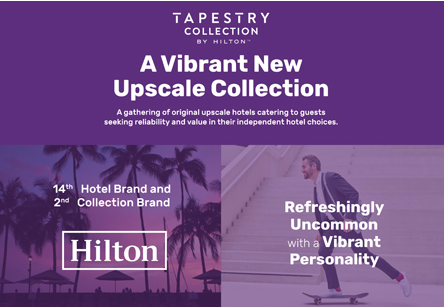
Hilton has launched its 14th brand and second collection brand, Tapestry Collection by Hilton, to meet rising customer and owner demand for original upscale hotels with an independent character.

Christopher Nassetta, president and CEO, said: “Tapestry Collection by Hilton will enable us to provide the best of both worlds to travellers who are looking for an independent hotel experience but also want the consistency and reassurance they expect from Hilton.”

Seven hotels have signed letters of intent with the collection in the following cities: Syracuse (New York), Chicago, Nashville, Warren (New Jersey), Hampton (Virginia) and two in Indianapolis, with the first property expected to convert to Tapestry Collection by 3Q2017.

An additional 35 deals with hotels are in process.

“The launch of Tapestry Collection by Hilton extends Hilton’s proven growth strategy, which focuses on developing clearly-defined brands organically to grow our global footprint, create more hotel options for existing guests and attract new guests,” said Nassetta.

Tapestry Collection by Hilton is positioned in the upscale segment just below Curio – A Collection by Hilton launched in 2014, which today operates more than 30 upper upscale hotels in seven countries with another 45 in the global development pipeline.

According to Bobby Bowers, senior vice president, operations, for industry research firm STR, the supply of independent properties in the upscale market is estimated to be more than 15,000 hotels globally.

Trade unworried by closure of Tourism Malaysia offices nationwide

0

mohamed-nazri-abdul-aziz
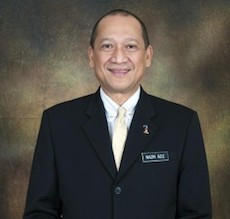
Mohamed Nazri Abdul Aziz

The Malaysian trade is not fretting over the government’s closure of 14 state Tourism Malaysia offices nationwide, instead seeing it as an opportunity for better deployment of resources in other more needed areas.

The closures, according to Malaysia’s tourism and culture minister Mohamed Nazri Abdul Aziz, were to avoid job duplication with state agencies and result in monetary savings for the government.

“Although all Tourism Malaysia offices will be closed, we will create five information offices – in Penang for the northern region, Terengganu for the eastern region, Johor for the southern region, and Sabah and Sarawak,” said Mohamed Nazri, who was quoted as saying in Bernama.

Urging the better utilisation of resources, Uzaidi Udanis, president of Malaysian Inbound Tourism Association, suggested: “The affected staff could be relocated to do enforcement work. There is a dire need for better enforcement to curb illegal taxis, and illegal travel agents operating without licenses. There is a lack of enforcement officers.”

An inbound agent, Ally Bhoonee, executive director at World Avenues, told TTG Asia: “This move will not affect international promotions because we deal with the head office directly and not with the state. I don’t think domestic tourism will suffer as the state tourism boards are there to promote the state.”

Meanwhile, Sam Cheah, president of the Malaysian Association of Hotels, hopes the savings of RM6 million (US$1.4 million) will be used on international promotions to further increase the number of tourist arrivals into Malaysia.

Tourism Malaysia is also in the midst of closing its offices in Los Angeles, New York, Stockholm and Johannesburg to consolidate its marketing activities into more effective markets where there are direct flights.

More robot-run hotels to greet guests in Japan

0
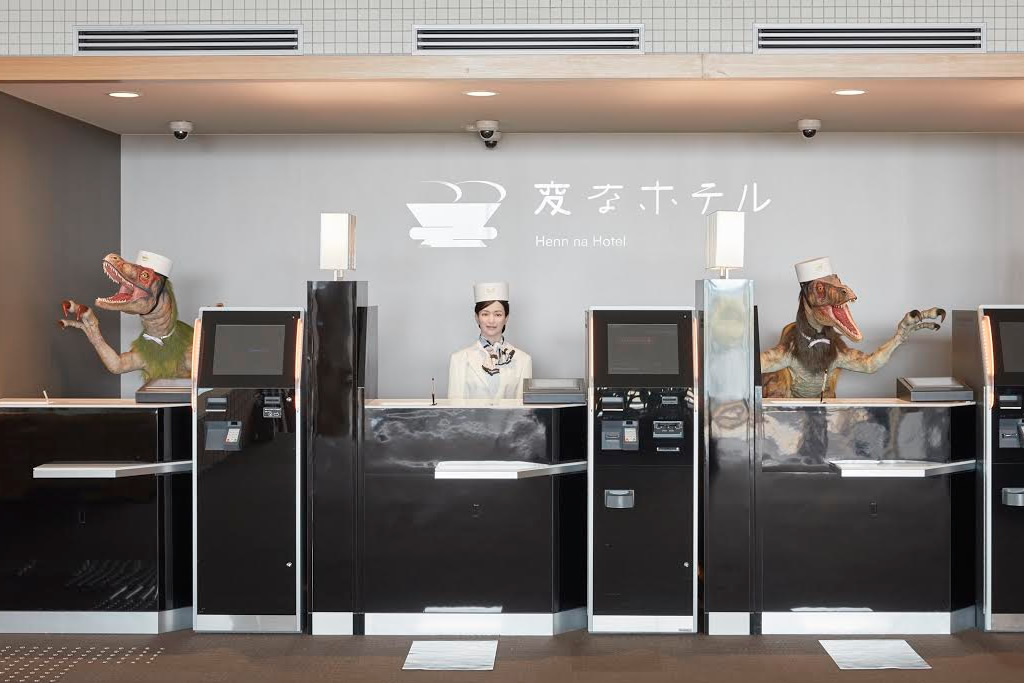
H.I.S. hotel subsidiary Henn Na Hotel was in the spotlight for its robot hotels; the first Henn Na fired half its robot staff this year

hen-na-hotel-japan-his
Hen na Hotel

Travel agency H.I.S. is on its way to open at least two robot hotels in Japan this year, after some 80,000 guests passed through the doors of its debut property, Henn na Hotel, which opened in Nagasaki’s Huis Ten Bosch theme park in July 2015.

Hideo Sawada, president of Huis Ten Bosch, aims to have 100 robot hotels within the next five years. This will be achieved through franchising and M&As, according to Kana Usami of H.I.S’s corporate planning department.

The second hotel of the brand is scheduled to open in Maihama, Tokyo, on March 15, and a third in Nagoya in summer, followed by an overseas launch likely in an East Asian destination, according to H.I.S. spokesperson Koto Takebe.

Where the first robot hotel experimented with 186 multilingual receptionist and porter robots servicing 144 rooms, H.I.S. will introduce robots in only the reception area and rooms for the upcoming 100-key Maihama hotel, with the option to add more following customer feedback.

The company estimates what it considers to be a modest outlay of two to three billion yen (US$17.6-26.4 million) in robot investment per hotel.

Moreover, the model offers a possible solution to hospitality staff shortages and language barriers, and hopes to incorporate energy-efficient solutions.

Takebe said “the robot-staff and eco-technology have received high evaluations from guests” who are mostly Japanese at present, but interest from overseas continues to grow.

H.I.S plans to increase inbound guests by using its network of some 230 overseas stores to promote the hotels.

TTG Asia goes on break for Lunar New Year

0

rooster-cny
TTG Asia will be taking a break from January 27-31, 2017, for the Lunar New Year holidays. News will resume on Wednesday, February 1, 2017.

From all of us at TTG Asia Media, we wish all of our readers a happy and prosperous Lunar New Year!

With restrictions lifted, HK agents eye more versatile tour package ideas

0

hong-kong-harbour

The Travel Industry Council of Hong Kong (TIC) will adopt its outbound committee’s proposal to lift restrictions on partners as well as packages and tour-related gifts that agents are allowed to offer with effect from March 2017, a pro-competition move that many in the trade are eagerly anticipating.

Agents told TTG Asia that the unpopular restrictions had stifled market potential over the years.

Morning Star Travel Service, director of marketing, Wilson Yeung, said: “In the past, we (had to stick to a) list of working partners including banks and tourism bureaus. Therefore, it was typical for all to offer, for instance, specific souvenirs from the tourism bureau to our clients.”

Added Wing On Travel, director and CEO, Lanny Leung: “The restrictions undermined our competitive power to combat OTAs as our resources couldn’t be fully utilised. For example, we couldn’t offer chauffeur transfers by Mercedes-Benz but only freebies like calendars and travel bags.”

With the lifting of these limitations, Leung, who intends to expand the marketing budget to achieve double-digit growth in online/offline platforms, expects the local trade would “flourish”.

For Yeung, who likewise is intending to raise his marketing budget this year, consumers also win as the change could unbridle promotional ideas and result in a healthy level of competition among agents. “Consumers will be the winners as agents are (free to go with their own ideas) and provide more (varied) offers to lure business.”

TIC executive director Joseph Tung added that members will now be able to compete with new rivals such as OTAs through flexible business tactics in addition to their existing service standards.

Getting a better handle

0

As Asia-Pacific’s traveller profiles, experiences and ecosystem become more diverse than ever, the marketplace fragmentation has travel agents seeking out technology and industry insights to better meet travellers’ evolving needs. By S Puvaneswary

25JAN_chart

Travel is no longer a luxury but a necessity for the booming travel class in Asia-Pacific. However, this travel market is also a highly fragmented one, reflecting immense diversity in its preferences, behaviour as well as aspirations, highlighting the need for travel agents to constantly reconfigure and adapt their businesses in the face of a rapidly evolving travel landscape.

Sabre’s The Polarisation of Asian Travellers report – conducted by The Futures Company for Sabre based on a quantitative survey 3,233 travellers from Asia-Pacific – found that polarisation exists across two key dimensions: the level of control people want to command over their trips and their motivation behind travelling.

Mapping out these polarisations give rise to four distinct traveller types (see sidebar), with the largest proportion (38 per cent) of Asian travellers belonging to the Explorer category, according to this Sabre research. An even mix of business and leisure travellers, as well as ages and gender, are observed across each type.

Sharing the findings during the Sabre Travel Technology Exchange Asia-Pacific in Beijing last September, Sabre Travel Network’s senior vice president for Asia-Pacific, Roshan Mendis, explained: “The research will help to educate and inform Sabre partners on the evolution of their customers, the traveller. (Such studies) ensure we are developing the most relevant products and solutions, designed to help our customers meet the evolving traveller demands they’re facing in today’s rapidly changing travel marketplace.”

The travel technology company is hoping to provide travel agents and suppliers with access to more data-driven decision support tools to better track and respond to their customers’ evolving profiles. Through such initiatives, Mendis also seeks to increase Sabre’s distribution market share in Asia-Pacific from the current 40 per cent to higher figures by 2018.
Agents believe such insights will help to elucidate the ever-changing travel marketplace. Aashutosh Akshikar, president & CEO at Mumbai-based Mercury Travels, said agents have to “figure it out themselves” on what will deliver best against the shifting landscape but new sources of additional intelligence, like Sabre’s recent study, can be a helpful guide in understanding their evolving customers.

He described the majority of his clientele as high net worth FIT customers who are cash rich, time poor and want the agent to handle their itineraries and entire bookings, fitting Sabre’s Followers type as those who require “hand holding”. As well, they appreciate experiences over itineraries, and want the best value instead of focusing on the cheapest, he added.

25JAN-analysis_QUOTE

To keep pace with the changing marketplace, many agents are no doubt already adopting technologies to meet the surge in demand and interest in online bookings.

Walter Dai, CEO of Nightingale Travel & Tours Australia, observed in the last three years a growing Explorer-type profile among his clients from the Filipino and Chinese communities in Adelaide. These travellers want to take charge of their holiday planning and prefer booking their leisure trips online by themselves than having a travel agent do it for them.

To better tap this growing trend in the coming years, Dai spent A$60,000 (US$46,190) on developing a website with online transaction capabilities and A$80,000 on mobile technology.

Mohamad Islahudin Abdullah, CEO at KOP Travel & Tour in Kuala Lumpur, said he was able to increase his market share of MNC customers by correctly identifying the needs and opportunities around this client type, i.e. to make their own bookings and changes directly without relying on a third party.

He explained: “MNCs like to make bookings independently rather than going through a travel agent. Reports can also be generated to reveal the number of bookings, which departments issued the most number of airline tickets and whether clients are choosing the lowest fare, among others.”

KOP Travel started using Sabre’s B2B online booking platform a year ago to enable corporate clients to incorporate their travel policies into the system and for their staff to book trips and make changes.

“Through automation, we have freed our ticketing staff from handling lots of calls and productivity has improved,” added Mohamad Islahudin.

Elaborating on how Sabre is developing new products to suit different customer types and local industry shifts, John Samuel, senior vice president of design at Sabre, predicted that messaging apps will be increasingly important for the Asia-Pacific travel sector in the future. He said his team is exploring the opportunities around adopting conversational interfaces for travel, identifying the potential value they present to Sabre’s customers – from shopping and merchandising to service and support.

Meanwhile, the global technology firm expects the new Sabre Red Workspace, which will be rolled out globally in 2017, to be “a game changer” for the industry.

Said Wade Jones, senior vice president of marketing and strategy, Sabre Travel Network: “It will provide consultants with more comparison shopping options and price transparency, plus deeper insights into historic fare trends, seasonality and travel preferences to support more informed shopping recommendations. Travel consultants will be creating far more personalised and relevant experiences for their customers.”


This article was first published in TTG Asia January 2017 issue. To read more, please view our digital edition or click here to subscribe.

Bringing light to darkness

0

Visiting disasters sites can be educational and provides a much-needed lifeline for the affected communities, insist Japanese tour operators. Julian Ryall finds out how

25JAN-Fukushima, JNTO l_164811_rgb

For a country that has suffered unfortunate catastrophes in recent years, disaster tourism is a territory that Japanese travel operators are still careful to foray into over concerns of sending out the wrong message.

“Dark tourism sounds very negative and there is a possibility that people will misunderstand and believe that the whole of Fukushima Prefecture is still dangerous and not worth visiting,” said Rin Onodera, of the Fukushima Prefecture Tourism Association.

“But that’s just not true,” she stressed. “Radiation levels in most areas in the prefecture are safe for people to live there.

“We are trying to promote ‘hope tourism’ and show visitors the efforts and 
progress being made by people who are working hard to ensure the region’s recovery.”

According to statistics from the tourism ministry, Fukushima was the 15th most-visited of Japan’s 47 prefectures in 2015, with at least 800,000 foreigners passing through.

Other trade players seek to cast disaster sites in a more upbeat light with the use of positive marketing terms.

“We prefer to promote tours to Fukushima Prefecture as ‘reconstruction tourism’ and help the local travel industry get back on its feet,” said Motohisa Tachikawa, a spokesman for JTB Corp. “Using the term ‘disaster tourism’ is totally different to what’s going on there right now.”

Pointing to the rebuilding efforts in Kyushu after the April 2016 earthquake, he added: “The best way our industry can help is to send more people there, get them to stay in local hotels, eat in local restaurants, and buy local goods and souvenirs.”

For now it seems that disaster tourism is getting more attention. In September 2015, the first issue of the Dark Tourism travel magazine was released in Japan, highlighting a leprosy sanatorium in Okayama Prefecture, World War II sites, parts of Fukushima Prefecture still seeing the after-effects of the March 2011 earthquake and tsunami, and the disaster at the Fukushima Daiichi nuclear plant.


This article was first published in TTG Asia January 2017 issue. To read more, please view our digital edition or click here to subscribe.