Tourism Australia has signed a three-year partnership with Indonesian travel agency Dwidaya Tour to expand into Indonesia’s outbound market beyond Jakarta.
The agreement, finalised in Jakarta, will include joint marketing campaigns, development of tailored travel products, and promotion of travel from secondary cities such as Surabaya, Medan, Makassar, Semarang, and Malang to destinations across Australia.
The partnership aims to tap Indonesia’s growing tier-two cities by developing tailored travel products and joint marketing initiatives
“Demand from Indonesia’s tier-two cities is growing rapidly, and the key to engaging these markets effectively is through strong, on-the-ground partnerships,” said Jennifer Doig, Tourism Australia’s new regional general manager for South and South East Asia.
“With Dwidaya’s wide distribution network and deep understanding of Indonesian travel trends, this partnership positions us to reach a broader audience and connect more Indonesians to Australia’s diverse, high-quality experiences,” she added.
Indonesia continues to be one of Australia’s fastest-growing and most stable source markets. Tourism Australia data shows a 12.2 per cent increase in arrivals from Indonesia year on year to March 2025, ranking it as Australia’s ninth largest international market. Indonesian visitors contributed around US$800 million to Australia’s visitor economy in 2024, driven by longer stays and demand for regional, nature-based, and immersive experiences.
Dwidaya Tour reports Australia as one of its top five international destinations, with bookings rising 29 per cent year on year in 1Q2025. Chief operating officer Hendri Yapto said the partnership reflects a strategic response to shifting traveller preferences.
“We are seeing growing demand for nature, wildlife and immersive experiences beyond the typical Sydney and Melbourne itineraries. Tasmania in particular is becoming more popular among Indonesian travellers seeking something different,” he noted.
Hendri added that Australia’s infrastructure, diverse landscapes, and inclusive offerings, particularly for Muslim travellers and families, continue to support its appeal in the Indonesian market. The partnership will focus on co-developing products tailored to premium, youth, and event-driven segments, along with agent training and marketing to expand Australia’s reach beyond gateway cities.
Tourism Australia is also engaging a wider network of Indonesian travel agents through its Muslim-friendly consortium and the Aussie Specialists programme to maintain Australia’s position among travellers across the archipelago.
Hong Kong Disneyland Resort has launched its year-long 20th anniversary celebration, The Most Magical Party of All. More than 1,000 guests, including celebrities, content creators, media, and partners from Asia and the US, gathered on Main Street, USA for the launch event.
Mickey Mouse and friends, joined by Duffy and Friends in new anniversary outfits, marked the occasion with a themed performance. The celebration continued with fireworks, pyrotechnics, and a drone display forming the 20th anniversary logo above the Castle of Magical Dreams.
The parade lights up Main Street, USA, marking the start of Hong Kong Disneyland’s 20th anniversary celebration
“Disney is known around the world for exceptional storytelling, and Hong Kong Disneyland is a shining reflection of that,” said Jill Estorino, president and managing director of Disney Parks International. “I’m so proud of how the resort has woven itself into the fabric of this community. It has become the tourism flagship, the largest employer in the tourism and family entertainment industry, and a source of happiness for so many. We look forward to a bright and bold future for Hong Kong Disneyland.”
Royal Caribbean has opened bookings for a new beach club experience in The Bahamas. Holidaymakers booked on sailings visiting Nassau from late December 2025 can now purchase all-inclusive day passes for Royal Beach Club Paradise Island on the cruise line’s website.
Opening in December 2025, Royal Beach Club Paradise Island is the first destination in the Royal Beach Club Collection. The club will feature beaches, pools, dining, bars, and what is described as the world’s largest swim-up bar. The experience is designed to incorporate Bahamian culture and includes return water transport, food and drink, entertainment, and activities suitable for families.
Royal Beach Club Paradise Island will feature the first two-storey Ultimate Family Cabana with a whirlpool, slide, and personal attendant; photo by Royal Caribbean
Guests will have access to two beaches and three pools, including The Deep End pool and The Floating Flamingo swim-up bar. Food and drink will be available across three beach grills and 10 bars. Amenities include Wi-Fi, umbrellas, lounge chairs, lockers, towels, and beach games.
A selection of all-inclusive passes will be available, with pricing subject to change based on seasonality. The Day Pass with Unlimited Open Bar and Dining will start from US$169.99 for guests aged 21 and over. The Day Pass with Non-Alcoholic Drinks and Dining will start from US$129.99 for guests aged 13 and over, US$109.99 for children aged four to 12, and will be free for children three years and under.
Guests may choose to combine their day pass with an onboard beverage package or pair it with additional experiences at Royal Caribbean’s other private destination, Perfect Day at CocoCay.
Additional features at the beach club will include a two-level private cabana designed for families, which will contain a slide, frozen drink machine, personal attendant, and whirlpool. Poolside and beachside cabanas will be available, including personal service, day beds, storage, umbrellas, and towels. A private second-floor area at The Floating Flamingo will accommodate up to 12 guests and include food and beverage service and music provided by a DJ.
Sailings that include Royal Beach Club Paradise Island will depart from six cities, with options including Utopia of the Seas. The destination joins others currently under development, including Royal Beach Club Cozumel in 2026, Lelepa in early 2027, and Perfect Day Mexico in autumn 2027.
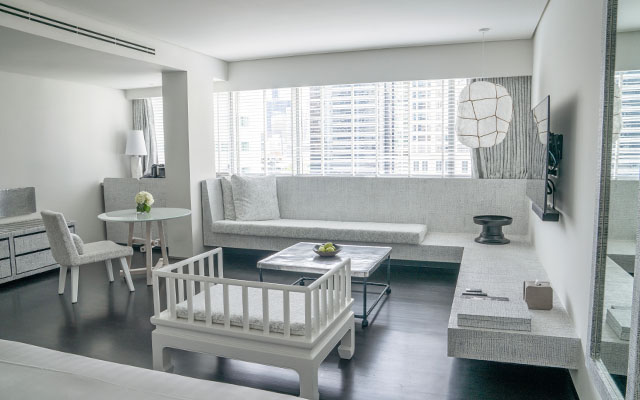
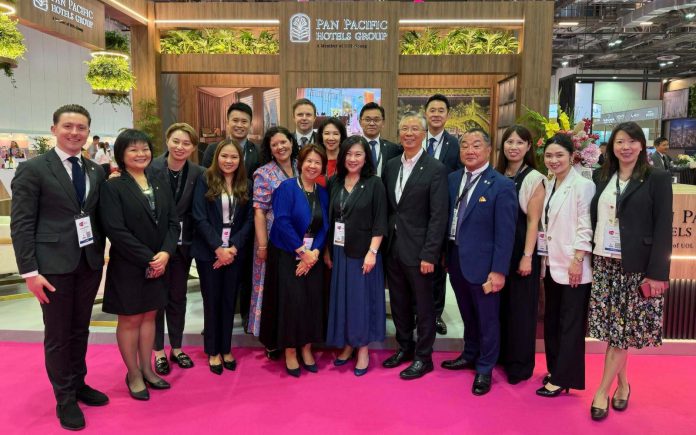
Following a global asset enhancement initiative (AEI) strategy that kicked off in 2021, Pan Pacific Hotels Group (PPHG) is now presenting a new brand that captures the crème de la crème of its hotels from around the world. The Pan Pacific Reserve Collection features six Pan Pacific-branded hotels and two Parkroyal Collection-branded hotels – they qualify for being the most luxurious properties with the highest service standards in PPHG’s portfolio.
The Pan Pacific Reserve Collection is showcased at ILTM Asia Pacific 2025 in Singapore this week.
Representatives of properties under the Pan Pacific Reserve Collection join CEO Choe Peng Sum (fifth from right, front row) and chief commercial and marketing officer Cinn Tan (sixth from right, front row) at ILTM Asia Pacific 2025
PPHG CEO Choe Peng Sum told TTG Asia that properties in the collection must be the topmost interpretation of their “brand’s Version 2.0” – indicating hotels and resorts that have either completed the recent AEI or are recently launched according to new brand standards and hardware requirements.
Presently, properties in the the Pan Pacific Reserve Collection include: Pan Pacific Singapore; Pan Pacific Orchard, Singapore; Bellustar Tokyo, A Pan Pacific Hotel; Pan Pacific Perth; Pan Pacific Jakarta; Pan Pacific London, Parkroyal Collection Marina Bay, Singapore, and Parkroyal Collection Pickering, Singapore.
Choe said the Pan Pacific Reserve Collection was first revealed at ILTM Cannes three years ago, and it gave PPHG an opportunity to highlight what a Singapore-based, homegrown hotel company could do in the luxury accommodation space.
“We are not big (in terms of the number of properties globally), but it does not mean that we cannot punch above our weight,” stated Choe.
Jastina Balen, director, communications at PPHG, recalled having Craig Bond, senior vice president head of operations, to present the Pan Pacific Reserve Collection at a press briefing during last year’s ILTM Cannes for the first time.
She said Bond received a lot of media queries and interview requests immediately after, “as the media were seeing the visuals of our properties for the first time”.
Choe said Pan Pacific London, which opened in September 2021, is representative of the Pan Pacific brand’s Version 2.0, and expressed immense pride for what the hotel has been able to accomplish within a short period of time. Pan Pacific London was named Forbes Five-Star by Forbes Travel Guide in 2022, 2023 and 2024, and received several other accolades for its F&B venues, spa and sustainability features.
Pan Pacific Orchard in Singapore also turned heads when it was conferred the World Selection title by UNESCO’s Prix Versailles, one of the world’s premier prizes in architecture and design, last December. It is the only Singapore hotel with this recognition.
The win was announced at ILTM Cannes, and alerted the luxury tourism community to the quality of PPHG’s most elite properties.
“These days, we have tourists walking up to Pan Pacific Orchard just to take photos, especially in the night. I will never take this for granted, and I know I have to work harder to ensure that people’s awareness of the brand is not limited to one famous property. I want them to know that PPHG’s brands are all respectable,” concluded Choe.
Lufthansa Group has appointed Kevin Markette as senior director – regional sales South Asia, based in New Delhi. He will oversee commercial activities across South Asia, including India.
He brings over 20 years of leadership experience within Lufthansa, having managed teams across Africa, the Middle East, and the Americas. Starting his career in South Africa in 2000, he has held roles in marketing, business development, and sales, including positions in Dubai, Ghana, and the US.
Most recently, he served as general manager for East Africa, leading commercial strategy and partnerships across the region.
Hyatt Place Gurgaon has appointed Neha Kapoor as its new general manager, who brings over 21 years of hospitality experience to the role.
Kapoor has held positions with brands like Grand Hyatt Mumbai, JW Marriott, and Hyatt properties across India, progressing from sales and marketing to hotel operations.
She will lead Hyatt Place Gurgaon with a focus on guest experiences and strengthen the hotel’s position in the Gurgaon market.
Novotel Geelong has named Larelle Fitt as its new director of sales, with her appointment expected to bolster the hotel’s standing as the region’s premier waterfront hotel and business events venue.
Fitt brings over 25 years of experience in tourism, hospitality, and events, with leadership roles at notable properties including Novotel Geelong, Sheraton Melbourne, and Mantra Lorne.
The launch of the Sanur Special Economic Zone (SEZ), also known as the Health SEZ, last week marks a significant step in Indonesia’s efforts to enhance its healthcare standards and establish itself as a global medical tourism destination.
The Sanur SEZ combines advanced technology, purpose-built facilities and a wellness-oriented approach to healthcare.
The Bali-based zone combines advanced healthcare infrastructure with a wellness-focused approach
In his inaugural address, president Prabowo underlined the SEZ’s strategic importance in driving international health tourism, thanking all stakeholders involved in its development.
He commented that the launch the first of its kind in Indonesia, and with this initiative, they aim to provide healthcare services on par with the best in the world.
Indonesia’s minister of tourism, Widiyanti Putri Wardhana, noted that the SEZ would accelerate the growth of health tourism in the country.
“This inauguration aligns with the health tourism development scheme, which relies on the utilisation of healthcare facilities that have obtained registration, certification, and accreditation from the minister of health, international accreditation, and are based on the health tourism catalogue issued by Indonesia’s Ministry of Health as a pilot project to provide medical tourism as well as wellness and herbal tourism services,” she said.
She added that the SEZ, along with Bali International Hospital in Sanur, is expected to support the creation of a health tourism ecosystem that offers a complete patient journey – from initial treatment to recovery.
The Sanur SEZ follows a health and wellness tourism model and includes Bali International Hospital, covering 67,465m² with 255 beds, eight operating rooms and four catheterisation labs. The zone also features the 184-room The Meru Sanur, 273-room Bali Beach Hotel, and the 3,750m² Bali Beach Convention Center.
Additional spa facilities have recently been added to the hotel compound. The 49-hectare Ethnobotanical Garden, partially opened, serves as the area’s green lung, while a health research centre is also in the planning stage.
Grassroots accommodation providers in secondary destinations in the Greater Mekong Subregion (GMS) are set to receive a helping hand getting their rooms filled, after Mekong Tourism Coordinating Office (MTCO) partnered with Agoda to develop online training to upscale their digital skills.
“There are a lot of hidden gems and secondary destinations in our region, and a lot of accommodation providers, like eco-lodges, guesthouses and home stays, that might not even have a presence online,” said Suvimol Thanasarakij, executive director of MTCO.
Suvimol: a lot of hidden gems and secondary destinations, and accommodation providers, do not have a presence online
She added that currently, the vast majority of these MSME accommodation providers sell rooms manually. “They don’t know how to be online, how to sell their rooms on a digital platform, or how to run online promotions.”
The training course, set to run in the local languages of all six GMS countries and tentatively scheduled for rollout in the last quarter of 2025, will teach participants how to strengthen their online presence and boost sales through the use of OTAs such as Agoda.
“We will develop the curriculum together with Agoda and in consultation with the member countries to see exactly which gaps need filling,” Thanasarakij told TTG Asia at the Mekong Tourism Forum, which took place in Luang Prabang, Laos, from June 24 to 27.
“I was looking at which areas are lacking, and wanted to focus on supporting secondary destinations in the region. I looked at what is missing, and it’s really digital skills to promote and sell. Agoda is the largest OTA in Asia-Pacific, so we will together introduce this training for the first time.”
A market intelligence update presented by Visa Business and Economic Insights at the Opening Forum for ILTM Asia Pacific 2025 on Monday evening has painted a promising picture for luxury tourism industry stakeholders. Visa sees opportunities in an aging but increasingly affluent population in Asia-Pacific, along with emerging source markets as well as wellness being a top travel motivator.
Simon Baptist, principal Asia-Pacific economist at Visa Business and Economic Insights, started his presentation with a caveat: “This is the time where there is so much change and so much unpredictability in the international environment.”
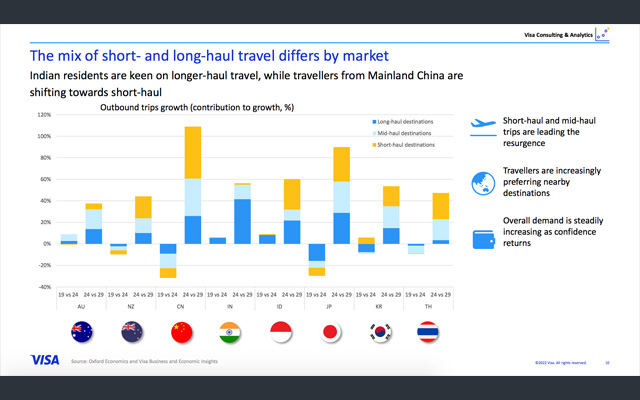
Emerging markets like India and the Philippines are driving outbound growth, with shorthaul trips dominating – while China and Australia lead in high-value longhaul travel
Baptist stated that despite volatility in the international environment, Asia-Pacific has continued to grow “very fast”, due to urbanisation of populations, internationalisation into the global supply chains, and government reforms towards more efficient economies.
“Asia has done a better job (at these things) than any other region in the last few decades,” said Baptist. “Hence, the big rise in the number of not just average wealth, but also the big rise in the number of affluent people.”
But growth in Asia is “getting tougher” due to three reasons: China’s big slowdown, where growth will moderate downwards to around three per cent by the end of the decade; higher interest rates that will impact cost of capital and investment, which has been the core generator of wealth for the region; and the change in geopolitics as a result of international trade barriers, dampening internationalisation that has been fuelling the region’s growth.
“We still have a good picture (in Asia-Pacific), but growth is not going to be as easy as it was,” he stated.
Elaborating on what defines a “good picture”, Baptist highlighted Asia-Pacific’s growing affluent population. Visa’s research shows that 48 per cent of the world’s new affluent will be in Asia-Pacific, with current analysis estimating a total addressable market of US$2.14 trillion across 10 key markets in the region.
Furthermore, as Asia’s population ages, it is also becoming wealthier – a trend that, according to Baptist, is giving rise to new consumer segments in the region.
Providing an overview of population changes in this region, Baptist shared that the populations of Japan, South Korea and China are shrinking. Meanwhile, core population growth in the region stems from India and Indonesia, while immigration flows are lifting the population in New Zealand and Australia, and creating new markets for luxury travel businesses to tap into.
He added that while Japan and Australia have historically been the two largest sources of high net worth individuals (HNWIs) in the region, China has overtaken to become number one since the pandemic and remains the dominant source of elite spenders despite economic woes.
Baptist also discussed changes in currency valuations as a factor influencing spending power in Asia-Pacific. He noted that the region has witnessed “massive changes”, where the Japanese yen has weakened by 45 per cent against the green back, the Korean won is down about 30 per cent, and the Chinese yuan is down by about 20 per cent.
“On the hand, some places have strong currencies, like Hong Kong, Singapore, and Thailand, allowing consumers from these markets to have more spending power out in the international environment at the moment,” he remarked.
Asia-Pacific’s rising affluence fuels a US$2.14 trillion luxury travel market, with China now leading elite outbound spend
He pointed to business opportunities in following where outbound growth is occurring in the region. Massive growth is observed in the Philippines and India, although these markets do not spend as much as the affluent in China and Australia.
Travellers from the Philippines and India spend about US$1,000 per trip, whereas Chinese or Australians would spend about US$3,000, according to Visa findings.
Vietnam and Indonesia are new source markets to watch, added Baptist.
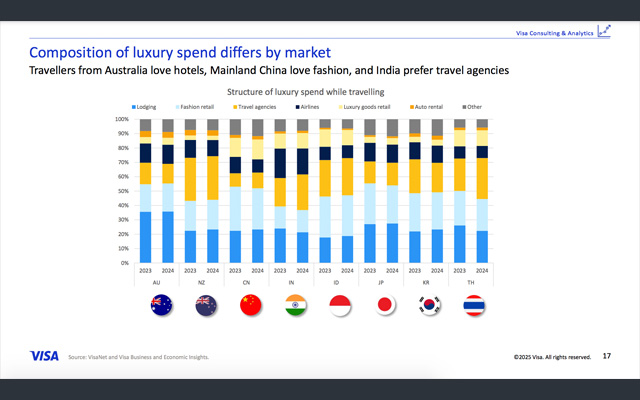
While travel motivations may differ in a region as diverse as Asia-Pacific, Visa research shows that HNWIs in the region have five main priorities when making spending decisions: focus on physical health and well-being; pursuit of long-term financial security; focus on family and social relationships; expressing wealth through cultural proficiency; and seeking curated luxury goods and experiences.
Breaking travel motivations down by geographical source markets, Baptist said Relaxation was a strong motivator for affluent travellers from Taiwan and Hong Kong while Spending time with family/friends was most important for affluent travellers from Malaysia, South Korea, and New Zealand.
Travel plans of regional travellers are also shaped by desires for culinary experiences, shopping, cultural activities, seasonal attractions, theme parks, and visiting family/friends who are living overseas.






 Most recently, he served as general manager for East Africa, leading commercial strategy and partnerships across the region.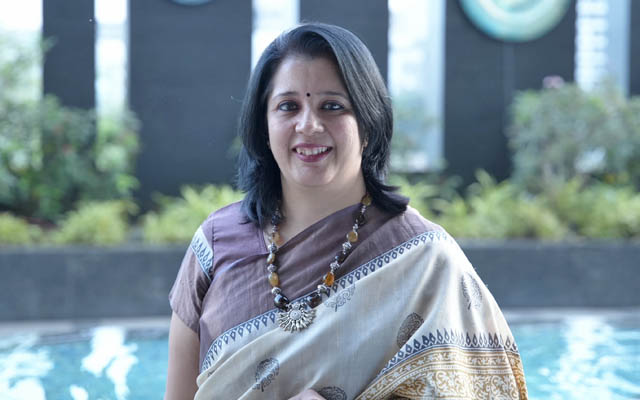
 She will lead Hyatt Place Gurgaon with a focus on guest experiences and strengthen the hotel’s position in the Gurgaon market.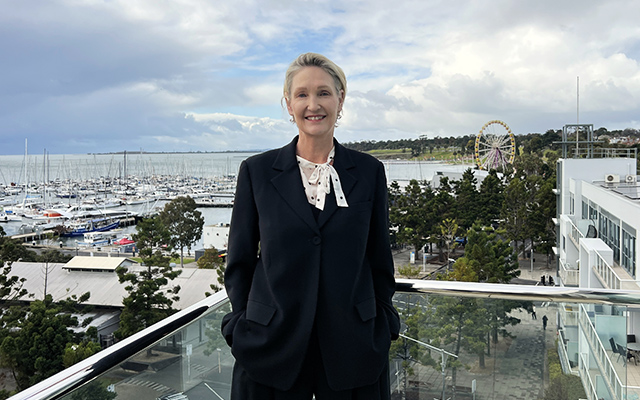
 Fitt brings over 25 years of experience in tourism, hospitality, and events, with leadership roles at notable properties including Novotel Geelong, Sheraton Melbourne, and Mantra Lorne.