TTG Asia
Asia/Singapore Saturday, 25th April 2026
Page 1698

Chasing a port of gold

0

Ten years ago, Adam Goldstein unlocked the Asian cruise market potential for Royal Caribbean Cruises (RCC) and made Singapore the regional homeport for the line. Raini Hamdi catches up with the president and COO of RCC, recalls his views from the first interview over a decade ago and asks, what’s next?

MAR3_VFTT-Adam Goldstein copyWelcome back to Singapore, Adam.
It’s good to be back…I remember I was speaking at the first or second Seatrade (conference) in Singapore and the question was, ‘how many people will cruise in Asia in year 2000?’. Of course you’d want to say a big number as if you say a small number, you might not get invited to speak again. The market was then may be 200,000 passengers or not even for all of Asia and when we thought it would grow to a million, we assumed it must come mostly from Japan. That’s what I was thinking. Then I realised there was a map on the projection and I looked at it and noticed that China was not marked. Whoever made that map literally could not imagine that China would be a source market for cruises. And now it’s the fastest-growing market and spurring the growth in the region.

Looking back, what’s the one thing you wish the company had done?
Like anything that turns out to be a good thing, you wish you could have done it faster, that’s the nature of life (laughs).

If you ask what we were doing before 2007 when we declared Singapore as our regional headquarters in Asia, we were spending a tremendous amount of time building our presence in Europe, while continuing to build our presence in North America and the Caribbean. In the years prior, we were introducing all of the Voyager, Radiance, Celebrity and Millennium class cruise ships, so we were very busy. The last 10 years were really our time to focus on the opportunity here and also, to be fair, the rise of income level and outbound travel that have propelled this region to the forefront of travel & tourism has really occurred in the last 10-15 years. We’ve been a leader and beneficiary of that and we hope someday Asia will move down a path to be either the largest cruise region in the world or right up there.

Yet in the 10 years, Asia has grown to around 2.2 million cruise passengers, a fraction of the 24 million worldwide. Shouldn’t it be bigger, considering the masses that travel by air?
We always think it should have grown faster, we’re impatient. We know what a great vacation a cruise is and what wonderful value it is, and we always think people should catch onto it faster. But life isn’t that easy and we have a lot of work to do to build up an appropriate level of consumer awareness and knowledgeable and supportive distribution.

If you think abut it, there’s something like 1.2 billion international person trips and 24 million cruise passengers, so that’s a two per cent share of international travel. There are a lot of options based on land around the world and we respect the fact people choose those options all the time. But we want to make sure people understand what the cruise proposition means and that they will choose it often.

I guess even in North America you are still developing the new-to-cruise market.
Yes, right now, even in North America, where there are about 12 million cruise passengers a year. We know there are millions of people in North America who have the wherewithal to cruise, would love it if they did and who almost certainly now have friends and family members telling them what a great thing it is – and still they haven’t cruised!

So obviously in Asia we have a long way ahead of us, but the sheer numbers that reflect the opportunity in this part of the world are so immense that it is well worth our effort to pursue that.

Is it a question of patience, or the industry doing a poor job at selling cruises?
One element is patience. We can’t expect that Asia will be this year everything it can be. Most people still don’t know what a cruise is. Most travel agents still aren’t comfortable to distribute them, recommend them. We’ve made progress and I’m sure we will make a lot of progress in 2017 as a company.

Here in Singapore for example Royal Caribbean (International) has its most extensive programme of cruises in a year, including a brand new ship, Ovation of the Seas. There’s going to be more capacity in Asia, more itinerary varieties, different types of ships, newer ships than ever before, so it’s going to be a year of progress in the region.

Can Asia be the biggest cruise market?
I know it’s exciting to talk about whether Asia can be the largest region of cruising or whether China as a country can be the largest source market. Right now with the US providing 12 million cruise passengers a year, and the rest of the world providing another 12 million a year, it’s clearly going to take a long time before any market displaces the US as the no. 1 cruising market. We don’t really obsess about that. We just know that the opportunity to increase the Asia cruise market by one to five million customers per year is real. Like everywhere else in the world our Asian customers love their cruises. We just need to do a better job of attracting them, of marketing and selling, of working with travel agents, to compete with all the other choices that they have.

But much of Asia does not have the ports to support the big ships you have.
It is absolutely clear that the continued development of cruise infrastructure is one of the most signficant challenges we face as an industry.

And because our industry isn’t so well understood yet, we have to be proactive in our outreach to governments and investors, to say what we believe the opportunity is, why the infrastructure is needed both in the homeports and in the ports of call, to discuss solutions to overcome these challenges. Because unless we have places we can take the customers to, where the right ships are capable of docking or anchoring, and the right tour products and destination experiences, we are not going to grow how we wish to.

Do you invest in port infrastructure and are you planning to in Asia?
Yes, we either are the most active cruise company in cruise-related commercial development, or we’re certainly right up there and we are constantly in a dialogue with governments and investor groups about finding solutions to infrastructure challenges.

Yes we are planning to invest in the region in commercial development without question and when the time is right to announce it, we aren’t shy to do so.

What’s your take on ASEAN specifically?
Singapore as a hub of the ASEAN region has an instrumental role to play in the overall development of the Asia-Pacific cruise sector. With Sydney in the south, Singapore more or less in the centre and China homeports in the north, these are the crucial centres of cruise activities. There will be other homeports and cruises over the course of time but these are the ones propelling the cruise industry today.

Singapore, like Sydney, needs to provide warm weather cruise options that complement the China cruise market. ASEAN too in itself has over 600 million people in it and is a growing region economically.


10 Need to Know’s about Adam Goldstein


Who’s in your family? My wife Cheryl, my son David and my daughter Julie.

What do you do for fun? Competitive running, table tennis, rowing and travelling

Your ideal vacation? Anywhere in the world with our ‘vacation gang’ of my law school friends and our families

How do you book your own leisure trips? My wife is a wizard at travel bookings, having once run the air/sea department at Royal Caribbean

What are you reading right now? The Economist, as always

How do you stay healthy? Constant training with my running coach

Favourite food? Pad Thai

A bad habit you cannot kick? Chocolate croissants

Your pet peeve, something that never fails to annoy you? When a colleague has no point of view on a way forward

Most people don’t know that you…have season tickets to the Philadelphia Eagles (American) football games despite living 900 miles from the stadium

This article was first published in TTG Asia March 2017 issue. To read more, please view our digital edition or click here to subscribe.

[SPONSORED POST] Blooming Avis Road Trips in Europe

0

Spring is a time to revitalise the senses, recharge the batteries and as the weather warms up, embark on new adventures. And what better way to do this than a European road trip with Avis?

With your windows rolled down, you’ll be able to experience some of the most spectacular routes in the northern hemisphere. In March and April, the flowers are in full bloom – promising a visual treat no matter where your Avis trip takes you.


For a true floral-infused European trip, the Netherlands is probably the most well-known, especially famous for its springtime tulips and daffodils. Driving the Netherland’s Flower Route will take you from the northern town of Haarlem to Naalwijk, passing fields full of colour. Plan your trip around 19-23 April to catch Holland’s Flower Parade Week in the bulb-growing region of Bollenstreek.

If you thought that Japanese Sakura couldn’t get any more beautiful, think again! In Spring, European cities are tinged with the oriental cherry trees. Take an Avis road trip across France to see cherry blossom growing under the Eiffel Tower, or drive through the Loire Valley with its regal Châteaux and sprawling gardens.

The season is also perfect for discovering Normandy, where the apple trees are in full bloom, and a visit to Claude Monet’s Garden in Giverny will literally have you feeling as though you’ve stepped into a painting.


The English countryside offers some simply beautiful drives when a car is essential, with wild woods of bluebells and snowdrops, or tour the more formal spring gardens of the National Trust properties located across the UK.  Alternatively, drive through Wales to experience pristine countryside, daffodils, orchards and fields full of newborn lambs.

A lesser-known but spectacular drive is in Hungary, where Budapest’s famous Gellert Hill is covered with blossoming trees and cafe terraces spill onto the streets.

With so much to see, it’s important that the car rental company offers the best choice and service. With unlimited mileage, Avis 360° offers all-inclusive rental, without excess. Whether you need a car for a few days, a weekend or 2 weeks, you won’t have to worry.


And of course you’ll want to get going straight away. Avis Preferred members have fast-track services and exclusive access to the newest cars so you have more time… to stop and smell the roses.

As a leading global car rental brand, Avis provides the key to unlocking amazing experiences and opportunities to travel the world, with a choice of around 5,500 rental locations in 170 countries around the world.


Avis awaits you in Europe… and the open road lies ahead.

(Photo Sources – Avis, Getty, Pixabay)

Wyndham Tamansari Jivva Resort Bali

0
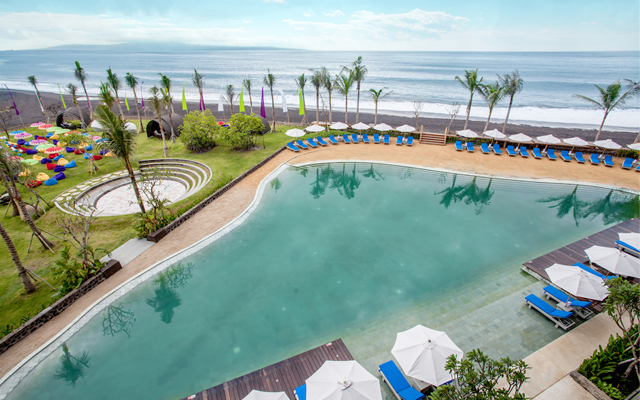
Beach Pool

The tranquility, black sand beach and well-appointed amenities make this upscale resort a blissful haven on an increasingly crowded island, finds Xinyi Liang-Pholsena 

Location Tucked along Bali’s east coast in the Klungkung regency, this Wyndham resort is currently the only international branded hotel in the vicinity, which is a blessing as the area doesn’t have the crowdedness or touristy vibe that characterise other popular beaches in Bali.

The low-rise resort calls lush paddies and duck farms its neighbours, and come evenings locals can be observed playing football or fishing on the carbon-coloured sands of Pantai Lepang.

From the Ngurah Rai International Airport, it’s at least a 45-minute drive to the resort but its location in eastern Bali makes it a convenient base for day trips into Ubud or the Batur and Agung mountains.

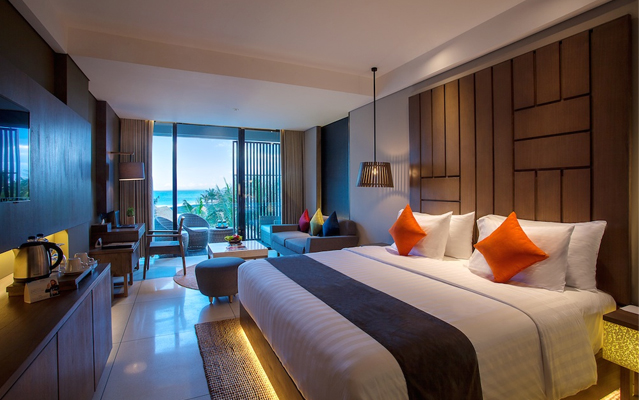
Room My 45m2 Deluxe Room – Ocean View looks out to a swimming pool and the Lepang Beach, with a terrace that affords a good vantage point for sunset viewing. The spacious brown-and-beige room is decidedly comfortable and elegant, with ornamental features like a rattan-woven floormat, puffy cushions and a striking decorative wooden panel.

The only fly in the ointment? The lack of an international-standard socket in the room, although that was quickly resolved with a call to the front desk and a travel adaptor was sent my way shortly.

Deluxe Room

F&B Food was scrumptious and serving sizes hearty whether it’s at the all-day dining restaurant Bumbu or the Jivva Beach Club. Owing to the lack of restaurants in the vicinity, we had most meals at the resort but the chefs did a commendable job of keeping our tastebuds satisfied throughout our two-night stay.

Our first meal, a late lunch at Jivva Beach Club, comprised spicy marinara pasta and the Jivva pizza topped with mozzarella and sambal matah relish, and were so yummy that we repeated these orders for our subsequent meals. With a lawn dotted with colourful beanbags, Balinese parasols and swaying palm trees, the beach club certainly offers a relaxing spot for lounging any time of the day.

Dinner at Bumbu was also an equally appetising and visually-pleasing affair, highlighted by ginger-infused beef carpaccio, French onion soup, king prawn and asparagus salad, and pan-seared barramundi.

Facilities The open lobby, surrounded by water, resembles a floating island and cuts an arresting feature for anyone visiting the resort. As well, the oceanfront resort’s two outdoor pools more than make up for the lack of swimming opportunity in the open sea – not advisable due to the big waves – with one tucked within the garden and the other fringed with real sand facing the ocean.

Beach Pool

The Thirta Spa and Wellness Centre comprises a cluster of eight thatched-roof cabanas. The massage was an absolutely soothing experience – between masterful strokes of my therapist and the sounds of waves crashing on the beach, it was too easy to drift into a state of oblivion.

Other facilities include a business centre, meeting rooms and gym. And with the legendary Keramas surf break just a five-minute-drive away, the resort also offers surf tours and lessons for guests.

Service Staff were friendly, always ready to offer a smile whenever they walked by. My husband and I had a great day out to Ubud and Mt Batur accompanied by resort concierge Goesmank, a Balinese native who shared many personal anecdotes along the way.

Verdict A serene retreat worth visiting to experience an idyllic Bali that is increasingly hard to find.

No of rooms 222
Rates From 1.2 million rupiah (US$89) a night
Contact details 
Tel (62) 366 543 7988
Email reservations@wyndhamjivvabali.com
Website www.wyndhamjivvabali.com

Far East Consortium to sell Silka West Kowloon

0

Dorsett Hospitality International has entered into an agreement to sell Silka West Kowloon in Hong Kong to China-based Golden Wheel Jasper at HK$450 million (US$58 million), through disposing its equity interest in and shareholder’s loan to its wholly-owned subsidiary, Double Advance Group (DAGL).

Upon completion, Far East Consortium International (FEC), which wholly owns Dorsett, is expected to record a gain of approximately HK$316 million, and Dorsett will enter into an agreement with DAGL to offer services in the management and operation of the hotel under the Silka brand.

silka-west-kowloon-double-bed
Silka West Kowloon

The net proceeds from the sale will be retained as capital for Far East’s business development and general corporate purposes.

Chris Hoong, managing director of FEC, said: “The sale is another example of our track record in successful monetisation of hotel assets, and is consistent with our strategy of disposing smaller and non-core hotel properties. It enables us to release hidden value in our hotel portfolio accumulated over the years.

“With an increasingly diversified development portfolio, the group enjoys a high degree of flexibility in deploying capital across various business divisions, allowing us to generate higher return on capital employed in the long run.”

As at September 30, 2016, FEC operated 20 owned hotels in Hong Kong, China, Singapore, Malaysia and the UK, with more than 6,000 rooms and 13 hotels in the development pipeline. When all the hotels in the pipeline become operational by the year ending March 31, 2022, the group will have 33 owned hotels operating more than 9,300 rooms.

Asia-Pacific visitor arrivals to spike up to 2021: PATA

0

Visitor arrivals into Asia-Pacific destinations are estimated to grow at an average rate of five per cent per annum from 2017 to 2021, reaching a combined footfall of close to 758 million, according to PATA’s latest Asia-Pacific Visitor Forecasts.

By 2021, Asia is expected to generate over half a billion of foreign arrivals into Asia-Pacific, accounting for over two-thirds of the total, due to its consistently high average annual growth rate between 2016 and 2021.

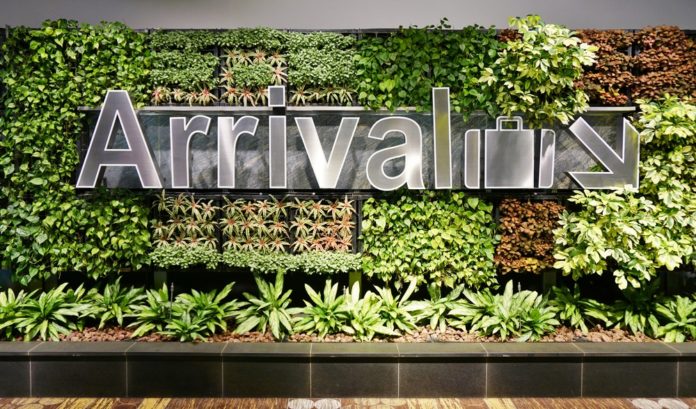
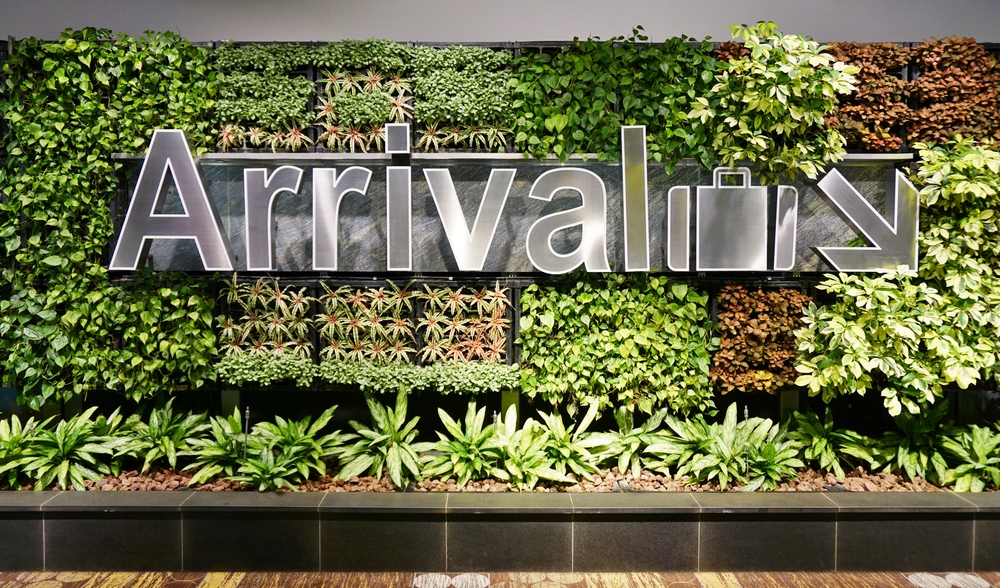
Arrival changi airport
An arrival sign at Singapore’s Changi Airport

The Americas and Europe will also contribute significant arrivals, the former numbering a little under 117 million by 2021 and Europe totalling over 76 million.

Intra-regional flows within North-east and South-east Asia, as well as the bi-directional flows across these two sub-regions, will continue to dominate the growth pattern in 2021 with the North-east Asia-to-North-east Asia flows alone numbering in excess of 300 million in 2021.

The study also projects South-east and North-east Asia to see significant arrivals from Europe, especially from West and East Europe.

Mario Hardy, PATA CEO, said in a media statement: “The importance of the Asia-Pacific region, both as a receiver and a generator of international arrivals, has been evident for some time and the momentum certainly appears to be holding over the next five years. With the maturing of many Asian source markets, destinations beyond the Asia-Pacific region are also being increasingly explored. However, these destinations need to be ready to deliver a service that the increasingly sophisticated Asian traveller has already experienced in Asia and is now seeking in destinations further afield”.

Hertz expands agreement with Sabre

0

Sabre Corporation has expanded its agreement to make The Hertz Corporation’s full inventory of car rental rates, including those available via Hertz.com and its mobile app, available to more than 425,000 travel agents, as well as hundreds of corporations and OTA websites powered by Sabre’s APIs.

With the renewed agreement, The Hertz Corporation is now positioned to market and offer its global car rental inventory through the Sabre travel marketplace, including prepay options previously available only on Hertz.com. The collaboration will benefit Sabre-connected travel agents with a global network of car rental pickup locations, and additional payment options to shop and book a vehicle.

Hertz

“Sabre and Hertz have reached a landmark agreement that will maximise retailing opportunities through a mix of digital channels,” said Traci Mercer, senior vice president of hotel, car, cruise and rail in Sabre Travel Network.

Business travellers and online shoppers will also see immediate benefits, as corporate booking tools and OTA websites using Sabre technology will now display the full range of Hertz car rental inventory worldwide along with all available pricing options. Prior to this agreement, the only way to shop all available vehicles and prices would be to monitor multiple channels at once.

The Hertz Corporation chose Sabre as its first GDS provider to distribute its worldwide rental vehicle inventory including Hertz, Dollar, Thrifty and Firefly brands.

Trade questions fate of luxury hotels coming into Phnom Penh

0

As Cambodia welcomes a swathe of luxury hotel brands to Phnom Penh, the trade is divided on whether the properties will help contribute to the economy or be forced to shutter due to low demand.

Hotels set to come online this year include the 175-room five-star Rosewood Phnom Penh in June, and the 1,000-key Naga2. Meanwhile, Hyatt Regency, Shangri-La and Okura Prestige are slated to enter the market by 2020.

Rosewood Phnom Penh
Rosewood Phnom Penh

However, with occupancy rates in many of the capital’s current limited luxury hotel offerings below 50 per cent on average, trade players fear that many of these properties might have to shutter due to a fiercely competitive landscape.

San Sambath, who owns three boutique hotels in Phnom Penh, has seen an 18 per cent decrease in occupancy in the last three years, and predicts this will worsen as new hotels are unable to fill its rooms and are forced to drop prices.

He lamented: “There are already too many empty rooms in Phnom Penh and times are really tough. I don’t think Cambodia is quite ready yet for all these luxury rooms. There just isn’t the demand.”

However, owner of a series of hotels and restaurants, Luu Meng, said the country should welcome more high-class offerings, as they help to raise the hospitality industry’s standards and attract “high-class tourists” who spend more money.

As well, tour operators are also hoping to benefit from the entry of upscale brands. Vangdong Tam, owner of Trails of the Mekong, said: “They will help promote Cambodia in a good light across the world and bring more high-end travellers with them.”

Room glut casts shadow over Maldives hotel takings

0

Hotels in the Maldives are reporting weaker performances as a result of a room oversupply aggravated by a lack of destination marketing.

While total arrivals in the destination had risen 4.2 per cent in 2016 over 2015, achieving a record high of 1.3 million visitors, hotel occupancies fell to 64.2 per cent from 67.4 per cent in 2015.

Maldives aerial

According to latest STR Global figures, revPAR for hotels there slipped 12.8 per cent in 3Q2016 over the same period in 2015.

Not helping matters is the continual expansion of accommodation inventory. The number of resorts rose from 108 in 2015 to 117 last year while the total number of beds in all accommodation units – resorts, hotels, guesthouses and safari boats – went up to 30,544 from 28,276 in 2015.

Early last month, New York-based Dream Hotel announced plans to build an integrated resort across three islands, with over 500 villas to be ready for occupation in 2019/2020.

The Maldives Association of Tourism Industry (MATI), the main body of hotel owners, at its annual general meeting last month urged the government to intensify destination marketing activities to reverse hotels’ fortunes. But it was a call long made by inbound travel operators.

MATI chairman Mohamed Umar Manik, who is also the owner of Universal Group, the largest group of resorts in the destination, lamented that yield was not growing in tandem with arrival figures.

He pointed to a 4.4 per cent decline in Tourism Goods and Services tax receipts last year. Industry officials explained that the decline was due to shorter stays and lower tourism spend.

With these declines in view, industry players have expressed dismay over a cut in state marketing budgets at a time when more of such activities are in fact needed.

Abdulla Ghiyas, president of the Maldives Association of Travel Agents & Tour Operators, said the government’s 2017 destination marketing budget had been pruned to just US$2 million from the original US$8 million. Government officials have declined to comment on this.

Japan’s regions turn to Europe to boost fortunes

0

Travel agents and tourism officials in several Japanese regions have stepped up sales and marketing efforts in Europe, believing that travellers from longhaul markets will increase the destination’s tourism receipts and average length of stay.

“Westerners tend to take longer holidays, spend more money on vacation and stay at higher-priced hotels,” said Cameron Stadin, representative of Global Sales Explorer (GSE), based in Kagoshima Prefecture.

Senganen garden
Senganen Garden in Kagoshima Prefecture. Photo: Japan-guide.com

As a result, the inbound tour agency will launch seat-in-coach tours in 2017.

“The European FIT market is growing and our (tours) will suit them. They want independence but many places in Kyushu are difficult to access by public transport so this bus tour is (a convenient option),” he said.

A pilot is planned for April and GSE will first promote the tours to European expat residents across Japan this summer.

Stadin is banking on these customers’ social media posts to stimulate interest among Europeans outside of Japan.

Meanwhile, other attractions are focusing on marketing directly in Europe.

Alex Bradshaw, spokesperson for Sengan-en in Kagoshima city, shared that the historic garden had started pursuing the European market since last April. Sengan-en’s aim is to promote not only the attraction, but also Kagoshima as a destination, firstly to the FIT market and then to outbound agents.

“There is little knowledge of Kagoshima (in Europe),” he said. “By promoting Kagoshima’s heritage, we want to attract higher-spending Europeans who are interested in culture.”

In particular, Bradshaw is targeting the UK and France, where he visited in late February to promote the prefecture’s renowned kiriko glass.

Chisayo Watari, spokesperson of Hotel Shiroyama Kagoshima, shared that the luxury hotel will begin promotions in Europe after garnering a positive reception at ILTM Cannes 2016.

Kagoshima Visitors Bureau, meanwhile, has started to use the prefecture’s historical connection to the UK, which dates back to the 19th century, as a marketing tool to attract British travellers, revealed spokesperson Tomoko Takae.

Similarly, the prefectures of Tottori and Nagano are planning to win over European visitors by first courting Tokyo’s European residents.

Tottori is marketing itself through banners depicting the prefecture’s scenery and tasting sessions of locally distilled sake at international events, while Nagano officials are working with agents to develop short, high-end tours. Market research is still underway but these programmes may focus on wellness, drawing on the area’s hot springs, lush forests and waterfalls.

Malindo Air to commence flights to Brisbane

0

Malindo Air will launch daily services – utilising a Boeing B737-800 – from Kuala Lumpur to Brisbane via Denpasar on March 31. It will be the only Malaysian carrier plying this route.

An inbound agent, Nigel Wong, director, Urban Rhythms Tour Adventures & Travel, said: “This flight will help the tourism industry as Australia is a key market for Malaysia. Australians are avid outdoor enthusiasts who love soft adventure and eco-tourism products which Malaysia has a lot of. For this leisure segment, we will promote our national parks and islands in east and west Malaysia.”

Malindo Air

Statistics from Tourism Malaysia revealed that the per diem expenditure of Australian tourists in Malaysia averaged RM773 (US$174) in 2015 and they spent an average of 5.8 nights in the country. Last year, arrivals from Australia totalled 377,727 tourists, a decline of 22.4 per cent over 2015.

An outbound agent, Desmond Lee, group managing director of Apple Vacations & Conventions, said: “Brisbane is not really a tourist attraction for Malaysians. They prefer holidaying in Gold Coast, which is about a 1.5-hour drive away.”

Lee added that as AirAsia currently flies daily from Kuala Lumpur to Gold Coast, he “may consider using” Malindo’s flights if the airfares are “very attractive”, which can translate into savings for customers. From Brisbane, the travellers can then transfer to Gold Coast by land.