TTG Asia
Asia/Singapore Sunday, 28th December 2025
Page 1647

Amadeus reaps bigger profits from diversification

0

Amadeus IT Group achieved adjusted profit of 911 million euros (US$964.5 million) for 2016, representing a growth of 21.2 per cent from 2015.

Growth was supported by an increase of 14.3 per cent in revenue to 4.5 billion euros (EBITDA up 16 per cent in EBITDA to 1.7 billion euros).

logo_amadeus_integracion_xml_vuelos_doblemente_dispongo

Luis Maroto, president & CEO of Amadeus, commented: “The strength of our core businesses, our diversification strategy and the positive contribution of recent acquisitions such as Navitaire drove Amadeus’ successful financial performance in 2016.”

Amadeus’ distribution business saw revenue increase 6.8 per cent to over 2.9 billion euros, with travel agency air bookings growing 5.9 per cent to total 534.9 million euros.

LCC bookings grew 15 per cent compared with the previous year, with content from more than 90 low-cost and hybrid carriers now available to subscribers to Amadeus’ inventory data.

According to Amadeus, the stronger distribution performance was also supported by new contracts of Amadeus’ merchandising solutions. At the end of last year, 66 per cent of the global bookings made through Amadeus were eligible to carry a merchandising item.

By end 2016, more than 120 airlines had contracts for Amadeus Airlines Ancillary Services, of which more than 90 had implemented the solutions; while 52 airline customers had contracted Amadeus Fare Families, with 33 seeing through to implementation.

For its IT solutions segment, Amadeus too reported growth in revenue, up 31.7 per cent to almost 1.6 billion euros.

Amadeus reported that more than 175 airlines had contracts for one of the Amadeus Passenger Service System (Altéa or Navitaire New Skies) at the end of 2016.

Amadeus passengers boarded grew 85 per cent to a total of 1.4 billion euros, fuelled by the addition of passengers boarded from Navitaire and a 12.2 per cent increase in Altéa passengers boarded.

Developments in its new business arms include a 10-year deal with Copenhagen Airports; the launch of the B2B Wallet Prepaid payment solution enhanced by partnerships with MasterCard and Ixaris; and the rollout of Amadeus Performance Insight and Amadeus Booking Analytics.

An extension of its agreement with Amadeus and AccessRail has also enabled travel to book 18 rail and bus operators across 26 countries on the same screen as air travel.

Call for ITB China Startup Award applicants

0

Application for the ITB China Startup Award, which aims to recognise innovative ideas turned into viable business solutions, is now open.

Taking place within ITB China on May 11, 2017 at the Shanghai World Expo Exhibition and Conference Center, the event will see finalists demonstrating their solutions and pitching before the judges.

itb china startup award

ITB China is welcoming applications from products launched within the past three years and that demonstrate innovation, add value to customers and are commercial. Companies of any size or sector may apply.

All applicants will receive online exposure on the ITB China website and through all its press channels and media coverage from the show’s media partners including TTG, the official show daily for the three-day event.

The winner will get to showcase their product at a nine-square-metre basic shell-scheme booth worth over US$4,000 at ITB China 2018.

The application deadline is March 31, 2017 and finalists will be confirmed on April 15, 2017. For more information on how to apply, visit itb-china.com/awards.

A Crowne Plaza coming KL’s way

0

InterContinental Hotels Group (IHG) has signed an agreement with Malaysian property developers Yuk Tung Properties to build a Crowne Plaza hotel in Kuala Lumpur.

Scheduled to open by 2021, the Crowne Plaza Kuala Lumpur City Centre will have 338 rooms, and facilities such as an outdoor swimming pool, gym, business centre, seven versatile meeting spaces and an all-day dining restaurant. It will be located along Jalan Yap Kwan Seng in the city centre, within walking distance from the Petronas Twin Towers.

crowne-plaza-klcc-rendering-low3

Leanne Harwood, IHG’s vice president, operations, South-east Asia and Korea, commented: “With the AEC coming together we see greater opportunities for intra-regional travel. Coupled with the launch of the High Speed Rail linking Singapore and Kuala Lumpur in 2026, we’re confident the city will welcome even more visitors in the coming years.”

Crowne Plaza has some 400 hotels in more than 63 countries worldwide, including 71 hotels across Asia, the Middle East and Africa.

Ho Kwon Ping on working with giants

0

A structure of collaboration between Banyan Tree Holdings and AccorHotels is being formed following their deal signed last December to ‘co-develop’ Banyan Tree brands – Banyan Tree, Angsana, Cassia and Dhawa – in new locations around the world.

If successful, the new model may be a way for mid-size hotel groups to remain independent amid the global hotel consolidation, expand globally without margins being eroded by the high overhead costs that expansion necessitates, and focus on brand differentiation rather than on the operational concerns common to all hotels everywhere.

Ho Kwon Ping

Accor is investing an initial 16 million euros (US$16.9 million) for a five per cent stake in Banyan Tree with an option to purchase an additional five per cent share.

Under the alliance, Accor will manage the daily operations of the co-developed Banyan Tree hotels sourced by Accor while Banyan Tree will manage all brand-related issues. Banyan Tree will ensure the hotels comply with the brand assurance protocols – from the conceptualisation of the hotel and working with consultants on interior design and restaurant concepts, to ensuring that operating practices are in line with standards, said Banyan Tree executive chairman Ho Kwon Ping in an interview on how the deal works.

Accor will decide on the choice of general manager (GM) in consultation with Banyan Tree. GMs in this alliance will report to Accor operationally but to Banyan Tree on matters pertaining to brand standards.

When asked how he would ensure a GM who isn’t reporting to him ‘live and breathe’ the brand, Ho said: “All senior executives will have to go through Banyan Tree training programmes, all GMs will attend our annual GM conference and be treated as ‘one of ours’, so they have the same outlook, orientation and brand values. We have to make more regular visits than a franchise to audit the hotel and ensure it fits a close level of brand compliance.”

The co-developed hotels will operate in parallel with Banyan Tree’s existing 45 and 25 new hotels under development, as the company continues to pursue new, solely-managed hotels. To the customer however, a co-developed and solely Banyan Tree managed hotel will be indistinguishable.

Ho says this is a real effort on the part of Banyan Tree and Accor to forge transformative alliances in the wake of global hotel consolidation.

With their M&As, the big companies are likely to collapse some of the brands that overlap and integrate their back office operations to gain economies of scale, he figured. They will shift to become more of a brand management company than the traditional hotel company, in the same way that the global FMCG (fast moving consumer goods) companies are all about brand management.

A global hotel group in city A might have a single entity doing housekeeping, laundry and security for all its numerous hotels under numerous brands (Marriott has 30), while GMs become brand managers, essentially focused on making their brands more differentiated unlike before, when they were in charge of their everything – their own housekeeping, F&B, laundry, security, personnel, etc.

“With consolidation having largely occurred, how then do global players acquire differentiated brands like Banyan Tree? They can’t simply buy over family-owned companies as most of us aren’t ready to sell, or are happily chugging along with 50, 60 hotels over time. Therefore strategic alliances with small companies like ours is another trend,” said Ho. “And it could become a transformational change in the relationship between the mega-players and smaller players.

“On our side, recognising that the industry is moving more towards brand management, we do not need the old model where each hotel manages 100 per cent of its operations. The move towards outsourcing these operations – even F&B – has already been underway in many high-cost locations. Our model of co-development is taking this one step further, for one partner to focus on operations and the other to focus on brand experience and development. We will manage the brand standards, product and service innovations which comprises the brand experience. In media lexicon, we will be the content provider.

“There will be cost synergies. On our own, we would never be able to be cost-effective if we go to, say, Nigeria. Even opening a hotel in Mexico took a lot of work for us. But if Accor has 20-30 (or more) hotels in Nigeria, even if they are of different brands, they can really do the active management on a daily basis because they have the whole infrastructure to support those hotels in Nigeria,” said Ho.

Aside from infrastructure and distribution, Ho points out that Banyan Tree is also better off tying up with a global company because it has more clout in talking to owners about maintaining brand standards or worse, to owners who don’t pay.

“The problem with brand standards and compliance is not going to be with Accor – they are a totally professional company, there is no motivation on the part of an Accor entity or a GM in Nigeria operating a Banyan Tree to say, I’m not going to do this or that. Actually the problem all along has been with the owners. Often, you have an owner who does not want to spend on the capex they need to and if the brand starts going down, the only remedy is to remove the brand. So, having Accor deal with owners is probably more effective than us dealing with them.”

When asked won’t Accor be pushing its brands first to owners, Ho said: “Accor has 250 business development people around the world. When they meet owners, they look at what the owner wants, recognise what brand is ideal for that vision – they are not obliged to put our brands first. But we do occupy a space in their brand architecture which can be attractive to owners in various circumstances, such as luxury resorts.”

As for development targets, Ho says he has none, except that growth will be a lot faster than in the past. “If brand management is our future, this arrangement would allow me to focus on sharpening, innovating and differentiating the brand experience. After all, the only reason Accor wants to tie up with us is not because of our size but because our brand and the distinctive experience,” he said.

“These alliances (the other is Banyan Tree’s recently announced JV with China Vanke) combine the platforms and infrastructure for us to roll out brands, initiate new brands and focus on what we have historically been best at, which is brand management, retaining the independence of a relatively small company compared with the giants, yet being able to work with giants.”

With Vanke, which is a strong real estate developer in mixed-use developments in secondary cities in China, he sees the opportunity to manage the developer’s serviced apartments and business hotels in secondary cities under the Cassia and Dhawa brands.

Another opportunity is in conceptualising/managing projects that cater to active agers, a growing segment in China.

“Vanke has hundreds of condo projects. But with changing demographics in China, there is a need for projects that can cater for active agers. These are not nursing homes, but condo units that are separately designed to fit this clientele, which have activities and services that cater for them such as a wellness retreat with some TCM aspects or a gym that’s more suited to older people,” said Ho, adding that this might be an entirely new brand.

Will he seal more alliances? Said Ho: “Never say never but with these two major deals, one in China, the other in the rest of the world, we’ll be preoccupied for quite a while. We’re happy that in the space of two months, we have two deals that cover the world, which to us will transform Banyan Tree in the future.”


Hong Kong Airlines, Jet Airways ink codeshare deal

0

Hong Kong Airlines and Jet Airways have entered into a codeshare partnership aimed at enhancing connectivity between India and Asia-Pacific.

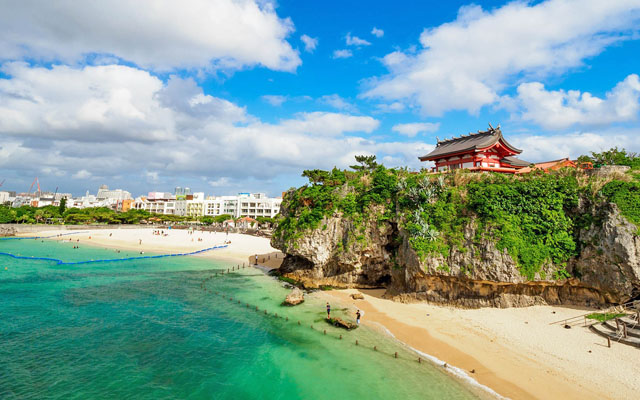
The agreement will allow Hong Kong Airlines to offer a daily service connecting Hong Kong, Mumbai and Delhi. It will also enhance connectivity for Jet Airways guests from Mumbai and Delhi via Hong Kong, to multiple destinations in the Asia-Pacific including first-time codeshare destinations Okinawa in Japan and Auckland in New Zealand.

Hong-Kong-Airlines-and-Jet-Airways-Ink-Codeshare-Agreement-916x516
Jet Airways’ Shanmugam (left) and Hong Kong Airlines’ Li

Jet Airways’ Jet Privilege members will also be able to earn frequent flyer miles when they travel on codeshare routes with Hong Kong Airlines.

Li Dianchun, chief commercial officer, Hong Kong Airlines, said: “From our observations, there has been great potential in the India market as increasing travellers from India tend to transit via Hong Kong to Japan, South-east Asia and Auckland. ”

Jayaraj Shanmugam, chief commercial officer, Jet Airways, said: “Both business and leisure travel between India and the destinations covered by this arrangement has been growing at a remarkable CAGR of 12 per cent over the last five years, on the back of sustained economic activity.”

SMX Davao to get new wing

0

SMX Convention Center Davao is expanding its facilities to cope with the growing number of bigger and international events keen on the Philippine venue.

A new building to be constructed sometime this year will connect with the existing SMX Davao, the largest privately-owned convention centre in southern Philippines.

SMX Davao3

Branch manager Daphne Jezelle Alojado told TTGmice e-Weekly that although the new building’s capacity is still under discussion, it would expand SMX Davao’s existing 7,835m2 of space for up to 5,500 pax by another 2,000 pax.

SMX Davao has already been getting business events for 6,000 pax since last year, aside from a rising number of international events, Alojado revealed.

The new building is targeted for completion either in 4Q2018 or 1Q2019.

Vietjet gets IPO off the ground

0

Vietjet yesterday became the first airline to be listed on the Ho Chi Minh City Stock Exchange (HOSE), and will now join the ranks of VN 30, Vietnam’s biggest publicly-traded companies in terms of market capitalisation.

Vietjet has a chartered capital of three trillion dong (US$131.8 milion), or 90,000 dong per share. That would mean its capitalisation would stand at 27 trillion dong (equivalent to US$1.2 billion), accounting for 1.5 per cent of HOSE capitalisation as of February 15, 2017.

Vietjet gets IPO off the ground Photo_1
Vietjet’s Nguyen Thị Phương Thao (fifth from left) marking the airline’s listing, witnessed by State Securities Commission of Vietnam’s Vu Bang (second from right) and Vietjet’s Nguyen Thanh Ha (fourth from right)

As a result of being hosted on HOSE, Vietjet will contribute to raise market capitalisation, offering immediate opportunities for local and foreign investors.

Vietjet is the first Vietnamese company to have completed an IPO that meets international standards and practices (Reg S). BNP Paribas, Deutsche Bank, JP Morgan are the IPO’s foreign joint global consultants.

Twenty-four international investors are subscribed to Vietjet’s offering, including Singapore sovereign fund GIC, Wellington, Morgan Stanley, Dragon Capital and VinaCapital.

According to 2016 statistics, Vietnam’s aviation transportation market grew 29 per cent between 2012 and 2016, and the rate of customers using airplanes as their means of transportation increased from 0.5 per cent in 2012 to 0.8 per cent in 2016.

Vietjet, the first privately-owned commercial airline in Vietnam, had started to generate profits in its second year of operations. Its revenue in 2016 was 27.5 trillion dong with a net profit of 2.4 trillion dong, with an earnings per share of 8,762 dong.

Trafalgar guarantees all 2017 Europe, Britain and Asia departures

0

Trafalgar has revealed that an unprecedented 100 per cent of its 2017 Europe, Britain and Asia departures are now definite, assuring agents that they can book the brand with confidence.

Commenting on the definite departures status, Nicholas Lim, president at Trafalgar, Asia, said: “We are thrilled to be able to guarantee agents that the chances of winning with Trafalgar are 100 per cent when it comes to selling our extensive portfolio of 109 guided holidays for summer in Europe and Britain and 17 different trips across Asia.”

RS5123_Trafalgar-Brochure-0138

To better equip agents, Trafalgar last month released a video showcasing how positioning the emotional ahead of the rational could impact bookings.

Other incentives include Trafalgar’s current Early Payment Discount of 7.5 per cent (valid until March 30, 2017), which is combinable with Trafalgar Frequent Traveller discounts, to enable another five per cent savings.

Singapore more pricey for business travel, but still cheaper than HK

0

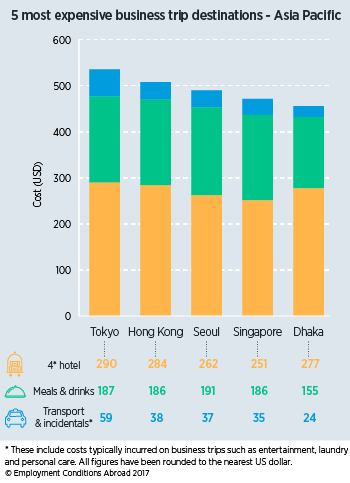
Singapore is now the fourth most expensive location in Asia-Pacific for business travel, rising one spot from last year’s regional ranking by global mobility solutions provider ECA International, although the average cost of a business trip to the Lion City is still eight per cent cheaper than Hong Kong.

The total cost of a typical business trip to Singapore, excluding travel to and from the city, is US$472 per day on average, according to ECA’s annual Daily Rates study, which considers average costs for four-star hotel accommodation, meals and drinks, laundry, transport and incidentals.

singapore

“Costs associated with accommodation for business travellers have risen in Singapore in the past year… although rates for four-star hotel accommodation are still approximately 16 per cent lower than comparable accommodation in the most expensive location, Tokyo,” said Lee Quane, regional director – Asia for ECA International.

While a typical meal out and incidentals amount to higher expenses in Singapore than in Hong Kong, this is offset by higher costs associated with hotel accommodation in Hong Kong (13 per cent higher) in the second spot. Seoul is ranked third most expensive in the region after Tokyo and Hong Kong respectively.

When leaving out hotel costs, however, Singapore falls to seventh in the regional ranking. Tokyo remains the most expensive, followed by Seoul, Yokohama, Sydney and Hong Kong.

ECA_International_-_Daily_Rates_February_2017
Source: ECA International

Shanghai, where hotel rates are 32 per cent lower than in Hong Kong, fell to 15th position. Beijing follows in 25th position with rates seven per cent lower than in Shanghai, largely due to cheaper hotel rates.

Meanwhile, ECA found Johor Bahru in Malaysia to be the cheapest business travel location in Asia-Pacific, while Kuala Lumpur is the only capital city ranked within the ten cheapest locations.

“Hotel accommodation rates have been depressed in the past 12 months owing to the impact of the fall in oil and gas prices on the Malaysian economy and subsequent reduction in business travel to and within the country,” added Quane.

“This has been further accentuated by the continued depreciation of the Malaysian ringgit versus the US dollar to (keep) business-travel costs in Malaysia low in comparison to elsewhere in the region.”

Caporicci helms two resorts, convention centre in Langkawi as MD

0

Marriott International and Rajawali Group have appointed Michelle Caporicci as managing director to oversee two resorts within the group and a convention centre.

Caporicci will lead strategic direction and overseeing the growth of The St. Regis Langkawi, The Westin Langkawi Resort and Spa, as well as The Langkawi International Convention Centre.

Michelle_Caporicci_-_Managing_Director_of_STRLGK_and_TWLRS_(4)

In her most recent tenure as regional vice president, sales and marketing for The Ritz Carlton, Asia-Pacific, Caporicci oversaw 26 hotels in eight countries and opened nine hotels including The Ritz- Carlton, Kyoto and Mandapa, a Ritz-Carlton Reserve.

With over 20 years of experience in various high profile positions, Caporicci began her career in 1995 as a catering manager for Long Beach Marriott Hotel and climbed through the ranks holding various roles in hotels across the US and Asia-Pacific.