TTG Asia
Asia/Singapore Sunday, 28th December 2025
Page 1641

Thai Airways wants to increase capacity on Europe routes

0
Thai Airways

Thai Airways International (THAI) intends to increase capacity to Europe where it already boasts 12 direct connections.

The airline is seeing “very strong” Europe performance and load factors, according to THAI’s vice president, sales department, Bryan Banston, who added that the carrier finally sprung back from the black in 2016, prompting further confidence in its business outlook this year.


Thai Airways

“One of our key strategies is to grow European routes to daily in the short term. These include Brussels, Milan, Rome and Moscow,” he told TTG Asia.

Besides doubling its Frankfurt and London services to double daily in late 2015, the airline’s resumption of four-times weekly services to Moscow in December 2016 has already witnessed “booming” traffic from Russia, according to Banston.

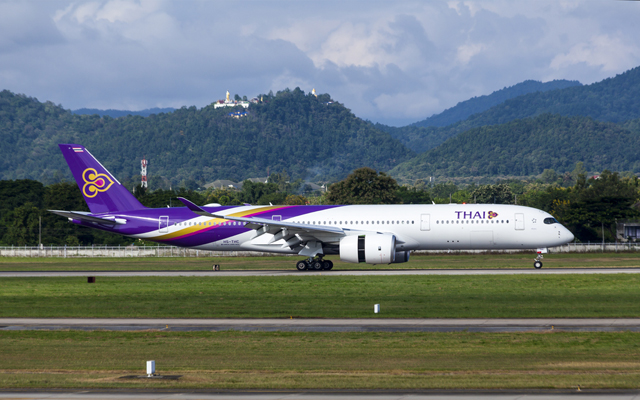
Meanwhile, the recent delivery of two Airbus A350-900XWBs has also enabled THAI to pursue European capacity growth by deploying the new widebody aircraft on the Milan and Rome routes.

Said Banston: “The A350 has proven itself well in Italy, and we expect it to do well in Europe.”

Furthermore, THAI is also leveraging its relationships with Star Alliance member airlines in Europe, particularly in markets like the Netherlands and Spain where it doesn’t have direct connections yet, said Banston.

The airline has also revealed clear ambitions to position itself as a network carrier in South-east Asia through its Bangkok hub. “We see good growth in network selling,” said Banston. “We also see opportunities to focus on our network to move passengers beyond Bangkok to other parts of South-east Asia, Asia and Australia.”

Regional subsidiary Thai Smile will hence play an integral role to generate new feed for THAI’s longhaul network, as it has fallen behind competitors in terms of regional network development in recent years. For instance, it has identified Europe to be a good source for Thai Smile’s Kota Kinabalu-Bangkok service starting the end of this month.

Banston also sees opportunities in driving European passenger demand into secondary destinations in Thailand like Phuket, where it recently added a Frankfurt-Phuket link in November 2016.

When asked if the aggressive competition of the Gulf airlines on the Europe-Asia market poses any threat, Banston said: “THAI’s edge lies in our non-stop operations, which comprise one long and short sector. Premium and corporate passengers prefer such arrangements than to have the leg broken up into two.”

Sri Lanka launches first major campaign in years

0

Sri Lanka is launching a comprehensive destination campaign in seven years, initially through digital platforms thereafter through all media.

The campaign will kick off in May/June focusing on boosting arrivals from Western Europe, the Middle East, China and India, said Sutheash Balasubramaniam, managing director of the Sri Lanka Tourism Promotion Bureau. It will be followed by a three-year global campaign touching all media platforms.

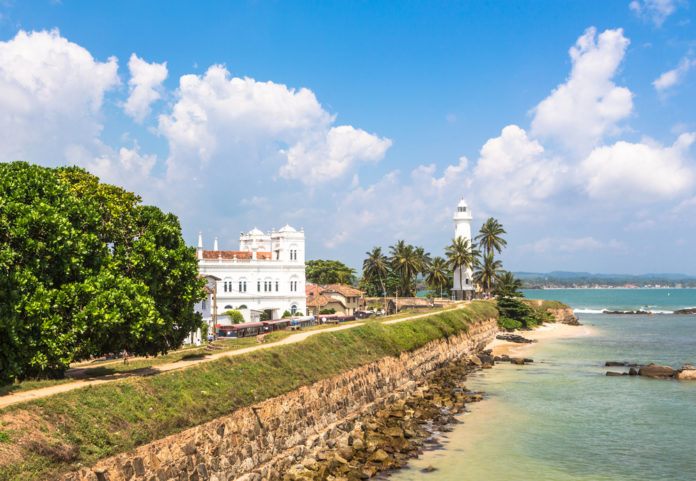
Galle Fort
Galle Fort, Sri Lanka

Since the conflict ended in May 2009, Sri Lanka has had only one destination marketing campaign in 2009-2010, and promotions in bits and pieces at roadshows and trade fairs. A destination marketing campaign has been in the works for several years but stalled by budgets and bureaucratic delays.

While India and China may be scoring by the numbers, it is Western Europe – Germany, the UK and France in particular – that has been Sri Lanka’s most mature source markets.

“Western Europe is the largest source market by region. Germany is the one market that has stayed with us through thick and thin (during the 1983-2009 conflict),” said Balasubramaniam. Unlike Asians, Europeans stay longer, spend more and frequent top-end hotels.

Arrivals from Germany have steadily grown to 133,275 in 2016, from 71,642 in 2012 and 47,402 in 2006. The UK recorded 188,159 arrivals in 2016, up from 114,218 in 2016 and 71,642 in 2006.

New entrant China recorded only 16,274 arrivals in 2006 but soared to 271,577 in 2016 partly due to a sizeable number of Chinese working on Chinese-funded projects. Arrivals from India, the country’s largest source, is beefed up by traders who stay two to three days in cheap hotels.

But SriLankan Airlines’ pull out of Europe, barring the UK, last year is an issue. It was the only airline with direct flights from Paris, Rome and Frankfurt to Colombo. KLM and Austrian Airlines began flights to Colombo last year.

“Direct air connectivity has grown in importance and is an added factor in going to certain destinations as against having a couple of transfers. But the fact is these are robust markets in Sri Lanka and despite almost 30 years of instability in the country, they have continued to patronise us,” he said.

There is hope that the debt-ridden national carrier, which is undergoing severe restructuring to curb losses – by reducing longhaul flights and focusing on South Asia, East Asia and the Middle East – would resume its European sectors.

“Once that is finalised, we would be in a better position to decide how to bring in direct connectivity. At some point we hope to resume flights,” he said.

Sri Lanka Tourism is pinning hopes on events pertaining to sports, culture, art, fashion, entertainment and food to attract more high spenders. Golf, skydiving and Olympics-level watersports are on the cards as the bureau prepares a calendar of events to attract these high rollers, particularly Europeans.

Also being considered is a project to profile its rich tapestry of Portuguese, Dutch and English colonial culture, and buildings, canals and forts which would connect with Europeans, blending it into events.

Sri Lanka is at ITB Berlin for the 51st time. “This highlights our long-standing association with German and European markets which we will continue to harness,” said Balasubramaniam.

Vietnam’s visa easing ‘annoying’

0

Recent visa relaxation measures put Vietnam on a path for arrivals growth from Europe, but their attached conditions are translating to missed opportunities for the destination and “annoyance” among some DMCs.

After prolonging visa exemption for five key European markets including Germany last year, Vietnam launched an e-visa facility for citizens of those same countries and 35 others in February.

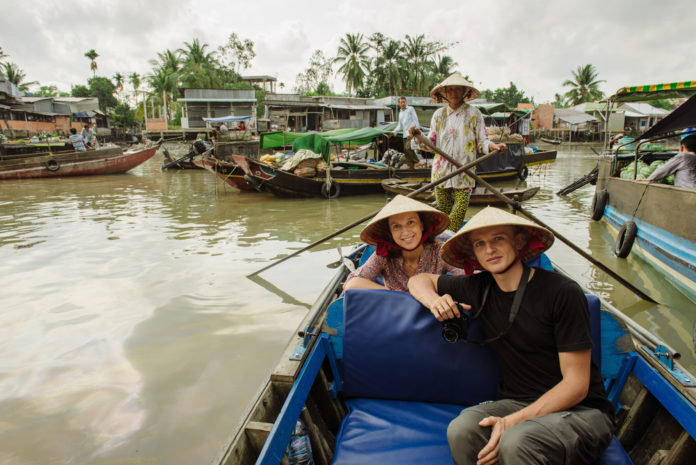
Caucasian tourists Vietnam
Tourists at the Cai Rang floating market near Can Tho in Vietnam

“The 15-day stay limit (of the exemption) is a problem as many Germans travelling to Vietnam for the first time want to do 14 days plus a few days at a beach, so they still need a visa,” said Frank Hasso Wiegand, spokesperson from Focus Asia’s Munich office.

And while the e-visa applies to stays of up to 30 days, it likewise comes with a single-entry clause, which Alexander Leven, director of product development at Asia DMC, said “limits the opportunity to bind guests for Vietnam beach extensions”.

With Vietnam-Cambodia-Vietnam itineraries still popular among German clients, Wiegand said: “The restrictions have made the whole process complicated and annoying. Agencies make mistakes resulting in tourists being (barred) from their second stay in Vietnam… some airlines cancel all ongoing flights including back to Germany. Gives us a lot of headache at least once a week.”

Consequently, he foresees more German roundtrippers deciding not to loop back to Vietnam and instead choosing to end their holidays in Cambodia or at a beach in Thailand.

Moreover, traditional European preference for long trips to South-east Asia are in greater demand. Leven observed a “big, thriving” German market for educational cultural tours led by doctors or professors, which tend to run longer due to their in-depth nature.

Erkan Tuncaakar, general manager of Go Vacation Vietnam, added that visa-free entry should be extended to Austria, Switzerland, Holland and Belgium as they have high potential for Asia as well.

Meanwhile, the e-visa has raised question marks about the fate of the visa exemption. “If the e-visa is meant to replace the exemption, this would be a step backwards,” Wiegand said.

“We welcome the e-visa, but what we’re looking for is an indefinite extension of the visa exemption.”

German bookings to the Philippines on decline

0

Concerns about travel to the Philippines have resurfaced after widely reported events including the Abu Sayyaf beheading of a German traveller last month and the withdrawal of a communist rebel group ceasefire in late January.

Following the beheading, Germany issued a travel advisory against the Philippines affecting Boracay, Palawan and Mindanao, said Jose Clemente III, president of Rajah Tours Philippines.

Philippines map

An indignant Clemente said: “Relatively, crimes against tourists are quite low in the Philippines… What they don’t tell you is he was in a place he shouldn’t have been. He was warned, but he still went there, is it really (the Philippines’) fault? We feel it’s unfair that we seem to be singled out.”

But the damage to tourism has already been done.

Matthias Rotter, managing director of Dertour and Meier’s, told TTG Asia that bookings for the Philippines are not coming in due to the incident being given a full play in the evening media.

Rotter said all Asian destinations for Dertour and Meier’s, including Thailand, Vietnam, Bali, Japan and China, are looking healthy. The only exceptions are the Philippines due to the incident and negative image, and Malaysia, which is suffering from Malaysia Airlines’ decision to axe direct Frankfurt flights.

Meanwhile, Philippine media reports last month that president Rodrigo Duterte’s declaration of the end of a ceasefire against communist rebel group New People’s Army, active in several parts of the country including Luzon and Mindanao, are only fuelling jitters.

But Clemente said while there have been “some sporadic (terror) incidents”, these took place outside the main tourist areas.

In response, the DoT stated: “The authorities have reassured us that the Philippine military and security forces have mounted massive pursuit and sweep-up operations against a ragtag criminal group operating in remote Mindanao areas and sea border territories… The Duterte administration has intensified its campaign against criminality resulting in significantly lower crime incidence.”

To reverse any impact on tourist arrivals, a spokesperson said the department will organise fam trips for German media some time this year.

In the wake of these events, travel agents in the country expressed that they continue to take the safety of customers very seriously.

“The same applies for travel into and out of the Philippines – when there are threats, we are prompted by red alert and communicate the information to guests straight away,” assured Michael Kipping, sales manager at Marsman Drysdale.

The agency also takes steps to minimise risk and respond to crises. “We only work with DoT (Department of Tourism) accredited hotels, vehicles, etc,” said Kipping.

Rajah Tours writes to clients to address points made in advisories and give them the agency’s take on the situation, Clemente shared.

“We are on the ground so we know exactly what’s going on. We have to be honest, if we don’t recommend certain areas, we’ll make that known. (But if) a single place is singled out when there’s nothing going, we state that too,” he said.

Additional reporting by Raini Hamdi

When politics means business

0

Business travel stakeholders discuss how recent political events are affecting the global landscape and share their outlook on Asia’s business travel sector. By Xinyi Liang-Pholsena and Paige Lee Pei Qi

MAR10_businessTravel

From left:
Olivier Jager, CEO, ForwardKeys
Benson Tang, regional director, Asia Association of Corporate Travel Executives
Choe Peng Sum
, CEO, Frasers Hospitality
Kevin Croley
, senior vice president, marketing, Pan Pacific Hotels Group
Kiran Vinchhi
, regional managing director, India, ATPI Group
Michael McCormick
, executive director and COO, Global Business Travel Association
Suyin Lee
, managing director, Flight Centre Travel Group Singapore

What impacts do you see the Brexit vote and the new Trump administration having on business travel?

Jager ForwardKeys’ data already shows a significant global reaction to Trump’s travel ban, but whether it’s detrimental overall is still evolving.
Business bookings from the Middle East to the US were down 31 per cent for the week of January 28 to February 3, 2017 (the travel ban was announced on January 27), compared with the same week last year, with Egypt (-29 per cent), Saudi Arabia (-37 per cent), Qatar (-53 per cent), the UAE (-33 per cent) and Iraq (-87 per cent).
Also, US border control is requiring travellers to declare all trips made to Iran, Iraq and Syria since 2011 when applying for visas or entry permits under the visa waiver programme.

McCormick The longer-term impact of Brexit still remains to be seen. Specific impacts on business travel include new waves of uncertainty, and the end of open skies for European carriers may result in fewer flights and higher fares, among other issues.

Tang It is too early to tell… but we are cautiously optimistic about their impact on corporate travel. Trump has just become US president with no real policy formalised yet; the timeline for UK official triggering of Lisbon Treaty article 50 is yet to be determined; and France’s election is still in the early stages.

(That said), the highly-probable reinstatement of “US Protectionism” by Trump could impact the import and export industry (and hit business travel).

Croley 2016 was undoubtedly a tough year for corporate travel, and the geopolitical situation around the world looks to continue in 2017. Expectations for the greenback to appreciate further will impact travel to the US, while Britain’s exit from the EU poses uncertainties to the pound as the UK government negotiates access to the European aviation market, travel within the EU, etc.
There’s a general cautiousness across most sectors, with businesses managing their budgets more carefully. Banking is one sector affected by political events, e.g. London’s status as the financial capital of the world will be impacted because of Brexit. The oil and gas sector has also been affected, although the outlook may become more positive with recent gains in petroleum prices. Overall, managed travel is under greater pressure.

Lee Global trade has fuelled growth for the past decades. (With events that disrupt global trade relations), economies and corporates may take some time to adapt to a new normal, including through the possible development of new free trade agreements and regionalisation of economies. It is still too early to see any impact on corporate travel.

Choe Despite global uncertainties in the geopolitical and economic environment, the MICE industry has been a key driver of growth in business travel in recent years and there is no indication of a slowdown on that front.
Have these uncertainties affected your business?

Kiran India is feeling the effects of a global slowdown and the coming year may prove to be a particularly challenging one. We have been impacted by reduced demand in the energy sector plus the broader implications of security threats and political uncertainties.
Safety and security is of crucial importance to any travel programme as compounding geopolitical disturbances across the globe and travel managers understand that no location is immune to
risk.

Tang We are not seeing any impact yet. However, senior leaders of firms are closely monitoring the global economic and political situation. (Having experienced shocks before), e.g. Asia financial crisis, close-down of Lehman Brothers, etc, firms are more ready to levy any travel policy changes if need be.

Choe Our properties in certain countries such as the UK were affected by short-term market jitters and uncertainty in 2016. When we decided to enter Europe, we selected specific cities for their long-term investment prospects. In Barcelona, we managed to secure our property at a 25 per cent discount of what it is today. We also entered Frankfurt as it is emerging as a global financial hub, and are seeing occupancy at around 90 per cent, 20 per cent higher than forecasted.

Croley With the bulk of our portfolio across Asia-Pacific, we expect to benefit from intra-regional travel; especially as key source markets for both our brands are from within Asia.

Lee Overall, business remains very resilient. Some industries including banking, oil and gas, and marine have rationalised their travel spend. However, we are seeing a significant growth in travel spend from companies investing in Asia.
How do you perceive Asia’s business travel prospects?

McCormick Sustained economic uncertainty and mixed results among major business travel markets will drive continued moderate growth, but as GBTA expects drastic differences in the relative performance of business travel markets around the globe.
Both India and Indonesia will average double-digit growth in business travel spending over the next five years. China’s economic growth continues to moderate and GBTA forecasts its business travel market will be the fifth fastest-growing major market in the world over the next five years – a vast departure from their first average ranking over the last 15 years.

Despite declines in growth, China remains the largest single market opportunity for travel suppliers and marketers as their US$291 billion market size coupled with 8.4 per cent average growth will lead to the largest gains in spending of any major market by far.

Croley Intra- and inter-Asia travel are looking more optimistic, as China is working with the EU to facilitate travel, and destinations such as Japan
and Thailand are relaxing their visa policies.

Corporate travel spending in Asia is expected to grow four times as fast as the US and more than twice the rate in Europe in the next decade, while China will continue to be one of our most important source markets. To deepen our engagement with Chinese consumers, we launched a Pan Pacific online storefront on Alitrip and invested in new digital marketing resources in Shanghai.

Choe Business travel to and within Asia-Pacific will get a boost from two key factors. Firstly, the region is home to some of the world’s fastest-growing and most populous economies like China, India and Indonesia. As growth in developed markets in the West slows, companies are turning their attention to these markets resulting in a jump in business travel to the region.
These are key growth markets for us. We have a portfolio of 25 properties including those in the pipeline. Secondly, the rapid growth of budget carriers has made travel more affordable. That has helped boost travel and will continue to do so, especially as airlines open up new routes.

Lee Asia has become the largest business travel region in the world by volume (China alone has overtaken the US) and intra-region traffic is very high. Airlines are opening new routes and launching more flights, giving travellers more options. Also, most new hotels opening in Asia are targeting business travellers.
Politics aside, what factors will have a bearing on business travel this year?

Lee Technology will remain a big driver for optimisation of travel programmes this year. We see a big jump in the adoption of online booking tools across the region (which usually drive higher compliance and cheaper fares booked). Innovative mobile apps are increasingly helping travellers throughout the trip duration, acting more like a personal concierge. Consolidation is also a growing trend for corporations in Asia.

McCormick The sharing economy will continue to impact managed travel. A recent GBTA global study reveals that half of travel programmes now allow ride-sharing and 30 percent now allow home-sharing within their policies. We also expect a blurring of lines as we see traditional companies expand to offer sharing-type services.
Other areas include innovation in travel programmes with the rise of personal incentive programmes, which will challenge companies to decide whether or not to adopt incentive programmes within their travel policies.

Croley “Bleisure” will be an increasingly important segment, with four in 10 business travellers having extended their business trip in the past 12 months.
Mobile will become increasingly prevalent as an information and booking channel, as millennials in particular have have emerged as a new breed of business travellers who are more flexible and last minute with their travel plans than other groups.

Choe The hospitality industry is facing stiff competition from the growth of aggressive disruptors like Airbnb. While they haven’t affected business travel in a big way, serviced apartment providers like us need to be nimble and adapt to ensure we continue to retain our loyal client base.
The changing profile of the business traveller will also have an impact. While historically business travellers put a lot of emphasis on brand promise, the new generation is attracted more by engagement and relevance.

Kiran Fragmentation and personalisation of travel programmes are major issues. Fragmentation impacts areas such as travel costs, accuracy of reporting, as well as travel risk and duty of care. Unlike non-compliant bookings – in which travellers purchase airfares directly – content fragmentation involves purchases from suppliers that may not be fully available through a company’s preferred booking technology.

The Indian economy is slowly coming to terms with the recent demonetisation move, which will impact GDP growth for at least two quarters. However, most analysts see this as a normal trend and are confident that the economy will grow after this temporary setback.

Jager One to watch: China’s “One Belt, One Road” policy promises more business travellers to China.


This article was first published in TTG Asia March 2017 issue. To read more, please view our digital edition or click here to subscribe.

Gilis come into their own

0

Long viewed as Gili Trawangan’s little brothers, there’s evidence that Gili Air and Gili Meno are becoming a force to be reckoned with in tourism. By Mimi Hudoyo

MAR_indonesia-shutterstock_166849130Gili Trawangan, one of the islands north-west of Lombok, has successfully transformed itself from a backpacker paradise into an upscale tourist destination, spurring neighbouring Gili Air and Gili Meno (the trio makes up the three Gilis) to play catch up in infrastructure development and attract more tourist footfalls.

Bill Barnett, managing director of C9 Hotelworks, observed: “Destination fatigue (of Bali), urbanisation and a change in travellers tastes towards more natural locations are spurring the move.

“We have seen a similar pattern in Phuket, where a growing number of return visitors are heading to Khao Lak and islands in Phang Nga Bay to seek out a less-crowded beach-oriented holiday.”

In an October 2016 report, C9 Hotelworks recorded 675 registered accommodation establishments in Gili Trawangan, 321 in Gili Air and 82 in Gili Meno.

There are nine confirmed hotels totalling 278 keys in the pipeline, although these premium projects are not expected to affect the boutique nature of the three Gilis.

Barnett also noted that development is shifting from Gili Trawangan to Gili Meno and Gili Air. Gili Meno, the smallest island, is emerging into an upscale destination with the entry of larger-scale, international-standard hotels.

“Here, a new generation of posh offerings are newly-opened or under development. One notable project that is capturing overseas interest is Australian entrepreneur Greg Meyer’s upcoming Bask Gili Meno, which has been designed by noted architect Gary Fell,” Barnett said.

“Gili Trawangan has become too crowded for some travellers, so they look for a quieter destinations like Gili Air and Gili Meno,” said Andhy Irawan, managing director of Dafam Hotel Management,  which soft-opened the Mola2 Resort Gili Air Lombok last year. The property currently offers 20 rooms but will feature 48 rooms when fully launched in July.

Confident of Gili Air’s future prospects, he commented: We have been running on very high occupancy since our trial last August,  even before we uploaded the hotel information on our website. The number of walk-in guests has been overwhelming.”

Hotel developments aside, accessibility is also improving on the Gili islands.

While the Gilis were dominated by Australians and Europeans, the islands are gaining popularity with regional markets such as Malaysia and Singapore, thanks to the growing air links from both countries as well as from across Indonesia, said Awan Aswinabawa, managing director of A&T Holidays.

Fast boat links have been vital in liking Bali to the Gilis. Said Awan: “The many fast boats  – between 10 and 12 times daily, and can double during peak seasons – operating from (Padang Bai Port) direct to Gili Trawangan make it easy for travellers to visit the Gilis from Bali.”

Furthermore, two new fast boats with capacities of 180 and 120 pax are currently being built and will increase transportation capacity significantly when launched.

Following a boat explosion last September, travel companies have become more selective with the the fast boat companies they work with and use only those with reliable insurance, according to Iwan Sitompul, marketing consultant for Mahamaya Boutique Resort on Gili Meno.

As well, he shared that Bali travel agents are concerned with new government regulations requiring all fast boats to stop at Bangsal port in West Lombok instead of going direct to the Gilis, adding at least 20 minutes to the trips.

Overall, the trade is sanguine over Gili’s future prospects. “While the Bali connection remains key to current trading levels, longer-term C9 is eyeing an expected rise in direct international flights to Lombok which will in the medium- to long-term become a game-changer for access to the Gilis and create a strong underlying fundamental for sustainable growth,” Barnett concluded.


This article was first published in TTG Asia March 2017 issue. To read more, please view our digital edition or click here to subscribe.

A raft for ASEAN cruising

0
ProEXR File Description =Attributes= cameraAperture (float): 36 cameraFNumber (float): 6.5 cameraFarClip (float): 1e+030 cameraFarRange (float): 1000 cameraFocalLength (float): 31.54 cameraFov (float): 59.4175 cameraNearClip (float): 0 cameraNearRange (float): 0 cameraProjection (int): 0 cameraTargetDistance (float): 16061.7 cameraTransform (m44f): [{0.826811, 0.562312, -0.0137639, 41203.3}, {0.56248, -0.826564, 0.0201869, -26149.6}, {-2.53614e-005, -0.0244327, -0.999702, 1607.67}, {0, 0, 0, 1}] channels (chlist) compression (compression): Zip dataWindow (box2i): [0, 0, 8999, 5062] displayWindow (box2i): [0, 0, 8999, 5062] lineOrder (lineOrder): Increasing Y pixelAspectRatio (float): 1 screenWindowCenter (v2f): [0, 0] screenWindowWidth (float): 1 tiles (tiledesc): [32, 32] type (string): "tiledimage" =Channels= A (half) B (half) G (half) MultiMatteElement.B (half) MultiMatteElement.G (half) MultiMatteElement.R (half) R (half) VRayGlobalIllumination.B (half) VRayGlobalIllumination.G (half) VRayGlobalIllumination.R (half) VRayLighting.B (half) VRayLighting.G (half) VRayLighting.R (half) VRayReflection.B (half) VRayReflection.G (half) VRayReflection.R (half) VRayRefraction.B (half) VRayRefraction.G (half) VRayRefraction.R (half) VRaySpecular.B (half) VRaySpecular.G (half) VRaySpecular.R (half) VRayWireColor.B (half) VRayWireColor.G (half) VRayWireColor.R (half)

A raft has been floated for South-east Asia’s cruise development in the form of an agreement among ASEAN tourism ministers to develop a joint declaration on cruise tourism.

The declaration will set out the “principles to spur port and destination development in the region, and further encourage industry stakeholders to collaborate and grow cruise tourism in the region”, according to a joint media statement of the mnisters’ 20th meeting during the recent ATF in Singapore.

Prior to the agreement, Singapore, ASEAN’s lead coordinator for cruise development, held an inaugural cruise dialogue where the ministers heard that the number of cruise passengers in South-east Asia is expected to reach 4.5 million in 2035. Aside from growth potential, the dialogue also cited examples of cruise port development projects around the world and examined how cruise lines and entities like the World Bank could partner the ASEAN member states to support cruise port development.

At ATF’s opening gala dinner, Singapore’s prime minister Lee Hsien Loong urged ASEAN to build up cruise tourism. Said Lee: “This is growing in popularity in North Asia and Australia. ASEAN is well placed to promote cruise tourism. We have archipelagos in ASEAN to rival the Aegean, the Caribbean or the South Pacific. We have year-round tropical weather and calm waters. We have diverse and attractive destinations within short sailing distances.

“But developing cruise tourism is a multilateral effort. We need to develop port infrastructure to receive bigger and newer ships. We need to work with cruise providers to create attractive alternative itineraries with multiple stops for tourists. Singapore is happy to be the lead coordinator for the ASEAN Cruise Development Initiative. We need to work together closely to make these happen, and harness opportunities under the Cruise South-east Asia brand.”

Singapore as anchor
According to data from Singapore Tourism Board (STB), Singapore saw a 16 per cent increase in cruise passenger throughput to 1.2 million last year at its two cruise terminals. The number of ship calls increased seven per cent from 385 to 411, of which 10 were maiden calls.

As cruising is multilateral, this growth benefits not just Singapore but the region, and the Lion City has long been persuading its neighbours to keep their eyes peeled on the cruise market.

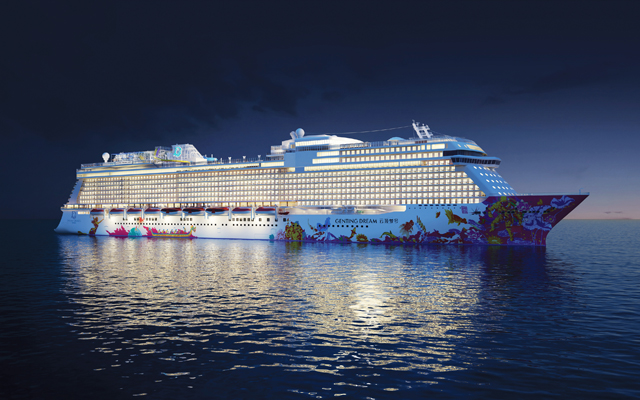
Thatcher Brown, president of Dream Cruises – which announced at ATF the deployment of its Genting Dream for year-round homeporting in Singapore from December 3 – described Singapore’s commitment to the cruise/tourism industry as “steadfast”.

Basing the 151,300-tonne cruise ship with a capacity for over 3,300 passengers in Singapore reflects Dream Cruises’ confidence in the region, he said. Singapore’s excellent cruise and tourism infrastructure and prime geographic location make it the ideal homeport to develop five-night itineraries that can reach multiple ASEAN destinations, he added.

Brown also believed that as the first Asian luxury cruise ship, Genting Dream will soon be “a Singapore and ASEAN icon”, inspiring sophisticated travellers from Singapore and the rest of the region to cruise while enlarging the broader Asia-Pacific fly-cruise market.

The ship will call at more than 10 ports in Singapore, Malaysia, Indonesia, Thailand and Vietnam in 2018.

Who’s active?
Indonesia and the Philippines are two ASEAN countries that are actively pursuing the cruise market.

Indonesia wants to promote developments in Bali and beyond, and is prioritising infrastructure in five ports – Tanjung Priok, Tanjung Perak, Belawan, Makassar and Benoa Bali – to allow them to berth larger cruise ships. Indonesia is also reviewing the consistency of its immigration clearance across all checkpoints to support the cruise industry.

A new National Cruise Tourism Development Strategy to attract more cruises to the Philippines is underway, focused on adding and improving port facilities, easing entry procedures, creating exciting tour packages and offering new destinations.

This comes on the heels of Star Cruises’ 2,400-pax Superstar Virgo making Manila its homeport – the first cruise ship to do so – from March to May. It will sail on 6D/5N journeys to Laoag in Ilocos Norte, Hong Kong and Kaohsiung in Taiwan.

Tourism undersecretary Benito Bengzon Jr, who also heads the Cruise Tourism Development Committee of the Philippines, said a key element of the strategy is to build new dedicated cruise facilities, especially in Manila.

“A superior cruise port and terminal in the capital, with its extensive airlift and ground facilities, will create a compelling reason for large ships to (dock in) the Philippines,” explained Bengzon.

Commissioned by the US Agency for International Development and the Philippine Department of Tourism (DoT), the draft cruise strategy presented by Chart Management Consulting also identified developments in the Turquoise Triangle linking Manila, Boracay and Puerto Princesa in Palawan.

A potential cruise destination in the north of Luzon, where ships departing East Asian hubs can arrive after one day at sea, was also pinpointed in the strategy.

With Superstar Virgo making 15 voyages from Manila, the DoT expects a growth in port calls in the Philippines this year to at least 105 with 86,000 pax, up from 72 port calls with 72,350 pax last year. – Additional reporting by Rosa Ocampo

20JAN visit Asean 50 LOGO

This article was first published in TTG Asia March 2017 issue. To read more, please view our digital edition or click here to subscribe.
Chasing a port of gold

0

Ten years ago, Adam Goldstein unlocked the Asian cruise market potential for Royal Caribbean Cruises (RCC) and made Singapore the regional homeport for the line. Raini Hamdi catches up with the president and COO of RCC, recalls his views from the first interview over a decade ago and asks, what’s next?

MAR3_VFTT-Adam Goldstein copyWelcome back to Singapore, Adam.
It’s good to be back…I remember I was speaking at the first or second Seatrade (conference) in Singapore and the question was, ‘how many people will cruise in Asia in year 2000?’. Of course you’d want to say a big number as if you say a small number, you might not get invited to speak again. The market was then may be 200,000 passengers or not even for all of Asia and when we thought it would grow to a million, we assumed it must come mostly from Japan. That’s what I was thinking. Then I realised there was a map on the projection and I looked at it and noticed that China was not marked. Whoever made that map literally could not imagine that China would be a source market for cruises. And now it’s the fastest-growing market and spurring the growth in the region.

Looking back, what’s the one thing you wish the company had done?
Like anything that turns out to be a good thing, you wish you could have done it faster, that’s the nature of life (laughs).

If you ask what we were doing before 2007 when we declared Singapore as our regional headquarters in Asia, we were spending a tremendous amount of time building our presence in Europe, while continuing to build our presence in North America and the Caribbean. In the years prior, we were introducing all of the Voyager, Radiance, Celebrity and Millennium class cruise ships, so we were very busy. The last 10 years were really our time to focus on the opportunity here and also, to be fair, the rise of income level and outbound travel that have propelled this region to the forefront of travel & tourism has really occurred in the last 10-15 years. We’ve been a leader and beneficiary of that and we hope someday Asia will move down a path to be either the largest cruise region in the world or right up there.

Yet in the 10 years, Asia has grown to around 2.2 million cruise passengers, a fraction of the 24 million worldwide. Shouldn’t it be bigger, considering the masses that travel by air?
We always think it should have grown faster, we’re impatient. We know what a great vacation a cruise is and what wonderful value it is, and we always think people should catch onto it faster. But life isn’t that easy and we have a lot of work to do to build up an appropriate level of consumer awareness and knowledgeable and supportive distribution.

If you think abut it, there’s something like 1.2 billion international person trips and 24 million cruise passengers, so that’s a two per cent share of international travel. There are a lot of options based on land around the world and we respect the fact people choose those options all the time. But we want to make sure people understand what the cruise proposition means and that they will choose it often.

I guess even in North America you are still developing the new-to-cruise market.
Yes, right now, even in North America, where there are about 12 million cruise passengers a year. We know there are millions of people in North America who have the wherewithal to cruise, would love it if they did and who almost certainly now have friends and family members telling them what a great thing it is – and still they haven’t cruised!

So obviously in Asia we have a long way ahead of us, but the sheer numbers that reflect the opportunity in this part of the world are so immense that it is well worth our effort to pursue that.

Is it a question of patience, or the industry doing a poor job at selling cruises?
One element is patience. We can’t expect that Asia will be this year everything it can be. Most people still don’t know what a cruise is. Most travel agents still aren’t comfortable to distribute them, recommend them. We’ve made progress and I’m sure we will make a lot of progress in 2017 as a company.

Here in Singapore for example Royal Caribbean (International) has its most extensive programme of cruises in a year, including a brand new ship, Ovation of the Seas. There’s going to be more capacity in Asia, more itinerary varieties, different types of ships, newer ships than ever before, so it’s going to be a year of progress in the region.

Can Asia be the biggest cruise market?
I know it’s exciting to talk about whether Asia can be the largest region of cruising or whether China as a country can be the largest source market. Right now with the US providing 12 million cruise passengers a year, and the rest of the world providing another 12 million a year, it’s clearly going to take a long time before any market displaces the US as the no. 1 cruising market. We don’t really obsess about that. We just know that the opportunity to increase the Asia cruise market by one to five million customers per year is real. Like everywhere else in the world our Asian customers love their cruises. We just need to do a better job of attracting them, of marketing and selling, of working with travel agents, to compete with all the other choices that they have.

But much of Asia does not have the ports to support the big ships you have.
It is absolutely clear that the continued development of cruise infrastructure is one of the most signficant challenges we face as an industry.

And because our industry isn’t so well understood yet, we have to be proactive in our outreach to governments and investors, to say what we believe the opportunity is, why the infrastructure is needed both in the homeports and in the ports of call, to discuss solutions to overcome these challenges. Because unless we have places we can take the customers to, where the right ships are capable of docking or anchoring, and the right tour products and destination experiences, we are not going to grow how we wish to.

Do you invest in port infrastructure and are you planning to in Asia?
Yes, we either are the most active cruise company in cruise-related commercial development, or we’re certainly right up there and we are constantly in a dialogue with governments and investor groups about finding solutions to infrastructure challenges.

Yes we are planning to invest in the region in commercial development without question and when the time is right to announce it, we aren’t shy to do so.

What’s your take on ASEAN specifically?
Singapore as a hub of the ASEAN region has an instrumental role to play in the overall development of the Asia-Pacific cruise sector. With Sydney in the south, Singapore more or less in the centre and China homeports in the north, these are the crucial centres of cruise activities. There will be other homeports and cruises over the course of time but these are the ones propelling the cruise industry today.

Singapore, like Sydney, needs to provide warm weather cruise options that complement the China cruise market. ASEAN too in itself has over 600 million people in it and is a growing region economically.


10 Need to Know’s about Adam Goldstein


Who’s in your family? My wife Cheryl, my son David and my daughter Julie.

What do you do for fun? Competitive running, table tennis, rowing and travelling

Your ideal vacation? Anywhere in the world with our ‘vacation gang’ of my law school friends and our families

How do you book your own leisure trips? My wife is a wizard at travel bookings, having once run the air/sea department at Royal Caribbean

What are you reading right now? The Economist, as always

How do you stay healthy? Constant training with my running coach

Favourite food? Pad Thai

A bad habit you cannot kick? Chocolate croissants

Your pet peeve, something that never fails to annoy you? When a colleague has no point of view on a way forward

Most people don’t know that you…have season tickets to the Philadelphia Eagles (American) football games despite living 900 miles from the stadium

This article was first published in TTG Asia March 2017 issue. To read more, please view our digital edition or click here to subscribe.
[SPONSORED POST] Blooming Avis Road Trips in Europe

0

Spring is a time to revitalise the senses, recharge the batteries and as the weather warms up, embark on new adventures. And what better way to do this than a European road trip with Avis?

With your windows rolled down, you’ll be able to experience some of the most spectacular routes in the northern hemisphere. In March and April, the flowers are in full bloom – promising a visual treat no matter where your Avis trip takes you.


For a true floral-infused European trip, the Netherlands is probably the most well-known, especially famous for its springtime tulips and daffodils. Driving the Netherland’s Flower Route will take you from the northern town of Haarlem to Naalwijk, passing fields full of colour. Plan your trip around 19-23 April to catch Holland’s Flower Parade Week in the bulb-growing region of Bollenstreek.

If you thought that Japanese Sakura couldn’t get any more beautiful, think again! In Spring, European cities are tinged with the oriental cherry trees. Take an Avis road trip across France to see cherry blossom growing under the Eiffel Tower, or drive through the Loire Valley with its regal Châteaux and sprawling gardens.

The season is also perfect for discovering Normandy, where the apple trees are in full bloom, and a visit to Claude Monet’s Garden in Giverny will literally have you feeling as though you’ve stepped into a painting.


The English countryside offers some simply beautiful drives when a car is essential, with wild woods of bluebells and snowdrops, or tour the more formal spring gardens of the National Trust properties located across the UK.  Alternatively, drive through Wales to experience pristine countryside, daffodils, orchards and fields full of newborn lambs.

A lesser-known but spectacular drive is in Hungary, where Budapest’s famous Gellert Hill is covered with blossoming trees and cafe terraces spill onto the streets.

With so much to see, it’s important that the car rental company offers the best choice and service. With unlimited mileage, Avis 360° offers all-inclusive rental, without excess. Whether you need a car for a few days, a weekend or 2 weeks, you won’t have to worry.


And of course you’ll want to get going straight away. Avis Preferred members have fast-track services and exclusive access to the newest cars so you have more time… to stop and smell the roses.

As a leading global car rental brand, Avis provides the key to unlocking amazing experiences and opportunities to travel the world, with a choice of around 5,500 rental locations in 170 countries around the world.


Avis awaits you in Europe… and the open road lies ahead.

(Photo Sources – Avis, Getty, Pixabay)

Wyndham Tamansari Jivva Resort Bali

0
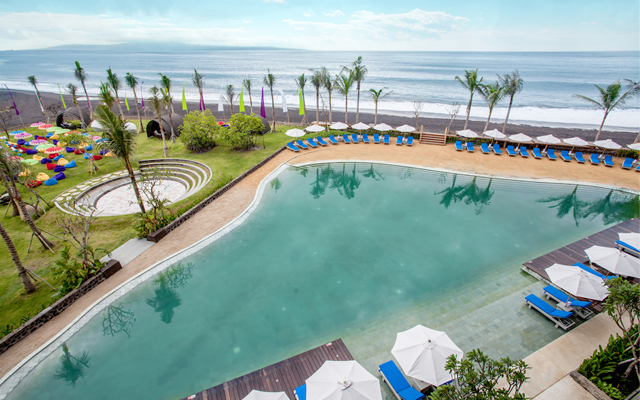
Beach Pool

The tranquility, black sand beach and well-appointed amenities make this upscale resort a blissful haven on an increasingly crowded island, finds Xinyi Liang-Pholsena 

Location Tucked along Bali’s east coast in the Klungkung regency, this Wyndham resort is currently the only international branded hotel in the vicinity, which is a blessing as the area doesn’t have the crowdedness or touristy vibe that characterise other popular beaches in Bali.

The low-rise resort calls lush paddies and duck farms its neighbours, and come evenings locals can be observed playing football or fishing on the carbon-coloured sands of Pantai Lepang.

From the Ngurah Rai International Airport, it’s at least a 45-minute drive to the resort but its location in eastern Bali makes it a convenient base for day trips into Ubud or the Batur and Agung mountains.

Room My 45m2 Deluxe Room – Ocean View looks out to a swimming pool and the Lepang Beach, with a terrace that affords a good vantage point for sunset viewing. The spacious brown-and-beige room is decidedly comfortable and elegant, with ornamental features like a rattan-woven floormat, puffy cushions and a striking decorative wooden panel.

The only fly in the ointment? The lack of an international-standard socket in the room, although that was quickly resolved with a call to the front desk and a travel adaptor was sent my way shortly.

Deluxe Room

F&B Food was scrumptious and serving sizes hearty whether it’s at the all-day dining restaurant Bumbu or the Jivva Beach Club. Owing to the lack of restaurants in the vicinity, we had most meals at the resort but the chefs did a commendable job of keeping our tastebuds satisfied throughout our two-night stay.

Our first meal, a late lunch at Jivva Beach Club, comprised spicy marinara pasta and the Jivva pizza topped with mozzarella and sambal matah relish, and were so yummy that we repeated these orders for our subsequent meals. With a lawn dotted with colourful beanbags, Balinese parasols and swaying palm trees, the beach club certainly offers a relaxing spot for lounging any time of the day.

Dinner at Bumbu was also an equally appetising and visually-pleasing affair, highlighted by ginger-infused beef carpaccio, French onion soup, king prawn and asparagus salad, and pan-seared barramundi.

Facilities The open lobby, surrounded by water, resembles a floating island and cuts an arresting feature for anyone visiting the resort. As well, the oceanfront resort’s two outdoor pools more than make up for the lack of swimming opportunity in the open sea – not advisable due to the big waves – with one tucked within the garden and the other fringed with real sand facing the ocean.

Beach Pool

The Thirta Spa and Wellness Centre comprises a cluster of eight thatched-roof cabanas. The massage was an absolutely soothing experience – between masterful strokes of my therapist and the sounds of waves crashing on the beach, it was too easy to drift into a state of oblivion.

Other facilities include a business centre, meeting rooms and gym. And with the legendary Keramas surf break just a five-minute-drive away, the resort also offers surf tours and lessons for guests.

Service Staff were friendly, always ready to offer a smile whenever they walked by. My husband and I had a great day out to Ubud and Mt Batur accompanied by resort concierge Goesmank, a Balinese native who shared many personal anecdotes along the way.

Verdict A serene retreat worth visiting to experience an idyllic Bali that is increasingly hard to find.

No of rooms 222
Rates From 1.2 million rupiah (US$89) a night
Contact details 
Tel (62) 366 543 7988
Email reservations@wyndhamjivvabali.com
Website www.wyndhamjivvabali.com