TTG Asia
Asia/Singapore Saturday, 27th December 2025
Page 1637

Brook becomes DOSM at InterContinental Hong Kong

0

Jeremy Brook has been appointed director of sales and marketing for InterContinental Hong Kong.

Originally from the UK, Brook has over 26 years of sales and marketing experience in the luxury hotel and travel industry, spanning across Europe, the US, China, Australia and South-east Asia.

He previously served as director of marketing at Peninsula Hotels for over a decade in Beijing and New York, and was with Starwood Group for almost a decade in various sales positions.

Brook’s other roles have included director of marketing at the Shangri-la China World Hotel in Beijing, vice president of sales and marketing for COMO Hotels and Resorts, and director of sales, Europe for Sandals and Beaches Resorts.

The new face of IRs

0

Asia’s integrated resorts are polishing their lifestyle facets and keeping them preened and Instagram-ready for millennials, as the younger generation becomes a potent consumption force. By Paige Lee Pei Qi, Rosa Ocampo, S Puvaneswary and Prudence Lui


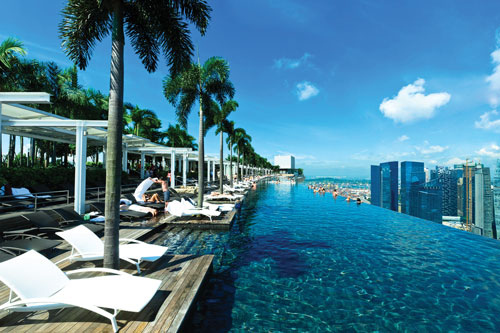
From left: Sands SkyPark at Marina Bay Sands; Soak Out Water Party at Universal Studios Singapore

Integrated Resorts (IRs), typically associated with casino-goers and families, are increasingly responding to millennial preferences. While IRs have different strategies to court this lifestyle-sensitive group, they can all agree that photogenic food, dynamic events and digital messaging are ways to the hearts of millennials.

Lures in F&B
“Dining is at the core of millennial culture today. With over 80 dining options across Marina Bay Sands (MBS) – from casual bistros along the waterfront promenade, to al fresco lounges atop the Sands SkyPark – we (aim to) satisfy this group who are always on the prowl for unique culinary experiences,” a spokesperson from MBS said.

“They also appreciate finer details when it comes to dining, from hospitality, finishing touches to the restaurant’s decor, right up to the produce that goes into what they eat,” the spokesperson added.

Similarly, a Resorts World Sentosa (RWS) spokesperson told TTG Asia that the newly earned Michelin stars at four of its restaurants, along with the Curate initiative (which features visiting Michelin-star chefs), appeal to millennials seeking the latest food trends and fine dining by renowned names.

Resorts World Genting (RWG) recognises the traction that international names and local cuisine have with millennial visitors. A spokesperson stated that established global brands at its new SkyAvenue mall such as Burger & Lobster and Motorino are popular with millennials, while those seeking authentic food and culture will enjoy its newly-opened Malaysian Food Street.

An event-loving crowd
RWG also holds regular activities such as concerts, live shows and festive promotions to attract millennials, which has gotten the thumbs up from Ally Bhoonee, executive director at World Avenues Travel & Tours.

“RWG has done the right thing by upgrading and refreshing their products. This will encourage repeat visitors and new ones, especially millennials who also form a key age group that Malaysia wants to attract,” Bhoonee said.

Also keeping entertainment offerings fresh is RWS in Singapore. A spokesperson said the resort “strives to create new, exciting and adrenaline-charged experiences across its attractions”.

Recent examples include the Soak Out Water Party, Halloween Horror Nights 7 and Santa’s All-Star Christmas in Universal Studios Singapore.

And at Resorts World Manila, its three bar and restaurants last November offered paid live viewing of the hyped boxing match between Filipino boxer Manny Pacquiao and welterweight champion Jessie Vargas.

Going digital
Where millennials are concerned, products may be key, but many IRs acknowledge that these are best taken advantage of when combined with digital strategies.

Samson Tan, CEO of GTMC Travel: observed: “We see IRs (using social media and technology). They are increasingly leveraging various social media tools to promote the latest offerings and drive the millennial crowd in.”

Indeed, through social media, MBS found that it has gained “strong clout over consumers’ decision-making process”, using “compelling imagery, trend and style tips, or content to win prizes” to connect with mobile-savvy millennials.

The potential doesn’t end there, as social media opens up opportunities for user-driven, organic and viral marketing.

“Being able to re-share our followers’ posts is a powerful means to empower them and encourage even more user-generated content – which in turn amplifies our share of voice in the world of social media,” said the MBS spokesperson.

Likewise, RWG was recently shown the power of viral marketing. It collaborated with ESL and provided the Arena of Stars as the venue for the ESL One Genting e-sports tournament (January 6 to 8), which “went viral” on social media and attracted 10,000 people, many of whom were millennials.

Charisse Chuidian, vice president – public relations, at City of Dreams (COD) Manila admitted that millennials are not a main target for its gaming facilities, but with some innovation and creativity, strategies can still be devised to engage this mobile-savvy segment and tap their influence.

“Millennials do play a role in spreading awareness for our hotel, restaurants and entertainment marketing. They are a great segment for brand awareness and we regularly offer online promotions to leverage on their ‘snap-happy’ market behaviour.”

The same applies for traditional gaming entertainment, as Chuidian highlights a millennial-targeted initiative to co-market the City of Games mobile app. The Slots and Baccarat mobile game allows players to earn real-world rewards that can be redeemed in COD Manila, COD Macau and Studio City.

For Sands China, which operates The Venetian Macao, Sands Macao and Sands Cotai Central, branding and marketing tends to be “more mass market”, a spokesperson said.

“We periodically undertake paid social campaigns for certain entertainment events/concerts if millennials are identified as a key market, but this is rare,” a spokesperson added.

Beyond promotions, RWS also caters to tech-savvy millennials with new payment modes. “Chinese visitors can make fast, secure and contactless mobile payments using Alipay – China’s largest mobile payment provider and global lifestyle app – at more than 200 RWS locations.”

Theme parks not exempt
Even IRs that have been chiefly appealing to the “young and young at heart” are not spared from keeping up with millennial trends.

Sean Choo, general manager of Sunway Lagoon, said: “Millennials travel solo or in small groups and do their research online before visiting a destination – it is important that we are ‘seen’ in all the online channels that millennials use to access information.”

He added: “We invite key opinion leaders such as bloggers, celebrities and artistes to visit our park, share their experiences and promote our brand… they have an influence on the decisions millennials make when choosing a holiday destination or place to visit.”

Not losing sight of more conventional tactics, Choo said the theme park – which is located close to a number of universities – have packages (e.g. Quacktastic Tuesdays and Terrific Thursdays) – to attract the price-sensitive student market.

As well, RWG expects its upcoming Twentieth Century Fox World theme park will be a “definite crowd puller, 
particularly among youths” when it debuts in 2H2017, the resort’s spokesperson stated.


This article was first published in TTG Asia March 2017 issue. To read more, please view our digital edition or click here to subscribe.

Too many beds in paradise?

0

Hoteliers in the Maldives are having a harder time filling up rooms amid a surge in new hotel openings and slowdown in arrival growth. Feizal Samath reports

A flurry of new resorts opening in the Maldives in recent years has brought new challenges to the lucrative tourism industry, as a supply glut outstrips demand and visitor arrival growth to put pressure on room revenues.

The accommodation supply has been steadily growing for the Indian Ocean nation. From 108 resorts and 23,936 beds in end 2015, the number of resorts in operation totalled 117 with 26,557 beds by end 2016. As well, there are nearly 400 registered guesthouses with a total of 5,600 beds as of November 2016.

“The ADR is significantly low and continues to drop. Resorts are not making money,” said a senior manager at a local resort chain, who declined to be named.

He added: “The influx of tourists three years ago has dissipated while the rooms to match that (earlier) demand are only now coming on stream.”

Nearly 1.2 million arrivals were recorded in January-November 2016, up 4.6 per cent from the same 2015 period. This presented a sharp picture of contrast from the double-digit growth three years ago when the one million arrivals in January-November 2013 translated into a 17.8 per cent hike from the same 2012 period.

This growth slowdown comes as no surprise to Mario Hardy, CEO of PATA. “When I ask friends and family members about the Maldives, the following words comes to mind: beautiful island paradise, turquoise water and expensive. I am not surprised that the country is witnessing growth of only three to four per cent because these words could represent any number of island destinations – some of which are very close by,” he remarked.

Still, Maldivian deputy tourism minister Hussain Lirar believes it is not all gloom and doom for a destination that remains aspirational for many in the region.

“Too many beds? I don’t think so. In fact, in December there was a shortage of rooms,” he said, while conceding that more destination marketing may be required when newer properties launch.

Abdulla Ghiyas, president of the Maldives Association of Travel Agents & Tour Operators, also maintains that an increase in promotional budgets will help the destination ride out this oversupply storm as well as the political uncertainty that has embroiled the country in recent times.

While political instability has led arrivals from China, the country’s largest source market, to tumble 10.2 per cent to 308,077 in January-November 2016, Krishan Balendra, executive director at Colombo-based John Keells Holdings, which owns three Maldivian resorts, expects a swift recovery from the Chinese market. “Some markets like China are very sensitive to political developments,” he said.

Industry players remain sanguine of the Maldives’ prospects. Thomas Meier, senior vice president operations-Asia at Minor International, said: “In the tourism industry it’s not unusual to see growth cycles. The Maldives has experienced a number of years of continued growth, so it’s certainly not uncommon to see a softening of the market,” he said.

Likewise, Shabeer Ahmed, chairman of Coco Collections, opined that falling room rates and occupancies over the last two years are just part of a cycle that every business experiences.

The key for owners, he stated, is to prepare the right strategy when the business cycle improves, adding that there is good reason to believe that the market for the Maldives is growing.

Looking ahead, new names entering the hospitality scene this year include Four Seasons Private Island Maldives at Voavah, the world’s first exclusive-use UNESCO hideaway on a secluded island with just 22 rooms, as well as the newly opened St Regis Maldives Vommuli Resort and Hurawalhi Island Resort (see page 26), all of which are expected to enhance the destination’s strength in commanding a premium upwards of US$1,000 a night at top resorts.

The destination also attracted a record number of 40 private jets in December, carrying the likes of superstar David and Victoria Beckham for their New Year’s Eve party in the Maldives.

Unfazed by the room influx, John Keells Holdings’ Krishan thinks that new resort openings will, on the contrary, instil further market confidence in the tourism sector. “It also ensures the incredibly high level of standards at the resorts,” he said. “Competition is healthy.”


This article was first published in TTG Asia March 2017 issue. To read more, please view our digital edition or click here to subscribe.

A haven with a troubled image

0

Despite its rich cultural and natural offerings, negative perceptions of Mindanao as a conflict zone remain a major roadblock for its tourism ambitions, finds Rosa Ocampo

Mindanao, the southernmost  major island in the Philippines, still remains sidelined by tourists due to safety and security concerns, but the trade feels this stigma stems from misinformation and seeks concerted efforts from the government and private sector to overturn the negative perception.

The foremost issue lies in addressing the prevalent safety and security concerns, stated Angel Ramos Bognot, president and managing director of Afro Asian Travel and Tours, and suggests Mindanao to take a leaf from Palawan’s book.

Rocked by a high-profile kidnapping at one of its resorts in 2001, Palawan has recovered from the incident and gained global renown as a premiere beach destination after giving focus on security measures put in place, she added.

As well, Ramos Bognot added that Mindanao should have highlighted the Japanese prime minister’s recent visit to Davao as well as the authorities’ preparedness for emergencies and safety measures that were implemented.

Although Rajah Tours offers tour packages to Davao, Cagayan de Oro and Siargao, its president Jogo Clemente sees “trepidation from some partners as their governments have travel advisories issued against Mindanao”.

Therefore, besides the need for the authorities to establish peace and order in Mindanao’s troubled spots, Clemente also underscores the vital role of the private sector.

“Mindanao has had its troubles and this is the biggest obstacle in offering it as a viable tourist destination. To change that perception, it is important to highlight what’s good about it and play up its attractions,” said Clemente.

“We must do a better job of explaining (to clients and partners) where these safe and enjoyable places (in Mindanao) are in contrast to where the troubled areas are,” he elaborated.

For Luxus Pacific Travel and Tours, which has not been getting clients to Mindanao, reservations manager Jovy Caldejon remarked that it would help if media reports about the island were less sensationalised and indicate that the violence usually takes place far away from the cities.

While not denying that certain areas of Mindanao had suffered from war and violence, a greater part of the island boasts unspoiled natural beauty, a multicultural society and rich heritage, but the island’s development was neglected by the central Philippine government in the past due to its geographical distance from Manila, a trade member pointed out.

Although Mindanao’s stigma has also affected peaceful areas nearby, such as Davao, that looks set to change as both Philippine president Rodrigo Duterte and tourism secretary Wanda Tulfo Teo hail from Davao, priority is finally being given to build infrastructure and promote Mindanao.

Meanwhile, Butch Blanco, tourism director of region IX in western Mindanao, has plans to develop Zamboanga, Dipolog and Dapitan as new tourism hubs by rolling out initiatives such as putting security personnel on alert to assure travellers that the areas are safe, building connectivity to Manila and improving airports.

As Mindanao is home to a sizeable Muslim population, Ramos Bognot feels that the Middle East and neighbouring Muslim countries can be developed as primary source markets for the destination. Europeans too will also make a good market to invest in as they are interested in culture, cuisine and beaches, something Mindanao has in abundance.

To develop Mindanao, she advocates ASEAN’s open skies policies to extend to the BIMP-EAGA (Brunei-Indonesia-Malaysia-Philippines East ASEAN Growth Area), which will drive connectivity from the neighbouring countries and increase foreign tourists to Mindanao.

And if people realise the value that tourism brings to livelihoods and the economy, perhaps the troubles in parts of Mindanao would cease, opined Clemente.


This article was first published in TTG Asia March 2017 issue. To read more, please view our digital edition or click here to subscribe.

Airbnb takes Trips to Singapore, Bangkok

0

Following its global debut last November, Airbnb’s tours and activities platform Trips has now made its way into South-east Asia, officially launching in Singapore earlier this week followed by Bangkok yesterday.

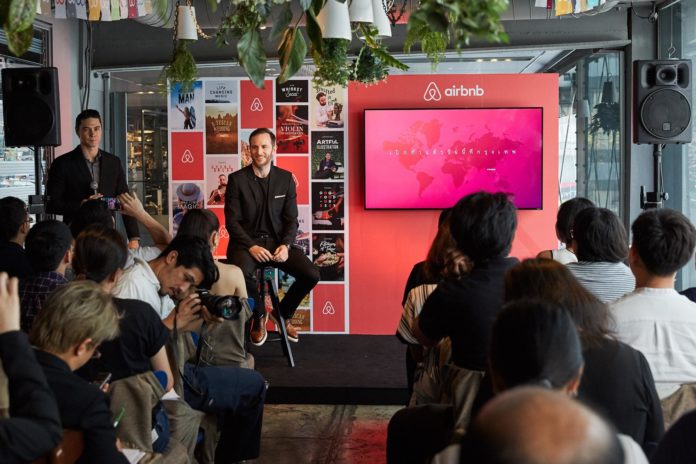
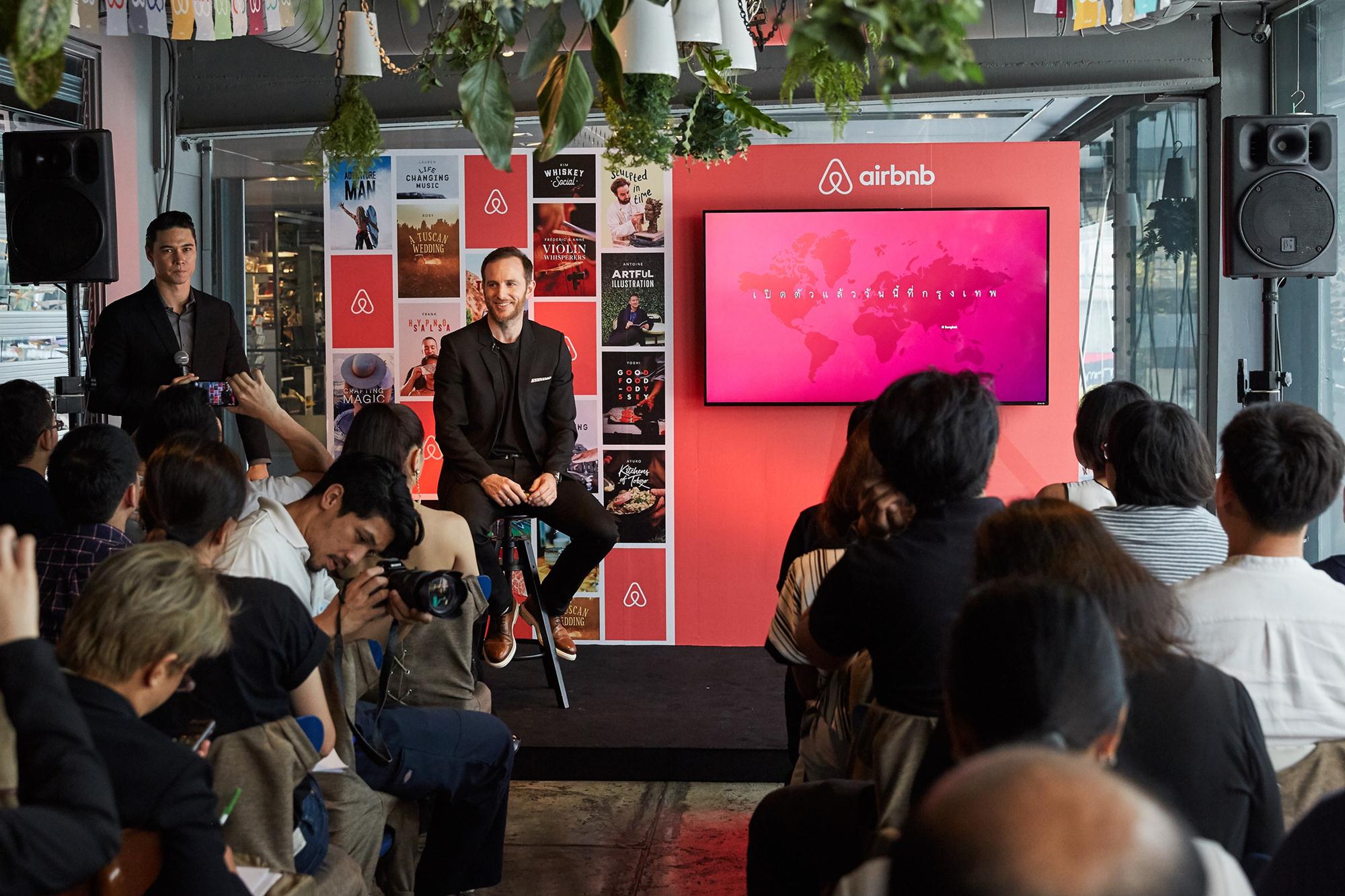
Mass tourism has resulted in a “disconnect between (travellers) and the community”, so Trips can bridge this chasm by offering “experiences that cannot be found in guidebooks”, said Airbnb’s chief product officer Joe Gebbia, one of its three co-founders who visited Singapore and Bangkok this week to launch Airbnb Trips in both cities.


Joe Gebbia launching Airbnb’s latest evolution – Trips – in Bangkok yesterday

The home-sharing giant now boasts three core offerings – Homes, Experiences and Places – although Trips is envisioned as “complementing home experiences”, pointed out Gebbia. Places are recommendations from Airbnb hosts, neighbourhood insiders and local influencers in a destination, providing travellers with access to a city’s hidden gems and events.

With its foray into tours and activities space, Airbnb’s ambitions to become a vertical player in the travel industry is becoming more apparent than ever.

“We foresee a vertical integrated system, building things on top of each other,” added Gebbia.

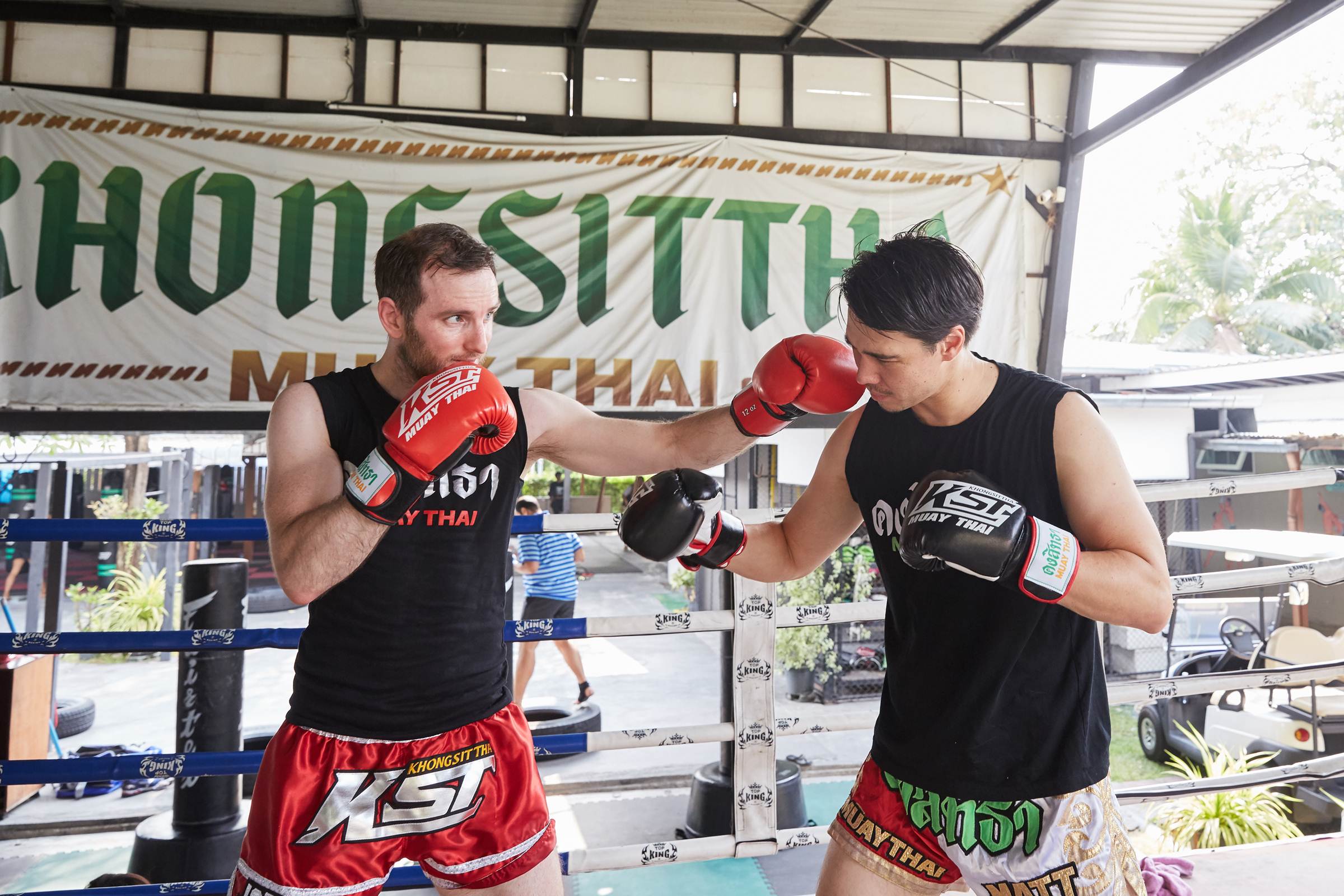
Experiences in Singapore include making soon kueh (turnip dumplings) with a hawker and making pottery at a family-run pottery with wood-fired dragon kilns. In Bangkok, a muay thai immersion with official master of ceremonies Matthew Deane, Thai fruit carving and making cocktails using traditional Thai ingredients are among the Experiences being offered.

Airbnb now offers 800 Experiences across 13 cities worldwide – including Singapore, Bangkok, Tokyo, Seoul and Sydney in Asia-Pacific – and is expected to be rolled out to 50 markets within this year.

In particular, Asia is seen as a high-potential market for Airbnb Trips. “Asia has the greatest potential over Europe and North America because these (latter) markets want to experience Asia,” said Gebbia.

“Thailand is already growing by leaps and bounds for Airbnb, so we expect cool experiences to be a future draw, offering reasons for visitors to come to Thailand and for people in Thailand to earn additional income,” he added.

But like Homes, Airbnb’s envisioned growth on its Trips platform could face regulatory challenges in South-east Asia. Singapore recently made it illegal for short-term rentals of lesser than six months, while Airbnb is still considered illegal by the Thai authorities. As well, in both countries, tour guiding is a profession that requires a license.


Gebbia with Matthew Deane, host of an authentic Muay Thai Experience in Bangkok

“We don’t foresee any headwinds. Regulatory challenges vary from country to country… We are working closely with local governments,” Gebbia maintained, appearing to sidestep the regulatory roadblock issue that has dogged the company in many cities when questioned by TTG Asia.

He added that Airbnb will respect the laws and regulations in each city and also provide registration and licensing of its local experts if needed. “The sharing economy is here to stay. The genie’s out of the bottle.”

Ensuring quality, consistency of standards and insurance and safety are other issues that Airbnb potentially has to grapple with as it scales up, although Gebbia insists that the company’s five-point checklist for Trips and nine-point checklist for Homes will be adequate.

Hosts are also offered training and those who receive negative feedback will be evaluated and asked to leave if they do not meet Airbnb’s standards for being hosts, he elaborated.

When asked about the company’s upcoming developments in the future, Gebbia declined to divulge further although he hinted that Airbnb could next enter the transportation arena. “A lot can happen in 10 years. Airbnb didn’t even exist 10 years ago,” he emphasised.

And is a much-rumoured IPO nearing for Airbnb, since it closed US$1 billion in its latest funding round? Gebbia insists that going public is “not in the cards”. He added: “We are focused on building Experiences and Trips now.”

New hotel openings: March 13-17, 2017

0

The latest hotel openings and announcements made this week

ibis Saigon Airport
Located five minutes from Ho Chi Minh City’s Tan Son Nhat International Airport, the 282-room ibis Saigon Airport offers 62 studios, as well as one- and two-bedroom serviced apartments with fully-equipped kitchenettes. All rooms are soundproofed and come with ibis’ signature Sweet Bed and black-out curtains. Amenities include an all-day dining restaurant, a rooftop bar, grand ballroom, gym, swimming pool and sauna rooms.

Radisson Blu Atria Bengaluru
The 167-key property has opened in the capital of India’s southern Karnataka State. A 10-minute drive from the City Railway Station, facilities available include four F&B options, a business lounge, business centre, swimming pool, spa and fitness centre. For conferences or meetings, the hotel offers over 1,250m² of space across its six meeting spaces and two boardrooms.

Sage Hotel James Street
The four-storey warehouse-turned-hotel stands in Brisbane’s Fortitude Valley on James Street, located three kilometres from the city’s CBD. The property features 93 rooms across four configurations, while amenities include complimentary Wi-Fi in rooms, an event and function space, a café, deli and boutique wine cellar.

The Oberoi Sukhvilās Resort & Spa, Siswan Forest Range, New Chandigarh
The property sits at the foothills of the outer Himalayas in northern India, surrounded by more than 3,237ha of protected natural forest. The resort offers 60 guestrooms, tents and villas, all of which are equipped with Oberoi E’nhance – an interface which allows guests to perform functions such as watch movies, adjust the air-conditioning and order room service. There are three F&B options, an Ayurvedic spa, a fitness centre, swimming pool and a 311m2 ballroom which can be divided into two.

Trump’s new travel ban blocked

0

Federal judges in Hawaii and Maryland have ruled against US president Trump’s latest ban on travel from several Muslim-majority countries from going into effect, questioning the legality of the executive order.

The new travel ban, which is narrower and would affect six countries with Iraq removed from the list, was blocked mere hours before it was scheduled to launch on Thursday midnight.

The first executive order, implemented in January with little warning, caused massive confusion and disruption around the travel world.
Data from travel intelligence company ForwardKeys has shown that travel to the US have been affected by Trump’s travel bans.

Asiatravel.com products now available at Philippines’ M Lhuillier stores

0

Singapore-based OTA Asiatravel.com and M Lhuillier Financial Services have inked an agreement to make travel easier and more accessible for travellers in the Philippines.

The deal will enable consumers to enquire, book and pay for Asiatravel.com travel products at M Lhuillier’s 2,000-plus stores throughout the Philippines.


(From left) M Lhuillier’s Michael Lhuillier and Asiatravel’s Nikki Rocha

Asiatravel.com will power a travel website for M Lhuillier and its travel specialists will train staff in the financial services company’s stores on how to serve customers’ travel enquiries and process bookings.

Nikki Rocha, Asiatravel’s executive vice president for the Philippines, Hong Kong and Thailand, said: “Unlike in the past, travel products were only more accessible in the cities or areas close to the cities. This partnership is extending our reach to the Filipinos not just to those with access to the Internet or with credit card, but to everyone even in the remote areas of the Philippines.”

Cathay Pacific suffers first annual loss since 2008

0

An excess of capacity, slumping business travel demand and intense competition with rival airlines have led to Cathay Pacific Airways seeing its first full-year loss since the 2008 global financial crisis.

The airline reported an attributable loss of HK$575 million (US$74 million) for 2016, down from the HK$6 billion profit in 2015.

Passenger revenue decreased 8.4 per cent from 2015 to HK$66,926 million in 2016. Capacity grew 2.4 per cent on the back of new routes and increased frequencies, but the load factor dropped 1.2 percentage points to 84.5 per cent while yield fell 9.2 per cent to HK54.1 cents.

Fuel is still the group’s most significant cost, accounting for 29.6 per cent of total operating costs in 2016, compared with 34 per cent in 2015. After taking hedging losses into account, the fuel costs decreased by HK$5 billion (or 15.2 per cent) from 2015.

In response to weak revenues, Cathay Pacific will embark on “a three-year programme of corporate transformation” to seek profitability, announced Cathay Pacific’s chairman, John Slosar, in a press statement.

The airline chief also expects the operating environment in 2017 to remain “challenging” as strong competition and a strong Hong Kong dollar will continue to put pressure on yield.

Royal Caribbean to build new cruise terminal in the Western Visayas

0

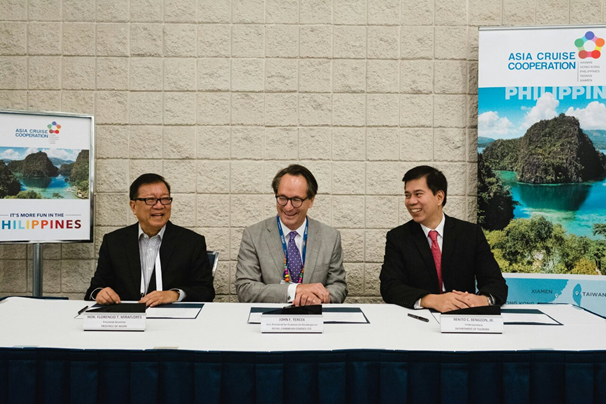
The Philippine Department of Tourism, Province of Aklan and Royal Caribbean Cruises (RCCL) have sealed a partnership to construct a purpose-built cruise ship terminal in the Western Visayas’ Caticlan or Boracay.

The agreement, signed on the sidelines of the Seatrade Cruise Conference (SCC), will see the Miami-based global cruise company provide all the necessary technical and financial support. It is still under negotiation whether the expected homeport for RCCL will open to other commercial vessels as well.


(From left) Province of Aklan’s Florencio Miraflores; Royal Caribbean Cruise’s John Tercek; and Philippine Department of Tourism’s Benito Bengzon, Jr

Said DoT undersecretary Benito Bengzon, Jr, who headed the Philippine delegation at the SCC: “We are seeing a major shift in the major cruise market. There will be more ships to be deployed in South-east Asia, and we are hoping that the Philippines will get more than its fair share of the market.”

As well, he added that the extended deployment of a number of large cruise ships to the country is a crucial factor in positioning the Philippines as a compelling and attractive value-for-money transit port.

Following Puerto Princesa and Manila, Boracay is the Philippines’ third largest cruise destination with 29 calls over the last four years.

International cruise calls to the Philippines have been growing at an average 27.8 per cent over the past four years, from 56 calls in 2014 to 70 calls in 2015 and 72 calls in 2016. This year, the Philippines expects over a hundred port calls bringing in an estimated 122,000 cruise passengers.