TTG Asia
Asia/Singapore Saturday, 27th December 2025
Page 1630

Monks now GM at Sunway Putra Hotel Kuala Lumpur

0

Michael Monks has been named general manager for Sunway Putra Hotel Kuala Lumpur to oversee the overall operations and business growth at the 650-room hotel.

A Kenyan-born British national with over 35 years of hospitality industry experience, Monks joins Sunway from his previous position as general manager of the Crowne Plaza Xi’an in China.

Prior to that, he was general manager in Shangri-La’s Fijian Resort & Spa, Shangri-La’s Golden Flower Hotel Xi’an, Shangri-La Hangzhou and Traders Hotel Manila, Philippines.

He also has experience as lead consultant in environmental, eco-hotel and tourism projects in Guyana, Seychelles and the Maldives.

A ‘toned down’ Songkran drenches Khao San business

0

Business operators on Khao San Road are bracing for a subdued Songkran this year after the Bangkok Metropolitan Administration requested for entertainment and festivities to be toned down during Thailand’s annual Water Festival from April 13 to 15, in observance of the passing of the Thai king Bhumibol Adulyadej.

The director of Phra Nakhon district, which oversees Khao San Road, reaffirms that traditional water sprinkling and merit-making will be permitted but disallows beauty pageants, water-gun and powder fights, sexy attire and alcohol. The backpacker street is traditionally a popular spot for Songkran celebrations in Bangkok.

Thammarat Rattanaphibal, general manager of the 76-room Buddy Lodge Hotel on Khao San Road, believes that guests, a majority of which hail from Europe, will make cancellations upon knowing the latest policy and move elsewhere in the city for celebrations.

On the other hand, Benchawan Pholpituke, manager of Mama Travel & Tour, thinks that tourists will understand the situation in Thailand and still buy tours from her company.

The Khao San-based agency has started informing customers about the toned-down Songkran celebrations this year so that they will come without expectations and have time to adapt their travel itineraries.

Meanwhile, a Bang Rak district officer that TTG Asia spoke with at press time could not confirm if Silom Road will continue its Songkran festival celebration this year.

Prasartpon Aksharamat, general manager of Silom Village, reckons that Silom Village will not be affected and is expecting to welcome more customers as usual.

Still room for traditional agents in digital age: Indonesian trade

0

Many travel agents in Indonesia remain unwavering in their beliefs that there is still room for growth in the offline space, even as the country’s tourism chief warns of competition from OTAs and emerging players like Airbnb and Uber in an increasingly connected digital landscape.

“I would like to warn the travel companies in Indonesia that if you all do not transform your business to the digital platform, I assure you that one day your customers will leave you,” said Arief Yahya, Indonesia’s tourism minister, at the opening of ASTINDO Travel Fair in Jakarta last weekend.

“You have little choice. Even (some) big international travel companies have gone bankrupt because they were too late in anticipating the customer behaviour,” he cautioned.

For travel companies, especially the smaller ones, that lack resources to digitalise their businesses, Arief said they have available to them the Indonesia Travel Exchange, a free online platform belonging to the ministry, while ASTINDO members can utilise the ASTINDO Hub platform.

Despite the growing trend of customers booking online, Rudiana, director of sales of WITA Tour and ASTINDO board member, thinks it’s still a long way to go before Indonesians will “embrace the digital world totally”.

“Many Indonesians, including the haves and digital savvy, still like to rely on travel consultants for their trips. They find it troublesome to search and compare products online themselves,” he added. “What we need to do in Indonesia is to become digilog, maintaining our analogue system and embracing the digital system at the same time.”

Royanto Handaya, CEO of Panorama Tours Indonesia, said: “I believe that the number of outbound travellers who book through (offline) travel companies will continue to grow, as travellers, apart from the affordable prices, seek seamless experiences.”

While OTAs provide instant confirmation, travellers still need consultants to change bookings, hotels or even their itineraries during a trip, Royanto added.

Furthermore, travellers flocking to travel fairs and queueing to buy holiday packages is a sign that offline travel consultants are still in demand, according to Royanto.


AccorHotels in talks to buy events company Potel & Chabot

0

AccorHotels and Edmond de Rothschild Investment Partners are now at the negotiation table to acquire Potel & Chabot Group, a French company specialising in high-end corporate and major events.

The proposed transaction will see Edmond de Rothschild and AccorHotels respectively holding 51 per cent and 40 per cent of the share capital.

This transaction will also provide Potel & Chabot to leverage AccorHotels to jointly develop new F&B offers for MICE and local guests through personalised concierge services.

Founded in 1820, Potel & Chabot generates revenues in excess of 100 million euros (US$107.5 million) and counts key events such as the French Open at Roland Garros, the Biennale des Antiquaires, 24 Hours of Le Mans and the Saut Hermès among its portfolio.

The group also has the exclusive management of venues in Paris – Pavillon Vendôme, Pavillon Seine, Pavillon Kléber, Pavillon Gabriel, Hôtel d’Evreux, Pavillon Cambon Capucines and Pavillon Dauphine.

Starwood Capital, Shimao announce China hotel venture

0

Chinese real estate developer Shimao Property Holdings and Starwood Capital Group will establish a new hotel joint venture based in China.

The joint venture, which will be owned 51 per cent by Shimao and 49 per cent by Starwood Capital Group, plans to focus on developing, operating and branding assets via management contracts and leasing agreements.

Starwood Capital Group will also provide financial and operational support for Shimao Hotels and Resorts’ future hotel expansion plans in China and other key Asia-Pacific regions, particularly markets that have witnessed unprecedented levels of Chinese arrivals.

By catering to the value-conscious yet increasingly discerning Chinese traveller seeking a differentiated lodging experience, the partnership’s ultimate goal is to develop one China’s most recognisable hotel companies.

“The close cooperation with Starwood Capital Group will help our growing hospitality platform and exciting new brands take advantage of the tremendous opportunities that exist in China, allowing the group to fulfill its potential,” said Tyrone Tang, general manager of Shimao Hotels and Resorts.

“The joint venture will focus on maximising the benefits that can be derived from the intangible assets, consolidating the group’s sustainable commercial development while ensuring profitability, and providing the most effective support for partners.”

Starwood Capital has invested in approximately 2,900 hotels since its inception. The firm created and built Starwood Hotels & Resorts into the largest hotel company in the world before exiting its stake in the company.

Dusit’s new JV brings Colours to Japan hospitality scene

0

Thai hospitality company Dusit International has come together with Colours International, operator of the E-Hotel chain in Japan, to launch a new joint venture Dusit Colours.

Dusit Colours aims to develop and operate Dusit-branded hotels and hotel management related education in Japan. As part of the agreement, both companies will work closely to develop a distinctive hotel franchise model formed by the best of Thai and Japanese hospitality cultures and traditions.

The joint venture company will explore opportunities in several major Japanese cities, including Kyoto, as candidate sites for hotels under Dusit International’s five-star Dusit Thani brand, and other Dusit hotel brands, including dusitD2, DusitPrincess, and Dusit Devarana.

Suphajee Suthumpun, group CEO of Dusit International and director of Dusit Colours, said: “In the next three years we aim to broaden our portfolio to have more than 50 per cent of our operations outside Thailand, and entering key markets such as Japan will be essential to reaching this goal.”

Dusit International owns 49 per cent of the company, while Colours International owns 51 per cent.

American Airlines takes stake in China Southern

0

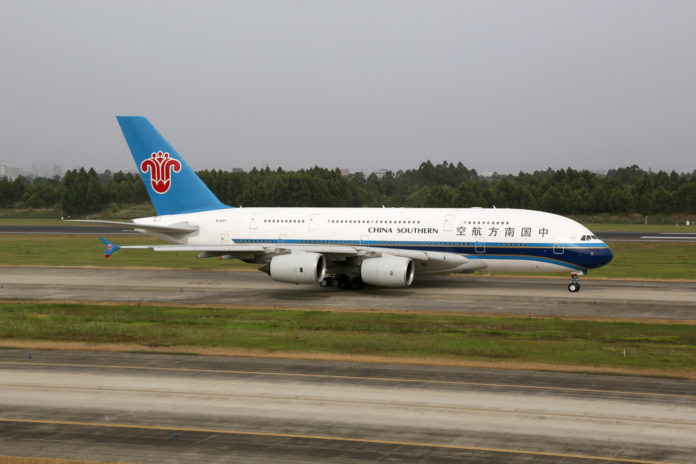
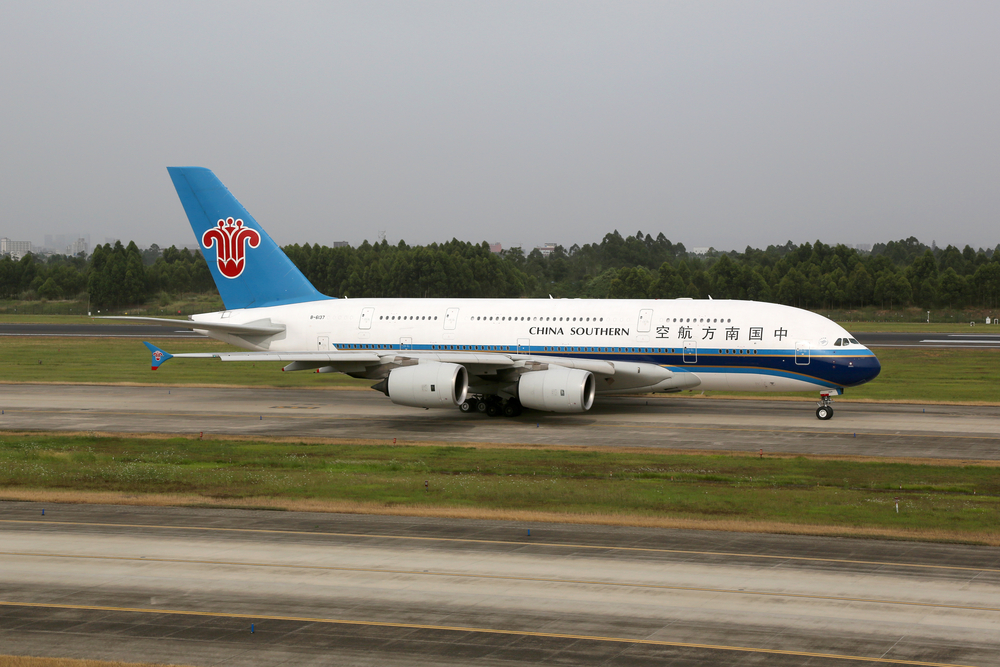
American Airlines has announced a US$200 million equity investment in China Southern Airlines, representing 2.76 per cent stake, which will see the two begin codeshare and interline agreements later this year.

“China Southern’s extensive network within China touches developing and thriving markets that only a Chinese carrier can reach,” said Robert Isom, president of American Airlines.


China Southern Airlines

“We are two of the biggest carriers in the world, and our networks are highly complementary, with the potential to offer China Southern and American customers an unmatched range of destinations in two critical markets for business and leisure travellers.”

China Southern’s chairman, Wang Chang Shun, also expects the relationship “to better connect two of the world’s largest aviation markets and leading economies”.

China Southern’s primary hub is located in Guangzhou with the majority of its transpacific flights positioned there, while American flies to Beijing and Shanghai from its hubs in Chicago, Dallas Fort Worth and Los Angeles.

With the codeshare, American customers will be able to access nearly 40 destinations beyond Beijing and more than 30 destinations beyond Shanghai. China Southern customers will gain access to almost 80 destinations beyond Los Angeles, San Francisco and New York’s Kennedy Airport in North and South America.

American currently offers daily service from Dallas Fort Worth to Hong Kong, Beijing and Shanghai; Los Angeles to Hong Kong and Shanghai; and Chicago to Beijing and Shanghai. All flights to Beijing and Shanghai are operated on its Boeing 787-8 Dreamliner, while its Hong Kong flights are operated using its flagship Boeing 777-300.

Hilton to plant a DoubleTree in Laos

0

Hilton has signed a management agreement with TPD Company, a subsidiary of Laos’ TK Group, to manage the 160-room DoubleTree by Hilton Vientiane scheduled to open in early 2020.

DoubleTree by Hilton Vientiane will mark the group’s entry into Laos and the brand’s debut in the capital city.

Located on the intersection of Rue Setthathilath and Rue Manthatourath, the property is close to That Dam, an iconic stupa in the city centre, and attractions such as the Presidential Palace, Sisaket Temple and Lao National Museum. Local markets, such as the Talat Sao Morning Market and Riverside Night Market, are also easily accessible from the hotel.

Shangri-La, Taj extend Warmer Welcomes to each other’s loyalty members

0

Shangri-La Hotels and Resorts and Taj Hotels Palaces Resorts Safaris have integrated their respective Golden Circle and InnerCircle loyalty programmes with the Warmer Welcomes partnership, following their strategic alliance that was announced last November.

Members of both loyalty programmes will receive reciprocal benefits and the opportunity to earn their preferred loyalty currency for stays at any of the 200 Shangri-La or Taj property located in 131 destinations across the globe.

Pudong Shangri-La East Shanghai

To celebrate its debut, Shangri-La is rewarding Taj InnerCircle members staying at Shangri-La with triple Taj Inner Circle Points (TIC Points). Similarly, Shangri-La Golden Circle members staying at a Taj property will receive triple Golden Circle Award Points (GC Award Points). This is valid from now through June 30, 2017.

Shangri-La Golden Circle and Taj InnerCircle members who wish to take advantage of the inaugural offer must first link their account at the respective programme’s website for automatic status matching. Shangri-La’s Diamond members are aligned with Taj’s Platinum membership level, while Golden Circle Jade members are awarded Gold status of the Taj InnerCircle programme.

Electronics ban not an effective, long-term solution: IATA

0

IATA is calling on governments to find alternatives to the electronic bans issued by the US and the UK, which it says cause serious “commercial distortions”, and to practise better information-sharing so as to more effectively fight terror threats.

“The measures are not an acceptable long-term solution to whatever threat they are trying to mitigate. Even in the short term it is difficult to understand their effectiveness,” said Alexandre de Juniac, IATA’s director general and CEO.

“The commercial distortions they create are severe. We call on governments to work with the industry to find a way to keep flying secure without separating passengers from their personal electronics,” de Juniac urged. “Governments must act quickly,” he added.

In his speech to the Montreal Council on Foreign Relations, de Juniac also highlighted the need to maintain public confidence in the security of the global aviation industry, which operates 100,000 flights a day on average.

The bans were reportedly imposed after the US and UK received intelligence on explosives being concealed in laptops.

De Juniac stressed: “While governments have the primary responsibility for security, we share the priority of keeping passengers, crew and aircraft secure. To do that effectively, intelligence is king. And it needs to be shared amongst governments and with the industry. It’s the only way to stop terrorists before they get near an airport, let alone aircraft.”

However, he made clear that airlines are not seeking access to state secrets, but to understand the outcome governments want.

Challenges to aviation security were highlighted in Resolution 2309 of the UN Security Council which tasked the International Civil Aviation Organization (ICAO) to develop a Global Aviation Security Plan, for which de Juniac said “states need to lend their full support”.

And in May, ICAO member states will consider amendments to Annex 17 of the Chicago convention that would require information sharing. “The security experience of recent years should compel states to support this,” de Juniac reiterated.