TTG Asia
Asia/Singapore Sunday, 14th December 2025
Page 1602

Wanted: more Singaporean tourists in the Philippines

0

With an eye on growing Singapore into a bigger visitor source market by attracting the niche as well as repeat segments, the Philippines’ Tourism Promotions Board (TPB) conducted a sales mission in the city earlier this week to introduce fresh destinations to outbound agents.

In 2016 Singaporeans made up just 2.9 per cent of arrivals to the Philippines, a dismal number for the TPB, which has set up its 2017 aim to grow the figure to 3.1 per cent, an increment of 7,000 arrivals. This, according to TPB’s deputy COO, marketing and promotions Maricon Ebron, was “easily achievable, particularly if we get the meetings market”.

She elaborated: “We’re trying to position the Philippines to appeal to the Singapore MICE market. Singapore is so near us, we can probably lure some of the MNCs to come to the Philippines to hold their board meetings. But this is just one of the few segments we are targeting.”

The TPB is promoting new destinations like Legazpi; Cagsawa church ruins with Mount Mayon volcano in the background

Other niche segments the TPB hopes to lure include golfing, diving, adventure sports like mountain climbing, and marine-based activities such as game-fishing and surfing.

When asked how those segments can be translated into visitor numbers, Ebron shared: “We have to keep on advertising online and offline, and getting the right people – like the golf and dive segments – to notice. We’re also introducing new activities such as surfing; I’m sure there’s a market in Singapore for that as people diversify their interests.

Conducting regular sales missions, attending tradeshows as well as organising fam trips for both agents and bloggers are ways the TPB has identified to raise awareness of the Philippines, she added.

As well, she notes that repeat visitors from Singapore is another segment the TPB wants to tap, especially as the country is seen as a prime market source within South-east Asia, thanks to its stronger currency and relatively advanced economy.

Select Travel Services’ director, John Emsermann, agreed: “The Philippines is very affordable for Singaporeans, and is a place where five-star hotel rates begin at US$90… A lot of Singaporeans have not been to the Philippines, and the market is huge.”

Emsermann hence wants to “use a variety of entertainment, from shopping to soft adventure, and the proximity of the country to lure Singaporeans”, who are usually FITs who are sophisticated and educated.

The TPB is also promoting new destinations such as Palawan’s Puerto Princessa, and Legazpi in the Bicol region. Both destinations recently had their main airports upgraded and expanded, and can now accommodate direct flights.

National carrier Philippine Airlines also plans to support the TPB’s aim to grow arrivals from Singapore.

Marie Jemma Saranillo, country manager Singapore/Indonesia/Malaysia, Philippine Airlines, shared: “We will come up with competitive fares as Singapore is a price-driven market. We will also promote the Philippines through promotional tie-ups with the private sector such as hotels and travel agents, as well as create in-house packages.”

UAE grows in stature as a holiday destination for SE Asians

0

Inbound agents from the UAE observe a growing trend for the emirates in becoming a mono-destination, rather than a transit hub for South-east Asian visitors on their way to Europe or elsewhere in the Middle East.

Dubai-based Cozmo Travel’s sales manager – holidays, Arnold D’Souza, estimates a 20 per cent year-on-year growth in mono-destination holidays from Malaysia and 10 per cent from Singapore.


Camel on Dubai beach and skyscrappers in the background

“We have seen a growing trend (from Malaysia) over the last two and a half years. In the past, Dubai was a transit stop (one- to two-night stay) for Malaysian Muslims going for Hajj or on their way to Europe. Now their stays have lengthened to four nights or more.”

The trend became apparent in the Singapore market more recently last year. “We see interest from the (Singapore) FIT family segments who are willing to spend five to six nights in Dubai alone,” continued D’Souza.

While the increase in Singapore was spurred by new theme parks and iconic attractions such as Burj Khalifa and The Dubai Mall, D’Souza notices that Malaysians and Singaporeans are now developing a taste for experiential tours with culture and history components.

Hana El Khanagry, managing director of MyWay Tourism in Dubai, notices mono-destination travel catching on among leisure and incentive groups.

“They travel beyond Dubai and Abu Dhabi to visit other parts of the emirates such as Sharjah and Fujairah. The attractions for Sharjah lie in the culture, food and architecture, while in Fujairah it is the beaches and culture.”

Meanwhile, also boding well for the destination are direct flights from Brunei by Royal Brunei Airlines and free visa-on-arrival since September 2016 for the Chinese.

China Comfort Travel Group Qingdao’s overseas development manager, Zhang Xuehao, expects the latter – who typically stay for five to six days – to boost leisure bookings to the emirates by at least 50 per cent this year.

Totalstay sharpens focus in Asian wholesale accommodation space

0

UK-based JacTravel’s wholesale accommodation website for agents, www.totalstay.com, is broadening its focus across Asian markets, having ventured into the region last year.

Ben Wood, regional head of sales – Asia-Pacific, JacTravel, said: “We see Asia as a big market of growth, which is why this region is a key focus for JacTravel. We are growing the brand across Asia-Pacific and continue to recruit staff and build our regional sales, contracting and operation teams in Asia Pacific.

Ben Wood

“It helps that through word-of-mouth marketing – a powerful tool in this region – we also have agents now in Taiwan, the Philippines, Thailand and Singapore using our hotel booking platform,” he added, acknowledging the “extremely competitive market space with an ever-increasing number of suppliers” in the travel distribution landscape.

Paul Hastings-Gayle, sales director, JacTravel, added: “We found that our growth and success has been achieved by localising our offerings, both in terms of hotel product and regional personnel. We have been able to grow sales by offering competitive prices and strong availability in key regional destinations, such as Japan, Hong Kong and Thailand.”

While a relatively new entrant to the Asian market, Totalstay has been established in Europe since 2003 and now has an inventory of over 165,000 hotels across 10,000 destinations worldwide.

In Asia, the service and support centre, alongside the sales, accounts development and contracting teams, are based in Hong Kong. There are also sales teams on the ground in Thailand and Malaysia.

Dusit to set up first Himalayan resort outpost in Nepal

0

Dusit International will introduce the Dusit brand to Nepal with a mountaintop resort near Dhulikhel, slated to open in 2020.

Dusit Thani Himalayan Resort & Spa will comprise 44 guestrooms and 20 villas, each providing views of the Himalayan range. It will feature a wellness spa concept created by Dusit’s signature Devarana Spa, an all-day-dining restaurant, a bar and lobby lounge, meeting facilities and a swimming pool.

The resort is located over an hour’s drive from Kathmandu and Tribhuvan International Airport, although the highway extension – scheduled for completion in 2020 – is expected to reduce travel time between the capital and the resort to under 45 minutes.

Namo Buddha, a small village which houses the ancient Thrangu Tashi Yangtse Monastery, one of the country’s main pilgrimage sites, is less than 10 minutes away by car. Dhulikhel, the administrative centre of Kavrepalanchok District, whose old town is home to many Hindu shrines and Buddhist stupa, is also nearby.

New hotel openings: May 15-19, 2017

0

The latest hotel openings and announcements made this week

Park Hyatt Bangkok
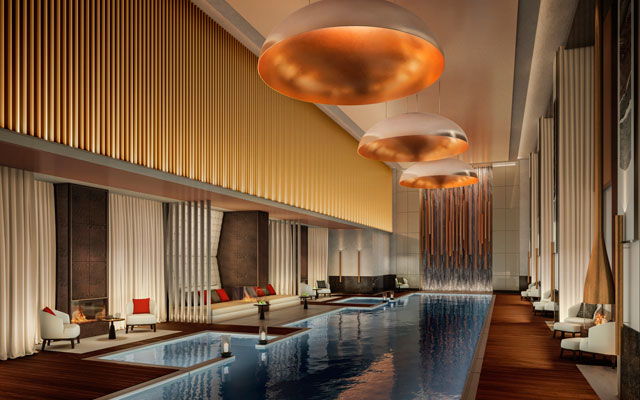
The first Park Hyatt hotel in Thailand has opened in the capital, offering 222 guestrooms (including 32 suites). Amenities on-site comprise four F&B options, a 40m-long infinity saltwater pool, 24-hour fitness centre, spa with eight treatment rooms, and 12 event spaces which include a pillarless ballroom. The property is also directly connected to the Central Embassy shopping mall and the Phloen Chit BTS skytrain station.

Amari Johor Bahru
The 242-room Amari Johor Bahru, Onyx Hospitality Group’s first property in Malaysia, has opened. The lobby is located on the sixth floor, and facilities on-site include an executive lounge, a library, spa, fitness centre and swimming pool. Food options include the market-style, all-day restaurant Amaya Food Gallery, Amaya Café and the poolside Dip Bar. Events can be held on the property’s pre-function foyer, outdoor terrace or ballroom.

DoubleTree by Hilton Xiamen-Haicang
DoubleTree by Hilton’s second Xiamen hotel is located in the Haicang district and offers 301 rooms. Each room is furnished with a custom-designed mattress and 43-inch LED flatscreen TV, plus Crabtree & Evelyn products as part of its amenities. Recreational facilities include a heated pool, 24-hour fitness centre and four F&B options. For events and meetings, there’s a 1,000m² pillarless ballroom for 950 people, and six meeting rooms.

Toyoko Inn Cebu
Tokyo-headquartered Toyoko Inn has opened its first Philippines outpost on Cebu Island. The 582-room hotel is located on the sixth to 18th floors of Mandaue City’s J Centre Mall. Facilities include complimentary Wi-Fi throughout the hotel, a bar, conference room and coin-operated washing machines. A complimentary pick-up bus service plies between the hotel and Mactan-Cebu International Airport.

Howard Johnson Jeju Seogwipo Harbor
Standing along Jeju Island’s shoreline in the Taepyeong-ro district is the Howard Johnson Jeju Seogwipo Harbor, the brand’s debut in South Korea. All its 241 guestrooms feature a balcony with either ocean or mountain views, as well as bedding topped with DuPont cotton duvets. Facilities include a fitness centre, rooftop terrace with Jacuzzi hot tubs overlooking the ocean, free Wi-Fi and a complimentary breakfast at the all-day dining restaurant.

No threat from sharing economy

0

Vacation rentals have not infringed on growth of traditional travel players in China.

The rise of sharing economy in China has given birth to homegrown players like Didi Chuxing and Tujia while home-sharing giant Airbnb has doubled down its investment in the country, but industry members interviewed do not see threats arising from such platforms for the time being.

Safety and security are the greatest differentiators between traditional hotels and home-sharing accommodation, observed Creamy Chen, general manager, Century Holiday International Travel Service (Guangzhou) Branch.

She said: “Clients prefer reliable hotel brands when planning trips to China. Under Chinese regulation, hotels have to scan foreign guests’ passports for registration but if they opt to stay in local residences, it’s necessary for them to inform a nearby police station.

“In fact, we have agreements with hotels to guarantee guests’ personal and food safety during their stay but I doubt home rentals could offer the same confidence.”

Chen also believes that local agents catering to the domestic travel market are more affected than inbound operators handling foreign visitors.

And while Tujia has joined forces with agencies like Nanjing China Comfort Travel Service to enable agents to offer home rentals to their clients, she does not think that such partnerships will become a trend “given the service limitations”.

Shanghai Jin Jiang Tours’ operations department manager Rong Rong, meanwhile, sees home rentals as a popular option only for FITs and small groups. She added: “It’s a kind of distribution channel targeting a different type of audience and will not compete head to head with our group business.”

Hoteliers, likewise, are unfazed with the growth of vacation rentals in China.

Hilton Shanghai Hongqiao, general manager, Joseph Zitnik, contended: “There is a place for Airbnb in the overall hotel market and distribution system but the traditional hotel business and reservation systems will remain strong. Most guests trust that international hotel brands can ensure them high-quality facilities, service standards and F&B.”

Pudong Shangri-La, East Shanghai, area general manager, Mark Kirk believes that Airbnb tends to attract budget-sensitive travellers, which makes the impact on luxury hotels minimal.

Johnny Li, founder and managing director of Gateway Group, which represents resorts and hotels in Asia and China, surmised: “The mainland market is not mature enough with many domestic travellers still sticking to traditional booking channels.

“Unless Airbnb aggressively goes for the niche market or dangles attractive perks like best offers or affordable rates, it’d be hard to get domestic Chinese travellers to switch from the OTAs that they have patronised for years.”


This article was first published in TTG Asia May 2017 issue. To read more, please view our digital edition or click here to subscribe.

Lighting up with events

0

Macau brandishes a robust calendar of events round the year to attract international visitors and give them reasons to stay longer.

Positioning Macau as a City of Events is one of the main ways that Macao Government Tourism Office (MGTO) plans to attract visitors and encourage them to stay longer.

A MGTO spokesperson commented: “Macau has been enhancing the city’s events, as well as ensuring they are distributed throughout the year, so that visitors may plan holidays to experience all these during their stay.”
MGTO, together with travel trade partners, has been leveraging event-themed packages, such as the Macau Grand Prix or the Macao International Marathon, as “windows for visitors to experience the destination”.

In line with MGTO’s efforts, integrated resorts (IRs) are also bringing to Macau “high-profile performances and events”.


“Some players bring big names from the regional and world entertainment industry, and stage resident shows for long seasons. Their calendar of performances usually comes along with special packages (that aim) for longer stays,” the MGTO spokesperson said.

Examples of shows currently running at IRs include the indoor ice sculpture showcase and other activities by Kung Fu Panda Adventure Ice World with the DreamWorks All-Stars at The Venetian (through July 9); magician shows scheduled for the House of Magic at Studio City (year-round); the Monkey King – China Show at Sands Cotai Theatre (through December 31).

“This favours not only the host hotel-resorts but the overall destination, since visitors also tend to visit other attractions while in town,” shared the MGTO spokesperson.

Echoing the sentiment that events across the city can bring collective benefits to the industry, Artyzen Hospitality Group, Macau, area vice president, Rutger Verschuren, said: “Considering how small Macau is, and the relative short time since we came on the international travel map, we cannot complain. We are lucky to benefit from Macau’s (events) treasure chest and its efforts to reach out to an international crowd.

“Our hotels, like the entire city, feast on large events by receiving more exposure as a destination, and by generating extra RevPAR during events,” he added.

Meanwhile, entertainment is at the heart of Sands China’s business. Its six venues have hosted a total of 60 different live entertainment events over 144 event days in 2016, attracting more than 228,000 visitors. The theatres offer a variety of ticketed events – everything from Broadway-style musicals to magic shows to classical ballet.

Said senior vice president of marketing and brand management, Ruth Boston: “The live entertainment programme at our properties is a key traffic driver… The diversity of entertainment offered by Sands Resorts Macao sets it apart from other gaming destinations.”

Welcoming Macau’s new positioning is Metropole Hotel’s general manager, May Wong, who looks forward to grow the vast potential in events tourism.

“Apart from local culture and customs, the city also celebrated Thailand’s Songkran Festival. Why don’t we expand in this direction by blending other nations’ festivals in addition to our homegrown ones?”


This article was first published in TTG Asia May 2017 issue. To read more, please view our digital edition or click here to subscribe.

APAC hits record 597 million inbound arrivals: PATA

0

Foreign arrivals into Asia-Pacific increased three per cent to 597 million in 2016, led by Asia with almost 436 million international arrivals (70 per cent), followed by the Americas with close to 147 million arrivals (34 per cent) and the Pacific with 24.5 million international arrivals (12 per cent), according to PATA’s Annual Travel Monitor 2017 Early Edition.

Intra-regional travel flows were extremely strong for Asia and the Americas, the report stated, with 94 per cent and 78 per cent of their inbound volumes respectively arising from within the same region.


South Korea among 17 destinations that saw double digit growth; Bukchon Hanok Village, Seoul pictured

Seventeen of the 47 destinations surveyed in the study saw double-digit growth rates, including Nepal and South Korea which each saw increases of more than 30 per cent, and over 20 per cent for Mongolia, Japan and Vietnam.

Growth was once again not uniform across Asia-Pacific with seven destinations reporting contractions. However, despite significant challenges, Turkey’s tourism sector saw nearly 18 million additional arrivals added to its foreign inbound count year-on-year.

Origin markets in North-east Asia were the largest generators of absolute volumes, led by China and Hong Kong which generated 108.5 million and 93.7 million arrivals respectively, followed by Macau (24.4 million arrivals), South Korea (23.2 million), Japan (20.3 million) and Taiwan (19.8 million).

Singapore was the only South-east Asian origin market within the top 10 feeder markets, generating close to 19.9 million visitors.

Among the origin sub-regions, North-east Asia topped that list with an additional eight million arrivals within its own sub-region between 2015 and 2016, and 4.4 million additional arrivals into South-east Asia.

The reverse was also true with South-east Asia generating 2.2 million and 1.8 million additional foreign arrivals into North-east Asia and South-east Asia itself respectively.

Mother-daughter, father-son travel a trend to watch for Australian families

0

Results from a recent Virtuoso survey of 772 travel advisors show a strong trend towards mother-daughter and father-son getaways, reflecting greater demand for experiences and signalling “an important time for bespoke travel agents as they move from selling packages towards listening to (clients)”.

Travel advisors say they are being asked to curate experiences, often a holiday that incorporates the particular interests of all family members rather than the traditional fly-and-flop holiday, shared Virtuoso’s Asia-Pacific managing director, Michael Londregan.

“As a society we are moving out of the commodity economy of more ‘stuff’ into an experiential one where our desire for experiences out-rates the things we might buy,” Londregan opined.

“This is being reflected in the decisions we make about what we do together. When we ask ‘what can we give mum or dad as a gift?’, we are thinking less about a new ‘thing’ and more about personal experiences such as a weekend escape or a pampering experience.”

The survey also revealed that the top five destinations for Australian families are Fiji, the US, Singapore, Italy and Hawaii.

Faus to head Pullman Jakarta Indonesia

0

Jaime Faus has been appointed general manager of Pullman Jakarta Indonesia.

Faus was most recently based in London as the vice president of operations AccorHotels, overseeing 13 hotels. The Spaniard has been with the company for 17 years, and has worked in many Central and Eastern European countries.

He took on his first general manger role in 2008 for AccorHotels, before moving to Moscow and helming the Novotel Moscow City Centre in 2010.