TTG Asia
Asia/Singapore Friday, 2nd January 2026
Page 158

Another big step forward

0

Congrats to another record-breaking year of signings. You broke record in 2023 with 80 new deals, and again in 2024 with 109 new deals. Is Marriott stepping into 2025 with the same confidence? What factors are stoking such confidence?
Yes, we are. We see the same momentum continuing into 2025. It is the enthusiasm of our partners that is feeding our confidence. They are going full steam ahead and are very excited about the future. They are working on long-term development projects, beyond conversion projects for this year or next year. Our pipeline of signed MoUs, which allows us to measure how many deals we are going to have for this year and so forth, is as full as it has ever been.

Are rising trade tensions and intensifying geopolitical issues not having an impact on the investment mood of your owners and developers?
Well, we’re not seeing these as issues. Sure, people are talking about the situation, but I think it’s more out of curiosity about what’s going to happen. Our partner projects are several years out, so they are looking far into the future. The view they may have is that tariffs will come and go over time, but the hospitality and tourism industry is very solid.

Many of our partners have a China-plus-one diversification strategy, which is pushing a lot of investment into Asia, especially South-east Asia. We have seen areas popping up and starting to develop. And if an area softens, activity is moved to another region. That’s the advantage of the APEC (Asia Pacific excluding China) region having so many countries. Many countries are firing at one given point.

Are loyal partners behind most of the new signings in 2024?
We signed 109 deals across 11 markets and 21 different brands, which gave us 21,000 additional rooms. That represented two major milestones for us — it was the first time we have ever crossed 100 deals and 20,000 rooms in a single year.

As we reflected on this achievement, two words popped up for us: trust and confidence. This specifically refers to our owners and partners. Thirty-five per cent of our signings in 2024 were with existing owners and partners. They choose our brands, they believe in us, and choose us to grow with them.

At the same time, 40 per cent of 2024 deals were conversions – owners taking their old flags and brands and converting them into Marriott brands and hotels.

We also saw 7,000 rooms being signed that were part of portfolios or large multi-unit transactions.

With conversion projects being quick to market, how many of those deals have opened at this point?
They typically open either within the year or within 18 months. Of the more than 7,000 conversion rooms we signed, about 5,000 have opened.

What strengths would you say Marriott International has to attract repeated deals from the same partners and owners?
Our number one strength is our Marriott Bonvoy programme. It is the reason why many of our existing owners are doing more deals with us. They see the power of the loyalty programme, which now has more than 219 million members worldwide.

Our owners and partners own multiple brands, typically not just Marriott International brands, and over time they say to us, “Wow, your hotel just performs so well”.

The Marriott Bonvoy occupancy is very high, which means we drive really strong returns for the hotel. And the cost of acquisition for those customers is very low because of the strong membership loyalty. More than 70 per cent of bookings originated from the Marriott Bonvoy app in 2024.

Number two is our distribution. We have one of the best distributions within the APEC region.

Your 2023 signings involved 19 brands, with Fairfield by Marriott leading the way among owners, followed by Marriott, Courtyard by Marriott, and JW Marriott; The Luxury Collection and Westin tie in fifth place. Can you flesh out the brands that were most in demand for 2024 signings?
Make a guess what our number one brand was. It is our newest brand.

Four Points Flex by Sheraton?
Yes! Since our initial portfolio signing with KKR (a US private equity firm that gave Marriott International 14 conversion projects across Japan) in May, we have gone on to sign a few extras, also for Japan.

Four Points Flex by Sheraton was by far our number one brand in terms of both hotel units as well as rooms. Number two was the Courtyard by Marriott brand, followed by Marriott, JW Marriott, and Sheraton in fifth place.

Besides the fact that KKR’s 14 conversion projects gave the brand such a huge bump up, why else does Four Points Flex by Sheraton have such good growth potential?
Four Points Flex by Sheraton caters to travellers that are looking for just a very simple, basic product that is done right.

In Japan, specifically, hotels of this (midscale) category have rooms sized between 12m2 and 17m2. The rooms would typically offer everything a guest needs and nothing that the guest will not need, plus at the right price point.

Seasoned travellers – many being Marriott Bonvoy members – are choosing to stay with Four Points Flex by Sheraton properties. We are also seeing new customers who have never tried our other brands before, as the Four Points Flex by Sheraton is a great entry point for them.

Four Points Flex by Sheraton is now only present in Asia through Japan. Is the company looking to bring the brand to more destinations in this region?
We are looking at other markets in South-east Asia like Thailand and Indonesia, as well as India and Australia. The brand works for first-tier cities as well as secondary and tertiary cities.

If you look at the brand’s footprint in Japan, several are in and around the big cities. (Editor’s note: Properties are located in Fukuoka, Hakodate, Kanazawa, Kobe Sannomiya, Morioka, etc) The hotels require a smaller footprint, and can in fit in next to a train station.

I can see them in CBD locations but also in secondary and tertiary markets where, for example, you can’t get a high rate to pay for the investment of a full service hotel, but can bring in hotel services that guests need and still make a good return for the owner at that price point.

Let’s talk about India now. Marriott International has a big presence in India – it opened its 150th property in the country last year with the Katra Marriott Resort & Spa. Signings in India last year resulted in 7,000 additional rooms. Just a few days ago, the Indian government announced its union budget for 2025. A big portion of it will be used to develop top 50 tourism destinations, and part of the effort requires state governments to carve parcels of land to build hotels. What will this mean for your development team?
I can tell that, for quite a while now, the developers in India are absolutely investing in the secondary, tertiary markets. When you look at the 40-plus hotels that we signed in India last year, many of them are located in places you probably wouldn’t have heard of. That’s where the activity is happening. Developers are going further afield, into hill station areas, religious sites, and pilgrimage areas.

The Indian government has been focused on building up infrastructure, not just in the hubs, but throughout the country. This has partly been driving our growth.

Your 2024 performance update shone a spotlight on the Moxy Hotels brand. Can you tell me more about development plans for this?
We have been getting a lot of interest in the Moxy Hotels brand. Developers really like the high energy, social feeling of the brand and we see the most interest for it in gateway cities.

The brand has been successful in Japan, South Korea and Australia, and has debuted recently in India, Malaysia and Thailand. Whether it is in Sydney, Seoul or Bengaluru, the hotel always boasts a good location.

We will have one coming up in Singapore and in more key gateway cities. We also see potential in Moxy Hotels coming up in business hubs and cultural capitals alike.

Rounding this up, what will your development focus be for 2025?
This year and next year, we are really focused on the luxury segment and the midscale segment because we’re seeing significant growth in both of those spaces right now.

Resorts World Cruises renames Star Scorpio to Star Voyager; announces sailing dates

0

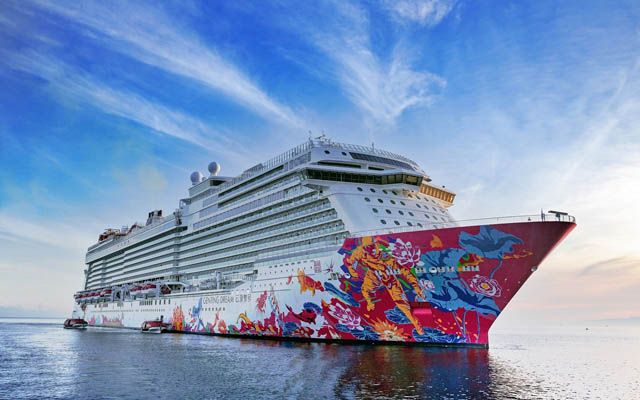
Star Voyager, the third cruise ship in Resorts World Cruises’ fleet and previously the Star Scorpio, will be deployed from March 26, 2025 until July 21, 2025.

Star Voyager will offer sailings that coincide with Asian school holidays

Singapore will be her main homeport, with Indonesia’s Jakarta, Malaysia’s Melaka, Thailand’s Bangkok and Vietnam’s Ho Chi Minh City as dual homeports. Passengers will be able to board the Star Voyager from any of these homeport cities at selected dates, with the option to sail between cities, as well as to popular destinations such as Medan in Indonesia, Pulau Redang in Malaysia, and Koh Samui in Thailand.

Four-, five-, and six-day itineraries will be available for booking.

Some sailing dates will coincide with local school holidays, with departures from Singapore from March 26 to July 21; Jakarta from March 29 to April 13 and June 14 to 29; Bangkok (via Laem Chabang Port) from April 22 to May 7; Melaka (via ICQS Cruise Terminal) from May 28 to June 9, and Ho Chi Minh City (via Phu My Port) from July 9 to 24.

SriLankan Airlines’s Yaana readies for customers

0
xxx

SriLankan Airlines has deployed chatbot Yaana to transform its customer support delivery through the use of advanced AI and Natural Language Processing (NLP) technologies, which allows it to assist with a wide range of passenger enquiries.

Yaana has been developed in collaboration with CodeGen International, and is now live on SriLankan Airlines’ corporate website.

AI-powered Yaana has handled close to 12,000 enquiries with remarkable efficiency since going live this month

Chamara Perera, group head of information technology at SriLankan Airlines, said Yaana features a generative AI virtual assistant powered by GPT-4 technology, and is equipped with sophisticated retrieval capabilities to enhance customer interactions and efficiently address enquiries.

By cross-referencing multiple policy documents, real-time data sets, including flight schedules, Yaana ensures that passengers receive reliable, tailored information.

Dimuthu Tennakoon, head of worldwide sales and distribution at SriLankan Airlines, said since going live, Yaana has handled close to 12,000 enquiries with remarkable efficiency, autonomously resolving 88 per cent of them.

The chatbot provides 24/7 assistance, including real-time updates during disruptions, streamlined booking guidance, and personalised support for complex queries.

Coldplay’s latest music video features iconic Singapore spots

0

From Gardens by the Bay and Jewel Changi Airport to a local neighbourhood and lively bar, Coldplay’s new music video for their track Man in The Moon featured Singapore’s iconic attractions and local neighbourhoods.

The song’s theme of unity and shared experiences transcending individual differences is reflected in the music video, which features youths of diverse backgrounds and identities – portrayed by Singapore talents ranging from cosplay artists to creative professionals.

Man in The Moon music video also features youths of diverse backgrounds and identities portrayed by Singapore talents

Coldplay said: “While we were in Singapore, we shot the video and captured some of the amazing, young, vibrant people that we had met. We are interested in shooting things in places we have never filmed before and mixing people up as much as possible. It was really fun to have a kind of dance party out in the middle of the water, just us and the otters.”

Man in the Moon, directed Ben Mor – known for his work on Coldplay’s Hymn For The Weekend music video – was filmed in partnership with Warner Music Singapore and Singapore Tourism Board.

Man in The Moon was filmed in January 2024 during the band’s Music of the Spheres world tour in Singapore. An exclusive Coldplay fan party to celebrate Moon Music was held in Singapore on February 5, 2025 at Marina Bay Sands’ newly revamped SkyPark deck, where the music video was premiered.

A good-hearted dose of sweetness at Meliá Chiang Mai

0
xx

A cart brimming with Thai-inspired chocolate bars, featuring unique flavours ranging from Mango Chili and Massaman Peanut Curry to Thai Tea and Khao Soi Curry, has trundled into Meliá Chiang Mai in support of local sustainable farmers.

The hotel has joined forces with award-winning boutique chocolatier Siamaya, a Chiang Mai company that makes bean-to-bar chocolate from locally sourced organic Thai cacao beans and ingredients, and that pays farmers higher prices to ensure they receive a living wage.

Sustainable chocolate products from boutique chocolatier Siamaya are now sold at Meliá Chiang Mai

The chocolate-laden cart is permanently stationed at the entrance of the hotel’s all-day dining restaurant Laan Na Kitchen.

The partnership with Siamaya is part of the hotel’s network of ethical and chemical-free suppliers, which includes gourmet farm Seed in San Sai District; organic gourmet farm Rong Khum in San Pa Tong; Jartisann’s Original Thai Cheese, which crafts artisanal cheese made from high-quality, locally sourced raw cow’s milk; and Supha Bee Farm, a local honeybee farm in Mae Rim.

The hotel’s guests are also welcome to participate in Siamaya Chocolate’s chocolate making workshops and learn about what it means to have social awareness and sustainability as small business key values.

Elevate DMC launches Thailand office, eyes SE Asia expansion

0

Elevate, an independent destination management company (DMC) specialising in luxury travel experiences, has announced the opening of its first office in Bangkok, Thailand.

Elevate Thailand will function as a full-service DMC, offering a wide range of travel products and services throughout the country. This move marks the company’s entry into the Thai market and signals the start of a broader expansion strategy across South-east Asia.

Georgie Walsh, general manager of Elevate DMC Thailand, (centre) with Thailand Convention and Exhibition Bureau representatives

To support its growth, Elevate Thailand is actively recruiting new team members. Elevate DMC currently works with over 1,000 directly contracted hotels, including major chains like Accor, IHG, Marriott, and Hilton.

In addition to its core services, Elevate offers specialised sub-brands catering to specific travel interests, including Elevate Wellbeing, Elevate Cruises, and CONNECT Business Events.

Samir Hamadeh, founder & CEO of Elevate DMC, commented: “The opening of our office in Bangkok marks an exciting milestone in Elevate’s journey of expansion. We are thrilled to establish a presence in Thailand, a market rich in diversity and opportunity. Our aim is to provide exceptional, tailored destination management services that cater to the unique needs of travellers, while growing a team that is passionate about delivering remarkable experiences across the entire country. This is just the beginning of a new phase, and we look forward to the road ahead.”

Firefly expands operations from Subang to Kuching and Singapore

0
The new routes from Subang Airport (pictured) to Kuching and Singapore will operate six times a week from March 24; daily operations start from March 30

Firefly, a subsidiary of Malaysia Aviation Group (MAG), announced its expansion of jet operations with the launch of two new direct flights from Sultan Abdul Aziz Shah Airport (Subang Airport) in Selangor to Kuching and Singapore Changi Airport.

The airline will operate each route six times a week from March 24 before increasing to daily operations from March 30.

The new destinations take Firefly’s operations from its current routes to Penang and Kota Kinabalu to 28 weekly flights, all on its Boeing 737-800 aircraft.

The new jet operations to Singapore will also complement Firefly’s turboprop operations from Subang Airport to Seletar Airport.

The new routes from Subang Airport (pictured) to Kuching and Singapore will operate six times a week from March 24; daily operations start from March 30

Firefly passengers on the new routes will enjoy complimentary 10kg check-in baggage, 7kg carry-on baggage, and in-flight refreshment.

Commenting on the move, Arokia Das Anthony, executive director, The Essence of Asia Tours & Travel said: “Firefly’s jet operations from Changi Airport directly to Subang Airport provides a convenient option for travellers wanting quick access to Shah Alam, Subang Jaya, Petaling Jaya and Kuala Lumpur’s city centre, saving time compared to travelling from Kuala Lumpur International Airport Terminal One and Terminal 2.

“Subang Airport’s proximity to Kuala Lumpur’s city centre makes it easier and faster for travellers from Kuala Lumpur and surrounding areas to access the airport, reducing overall travel time compared to departing from Kuala Lumpur International Airport (KLIA). This is especially beneficial for business travellers and frequent flyers seeking a more efficient travel experience.”

He added that Changi Airport’s “extensive retail, dining, and entertainment options enhance the overall travel experience” enhances the travel experience, and its status as a major international hub provides easy connectivity to destinations worldwide.

Macau welcomes more than a million visitors this Spring Festival

0

Nearly 1.31 million visitors called at Macau during the eight-day Spring Festival Golden Week, which ran from January 28 to February 4, 2025, with the average daily visitor number standing at 163,696 – 3.5 per cent shy of what was recorded during the 2024 Golden Week.

Arrivals from China made up the bulk. The daily average of Chinese visitors was 125,000, a slight decrease of 3.2 per cent from that of 2024 (129,204).

Macau welcomed more international visitors during this Chinese New Year holidays, with daily average numbers up 10.2 per cent over 2023

The overall and average daily volumes of Hong Kong visitors were 231,000 and nearly 29,000 respectively.

The overall and average daily volumes of visitors from Taiwan were 20,000 and 2,500 respectively.

As for international visitor arrivals, the overall number was 58,000 while the daily average neared 7,300, a year-on-year rise of 10.2 per cent.

Single-day visitor arrivals trended upward from January 29 to 31, during the initial and most important days of the Chinese New Year, peaking at over 219,000 on the third day. Arrivals on the fourth day of the holiday rose 9.1 per cent over the same time in 2024.

Data submitted from industry operators showed that local hotel establishments had an average occupancy rate of 95 per during the Spring Festival Golden Week, the same as last year. The hotel occupancy rate peaked at 97.8 per cent on the fourth day of Chinese New Year.

The average room rate of across Macau’s hotel establishments (including hotels, apartment hotels and economical accommodation establishments) was around 1,839.5 patacas (US$229.20) during the Golden Week, a year-over-year drop of 2.4 per cent.

Hotel Okura, Plataran Indonesia join hands to reinforce tourism excellence

0
From left: Plataran Indonesia’s Yozua Makes and Hotel Okura’s Toshihiro Ogita

Japanese hotel operator Hotel Okura Co. and hospitality firm Plataran Indonesia have signed a strategic alliance agreement on February 6 to jointly work towards greater tourism excellence and a finer definition of luxury experiences through shared expertise and a commitment to community and purpose.

The alliance is described as a “landmark cultural exchange partnership that bridges the rich heritage of Indonesia with the refined traditions of Japan” in a joint press release.

From left: Plataran Indonesia’s Yozua Makes and Hotel Okura’s Toshihiro Ogita

Areas of focus in this alliance include Partnership Concept, where both hotel groups will foster friendship between Indonesia and Japan to enable cultural exchange and diplomacy; Sales and Marketing Cooperation, where brand recognition in both markets will be achieved through effective joint promotions and mutual utilisation of sales networks and membership programmes; Product and Service Collaboration, where Plataran’s customer-centric philosophy will be blended with Okura’s meticulous approach to Japanese-style hospitality for expanded culinary offerings; Joint Brand Development in Indonesia, where a hotel will be developed together in Indonesia; and Personnel Exchange and Development, where the two will implement employee exchange programmes.

Toshihiro Ogita, president of Hotel Okura, said: “We are truly honoured to form a partnership with Plataran, a leading hospitality group that aspires to be a ‘True Indonesian Icon.’ Since its foundation, Plataran has committed itself to the conservation of nature, the celebration of Indonesia’s cultural heritage, and giving back to the community, values that Hotel Okura shares. We see a common thread in our commitment to providing authentic experiences rooted in tradition and in our dedication to personalised and exceptional hospitality. Through this partnership, we aim to serve as a bridge between Indonesia and Japan, helping to promote cultural exchange.”

Yozua Makes, Plataran Indonesia CEO and Founder, added: “This partnership represents a shared vision of how the hospitality sector can play a pivotal role in preserving culture and showcasing a nation’s heritage, as well as preserving cultural diplomacy between Indonesia and Japan.”

AAPA welcomes Air New Zealand as member

0

Air New Zealand has joined the Association of Asia Pacific Airlines (AAPA) today with immediate effect.

Air New Zealand makes AAPA’s 18th airline member

Subhas Menon, director general of AAPA, said: “Air New Zealand’s important role in connecting New Zealand to the world and its strong international outlook will reinforce the collective advocacy of airlines in the Asia-Pacific region in areas such as sustainability, supply chain recovery and smooth cross border travel.”

Greg Foran, chief executive officer of Air New Zealand, added that joining the AAPA membership would allow his airline to “share learnings with our regional counterparts, to ensure a thriving Asia-Pacific aviation industry into the future”.

AAPA has 18 members today, including Air New Zealand. It also recently welcomed Qantas Airways in January.