Singapore Airlines (SIA) has raised S$3 million (US$2.2 million) through its SG60 SIA Cares 2025 fundraising campaign. The campaign, which ran for three months, will benefit more than 1,600 children and youth with disabilities and developmental needs across Singapore.
The airline matched the amount donated by corporate partners, members of the public, and SIA staff – S$1.5 million – bringing the total to S$3 million. The funds will go to social service agencies AWWA and Rainbow Centre, as well as to more than 200 programmes supported by Community Chest.
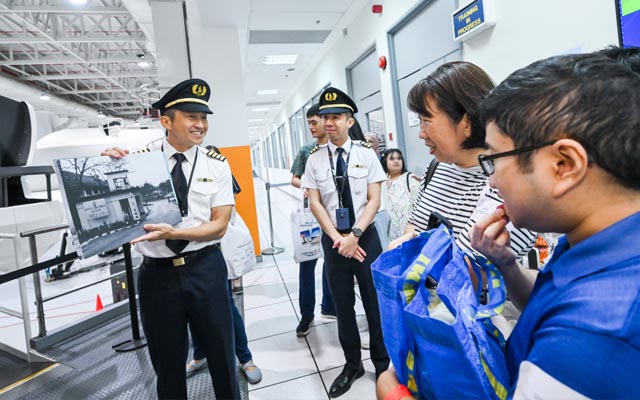
Guests toured SIA Training Centre during SG60 Open House, exploring flight simulators, safety facilities, and heritage exhibits
An additional S$3 million will be contributed through the Singapore government’s SG Gives matching grant, bringing the total impact of the campaign to S$6 million. These funds will support a range of social and community initiatives in Singapore.
A cheque for S$3 million was presented to the beneficiaries during the SG60 SIA Cares Open House held at the SIA Training Centre.
AWWA will use the funds to support its Community Integration Service, which serves over 300 students in mainstream schools and more than 470 students with multiple disabilities and autism at its Napiri and Bedok campuses. The funding will be used to strengthen therapy services, training for independent living, curriculum development, access accommodation, and co-curricular activities aimed at promoting greater inclusion.
Rainbow Centre will apply the funds to its Special Education Programme across its Admiral Hill, Margaret Drive, and Yishun Park campuses. This will support over 900 children and youth with autism or multiple disabilities. The programme focuses on tailored education, care, and intervention services that address individual developmental needs and promote greater independence.
Community Chest will allocate its share of the funds to address critical social needs. This includes support for children with special needs, youth at risk, adults with disabilities, persons with mental health conditions, and low-income families and seniors.
SIA also hosted its third SIA Cares Open House on July 19 and 20 at its Training Centre, which saw nearly 900 guests, including youth at risk, persons from disadvantaged backgrounds, and individuals with disabilities or developmental needs, along with their caregivers from 33 Singapore-based social service agencies. Guests took part in a two-hour tour of the SIA Training Centre, which comprised meeting pilots, cabin crew, and engineers; learning about flight training simulators; visiting safety training facilities; and exploring a showcase on Singapore’s nation-building journey and the airline’s heritage as well as sampling SIA’s in-flight meals.
The 19th edition of the International Travel Expo Ho Chi Minh City (ITE HCMC 2025) will take place at the Saigon Exhibition and Convention Center in Ho Chi Minh City from September 4 to 6.
Said to be the largest and most prestigious international travel trade event in Vietnam and the Mekong subregion, ITE HCMC 2025 will provide a platform for Vietnam’s and the global tourism community to connect, collaborate, and explore business opportunities.
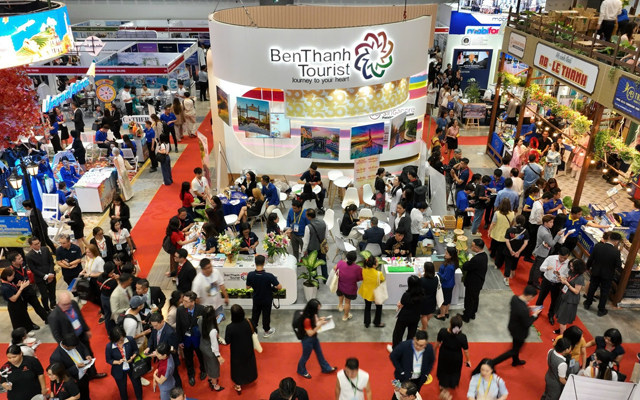
ITE HCMC 2025 returns from September 4 to 6 as Vietnam’s largest international travel trade event; photo by ITE HCMC
It serves as a hub for domestic and international tourism businesses – especially those from the Mekong subregion countries – to seek business partners and showcase a rich array of products to global markets. It also provide a platform for businesses to explore new products and business models, advancing toward sustainable tourism development. At the same time, localities and tourism enterprises will have the opportunity to introduce distinctive tourism products and unique experiences of Vietnam and Ho Chi Minh City to international visitors.
More than just a trade show, ITE HCMC also acts as a thought-leadership forum, spotlighting emerging trends and fostering critical dialogue around the future of the tourism industry.
ITE HCMC 2025 is expected to welcome over 520 exhibiting companies and brands, as well as 50 provinces and cities, along with 240 high-level buyers from more than 30 countries and territories. The event anticipates over 28,000 visitors and aims to facilitate 12,600 business appointments between international buyers and sellers.
The programme will comprise 16 key activities, including trade connection events, forums, conferences, and seminars.
A major programme highlight is the 12th General Assembly of the Tourism Promotion Organization for Global Cities (TPO), which will bear the theme, Shaping the Future of Tourism: Embracing Digital and Green Transformation.
Ho Chi Minh City is one of the founding members of TPO and currently serves on the Executive Board.
Le Truong Hien Hoa, deputy director of the Ho Chi Minh City Department of Tourism, said in a press statement: “With the theme Sustainable tourism, Vibrant experience, ITE HCMC is expected to become a benchmark of innovation and transformation for Vietnam’s tourism industry, especially in today’s highly volatile and challenging global economy, where tourism has been among the hardest-hit sectors.
“Serving as a strategic gateway, ITE HCMC 2025 brings together tourism associations and enterprises nationwide to foster collaboration, boost competitiveness, and elevate Vietnam’s position as a standout destination in both regional and global markets”.
Frasers Hospitality’s global travel campaign More to Explore, More to Save has returned and is now open for bookings till September 30, 2025 for stays between August 1 and October 31, 2025.
The campaign offers a 20 per cent discount or more on new reservations at participating properties across Asia, Australia, Europe, the Middle East and Africa.
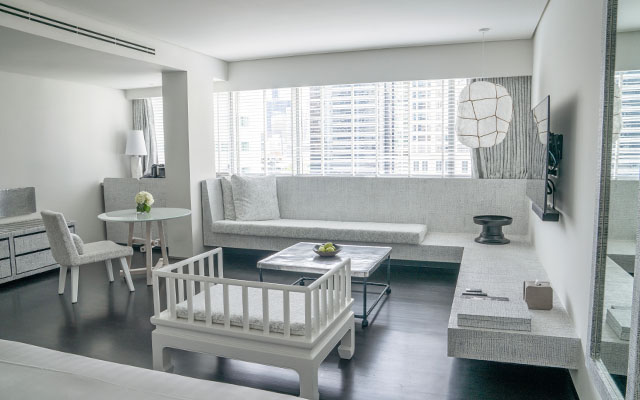
Frasers Hospitality offers 20 per cent off stays worldwide at properties such as Capri by Fraser, Johor Bahru, pictured
The campaign encourages travellers to visit neighbourhoods beyond typical tourist areas. Participating properties include Fraser Suites Al Liwan in Bahrain, located in the Al Hamala district near the beach, desert trails and UNESCO heritage sites. Fraser Place Chengdu in China’s Gaoxin District offers studios to three-bedroom apartments suitable for families and business travellers.
Capri by Fraser in Leipzig, Germany, is located in the city centre near cultural venues such as opera houses and galleries. Fraser Residence Nankai in Osaka is situated in the Namba district, close to shopping areas and historic temples. Capri by Fraser in Johor Bahru, Malaysia, is near heritage streets, malls and night markets.
Fraser Suites Glasgow occupies a restored 19th-century building in the city centre, and Modena by Fraser Bangkok is located near Queen Sirikit MRT station and the Sukhumvit interchange, close to Terminal 21 and Benjakitti Park.
Singapore’s Royal Plaza on Scotts’s Carousel has introduced Voyage of the Titanic, the second immersive dining experience in its Hidden Table series.
Following its earlier season, the production returns with a new script that combines a tasting menu and stage performance, delivered entirely in darkness.
Experience the Titanic’s final voyage through sound, taste and scent in complete darkness
The event begins with a recorded narration set in 1912, as diners are introduced to the departure of the RMS Titanic. A four-course menu is served during the experience, with each course representing a stage of the ship’s journey. Several dishes are based on the original First Class menu served aboard the Titanic.
The performance takes place in complete darkness and is guided by sound, scent, and taste. Diners may be invited to interact with objects during the experience. The format is designed to encourage sensory focus without visual input.
The event opens on July 25 and runs weekly from Thursday to Sunday. Sessions are held at 19.00 on Thursdays and Fridays, and at 11.00, 13.00, 17.00, and 19.00 on Saturdays and Sundays. It begins at Palm Café, Level 5, Royal Plaza on Scotts, in Singapore.
Tickets are priced at approximately S$98 (US$73) per person. In conjunction with Singapore’s 60th year of independence, a special rate of around S$60 per person is available with a minimum purchase of two tickets.
Air France KLM has appointed Steven van Wijk as general manager Greater China, effective August 1, 2025. He will be responsible for overseeing four destinations – Beijing, Shanghai, Hong Kong and Taipei – from his base in Beijing.
van Wijk brings over 15 years of experience in the aviation industry to the role, having joined KLM Royal Dutch Airlines in 2007. He has held multiple key positions, including roles in the KLM Network department and the commercial division of Air France-KLM.
He was most recently commercial director for Air France KLM in the UK and Ireland.
Singapore sights and locations have been trending high on social media across May and June, riding on the massive global fanbase of two members from Korean boyband BTS.
Released on May 16, a three-minute, 25-second music video for Jin’s English song, Don’t Say You Love Me, the main track off his second solo album Echo, which was also released on the same day, shows the popular artist and his love interest, an established South Korean actress Shin Se-kyung, interacting around eight landmarks in Singapore.
The lobby of Anantara Bophut Koh Samui Resort was among various hotel locations featured in The White Lotus season three
Besides well-known tourist locations like National Gallery and Gardens by the Bay, the music video also featured locations that are relatively less prominent, but no less unique in their own way – the rooftop carpark of Goldhill Plaza, which is known for its unique circular design; Emerald Hill at night, which is home to a cluster of preserved Chinese Baroque shophouses; and Keng Eng Kee Seafood, a local restaurant listed in the Michelin Guide.
In just five days, the Don’t Say You Love Me music video has acquired 10 million views on YouTube as of the evening of May 21. At press time on June 19, viewership crossed the 19-million mark.
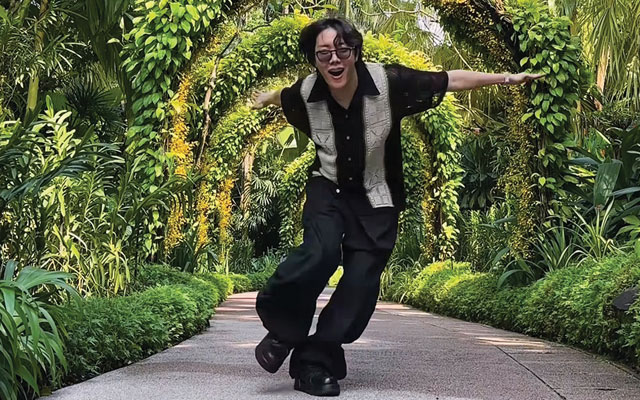
Fellow BTS member, J-Hope, who did two sell-out solo concerts in Singapore April 26 and 27, also put Singapore sights in the spotlight when he posted an Instagram Reel of himself enjoying Singapore Botanic Gardens, Sentosa Sensoryscape, Alkaff Bridge, and digging into a popular local breakfast of half-boiled eggs and kaya toasts at Ya Kun Kaya Toast and an elaborate dish at one-Michelin-starred Waku Ghin. The itinerary, part of his world tour stop in Singapore, was created in collaboration with STB.
The Reel on J-Hope’s official Instagram page has 29.5 million views and 101,000 shares at press time.
Commenting on Jin’s music video collaboration, Serene Tan, executive director – North Asia, Singapore Tourism Board (STB), said it was a “unique opportunity to showcase Singapore’s culture, nature, and architecture through a charming blend with Jin’s music”.
“We hope that people around the world will come to see and experience Singapore from a new perspective through the music video,” Tan added.
Singapore is not the only destination that has chosen to make its marketing campaign ‘pop’ with the power of global influencers.
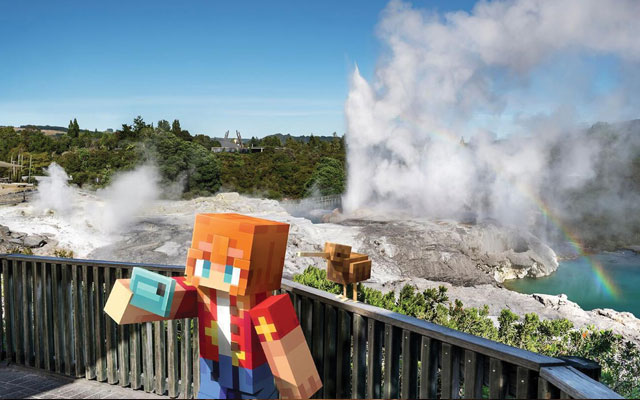
More than 8,000km away, the marketing gurus at Tourism New Zealand (TNZ) recently jumped on the Minecraft bandwagon and launched the world’s first fully playable destination New Zealand in the game world.
In collaboration with Warner Bros Pictures and Mojang Studios as well as 11 mana whenua indigenous Maori groups and the tourism industry, TNZ created a destination DLC (downloadable content) for Minecraft that features six local locations, including Waitomo Caves (Waikato), Rotorua (Bay of Plenty), Kapiti Island (Wellington), Abel Tasman (Nelson/Tasman), Tekapo (Mackenzie), and Doubtful Sound (Fiordland). Game players and potential visitors are invited to experience a range of real-world activities in the DLC, such as paddling a waka in Abel Tasman, exploring glow-worm caves in Waitomo, or stargazing in Tekapo.
The DLC was launched alongside the April release of A Minecraft Movie, starring Jason Momoa and Jack Black, and filmed in New Zealand.
With widespread appeal and over 300 million copies sold, Minecraft is the best-selling video game of all time. The partnership enables TNZ to connect with 70 per cent of its primary target audience in key markets who actively engage with Minecraft, making it a powerful tool for global engagement.
TNZ chief executive René de Monchy, expects this activity to attracting NZ$50 million (US$29.7 million) in visitor spend this year and generate NZ$50 million in equivalent advertising value via media and social media exposure.
These headline-grabbing destination marketing collaborations follow on the heels of another pop culture effect. The third season of the popular HBO series, The White Lotus, which was filmed in Thailand, drove tourism interest and arrivals.
Not only did the Tourism Authority of Thailand produce a dedicated film microsite to offer visitors a virtual journey through Koh Samui, Phuket, and Bangkok, which were featured in the series, it also partnered fashion label 3.1 Phillip Lim to launch a limited edition collection of outfits and accessories that are said to be “ideal for visiting Thailand’s vibrant temples, walking through the country’s infamous night markets, or simply looking effortlessly while exploring its bustling streets and serene landscapes”.
J-Hope shows off Singapore sights in his Instagram Reel
Business realisation
It is one thing to boost a destination’s reputation and inspire travel through pop culture, and another to convert ideas into actual tourism business.
TNZ’s Minecraft campaign is certainly more than a marketing gimmick – it boasts business conversion power, enabled by an integration of bookable Minecraft-inspired itineraries with travel agent partners. Klook has integrated Minecraft products into its Klook NZ Pass while Trip.com is promoting Minecraft-inspired itineraries.
Gregg Wafelbakker, general manager Asia with TNZ, told TTG Asia: “Often, when we achieve earned media to build awareness for New Zealand, it is difficult to convert attention into actual bookings. So, we built bookable itineraries that feature some of those iconic experiences in the DLC.”
The DLC initiative also leverages the reach of travel and tourism KOLs, who have been invited to play the game and then immerse in real-life versions of the activities across New Zealand.
“Our work with Minecraft does not just target gamers. The campaign reaches beyond gamers through lifestyle influencers. Minecraft was just the hook,” stated Wafelbakker.
STB has leveraged other celebrities in its destination marketing efforts, such as Coldplay and Charlie Puth. To maximise the business impact of such destination exposures, STB promotes content on its official social media platforms to sustain interest and encourage travel.
Tan added: “Featuring Singapore in content by global celebrities helps drive travel consideration by tapping into the set-jetting trend, where fans are inspired to visit locations associated with their favourite artists. Also, by showcasing behind-the-scenes content, travel tips, and suggested itineraries of artists, we help turn destination inspiration into actionable plans.”
Banking on attention around The White Lotus series, private sector tourism players in Thailand swiftly rolled out film-inspired holiday packages for fans.
Three Anantara resorts, which were used as film locations, came together to offer series fans the Lotus Awakening Escape package for stays at Anantara Lawana Koh Samui Resort, Anantara Mai Khao Phuket Villas, and Anantara Bophut Koh Samui Resort.
Banyan Tree Samui introduced Sense of the Sea, a custom-built speedboat offering private charters and day trips to nearby islands, including film locations. According to general manager Remko Kroesen, there has been a marked increase in interest to visit the marine destinations featuring in the show via these speedboat tours.
“We are constantly being asked about the film locations, especially the stunning islets, white beaches and sapphire waters of Mu Ang Thong Marine Park, which is possibly the epitome of paradise. Our Sense of the Sea tour takes in all of that scenery and visitors generally find it an awe-inspiring experience,” said Kroesen.
Rotorua’s famous geysers are featured in New Zealand’s playable downloadable content for Minecraft
Set-jetting reach
Lavinia Rajaram, Asia travel expert and director of public relations at Expedia Group, recalled the influential power of an earlier season of The White Lotus.
When The White Lotus season 2 went on screens in October 2022, Expedia recorded a 300 per cent increase in searches all over the world for San Domenico Palace, Taormina, A Four Seasons Hotel and Sicily, where the series was set and filmed.
A “similar frenzy” for Thailand was expected with season 3. As soon as Koh Samui was announced in January 2024 as the film location for the latest season set for a February 2025 premiere, Expedia saw searches for the resort destination shoot up 80 per cent. Searches for neighbouring Thai destinations, like Bangkok and Phuket, also spiked.
While films have always shaped travel dreams, Rajaram said their influence has expanded on the back of governments and tourism authorities becoming more strategic about their use of such media content to achieve tourism goals. Furthermore, social media has enabled a wider and stronger push of films and related content across the world.
Expedia identified the set-jetting trend in 2022, and travellers’ desire to visit the locations featured in their favourite dramas and movies has continued to grow 16 per cent year-on-year.
“In our research, two-thirds of travellers say movies, streaming services and TV shows have influenced their travel choices,” Rajaram added.
Concert power
Concerts have also played a key role in boosting destination reputation and tourism earnings.
Since reopening to international tourism, Macau has hosted a range of concerts that contribute to the city’s live events scene. Integrated resorts compete on star power, from Andy Lau to Andrea Bocelli.
The concert economy is now one of the key pillars supporting the diversification of Macau’s tourism offerings. Macau’s 240 concerts throughout 2023 brought in around 1.1 billion patacas (US$137 million) in ticket sales.
Pamela Chan, managing director of Taipa Village Destination, said concerts are contributing to a thriving Macau. She observes that concerts are bringing a “strong influx of visitors” to Macau and ringing the tills for retailers, restaurant operators, and small businesses in the community.
She shared that some local businesses in Taipa Village are creative with maximising star power when they descend on Macau. Some would organise fans gatherings, using shop entrances and props to entice photo opportunities and drive up merchandise sales.
Pull factor
Of all the vehicles of pop culture, which has a stronger pull factor?
Rajaram believes that each of them – games, films, music videos, concerts and event sports events – “have their own pull power in travel and tourism, and each engages with a different demographic of travellers”.
However, she believes that concerts tend to materialise short trips, as concert-goers visit mainly for the performance while TV tourism has the potential to encourage longer stays, as fans not only visit film locations but also book activities and hotels where their idols had done, visited or stayed at.
Kroesen also sees strong and lasting power from film placements. He said: “We can assume that many viewers will watch the show at a later date, and that bodes well for later in the year when vacationers look to escape the winter months in Europe and the US.
“However, it is worth pointing out that for many years both the local people of Koh Samui and the Thai tourism authorities have worked together successfully to implement a long-term goal of developing Koh Samui as a luxury sustainable island-destination. A decade ago, this might have been seen as over-ambitious, but the reality is that it is coming to fruition now. I am confident that Koh Samui tourism will continue to flourish in this way in the coming years, well after The White Lotus effect has worn off.”
TAT governor Thapanee Kiatpaibool presents the TAT's Strategic Direction for 2026 during the agency's annual press briefing at the QSNCC on July 21, 2025.
(Photo Credit: Tourism Authority of Thailand (TAT))
The Tourism Authority of Thailand (TAT) has unveiled its strategic direction for 2026 under the theme, Value is the New Volume, marking a pivotal shift toward quality, sustainability, and emotional storytelling as core pillars of the country’s tourism future.
Speaking at the TAT Strategic Direction 2026 press conference at Queen Sirikit National Convention Center, TAT governor Thapanee Kiatphaibool shared that 2026 marks the beginning of a fundamental shift towards ‘The New Thailand’ – where tourism success is defined by value, not volume.
Tourism Authority of Thailand’s Thapanee Kiatpaibool details the country’s 2026 strategic direction for tourism at a press conference; photo by Tourism Authority of Thailand
“We will emphasise quality, balance, and long-term growth rooted in genuine experiences for visitors and tangible benefits for Thai communities,” she said.
The strategy rests on four pillars: prioritising value over volume; balancing tourism flows across regions and seasons; advancing creative, thematic tourism; and embedding sustainability as a sector-wide standard.
To achieve this, TAT is sharpening its global focus across key high-potential segments including millennials, gen Z, luxury travellers, and the health and wellness market.
Markets will be prioritised through a three-tier framework, with flagship campaigns targeting China, India, the US, and the Middle East.
Trusted Thailand, a new safety stamp, will be launched in August to reinforce confidence in Thai tourism.
Soft power will be a central force, with cultural assets like Thai food, fashion, spirituality, and festivals featured through the Healing is the New Luxury campaign.
Tomorrowland Thailand 2026 – Asia’s first edition of the iconic music festival – will headline the global events strategy, alongside the Maha Songkran World Water Festival and SEA Games 2025.
TAT will also lead the sector’s shift toward sustainability.
Earlier in the afternoon on July 21, it signed a landmark Letter of Intent with 20 public-private partners to accelerate the Sustainable Tourism Goals by 2030.
“As Thailand moves toward becoming a top-10 global tourism economy, we are setting a course that prioritises stewardship of our natural resources, genuine community benefit, and long-term resilience. We’re diving ever deeper into our target segments – looking closely at the segmentation of each market to match each one’s unique needs with Thailand’s product offerings,” Thapanee affirmed.
Thailand’s minister of Tourism and Sports, Sorawong Thienthong, also highlighted in his opening remarks the crucial role of Thailand’s global tourism network, stating: “Being a true salesperson for Thai tourism isn’t just about promoting our own products or activities. Once you take on that role, especially in a foreign market, it demands relentless effort.”
He encouraged the TAT’s overseas offices to adopt a more proactive and collaborative approach in promoting Thailand on the global stage.
“Each of the TAT offices across the globe must actively sell Thailand’s identity and draw in international visitors. And this can’t be done alone – collaboration with every relevant government agency is essential,” he underscored.
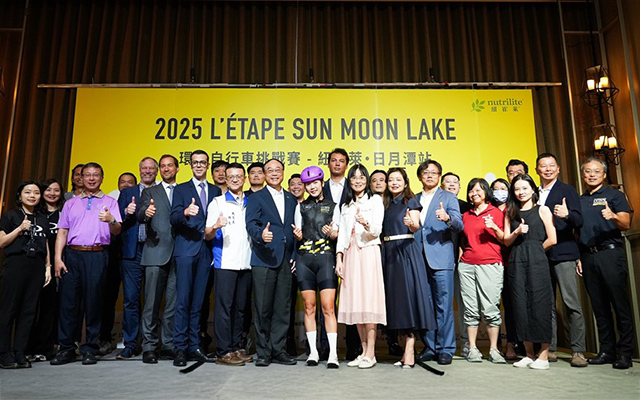
More than 3,000 cyclists from over 30 countries are expected to take part in the L’Étape Tour de France – Nutrilite Sun Moon Lake Station when it rolls into Taiwan on October 18, 2025.
The amateur cycling event, part of the L’Étape Series by Tour de France, will mark its first Asian stop of the year at Sun Moon Lake, with a 104km Challenge route and a 29km Classic route starting from the Xiangshan Visitor Center.
Taiwan gears up to welcome L’Étape Tour de France’s first 2025 Asian leg
For the first time, electric-assisted bicycles will be allowed in the competition category. The winner of the 104km Challenge will qualify for the 2026 Tour de France World Championships in France.
Calling Taiwan a global “cycling kingdom”, the Tourism Administration said the international event would further raise the country’s profile among cycling enthusiasts.
Sun Moon Lake previously hosted the event in 2023. Other past Asian editions of the L’Étape Series include Thailand’s Phang Nga (2022), Don Thani (2024), and Malaysia’s Desaru Coast (2022, 2023) and Melaka (2024).
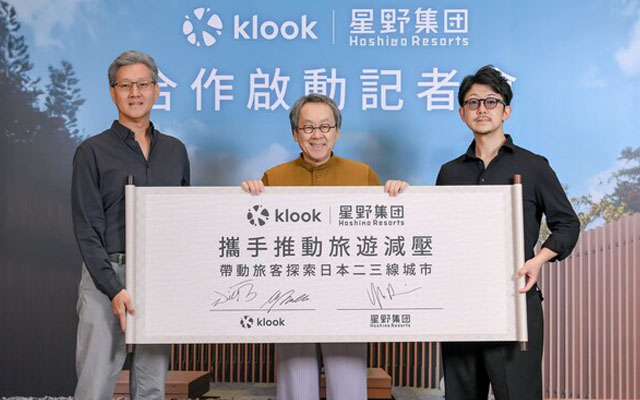
Klook has partnered with Japanese hospitality company Hoshino Resorts to promote travel to regional Japan. The collaboration is intended to ease overcrowding in major cities such as Tokyo, Kyoto and Osaka by encouraging travel to less-visited destinations.
According to Klook’s latest Travel Pulse survey, 63 per cent of Asia-Pacific travellers are looking to avoid crowded destinations and prefer less-travelled areas. Klook’s data also shows growing interest in cities such as Kunigami, Nagakute and Usu, which have seen a recent rise in demand.
From left: Klook’s Wilfred Fan, Hoshino Resorts’s Yoshiharu Hoshino, and Klook Japan’s Wataru Masuda
The increase is attributed to developments such as the opening of the JUNGLIA theme park in Kunigami, continued interest in Ghibli Park in Nagakute, and nature-based tourism in Usu, including volcano treks, scenic trails and open-air hot springs.
Despite growing interest in regional areas, many international visitors face practical challenges such as limited transport coverage, language barriers and a lack of accessible booking options. To address this, the partnership includes Stay+ bundles that combine accommodation at Hoshino Resorts’ KAI ryokans with transport passes such as the JR Pass. These bundles, available through Klook, include instant booking and multilingual support.
The bundles cover 21 KAI properties in areas including Poroto in Hokkaido, Tsugaru in Tohoku, and Okuhida in the Japanese Alps.
The rollout will begin in Taiwan, South-east Asia and South Korea, with additional markets planned.
“Overtourism is a global issue, and Japan feels it strongly,” said Wilfred Fan, chief commercial officer of Klook. “Alongside Hoshino Resorts, we’re committed to promoting sustainable tourism through regional travel, and take this step toward securing the long-term future of Japan’s tourism ecosystem.”
Yoshiharu Hoshino, CEO of Hoshino Resorts added: “By partnering with Klook to integrate accommodation and transportation, we believe we can effectively address the challenge of limited local transportation and attract more travellers to explore various regions of Japan, improving both the visibility and accessibility of local tourism.”
Banyan Group will open its 100th property, Mandai Rainforest Resort, in Singapore this November, marking the occasion with a weeklong celebration and charity festival. The group is also celebrating 20 years in China this year, with five new hotel openings, and will launch its first safari resort, Ubuyu, in Tanzania’s Ruaha National Park in late 2025.
Other developments include new properties in Vietnam, the Philippines, and Madrid, and expanded real estate efforts in Phuket.
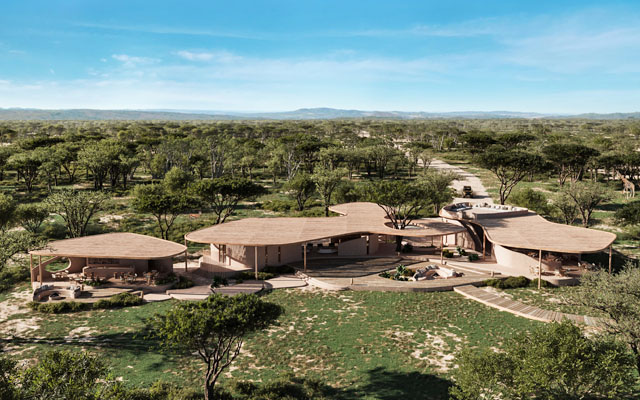
Banyan Group will launch its first safari resort, Ubuyu, in Tanzania’s Ruaha National Park in late 2025
In addition, the group also continues to expand its community impact through the Banyan Environmental and Community Fund, launched in partnership with the China Environmental Protection Foundation. A new clean water project in Lijiang will launch this year to mark the 20th anniversary, complementing ongoing initiatives in coral reef restoration, marine protection, and education.
“The first half of 2025 reflects not only the growth of our footprint, but also our belief that hospitality should offer more than just a place to stay,” said Eddy See, president and CEO of Banyan Group. “It’s about something authentic shaped by thoughtful design, cultural depth, and genuine care. As we grow, we remain committed to using travel as a force for positive change and to deepening meaning, not just expanding presence.”




 He was most recently commercial director for Air France KLM in the UK and Ireland.