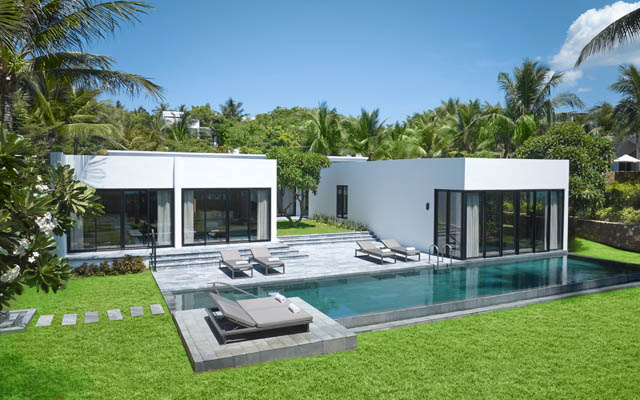
COMO Metropolitan Bangkok has launched stay-and-dine packages at nahm, which was this month awarded with one Michelin star in the inaugural Bangkok Michelin guide.
Nahm was this month awarded on Michelin star
The ‘nahm Experience’ package (double occupancy) includes a one-night stay in a Metropolitan Room; a guaranteed table at nahm for dinner and tasting menu; and breakfast at glow.
Packages are priced from 7,270 baht (US$223) for single occupancy to 9,770 baht for double occupancy. It represents a 10 per cent saving overall if guests were to book the room and the tasting menu for two separately.
Dishes include the King fish salad with pomelo, lemongrass and lime and the restaurant’s signature blue swimmer crab curry.
Expedia is holding out an olive branch to hotels, offering to lower commissions for the roomnights it generates, on the condition they reinvest the savings on its technology, marketing and data offerings.
Cyril Ranque, president, Expedia Lodging Partner Services, makes a case that this is a “two-sided” solution for both lodging partners and Expedia: hotels will be stronger if they invest on, say, marketing campaigns or tools to optimise their operations, and stronger hotels are the backbone of the Expedia content.
Ranque: two ways of lowering commissions
“The sustainability of our business model depends on the richness of our supply from the consumer standpoint. If supply is diversified and is of high quality, consumers will come. So it is important for us to build an ecosystem that allows any type of partner (small independents or big global chains) to be successful on our marketplace. Equipping them with tools – such as Rev+ (revenue management tool), ALICE to optimise operations, etc, the list is long – is actually in our longterm interest,” he said.
Ranque is responding to TTG Asia’s question on whether Expedia will lower commissions as a result of lower fixed costs achieved through growth over the years. He said one way is through a flat margin reduction. Compared to when it started in the US with a 25 per cent margin, Ranque said margins are now lower and “quite diversified” depending on markets and other factors.
The other way is agreeing with partners that the base compensation is lower, but “they guarantee us they will spend the money (savings) on dynamic products (from Expedia), such as data marketing technology when they need the exposure to get the business, so we would be making the same average compensation”.
“It’s a longterm strategy, you don’t move that overnight, but that’s really our intention,” Ranque said.
With Expedia bookings growth being under threat from factors such as the rise of alternative accommodations, or Google’s advancements into travel booking, Expedia clearly wish it could be done overnight. All of its leadership team chanted ‘Better Together’ at last week’s Expedia Partner Conference, the idea being hotels feedback to Expedia what ails them, Expedia tailors the solutions, hotels become more efficient and effective, the consumer travel experience becomes better, the travel product becomes more attractive, more bookings will follow and everyone wins.
The pitch – as persistent and incessant as Christmas jingles at this time of the year – follows the launch of Expedia Powered Technology last August, which reflects Expedia’s recognition it needed to move beyond being just a distribution channel into business solutions.
Expedia Powered Technology includes solutions such as Partner Loyalty Enrolment, which enables hotels to enlist and sign up users from Expedia sites for their loyalty programmes; MICE Booking Technology, which automates the booking process for small and medium-sized meetings so hotels will have more time to work on the large ones; Rev+, a revenue management tool; and ALICE (which stands for A Life-Improving Customer Experience), a software it invested in early last year which allows hotels to solve their operational pain points.
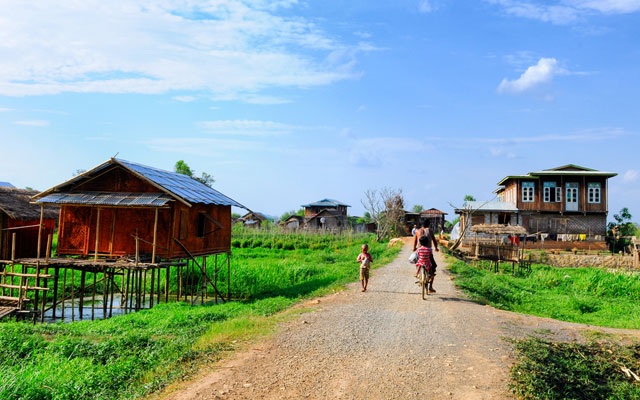
Communities must be kept at the heart of community-based tourism (CBT) projects if they are to thrive, said tour operators, as Myanmar announces three initiatives slated to open next year.
The Ministry of Hotels and Tourism revealed that it will work with communities in Ma Kyone Galet Salone, a sea gypsy village in Kawthaung, Don Nyaung Mhaing village in Myeik, and San Hlan village in Dawei to develop a range of tourism products.
CBT can be one of Myanmar’s tourism pillars, but needs to be managed well and sensitively
With Myanmar home to more than 135 ethnic groups, offering a diverse range of traditions, cultures and religions, and a swathe of remote villages giving a glimpse into village life, CBT has been earmarked as an important pillar to drive tourism while providing a sustainable form of income for impoverished communities.
Whin Eindray Wint Wah, director general of Pan Thu Kha Travels and Tours, said: “This is a good way to grow tourism in more rural areas, and there is a lot of potential. But it needs to be developed carefully, and with the communities.”
Edwin Briels, managing director of Khiri Myanmar, said CBT projects are a “good move” for Myanmar. However, efforts need to be made to ensure the tourist dollar benefits communities regardless.
He added carrying out marketing and receiving backing in the form of bookings is also essential. Said Briels: “A challenge is ensuring that high hopes created by a community are met in reality by sending enough paying customers to a project. On the flip side, balanced marketing of a project is very important to avoid disappointment among visitors, if the project is a simple or humble one.”
Bertie Lawson, managing director of Sampan Travel, said with CBT opportunities spanning the spectrum, it is necessary to ensure attractive products are developed.
Lawson said: “CBT can be done well, and it can be done badly. It is vital that all such projects are led by the communities themselves, and that they offer something authentic and of interest to tourists in Myanmar.”
Tourego, a mobile tax refund app and travel guide rolled into one, is being made available to tourists in Singapore.
Said to be the world’s first mobile tourist tax refund solution, Tourego migrates the current paper-based tax refund process onto the app, allowing users to receive and store their refund tickets in an e-wallet.
Tourego is also a travel companion that provides tourist users with the latest shopping, food and travel tips about Singapore. In addition, it has a shopping list function that recommends Tourego retailers as users put together their wishlist.
Already spanning more than 100 doors in Singapore, the Tourego retailer network coverage is expected to increase with more partner announcements expected in the coming months.
Singaporean entrepreneur, Tan Tie Wee, founder and CEO of Tourego, explained: “Tourego wants to be Singapore’s solution to the worldwide problem of tourists spending too much time at airports trying to get their tax refund. Our mobile app enhances the shopping experience for tourists, helps our retail partners improve their retail operations efficiency, and gain big data insights into the consumer behaviour of their tourist customers.”
Tourego is supported by government agencies including the Singapore Tourism Board, Infocomm Media Development Authority, SPRING Singapore; and approved by the Inland Revenue Authority of Singapore.
Launching in Singapore as its first market, the app is free to download, but is currently only available to non-Singaporeans (eligible tourists for tax refund) to register for an account.
Cybersecurity, autonomous vehicles and emerging technologies will take the spotlight at the Singapore Airshow 2018.
The show, which will run from February 6-11, 2018, will see more than 1,000 participating companies from some 50 countries exhibiting the latest products and services in cybersecurity, unmanned aviation systems and more.
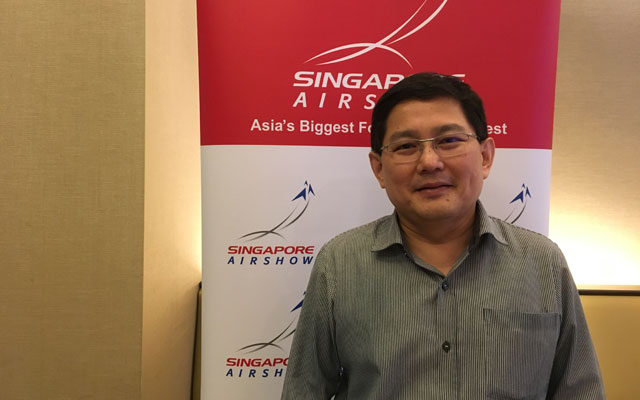
Leck: key aviation trends will be looked at in depth
“These key trends are what’s happening in the industry, which is why we singled them out for the Airshow,” said Chet Lam Leck, managing director of Experia Events, the organiser of Singapore Airshow.
He added that the exhibition and discussion forums can help expose visitors to product options and different viewpoints in the trade.
In particular, the entry of autonomous vehicles has generated “anxiety” in the industry, and the Airshow hopes to address these concerns, remarked Leck.
A new addition to the upcoming Airshow is What’s Next @ Singapore Airshow, a segment that brings in start-up companies to showcase and pitch their latest aviation innovations to interested investors and partners.
This new initiative will help introduce “new mindsets” in aviation, “expose exhibitors to what’s available out there for them to tap on” and educate entrepreneurs on the requirements of companies in the industry, explained Leck.
The Airshow will be held at Changi Exhibition Centre. In 2016, it drew 48,229 trade attendees from 143 countries and regions.
Rosewood Hotel Group has introduced KHOS, a new concept for business hotels with a lifestyle orientation.
Derived from the Mongolian word meaning “pair”, KHOS is meant to symbolise the blend of work with play, people with ideas, East with West and business with lifestyle.
KHOS will establish a global footprint, matching the footsteps of its guests to capital cities and urban portals, up-and-coming business centres, and resort destinations, with the first KHOS hotels to be announced and opened in 2018.
According to Sonia Cheng, CEO of the Rosewood Hotel Group, the brand was designed to serve the needs of a “new generation of business travellers, who are constantly on the move” and “inseparable from lifestyle”.
“KHOS will fulfill the needs of a more contemporary, vibrant and collaborative work era. It is envisioned as the go-to destination for teams to unite and leaders to socialise with public spaces that are vibrant and convivial. Within each of its communities, KHOS will also act as a gathering point for people to form bonds and gain mutual inspiration with like-minded influencers, those who are curious and gain their insight and motivation from a constantly stimulating global backdrop of cultures, art, design and cuisine,” she added.
Traditional hotel facilities and services, including meeting and event spaces as well as dining options, will hence be re-conceived to create opportunities for guest interaction, flexible use and fresh experiences.
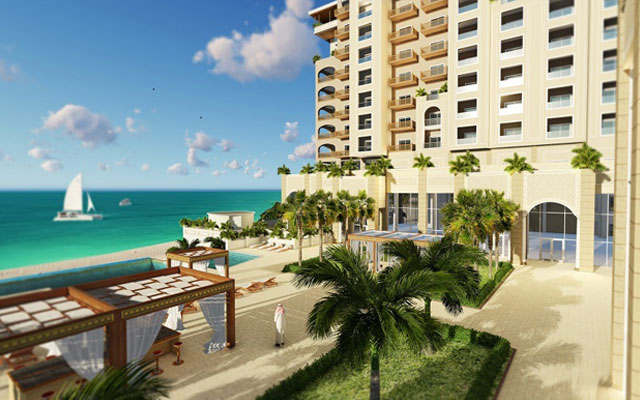
Minor Hotels has signed a management agreement with Basma Group and ARADA for a new Anantara resort in Sharjah in the UAE.
Scheduled to open in mid-2020, the 233-key Anantara Sharjah Resort will be located on a prime beachfront location in Sharjah, approximately 30 minutes’ drive from Dubai International Airport and 15 minutes’ drive from Sharjah International Airport.
Adding a resort in Sharjah will help extend the brand in the region and reach new markets
The new-build resort will offer a selection of accommodation options including Deluxe Rooms and Luxury Suites. Facilities include multiple dining options with a specialty restaurant located on a pier, a male and female spa and wellness centre, a kids’ club, a swimming pool and a ballroom that can accommodate up to 540 guests for a banquet.
Anantara Hotels, Resorts & Spas was launched by Minor Hotels in 2001 and currently operates 39 properties in 12 countries. The luxury brand has nine hotels and resorts in the Middle East – six in the UAE, two in Oman and one in Qatar.
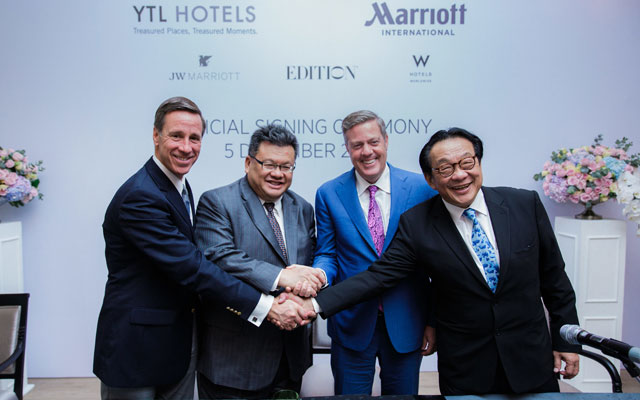
Marriott International and YTL Hotels have agreed to develop two new luxury hotels in Malaysia under the JW Marriott and Edition brands.
In Malaysia, YTL Hotels’ second JW Marriott hotel will be located near Kuala Lumpur Sentral. The Edition in Kuala Lumpur, Malaysia’s first, will neighbour Kuala Lumpur City Centre, and offer 350 keys.
(From left) Marriott International’s Arne Sorenson; YTL Hotels’ Mark Yeoh; Marriott International’s Craig Smith; and YTL Group of Companies’ Francis Yeoh
Moreover, the two companies have signed MoUs for two hotels in Japan, an Edition and a W Hotel in Niseko Village, Hokkaido. This new collaboration in Malaysia and Japan expands the partnership to 15 international properties across six brands.
Separately, YTL Hotels on December 5 celebrated the relaunch of the 578-room JW Marriott Kuala Lumpur after a complete refurbishment.
Marriott International has appointed Bernhard Langer as general manager of Four Points by Sheraton Sydney, Central Park, effective February 1, 2018.
Langer will oversee and manage all aspects of the hotel’s operations, including financial performance, business strategy development and implementation of the Four Points service philosophy to ensure guest satisfaction. He will also assemble the hotel’s management team.
Langer will report to Sean Hunt, area vice president, Australia, New Zealand and Asia Pacific, Marriott International.
Previously the hotel manager of Sheraton on the Park, Sydney, Langer has 18 years of experience working across the Westin, St Regis, and Sheraton brands in countries such as Fiji, Singapore, Thailand, China and Japan.
Four Points by Sheraton Sydney, Central Park will open in August 2018. The property features 297 guestrooms, a bar and lounge with an outdoor terrace, an all-day dining restaurant, 550m2 of function space and a fitness centre.
Reporting from Expedia Partner Conference 2017, Las Vegas
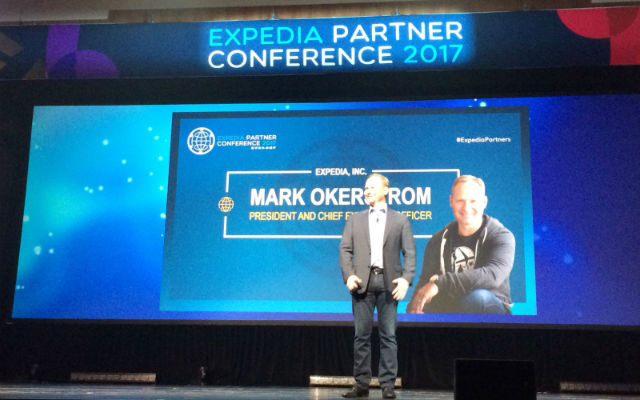
A combination of robust growth in global travel and a digital revolution sees Expedia’s new CEO Mark Okerstrom being hugely optimistic of the company’s future despite its recent stock plunge and a third-quarter loss of US$8 million.
Addressing more than 5,000 partners attending Expedia Partner Conference 2017 in Las Vegas, Okerstrom trained their eyes on the longterm and what Expedia intends to do to grow.
He outlined three priorities: harnessing the local markets Expedia is already in rather than expanding into new ones, being more customer-centric and speeding up the pace of innovation.
The basis of Expedia’s new priorities under Okerstrom, who replaced Dara Khosrowshahi as CEO on August 29, is the combination of continued growth in travel and the digital revolution. In an “act of defiance” against terrorism, travel bans, natural calamities, people are travelling more than ever before, he said, chalking up US$1.6 trillion in travel spend in 2017 and growing six per cent year on year. International markets are growing, with countries like China, Indonesia and India showing absolutely phenomenal growth rates and bypassing laptops straight to mobile which has everything they need.
“So more innovations (are needed). The shift to mobile is almost old news now. We’re moving into voice, chatbots, machine learning, artificial intelligence and driverless cars,” he said.
On being global but locally relevant, Okerstrom said: “The land grab for being present across the world is largely complete and it’s time to turn our attention to be locally relevant in every market,” he said.
Okerstrom: speeding up pace of innovation
If it’s Malaysia, that means having all the local inventory, including places where Malaysians go for the weekend, being translation-perfect and speaking in their tone of voice, so “you feel you are actually working with a Malaysian travel agency”, said Okerstrom.
Expedia also recognised the need for Expedia to be more customer-centric. “In the first 10 to 20 years of travel, we’ve taken the green screen of the GDS, turning around to customers saying ‘here, you do the research, you book’, and we’ve gone from desktop to mobile,” he said.
The future sees the task going back to Expedia to anticipate customer needs. He cited an example of notifying a family while they are still in the air that they have missed their connection, re-booking them on a different flight, taking care of their accommodation needs. Egencia, the group’s corporate travel management company, is already doing this. “We want to bring more of this to leisure travel,” said Okerstrom.
Or, getting much closer to personalisation using artificial intelligence to help customers find the perfect trip. He said he takes two trips a year, one during the February school break and the other in August with a group of friends, always in the same destination and hotel – he’s just waiting for an email from Expedia recommending something different based on the use of artificial intelligence.
In man versus machine, so far man has won. In future, machines can win, he said, and Expedia wants to speed up the pace of innovation internally, he said.
But it’s no longer OTAs innovating on one side, then talking to partners, he said. The future is about joint innovations, joint success. “We are better together. You with us, we’re unstoppable.”
He said since 2010, some US$62 billion funding has been put into travel technology, half of that in the last two years. Since 2005, there have been 1,500 digital travel startups, fewer than 100 a year, but last year there were almost 250. “The pace of change is absolutely accelerating. Of course Expedia, and you, are a part of that,” he said.
Okerstrom’s address was followed by senior Expedia executives spotlighting ‘better together’. Ariane Gorin, senior vice president Expedia Affiliate Group Brand, used a Formula One analogy. In F1, the driver gets the attention, decides when to accelerate, when to overtake the competition. The race cars are masterpieces with the power to thrust them forward, and the team is the support before and during the race. “You our partners are always in the driver seat. Marketing campaigns and our platforms are the race cars and the team are the engineers that support the race – all are truly better together,” she said.
Scott Jones, Expedia vice president design and user experience, demonstrated how Expedia Innovation Lab tries to understand what customers want through electromygography. Planning travel is one of the most complicated, joyless tasks because of the time, money, uncertainties if it’s the right travel experience, plus it can’t be returned unlike other online purchases, he said. Planning isn’t the trip, making moments and memories is the trip. “There’s more we can do to put more anticipation and aspiration into experiences. I do believe we can make better memories together. We got the technology, we can mine it,” he said.
In outlining the massive growth of travel and how Expedia is positioning itself to harness that growth, Okerstrom indirectly addressed the concern of Expedia’s stock plunge and earnings loss, which it had described as short term arising from the impact of hurricanes and earthquakes, increased marketing spend at Trivago and increased technology costs at HomeAway.