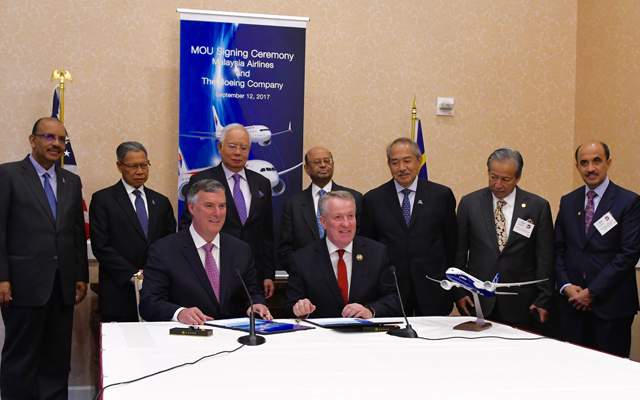
Boeing’s Kevin McAllister (left) and Peter Bellew at the signing ceremony in Washington DC
Malaysia Airlines (MAS) has signed an MoU with Boeing for 16 airplanes, including eight 787-9 Dreamliners converted from an existing order of eight Boeing 737 MAX aircraft, and eight additional purchase rights for the 737 MAX 8s.
Also part of the agreement is Boeing’s Global Fleet Care service to maintain the national carrier’s current and future Boeing airplanes.
Boeing’s Kevin McAllister (left) and Peter Bellew at the signing ceremony in Washington DC
“New widebody aircraft are a key to making Malaysia Airlines a premium airline offering a five-star product again. The extraordinary range of the 787-9 gives an ability to operate to any point in Europe and some US destinations from Kuala Lumpur in future,” commented Peter Bellew, managing director and CEO of Malaysia Airlines.
He added: “The MoU with Boeing on their Global Fleet Care programme will allow the two companies to build a world-class MRO (maintenance, repair and overhaul) for the 737 MAX, 787 and 737NG based on Malaysia’s existing facilities in Kuala Lumpur.”
MAS currently operates more than 50 Next-Generation 737s and has an additional 25 737 MAXs on order, including 10 for the new 737 MAX 10.
Barr: greater autonomy and independence in individual markets
InterContinental Hotels Group (IHG) CEO Keith Barr said he is not de-prioritising AMEA with his move to create a new mega region that combines AMEA with Europe based in the UK.
In fact, he wants to bring resources closer to the markets, Barr said in a phone interview from London.
The intention, according to Barr, is not to have a big office in Europe running the business but “to have more resources going into the markets close to the hotels and owners (and) to enable the markets have more autonomy and be a bit more entrepreneurial to drive performance. So we’re moving resources around while maintaining centres of excellence on development, luxury, F&B, operations, in Asia.”
Barr: greater autonomy and independence in individual markets
Barr recounted that was how he ran Australia/New Zealand/South Pacific years ago. “I was a fairly independent business; I wasn’t dependent on Singapore. I had development, sales & marketing, revenue management, I ran my own business, and I had the ability to make decisions on how we partner, how we negotiate a deal, and that’s what I want to see. I want to empower southern Asia, India, and so forth. Sure there are some things we can’t do from a back office perspective such as Finance or HR which are more process-related.”
He’s looking at how best to structure EMEAA on a market basis, he said. Macpherson will have accountability for the overall strategy of EMEAA, and there will be leadership in each of the markets who will be accountable for operating the hotels, opening hotels, growing the business. “We’ll work through who should be in those roles going forward. We have a number of people in place and we have to look at which other leaders we want to have in place going forward,” he explained.
He reiterated: “There’re going to be resources in Singapore, it’s a huge important part of the world for us. There will be resources in other important markets for us and we’ll be more focused on putting resources in markets that have the highest potential, based on pipeline, relationships with have with owners and our competitive positions too.”
Asked why this model is relevant for IHG today, Barr said: “The business has got scale now. Where we didn’t have scale in many of those markets in the years past, it did make sense to do everything out of Singapore. But now that we have scale in those markets, the best way to drive performance for owners is to grow more resources in those markets.”
Each market, he reminds, is fundamentally different. Australia/New Zealand has lots of institutional funds compared with southern Asia, which has lots of high net worth individuals, managed luxury and upscale business, he points out. “So no one size fits all,” he said. “I want to make sure we’ve got the right go-to-market strategy.”
Regions are just constructs that companies make, says Barr. What’s important is “how to ensure we have the right operating model in the markets and not be constrained (by traditional ways), how we look at using technology, new ways of working and leveraging our scale”.
Air New Zealand estimated 2,000 of its customers were affected yesterday
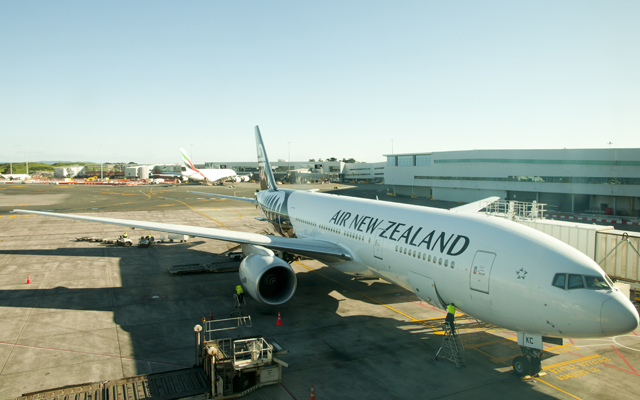
Flights continue to be rerouted and cancelled at Auckland Airport, which faces a fuel shortage after an oil pipeline to the airport was ruptured in Ruakaka, Northland last weekend.
Due to the fuel crisis, the limit on jet fuel that can be uplifted is now 30 per cent of normal usage, according to Air New Zealand.
Air New Zealand estimated 2,000 of its customers were affected yesterday
On Saturday and Sunday, a total of about 27 domestic and international flights departing Auckland Airport were cancelled, according to a statement from the airport. And at Air New Zealand, about 2,000 customers were expected to be affected on Monday alone.
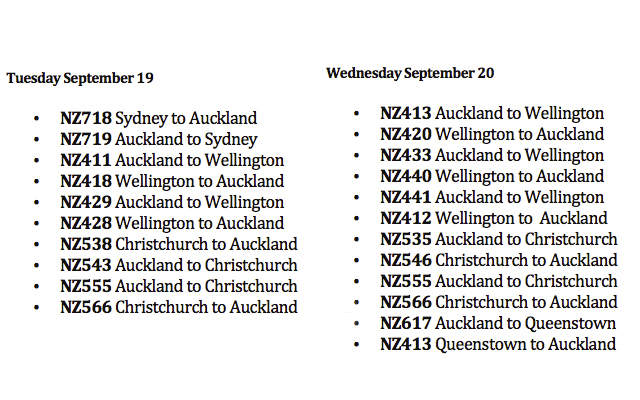
The national carrier announced flight cancellations over the next couple of days to be as follows:
Air New Zealand cancellations, accurate as of Monday evening
Air New Zealand said yesterday afternoon that it was temporarily grounding some domestic and Tasman services to consolidate passenger loads; ensuring domestic jet services uplift maximum fuel limits when operating out of Wellington or Christchurch to reduce fuel requirements at Auckland; and requiring some longhaul services to and from Asia and North America to stop for refuelling at selected Pacific or Australian airports.
At Emirates, the daily flight (ED449) from Auckland to Dubai was rerouted via Christchurch for refuelling over the weekend. From September 18 – 24, ED449 will operate via Melbourne, departing Auckland at 20.30 for arrival in Melbourne at 22.40. It then leaves Melbourne at 00.25, arriving in Dubai at 08.30.
The gulf airline advises that passengers with onward connections during this time contact their local Emirates office and check the status of their flight. Connecting flights will be rebooked as required.
Meanwhile, Singapore Airlines announced that its Auckland-Singapore flight (SQ286) on September 20 and 21 will require a stop in Sydney to refuel. Customers who miss connecting flights will be rebooked on the next available connecting flight from Singapore. SQ286, originally due to arrive in Singapore at 19.00, is now expected to arrive at 20.10 on September 20 and 21.
Auckland Airport chief executive Littlewood commented that the airport was working closely with airlines and other airport stakeholders, including the Board of Airlines Representatives New Zealand, to monitor the impact of the disruption.
“We will have additional staff in the terminals supporting passengers and addressing any questions or concerns they may have. We strongly recommend that any passengers travelling over the coming days plan ahead and check with their airline for the latest information.”
According to a statement issued by the New Zealand Labour Party, the security of fuel supply in Auckland has been a concern for years, particularly where it concerns jet fuel to Auckland Airport. “And they have only got worse (over the year) as the city grows and air traffic expands,” the statement read.
Calls made in 2012 for the government to help establish a new fuel storage facility in west Auckland and for the Wiri terminal to be turned into jet fuel facility were not taken up. The labour party quoted the reasoning given in a 2012 Cabinet paper to be the large capital investment, estimated at an upfront cost of NZ$57 million (US$41.6 million).
Airbnb has the largest share of voice on both news and social media channels in Asia, trumping other hotels including legacy brands that have been in operation for much longer, a study by Meltwater shows.
This data was uncovered by tracking the total mentions of brands online, including ASEAN’s top five hotels, sharing economies such as like Airbnb and Homeaway, and Online Travel Agents (OTAs) like Expedia and Agoda.
Airbnb most talked about in hospitality
Mimrah Mahmood, regional director, media solutions, Meltwater Asia-Pacific, said: “According to our research, Airbnb, the pioneer of the sharing economy, has stayed ahead of its competitors with its first mover advantage in Asia, led by a focus on digital strategy and localised content. This has brought increased engagement from customers, which has corresponded to its position as the market leader.
“The hospitality industry has seen significant transformation in recent years. Brands that are navigating this disruption need to understand technology has redefined the customer experience,” added Mahmood.
Other key findings
In the hotel industry, Sheraton dominated share of voice in news (32%) and social (28 per cent) of earned media, with Shangri-La (27 per cent) and Marina Bay Sands (27 per cent) coming in 2nd and 3rd respectively for news channels, and 3rd (24 per cent) and 2nd (27 per cent) respectively for social channels. Marina Bay Sands tops both news and social for positive sentiment, followed by W Hotels and Ritz-Carlton. Although both Shangri-La and Sheraton had the highest SOV in news and social media among the hotels analysed, both brands have a lower percentage of positive mentions, with a bulk of the sentiment being neutral.
In the sharing economy, Airbnb has the largest news (12,637) and social media (68,056) volume on earned media, making the brand the undisputed market leader for the sharing economy in ASEAN, as well as globally.
In OTAs, Agoda dominates the social media sphere, capturing just over 60% of the share of voice, followed by TripAdvisor at 30.46 per cent. On Twitter, TripAdvisor has the largest share of followers (89.57 per cent) whilst Expedia has a larger share of the interactions (51 per cent). TripAdvisor is the King of Instagram among the OTAs, having 15 and 33 times more interactions as compared to Expedia and Agoda respectively.
Meltwater provides insights and consultancy to help brands future-proof their business.
Monique Arnoux is now CEO of Bangkok-based Destination Asia, replacing James Reed, who has been promoted to executive chairman.
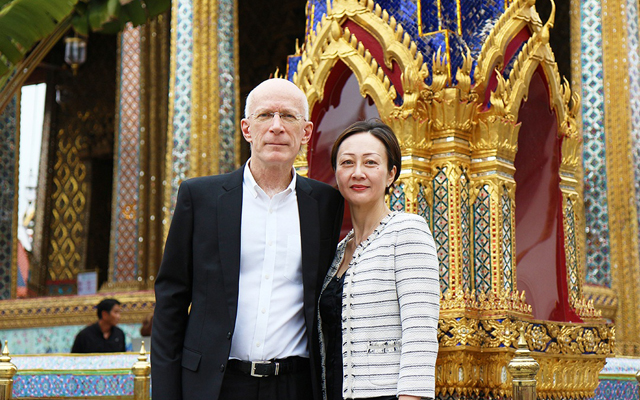
Arnoux was global sales and marketing director of Hotelbeds’ Group destination management division based in Bangkok. Before her 10-year tenure holding various regional positions at the group, Arnoux was director / head of FIT at Pacific World based in Hong Kong. Prior to that, she was head of hotels and strategic development with Hutchinson – Priceline.
Reed (left) with Arnoux
Reed was one of the founders of Destination Asia back in 1996 and was instrumental in expanding the group’s footprint from just two countries and 18 staff in 1996, to its current 11-country pan-Asia network with over 600 staff and 29 operating offices.
Last year, DNATA acquired a stake of Destination Asia.
Visitors holding valid residence permits or visas from the mentioned countries may apply
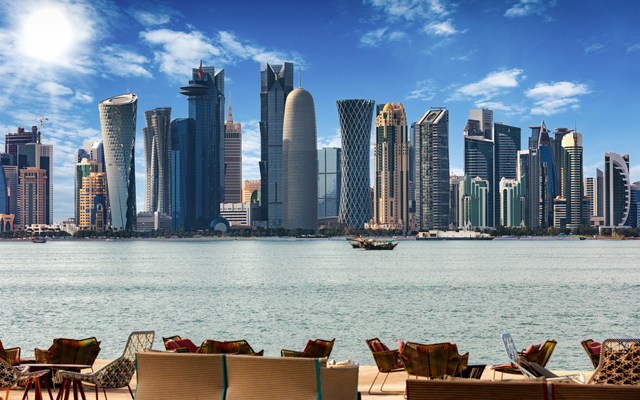
Effective September 27, Qatar will make Electronic Travel Authorisation (ETA) available to visitors that hold valid residence permits or visas from the UK, the US, Canada, Australia, New Zealand, the Schengen countries, or the countries of the Gulf Cooperation Council.
Eligible visitors can obtain an ETA by completing an online application at www.qatarvisaservice.com four to 90 days prior to travel, requiring them to provide proof of accommodation (e.g. hotel booking), details of return (or onward) travel, a copy of their passport with a minimum validity of six months, and a copy of their residence permit or visa to the aforementioned countries.
Visitors holding valid residence permits or visas from the mentioned countries may apply
The ETA is for a single trip and is valid for 30 days, renewable for a further 30 days on the same website. Applicants are charged a US$14 service fee regardless of whether they are successful.
Brigadier Mohammed Al Ateeq, director general of the department of passport and expatriates affairs at Qatar’s Ministry of Interior (MoI), commented: “We are continuously reviewing Qatar’s visa policies and seek to update them in line with Qatar’s economic and social aspirations. Visitors who are not eligible for an ETA are also welcome to apply for a regular tourist visa through the same e-visa platform.”
This development comes as part of a series of measures that Qatar has taken to facilitate visitor access to the country, including a relaxation of visa requirements for nationals of 80 countries.
The ETA was announced during UNWTO’s General Assembly, taking place in Chengdu, China. Hassan Al Ibrahim, chief tourism development officer at QTA, remarked: “This is testament to Qatar’s commitment to openness, and championing the right to tourism for all people, in line with the UNWTO’s Global Code of Ethics for Tourism.”
He added that visa facilitation is a critical component of the national tourism sector strategy, which QTA has recently reviewed in partnership with stakeholders from the public and private sectors.
Khin: caravan tours that run from India via Myanmar and Thailand to Singapore being developed
To raise its own visitor numbers, Myanmar is working with operators and organisations in neighbouring countries on improving cross-border tourism in the region.
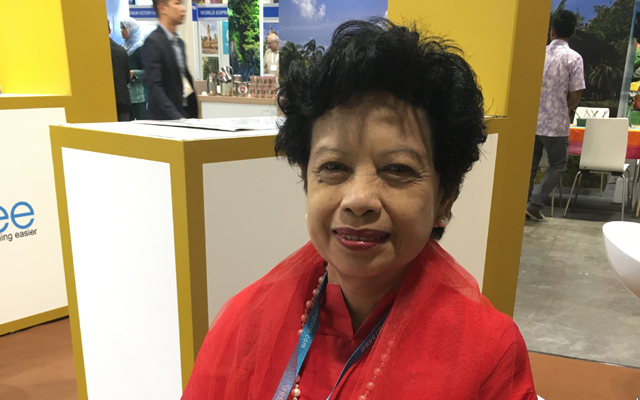
One of its efforts is the development of caravan tours that run from India via Myanmar and Thailand to Singapore, revealed Khin San Aye, executive committee member of the Union of Myanmar Travel Association.
Khin: caravan tours that run from India via Myanmar and Thailand to Singapore being developed
The association hopes to promote through these tours “community-based tourism”, or travel and overnight stays at local villages near major attractions such as Bagan and Mandalay, said Khin.
The caravan tours will be organised by an Australian company based in India and developed with the Travel Agents Association of India. The parties are “still negotiating”.
The government is throwing strong support behind this initiative by improving access to villages, stepping up destination marketing, and increasing dialogue between inbound companies.
The Ministry of Hotels and Tourism has also been organising study trips to other countries such as Japan that are established in this area.
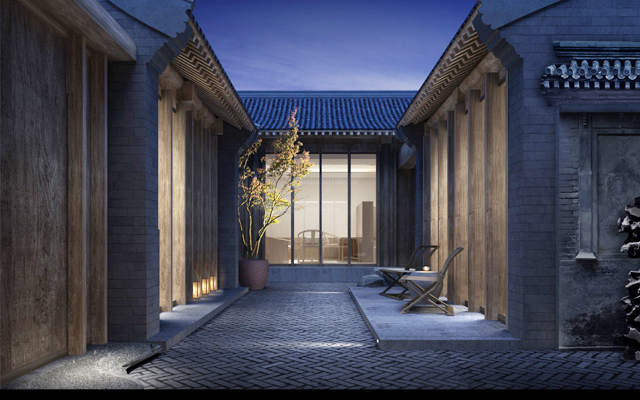
Mandarin Oriental Qianmen, Beijing is located within a hutong quarter currently undergoing preservation and regeneration works
Mandarin Oriental Hotel Group will manage a luxury hotel in Beijing located in a traditional hutong quarter close to Tiananmen Square.
The hotel, Mandarin Oriental Qianmen, Beijing, is being developed by Beijing Tianjie Group Company and is expected to open in 2018.
Mandarin Oriental Qianmen, Beijing
The traditional Qianmen East Hutong Quarter is currently undergoing preservation and regeneration. Hutongs date back to the 13th century and comprise courtyard houses connected by narrow lanes and alleyways.
Guests can expect to stay in landscaped courtyard suites and experience the traditional Beijing way of life within the labyrinth of alleys and lanes.
Facilities within the hotel will include multipurpose function rooms, indoor swimming pool, fitness centre and spa. For F&B options, there will be an all-day dining concept with a roof terrace, a Chinese restaurant, a lobby lounge, a traditional tea lounge and a Mandarin cake shop.
Broken or ineffective mobile websites
It’s a well-known fact that consumers have little patience with poor mobile websites; this is even more critical for Millennial travellers who grew up with technology and believe that “it should just work”. Beyond that, there is the additional need to ensure that your product provides a good user experience (UX) as it will drastically improve your conversions and ROI.
Studies show that 57 per cent of users won’t recommend a business with a poorly designed mobile site and, because Millennials are heavily influenced by peer recommendations, a poor mobile site (or app) can have a significant negative impact on your bookings and revenue.
Yup, you heard that right: if your mobile website isn’t making it easy and painless for potential guests to search for rooms, compare options and book, it is VERY likely that you’re not only missing out on valuable bookings but also giving them to your competition!
Inconsistencies of user experience across all channels
Ready for another buzzword? Today’s consumers are looking for an omni-channel experience, which, in layman’s terms, means that users want the same brand experience, regardless of the channel through which they engage with your brand.
As a matter of fact, 83 per cent of mobile users say that a seamless experience across all devices is very important. So, in addition to having a mobile website that works well, it is also important that your guests’ mobile experience is consistent across all channels.
You obviously cannot have complete control over your hotel’s branding and the mobile user experience of the indirect channels (i.e. OTAs) but on your own channels, it is integral that you maintain consistent brand presentation and pricing. Whether they book through your desktop website, mobile website, mobile app, email, call or text, your customers should be receiving the same recognition and service at every touchpoint.
Inability to view video via mobile
Did you know that 48 per cent of Millennials view video solely on their mobile device? No wonder they are always staring at their mobile devices!
So it stands to reason that if your mobile site doesn’t have the bandwidth or capability to showcase the videos that you have on your desktop website, almost 50 per cent of your potential guests (i.e. Millennials) will never see your video content. Because we know that video is a highly effective marketing medium for travel companies (45 per cent of leisure travellers booked instantly after watching a video of the travel activity… 72 per cent of business travellers and 74 per cent of affluent travellers booked upon watching a video), this mobile mistake could cost your hotel a lot of revenue.
There you have it: three big problems that will push Millennials into the arms (or to the mobile website) of the competition!
Hong Kong not as attractive to Indian toursts now with PAR
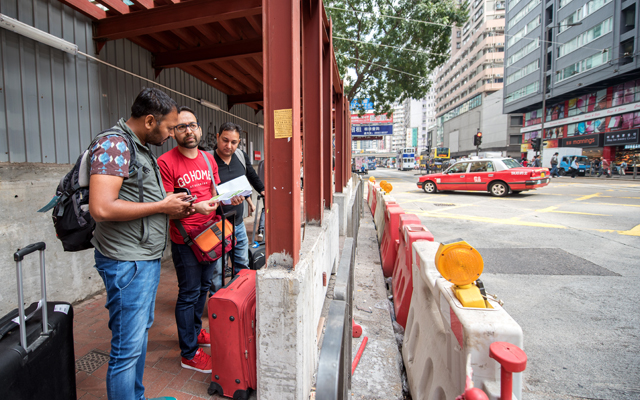
Hong Kong’s online pre-arrival registration (PAR) requirement for Indian nationals, in place since January, has triggered a 20 per cent drop in Indian inbound to 207,133 in 1H2017.
And with Macau a popular twin destination in Indian travellers’ itinerary, the entertainment city has also seen fewer Indian footfalls – down 12.9 per cent to 91,090 in 1H2017.
Hong Kong not as attractive to Indian tourists now with PAR
Ronald Wu, director of sales and marketing at Hong Kong’s Grayline Tours, said the impact on Macau was lighter compared with Hong Kong because Indian nationals transiting at Hong Kong International Airport to Macau did not need PAR, as long as they show their Macau ferry tickets at the immigration counters.
For Chennai-based ttworld-tours.com’s CEO, Tamilselvam T, trouble brought on by the new visa system was the high number of application rejections.
“(Tendency of rejection is higher for travellers) from North India. It’s typical for clients to pay for their tour only to have their PAR application rejected later. We agents have to refund their money, which means the extra administration burden.”
Travel Agents Association of Jharkhand president Sanjiv Poddar, said: “One immediate impact I’ve observed is that Indian business event groups have chosen to skip Hong Kong (in order to avoid PAR application) and only hold their meetings in Macau.”
Indian leisure groups, however, are skipping Hong Kong and Macau entirely and spending their vacation elsewhere in the region. Poddar expects Indian travel to fall by 20 per cent to Hong Kong and Macau. “(PAR) is also giving additional work to our staff as they have to fill out online application forms for our clients,” he lamented.
He hopes the Hong Kong government can relax the rules at least for family groups, such that a single approval is only needed rather than the existing requirement for individuals.
CITS (Macao) international department manager, Cooper Zhang, has also reported dismal Indian performance.
He told TTG Asia: “Leisure market is the worst hit. For the upcoming Devali, bookings don’t look promising and we are estimating a 30 to 40 per cent drop in business.”
Oriental Travels India’s director Mukesh Goel is, however, unaffected, saying that Macau’s many new integrated resorts and their varied recreational attractions are strong enough magnets to keep Indian travellers coming despite the PAR requirement.
“What we are seeing though is clients cutting down time in Hong Kong to stay on longer in Macau,” he remarked.