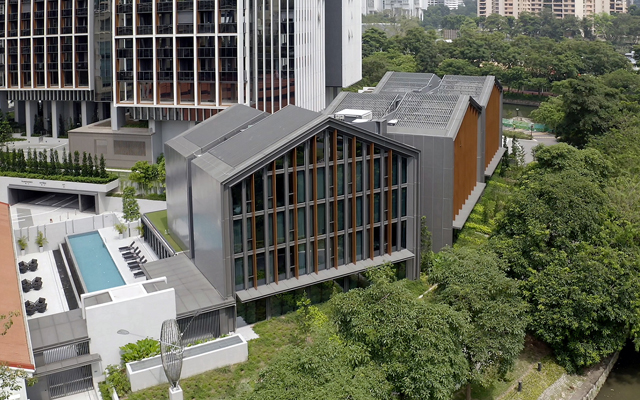
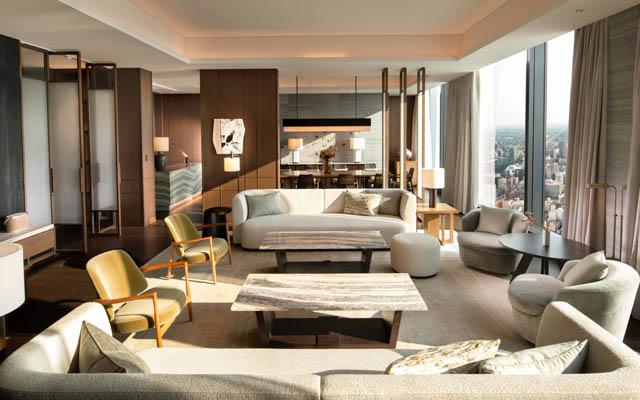
Marriott International has signed an agreement with HTL Gateway to open AC Hotels by Marriott Ulaanbaatar, marking the company’s entry into Mongolia. The hotel is expected to open in 2027 and will offer spaces for business and leisure travellers.
The property is planned as part of a mixed-use development in the Khan Uul District of Ulaanbaatar, located along Buyant-Ukhaa Road with access to the CBD, Sukhbaatar Square, and Chinggis Khaan International Airport. It is near the Buyant Ukhaa Sport Palace, AIC Steppe Arena, and Yaarmag’s commercial and residential hub.
The AC Hotel by Marriott Ulaanbaatar will be part of a mixed-use development in the Khan Uul District
The hotel is expected to have 190 guestrooms and suites, an all-day dining restaurant, a specialty restaurant, a grab-and-go AC Store, and a lounge and bar. Amenities will include an indoor swimming pool, fitness centre, spa, and dedicated spaces such as an AC Library. Meeting and event facilities are expected to include a junior ballroom, function rooms, and breakout spaces.
Mongolia welcomed more than 800,000 international visitors in 2024, a record for the country. The hotel is expected to contribute to the hospitality sector in Ulaanbaatar and provide services for travellers.
“We are excited to expand Marriott International’s portfolio into Mongolia, a country that is emerging as both a dynamic business hub and a distinctive leisure destination,” said Duke Nam, regional vice president for South Korea, Vietnam and the Philippines, Marriott International. “This signed agreement reflects our confidence in Mongolia’s long-term tourism potential and underscores our commitment to bringing diverse hospitality experiences to this growing market.”
Erkhes Battuul, founder and project leader of HTL Gateway, added: “The Mongolian government has placed strong emphasis on the tourism sector and is undertaking many initiatives to expand the country’s presence in international markets. Together with Marriott, we are confident that this signing will set new standards and open an exciting new chapter in Mongolia’s hospitality industry.”
MGallery hotels across Asia will mark European Heritage Days this September with cultural programmes that highlight local traditions and stories. Activities include wooden stamp-making in Vietnam, heritage quests in Laos, island practices in the Philippines and cultural showcases in Thailand.
European Heritage Days, held each year to invite the public to discover art, architecture and history through events at significant sites, are marked by MGallery hotels in Asia with activities that open their doors to communities and guests, linking the past with the present and sharing cultural traditions across the region.
Guests at Hôtel de la Coupole in Sapa, pictured, explore heritage through wooden stamp-making and traditional H’Mong Batik art
In Laos, 3 Nagas Luang Prabang – MGallery Collection, located within a UNESCO World Heritage Site, will offer activities such as Sketching the Past, using the hotel’s façade as a canvas, and the Hidden History Quest, which traces its past as a royal ice cream parlour and meeting place for the court. Guests can wear traditional Lao attire and end the visit with the return of the hotel’s ice cream.
At Hôtel de la Coupole – MGallery Collection in Sapa, Vietnam, a Stamp Rally Tour highlights the work of Phuc Loi Stamp, one of the country’s last wooden stamp makers. Guests collect handcrafted stamps while exploring the property, view an exhibition by H’Mong Batik artist Ha Phuong, and join a talk with both artisans before leaving with a carved stamp set.
Hôtel des Arts Saigon – MGallery Collection in Ho Chi Minh City will present Pigment in Bloom with Lotus Gallery, an exhibition focusing on gouache, a medium central to Vietnamese art in the early 20th century. The works will be displayed in the hotel’s Café des Beaux-Arts.
In the Philippines, South Palms Resort & Spa Panglao – MGallery Collection will host Waves of Heritage, where storytellers and artisans demonstrate traditional fishing, crafts and sustainable practices. The programme connects visitors with the local community and the rhythms of island life.
In Phuket, Avista Hideaway Patong Phuket – MGallery Collection will hold Heritage Day – Ode to Thai Culture on September 19. The event includes lotus-folding, gong rituals, Thai dance, fire performances, calligraphy, garland making and traditional snacks.
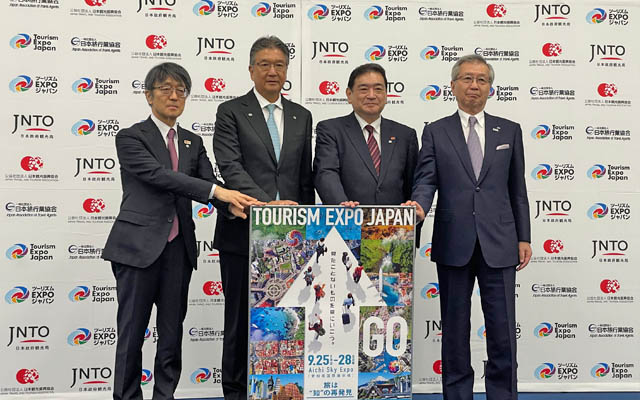
Tourism Expo Japan 2025, Japan’s largest B2B travel event and public travel festival, has opened for the first time in Aichi Prefecture, near Nagoya.
Organised by the Japan Association of Travel Agents (JATA), the Japan National Tourism Organization (JNTO) and the Japan Travel and Tourism Association, the exposition this year particularly aims to promote greater tourism dispersal to regions through destination diversification and to stimulate the outbound market, which has recovered to only 70 per cent of pre-pandemic levels.
Japan’s largest travel trade and consumer event highlights regional dispersal and global market growth; photo by Kathryn Wortley
Under the theme of Travel for discovery and new encounters, the event will “provide visitors with the opportunity to rediscover the wonder and appeal of travel”, said JATA chairman Hiroyuki Takahashi.
JNTO president Atsumi Gamo expressed gratitude to tourism stakeholders for enabling Japan’s visitor arrivals to reach a record high of 36.87 million in 2024 but noted that “channelling this inbound tourism power toward regional revitalisation requires more focus on attracting visitors to local regions”.
To support this goal, JNTO will conduct familiarisation trips for 250 travel and MICE agents from Asia, Europe and North America across 12 courses in the Chubu and Hokuriku regions of central Japan over September 27-30.
Takashi Ando, chairman of Aichi Prefectural Tourism Association, said he hoped hosting would help position Aichi not only as an industry hub but also as a destination known for its diverse tourism offerings, from food culture and cuisine to history and nature.
Tourism Expo Japan 2026 will be held at Tokyo Big Sight from September 24 to 27 next year. When held at the same venue in 2024, the event attracted 182,934 attendees and 1,284 companies and organisations.
Ascott has reached a milestone as its Citadines portfolio surpasses 200 properties globally – the upper-midscale brand now comprises 205 properties and around 35,000 units, with more than 60 per cent operational.
Since a brand refresh three years ago, Ascott has signed over 50 new properties totalling about 8,000 units, including conversions, bringing Citadines to 18 new cities such as Colmar, Hobart, Liverpool, Surabaya, Phu Quoc, Udupi, Tangier, Marrakech and Kuwait, while expanding in major Chinese hubs including Changshu, Dalian, Foshan, Guilin, Nanjing, Shenzhen, Tianjin and Zhuhai.
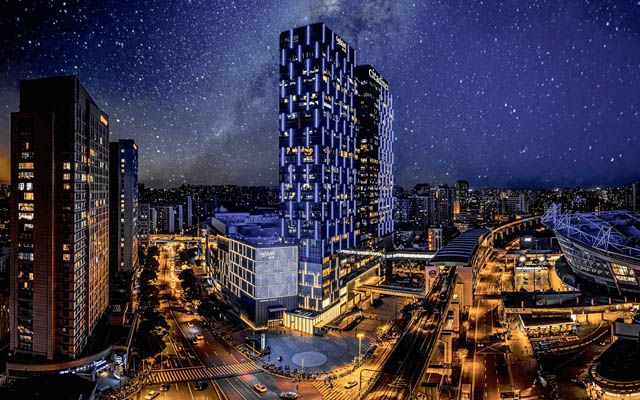
Citadines Hongkou Plaza Shanghai is set to open in 2H2026 under a franchise agreement, bringing the total number of Citadines properties in the tier-one Chinese city to around 10
Conversions have been a major driver, accounting for 61 per cent of new openings in the first seven months of 2025. Citadines Antasari Jakarta opened three weeks after conversion, while Citadines City Centre Liverpool completed its transformation in around three months. The brand currently has 15 franchised properties, including key Chinese locations such as Shenzhen, Shanghai, Wuxi and Xi’an, with Citadines Universiade Centre Longgang Shenzhen set to open in November 2025.
Citadines Almaz Casablanca, the brand’s first property in Morocco, opened in early 2025 following a late-2024 franchise agreement.
Citadines’ growth aligns with trends in the upper-midscale segment, valued at US $115.2 billion in 2024 and projected to grow at 6.8 per cent CAGR through 2033, driven by rising incomes and demand for value-driven accommodation.
Since 2004, Ascott has transformed Citadines from a Europe-centric chain into a global platform, with 70 per cent of properties in Asia-Pacific, 20 per cent in Europe and a growing presence in the Middle East, Africa and Turkey. The brand combines apartment-style space with hotel conveniences and curated local experiences and is expanding into resorts, including Citadines Selavia Phu Quoc in Vietnam (2027) and Citadines Mactan Cebu Resort in the Philippines (2028).
The activ∞ programme continues to deliver experiences across 23 countries, from city runs and cycling tours to yoga and cultural activities, while upcoming openings until the end of 2026 include Citadines on the Pier Hobart, Citadines Vue Aston Phnom Penh, Citadines Paragon Davao, Citadines Hongkou Plaza Shanghai, Citadines Huadu Guangzhou, Citadines Connect West Surabaya and Citadines Racine Casablanca.
Serena Lim, chief growth officer of Ascott, stated that Citadines stands out for its built-in versatility, enabled by Ascott’s flex-hybrid model.
She added: “Our franchise model is conversion-friendly and operationally efficient, helping partners enter the market faster with lower complexity. As more owners seek trusted partners and high-performing midscale brands, franchise-led growth will become a key driver of Citadines’ continued global expansion.”
Preferred Hotels & Resorts has unveiled its first private jet journey, Legendary Journeys – The Ultimate Private Jet Experience, in partnership with Bucketlist Xperiences.
The 17-night itinerary, running from October 6 to 23, 2026, takes guests to Singapore, India, Rwanda, Kenya, Greece, Morocco and London. Travellers will stay at luxury properties, including four members of Preferred Hotels & Resorts’ Legend Collection, while experiencing curated excursions, wildlife encounters, and cultural events.
Travellers can explore seven countries in 17 nights, combining luxury stays with curated cultural and wildlife experiences on Preferred Hotels & Resorts’ first private jet journey
The journey begins aboard a private VIP airliner with lie-flat leather seating, gourmet meals, curated wines and spirits, and a 17-member service team. Enhancements include private transfers, VIP airport access, luggage concierge, personalised gifts and amenities, and a professional photographer and videographer to capture highlights. Participants will also receive I Prefer Hotel Rewards Titanium Status and a million points, equivalent to over 10 complimentary nights at more than 650 participating properties.
In Singapore, guests will stay two nights at The Fullerton Bay Hotel, enjoying sunset cocktails on the rooftop and a welcome celebration on Marina Bay. In Jaipur, India, the itinerary includes three nights at a Legend Collection property with VIP excursions to the Taj Mahal, Amber Fort and City Palace, culminating in a Royal Wedding Celebration.
In Kigali, Rwanda, guests at the Movenpick Kigali will take a helicopter flight over the Virunga Mountains, trek in Volcanoes National Park and meet conservation leaders from the Dian Fossey Gorilla Fund. The Kenyan leg includes three nights at andBeyond Suyian Lodge or Angama Mara, featuring game drives, sunrise hot-air balloon safaris and dinners beneath the stars.
In Santorini, Greece, travellers will stay at Andronis Luxury Suites, with private plunge pools and caldera views, enjoying sunset sailing and wine tastings. In Marrakech, Morocco, the journey continues with a stay at the Mandarin Oriental, including medina visits, mountain excursions, and dining under desert skies. The experience concludes with one night at The Londoner, where guests will tour city landmarks and enjoy the hotel’s spa and rooftop terrace.
Seats are limited to 29 couples, with single occupancy available on request. Pricing begins at US$133,500 per person based on double occupancy.
Lindsey Ueberroth, CEO of Preferred Hotels & Resorts, said: “Our mission has always been to connect travellers with the world’s most remarkable independent hotels and destinations in ways that are both unforgettable and transformative… the Legendary Journeys experience delivers rare adventures with personalised service, crafted to feel effortless, memorable and truly legacy-defining.”
“Together, we are curating an experience that transcends traditional travel, blending private jet journeys with independent luxury hospitality at the world’s most extraordinary destinations,” added Jordan Kaplan, president of Bucketlist Xperiences.
RateHawk, a B2B booking platform, has found in a global study that nearly half of travel agents fear competition from AI, which they believe could eventually replace their roles. Released for World Tourism Day, the study comes as generative AI gains popularity among travellers for planning and managing trips, and explores how agents view these tools and how the industry can adapt while preserving the value of human service.
The report, What Supercharges Travel Professionals, draws on responses from over 1,300 travel agents across Europe, North America, Latin America, Asia and the Gulf Cooperation Council (GCC). Earlier sections analysed motivating and demotivating factors, as well as the most in-demand technologies for travel professionals.
Nearly half of travel agents fear AI could replace their roles, according to RateHawk’s global survey
The findings reveal divided views on AI’s impact. Globally, 56% believe AI will not replace them, while 44% see it as a real possibility. In Asia and the GCC, 60% and 55% respectively believe replacement is likely. In Europe (58%) and Latin America (55%), the majority do not share this concern. North America is the most sceptical, with only 20% believing AI could take over their jobs. However, interest in using AI tools is strongest in the US and Canada, with 45% open to adopting personalisation tools to improve efficiency.
Views also vary by experience. Among those with less than three years in the industry, 51% think AI could replace them. Among those with over 15 years’ experience, the figure drops to 40%.
Despite these concerns, one in three travel professionals globally are willing to use more AI tools in their work. Beyond AI, the survey shows strong interest in automation, advanced analytics and mobile booking tools.
The report also highlights broader challenges. While 92% of travel agents are satisfied with their careers, they face strong competition, rising client expectations and the time-consuming search for the best deals. To address these pressures, 29% want more technology to streamline their work.
Astrid Kastberg, managing director of RateHawk, commented: “The travel industry, valued at US$10.9 trillion in 2024 by the World Travel and Tourism Council (WTTC), is going through significant changes. According to research by Kantar, 40% of global travellers have already used AI tools to plan their trips, and 62% are open to using them in the future. While this may seem concerning for travel professionals, the rise of generative AI is also driving higher expectations for personalised experiences. In fact, reports show that more than half of younger travellers want a travel agent or trusted advisor to help them plan major trips. For agents, this means that professional expertise and the human touch are becoming even more valuable as demand for customised service continues to grow.
“We see the future of travel as a blend of human expertise and innovative technology. By using AI, we develop tools that support agents behind the scenes – from intelligent rate matching and content management to hotel search, automated support, chatbots, and voice assistants that ensure booking security. These solutions empower agents to deliver more efficient, reliable, and competitive services to their clients. We believe that as long as agents continue to adapt and innovate, their skills and knowledge will remain indispensable.”
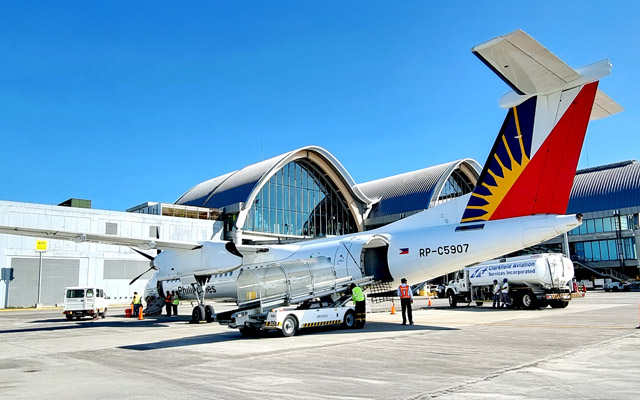
Philippine Airlines boosts domestic flights, launches new Cebu-Calbayog route
Philippine Airlines (PAL) is expanding its domestic network ahead of the peak travel season in October 2025, adding flights across key routes to meet rising demand.
Manila services to Butuan, Cagayan de Oro, Cotabato, Legazpi, Dumaguete, and Tacloban will see increased frequencies, while daily Manila-Siargao flights will operate alongside 21 weekly Cebu-Siargao services and daily Clark-Siargao flights.
Boracay will be served via 42 weekly Manila-Boracay flights and 14 weekly Cebu-Boracay flights, while Coron flights will operate from Manila (seven weekly), Clark (14 weekly) and Cebu (21 weekly). Manila-Antique flights will run three times weekly, and Manila-Catarman four times weekly.
From December 8, 2025 to March 28, 2026, five Manila-Iloilo weekly frequencies will be upgraded to Airbus A330 aircraft. Overall, PAL will operate 1,154 flights per week from Manila to destinations in Luzon, Visayas, and Mindanao, adding over 14,000 seats.
From October 26, 2025, PAL will launch a Cebu-Calbayog route with four weekly flights every Monday, Wednesday, Friday, and Sunday. Flights to Cebu’s island gateways are also expanding, with Cebu-Siargao and Cebu-Busuanga services now running thrice daily.
Other Cebu route frequencies are also increasing: Cebu-Bacolod from 14 to 18 weekly, Cebu-Butuan from seven to 11, Cebu-Cotabato from two to three, Cebu-Ozamiz from three to four, and Cebu-Tacloban from 11 to 14 weekly.
PAL also operates international flights from Cebu to Ho Chi Minh City, Seoul, Tokyo, and Osaka.
Cathay Pacific
Cathay Pacific returns to Seattle
Cathay Pacific will resume non-stop flights between Hong Kong and Seattle from March 30, 2026, operating five return flights per week.
Seattle becomes the airline’s ninth North American passenger destination, enhancing connectivity from its Hong Kong hub.
This launch follows the introduction of direct flights to Dallas-Fort Worth in April, which will increase to daily services from October 26, 2025 due to strong demand.
The Hong Kong-Seattle route will use Airbus A350-900 aircraft, offering fully flat beds in Business Class, Premium Economy seats, and Economy cabins. Services will run from March 30 to May 31, 2026, and from September 16 to October 24, 2026, subject to regulatory approval.
Singapore Airlines and Vietnam Airlines
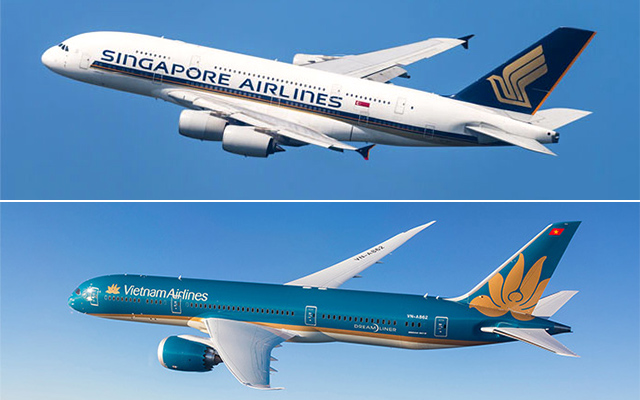
Singapore Airlines, Vietnam Airlines launch codeshare services
Singapore Airlines and Vietnam Airlines will begin codeshare flights from October 26, 2025, offering more options between Singapore and Vietnam.
SIA will codeshare on Vietnam Airlines-operated flights to Hanoi and Ho Chi Minh City, while Vietnam Airlines will codeshare on SIA-operated flights to Danang, Hanoi and Ho Chi Minh City.
Tickets will be available from October 10, 2025, with plans to expand the arrangement to more destinations, subject to regulatory approval.
Lion Group’s Batik Air
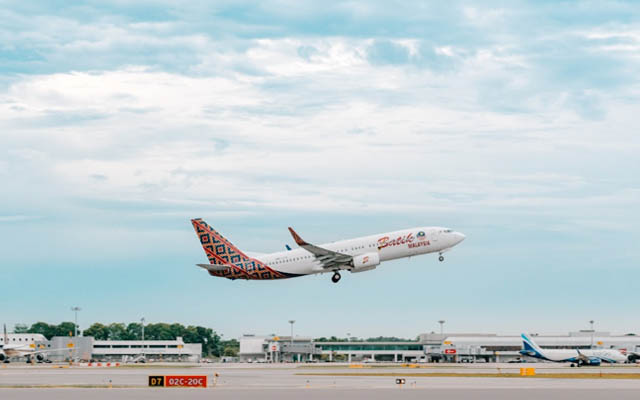
Lion Group expands Malaysia flights, moves to Changi T4
Lion Group will strengthen its Singapore operations with Batik Air Malaysia launching new services to Ipoh, Penang and Subang from December 2025, alongside its existing Kuala Lumpur flights.
The group, which currently operates 88 weekly services linking Singapore with cities in Indonesia, Malaysia and Thailand, will relocate from Terminal 3 to Terminal 4 in November 2025 to support further growth. The move will give Lion Group access to enhanced capacity and automated facilities, with shuttle connections between terminals set to increase in frequency.
Pantai Indah Kapuk (PIK) is a developing tourism destination in Jakarta. Located along the northern coast and extending into Tangerang in Banten Province, the 3,800-hectare area – once dominated by mangrove forests and wetlands up to the 1970s – has undergone significant transformation into a lifestyle and tourism hub.
With plans led by the newly formed PIK Tourism Board, the destination aims to attract both domestic and international visitors. PIK currently receives an average of 2.1 million visitors per month, mainly local and domestic travellers, though regional arrivals have started to increase.
Pantjoran features a mix of arts, crafts and culinary adventures for visitors to explore
Its location, 15 minutes by car from Soekarno-Hatta International Airport and accessible via toll roads from central Jakarta and surrounding areas, makes it convenient for both general visitors and transit passengers. Travel time will further reduce to around seven minutes once the first section of the Kataraja toll road – currently under construction – is completed early next year.
Developed by Agung Sedayu Group and Salim Group, PIK consists of PIK 1 in North Jakarta and PIK 2 in Tangerang Regency, Banten. It includes residential and commercial areas as well as facilities designed to support social, business, entertainment, dining and tourism activities.
PIK comprises over 40 attractions, 1,300 F&B outlets, and 40 event venues across indoor and outdoor settings. It offers 1,126 rooms across hotels and serviced residences, two golf courses with a 27-hole course in development, a 14-kilometre man-made beach, and 655 hectares of preserved mangrove area.
Fenny Maria, head of tourism development at Agung Sedayu Group, said: “We do not want PIK to become just a transit point, but a destination. PIK is for everybody. PIK is family-friendly, kid-friendly, Muslim-friendly, senior citizen-friendly, pet-friendly, and special needs-friendly. In the development of infrastructure, we are ensuring that these (elements) are available.”
Attractions at PIK range from art, craft and food-focused areas such as Pantjoran and Batavia, to retail spaces like PIK Avenue, Tokyo Hub, Sarinah and By The Sea. Religious sites include Our Lady of Akita and Bunda Maria Prayer Parks. The area also hosts sports centres, nightlife venues like Dreamville and HW District, and spaces for events.
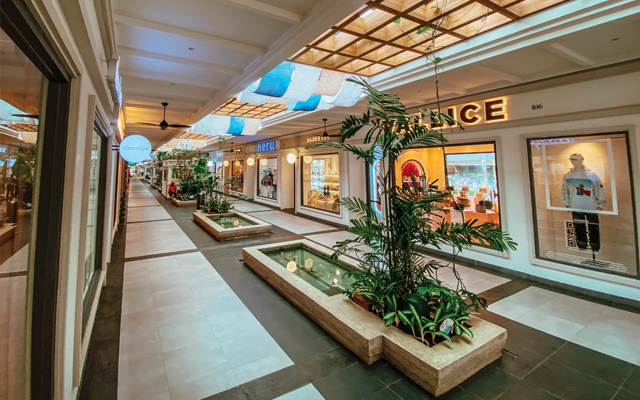
By The Sea offers a diverse shopping experience in a beachfront setting
The beachfront location supports seaside activities and island tours. The 14-kilometre White Sand Beach, with four kilometres currently open to the public, features attractions including Aloha, Land’s End and Ginza Beach Walk.
Fenny shared that Aloha provides a seaside experience in the PIK2 area, with various food and beverage options available. She referred to Land’s End as a peaceful coastal spot with a relaxed atmosphere, noting that its lighthouse offers scenic views.
The Ginza Beach Walk is described as the largest walkable beachfront destination in the region, offering open-air dining, retail options and beachside leisure in a pedestrian-friendly layout. A pier is also under construction.
“When ready, boats can operate and take tourists to the resort islands in Kepulauan Seribu (Thousand Islands), such as to the popular Bidadari, Kelor, Alor and the (historic) Onrust Islands, which are just about seven minutes from here,” Fenny added.
Additional developments include a planned Marina Club and PIK International Cruise Terminal. As for the mangrove forest, it provides walking trails, kayaking, birdwatching and guided nature tours.
PIK also offers more than 40 venues for MICE and social events, including weddings. The Nusantara International Convention Exhibition (NICE), said to be the largest in Indonesia, is scheduled to open its first phase in September. It will include a leasable area of 130,000m² and capacity for 70,000 attendees, with future plans for an additional exhibition building with 120,000m² of leasable space.
Spike Air Dome, a 10,000m² innovative and environmentally friendly venue at PIK 2, also recently opened.
Fenny stated: “Spike is the first venue with Air Dome technology in South-east Asia, which costs significantly less to construct compared to conventional buildings. It utilises solar energy for daytime lighting and features an insulated membrane that retains heat, reducing the need for cooling and enhancing energy efficiency. This space is perfect for music festivals, concerts and sports tourism.”
PIK currently has three hotels – Mercure Jakarta Pantai Indah Kapuk, Swissotel Jakarta PIK Avenue and Hotel Osaka PIK2 – as well as two apartment residences: Oakwood Apartment PIK and Tokyo Riverside Apartment.
“There are some hotels in the pipeline: two will be near NICE and several others along the beach, but we cannot announce them yet,” Fenny said.
On regional and international promotion, Fenny said the PIK Tourism Board has been working with the Ministry of Tourism, regional governments, tour operators, media and influencers to increase international awareness.
“We have been participating at tradeshows and sales missions, joining Jakarta Provincial Tourism Office and the Ministry of Tourism. We have also hosted various fam trips collaborating with tour operators and event organisers from other parts of Indonesia and neighbouring countries like Malaysia and Singapore,” she said.
She added that the PIK Tourism Board is also focused on improving service standards.
“To establish PIK as a premier tourism destination, we must elevate our service standards. This requires educating the local community to consistently meet hospitality service levels,” she concluded.
From left: TTG Asia Media's Darren Ng; Frasers Hospitality’s Eu Chin Fen; and TTG China's Chimmy Tsui
The 34th Annual TTG Travel Awards celebrated excellence across the Asia-Pacific travel and tourism sector, recognising 93 organisations for their leadership and innovation.
The awards ceremony was held at Centara Grand at CentralWorld, coinciding with the IT&CM Asia and Corporate Travel World (CTW) Asia-Pacific events.
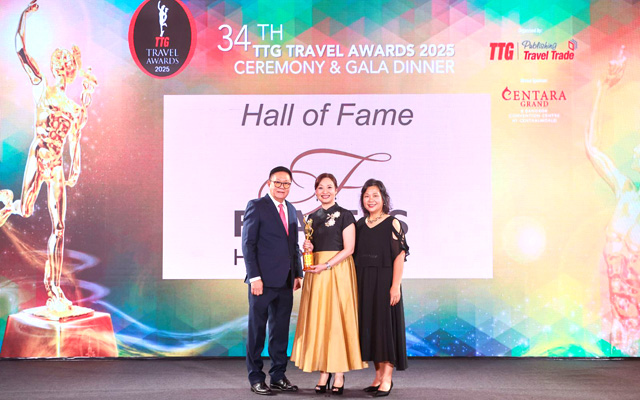
From left: TTG Asia Media’s Darren Ng; Frasers Hospitality’s Eu Chin Fen; and TTG China’s Chimmy Tsui
Winners were determined by votes cast from April 1 to July 31, 2025, by travel professionals across different sectors. This year’s event introduced two new categories – Best Local Hotel Brand – Singapore and Best All-Inclusive Resort – reflecting evolving traveller demands. In total, 72 winners were recognised across various categories.
A highlight of the night was the induction of Frasers Hospitality into the TTG Travel Hall of Fame for winning the Best Serviced Residence Operator category for 10 consecutive year, joining 20 other prestigious inductees. The Outstanding Achievement Awards, chosen by TTG’s editorial team, recognised contributions in non-voting categories. This year’s recipients were South Korea (Destination of the Year), Disney Cruise Line (Best Travel Marketing Effort), and Khiri Travel (Most Sustainable Travel Company).
Meanwhile, returning champions included Pan Pacific Hotels Group (Best Regional Hotel Chain), Kuala Lumpur Convention Centre (Best Convention & Exhibition Centre – Malaysia), Dao by Dorsett AMTD Singapore (Best Serviced Residence – Property Level), and Scoot (Best Low-Cost Carrier).
The 2025 Global Destination Sustainability Index (GDS-Index) has released its Top 40 rankings, marking a decade of benchmarking destination sustainability.
This year’s theme, Shifting Tides, highlights a period of global transition, with destinations showing resilience and accelerated action.
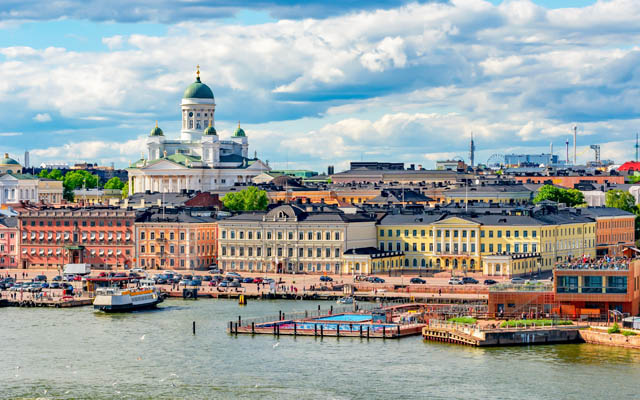
The 2025 Global Destination Sustainability Index highlights global progress in sustainable tourism, with Helsinki, pictured, leading the way
The 2025 rankings show a 31 per cent rise in average performance across all participating destinations since the programme began, with the Top 10 improving by 46 per cent. Despite ongoing economic uncertainty, destinations have maintained momentum in their sustainability initiatives.
Helsinki (Finland) leads the GDS-Index for the second consecutive year, scoring 93.52 per cent and maintaining its position as a sustainable tourism and events leader. The city has ended its coal era, earned Green Destinations certification, and ensured near-universal sustainability certification across hotels, convention centres, and top attractions. The Nordic trio of Helsinki, Gothenburg and Copenhagen continues to dominate, though the gap between the Top 10 and the overall GDS-Index average has narrowed from 23.2 per cent to 20.3 per cent, reflecting rising performance globally.
Adelaide is recognised as the most improved destination, climbing 23 places in its second year of participation. The city’s rise was driven by its Integrated Climate Strategy 2030 and sustainability roadmap, including Adelaide Airport achieving carbon neutrality for its direct emissions. Krakow and The Malverns also feature among the most improved destinations.
The 2025 GDS-Index highlights a more dynamic Top 40, with nine new destinations entering the rankings, accelerated climate action with 77 per cent of destinations reporting sector-level measures, and widespread adoption of third-party sustainability certification. In the Top 10 destinations, 81 per cent of hotels are now certified, up from 66 per cent in 2016, and 50 per cent of destination marketing organisations hold sustainability certification for their own operations. Regional leadership is also evident, with Lyon leading Central and Southern Europe, Melbourne topping Asia-Pacific, and Montreal retaining the North American lead.
Guy Bigwood, CEO and chief changemaker at GDS-Movement, said: “Every destination featured in the GDS-Index has demonstrated leadership and commitment – each one deserving recognition for its efforts to build a more regenerative future.
“As we mark the 10th year of the GDS-Index – with 626 benchmarking assessments completed across 35 countries since 2016 – one thing has remained constant: the courage of this community to lead with vision and to innovate with purpose.”
He added: “From shifting seasonality to changing governance and a pushback against sustainability, members of the movement meet each wave with intention, creativity, and a fierce resolve to do better, faster, together. It’s not just about riding the wave, it’s about learning how to read it, shape it, and surf it to make it count.”