Anticipating a surge in visitor numbers during Visit Malaysia Year 2026, Malaysian inbound operators interviewed at PATA Travel Mart 2025 are planning to expand into new markets and introduce new products to capitalise on the year-long campaign, which is targeting 47 million tourist arrivals.
Alvin Lim, director of sales for Borneo Nature Tours, said the company plans to expand the market reach of its flagship property, Borneo Rainforest Lodge, to include Asian markets such as China, India, South Korea, and Japan. This will help diversify the lodge’s visitor base, which has primarily been promoted to European markets.
Paradesa Borneo’s Casandra Bong said the company is preparing non-cycling tours to reach more travellers
“We see significant potential in the Asian markets due to accessibility and shorter travel times,” Lim told TTG Asia.
He added that the expansion will also help raise awareness of Borneo’s unique biodiversity and conservation efforts among a new audience. The Borneo Rainforest Lodge is the only accommodation option within the Danum Valley Conservation Area.
Starting next year, Paradesa Borneo plans to expand its tours to cater to non-cyclists, said the company’s sales and marketing manager, Casandra Bong.
“We have received feedback and requests for non-cycling tours and have already started our groundwork preparations which will be rolled out in 2026,” she shared.
Paradesa Borneo, currently Sarawak’s only operator for specialised cycling tours, aims to make exploration of the region’s natural beauty, wildlife, culture, heritage, and food more accessible to a wider range of travellers.
Fariz Khan Zamurad Khan, senior sales manager at Putrajaya Leisures & Services Group, said the group will work closely with Tourism Malaysia to promote its tourism offerings in Putrajaya to international markets.
He also revealed plans to open an Indian food outlet in Putrajaya by the end of 2025, a timely initiative in view of the anticipated influx of Indian travellers next year. Currently, there are no Indian restaurants in Putrajaya, Fariz said.
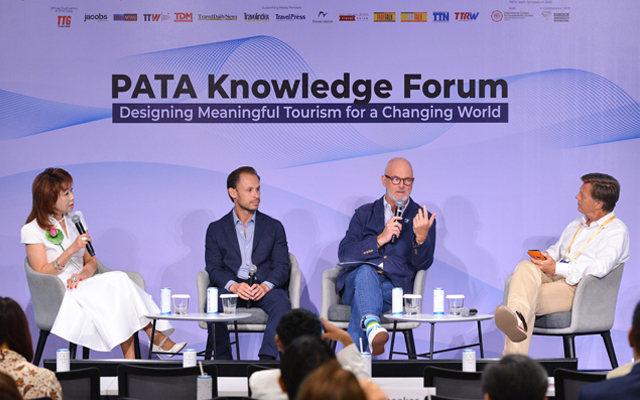
Today’s travellers want personalised, seamless and instant, whether at the trip planning stage or during the trip itself, say industry experts during the Connected Journeys: Reimagining the Travel Experience in a Digital-First World session at the PATA Knowledge Forum last Tuesday.
Cindy Lui, vice president of resort sales, MGM, pointed out that travellers are used to digital experiences in their daily lives.
From left: MGM’s Cindy Lui, Simplenight’s Mark Halberstein, BBC Asia’s John Williams, and Eventiz’s Frederic Vanhoutte (moderator)
“They want the same with travel – personalisation, speed – and to be able to control this all within the palm of their hands. This means that service design has to be mobile-first, frictionless and integrated,” she stated.
John Williams, vice president – Asia, advertising sales, BBC Asia, agreed, adding that service providers have huge expectations placed on them and they have to constantly deliver the same.
“The overall experience has to be personalised from start to finish. It’s the ‘me’ culture,” added Mark Halberstein, CEO at Simplenight, a tech experience platform.
Every touchpoint that the consumer engages with a brand – such as its loyalty programme, website, or mobile app – needs to cater to the consumer, Halberstein noted. Brands can then advertise to consumer on their preferred social media channels.
On what defines a truly connected journey, Lui said it is one that is “very seamless, consistent and also personalised from every touchpoint from the guest’s booking process to check out”.
Halberstein indicated that it is about connecting all the components of the journey from the inception, planning, booking and fulfilment. “If a company can deliver all this, it makes the customer’s experience that much more memorable and enjoyable,” he added.
The discussion also touched on the challenges integrating technology and data in the travel ecosystem.
Speakers all agreed that a key challenge is fragmentation. Different parts of the travel ecosystem – airlines, hotels, transportation, and attractions – operate on separate platforms. This makes it difficult to collect data and create a single, comprehensive view of the guest, said Lui. There is also the added complexity of privacy concerns, especially with guests moving across borders.
Halberstein emphasised that while tools like AI and loyalty programmes are valuable, they are “useless without proper data”, so the key is to attack fragmentation and translate raw data into meaningful insights.
Speakers also noted the need to balance the push for personalisation with growing privacy concerns, suggesting that transparency and offering choice can achieve this balance.
Lui said that by being transparent about what data is collected and how it benefits guests, companies can build trust. When customers understand the value of sharing their data, such as receiving personalised dining or entertainment recommendations, they become more comfortable.
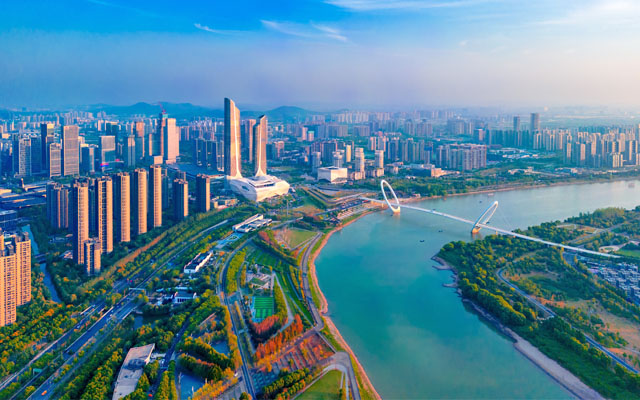
The Chinese province of Jiangsu boosted its profile at PATA Travel Mart, where it exhibited for the first time, as part of its push to attract more international travellers by showcasing its mix of food, culture, and nature.
Paul Chin, director representing the Jiangsu Tourism (Singapore and Malaysia) Promotion Centre, sees the event as a platform for raising awareness among a professional audience.
Jiangsu highlighted its culinary traditions and heritage during its debut at the recent PATA Travel Mart
“A lot of people still don’t know much about Jiangsu. Whether for business, culture, scenery, or food – we have it all here,” he stated.
Chin focused on highlighting the region’s culinary traditions, which are celebrated as one of China’s Eight Great Culinary Traditions. He hopes that by sharing the stories behind the food, tourists will be inspired to explore the destination and its history more in depth.
Moving forward, Chin’s team will continue to organise fam trips and focus on marketing efforts to draw visitors from key markets such as Singapore, Malaysia, and Thailand. He believes that by emphasising culture and heritage, Jiangsu can offer travellers a more immersive and meaningful experience.
The World Sustainable Hospitality Alliance (WSHA) has partnered with Zeero Group, a climate innovation company focused on decarbonising luxury hospitality and travel through scalable, community-driven solutions, to create measurable global impact for people and the planet.
The partnership brings together WSHA’s global network of hospitality leaders and Zeero’s approach to waste-to-energy, renewable fuels, and climate financing. Together, they aim to support hotels, resorts, and private aviation companies in addressing two of the industry’s main challenges: waste and emissions.
The partnership aims to fund clean energy and waste-management projects, making sustainability seamless for guests; Parkroyal Collection Pickering, Singapore, pictured
Rather than requiring guests to make decisions during their stay, Zeero enables properties to integrate climate contributions directly into the booking path, either as an included benefit or a subtle, optional addition.
Zeero’s model allows properties to fund clean energy and waste-management projects through small guest climate contributions, typically only a few euros or US dollars per booking or checkout folio, while remaining cost-neutral for operators. Aggregated at scale, these contributions are directed into projects such as converting municipal wastewater into low-emission biofuels, which can reduce lifecycle emissions by up to 81 per cent compared with fossil fuels.
Through this model, hotels fund projects that reduce emissions and provide benefits to the local environment and economy. The process allows properties to maintain their operational standards while supporting long-term community and environmental outcomes, without altering the guest experience.
The partnership will focus on scaling regenerative energy projects that convert waste into renewable fuels and electricity, creating sustainability narratives that resonate with travellers, and building shared ownership models to enable hospitality groups to co-invest in renewable energy infrastructure.
Glenn Mandziuk, CEO of the WSHA, said: “By partnering with Zeero, we are helping luxury hospitality brands transform sustainability into a source of innovation, value, and leadership. This collaboration will accelerate systemic change while supporting local communities and infrastructure worldwide.”
Zeero Group CEO Nico Nicholas added: “Luxury travel has both the responsibility and the opportunity to lead in climate action. Through our partnership with WSHA, we can rapidly scale solutions that make sustainability seamless for guests and profitable for operators, turning climate contributions into meaningful global impact.”
Singapore Oceanarium will launch its Animal Spotlight: Manta Rays programme to coincide with World Manta Day on September 17, 2025. The programme will run from September 6 to 20, 2025, overlapping with the September school holidays. It will feature activities that highlight the ecological role of manta rays and the conservation issues they face.
The 45-minute English-guided programme runs three times daily and provides behind-the-scenes access to manta ray care and monitoring. Participants will learn about their health, diet and behaviours, and how conservation efforts are applied. An Oceanarium education guide will also be present for questions and discussion. Each participant will receive a manta ray plush keychain and lanyard set. The add-on programme costs S$28 (US$21) per person aged four and above.
The two-week programme offers behind-the-scenes insights into manta ray care and conservation
As part of the programme, Daniel Fernando, co-founder of Blue Resources Trust and associate director at the Manta Trust, will hold an Expert Sharing Session on September 13, 2025, at 16.00. The session will be available online and in person for ticket holders. He will speak on the threats manta and devil rays face, including overfishing and international trade, and discuss conservation strategies.
Other activities during the two weeks include a manta ray mascot meet-and-greet, food and beverage specials, a retail collection, and a storytelling session titled Manja’s Adventure at the Children’s Biodiversity Library on September 6 from 11.00 to 12.00.
The Animal Spotlight series is part of Singapore Oceanarium’s education and conservation efforts. Other editions focus on sea jellies and corals.
Tickets may be purchased on the Singapore Oceanarium website, and registration for the Expert Sharing Session must be made with full name, ticket number and attendance mode at least three working days in advance.
Additional programmes offered during the September holidays include the Singapore Oceanarium Insider Experience, Ocean in Focus: Into the Abyss, and the Fossilist Workshop, which features fossil study and excavation activities.
Overt objections of overtourism – such as anti-tourist protests in some parts of Europe – and stealthy push-backs – like signs in English or Chinese to turn away tourists from eateries, but welcome locals in native small print – are increasingly showing up on the news and social media. Netizens clash in the comments section over who’s to blame for a poor destination experience, suspected racial profiling of bad behaving tourists, and dual pricing standards for locals and foreigners.
Even though overtourism is mostly seasonal and occurring only in certain locations, negative public perception can jeopardise an entire country’s welcome for a longer time.
Natalie Kidd, managing director, Asia at Intrepid Travel contributed an insightful opinion piece to TTGAsia.com on what Asia could learn from Europe’s overtourism crisis. In it, she called for a restructure of tourism that uplifts and protects local communities while establishing a respectful connection between people.
Our Bhutan destination feature in this issue (A shining beacon, pages 20 and 21) highlights a tourism structure that prioritises economic and social development for the country, where benefits of tourism are broadly distributed across local communities while preserving the nation’s cultural identity. Like attracts like – Bhutan’s unique destination reputation attracts travellers who appreciate high-value, low-impact tourism development.
With arrivals to the Greater Mekong Subregion set to surge in the coming years, tourism leaders in the region are now determining visitor management systems to protect their environment and communities (Reshaping tourism flow, page 9). Case studies on successful methods are shared, such as the use of digital tools to monitor and redirect tourist flows.
Indeed, this is where AI magic can come in to anticipate travel peaks and trends, monitor online reviews to spot issues in host community and traveller sentiments, and push recommendations to lesser-known areas.
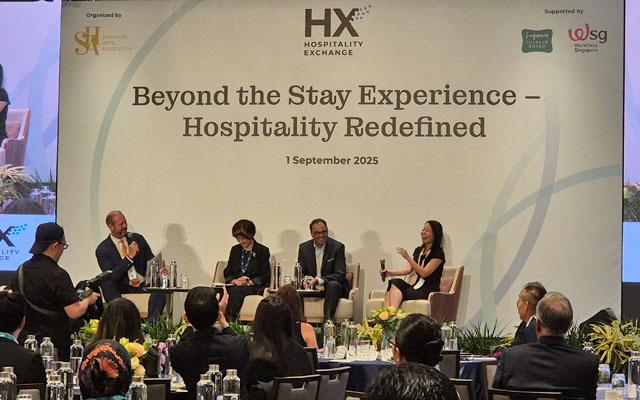
Digital fluency, courage to lead and make decisions, emotional intelligence, imagination, and creativity are some of the characteristics expected to be embodied in the future travel and tourism workforce, according to industry leaders on a panel at the Hospitality Exchange 2025 conference on Monday.
Due to the growing implementation of AI in business, Chan Yit Foon, senior vice president, human resources, Marina Bay Sands, believes that the future workforce has to be “digitally-ready and fluent” in technology, beyond understanding and utilising data.
Hospitality leaders emphasise agility, innovation, and emotional intelligence as key to a future-ready workforce; photo by Karen Yue
Skills that are “uniquely human”, such as emotional intelligence, imagination, and creativity, will be increasingly crucial, opined Teresa Mok, assistant chief executive, Enterprise Development Group, Workforce Singapore (WSG).
She added that the future workforce will also need “people who have a continuous learning mindset”.
Looking beyond the influence of technology on human resource needs, Rajeev Menon, president – Asia Pacific excluding China, Marriott International, underscored the value of empowering team members, and added that his company has been “developing talent with focus on three parts”.
The first involves encouraging curiosity in its people, where learning and growing in a collaborative environment is key.
The second involves facilitating innovation at all levels, breaking away from the Asian culture of relying on managers for answers and decisions.
Menon recalled that “the best innovation we saw in the field was during Covid because (staff) were told to do what they needed to do to survive”.
“We saw an incredible amount of innovation, incredible amount of questioning the status quo. As a result, we saw change and innovation,” he added.
The third involves facilitating collaboration to achieve best results.
Panellists agree that a future-ready workforce must be agile and adaptable to changes in the business environment and macro-environment.
For this to happen, companies need to assess their career health, opined Mok, who added that this is now a “strategic business imperative and no longer a human resource function”.
Career health should be approached as one does a health assessment, with regular checks on the state of the workforce internally and externally.
Internal career health checks will entail reviews of talent management practices and employee support while external checks will include understanding market trends, new job roles and new skills needed to build the business.
To help Singapore’s travel and tourism businesses with their career health assessment, WSG worked with the Singapore Tourism Board on a hotel sector Job Transformation Map to determine new skills, key trends and future direction in human resources.
When hotels are ready to start job redesign, WSG has support schemes ready for deployment – such as the Productivity Solutions Grant for companies and the Career Conversion Programme for individuals.
Soon to come is a Career Health Workshop for the hotel industry, which will equip human resource professionals, line managers, and supervisors with essential skills to conduct meaningful career conversations and implement structured career planning for their employees. This initiative will be jointly led by WSG and the Singapore Hotel Association.
Mok added: “We’re not stopping here. Next year, we will launch enhanced support under the Enterprise Workforce Transformation Package to help with the end-to-end transformation of the workforce.”
When asked for the crucial ingredient needed in successful workforce transformation, panellists identified supportive leadership and communications.
Chan said teams cannot “just go forward (without anyone following) behind due to a lack of change communication”.
Menon agreed, adding that leadership must be “open to innovation” and encourages team members to lead and “be okay with making mistakes”.
“When you create an environment where people are curious to learn and courageous enough to push the boundaries, question status quo, and bounce ideas off each other, you will create an organisation that’s willing to go beyond what it is used to in the past,” he said.
The Hotel Industry Digital Plan (IDP), a programme introduced in 2019 by Infocomm Media Development Authority (IMDA) and Singapore Tourism Board (STB) with support from Singapore Hotel Association to facilitate digital transformation, has been refreshed to keep pace with rapid technological advancements and evolving industry needs.
The updated programme was announced by Alvin Tan, minister of state, Ministry of Trade & Industry and Ministry of National Development, yesterday at the Hotel Exchange 2025 conference for Singapore’s hotel industry leaders.
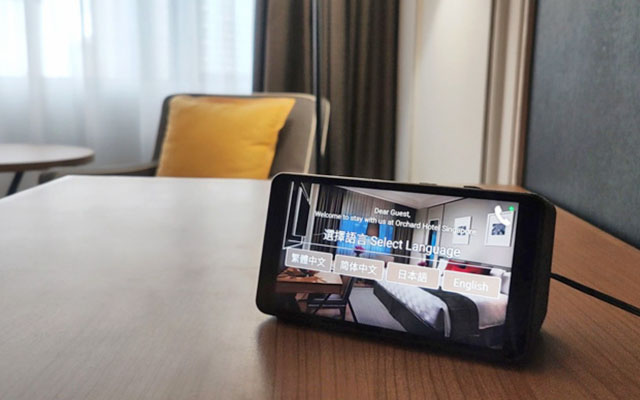
Millennium Hotels and Resorts’ adoption of the Aiello Voice Assistant in 2024 was cited as a successful example of digital transformation
The refreshed IDP is said to take a more comprehensive approach to digital transformation, mapping out detailed business journeys across operational touchpoints and key hotel functions, with clearer pathways for hotels to digitalise their operations. The IDP also includes examples of how AI-enabled solutions can enhance guest experience, improve operational efficiency, and accelerate business growth.
It will also push for the adoption of five key technologies: Smart Rooms, Robotics, Digital Concierge, Digital Check-in & Check-out, and Asset Management systems.
A spokesperson with IMDA – the national agency driving Singapore’s digital transformation and often the go-to for organisations seeking innovation clarity – told TTG Asia that since the launch of IDP, “the hotel industry has experienced significant disruptions, accelerated by digital adoption during the pandemic and recalibration in guest expectations toward contactless, digital-first experiences”.
“Emerging technologies like AI and the Internet of Things, heightened cybersecurity demands, and sustainability considerations further underscore the need to refresh the IDP.
“The refreshed Hotel IDP also ensures alignment and relevance to the Hotel Industry Transformation Map 2025, supporting its core objectives and industry priorities to improve customer experience, enhance productivity, and advance sustainability,” added the IMDA spokesperson.
Millennium Hotels and Resorts’ elevation of guest service through the adoption of the Aiello Voice Assistant in 2024 was cited as a successful example of digital implementation.
The industry overall has made significant strides in digital adoption, with IMDA’s IDP Annual Survey showing encouraging trends. In 2021, more than 60 per cent of SMEs in the hotel industry have adopted at least one sector-specific digital solution. By 2024, this figure rose to over 90 per cent.
When asked if there were specific hotel functions that saw the most digital transformation, the IMDA spokesperson pointed to guest-facing operations, with more than 70 per cent of Singapore hotel room stock already adopting digital check-in/check-out solutions integrated with STB’s E-Visitor Authentication system.
This demonstrates “significant progress in enhancing guest convenience whilst streamlining operations”, said the IMDA spokesperson.
“Beyond these established areas, hotels are increasingly exploring cutting-edge functions that require heavier investments, such as advanced robotics. STB continues to support hotels on their technology adoption journey by collaborating with them to pilot innovative solutions before full-scale implementation. Grant support such as the Business Improvement Fund aims to help hotels manage their financial commitments during their technology adoption journey.”
The 15th National Games (NG), the 12th National Games for Persons with Disabilities (NGD) and the ninth National Special Olympic Games (NSOG) will be co-hosted by Guangdong, Hong Kong and Macau in November and December this year, marking the first joint staging of the events.
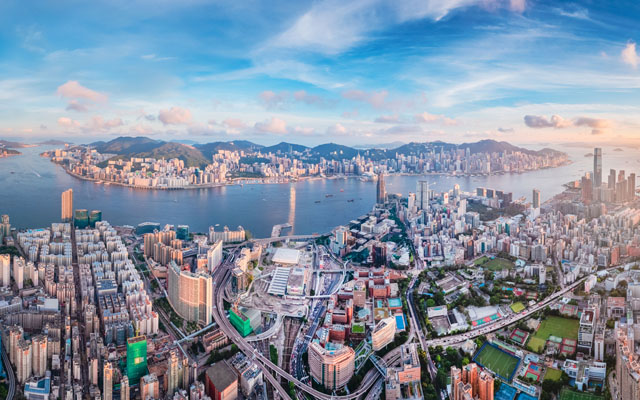
The games will highlight Hong Kong’s role in the Greater Bay Area (GBA) and provide a platform for regional cooperation in sports and tourism.
The games will highlight Hong Kong’s role in the Greater Bay Area and strengthen regional cooperation in sports and tourism
According to the National Games Coordination Office (NGCO) in Hong Kong, the event demonstrates the country’s capacity to host large-scale sports events and promotes exchanges and integration in the GBA. It will also provide experience and a foundation for jointly hosting future events.
An NGCO spokesman told TTG Asia: “To support the hosting of the games, a total of eight hotels have been designated as official hotels for the NG, while four hotels have been designated for the NGD and the NSOG to accommodate athletes, technical officials and delegates. These hotels were selected through open tender based on criteria such as category, capacity, facilities, management plan, experience, green certification, security measures and proximity to competition venues.
“As part of the promotional efforts, the NGCO has collaborated with the Hong Kong Tourism Board to augment the publicity of the games through their multi-faceted channels, both online and offline. These channels include adding NG, NGD and NSOG information to the Hong Kong Tourism Board’s website, social media platforms, consumer and trade events, as well as visitor centres. The NGCO has also arranged mascot displays at some of the festive events such as the Chinese New Year Parade.”
Nina Hotel Tsuen Wan West will host delegates of Para Table Tennis for the NGD of China and Special Olympics Table Tennis for the NSOG, including athletes, instructors, judges and working teams, from late November until mid-December. During their stay, they will be provided with accommodation and three meals a day. Approximately 350 of the hotel’s 1,608 rooms will be serviced daily.
Nina Hospitality managing director Simon Manning said: “The 2025 National Games represent far more than a sporting event; they are a catalyst for transformative growth across Hong Kong and the GBA. I see this as a pivotal moment to advance three key pillars of our region’s future like economic and tourism acceleration as the games are expected to attract over 100,000 spectators (forecasted by HKSAR government), generating immediate revenue for hotels, retail, and F&B sectors while creating jobs. Beyond short-term gains, the global spotlight will reinforce Hong Kong’s position as Asia’s events capital, unlocking long-term tourism and MICE opportunities.
“By hosting this milestone event, we are not just welcoming athletes, we are advancing Hong Kong’s role as a dynamic connector within the nation’s development blueprint. The National Games will leave us a stronger economy, a more integrated region, and a prouder, healthier community.”
Hong Kong Hotels Association chairman Alex Wu shared: “These games mark a milestone in cross-regional collaboration, strengthening ties across the GBA and showcasing Hong Kong’s capability in hosting mega events. It is a prime opportunity for the hotel sector to demonstrate our professionalism, inclusivity, and readiness to support large-scale international gatherings.
“Our commitment to biliteracy and trilingualism ensures seamless service for diverse guests, while our latest infrastructure – including Kai Tak Sports Park and the West Kowloon Cultural District – positions Hong Kong as a sports and cultural tourism leader. The games also support our broader Tourism Everywhere strategy, and we are leveraging social and global media platforms to build momentum for welcoming the 2026 Lions Clubs International Convention, which will bring over 10,000 international delegates to Hong Kong. This is a defining moment for Hong Kong’s hospitality sector to reaffirm its role in advancing tourism excellence, regional integration, and global engagement. We look forward to contributing to the success of these games and beyond.”
At press time, the NGCO was working with Guangdong counterparts on the selection of travel agents to develop travel products bundled with tickets to the games, aimed at attracting more spectators and promoting tourism in the GBA.