After naming casino maestro Edward Tracy as CEO of Hard Rock Japan, which was launched last year, Hard Rock International has now appointed Ado Machida as the new president of its Japan unit to oversee the company’s integrated resort initiatives in the country.
With his vast experience in foreign affairs and expertise in international law, finance, business development and team building, Machida is expected to play a key role in leading Hard Rock Japan’s expansion efforts to develop a new luxurious integrated resort in the country.
Machida comes to Hard Rock Japan from Navigators Global, a management consulting organisation. Prior to Navigators Global, Machida was director of policy implementation for the Trump Transition effort. Additionally, he also served as chief domestic policy officer for vice president Cheney, as well as served in various leadership and advisory roles for senator Bob Dole.
He has also held positions with Goldman Sachs, both in New York and Tokyo, and also worked at the Boston Consulting Group based in Tokyo early in his career.
WTM London, the leading global event for the travel industry, and Travel Forward have opened registration for its 2018 editions.
WTM London 2018, which takes place between Monday 5 – Wednesday 7 November, is poised to be the most successful yet with more Ideas Arriving at WTM London than ever before.
Tourists onboard the World Dream, one of Dream Cruises' ships
Amid the cruising boom in Asia, penetration rate in some fast-growing markets in South-east Asia remain as low as 0.02 per cent, underscoring the need for the region’s travel agents to enhance their product knowledge and marketing capabilities to tap the growth potentials.
Cruise passengers originating from Asia crossed the four million mark in 2017, up 20.6 per cent over 2016, and is now the world’s fourth largest cruising region, said Jiali Wong, regional manager, Asia, Cruise Line International Association (CLIA) during a travel agent seminar held by the association during ITB Asia last week.
While China is the region’s largest source market, Wong pointed out that “almost every market in Asia saw double-digit growth”.
Tourists onboard the World Dream, one of Dream Cruises’ ships
The statistics reflect healthy consumer interest in a region where travellers are starting to “recognise cruise holidays as a relaxing and value-for-money option”. It also helps that cruise is “a natural fit” for families, a key travel segment in Asia, she pointed out.
This cruising wave is translating into great opportunities for travel agents.
“Unlike a lot of travel segments, where consumers are starting to book direct, travel agents remain a key distribution channel for cruise lines. In fact, the majority of agents have over 80 per cent of their products listed by travel agencies. This translates to potential for travel agents to tap into the cruising segment to increase sales,” Wong said.
However, with penetration rates still low in many of Asia’s markets, Wong stressed that travel agents “need to be more cruise-educated by taking the next step to familiarise themselves with products”. CLIA is stepping up support for travel agents looking to sell cruises, through training and accreditation as well as sharing resources such as marketing toolkits.
In Indonesia, the outbound cruise market is showing an alluring 40.2 per cent year-on-year growth. Only one in 5,600 Indonesians are cruising, putting the penetration rate at only 0.017 per cent.
With the tremendous room for further growth, travel players are taking a greater interest in the cruise business, starting by sniffing out opportunities to hone their knowledge and expertise.
For example, Selayar Kepulauan Lestari – which has been offering yacht and cruise itineraries out of Bali, servicing mainly European travellers – now wants to foray into Indonesia’s outbound cruising market.
On the sidelines of the CLIA seminar, company spokesperson Iwan Syahlani shared with TTG Asia plans to undergo the association’s accreditation programme to pivot into the cruising market.
He said: “We now want to penetrate the outbound market. (As the numbers show), there is a large potential market of Indonesians wanting to enjoy cruising around the world.”
But the market is still nascent, said Iwan. “Unlike in Singapore, there is nothing happening in Indonesia to educate travel agents and help them better understand cruise tourism.
“I would like to learn more and be able to create marketing campaigns to penetrate big city markets like Jakarta, Medan and Surabaya.”
Apart from CLIA’s training and accreditation, Iwan also hopes to pursue learning opportunities with a Jakarta-based consultant in cruise line marketing.
Further highlighting the importance of education for travel agent is the proliferation of cruise products in the region, not only in terms of capacity but also the types of offerings available.
“Ships are moving more and more to the east. This year we’ll see almost 38 cruise lines represented in Asia with more than 78 ships. There is also more variation in the types of cruise products,” CLIA’s Wong pointed out.
For example, in addition to large ships, small luxury cruising is also catching on in Asia.
“This ties back to agents having to familiarise themselves with what products are out there. They need to leverage the unique selling points (of the relevant cruise product) and (how to target the different products) to customers,” Wong stressed.
Thailand needs aggressive remedial measures to woo the Chinese market back, with expectations that the decline in Chinese arrivals would persist into the first quarter of 2019 causing serious worry among travel agents in the country.
The destination recently sustained a series of setbacks to its core feeder, including the July boat accident off Phuket that killed 47 Chinese tourists, a dengue fever outbreak among Chinese travellers and a Chinese traveller hurt by an airport security guard.
Chinese tourists to Thailand are on a decline; Chinese tourist taking a selfie at Wat Phra Kaew in Bangkok
The Ministry of Tourism and Sports reported that arrivals from China started to drop in July with a total of 929,771 (-0.9 per cent year-on-year). Arrivals continued to decline, down 12 per cent year-on-year to 867,461 visitors in August, and down 15 per cent year-on-year to 647,664 visitors year-on-year in September.
The Association of Thai Travel Agents (ATTA) expects that the number of Chinese visitors to Thailand in the rest of this year will fall by 15 per cent per month unless the government rolls out aggressive promotions to counter the decline.
“We are now very worried about tourism in the first quarter of 2019. If we do not have any aggressive promotion to woo back Chinese travellers, the situation will extend into the first quarter of 2019. We will lose huge business opportunities to rivals,” said ATTA president Wichit Prakobkosol.
Wichit does not think Thailand will achieve its target to welcome 10 million Chinese travellers next year amid high competition.
This would also affect the overall tourism target of 2019 because the Chinese market accounted for one-third of Thailand’s total inbound tourism market, he said.
ATTA and members believed that the government acknowledges the situation, pointing to the upcoming visa-on-arrival fee exemption (worth 2,000 baht or US$61) as a demonstration of its commitment to woo back travellers, he added.
Deputy prime minister Somkid Jatusripitak plans to extend the visa-on-arrival fee exemption to travellers from 21 countries. The exemption is scheduled to start on November 15, 2018 and last until January 15, 2019.
According to Tourism Authority of Thailand (TAT) governor Yuthasak Supasorn, the waiver will help to woo Chinese travellers back and enable the country to achieve its previous target of 11 to 12 million Chinese tourists this year.
Yuthasak added that TAT allocated a budget of 50 million baht to marketing campaigns. It would include subsidies for charter flights from second-tier provinces of China to Thailand and promotions with travel agents.
Andrew Herdman speaking at the AAPA 62nd Assembly of Presidents
The Association of Asia Pacific Airlines (AAPA) has issued five resolutions in hopes of committing governments and other stakeholders to resolve regulatory issues concerning aviation safety, environment, infrastructure, passenger rights and wildlife trafficking.
Speaking at AAPA 62nd Assembly of Presidents in Jeju last week, director general Andrew Herdman explained: “Asia-Pacific carriers lead the development of the global air transport industry, but the long-term profitability and sustainability of the industry risks being undermined by inappropriate government legislation and short-term policy thinking.”
Andrew Herdman speaking at the AAPA 62nd Assembly of Presidents
To further enhance aviation safety, the first resolution asks governments and the industry to form regional and national safety teams within a ‘just culture’ framework outlined in ICAO’s Annex 19’s recommended practices for safety management.
The second resolution calls for the effective implementation of ICAO’s CORSIA (Carbon Offsetting and Reduction Scheme for International Aviation). Reached in 2016, the CORSIA agreement is approaching a critical stage in implementation with carriers required to report full emissions starting January next year, Herdman noted.
While the industry shows full commitment to CORSIA, the association is “concerned that some governments are imposing variations or additional requirements, which could undermine the integrity and environmental effectiveness of the scheme”.
As more airport infrastructure are necessary for the growing passenger traffic and airline fleet, AAPA said “the capital-intensive nature of infrastructure investments raises important questions about planning and financing, and the necessity for appropriate regulatory oversight by government”.
The association is “concerned about the effect on user charges, and arguing for a more coherent debate on how such infrastructure is best funded and regulated in the future”.
It also asks government to ensure that consumer protection regulations “are designed from the outset to be non-prescriptive, practical, and cost-effective”, after identifying new challenges in the area of passenger rights where it says many governments have introduced aviation-specific consumer protection regimes that are often uncoordinated and sometimes inconsistent with existing international treaties.
“These results in confusion for consumers and operational difficulties for airlines particularly in instances of mass disruption due to extreme weather conditions or natural disasters, where the focus should be on wider service recovery efforts,” AAPA pointed out.
It added that “during periods of mass disruption, focus should be on wider recovery efforts to restore services to the travelling public” and governments and stakeholders jointly develop appropriate contingency plans for system recovery following major disruptions.
Likewise, AAPA is appealing for investments in education and training of future aviation professionals, as well as for the promotion of best practices in human resource development including further diversification of the workforce and gender equality.
ICAO forecast the need for 620,000 pilots, 1.3 million aircraft maintenance personnel and 125,000 air traffic controllers over the next 20 years.
Lastly, the association is lobbying governments and law enforcement agencies to commit more resources to combat illegal wildlife trafficking and to help raise the public’s awareness and monitoring efforts.
Oyo Hotels is planning to invest US$100 million in Indonesia and expand its presence to over 35 cities by 2019.
The India-based budget chain will start operations with 30 properties operated under leasing or franchise agreements in Jakarta, Surabaya and Palembang.
Oyo expands its brand into Indonesia; Oyo Rooms Thane Station, Mumbai pictured
It will also introduce its tech-based solutions for both guests and asset owners while generating job opportunities for locals in various fields including housekeeping, front office, F&B, general management, civil engineering and more.
Commenting on the developments, Ritesh Agarwal, founder and CEO, Oyo, said: “We’ve been at the forefront of the small and budget hotels revolution in India, China, Malaysia and Nepal, and have recently forayed into the UK and the UAE. Indonesia is one of the top choices for both global and Indian travellers, and with our market learnings and expertise we are ready to tap this opportunity.
“We intend to invest over US$100 million in this high growth market and plan to expand to the top 35 cities in Indonesia, including Yogyakarta, Bandung and Bali, over the next 15 months.”
These properties will be operated under models of manachise, lease with full inventory control, similar to other markets like India and China.
Rishabh Gupta, country head, Oyo Hotels, Indonesia, added: “Indonesia is an attractive market with sizeable Internet and mobile presence, which complements our approach. We’ve received an overwhelming response to Oyo Hotels offerings in the country since our soft launch and look forward to hosting more guests in the coming years.”
Ibu Lidya, asset owner of Oyo Sarkawi Residence, Indonesia, manchised her asset with Oyo Hotels four months back when it was “struggling with 28 per cent occupancy”, and has since seen the number rise to 92 per cent.
She shared that there are plans to buy a new asset for Oyo Hotels.
The Oyo chain is currently present in over 350 cities with over 12,000 asset owners spread across six countries including India, China, Malaysia, Nepal, the UK, the UAE and now Indonesia.
Touted the fastest growing accommodation chain in the world, Oyo Hotels has pioneered the world’s first full stack technology led hospitality model and has over 270,000 franchised and leased rooms as a part of the chain. Oyo Hotels host more than 125,000 stayed room nights on a single day.
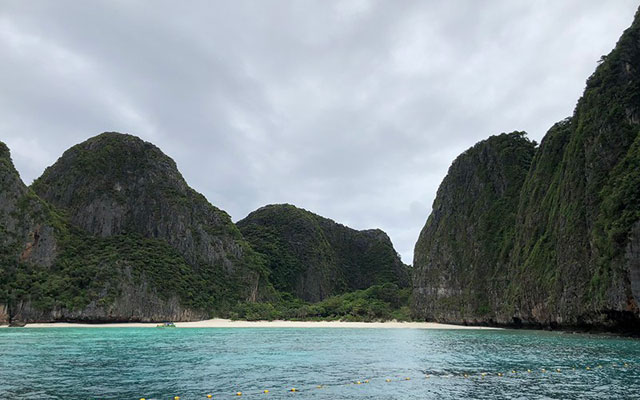
With news of the indefinite closure of Maya Beach widely reported around the world, the Tourism Authority of Thailand (TAT) has issued a statement to clarify that Phi Phi Leh island – where the world-famous bay is located – remains open to visitors.
Maya Beach itself is off limits, but visitors can still enjoy the views of Maya Bay – now sans people – from a boat. They can also enjoy snorkelling in the front of the bay. Diving and snorkelling trips around Mu Ko Phi Phi are also running as usual.
Maya Beach is closed, but the island and its surrounds like Maya Bay (pictured) are still open.
The Nopparat Thara Beach-Phi Phi Islands National Park has reported sightings of blacktip reef sharks swimming in Maya Bay last week, which it said was as a good sign of the improving biological system since Maya Bay was closed to visitors four months ago.
Yuthasak Supasorn, TAT governor, said: “For many years, the local community at Mu Ko Phi Phi has been undergoing a regular beach and underwater clean-up aimed at helping to preserve the marine ecosystem as well as the coral reef system, which are the reasons why tourists and divers return to the area year after year.”
“TAT is ready to support all stakeholders to work together to achieve common goals towards socially and environmentally sustainable tourism,” he added.
Centara Hotels & Resorts has appointed hospitality veteran Andrew Langston as senior vice president, business development, to help execute its five-year expansion plan.
The British national, who has over 34 years’ experience in hospitality management and development, will report to deputy CEO Markland Blaiklock.
Langston was most recently executive vice president, strategic advisory & asset management, at Jones Lang LaSalle Hotels & Hospitality Group, working throughout Asia from the company’s Thailand base.
He has also held senior management positions with major hotel groups such as Banyan Tree and Intercontinental Hotels group.
Earlier in his career, he served the British royal family as a footman at Buckingham Palace, a role which included looking after the Queen of England, Diana the Princess of Wales and Prince William, among others.
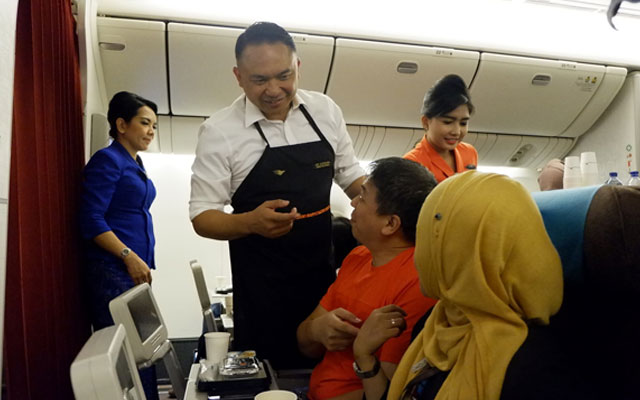
Last Sunday, passengers onboard Garuda Indonesia’s flight GA421 between Denpasar and Jakarta were surprised to find airline’s president and CEO Ari Ashkara among the cabin crew.
Ari welcomed passengers at the flight door and served them food and drink, while Garuda’s executive vice president of operations, captain Bambang Adisurya Angkasa was the flight’s chief pilot.
1 of 4
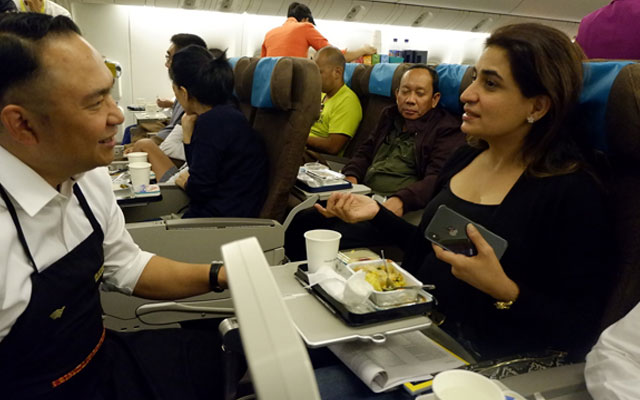
Ari and his management team were “on duty” as part of the CEO on Board programme to gain insight into what passengers want from the flight experience as a way of further refining customer service. This would also go towards demonstrating the importance of passenger feedback.
On the occasion, Ari talked to the passengers and listened to their input on services and expectations from the managements going forward.
Ari said: “Customers’ characteristics are getting more varied, and the standard of service satisfaction is also increasing. Therefore, we expect that a more direct approach to customer service can support our ongoing efforts to improve loyalty (to Garuda).”
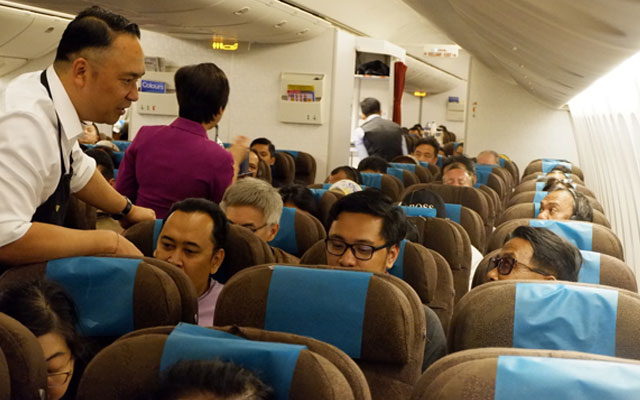
In the airline’s first time running the CEO on Board programme, the Sunday evening Denpasar service was chosen as it was the busiest domestic route with more than 300 passengers.
Langkawi has launched its fourth geopark trail, BioGeoTrail Kubang Badak, taking visitors on a gentle three-hour tour of the Malaysian island’s biodiversity.
Langkawi Development Authority and Langkawi Research Center spent more than a year developing the bio-geo trail in the north of the island, which includes geographical, biological and cultural elements.
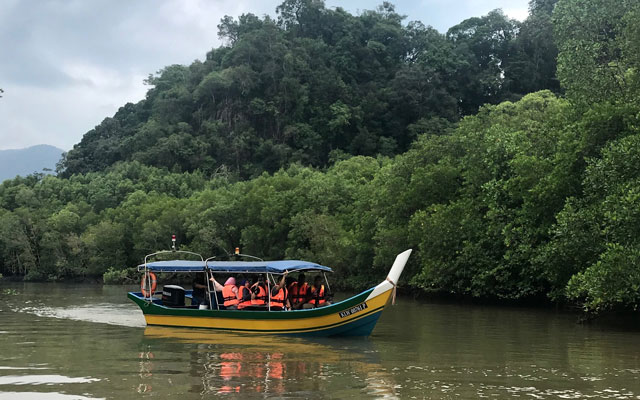
A boat ride is part of the BioGeoTrail Kubang Badak
The trail incorporates 13 spots of interest, varying from taking a boat through pristine mangroves, exploring an ancient cave that is home to the largest number of bats on the island, hiking through dense forest to discover the diversity of wildlife and standing on the summit where the first Thai communities settled after migrating to Langkawi about 200 years ago.
Ibrahim Komoo, managing director of GeoSight, which helped lay the trail, said the aim is to showcase more of Langkawi’s natural beauty while alleviating the increasing burden of tourists from the existing three trails.
The trail starts at Jeti Kubang Badak, with an information booklet provided for visitors to navigate themselves.