TTG Asia
Asia/Singapore Friday, 26th December 2025
Page 140

Korean Air unveils new corporate identity and aircraft livery

0

Korean Air has introduced a new corporate identity featuring a modernised deep blue Taegeuk symbol that reflects the airline’s heritage while following minimalist design trends.

The reveal took place on March 11 at the airline’s headquarters in Seoul during the Rising Night event, with around 1,000 guests, including employees, industry leaders, and media.

Korean Air’s Walter Cho unveils Korean Air’s new corporate identity

The new logotype, Korean Air, next to the Taegeuk symbol, combines national prestige with a refined visual identity. It features brushstroke-inspired details, and open connections, offering a modern take on Korean elegance.

Korean Air also revealed its new aircraft livery, featuring a Boeing 787-10 with the updated design. Registered as HL8515, the aircraft includes the latest Prestige Suites 2.0 cabin interiors and began service on March 12, flying from Seoul Incheon to Tokyo Narita.

The new livery features a bold “Korean” logotype, highlighting its status as South Korea’s flagship carrier. The design includes an enlarged logo, metallic sky-blue paint, and a smooth curve across the fuselage, replacing the traditional cheatline for a more refined, modern look.

This is the first major brand update since 1984, when Korean Air introduced the Taegeuk symbol, which is globally recognised as a representation of both the airline and the nation. The new corporate identity will be gradually rolled out across aircraft liveries, in-flight services, and key customer touchpoints.

In addition, Korean Air introduced its upgraded in-flight meals at Grand Hyatt Incheon, reflecting the airline’s new corporate identity and aiming to elevate the premium travel experience. Partnering with chef and owner of Seoul’s Cesta, Seakyeong Kim, the airline has created a refined menu featuring seasonal ingredients, innovative culinary techniques, and a focus on Korean culinary heritage.

Economy-class meals now include options like salmon bibimbap, spicy stir-fried octopus, tofu pad thai, and rosé pasta. For an elevated dining experience, first-class passengers will use Bernardaud china, Christofle cutlery, and Riedel glassware, while Prestige class features Armani/Casa dishware and glassware.

For added comfort, first-class bedding features premium Frette materials and an Air Coil mattress from Eco World, with passengers also receiving Frette loungewear. Premium-class amenity kits, created in collaboration with British brand Graff, include pouches with skincare products and perfume.

The upgraded in-flight dining and services began on March 12 across 10 major longhaul routes, including flights to New York, Paris, and London. These enhancements will be available on all longhaul routes by June and on all routes starting in September.

Walter Cho, chairman and CEO of Hanjin Group and Korean Air, shared his vision for the airline’s future: “As a unified Korean Air, we are committed to more than just transportation – we aim to connect people, cultures and the world through the skies. With this foundation, we will build an industry-leading safety system, elevate the customer experience and strengthen trust through open communication with all stakeholders. Together, we’ll create a more connected and better world.”

Malaysia’s travel trade unites for Selangor Super Savers 2025 campaign

0

The travel trade has come together in a united, strategic move to bolster Selangor’s tourism sector in line with its Visit Selangor Year 2025 campaign.

The Malaysian Association of Hotels Selangor Chapter (MAHSEL) and the Malaysian Association of Hotel Owners (MAHO) launched the Selangor Super Savers 2025 (SSS2025) campaign last month, with strong support and participation from the Malaysian Association of Theme Parks & Family Attractions and the Malaysia Shopping Malls Association.

Tourism Selangor’s Chua Yee Ling (fourth from left) joins Malaysian Association of Hotel Owners’ Shaharuddin M Saaid (third from left) and Malaysian Association of Hotels Selangor Chapter’s Jasmine Abdullah Heng (third from right) in the launch of Selangor Super Savers 2025

This initiative aligns with Tourism Selangor’s Visit Selangor Year (VSY) 2025 campaign under the theme, Surprising Selangor, which aims to attract eight million international and domestic visitors to Selangor and generate RM11.7 billion (US$2.6 billion) in tourism receipts.

Jasmine Abdullah Heng, chairman of the Malaysian Association of Hotels Selangor Chapter, said: “SSS2025 aims to position Selangor as a must-visit destination by fostering collaboration among key industry players, including hotel operators, theme parks, attractions, and shopping malls.

“The campaign offers exclusive promotions and benefits to visitors, enhancing their overall travel experience in the state.”

The campaign was officially launched by Chua Yee Ling, chief executive officer of Tourism Selangor, who also unveiled the campaign’s dedicated digital portal, selangorsupersavers.com. The platform enables travellers to access a range of stay packages, including a minimum of 10 per cent off Best Available Rates, F&B credits, and late check-outs until 15.00.

Additionally, the campaign extends up to 10 per cent discounts on meeting and wedding packages across more than 20 participating hotels in Selangor. Guests staying in any of the participating hotels can also enjoy perks and discounts at participating theme parks and shopping malls in Selangor.

All offers, packages, and discounts are valid for six months from March 1, unless otherwise stated and subject to partners’ terms and conditions.

Shaharuddin M Saaid, executive director of MAHO, shared that the listing on the website is not yet complete, as more participating hotels and malls in Selangor have registered their interest to join the campaign.

He added that both MAHSEL and MAHO are working on Phase 2 of SSS2025, which will see further support from industry players, including airlines. The campaign will run until the end of 2025.

Industry players are encouraged to participate in Phase 2 of the initiative, which is expected to attract additional stakeholders, including airlines, and extend benefits until the end of 2025. This campaign serves as a lead-up to Visit Malaysia Year 2026, which aims to welcome 26.1 million tourist arrivals and generate RM97.6 billion in domestic spending.

Lily Hotels welcomes Michael Wieser back as CEO

0

Michael Wieser returns to Lily Hotels as CEO, having previously held the role before the Covid-19 pandemic.

With 35 years of international hospitality experience, he has held leadership positions with some of the world’s most prestigious hotel brands, with a proven track record in operations, guest satisfaction, and strategic growth.

Wieser will oversee the development and expansion of the two resorts in the Lily portfolio: Lily Beach Resort & Spa and Hideaway Beach Resort & Spa.

CBRE strengthens Asia-Pacific hotels and hospitality team

0

CBRE is bolstering its hotels and hospitality team in Asia-Pacific with the appointments of Andrew Hunter as senior director, and Mark Hahm as associate director.

Hunter, based in Singapore, will collaborate with CBRE’s global, Asia-Pacific, and local hotels teams to enhance cross-border hotel investment opportunities. He will focus on client engagement to drive deal distribution and provide essential hotel market intelligence to empower clients in their real estate investment strategies.

From left: Andrew Hunter and Mark Hahm

Hahm, based in Seoul, joins CBRE from JLL where he held a senior role managing hotel transactions. He will enhance transaction execution in South Korea, leveraging his experience with hotel owners and investors.

Air travel remains brisk despite prominent accident headlines

0
  • Long-term trend of air accidents has declined over 2005 to 2024
  • Aviation leaders emphasise airlines’ safety culture and “zero tolerance” for safety breaches
  • 2024 accidents attracted widespread media attention, but the travelling public has continued to choose to fly
IATA’s 2024 safety report shows a steady decline in accident rates, though recent incidents have sparked concern

The IATA Annual Safety Report – 2024, released at the end of February, has emphasised a long-term significant reduction in accident rates amid current public concerns about the safety of air travel.

The report noted 1.13 accidents per million sectors in 2024 compared to 3.72 accidents per million sectors in 2005.

However, the 46 accidents in 2024 based on IATA’s classification criteria represent a nine per cent increase compared to 2023, the safest year on record for commercial airline travel.

Among accidents listed in the IATA Annual Safety Report – 2024 are:

January 2025: A Japan Airlines Airbus 350-900 collided with a Japan Coast Guard aircraft at Haneda Airport. While all passengers on the A350-900 escaped, five on board the Japan CoastGuard aircraft lost their lives.

January 2025: An Alaska Airlines Boeing 737-9 MAX suffered a fuselage separation while taking off from Portland’s airport. All 177 passengers survived the emergency landing.

May 2024: An SIA Boeing 777-300 experienced a severe turbulence event, resulting in an emergency landing in Bangkok and one fatality.

July 2024: A Saurya Airlines CRJ-200 crashed on take-off in Nepal and claimed 18 lives

Airlines successfully transported five billion passengers worldwide on more than 40 million flights, and IATA asserts commercial aviation remains one of the safest modes of public transport.

Director general, Willie Walsh, said: “Even with recent high profile aviation accidents, it is important to remember that accidents are extremely rare.

“There were 40.6 million flights in 2024 and seven fatal accidents… a decade ago, the five-year average (2011-2015) was one accident for every 456,000 flights. Today, the five-year average (2020-2024) is one accident for every 810,000 flights.”

The topic of air safety was also raised at the recent Aviation Festival Asia (AFA) in Singapore. Julia Simpson, president and CEO of WTTC, and airline chiefs echoed the industry’s safety-first principle and regulatory measures that make flying the safest means of transportation.

In fact, airlines cannot fly if they do not meet the regulatory requirements, asserted Richard Nuttal, CEO, SriLankan Airlines.

Simpson, formerly with British Airways, reiterated that the industry has “zero tolerance” for air incidents.

Easily forgiven
While recent air incidents have made prominent news headlines, the Association of Asia Pacific Airlines director general, Subhas Menon, told TTG Asia that “air travel confidence has not been dented”.

Menon continued: “Forward bookings have not been affected by these incidents. Air transport is still the safest mode of travel and people know that.”

An AFA commentator’s quip that “people have short memories” seems to ring true.

IATA’s January 2025 data shows global passenger demand, measured in revenue passenger kilometres, was up 10 per cent compared to January 2024, and total capacity, measured in available seat kilometres, was up 7.1 per cent year-on-year.

The January load factor was 82.1 per cent (up 2.2 percentage points compared to January 2024), an all-time high for the month.

International demand rose 12.4 per cent compared to January 2024. Capacity was up 8.7 per cent year-on-year, and the load factor was 82.6 per cent (up 2.7 percentage points compared to January 2024), an all-time high for the month.

Domestic demand rose 6.1 per cent compared to January 2024. Capacity was up 4.5 per cent year-on-year. The load factor was 81.2 per cent (up 1.2 percentage points compared to January 2024), an all-time high for the month.

IATA’s Walsh commented: “We’ve seen a notable acceleration in demand this January, with a particularly strong performance by carriers based in the Asia-Pacific region.”

In the 2025 World’s Safest Airlines top 25 ranking, Airline Ratings placed full-service regional carriers Air New Zealand, Qantas and Cathay Pacific in the first three spots; ANA, EVA Air, Korean Air, Japan Airlines (JAL) and Vietnam Airlines also made the list.

In the low-cost carrier category, the list includes Hong Kong Express, Jetstar Group, AirAsia, VietJet Air, IndiGo, Cebu Pacific and ZipAir.

While it may be considered taboo and airlines are often reluctant to discuss their safety records, Steven Ler, president of the National Association of Travel Agents Singapore (NATAS), stated that winning an award serves as a valuable reference point for gaining passenger trust.

In addition to promoting the “luxury of the seats,” he suggested that not enough is being done to market safety to customers, such as highlighting features like “a young fleet” or “aircraft less than five years old”.

He said: “Airlines from all over the world fly to Singapore, but most Singaporeans trust Singapore Airlines and see it as the main carrier.

“New airlines like Gulf Air, a Gold award winner in the Middle East, may be unfamiliar.”

Gulf Air was the official airline partner of the recent NATAS Fair, while Singapore Airlines was the strategic airline partner.

Ler, who is also the executive director of UOB Travel Planners, continues to fly with Garuda Indonesia despite the airline’s struggles with its safety record over the years.

He noted that most incidents are “one-off” and that the airline has “put in the effort to improve”, describing it as a “value-for-money airline”. – Additional reporting by Karen Yue

UN launches new tourism employment indicator for SDG progress

0

The United Nations has taken a major step in recognising the role of tourism in sustainable development by adopting a new tourism employment indicator as part of the official Sustainable Development Goals (SDGs) Indicator Framework.

Endorsed at the 56th session of the UN Statistical Commission, this landmark decision means that, for the first time, global data on tourism employment will be systematically tracked within the SDG monitoring process. It also increases the number of official tourism SDG indicators from two to three, enhancing the recognition of the sector’s global contribution to economic and social progress.

The UN adopts a new tourism employment indicator to track tourism’s role in sustainable development and support SDG progress globally

UN Tourism’s most recent survey of Member States’ priorities revealed a strong preference for the organisation to focus on ensuring tourism contributes to the achievement of the SDGs. In response, the new tourism employment indicator, with UN Tourism as its custodian, provides the evidence needed to advance this priority. This indicator addresses a critical policy issue in many countries, offering a broader perspective on tourism’s sustainability by complementing the existing SDG indicator on tourism’s GDP and better considering social progress.

With this recognition, tourism employment will now be officially integrated into the deliberations of the United Nations High-Level Political Forum (HLPF) on Sustainable Development, including the UN Sustainable Development Goals Report. The data will be available on the SDG Global Database and the UN Tourism Statistics Database website.

The indicator was developed under the leadership of Austria, Spain, Saudi Arabia, CARICOM, ILO, and UN Tourism, following extensive research and consultative processes. It is one of three new indicators endorsed by the UN Statistical Commission in the second and final SDG Indicator Framework review for the 2030 Agenda.

Through a partnership between UN Tourism and ILO, the indicator leverages both organisations’ data reporting mechanisms, maximising previous investments and minimising the reporting burden on countries.

The new indicator, derived from the Statistical Framework for Measuring the Sustainability of Tourism, tracks all working-age persons with paid employment and self-employment. It can be expressed as a share of total employed persons and disaggregated by gender, employment type (employee/self-employed), and the 10 tourism industries. This allows for a comprehensive measurement of tourism sector employment both within individual countries and globally.

UN Tourism secretary-general Zurab Pololikashvili said: “The new tourism employment indicator goes beyond GDP to enhance our understanding of tourism’s potential for social progress. Policymakers will be better equipped to identify gaps, address inequalities, and maximise tourism’s social and economic benefits – ensuring no one is left behind.”

GSTC 2025 conference to be held in Fiji

0

The 2025 Conference of the Global Sustainable Tourism Council (GSTC) will be held in Fiji from August 5 to 8, bring together global leaders in sustainable tourism, including government representatives, destination managers, industry professionals, and sustainability experts, to advance the future of responsible travel and tourism worldwide.

Hosting GSTC2025 in Fiji will highlight the Pacific region’s sustainability challenges and opportunities, focusing on climate resilience and conservation in island destinations globally.

Fiji will showcase its commitment to sustainability and conservation as the host of GSTC2025; Savusavu Bay in Fiji, pictured

The GSTC2025 Conference will feature an extensive programme, including keynote speeches from sustainability leaders, panel discussions, as well as hands-on workshops and trainings designed to foster best practices in tourism sustainability.

Attendees will have the opportunity to explore critical topics related to marine and coastal tourism, community, culture and responsible development, and destination stewardship. Furthermore, GSTC2025 will serve as a key networking platform, allowing stakeholders from across the tourism industry to collaborate and exchange ideas and solutions for a more sustainable future.

“Tourism Fiji is delighted to bring GSTC to Fiji later this year, in a first for our region. As a developing country, our need for sustainability is immense. We recognise the precious environment that gives us our livelihood in tourism, and we want to preserve it. To do this, we need input, professional advice, learnings, and best practices – adapted to our pressing needs in a small developing island nation. We are delighted to host delegates from around the world to also experience the very best sustainable tourism experiences we have to offer,” said Tourism Fiji CEO Brent Hill.

More details on pre-conference trainings, venue, and speakers will be announced soon. Early-bird registration for the conference can be accessed here.

A2A Safaris sees surge in Asian bookings

0

Singapore-based luxury travel company A2A Safaris (A2A) is seeing a strong rebound in safari bookings as affluent Asians increasingly seek wildlife encounters in their holiday plans.

The company reported a 26 per cent increase in bookings last year compared to pre-pandemic levels in 2019. It anticipates surpassing this growth in 2025 as Asia, traditionally a smaller market for African safaris compared to North America and Europe, gains importance.

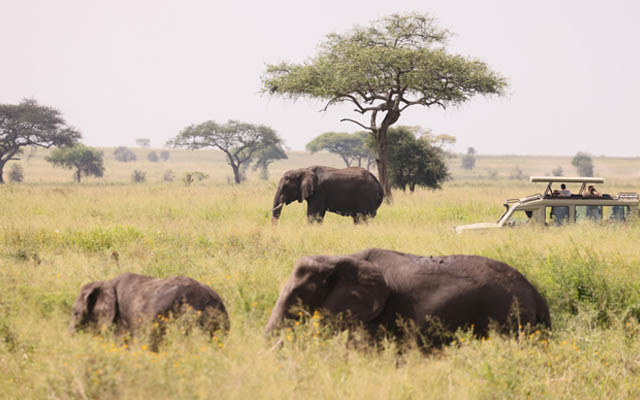
More Asia travellers are seeking unique wildlife experiences; photo by A2A Safaris

Over the past decade, A2A’s business has grown by 142 per cent, having been the first Asia-based tour operator to specialise in planning African safaris for Asian travellers since 2002. A2A co-founder Victor Dizon said Asians are increasingly seeking “money-can’t-buy experiences”, where exclusivity and access to nature outweigh traditional luxuries.

Known for its private luxury safari and nature expeditions, A2A offers customisable itineraries in India featuring exclusive experiences, such as private access to the Taj Mahal, tiger safaris with specialist guides, intimate dining, shopping with local insiders, glamping in the wild, and access to the treasures of the Gem Palace.

Building on this strong growth, A2A has added India and Bhutan to its Wild Asia portfolio, combining the best accommodation, private guides, and exclusive five-star experiences from both countries. The company is also looking to expand its reach to South Korean travellers.

Trips are tailored from a curated portfolio of special interest activities, allowing each client to experience India on their own terms. A2A also offers concierge support, including visa assistance, personalised pre-departure briefings, and restaurant recommendations and reservations.

Dizon explained that the expansion into India responds to clients’ growing desire for safaris offering the same excitement and adventure as those in Africa. He shared that a group of clients who have travelled with them on safaris across Africa are now looking for something equally unique. He added that India offers wildlife such as tigers and snow leopards, and its dense vegetation makes wildlife spotting more challenging compared to Africa’s open savannahs and grasslands.

The Bhutan programme highlights include the National Memorial Chorten, the country’s most prominent religious landmark, the National Institute for Zorig Chusum, where students preserve traditional Bhutanese arts and crafts, and the Buddha Dordenma, one of the tallest Buddha statues in the world, surrounded by 100,000 smaller bronze and gold-gilded statues.

Hiking trails include the Kuensel Phodrang trail – often used by the current king for mountain biking and the Khamsum Yuelley Namgyal Chorten, a religious structure built recently for protection of the people of Bhutan.

In addition, Singaporeans are increasingly interested in East Africa, with many hoping to witness the Great Migration’s river crossings before exploring less crowded reserves or visiting the gorillas in Rwanda or Uganda.

Dizon noted that, impacted by the pandemic, travellers now prioritise time with loved ones, choosing to pursue their dreams and explore the world’s wonders. In response, the company has diversified its product offerings to stay adaptable in the uncertain post-pandemic environment.

Hotels need to embrace Gen Z travel trends for success, Agoda reveals

0

Agoda has outlined how hotels across Asia can embrace the preferences of Gen Z travellers to ensure they are adequately future-proofing their business.

The call comes as Agoda research reveals the top five travel habits of Asian Gen Z, highlighting a generation that finds inspiration in the digital realm, embraces spontaneity, and values shared experiences.

Gen Z travellers value connection, preferring to explore with a partner, group of friends or family

The survey, conducted on the Agoda platform between January 10 and 31, 2025, included over 15,000 participants from markets across Asia including Hong Kong, Indonesia, India, Japan, South Korea, Malaysia, the Philippines, Singapore, Taiwan, Thailand, and Vietnam. It highlights how travellers aged 18-27, or Gen Z, are shaping the future of travel in Asia, influencing trends and paving the way for future generations to explore the world in new ways.

To attract Gen Z travellers, hotels should focus on creating Instagrammable spaces that encourage guests to share their experiences, using hashtags that connect directly to the property. Additionally, hotels should stay proactive by incorporating upcoming concerts and festivals into marketing strategies early on, capturing the interests of this generation. Themed experiences, such as offering unique menus inspired by popular shows like White Lotus in Thailand, can further engage Gen Z.

Collaborating with social media influencers to showcase memorable moments at the property is another effective strategy for drawing attention. Staying on top of trending content, particularly on TikTok, and reflecting these trends in the hotel’s offerings will help attract experience-driven travellers. Finally, personalising the guest experience is key for ensuring Gen Z leaves positive reviews, as they are focused on self-expression and meaningful experiences.

Social media is the new travel guide
Gen Z is blazing a trail on social media, with TikTok leading the way as their top source for travel inspiration. While millennials lean on friends and family as their preferred source of recommendations, Gen Z is scrolling through TikTok (20%) and Instagram (14%) to discover their next adventure. Despite the digital influence, personal recommendations remain a close second (17%), proving that word-of-mouth still holds sway.

Last-minute bookings on the rise
In a world where plans can change in an instant, Gen Z embraces the thrill of last-minute travel more than any other generation. 20% of Gen Z say they book flights less than a week in advance, outpacing millennials, Gen X, and boomers. Accommodation follows suit, with one in four Gen Z travellers reporting they make bookings at the eleventh hour, showcasing their penchant for spontaneity.

Partnered adventures take the lead
For Gen Z, travel is a shared experience, with 38% preferring to explore the world with a partner. Group trips with friends and family vacations also rank high, highlighting the importance of connection and companionship in their journeys. Millennials, on the other hand, prioritise family trips, reflecting a generational shift in travel dynamics.

Spending habits align across generations
When it comes to travel spending, Gen Z and millennials are on the same page. Both generations prefer to keep accommodation costs under US$50 per person per night, with Gen Z more inclined to do so (56%) than their millennial counterparts (44%). Meanwhile, 32% of Gen Z plan to spend between US$51-100 per person per night compared to 41% of millennials. This trend underscores a shared commitment to affordable travel without compromising on experiences.

The desire to travel transcends generations
Despite differing preferences in where different generations find travel inspiration, when they book their travels, and who they go with, the desire to explore the world is universal. Nearly half of Gen Z and millennials plan to embark on one to three trips this year, while a third are aiming for four to six adventures. This shared wanderlust bridges generational gaps, proving that the love for travel knows no bounds.

“It’s hard to understate the importance of Gen Z in determining the future of travel,” said Andrew Smith, senior vice president supply, Agoda.

“This is the first generation never to have known the world without the internet and one that is developing increasing spending power, with Neilsen’s Spend Z report expecting US$12T growth by 2030. It is no surprise that they place a premium on opportunities to capture instaworthy content and are constantly looking for unforgettable experiences. The most forward-thinking hotels are those adapting their marketing strategies to thoughtfully cater to this group.”

Bhutan icons land at Changi Airport

0

A 3D model of Paro Taktsang, also widely known as the Tiger’s Nest, alongside stunning visuals that showcase Bhutan’s natural beauty, cultural heritage, and unique travel experiences, are now on display at Changi Airport Terminal 3.

The Discover Bhutan Exhibition is a limited edition showcase in Singapore, supported by the Department of Tourism (Bhutan) and Drukair – Royal Bhutan Airlines.

The Discover Bhutan Exhibition is on display at Changi Airport Terminal 3 from now to April 6

Visitors can also explore select Bhutanese products on display to get a glimpse into the country’s rich arts and crafts.

Discover Bhutan Exhibition will end on April 6.