Spanish hotel group Meliá Hotels International will be taking over the management of The Reed Hotel in Ninh Binh, Vietnam, from May onwards.
The property, occupying the highest building in the area, will be rebranded to as Meliá Ninh Binh by January 2020, and will have 153 rooms alongside facilities such as an infinity pool, fitness centre, VIP lounge and three F&B options.
Melia adds The Reed Hotel in Vietnam to portfolio
In addition, the next-door convention centre will also fall under Melia’s management. Event planners may avail the 4,000m2 of meeting space across multiple meeting rooms.
The hotel group will also position Meliá Ninh Binh as a bleisure-focused property, in recognition of the destination’s growing MICE market.
Meliá Hotels International continues to expand its presence across Vietnam with a total of six operating hotels and seven in the pipeline. In total, the group has 20 properties currently in operation and 32 properties in the pipeline that are expected to be open by 2022.
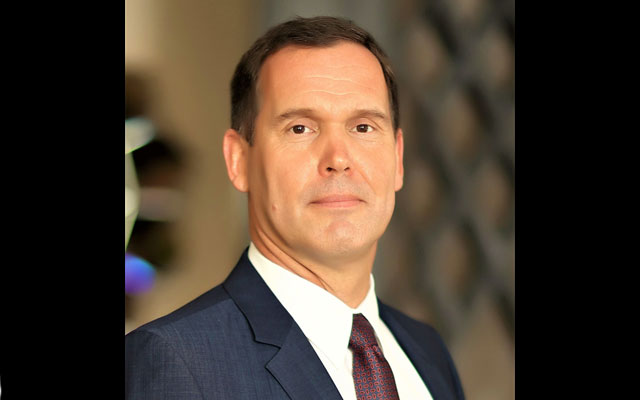
BHMA Hotels and Resorts has appointed Jens Reichert as the company’s first chief development officer.
He has been tasked with setting up a focused business development team with the goal of growing the company’s portfolio according to BHMA’s global expansion plans of its brands X2, X2 Vibe and Away Resorts.
The industry veteran has more than 30 years of service under his belt, having spent the last decade focusing on domestic and international hotel development. Over the past few years, Reichert has been instrumental in signing more than 50 hotel contracts and possesses extensive knowledge of contract negotiations in various jurisdictions.
Companies find Thailand a harder sell, as DIY travel gains favour among Europeans
Long a top Asian destination for Europe’s travellers, Thailand today is not the easy sell it once was for tour operators and travel agents, who are finding that they have to dig deep to have a shot at attracting repeat clients with the “been there, done that” mindset.
“European numbers are stable for Thailand, however there’s not much growth opportunities from the region’s market,” admitted Tobias Fischer, director of business development, Go Vacation Thailand.
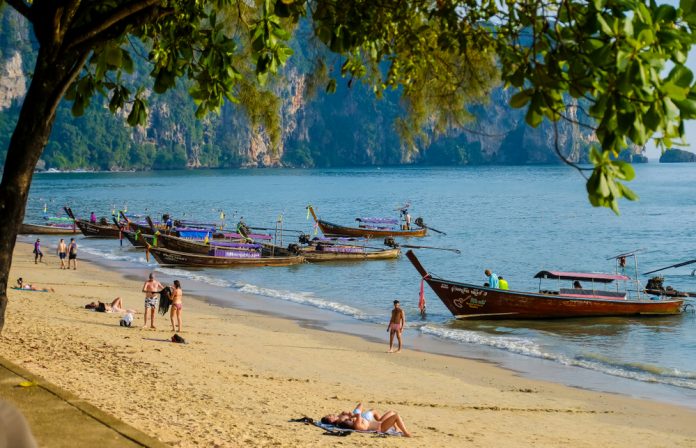
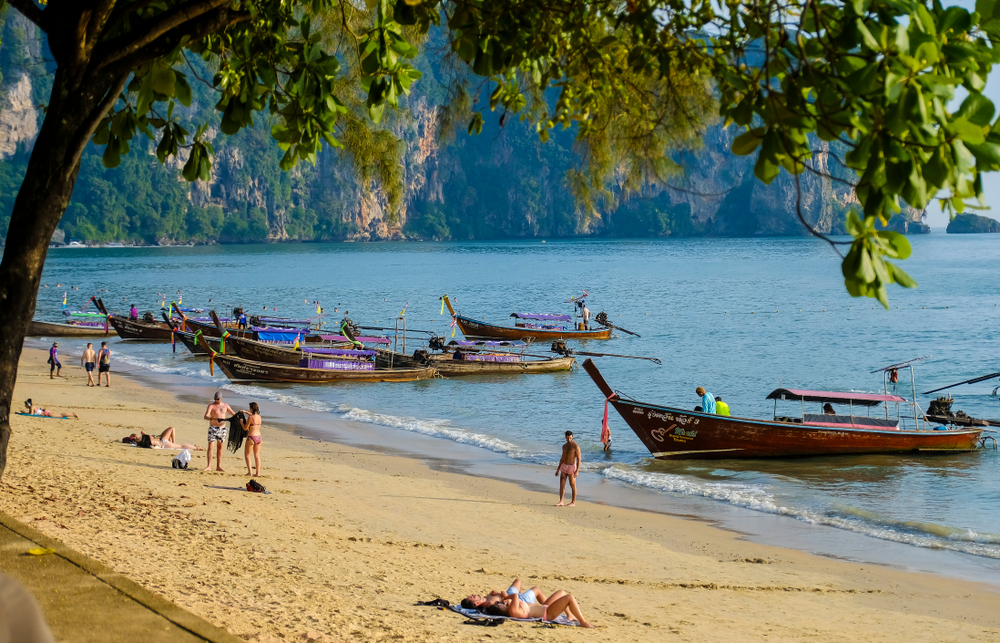
European agents are increasingly finding Thailand (Krabi pictured) a harder sell, as DIY travel gains favour
It appears that the destination may have lost its lustre after many years in the spotlight, some buyers at ITB Berlin shared.
Tina Bach Thogersen, destination manager, Denmark’s Viktors Farmor World-wide Expeditions, said: “We sell (pretty much) all of Indochina. We offer one itinerary for Thailand, but it doesn’t sell.
“Many Danes have been to Thailand. Today, many of us do it individually because we want to visit the beaches and the small islands. It’s hard to gather groups of 20 people wanting to do the same beach holiday,” she explained.
Moreover, with Thailand being a mature destination, she said it is “very easy to travel within Thailand on your own”.
In an attempt to keep things fresh for repeaters while staying abreast to trends, DMCs like Go Vacation has been adding new components to itineraries, including local experiences and lesser-known destinations.
“As DMCs, we make money from round-trips. We still keep classic tours but develop new tours such as klong (canal) tours followed by lunch with a local family. For seat-in-coach tours, we always have to keep classic sites like Ayutthaya but try to add diversity into them,” said Fischer.
Similarly, Laurent Kuenzle, CEO, Asian Trails, remarked: “Experiences is the buzzword, customers want to see main sites and new things.”
Foodie tours are a hit, he shared, adding that it’s about marketing the right product to the customer. “A dinner would be done differently for a German and a Spanish customer, for example.”
But similar attempts have come to naught for Thogersen. “That is the kind of itinerary we do. We do all we can to get as close to the locals as possible. But still, no – they choose Laos, Cambodia and Vietnam instead.”
In her experience selling travel to Danes, “the last time group tours to Thailand were selling was around a decade ago”. A previous company she was with stopped selling Thailand in 2010. Following that, it was a cycle of reintroducing Thailand before it would drop off again.
On the other hand, product manager for South-east Asia at Swiss agency Adgentes, Julien Rousseau, said Thailand has not lost its mojo in Switzerland, and continues to sell itself.
Thailand is a “big destination” at the agency, making up around 20 per cent of business. The country is followed in popularity by Vietnam and Indonesia.
“I was expecting many would book Thailand online. But (perhaps) they encountered problems before, and returned to agencies as they feel safer booking with us,” he told TTG Asia.
He added: “For destinations like Cambodia and Vietnam, our clients tend to visit just once. But they choose Thailand often for the beaches.”
Repeat travellers are choosing Thailand’s less touristy beaches like Koh Kood and Koh Chang, according to Rousseau. – additional reporting by Xinyi Liang-Pholsena
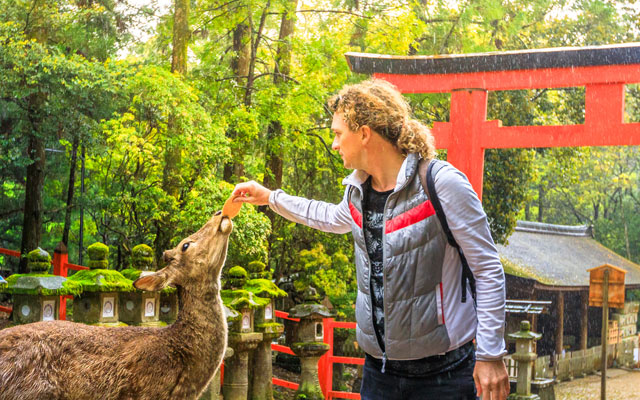
Young male tourist feeds with deer biscuit at Nara wild deer in a public park of Nara, Japan. Red Torii and stone lanterns on background
The perception of Japan as an insular nation no longer holds true, as the country opens up to tourism in recent years. Furthermore, the immense influence of Japanese pop culture is turning out to its best ambassador in promoting the country in the European markets.
Japan is becoming “more accessible” for UK travellers, a trend fanned by Japanese pop culture figures such as Yayoi Kusama, whose recent exhibition was sold out in London, and Netflix sensation and tidying expert Marie Kondo, observed Natasha Rewrie, business development manager EU at Buffalo Tours.
A tourist feeds a deer biscuit to wild deer in Nara, Japan
The growing influence and consumption of Japanese pop culture is likely fuelling awareness and sparking travel interest to the Land of the Rising Sun, Rewrie suggested.
Japan tourism has also benefited from the greater media attention on the country as it gears up for major sporting events like Rugby World Cup 2019, said Johann Chabert, country manager, Buffalo Tours Japan.
“Japan is overall a growth market because the country is opening up, and we’re seeing around 10-15 per cent growth from the Western markets to Japan,” he said.
It’s a similar story for Terrie Lloyd, CEO of JapanTravel.com who said his business was up millions of dollars over the last year, driven solely by German tourists’ fast-growing demand for Japan.
He commented: “Japan is gaining popularity overall, and next year is the Olympics (which has spurred interest). Europe’s usually the last place to hear about Asia, and up until very recently everyone here wanted to go to Thailand. But recently, Japanese food and culture are starting to get really well known. In the last two years, Japan suddenly took off.”
Among the European markets, Geraint Holt, managing director of Japan specialist DMC, The J Team, first saw strongest underlying interest in Japan from France, then Germany, Spain and Italy.
The emergence of demand from Holland and Belgium operators has been the most notable change for the DMC in the past six months. “Japan is now a destination they are offering, which we didn’t see previously,” he added.
For Western European travellers, Japan’s biggest advantages as a destination is how unfamiliar and mystifying it is. Added Holt: “Travellers arrive with little preconceived ideas and low expectations. But then end up having a great time, and want to tell everyone else about it.”
This is a marked departure from in the past, when the destination welcomed mainly travellers with special interests.
“That was the case when Japan was still below 20 million (arrivals). The majority of visitors arriving had a prior interest, and were channelling that into a holiday. Now, Japan is coming to the top of the list of avid travellers who have been to many countries, he observed.
While the country is clearly becoming a “more mainstream” destination, Chabert contends Japan is not yet fully ready for Western tourists as English is rarely spoken beyond the key cities of Tokyo and Kyoto. – additional reporting by Yixin Ng
With a recent refresh of its destination campaign, the Philippine Tourism Promotions Board (TPB) is extending its focus on more granular marketing content to European markets.
TPB recently revived the It’s More Fun in the Philippines campaign with a strong focus on crowd-sourced visual content shared by tourists online.
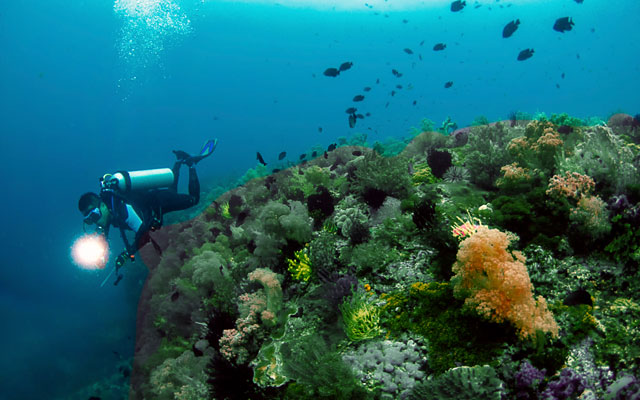
Diving in the Philippines is a popular activity for Europeans visiting the country, hence it’ll be one of the niche interests the TPB is highlighting
While this may signal the weight that TPB is placing on digital marketing, Marie Venus Tan, COO of TPB told TTG Asia that visuals and other content serve to paint a clearer picture of fun in the destination, meant to resonate both online and offline.
“Our (marketing content) are meant to illicit interest, and not simply (highlight the destination), but what’s in the destination. It’s important that we don’t merely focus on beaches, as this is a very competitive area regionally, or mountains. We would have to go deeper into culture and folklore, for example.”
TPB intends to highlight more tourism assets that appeal to niche interest, and part of that will involve opening up new destinations.
“We are appealing to areas that address specific niche interests. For instance, surfing in Siargao. We will use more action shots that will evoke curiosity.”
She added: “Boracay does not need promotion – it needs enhancements. We are opening up Iloilo, and other destinations outside of Mindanao such as Bukidnon. These areas are interesting for experiential tourism, (and figure into) the strategic direction towards special interests.”
Content will be targeted to different markets. “Diving is an important niche while we’re here in Europe. In the UK, it is birdwatching, among other activities. And in India and the Middle East, weddings.”
In Europe, the UK, Germany and France are the top performing source markets in terms of both volume and growth, Tan said. Emerging markets in eastern Europe, such as Poland and Russia, are also coming onto the radar, she added.
As tourist numbers grow and new parts of the Philippines are promoted to visitors, industry observers foresee connectivity to be a continued challenge with the lack of direct international connections and capacity strains at the country’s main gateway.
Tan stated that communications is vital to “manage expectations” of travellers, as well as to tie back to what makes the Philippines different from its neighbours.
“We are an archipelago with many islands, not a landlocked country (offering) seamless and contiguous travel. How we communicate that to manage the expectations of travellers is very important.
“Connectivity is a challenge. But at the same time, talking about it is one way to bridge knowledge of what the Philippines is. Many people tend to look at the countries in South-east Asia as similar, which is not right.”
Down the line, Tan shared that there may be plans to appoint MICE representation in Europe. In the region, the destination has had offices in Frankfurt and London since the 1990s.
Tan elaborated: “We are now strategising and working out a MICE action plan. (In addition to the tourism offices) the Philippine Department of Tourism already has, we are probably going to have MICE representation in Europe or the Middle East.”
Nepal's tourism officials at the Visit Nepal 2020 Europe launch briefing at ITB Berlin. Photo: Jonathan Yap
he launch of Visit Nepal 2020 campaign at ITB Berlin was dedicated to the late Nepal minister for culture, tourism, and civil aviation, Rabindra Adhikari, who passed away last week in an unfortunate helicopter accident.
Travel trade members expressed regret over the death of Adhikari, who had undertaken a series of policies to reform Nepal’s civil aviation sector since assuming the position in February 2018.
Nepal’s tourism officials at the Visit Nepal 2020 Europe launch briefing at ITB Berlin. Photo: Jonathan Yap
Founder of Himalayan Windows, Anupam Dahal, paid tribute to the late minister’s efforts in removing bottlenecks at Kathmandu airport. “He was initiating changes like never before and made good impact to improve our air connectivity.”
Shreehari Thapaliya, CEO, Trekking Team Group Nepal, described Adhikari as “one of the best and most dynamic leaders”.
Mario Hardy, CEO of PATA, added: “During his short term as minister he has help moved the tourism sector of his country forward, and we were all looking forward to see all of achievements. He will be greatly missed.” – additional reporting by Xinyi Liang-Pholsena
Standard International, the parent company behind Standard Hotels and Bunkhouse Group, has announced 15 new hotel projects across the globe, with Asia making up a significant focus of its upcoming pipeline.
This announcement comes less than 18 months after Sansiri – a Bangkok-based real estate developer – invested US$58 million into Standard International.
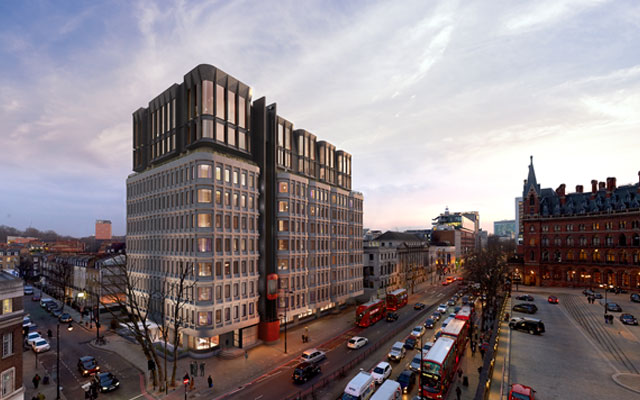
The upcoming The Standard, London
This global growth pipeline includes its first European property, The Standard, London opening later this year in Kings Cross. Standard Hotels will also set up shop in these 12 cities around the globe: London, Paris, Milan, Lisbon, Mexico City, Chicago, the Maldives, Bangkok, Phuket, Jakarta, Hua Hin and Pattaya; as well as three new Bunkhouse hotels in the US: Austin, New Orleans and Atlanta. These projects include the first mixed use branded residential projects for both Standard and Bunkhouse.
“This is an exciting time for our team,” said Amar Lalvani, CEO of Standard International. “We have a global pipeline of incredible projects well underway in some of the most interesting places in the world, all with first-rate partners.”
These new projects will be a showcase of Standard International’s “unique take on hospitality”, a contrast to the “the plethora of soulless ‘lifestyle brands’ popping up seemingly at every turn”, claimed Lalvani.
In addition to Standard International’s expansion, the company has also launched launch a venture-backed technology company, One Night. Launched in 2016, One Night is a same-day hotel booking app operating in 17 cities with a list of over 200 experientially driven hotels.
However, with the recent investment from SWaN & Legend Venture Partners, One Night will spin out as a separate company, although Standard International remains the majority owner.
2- Kelvin Wu (2nd from right), Co-founder of Fayfay.com and Huynh Thi Huong Lan (2nd from left), the Deputy Director of the Da Nang Tourism.jpg
Vietnam-focused e-commerce travel site Fayfay.com has signed two MoUs with Da Nang Tourism Promotion Center and the Tourism Department of Thua Thien-Hue Province to promote travel to the central provinces of Vietnam.
The MoUs will see Fayfay.com working closely in collaboration with both tourism authorities to roll out a host of initiatives, including digital campaigns, industry partnerships, media fam trips and tradeshow participation.
Fayfay.com’s Kelvin Wu (second from right); and Da Nang Tourism’s Huynh Thi Huong Lan (second from left)
“We will leverage our online platforms to showcase the vibrant history and the magnificent natural wonders of central Vietnam which includes popular cities such as Danang, Hue, Hoi An, Nha Trang and Quang Binh, as well as promoting the region as the destination of choice for travellers from Hong Kong, Taiwan and South-east Asia,” said Kelvin Wu, co-founder of Fayfay.com in a statement.
The MoUs come at a strategic time, as international visitors to Vietnam hit a record 15.5 million in 2018.
According to the municipal tourism department, Danang attracted more than 7.6 million visitors in 2018, rising 23 per cent year-on-year, earning total revenue of nearly US$1.2 billion. Meanwhile, Thua Thien-Hue Province welcomed over 4.3 million visitors in 2018, an increase up to 14% year-on-year and grossed US$192.4 million from tourism revenue.
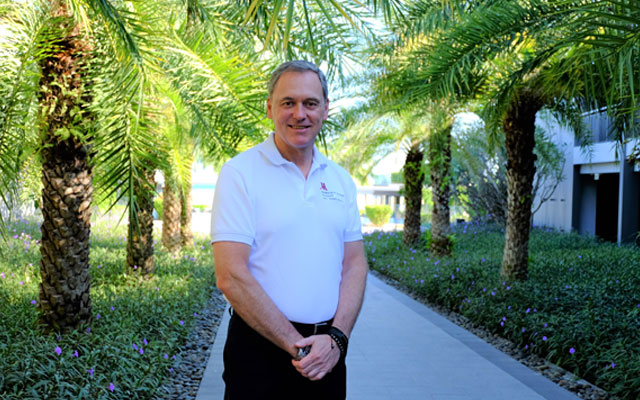
Gerd Kotlorz has joined Phuket Marriott Resort and Spa, Nai Yang Beach as general manager, taking over from David Ippersiel who has been stationed there since 2016.
Joining the company in 2013, Kotlorz was previously Marriott’s area director of sales & distribution for Thailand, Vietnam, Cambodia and Myanmar.
He spent his formative years working in the aviation industry with airlines including Pan Am and Japan Airlines before moving into the hospitality industry. He cut his teeth at European hospitality companies such as Maritim Hotels and Tui Hotels, before joining InterContinental Hotels Group where he spent a decade in destinations including Oman, German, Kenya and the UAE.
In 2011, Kotlorz moved to South-east Asia to join the InterContinental Danang in Vietnam as director of sales & marketing.
Mandarin Oriental Wangfujing, Beijing is opening on March 18 as the group’s first hotel in the Chinese capital.
To mark the opening, the hotel has launched an accommodation package that offers a daily hotel credit of RMB888 (US$132), which can be used at the MO Bar, a spa treatment and airport transfers.
Valid until June 18, this opening is priced from RMB3,088. Room rates are per room per night, based on double occupancy and subject to 16.6 per cent service charge and tax.
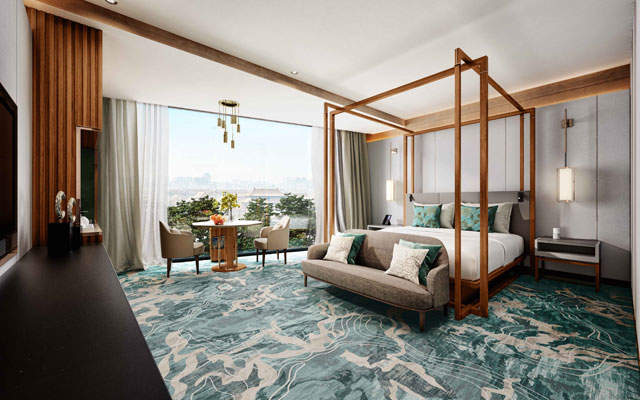
Located on the upper levels of the WF Central retail centre, Mandarin Oriental Wangfujing, Beijing offers 73 guestrooms and suites, many of which with views of the Forbidden City. Amenities on-site include a spa, fitness centre, 25m-long indoor lap pool and three F&B options – MO Bar, Café Zi and Mandarin Grill + Bar.