2- Kelvin Wu (2nd from right), Co-founder of Fayfay.com and Huynh Thi Huong Lan (2nd from left), the Deputy Director of the Da Nang Tourism.jpg
Vietnam-focused e-commerce travel site Fayfay.com has signed two MoUs with Da Nang Tourism Promotion Center and the Tourism Department of Thua Thien-Hue Province to promote travel to the central provinces of Vietnam.
The MoUs will see Fayfay.com working closely in collaboration with both tourism authorities to roll out a host of initiatives, including digital campaigns, industry partnerships, media fam trips and tradeshow participation.
Fayfay.com’s Kelvin Wu (second from right); and Da Nang Tourism’s Huynh Thi Huong Lan (second from left)
“We will leverage our online platforms to showcase the vibrant history and the magnificent natural wonders of central Vietnam which includes popular cities such as Danang, Hue, Hoi An, Nha Trang and Quang Binh, as well as promoting the region as the destination of choice for travellers from Hong Kong, Taiwan and South-east Asia,” said Kelvin Wu, co-founder of Fayfay.com in a statement.
The MoUs come at a strategic time, as international visitors to Vietnam hit a record 15.5 million in 2018.
According to the municipal tourism department, Danang attracted more than 7.6 million visitors in 2018, rising 23 per cent year-on-year, earning total revenue of nearly US$1.2 billion. Meanwhile, Thua Thien-Hue Province welcomed over 4.3 million visitors in 2018, an increase up to 14% year-on-year and grossed US$192.4 million from tourism revenue.
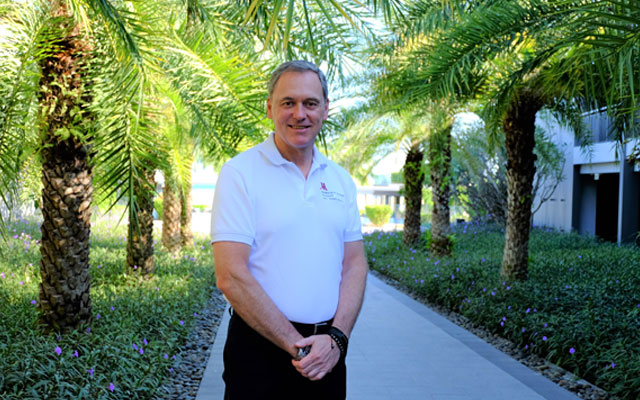
Gerd Kotlorz has joined Phuket Marriott Resort and Spa, Nai Yang Beach as general manager, taking over from David Ippersiel who has been stationed there since 2016.
Joining the company in 2013, Kotlorz was previously Marriott’s area director of sales & distribution for Thailand, Vietnam, Cambodia and Myanmar.
He spent his formative years working in the aviation industry with airlines including Pan Am and Japan Airlines before moving into the hospitality industry. He cut his teeth at European hospitality companies such as Maritim Hotels and Tui Hotels, before joining InterContinental Hotels Group where he spent a decade in destinations including Oman, German, Kenya and the UAE.
In 2011, Kotlorz moved to South-east Asia to join the InterContinental Danang in Vietnam as director of sales & marketing.
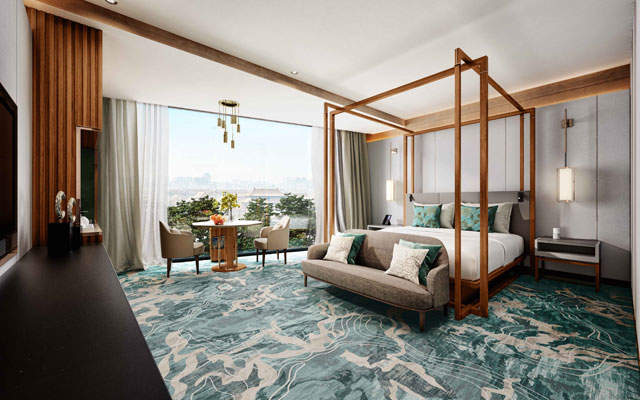
Mandarin Oriental Wangfujing, Beijing is opening on March 18 as the group’s first hotel in the Chinese capital.
To mark the opening, the hotel has launched an accommodation package that offers a daily hotel credit of RMB888 (US$132), which can be used at the MO Bar, a spa treatment and airport transfers.
Valid until June 18, this opening is priced from RMB3,088. Room rates are per room per night, based on double occupancy and subject to 16.6 per cent service charge and tax.
Located on the upper levels of the WF Central retail centre, Mandarin Oriental Wangfujing, Beijing offers 73 guestrooms and suites, many of which with views of the Forbidden City. Amenities on-site include a spa, fitness centre, 25m-long indoor lap pool and three F&B options – MO Bar, Café Zi and Mandarin Grill + Bar.
The rise of a millennial generation and Airbnb have unleashed many changes in the global hospitality sector, with hospitality players recognising the need to offer more than just a hotel room but a lifestyle experience for today’s travellers.
137 Pillars Suites & Residences in Bangkok
Enter lifestyle hotels, a trend that is gaining popularity among global travellers and the hospitality sector alike, with most major hotel companies having jumped onto the bandwagon to launch new brands that are ostensibly targeted at the millennial demographic.
A CBRE report defines a lifestyle hotel as one that has many of the characteristics of a boutique hotel, with a strong emphasis on being creative and innovative, in addition to having the potential to be replicated and rolled out across the globe.
Starwood Hotels & Resorts’ W Hotels was widely accepted among industry practitioners as the first mainstream lifestyle hotel when the brand was launched in New York in 1998. Similar brands and concepts have since popped up in the US and Europe, and Asia is now beginning to see the proliferation of lifestyle hotel brands too.
“Most international hotel operators have started rolling out their lifestyle concepts in a significant way”, said Sashi Rajan, senior vice president – strategic advisory and asset management, Asia at JLL Hotels & Hospitality Group, attracted by Asia’s large millennial base which are expected to make up a strong potential market for lifestyle hotels.
Marriott’s Aloft, Hyatt’s Andaz and InterContinental Hotels Group’s Indigo are clear examples of hospitality giants’ foray into Asia’s lifestyle hotel space, noted Rajan, while international boutique brands like The Standard, SBE, Dream Hotels and ACE have either expanded or announced their intentions to venture into the region.
What comes after W
But lifestyle hotels are not an entirely new phenomenon for Asia, industry watchers pointed out.
“You can call it LAW or Life after W,” Bill Barnett, founder and managing director of Phuket-based C9 Hotelworks said. “W was a game changer, but in Asia groups here already know hospitality so the development of groups like Alila, Upper House, etc, have cut the institutional mould,” opined Barnett.
W Shanghai The Bund
“In Thailand, 137 Pillars, Sala and Burasari are all expanding their non-standardised approach to good success. Indonesia is another exciting space – Artotel is one and Potato Head with Katamama and other new offerings in the works.”
Barnett added: “Design and lifestyle hotels are now across most Asian markets and strong performers but it’s not so much a standalone trend but a reflection of changes in travel taste. Be it in technology, design, food, fashion or social media, it’s now about getting out of the box.”
Major hospitality companies in Thailand have also joined the lifestyle fray. Onyx Hospitality Group entered into a partnership with UK-based Yoo Hotels & Resorts to grow its footprint into the lifestyle hotels segment, with the first two Yoo Asia hotels expected to open in Phuket and Bali in 2019.
Dusit International has unveiled Asai, its “millennial minded” brand which has already found management contracts inked for properties in Bangkok, Cebu and Yangon.
Singapore has been a hotbed of activity for lifestyle hotel brands in recent years, including M Social, whose eclectic and playful style was the brainchild of famed designer Philippe Starck; and Yotel, a capsule-style hotel which appeals to tech and design fans with its guest service robots and futuristic Tron-like aesthetics.
Coming up next in mid-2020 will be The Clan – a 324-room property targeting millennials and tech-savvy travellers – which is touted as Far East Hospitality’s (FEH) answer to the “new demand for hotels that offer an optimal combination of value for money, quality hospitality service, stylish design, and a strong sense of place”, said Arthur Kiong, CEO of FEH.
“Guests will be treated like a member of an exclusive club that is reflected through the hotel’s highly customised services. These include special privileges at popular lifestyle establishments, staff members recognising guests by names and being served traditional Chinese tea upon check-in,” described Kiong.
Non-sector players make a beeline
Even non-traditional players are foraying into the lifestyle hotel segment, with notable examples being Japanese lifestyle giant Muji extending its minimalist lifestyle ethos to its hotel ventures in Japan and China, and toymaker Hasbro’s plans to launch a Monopoly-themed hotel in Kuala Lumpur (see sidebar below).
Hotel Indigo Bali Seminyak Beach
Another Japanese retail brand, Koe, has launched its flagship store-and-hotel complex in Tokyo’s Shibuya district in February 2018 to bring “stay, fashion, music and food” together, Naomi Shinonaga, the brand’s creative director, shared.
Its “new basic for new culture” philosophy is also reflected in the hotel decor, which abstains from the use of leather, fur or other materials from real animals. Rooms, like Koe clothing, are divided into four sizes – S, M, L and XL.
Meanwhile, Macau is the staging ground for acclaimed fashion designers to showcase their forays into lifestyle hotels.
Legendary late designer Karl Lagerfeld’s creative and modern take on mixing Sino-Western styles will be demonstrated in every single detail of the first-ever Karl Lagerfeld Hotel, creating a completely new definition of east-meets-west luxury while echoing Grand Lisboa Palace’s design theme.
The Palazzo Versace Macau, under the creative direction of the renowned designer Donatella Versace, will feature classical style interiors, such as traditional mosaic and terrazzo flooring, with all furnishings and amenities supplied by or following Versace’s stylistic and artistic direction.
Singapore may also soon be home to a development tagged to nightlife brand Zouk. Andrew Li, CEO, Zouk Group, revealed to TTG Asia that the group is “exploring opportunities that will hopefully come into fruition within 2019”.
He shared: “Since the acquisition (by Genting), the focus for us is to grow Zouk beyond the realm of nightlife, expanding its offerings into the lifestyle realm. The primary audience we are targeting is the millennials. We see Zouk’s move into lifestyle as a natural progression of growing the brand by expanding to different verticals, such as F&B, merchandise and more to come. This fits into Genting Hong Kong’s vision of cultivating holistic lifestyle spaces for millennials to wine, dine and play.”
Hotel analysts expect such cross-over brands to proliferate and bloom.
Barnett commented: “Owning the customer is key, as you can see from Accor’s investment into other brands they want to be in front of consumers’ faces at all time, or Sansiri’s investments in The Standard Hotels and Monocle magazine, and (for) JustCo co-working (scaling) the vertical is key.”
Rajan added: “We are seeing several bold entrants who believe they can innovate and further disrupt the already disrupted traditional hotel experience. We have seen restauranteurs go into hotels like Nobu, fashion accessory specialist Shinola opening their first hotel and more recently AliBaba with FlyZoo (embracing AI technology in collaboration with Marriott International).
“Travellers today are always on the lookout for something different so I believe there’s enough room for everyone to make their mark. To stand out however, lifestyle hotels have to ensure that they have clear brand identity, service differentiator and value proposition in their micro-market,” he summarised. – Additional reporting from Pamela Chow, Julian Ryall and Prudence Lui
Personalisation, a concept that lies at the very heart of the travel industry, is no longer a trend but an obligation, as every player in the travel industry now looks to market itself as an experience rather than a product.
Hotels are taking the personalisation message to heart to create a memorable guest experience and stand out from competitors. The proliferation of lifestyle hotels is a reflection of the increasing emphasis hotels are putting on creativity and innovation in the sharing economy era, as they seek to accommodate the changing preferences of a new generation of digital-savvy travellers seeking non-cookie cutter experiences.
But in an era where consumer technologies barrel forward, hotels also face a challenge in keeping up with ever-changing consumer preferences and behaviour. As guests nowadays are likely to have more advanced technology in their own homes (or hands) than what is offered in a guestroom, pressure is mounting on hoteliers to adapt to the new era of personalisation, i.e. the hyperconnected guest experience.
Oakwood’s Asia-Pacific managing director Dean Schreiber thinks “customisation” will be the future of the guestroom experience, sharing his observations on the sidelines of the Serviced Apartment Summit Asia in Bangkok last month.
“Twenty years ago, hotels were where technology was more advanced, but homes have caught up quickly. Now the trend is reversed,” Schreiber stated. Oakwood has hence been looking at innovative ways to enhance the guest experience, and is set to unveil game-changing concepts in the coming weeks, he shared.
At the same time, the rise of technology and big data has enabled hotels to gather the information necessary to build accurate customer profile and deliver personalised experiences.
But while giving data may be second nature for a younger generation used to giving data in return for tailored content, services and experiences, their willingness to offer data is not shared equally across the travel demographics.
Herein also lies the personalisation challenge – how can hotels hyper-personalise without being hyper-personal or even becoming ‘creepy’? There is also the broader concern of hyper-personalisation encroaching on guest privacy, as recent data breaches in the airline and hospitality sectors have shown.
Striking the right balance between effective personalisation and respect for consumer privacy can be a challenge. How can hotels offer each customer a tailored experience with the right level of relevance and value as they seek to build a long-term relationship with guests?
The art of making guests feel at home remains a fine art, even in this hyperconnected age.
It may be premature to speculate on Brexit’s impact on travel, but bright spots are few
Uncertainties abound in the UK travel sector with the outcome of Brexit still up in the air weeks ahead of its planned deadline, but buyers and sellers at ITB Berlin are cautious in speculating what this may mean for business coming into Asia.
In January, IATA warned that up to five million flights would be at risk if the UK leaves the EU without a deal. A no-deal Brexit was feared to see airlines capping flights at 2018 level, although tickets for 2019 routes were already on sale. Late last month, the EU reportedly stated its intentions to lift this cap.
It may be premature to speculate on Brexit’s impact on travel, but bright spots are few
More recently, research by a product comparison website claimed that half of British holidaymakers could ditch European mini-breaks as a result of Brexit, with higher flight costs a concern.
Frank Wiegand, director of team sales Europe at Focus Asia, said: “There could be some legal problems for a short while, leading to certain Europe flights (operated by UK airlines) being unable to continue – but these will be solved.”
On whether these uncertainties could translate to speculative buying of Asian holidays in the short term, Wiegand was doubtful. “Asia is more expensive. I don’t think a family in Birmingham originally intending to visit Spain will decide on Thailand instead. (Those choosing Asia and Europe holidays) are different markets.”
Particular segments of Brits may even choose to travel closer to home. “I think the concern about being close to home is valid, particularly in the months immediately after Brexit. Our clients tend to be decision-makers within their business. They want to feel they can react quickly to any crisis. You can do a conference call but sometimes you feel the need to be present,” said David Kevan of Chic Locations.
Paul Gorman, senior manager – owner engagement, of Luxury Escapes, which is plotting its move into the European outbound market, said: “Whether Brexit will have an impact depends on what the result is. At the same time, (a great deal of) airline capacity is coming out of Europe into Asia and vice versa. The barrier to getting to places now is so much less, you can fly between Singapore and Berlin (on an LCC, for example). Ultimately it’s about (the desire to travel). I don’t think Brexit will slow that down. “
As for intra-Europe travel, he said: “Nobody knows how it’ll be in terms of operating licences. Guys who have UK or Irish operating licences like Ryan Air and EasyJet may have to reapply for landing rights. I suspect that will be worked out before (the deal is final), (but it is still) a big risk to a lot of companies.”
Perhaps, a potential slump in the UK economy and currency are larger concerns.
“Nobody knows yet what the result of Brexit might be. Does it happen in March, June, or ever? Will they hold another referendum? The only risk I see is there might be less Brits travelling at all, whether to Europe or to Asia,” said Wiegand.
If or when the pound takes a hit, “travel everywhere will get more expensive”, Wiegand explained. “It happened in Russia years ago, and there could be a similar crisis ahead of the UK.”
“Brexit opens up two levels of uncertainties. On the consumer level, travellers are not sure what’s going on and how it would affect them personally; on the trade level there will be more uncertainty over currency issues, with the pound already hit really hard a bit ago, will there be even further impacts?” said Willem Niemeijer, CEO & co-founder, Khiri Travel.
With travellers’ spending power affected, Kevan suggested that the UK’s travelling demography may shift towards those age above 35.
“Like with everything, a door closes and another opens. There will be problems and opportunities in equal measure. I would probably be much more concerned if (over half) of my business came from under 35 year-olds .”
The Myanmar trade is taking on a more positive outlook of the European market, as they believe that the plunge in Western visitor numbers to the country due to the international media coverage of the Rakhine conflict has bottomed out.
May Myat Mon Win, Myanmar Tourism Marketing’s (MTM) chairperson is seeing signs of recovery from the European market.
Myanmar Tourism Marketing has launched the a new campaign highlighting the country’s lesser-known destinations such as Putao (pictured) in Kachin State
“2018 was a challenging year, but we saw improvement in January 2019, with five per cent drop (in European numbers) instead of a 35 per cent (drop for same period last year),” she said.
Edwin Briels, managing director of Khiri Travel Myanmar, is also observing an uptick in interest in Myanmar from the Netherlands and Scandinavian markets since January this year.
“These are more conservative markets, but even families are asking about Myanmar. If family trips are coming back, everyone is coming back,” he remarked.
This positive sentiment is providing impetus for Myanmar tourism to step up its charm offensive at ITB Berlin. The Myanmar Tourism Marketing (MTM) yesterday launched the 9 Enchanting Discovers of Myanmar, highlighting the country’s diversity of attractions and natural beauty by focusing on nine lesser-known destinations of Kyaing Tong, Loikaw, Mergui Archipelago, Mogok, Mt Victoria, Mrauk U, Putao, Hpa An and Hsipaw.
Minister of hotels and tourism Ohn Maung told TTG Asia that the latest campaign, which will leverage digital media to target different groups and segments, will place a stronger emphasis on experiential travel.
“Myanmar is not just a cultural destination; there’s more than the classic four of Yangon, Mandalay, Bagan and Inle Lake,” he stressed.
Austria, which has greater market awareness of Myanmar thanks to heavy marketing of the country since some 15 years ago, is flagged as a “niche market”, particularly for trekking and diving, according to the minister.
Ohn Maung also shared that several European governments, including Czech Republic and Poland, have submitted formal requests for visa-on-arrival for their respective citizens into Myanmar.
In response, the Myanmar government is currently planning visa relaxation to selected European markets to facilitate travel as well as investment into the country.
Meanwhile, Scandinavian airlines have also indicated their interest in launching flights to Ngapali, and in response the Myanmar government is now upgrading the domestic airport in Ngapali, plus four others in Kawthaung, Dawei, Heho and Pakkuko, into international ones.
Furthermore, Italian carrier Neos Air begun direct flights from Milan to Yangon since last October, driving up optimism of faster recovery of the Italian market, May Myat Mon Win added.
Panellists speaking at the Direct Booking Summit last week. (From left): Onyx Hospitality Group's Chetan Patel; GCP Hospitality's Michael Belanger; The Surin Phuket's Claude Sauter; and Eastiny Pattaya's Ayudh Nakaprasit
Hoteliers have come forth to express disgruntled sentiments about hostile treatment from ever-expanding OTAs’ growing presence, and their desire to reduce their reliance on the digital booking platforms.
This paints a different picture from their relationship in early 2001, when OTAs first emerged as a “new opportunity” for hoteliers to deviate from wholesalers who were “dictating the rates”, said Claude Sauter, general manager, The Surin Phuket.
Panellists speaking at the Direct Booking Summit last week. (From left): Onyx Hospitality Group’s Chetan Patel; GCP Hospitality’s Michael Belanger; The Surin Phuket’s Claude Sauter; and Eastiny Pattaya’s Ayudh Nakaprasit
Some hotels like The Fullerton Hotel Singapore & The Fullerton Bay Hotel Singapore have adopted a “defensive” approach, making use of OTAs for their “billboard effect” to guarantee visibility and capture guest awareness, shared Jeff Crowe, the hotel’s executive assistant manager, sales & marketing, at the Direct Booking Summit in Singapore last week.
However, a large number of hoteliers has grown dependent on OTAs for a majority of their bookings. Michael Belanger, vice president revenue & distribution, GCP Hospitality, admitted: “The trouble is that we are too often over-reliant on a single source, whether it’s OTAs in general or a single OTA. That’s when it becomes dangerous.”
A “healthy” percentage of room reservations coming from OTAs should be about 50 per cent, with the other half from direct bookings. However, some hotels – in particular smaller independent hotels – attribute 90 per cent of their bookings to OTAs, observed Adrian Caruso, founder and managing director of Fastrack Group.
Leaning too heavily on OTAs has resulted in some hotels being taken advantage of, lamented Ayudh Nakaprasit, owner of Eastiny Pattaya.
Nakaprasit said: “My relationship with OTAs is not the best. At the moment, the commission rate that I pay is roughly between 15 to 17 per cent, but taking into account the amount of abuse and harassment – I probably get it every other day – it is not good.”
According to a poll at the summit, the average OTA commission rate can range from 10 to 20 per cent. Sauter chimed in that “it’s very hard to negotiate, but we need them”.
To counter this treatment and protect their rate parity, hospitality players have developed various defence mechanisms. For example, as part of Triptease’s programme, its hotel clients have implemented a “three-strikes policy” before cutting off hostile OTAs.
This strategy has reduced the hotels’ rate of being undercut to 4.1 per cent, and raised the average daily rate up by 12 per cent, and website bookings by 22 per cent.
Some hotels have also taken steps to diversify.
Belanger explained: “For independent hotels, we need to learn to diversify our portfolios in terms of drawing corporates, MICE, other OTAs and direct channels. Once you have a very diverse portfolio, you can pick and choose, and go back to the ones that aren’t playing fair and dictate what you want.
“What the hotel companies have to realise is that we’re not great at technology, so we need to partner with the right providers or invest tons of money,” he noted.
“We’ve been very, very slow at doing that, and that’s where the OTA model has been much more rapid in terms of evolving. It’s going to continue to evolve, and it has (come down to) whether hoteliers can recognise that and stay ahead of that curve by investing in a similar fashion.”
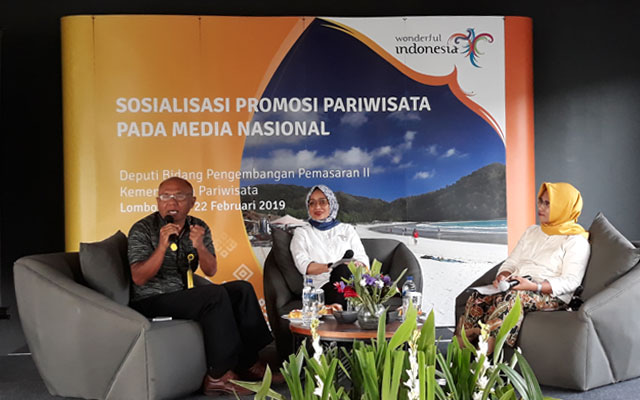
recent media presentation publicising the ministry’s 2019 marketing programme in Lombok.
Indonesia’s Ministry of Tourism will continue to target 20 million arrivals this year, despite its failure to meet its volume goals two years in a row.
Instead, the tourism authority has set an even more ambitious target, stating that half of the total should be reached within the first six months of the year, despite Indonesia’s peak season traditionally falling in the second half.
Speakers at a media presentation publicising the ministry’s 2019 marketing programme
Visitor arrivals to Indonesia totalled 14.1 million in 2017, when the target was 15 million arrivals. Last year, the country welcomed 15.8 million arrivals, down from its target of 17 million.
Nia Niscaya, Indonesia’s deputy minister of marketing development area II, attributed the shortages in 1.2 million arrivals for 2018 to the earthquake in Lombok, as well as the tsunamis in Palu and Sunda Straits. Earlier in 2017, inbound numbers to Indonesia were massively affected by Mount Agung’s eruption.
She added that when Bali was hit with a natural disaster, the impact was felt more keenly, as 40 per cent of international arrivals were to Greater Bali. Islands surrounding Bali, such as Lombok, were also inadvertently affected.
“The Lion Air accident also had a big impact, especially on the China market. Lion Air had a lot of chartered services from China, where many were cancelled after the accident,” Nia lamented.
While she acknowledged the target set out this year is challenging, she believes the figures are realistic.
“We are working all out to meet the 10 million target (by June), and hit the 20 million mark by the end of the year,” she shared during a recent media presentation publicising the ministry’s 2019 marketing programme in Lombok.
The ministry has also prioritised tourism programmes – such as boosting border tourism, creating strategic hub and developing LCC terminals – ints push to achieve the 10 million arrival mark.
According to Nia, Singapore is a strategic hub that Indonesia will be leveraging as several of its top markets (China, India, South Korea and Japan) are also Indonesia’s market focus.
The ministry is planning to leverage on Malaysia and Thailand as well, to lure outbound traffic from India. However, while China is Thailand’s top source market, the distance between Thailand and Indonesia has not made it easy to twin the countries.
To encourage more sales to Indonesia, Nia shared that the ministry was working closely with major wholesalers, OTAs and airlines on co-branding and incentive programmes. As well, they are also encouraging more LCCs to operate routes to Indonesia.
In 2017, 55 per cent of arrivals to Indonesia was on full-service carriers, while the rest arrived on LCCs. Internationally, passenger growth on full-service carriers stood at 12 per cent, while LCCs was 21 per cent.
“We hope to encourage more LCC services by providing promotional support,” Nia revealed.
To support potential growth, the ministry has also negotiated with airport authority Angkasa Pura II to convert several of their terminals to LCC terminals.
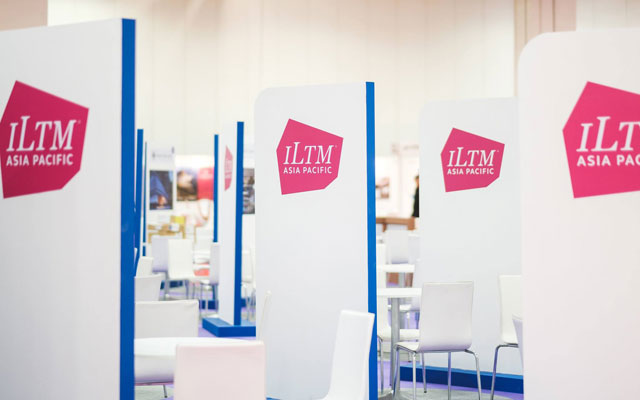
ILTM gears up for another show in Singapore. Photo credit: ILTM Facebook
Luxury travel tradeshow ILTM Asia Pacific will be returning bigger in its second edition, taking place in Singapore from May 27 to 30.
The coming edition will feature approximately 550 luxury travel suppliers, an increase of around 10 per cent year-on-year. New participating exhibitors include Banwa Private Island in the Philippines, Makanyi Private Game Lodge in South Africa, Matetsi Victoria Falls in South Africa, Bahwah Reserve in Indonesia and the Ungasan Clifftop Resort in Bali.
ILTM gears up for another show in Singapore. Photo credit: ILTM Facebook
Returning exhibitors include Rosewood Hotels & Resorts, Belmond, Kempinski Hotels, InterContinental Hotels, Four Seasons, as well as destinations including Switzerland, New Zealand, Botswana, Japan and Singapore.
In addition to more exhibitiors, ILTM Asia Pacific will also expand its hosted buyer programme, where planners and agencies will be able to engage with suppliers to create more than 30,000 one-to-one meetings during the show.
Next, the participant programme this year will support the ILTM theme of health and wellness with morning ILTM bay runs and morning yoga in the host hotels. There will also be a designated area on the showfloor called The Retreat, and it’ll feature brands showcasing some of the latest health and wellness products and services.