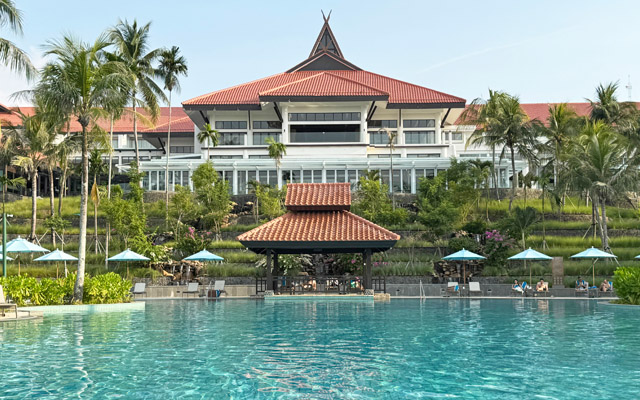
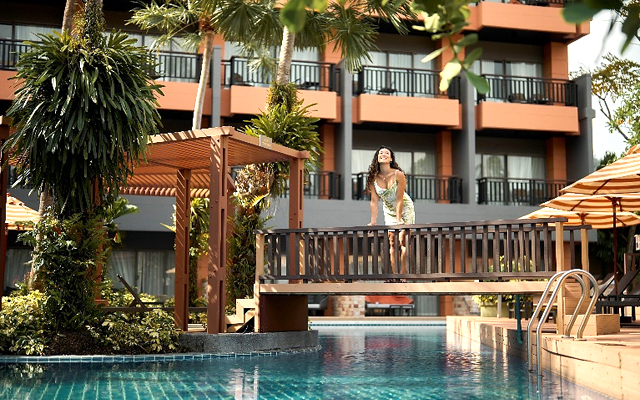
Jihong An has been appointed senior vice president of Sono Hotels & Resorts Asia.
He will lead the group’s growth and operations across Asia.
An brings more than 20 years of experience in hospitality development and asset management, having worked across South Korea, Japan, South-east Asia and China.
Kenneth Johansen has been named chief revenue officer at Travelport, where he will lead the company’s global commercial organisation.
He joins from Oracle, where he most recently served as senior vice president, technology, Europe North.
Johansen brings more than 20 years of technology sales leadership experience, having also served as CEO of Oracle Japan and country leader for Oracle in Germany and Denmark.
Indonesia is preparing a new visa category for foreign content creators as the government looks to separate commercial digital content production from journalistic work.
The proposed C5A content creator visa is intended for foreign visitors travelling to Indonesia to create digital content, including promotional work with businesses and brands. The existing C5 journalist visa would continue to apply to foreign journalists carrying out journalistic work in Indonesia.
Indonesia is proposing a dedicated visa for foreign content creators undertaking commercial digital content production
Happy Reza Dipayuda, head of sub-directorate for visa services at the Directorate General of Immigration, Ministry of Immigration and Corrections, explained that the two visa categories are designed for different types of activity.
“Journalists and content creators may both produce content, but they have different roles and responsibilities. Journalists work for media organisations and follow journalistic codes of conduct, while content creators may create content for commercial purposes,” Happy explained.
Under the current system, foreign journalists visiting Indonesia for reporting assignments use the C5 journalist visa. The C5 visa covers activities such as news reporting, documentary production, interviews and event coverage for recognised media organisations.
Applicants are generally required to provide press credentials and documents related to their assignments. They are also expected to follow professional journalistic standards while carrying out their work in Indonesia.
According to Happy, the growing number of international content creators has highlighted the need for a separate visa category. While many creators are not journalists, their content can still reach millions of people and influence public opinion. He added that the proposed C5A visa is intended to provide a clearer pathway for these activities.
The proposal is not yet in effect. Happy said it is still being reviewed by the Ministry of Foreign Affairs and other government agencies.
“After the review is completed, it will still need further approval before it can be implemented,” he said.
Until then, foreign visitors producing content will need to use the appropriate visa category, such as the C14 visa for certain production activities, while the C5 journalist visa will continue to apply to foreign media professionals conducting journalistic assignments.
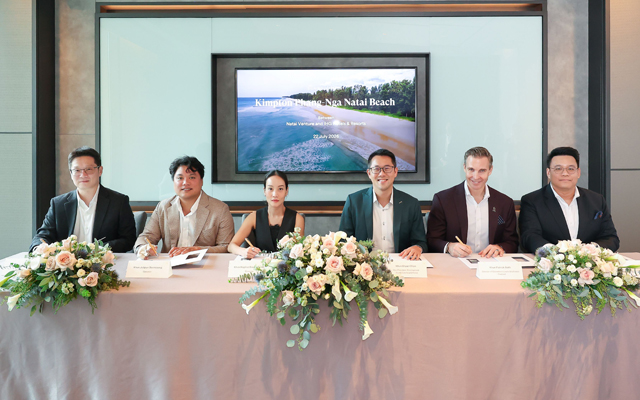
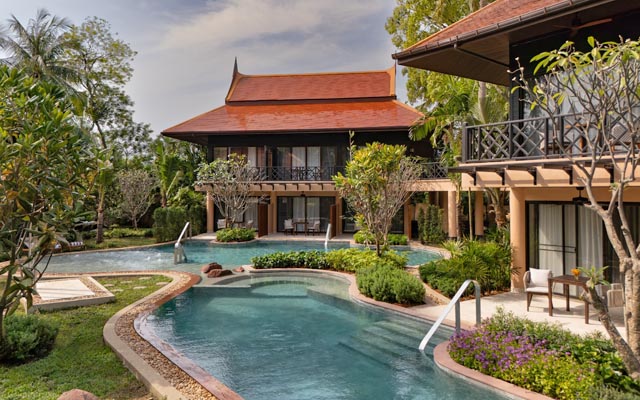
IHG Hotels & Resorts has signed Kimpton Phang Nga Natai Beach, a 150-key beachfront resort that will introduce the luxury lifestyle brand to Thailand’s Phang Nga province.
Developed in partnership with Natai Venture Co., the new-build resort is scheduled to open in 2028 on Natai Beach, about 20 minutes from Phuket International Airport.
Kimpton Phang Nga Natai Beach is scheduled to open in 2028 with 150 guestrooms, suites and villas
The resort will offer 150 guestrooms, suites and villas, together with multiple dining venues, a spa, swimming pools, fitness centre, kids’ club and function spaces.
The signing expands IHG’s luxury and lifestyle portfolio in Thailand and marks the company’s second hotel project in Phang Nga, following InterContinental Phang Nga Bay Resort. It also adds to the Kimpton pipeline in Thailand, which includes projects in Bangkok, Chiang Rai, Hua Hin, Khao Yai and Pattaya.
Natai Beach has attracted growing interest as an alternative to Phuket, with future infrastructure projects expected to improve access to the destination. The planned Andaman International Airport, targeted for completion in 2032, is expected to further enhance connectivity to the province.
Kimpton currently has two operating hotels in Thailand: Kimpton Maa-Lai Bangkok and Kimpton Kitalay Samui, the brand’s first resort in Asia.
Pathana Jitsaereetham, director, development, Thailand, IHG Hotels & Resorts, said: “As IHG’s second hotel signing in Phang Nga Province, Kimpton Phang-Nga Natai Beach marks an important milestone in our growth strategy and underscores our confidence in the destination’s long-term tourism potential.
“Supported by ongoing infrastructure investment and improving connectivity, Phang Nga is expected to attract increasing interest from both domestic and international travellers.”
Minor Hotels has completed the roll-out of Oracle Opera Cloud across 106 hotels, resorts and branded residences in 59 countries as part of its digital transformation programme.
The implementation also includes Oracle Opera Cloud Central, strengthening the group’s central reservation and distribution capabilities across its global portfolio.
Minor Hotels has deployed Oracle Opera Cloud across 106 hotels, resorts and branded residences in 59 countries
The cloud-based platform replaces legacy on-premises systems, providing a centralised technology platform designed to support future growth while reducing the need for property-level servers. The roll-out also creates a common operational data platform across brands including Anantara, Avani, NH Collection, NH Hotels, Tivoli and Oaks.
Minor Hotels said the system will support faster integration of new technologies through Oracle Hospitality Integration Platform (OHIP), allowing the company to develop digital services such as paperless check-in and connect with third-party applications.
The deployment forms part of the group’s wider digital strategy, with the next phase extending Opera Cloud to hotels across Australia and New Zealand.
Ian Di Tullio, chief commercial officer, Minor Hotels, said: “At Minor Hotels, digital transformation is about far more than modernising systems. It is about building a connected commercial ecosystem that unifies our brands, our data and every guest interaction across the journey. Oracle Opera Cloud provides an important foundation for that vision, enabling us to accelerate innovation, strengthen personalisation, and create more seamless experiences for both our guests and our teams.”
Thiru Tholtan, vice president – solutions, hotel technology, Minor Hotels, added: “OHIP gives us the flexibility to innovate quickly, from developing our own paperless check-in solutions to integrating best-in-class third-party services. It creates a truly connected platform that evolves with our needs.”
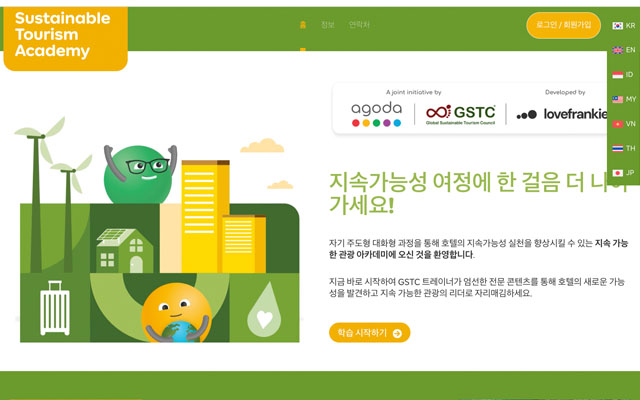
Agoda and the Global Sustainable Tourism Council (GSTC) have added full Japanese and Korean language support to the Sustainable Tourism Academy, marking the platform’s first anniversary and extending its reach to hospitality professionals in two of Asia’s largest tourism markets.
The expansion comes as the Academy surpasses 3,000 registered users and continues its mission to help hospitality professionals build practical knowledge in sustainable tourism based on the GSTC Hotel Standard.
The Sustainable Tourism Academy now offers training in Japanese and Korean, expanding access to sustainability education for hospitality professionals in Japan and South Korea
Since its launch a year ago, the Sustainable Tourism Academy has become a resource for hospitality professionals seeking to strengthen sustainable practices across Asia. The addition of Japanese and Korean increases the number of supported languages to seven: English, Vietnamese, Malay, Thai, Indonesian, Japanese and Korean.
The Academy has collectively reached more than 3,500 hospitality professionals through digital and in-person training programmes. Participants include professionals from hotel groups such as Accor, Rosewood Hotels & Resorts and Onyx Hospitality Group, as well as independent operators and hospitality students from institutions including the Asian Institute of Hospitality Management.
The Japanese-language Academy is intended to support tourism businesses ranging from major hotel groups to family-run operators, while the Korean version aims to help hospitality partners adopt more sustainable practices and strengthen long-term business resilience.
The most popular courses include GSTC Standards & Performance Indicators, GSTC Certification, and Developing a Sustainable Policy and Strategy, reflecting strong demand for both sustainability fundamentals and practical implementation.
River Wonders has welcomed Yaffa, an 11-year-old male red panda from Taipei Zoo, who made his public debut over Singapore’s National Day weekend (August 8-9) at a new purpose-built exhibit in the park’s Yangtze River zone.
Yaffa arrived in Singapore on June 11, 2026, under an animal exchange programme between River Wonders and Taipei Zoo. He is the first new red panda to join the park in 12 years and joins resident red panda Karma, who lives at Giant Panda Forest.
Yaffa explores his new home at River Wonders’ newly-opened red panda exhibit; photo by Mandai Wildlife Group
Following a month-long quarantine and veterinary assessments, Yaffa has been introduced gradually to his new environment and care team. His climate-controlled habitat, maintained below 25°C, has been designed to support the species’ natural tree-dwelling behaviour, with elevated platforms, climbing structures and connected viewing areas.
Native to Asia, red pandas are listed as Endangered on the International Union for Conservation of Nature Red List, with fewer than 10,000 estimated to remain in the wild. According to Mandai Wildlife Group, Yaffa’s arrival supports the ex situ conservation of the species and helps strengthen the genetic diversity of managed red panda populations in the region.
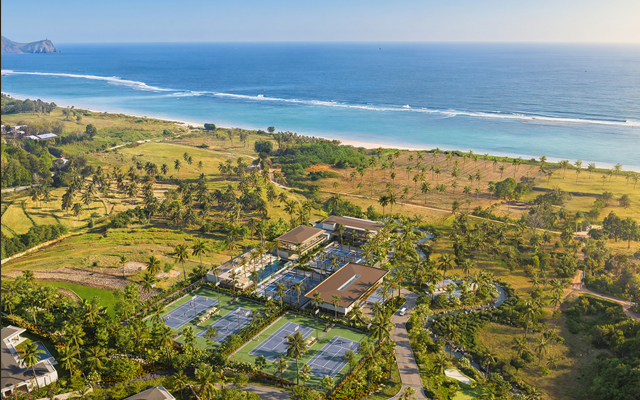
Samara Lombok has been selected as the location for Rafa Nadal’s first tennis centre in South-east Asia, bringing the tennis champion’s training methodology to the region for the first time.
The centre will open as part of Samara Lombok, a 150ha integrated coastal destination scheduled to welcome guests in 1Q2028. Located on Lombok’s south coast, the development will be the first Destination by Hyatt in South-east Asia.
Samara Lombok will become home to South-east Asia’s first Rafa Nadal Tennis Center when the integrated destination opens in 2028
The Rafa Nadal Tennis Center will feature four tennis courts and four padel courts, with coaching programmes based on the methodology developed by Nadal and his technical team for players of all ages and abilities.
The first phase of Samara Lombok will include three boutique hotels and 150 of a planned 500 villas. Other facilities will include 12 dining concepts curated by chef Will Meyrick and children’s food author Annabel Karmel MBE, a marine biology and water sports centre operated by Rascal Voyages, and a football training centre developed with an international club partner.
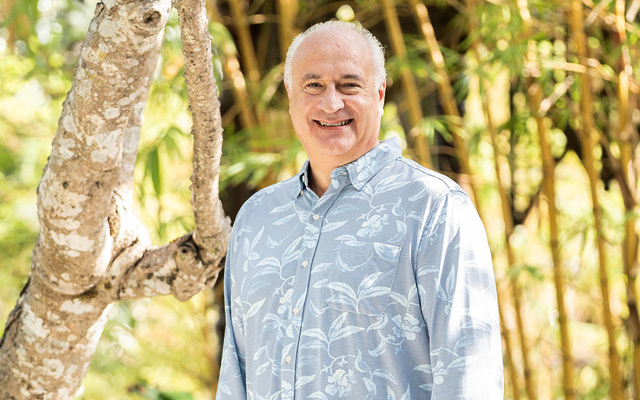
Didier Jardin has been appointed general manager of Four Seasons Resorts Bali, overseeing Four Seasons Resort Bali at Jimbaran Bay and Four Seasons Resort Bali at Sayan.
He joins from Four Seasons Resort Maldives at Kuda Huraa, where he served as general manager.
Jardin brings more than 30 years of experience with Four Seasons, having held leadership roles across destinations including Bora Bora, Mauritius, New York, Cairo and Kuwait.



 An brings more than 20 years of experience in hospitality development and asset management, having worked across South Korea, Japan, South-east Asia and China.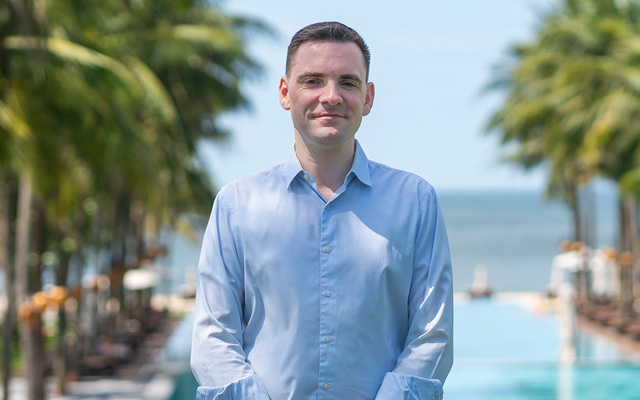
 Most recently, Quintelier served as director of food and beverage at Four Seasons Hotel Hong Kong, where he oversaw the hotel’s dining operations.
 Johansen brings more than 20 years of technology sales leadership experience, having also served as CEO of Oracle Japan and country leader for Oracle in Germany and Denmark.

 Jardin brings more than 30 years of experience with Four Seasons, having held leadership roles across destinations including Bora Bora, Mauritius, New York, Cairo and Kuwait.