TTG Asia
Asia/Singapore Tuesday, 3rd February 2026
Page 1269

APAC hotel investment projected to increase 15% this year

0

Asia-Pacific is the only region expected to see growth in hotel transaction volumes this year, according to real estate consultant JLL, which anticipates a 15 per increase to US$9.5 billion in 2019.

Last year, transaction activity was fuelled by single-asset trades, which drove more than 83 per cent of the total US$8.3 billion invested into the region. Developers and private equity firms were the biggest buyers, acquiring more than half of all the properties traded.

Building on 2018, investment momentum is expected to accelerate as investors look to sell assets and ride the anticipated tourism boom, especially in Japan and Singapore.

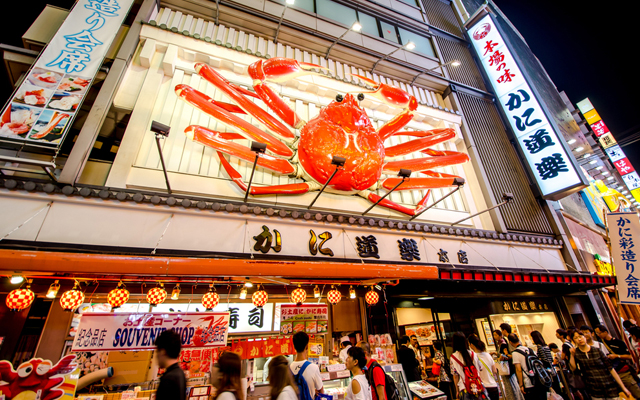
Nearly 30 per cent of all hotel investment last year was in Japan; Tokyo pictured

The most notable buyers will be Pan-Asian private equity funds that raised capital last year but have yet to deploy it. Listed REITs, particularly Japanese REITs, will look to Asia’s most liquid markets for purchases, while conglomerates and owner/occupiers will buy selectively in key markets.

“Despite a series of natural disasters, Japan’s hotel market captured investor interest globally. Nearly 30 per cent of all investment into Asia-Pacific was in Japan, overtaking China for the top spot,” said Nihat Ercan, head of hotel investment sales Asia for JLL’s Hotel & Hospitality Group.

According to JLL’s latest Hotel Investment Outlook report, investor sentiment in Japan will remain buoyed by the Rugby World Cup and the Tokyo Olympics – the market has already seen an 8.7 per cent growth in tourism year-on-year.

Similarly, Singapore’s hotel market pulled in seven per cent more tourists last year, driving positive RevPAR increases across all chain scales. In China, tourism demand outstrips supply – JLL tracked record high growth in RevPAR across major Chinese cities in 2018, including Chengdu up 20 per cent, Beijing up 15 per cent, Chongqing up 13 per cent and Wuhan up 12 per cent.

“While we remain in a late-cycle environment where yields remain low with limited potential for further compression, most investors do not see a major downturn coming. After a subdued final quarter in 2018, enquiries and deal making have perked up at the beginning of the year. Interest rates are now stabilised, so investors can focus on income growth and in markets where fundamentals remain strong,” concluded Ercan.

JLL expects investors looking at Asia-Pacific will factor into their valuation assumptions less upside in income; however, liquidity across key cities and lower return requirements will drive transaction volumes.

On the global front, hotel occupancy rates and underlying property performance will remain strong while travel and tourism are slated for another record year. Investors seeking more yield are increasingly turning their sights toward hotels amid slower economic growth projections and geopolitical uncertainty.

“Investment activity exceeded expectation in 2018 and we believe 2019 will be another strong year for global hotel investment, with a significant amount of debt and equity liquidity and competitive bidding for assets, given continued strength in fundamentals,” said Mark Wynne-Smith, global CEO, JLL Hotels & Hospitality. “Notwithstanding the more cautious backdrop, ongoing large portfolio and entity-level activity, hotels’ attractive yield profile and record levels of dry powder will drive global hotel investment momentum.”

Data that hotels need to predict demand is readily available: PolyU study

0
The combination of portfolios will allow both parties to reach into different hotel categories and segments

A new study is demonstrating how hotels, even the most resource-strapped of them, can use publicly available data to improve occupancy predictions.

While international hotel chains often have sufficient resources for forecasting demand, smaller and independent hotels can “rarely afford to invest in such resources”, although their need for accurate predictions is just as great.

Brian King and Stephen Pratt from the School of Hotel and Tourism Management (SHTM) at The Hong Kong Polytechnic University, plus a co-author, say the method they used to make demand predictions can be adopted by even the smaller hotels.

With relevant data publicly available, even the smaller actors will be able to make relatively accurate demand predictions

How data from wider economic context of could speak to tourism
Given that tourism is a global industry consuming a diversity of goods and services, the prediction of future trends needs to take account of the wider economic context, the researchers say.

They hence looked at easily accessible online data available from the Organisation for Economic Cooperation and Development (OECD). The OECD, established in 1957, comprises 34 member states and a further 25 non-member states, including China, that participate as committee observers.

The OECD produces various quantitative indicators of specific aspects of the global economy, three of which were used by the researchers. First, the composite leading indicator (CLI) combines various economic variables, such as GDP, that indicate a country’s economic situation and provide “early signals of turning points in economic activity”. The researchers expected that the CLI for tourist origin countries would predict hotel occupancy rates in the destination country.

The business survey index (BSI) collects qualitative information from business executives and managers that is reflective of “confidence within the business community about prevailing economic conditions”. The researchers argued that the BSI reflects the “motives of business travellers and conference delegates”, which affect the volume of business in the accommodation sector.

The consumer confidence index (CCI), in contrast, reflects consumer sentiment based on the economic climate and household finances. The information is collected through a monthly survey of 19 member and non-member countries. The researchers predict that more positive feelings towards the local economy expressed through the CCI would be associated with increased hotel occupancies in the destination.

Findings
To test their predictions, the researchers used quarterly data on hotel occupancy rates in Hong Kong from the first quarter of 1972 up to the final quarter of 2010. They initially applied a method of “smoothing” the data to reduce the effects of seasonal fluctuations, so that they could identify the real peaks and troughs that reflected upturns and downturns in demand.

In the next step, they assessed the abilities of the three OECD indicators to predict peaks and troughs in the Hong Kong hotel occupancy data, categorised according to the Hong Kong Tourism Board’s classification of hotels as “high tariff A, high tariff B and medium tariff hotels”.

They showed that the three OECD indices are leading indicators of hotel occupancy rates. Then, they determined the correlations between each OECD indicator and the peaks and troughs in demand for each hotel type, finding that the CCI is the best predictor of overall Hong Kong hotel occupancy rates. However, the CLI provides better predictions for tariff B hotels.

Furthermore, the researchers note that other sources are available, such as the World Tourism Barometer which is produced by the UNWTO and outputs from the Australian government’s Tourism Forecasting Reference Panel.

There is, they explain, “growing interest at both national and international levels in improving the accuracy of predictions through multiple inputs”. The greater availability of such data, and the use of relevant methods to exploit them, means that policymakers and hoteliers will be better equipped to predict future demand.

Aman unveils third Japan outpost in Kyoto

0
Old sculptures on the once-forgotten garden

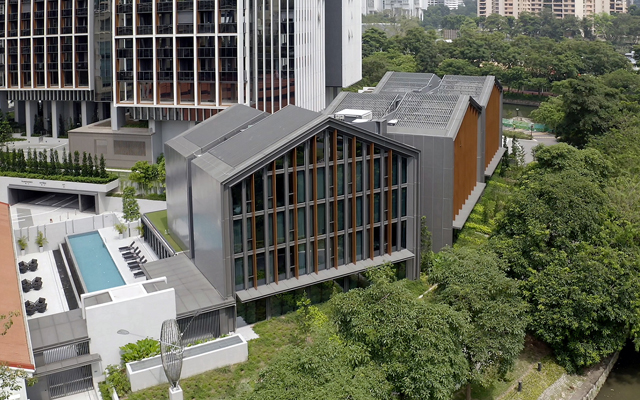
Aman Kyoto will open in a once-forgotten garden at the foot of the Mountain of Hidari Daimonji in Kyoto’s north come November 1, giving the brand its third resort in Japan.

Nestled in forested grounds in the district of Takagamine, the resort is within walking distance of the iconic UNESCO World Heritage Site of Kinkaku-ji Temple.

The 32.3ha Aman Kyoto site comprises 29ha of permanent forest and 3.2ha of gardens tended over decades by the previous owner of the site, a respected collector of the obi (the ornamental sash for a traditional Japanese kimono) with an unrealised plan to house his collection in a museum to be built within the garden.

As the garden’s next custodian, Aman intends to bring a resort that draws on the country’s ryokan (traditional inn) and onsen (hot spring) concepts, while protecting the grounds for decades to come.

The garden sits within a valley, enclosed on one side by a small stream, and on another by a wooded hill. Platforms originally intended as locations for the buildings of the museum now provide the foundations for the resort pavilions.

Aman Kyoto includes separate Arrival, Living, Dining and Spa Pavilions, four Guest Pavilions housing 24 guest rooms with garden or stream views, and two separate Pavilions overlooking the forest canopy housing a pair of two-bedroom villas.

Each of Aman Kyoto’s 24 guest rooms and two villas is a contemporary reimagining of the traditional ryokan. The rooms feature floor-to-ceiling windows framing the natural surroundings, tatami mats and tokonoma (alcoves where items for artistic appreciation are presented).

Aman Kyoto’s signature restaurant in the Dining Pavilion will showcase Japanese haute cuisine, with multicourse dining experiences that make use of the local produce.

The Living Pavilion will offer a convivial space with a central fireplace and glass doors opening onto the zen (ornate stone garden).

Home-cooked Kyoto obanzai-style cuisine will be served throughout the day, and guests can also enjoy afternoon tea and reserve bamboo picnic hampers to be enjoyed al-fresco in the garden or forest glades. The garden itself is ideal for outdoor events, from small private dinners and functions, to weddings, yoga and mindfulness sessions.

The traditional onsen bathing facilities will use the water from a local spring, to deliver relaxation and healing, while a range of treatments tap into Japan’s plentiful natural apothecary – including Kyoto green tea, tanba kuromame (black beans), local saké, and cold-pressed tsubaki (camellia) oil.

Vladislav Doronin, chairman and CEO of Aman, said the Kyoto resort will add another facet to the brand’s journey in Japan, onward from Aman Tokyo and Amanemu in Ise-Shima National Park.

Aman Kyoto is owned by Kyoto Resorts, a subsidiary of the Chartered Group, which has been the driving force behind this project. Eyal Agmoni, chairman of the Chartered Group, said: ‘This garden sanctuary has been over two decades in the making so we can open its doors as an Aman. I am especially grateful to the late Kerry Hill and his team who created an architectural language that not only respects traditional Japanese design, but also celebrates, protects and brings back to life the unique gardens in which Aman Kyoto is housed.”

Chartered Group’s strategic alliance with Aman will also include the introduction of Residences at Aman Kyoto (2020).

Get connected with TTG on TripAdvisor

0

TTG Asia Media has joined the TripAdvisor platform so that we can better connect with you, our travel industry readers, and provide trip recommendations and inspiration for you and your clients alike.

Whether you’re a travel expert, meeting planner or association organiser, industry readers will benefit from our handpicked trips and articles on our travel feed on TripAdvisor.

Our team of reporters and correspondents in Asia-Pacific, with their deep understanding of their home market as well as the travel industry, will provide honest advice and recommendations of hotels, products and activities reviews.

We will cast the spotlight on one country every month – providing an in-depth review on local attractions, properties, as well as activities.

Simply click ‘follow’ on TTG Asia Media’s TripAdvisor page to subscribe to great travel content and recommendations!

Aviation roundup: Bangkok Airways, Singapore Airlines and more

0

Bangkok Airways to fly from Chiang Mai to Krabi and Luang Prabang
Bangkok Airways is launching a thrice-weekly service from Chiang Mai to Krabi (one-way). The flight will operate on Sunday, Tuesday and Thursday from March 31 to April 29, and be adjusted to a daily frequency from April 30 onwards. The airline will use a 144-seater Airbus A319 aircraft to service this route. The outbound flight PG246 will depart Chiang Mai International Airport at 12.00 and arrive Krabi International Airport at 13.55.

From April 2, the airline will operate thrice-weekly flights between Chiang Mai and Luang Prabang using a 70-seater ATR 72-600 aircraft. On Tuesday, Thursday and Saturday, the outbound flight PG983 will depart Chiang Mai International Airport at 16.30 and arrive Luang Prabang International Airport at 17.45. The inbound flight PG984 will depart Luang Prabang International Airport 18.30 and arrive Chiang Mai International Airport at 19.45.


AirAsia launches flights from Bangkok to Nha Trang, Brisbane
From June 25, Thai AirAsia X will open itself up to a new continent by launching direct flights from Bangkok (Don Mueang) to Brisbane.

In addition, AirAsia will commence flights from Bangkok (Don Mueang) to Nha Trang, flying four times a week (Monday/Wednesday/Friday/Sunday).


Singapore Airlines to boost Osaka service
Singapore Airlines (SIA) will add a third daily service to Osaka’s Kansai International Airport on April 27, 2019. Operated with Airbus A330-300 aircraft, adding nearly 2,000 seats per week in each direction, flight SQ620 will depart Singapore at 08.30 and arrive at Osaka at 16.10. The return flight will operate as SQ621, departing Osaka at 17:25 and arriving in Singapore at 23.05.


Emirates’ forges codeshare with China Southern
In its first codeshare partnership with a Chinese carrier, Emirates has signed an MoU with China Southern Airlines to enter a reciprocal codeshare agreement.

The partnership covers 18 routes including domestic points in China and destinations in the Middle East and Africa.

It adds eight new destinations to Emirates’ network. In the initial phase, Chinese cities covered by the agreement include Fuzhou, Chongqing, Kunming, Qingdao, Xiamen, Chengdu, Nanjing and Xi ‘an. Emirates operates twice-daily flights to both Beijing and Shanghai in addition to one daily flight to Guangzhou, all operated by the iconic Airbus A380 aircraft.

For passengers travelling from China, there will be more convenient connections to destinations in Emirates’ Middle East network such as Riyadh, Jeddah, Dammam, Muscat, Kuwait and Cairo. The agreement also includes flights to African destinations such as Seychelles and Lagos, operated by Emirates.

The Clairvoyants bring magic, mentalist show to Colombo

0
The duo has performed in the world's largest touring magic show, and is now taking its magic to Colombo

The Clairvoyants, a magician and mentalist duo, will perform at Colombo’s Nelum Pokuna Rajapakse Theatre on April 4, part of efforts by Cinnamon Life to amp up the entertainment scene in the Sri Lankan capital.

Comprising Amélie van Tass and Thommy Ten, The Clairvoyants were offered a spot in ‘The Illusionists’, the largest touring magic show in the world. The duo received worldwide acclaim in 2016 when they placed second on America’s Got Talent Season 11 and again secured the spot as runners-up at AGT: The Champions.

The duo has performed in the world’s largest touring magic show, and is now taking its magic to Colombo

In 2016, The Clairvoyants were also commissioned to headline the show ‘The Illusionists – Turn of the Century’ in New York City, which turned out to be the bestselling magic show recorded in Broadway history.

Bringing the event to Colombo reflects Cinnamon Life’s desire to position itself as a leader in entertainment ahead of the opening of its own performance venues.

It wants to eventually be “the heartbeat of the city” and make its mark as Colombo’s lifestyle capital. The integrated development, positioned as a “city within a city”, will feature hotels, shopping arcades, theatres, office spaces, multi-purpose entertainment venues, restaurants and apartments.

Dileep Mudadeniya, head of brand marketing, Cinnamon Hotels and Resorts commented: “This highly anticipated event will provide yet another glimpse of what you can expect from Cinnamon Life, Colombo’s paragon of lifestyle and entertainment. Cinnamon Life, a multi-faceted development set to become a hub in its own right… will play a crucial role in attracting world-class entertainment acts to the island, elevating Colombo and Sri Lanka’s place as the rising stars of the region.”

Tickets for The Clairvoyants show are available on www.cinnamonboxoffice.com, and will be priced at Rs4,500 (US$23.40), Rs7,500, Rs10,000, Rs15,000 and Rs20,000.

IHG snaps up Six Senses to bolster luxury positioning

0
The 40-villa Six Senses Krabey Island (pictured) opens on March 1 this year in Cambodia

InterContinental Hotels Group (IHG) has announced the acquisition of Six Senses Hotels Resorts Spas and its management business, a move that is expected to amp up the hospitality giant’s luxury footprint, and provide instant entry into some of the world’s most sought-after locations.

The US$300 million cash acquisition from Pegasus Capital Advisors includes all of Six Senses’ brands and operating companies, but does not include any real estate assets. The sale includes the management of 16 hotels and resorts (1,347 rooms), 37 spas and sister companies Evason and Raison d’Etre. The Six Senses management will remain in place.

The 40-villa Six Senses Krabey Island (pictured) opens on March 1 this year in Cambodia

As an asset-light business, Six Senses currently manages 16 hotels and resorts, with 18 management contracts signed in its pipeline, and a further 50 deals under active discussion.

Following the acquisition, IHG expects to accelerate Six Senses’ growth globally to more than 60 hotels over the next 10 years. This includes bringing Six Senses to important urban markets, with a property already under construction in West Chelsea, Manhattan, New York City, IHG said in a statement.

IHG also revealed that Six Senses will sit at the top of its luxury portfolio, complementing luxury hotel brand, InterContinental Hotels & Resorts; the recently acquired and repositioned Regent Hotels & Resorts; and Kimpton Hotels & Restaurants, for which IHG has secured a presence in 14 countries, since its acquisition of the brand in 2015. The latest acquisition of Six Senses takes its portfolio of open and pipeline luxury hotels to 400 hotels (108,000 rooms) globally.

Keith Barr, CEO of IHG, commented: “Six Senses is an outstanding brand in the top-tier of luxury and one we’ve admired for some time. You only have to look at its iconic hotels and resorts to see how this acquisition will further round out our luxury offer. With a focus on wellness and sustainability, Six Senses has been voted the world’s top hotel brand for the past two years, which is testament to its impressive management team who bring deep experience to IHG’s luxury operations.

“Six Senses’ attractive development pipeline provides us with a platform for high quality growth. With the power of the IHG enterprise, we believe we can expand Six Senses to more than 60 properties globally over the next decade. This acquisition continues the progress we’ve made against the strategic initiatives we outlined a year ago, which included a commitment to adding new brands in the fast-growing US$60 billion luxury segment.”

Neil Jacobs, CEO, Six Senses Hotels Resorts Spas, added: “This is an exciting new era for Six Senses… Joining forces with IHG means we can use a wealth of systems and operational excellence to grow our brand and reach new markets without losing our quirky personality and playful touch. It’s been a great pleasure to work with Pegasus over the last six years and we would never have reached this milestone without their vision and deep involvement.”

Over the next 12 months, Six Senses will open properties in destinations ranging from the private island of Krabey in Cambodia, a circuit of five lodges in Bhutan, to a 14th-century-old restored fort in Rajasthan. Additional projects are currently under way in Austria, Brazil, Mainland China, Spain, Switzerland, Taiwan and Thailand.

What You Do Not Find out about Business Building Might Wonder You

0

As you possess your property you’ll not have to be worried about being displaced or if your lease is going to be brought up beyond the things you are able to manage. You need to understand whenever you can about any kind of property where ever your business will be found. Get the asset able to promote If you will absolutely advertising a residential or perhaps business property or home, you can draw in the best offers with a premises that is certainly in good condition and is also prepared for your innovative owner. In the event that you’re going to get the industrial property or home in auction, you will have to become sure what sort of the commercial residence may do to benefit you. The industrial property or home which you’re likely to purchase inside the auction will need to find the conference space, as you won’t be able to rent the conference space in separate.

Things Won’t Really like about Organization Property or home and Things Will

Ordering your home comes with the condition of a number of benefits. Organization properties regularly have flat roofs. Choosing the property to your company is fairly important. An individual necessarily have to have your company personal property.

Regardless of the line of business you operate, you more than likely very own residence which can help you offer products and items. For most business people, covering an commercial property can indicate a whole lot in see to the security of the enterprise and for the returns as well. Try to keep in mind that in the event you include a rental property, it’s managing an organization.

Businesses Should be Covered by insurance In case you own a business, odds are you need to purchase some type of commercial insurance to safeguard your self and the organization. Offering a business may create extra than one particular personal items group to change. Typically small businesses needs increased insurance restrictions of auto insurance in comparison to your own personal auto policy. If you’re setting up to transform your small company into business then it’s going to be an excellent thought because when you shape a corporation consequently you aren’t no longer stored personally liable for any losing trades in the firm.

Leading Different types of Organization Building

Regularly businesses lease the company materials. Regardless of the size of organization you manage, big or perhaps little, it certainly is important to give protection to your company and yourself from unpredictable. When incorporating the little business in Florida is also a good idea.

What’s Really Going on with Organization House

You will discover vast number of companies are entitled to organization owner’s insurance policy. Actually though your business is unprofitable, it is not impossible to take the whole Section 179 deduction of $5, 000 (again, hoping your provider is usually a great company away from each other from a C” Corporation). For that reason, it can be to the businesses to also elect just for commercial residence insurance, which is a significant a part of efficiently managing a company. Just like you put together to run the organization out of your home, you need to know that every and every single business seems to have to get under legal standing well known by laws and regulations that regulate the jogging of a enterprise. To take lessening in the selling of real estate it should be regarded as an organization or investment property. Read extra:

arcelikvrs.com

Pair of luxury travel bigwigs buy Abercrombie & Kent

0
From left: Heritage group's Manfredi Lefebvre d’Ovidio and A&K's Geoffrey JW Kent

Geoffrey Kent, founder, chairman and CEO of Abercrombie & Kent (A&K), and Manfredi Lefebvre d’Ovidio, chairman and former owner of Silversea Cruises, have sealed a strategic partnership to jointly acquire 100 per cent of the luxury tour operator for an undisclosed amount.

The Monaco-based Heritage group, of which Lefebvre currently chairs, will own 85 per cent of A&K, while Kent will hold the remaining 15 per cent.

From left: Heritage group’s Manfredi Lefebvre d’Ovidio and A&K’s Geoffrey JW Kent

Kent will continue as chairman and CEO of the operating company, while Lefebvre will become chairman of A&K Holding.

The long-time friends and business partners, who also acquired the MV Explorer together in 1992, are taking control of A&K from struggling Chinese conglomerate Zhonghong Holdings Group, which bought the company in 2016 from US-based Fortress Investment Group.

In a statement, Lefebvre, said: “A&K is the finest luxury travel company in the world, and I am honoured to be able to partner with Geoffrey Kent to help this remarkable company continue its record growth.”

A&K is a separate and unique investment by Heritage group, led by Lefebvre d’Ovidio, and does not involve Silversea. The Royal Caribbean Group recently acquired a 66 per cent stake in Silversea Cruises.

The closing is expected to be completed later in the year, subject to customary closing conditions and regulatory approvals.

Thailand takes steps to improve transport safety for tourists

0
XXXX

The Tourism Council of Thailand (TCT) is joining hands with state agencies including the Department of Land Transport, Marine Department and Tourism Authority of Thailand (TAT) to improve tourist safety standards nationwide and overturn perceptions of the country as a dangerous tourist destination.

TCT revealed that countries such as the UK and China have expressed concerns about their citizens travelling to Thailand amid the kingdom’s inadequate safety standards.

The first round of safety standards will be first implemented for tourist buses

First to launch this April will be safety standards for tour buses. Apart from vehicle checks, bus drivers must be trained regarding tour services, have limited driving hours and drive responsibly.

At least 1,000 tour buses out of 15,000 buses nationwide should meet the standards within this year, assured TCT’s vice president Wasuchet Sophonsathien.

Wasuchet, who is also the president of the Thai Transportation Operators Association, added that certified tour buses would also receive a safety standard logo. Government bodies like the TAT, the Ministry of Tourism and Sports, and Thailand Convention and Exhibition Bureau, will promote the logo and set an example by using these certified buses.

The logo will be publicised through Chinese government websites as well, he noted.

In addition, TCT members in popular beach destinations including Pattaya, Phuket and Krabi have been working closely with the Thai Marine Department and local tour operators to look for illegal tour boats and unlicensed captains since the Phuket boat tragedy in mid-2018. Hundreds of arrests have been made.

Wasuchet further revealed TCT will be launching tour boat standards by the end of this year. Plans for the next two years include getting tour boat operators to install GPS devices and providing GPS tracking wristbands to their passengers.

“This will help to upgrade Thai tourism standards concretely, and is the most important project of the council this year,” said TCT president Chairat Triratanajarasporn.

Apart from improving land and marine transportation standards, TCT will also focus on other aspects of tourism safety such as food, accommodation, tour guides and cybersecurity. It will also set up a technology subcommittee to help tourism operators keep up to date with the latest technology, added Chairat.