TTG Asia
Asia/Singapore Monday, 23rd February 2026
Page 12

Philippine Travel Agencies Association names new leadership team

0

The Philippine Travel Agencies Association (PTAA) has confirmed its new board of directors, which will serve as the association’s leadership body representing travel agencies across the Philippines.

PTAA is the national association representing travel agencies and allied tourism stakeholders in the Philippines. It works to support collaboration between the public and private sectors and to advocate for the interests of its members across the travel trade.

PTAA sets its leadership line-up for the current term

The association has more than 600 member agencies nationwide, covering outbound and inbound travel. It works to represent industry interests, promote professional standards and support sector development.

The new board is led by president Jaison P Yang. The other officers are executive vice president Evelyn Dy Bondagjy; vice president for Visayas and Mindanao Matt Poonin; vice president for outbound Rowena Coloma; vice president for inbound Ellen Cobarrubias; secretary general Arnel DC Gomez; past president and chairman for international affairs Evangeline Tankiang-Manotok; treasurer Helena Ty; public relations officer Chal Lontoc; and auditor Amie Demapindan.

Supporting the board are assistant vice president for outbound Dominic Castillejos, assistant vice president for inbound Kristoffer Kim Paollo Guzman, assistant secretary general Cherry Caritativo, assistant treasurer Rolando Maramo, and assistant public relations officer Kem Aldrich Lim.

The board acts as the authorised voice of PTAA, with all official statements and media coordination managed through designated officers. The association continues to work with the Department of Tourism and local government units on industry engagement, professional development and community-related initiatives through the PTAA Foundation.

PTAA stated it will continue to engage with industry stakeholders and media partners to share updates and developments related to Philippine travel and tourism.

Salter Brothers Hospitality to rebrand two properties under Ardour collection in 2026

0

Salter Brothers Hospitality has confirmed that two regional properties will join its Ardour Hotels & Estates collection in 2026. Spicers Guesthouse in the Hunter Valley, New South Wales, and Kingsford The Barossa in South Australia will be rebranded under the Ardour name.

Spicers Guesthouse will become Ardour Guesthouse Hunter Valley, while Kingsford The Barossa will be renamed Ardour Kingsford Barossa. Both properties are located in established wine regions and are part of Salter Brothers Hospitality’s existing portfolio.

Spicers Guesthouse Hunter Valley and Kingsford The Barossa, pictured, will join Salter Brothers Hospitality’s Ardour Hotels & Estates portfolio next year

The announcement follows confirmation that Ardour Hotels & Estates will launch in 2026 with Ardour Milton Park Bowral and Ardour Lilianfels Blue Mountains. Both properties are undergoing refurbishment works and are scheduled to reopen under the Ardour brand.

Salter Brothers Hospitality stated the Ardour collection will focus on heritage estates in regional locations. The portfolio will include accommodation, dining, wellness facilities and event spaces, with offerings shaped by the characteristics of each location.

The Ardour brand introduces a set of standardised service elements across its properties. These include hosted guest experiences, scheduled social gatherings and curated local activities developed with regional partners. Wellness facilities will vary by location and may include in-room treatments and dedicated spa or activity spaces.

Ardour Milton Park Bowral is scheduled to be the first property to open under the new brand from February 2026. Ardour Lilianfels Blue Mountains, Ardour Guesthouse Hunter Valley and Ardour Kingsford Barossa are expected to follow later in the year.

“Ardour is about elevating Australia’s most extraordinary places into destinations of global calibre. We’re not simply creating hotels, we’re shaping experiences that celebrate the beauty, culture and authenticity of each region,” said Tash Tobias, CEO of Salter Brothers Hospitality.

New hotels: Kimpton Naluria Kuala Lumpur, Wyndham Goseong Gangwon and more

0
Kimpton Naluria Kuala Lumpur

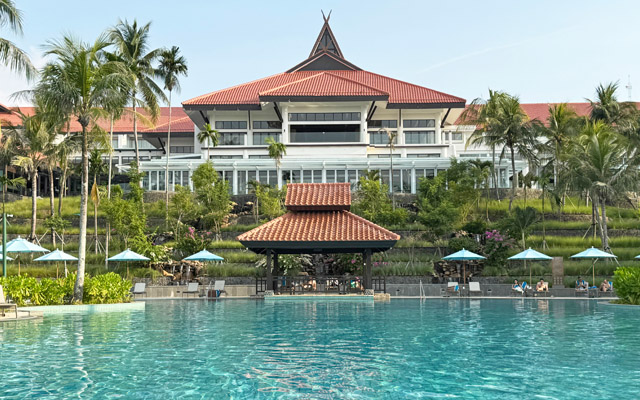
Kimpton Naluria Kuala Lumpur, Malaysia
The 466-key Kimpton Naluria Kuala Lumpur is situated in the Tun Razak Exchange (TRX) district, above The Exchange TRX shopping centre. The hotel spans 26 storeys and includes guestrooms and suites with city views, including Merdeka 118 and KL Tower.

Facilities include a rooftop bar, dining venues, fitness centre and wellness spaces, with meeting and event rooms scheduled to open in early 2026.

The hotel is within Kuala Lumpur’s main business and retail precinct and is close to public transport, offices and cultural attractions in the city centre.

Wyndham Goseong Gangwon

Wyndham Goseong Gangwon, South Korea
Wyndham Goseong Gangwon is a 529-room hotel on South Korea’s east coast, near Bongpo Beach and Seoraksan National Park.

Guestrooms include ocean-view options suited to leisure travellers, families and groups. Facilities include dining outlets, leisure amenities and event spaces designed to support meetings and group travel.

The hotel sits close to Seoraksan National Park, with access to hiking trails and coastal scenery. Bongpo Beach is within walking distance, while the surrounding Gangwon Province area is known for seafood markets, seaside towns and seasonal outdoor activities.

La Résidence Phou Vao

La Résidence Phou Vao, Laos
La Résidence Phou Vao has reopened following a full refurbishment and is set on Phou Vao Hill overlooking Luang Prabang and its UNESCO-listed old town. The property has 37 suites, including new connecting options, all with private terraces. Rooms have been reconfigured to increase natural light and views of the surrounding gardens and mountains, with updated bathrooms, walk-in showers and terrazzo bathtubs.

Facilities include a restaurant serving French and Lao cuisine, a bar, boutique and landscaped grounds. Accessibility upgrades have been introduced across pathways and guest areas. The hotel is a short walk from the historic centre and close to temples, the Mekong and Nam Khan rivers. Further additions, including a wellness centre and meeting facilities, are planned for 2026.

Nala Maldives by Jawakara Islands

Nala Maldives by Jawakara Islands, the Maldives
Nala Maldives by Jawakara Islands occupies a private 10-hectare island in Lhaviyani Atoll, a 35-minute seaplane journey from Velana International Airport. The adults-focused resort has 80 one-bedroom villas across beach and overwater settings, with selected categories including private pools or lagoon access.

A short speedboat ride links the resort to the neighbouring Jawakara island, allowing use of additional dining, sports and recreation facilities. On the island, guests have access to a spa with thermal facilities, a fitness centre, multiple dining venues and bars, and a wide range of water sports. The resort is also connected to marine conservation initiatives, with access to the Jawakara Atoll Research Centre and the Sea Turtle Health Institute.

An appealing region for travel

0

Despite ongoing global economic and political volatility, Asia-Pacific continues to demonstrate strong travel demand across both leisure and corporate segments.

Three sets of research by MMGY Global, Kearney, and FCM Consulting show travellers gravitating toward stable destinations and sustainability-aligned experiences, while the region’s competitive pricing continues to support corporate travel. Together, these insights highlight a sector that remains resilient and increasingly shaped by values, authenticity and cost competitiveness.

MMGY Global’s research found that Japan is most favoured by longhaul travellers; Himeji Castle in spring

PATA’s second Issues and Trends Report 2025, authored by Simon Moriarty, vice president, syndicated research at MMGY Global, identifies favoured destinations and the reasons why travellers are drawn to them. Through a survey with 2,534 respondents from Germany, the UK, Japan, Canada, Mexico, Saudi Arabia, India and China, it found Japan to be among the most favoured longhaul destinations.

Sixty-three per cent of American respondents and 59 per cent of Canadians expressed intent to visit Japan, while European interest rose from 51 per cent in 2023 to 55 per cent in 2025.

Japan’s combination of unique cultural, historical and modern attractions underpin its broad appeal for European travellers.

China, however, shows a more mixed demand profile. Travel intent rose 41 per cent among Saudi respondents and 36 per cent among Mexican respondents year-on-year, supported by simplified visa processes and perceptions of better value for money compared with the US or Europe.

In contrast, interest from Western markets remains subdued due to concerns relating to political safety, health risks and perceived restrictions on personal freedoms.

This divergence underscores how diplomatic ties and perceptions of political conditions shape traveller confidence.

India’s momentum is fuelled primarily by its domestic market. Moriarty shared that 53 per cent of Indians surveyed were more interested in travelling within the country compared to a year earlier, reflecting a growing middle class and rising confidence in domestic trips.

International intent to visit India is steady but moderated by a perception gap around safety and health.

Moriarty explained that as travel intent is influenced by perception, destination marketers have the opportunity to “develop conversations” with travellers to convey safety assurances.

He added that visitors want to experience India’s culture and landscapes “within the context of feeling safe, feeling comfortable, not going out of their comfort zone too much if they don’t want to”.

Affordability is another major draw, particularly for longhaul travellers, but Moriarty stressed the need to better communicate value. He noted that “cost effectiveness and affordability doesn’t mean a less important or less impactful holiday… it doesn’t mean a kind of cheap alternative”.

MMGY’s findings also show a shift away from traditional sightseeing towards deeper cultural immersion. Sustainability is also becoming a decisive factor in destination appeal, with travellers favouring businesses that demonstrate environmental responsibility and positive community impact.

Kearney’s 2024 report, In the Mind of Global Travelers, echoes these findings. Siddharth Pathak, senior partner and head of consumer industries and retail for Asia Pacific at Kearney, pointed out that 86 per cent of travellers globally, aged 25 to 34, favour eco-friendly options. Tourism players are responding accordingly – they are increasingly “educating travellers about the region’s sustainable ecosystem, showcasing locally-originated sustainable products, and integrating these seamlessly with the travel purpose”.

Pathak further observed that travel purpose strongly influences retail behaviour. Business travellers typically opt for click-and-collect or pre-order services, while leisure visitors prefer to browse and seek authentic local products or strong value buys.

He believes that this convergence of sustainability, local identity, and retail innovation is reshaping how travel retailers meet post-pandemic expectations.

Meanwhile, the FCM Consulting Insights Report identifies Asia as the world’s most cost-effective region for business travel. In the first half of 2025, the average hotel rate across Asia was US$170 per night, with total trip costs averaging US$972 – well below the global average of US$1,600.

This continues to fuel strong demand for corporate travel, meetings, and events across the region.

Domestic air travel capacity also remains high, led by China and India with passenger load factors of 84 per cent and 86 per cent respectively. Intense intra-regional competition is helping to maintain competitive fares, even as airlines face limited pressure to discount.

Bleisure travel – the blend of business and pleasure trips – continues to gain momentum, particularly in South-east Asia, as more business travellers extend work trips for short leisure breaks.

Bertrand Saillet, FCM Travel managing director, Asia, said: “Done well, this can be a positive win–win. Combining business with a leisure portion is a trend that is here to stay.”

He added that companies could support staff’s work-life balance while keeping costs in check by allowing leisure extensions – “provided the personal segment is cost-neutral for the organisation”.

The FCM Consulting Insights Report draws on corporate booking data from January to June 2025 from FCM Travel and Flight Centre Travel Group, supported by aviation data from Cirium.

Intrepid Travel appoints country GM

0

Intrepid Travel has named Ravindra Singh Shekhawat as country general manager, India.

With nearly 18 years’ experience in travel and hospitality, Shekhawat has been with Intrepid since 2008. He began as a tour leader in India and later held senior operational roles, including general manager in Nepal and most recently general manager at Intrepid DMC Indonesia.

In his new role, he is responsible for strategy, operations and performance in India, with a focus on sustainable growth, operational delivery and team leadership.

Philippines steps up tourism marketing in Asia

0

The Philippine Tourism Promotions Board (TPB) is increasing its marketing spend not just on its top source markets, but also on reinvigorating potentially big markets in Asia, including India and China.

“Apart from implementing more joint promotional initiatives for South Korea, the US, and Japan as our top three source markets, the TPB is focusing on India, whose nationals can enter the Philippines visa-free for a period of 14 days for tourism purposes,” said TPB chief operating officer Maria Margarita Nograles.

Philippines is placing greater emphasis on gastronomy in its tourism marketing, alongside expanded promotion in Asian growth markets

Inbound from India – breaching the 60,000 pax for the period January to September 2025 – is expected to grow exponentially since the introduction of the visa-free policy in June 2025 as well as commencement of Air India’s nonstop flights from Delhi to Manila five times a week in October.

The stronger marketing commitment comes as the Department of Tourism (DoT) numbers show that the destination has again missed its foreign arrivals targets, ending 2025 with 5.6 million foreign tourists versus the 8.4 million target and, in 2024, 5.9 million foreign tourists versus the 7.7 million target. These figures are also way below the 8.2 million arrivals posted in 2019.

Norgrales added that TPB, the marketing arm of DoT, is also “strengthening its efforts in China, as the country’s eVisa service for its nationals travelling to the Philippines for business or tourism purposes was recently resumed”.

It is understood that the slowdown in Philippine inbound the past several years is due to the drastic drop in tourist arrivals from China – once the destination’s primary source of inbound. The Philippines received an estimated 265,000 Chinese visitors last year, down from 312,000 in 2024 and nearly two million in 2019.

Gastronomy will form a bigger part of the global promotional initiatives as the Philippines is now officially on the Michelin-Guide’s Most Exciting Food Destination for 2026.

Nograles said Iloilo, with its UNESCO recognition as Creative City of Gastronomy and World Heritage Site, “is gaining traction in the US market”.

TPB will also continue joint promotions with foreign tour operators, consolidators, online travel agencies, and airlines, apart from fam trips that take media and travel trade participants “to known destinations in the Philippines”.

Improvements will also be made to institutional B2B events involving foreign participation mounted by TPB, such as the Philippine Travel Exchange and MICECONnect.

In addition, TPB is refining the perks for its Membership Programme to facilitate linkages among its members, communities, international travel agents, tour operators, local government units, and DMCs for possible collaboration on promoting destination Philippines.

Thailand hotel owners pivot to flexible costs as supply growth slows

0

Thailand’s hotel sector is entering a phase of operational maturity, with the focus shifting from aggressive inventory expansion to more sophisticated cost management and asset flexibility.

While the national room pipeline has grown over the past 18 months, the projected average supply addition of three per cent is notably lower than growth levels seen over the previous decade.

Palmqvist: the goal is not lower costs; it’s flexible costs; photo by Anne Somanas

According to data presented by Jesper Palmqvist, area director, Asia Pacific at STR, a division of CoStar Group, the industry is recalibrating for a more volatile demand environment. Owners are moving away from traditional blanket cost-cutting measures in favour of higher-yield strategies.

This is particularly evident in the luxury segment, which recorded a 3.4 per cent increase in average daily rate (ADR) despite a 7.3 per cent decline in occupancy during the first 11 months of 2025.

Palmqvist noted that the industry is “shifting to variable staffing by demand clusters”, with greater focus on guest mix and the use of energy efficiency as an asset lever to lift gross operating profit (GOP).

“The goal is not lower costs; it’s flexible costs,” Palmqvist emphasised in his analysis of current owner trends.

This flexibility is extending to F&B operations, where owners are increasingly outsourcing to strong local partners or replacing a single signature venue with “three average outlets”. Other approaches include pop-up and rotating chefs in place of permanent concepts, and hotel kitchens doubling as content engines for events, social media and PR.

Development strategies are also being viewed more pragmatically, with a growing preference for acquisitions over greenfield projects.

The near-term outlook for the capital remains conservative. Bangkok is forecast to record modest growth of one per cent in both occupancy and ADR throughout 2026, with performance expected to improve over the course of the year and more meaningful recovery anticipated by 2027.

On the future of hotel design and functionality, Palmqvist highlighted a clear shift in development priorities.

“Hotels are now designing for operations first, aesthetics second, with fewer keys and higher ADR in mind,” he stated.

Onyx Hospitality Group inks management agreement for Shama Hub Ladprao

0

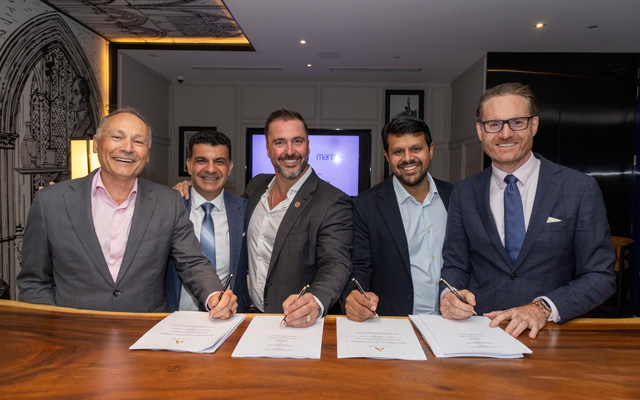
Onyx Hospitality Group has signed a management agreement for Shama Hub Ladprao at a ceremony held at Amari Bangkok on January 22, 2026. The agreement was signed by Yuthachai Charanachitta, CEO of Onyx Hospitality Group, and Somchai Ngamdamrongkiat, owner of Shama Yen Akat and Shama Hub Ladprao, in the presence of executives and staff from both organisations.

Shama Hub Ladprao is the second serviced apartment project awarded to Onyx Hospitality Group by Somchai Ngamdamrongkiat, following Shama Yen Akat, which has been in operation for five years. The new project reflects the continuation of the partnership between the owner and the operator.

Onyx Hospitality Group expands its serviced apartment portfolio with the signing of its first Shama Hub property in Thailand

The property will be the first Shama Hub in Thailand and the third in the region. Developed under the Shama Hub concept, the project focuses on compact, functional residences designed for flexible urban living. The development is located in Ladprao, an area with access to transport links, workplaces and lifestyle amenities.

Shama Hub Ladprao will include shared facilities such as co-working and social spaces. The property will operate under the Shama Hub brand, which provides serviced apartment accommodation with standardised operational and service frameworks.

Shama Hub Ladprao forms part of the wider Shama portfolio, which includes three sub-brands: Shama Luxe, Shama and Shama Hub. These brands vary by room size, location and design, and cater to different market segments. Shama currently operates 23 properties and pipeline projects across Thailand, China, and Malaysia.

“The continued growth of the Shama brand reflects its strong alignment with evolving travel and residential lifestyle preferences, particularly in the long-stay segment. This growth is the result of Onyx Hospitality Group’s ongoing market research and brand development efforts, aimed at positioning Shama as a serviced apartment brand that genuinely meets the needs of today’s residents,” said Yuthachai.

“We believe that a residence should be more than just a place to stay; it should be a living environment that addresses every dimension of modern living – from quality standards and safety to comfort, experience, and a genuine sense of belonging,” added Somchai.

Fighter jets and airliners to take to the skies at Singapore Airshow 2026

0

Singapore Airshow 2026, taking place at Changi Exhibition Centre from February 3 to 8, 2026, will feature eight aerial displays by six air forces and two commercial aircraft manufacturers.

The flying display programme will include a mix of military and commercial aircraft. Making its first appearance at the event is the Royal Australian Air Force’s F-35A Lightning II fighter aircraft.

Fighter jets and commercial aircraft will feature in the daily flying displays at Singapore Airshow 2026; photo by Singapore Airshow

Several military aerobatic teams will return, including the Indian Air Force’s Sarang helicopter display team, the Indonesian Air Force’s Jupiter aerobatic team and the People’s Liberation Army Air Force’s Bayi aerobatic team. The Royal Malaysian Air Force’s Sukhoi Su-30MKM fighter jet, which previously appeared in the 2016 and 2018 editions, will also perform.

The Republic of Singapore Air Force will present its Integrated Display Team, featuring the F-16C fighter jet and the AH-64D Apache attack helicopter.

Commercial aircraft displays will include the Airbus A350-1000 and the Comac C919 narrow-body aircraft.

Flying displays will take place once daily at 12.00 on February 3, and at 11.00 on February 4 and 5. During Weekend@Airshow on February 7 and 8, displays will be held twice daily at 11.00 and 15.30. Schedules are subject to change.

The event will also include a static display of more than 35 aircraft, covering commercial, business, military and unmanned platforms. Participating manufacturers and operators include Airbus, Bombardier, Comac, Dassault, Embraer, Gulfstream, Pilatus and Textron Aviation, alongside aircraft from the Republic of Singapore Air Force, German Air Force, Royal Australian Air Force and United States Air Force.

Weekend@Airshow tickets are available from Sistic, priced at S$39 (US$29) for adults, S$19 for children aged three to 12, and S$250 for a group package including four tickets and one car park label.

“The flying displays are always among the most anticipated highlights of the Singapore Airshow and the 2026 line-up reflects the strong international support for the event,” said Leck Chet Lam, managing director of Experia Events.

“We look forward to welcoming industry professionals, aviation enthusiasts and the public to enjoy these spectacular aerial performances.”

AirAsia, Hyrox join forces to support regional fitness events

0

AirAsia has launched a partnership with Hyrox Asia-Pacific, formalising a collaboration focused on travel support for fitness events across South-east Asia and other regional markets.

The partnership aims to support athletes, participants and spectators travelling to Hyrox host cities by providing flight access across AirAsia’s network. It reflects a shared focus on community participation and the growth of organised fitness events in the Asia-Pacific region.

The airline becomes official carrier for Hyrox Asia-Pacific, starting with the Singapore event in April 2026

As part of the agreement, AirAsia will work with Hyrox on community initiatives and on-ground activities beyond race days. The airline will also collaborate with selected Hyrox Training Club gyms to engage local fitness communities. Key markets include Osaka, Bangkok, Singapore, Hong Kong and Incheon, with additional destinations to be added.

Participants registered for selected Hyrox races partnered with AirAsia in 2026 will be eligible for a 10 per cent flight discount during a designated booking period linked to race registration.

The partnership was announced alongside the unveiling of a co-branded aircraft livery carrying the theme Keep Moving, Keep Rising. The livery will operate within the AirAsia fleet during the partnership period.

AirAsia has been named Official Regional Airline Partner for Hyrox Asia-Pacific. The 2026 Hyrox calendar includes the first Singapore edition of the event, scheduled to take place from April 3 to 5, 2026 at the National Stadium Singapore.

“Our partnership with Hyrox comes at the right time, as fitness becomes a global lifestyle movement… we can offer seamless travel experiences that bring people closer to the sports they love. Through this partnership with Hyrox, we look forward to continuing our mission to bring communities together,” said Amanda Woo, chief commercial officer of AirAsia X.

“Hyrox is more than a race, it is a lifestyle and sport built around community, consistency and shared ambition. Partnering with AirAsia allows us to better support our athletes and fans by making travel across the region more accessible, while strengthening Hyrox’s presence in key markets,” added Gary Wan, managing director of Hyrox Asia-Pacific.

Hyrox organises mass-participation fitness races that combine running and functional workouts. In Asia-Pacific, the series has held events in 10 cities, with more than 196,000 participants to date.

Further Hyrox events and related travel initiatives supported by AirAsia are expected to be announced later in 2026.