TTG Asia
Asia/Singapore Friday, 30th January 2026
Page 1198

Thomas Cook confirms takeover talks with Fosun, its largest stakeholder

0
This model for in-destination business fits Thomas Cook Group's strategy for growth

British travel giant Thomas Cook has confirmed that China’s Fosun Tourism Group was in talks to buy its tour operator business.

Fosun, which acquired a minority stake in Thomas Cook in 2015, is already the group’s biggest shareholder with an 18 per cent stake. The Shanghai-based conglomerate is also the owner of Club Med.

Fosun, already with a minority stake in Thomas Cook, may buy the UK giant’s tour operator business

There is no certainty that this approach will result in a formal bid from the Hong Kong-listed Fosun, Thomas Cook said in a statement. “However, the board will consider any potential offer alongside the other strategic options that it has, with the aim of maximising value for all its stakeholders.”

When contacted by TTG Asia for comments, a Fosun spokesperson replied: “Fosun Tourism Group follows Thomas Cook’s recent developments and maintains normal communication with its board of directors. We have no further information to disclose now.”

At the recent Skift Forum Asia, Fosun Tourism Group chairman and CEO Qian Jiannong did not deny the possibility of a Thomas Cook takeover although he declined to comment further.

At the forum, Qian also described Fosun’s joint venture with Thomas Cook in China as “very successful”. The two partners have developed their own-brand properties in southern China and near Shanghai, opening up the domestic Chinese market to Thomas Cook.

Acquiring Thomas Cook would make sense for Fosun, as it steps up its focus of creating a synergy among its resorts, destination and tourism products.

The takeover move, if it goes through, is expected to break up the 178-year-old tour British tour operator. The ailing company is already looking to sell its airline business, and last month said it had received a takeover approach for its Nordic operations from private equity group Triton.

Thomas Cook has in recent years come under multiple headwinds, citing uncertainty around Brexit and last year’s summer heatwave to have affected bookings. The British travel giant has declared a 1.5 billion pound (US$1.3 billion) loss in 1H2019, and has already closed down 21 stores.

M’sian hoteliers observe disparities between arrivals and occupancies in 1Q

0
xx

The Malaysian Association of Hotels’ (MAH) statistics on 1Q hotel occupancy showed a slight drop to 64.2 per cent, compared with 65.7 per cent in 1Q2018, despite Tourism Malaysia announcing an improvement in arrivals performance.

The NTO recently announced that tourist arrivals showed a 2.7 per cent growth to 6.7 million tourists in 1Q2019.

Hotels report declining occupancy despite improving arrivals performance

Some deduce that the disparity comes down to how arrivals figures are quantified.

MAH’s CEO, Yap Lip Seng, commented: “Tourism Malaysia gets their statistics from the Immigration Department, but whether those numbers shown are tourists (benefiting the traditional players) or not, remains a question mark.”

He said MAH had on several occasions proposed to the Ministry of Tourism, Arts and Culture Malaysia for the reintroduction of arrival cards at entry points, where foreigners are required to state their reason for visiting the country and accommodation type.

He said some foreigners coming into the country could be staying with friends and relatives, or at vacation rental services such as Airbnb instead of hotels, possibly explaining the disparity between hotel occupancy and arrivals.

According to Tourism Malaysia’s arrival statistics for 1Q2019, arrivals from China grew by 8.8 per cent to 841,800 tourists, from 773,732 in 1Q2018. Yap viewed the Chinese market as a low-hanging fruit which could be further tapped by the introduction of visa-on-arrival.

Steve Woon, senior vice president – sales marketing of Lexis Hotel Group, agreed that the market was soft and described Airbnb as a “big killer” for hotels.

He shared that the government should make visa requirements easier and cheaper for all major markets, including China, in order to further encourage tourists to visit the country.

He shared that Chinese arrivals to the Lexis properties in Malaysia had seen a “20 per cent drop easily year-to-date”. Chinese tourists are the top medium-haul market to Malaysia and spent an average of 6.1 nights in Malaysia in 1Q2019.

APAC leads growth as international tourism exports hit US$1.7 trillion

0
xx

Exports generated by international tourism reached US$1.7 trillion in 2018, up 4% over the previous year, with Asia-Pacific leading growth, a new report from UNWTO shows.

For the seventh year in a row, tourism exports grew faster than merchandise exports (+3%), reflecting solid demand for international travel in a generally robust economic environment.

Tourism exports grew faster than merchandise exports for the seventh year running

Strong growth in outbound travel from many source markets around the world fuelled revenues. This accounts for 29% of global service exports and 7% of overall exports of goods and services. These figures consolidate international tourism among the top five economic sectors in the world, behind chemical manufacturing and the fuel industry but ahead of the food and automotive industries.

“Rather than growing in volume we need to grow in value. We are pleased to see that both emerging and advanced economies around the world are benefiting from rising tourism income,” said UNWTO secretary-general, Zurab Pololikashvili.

“Revenues from international tourism translate into jobs, entrepreneurship and a better situation for people and local economies, while reducing trade deficits in many countries” he added.

International tourism receipts increased 4% in real terms (adjusting for exchange rate fluctuations and inflation) to reach over US$1.4 trillion in 2018, about US$100 billion more than the previous year. This is consistent with the 6% increase in international tourist arrivals in 2018.

By regions, Asia and the Pacific led the way with 7% growth in international tourism receipts, followed by Europe with a 5% increase. The Middle East saw 3% growth, while Africa (+1%) and the Americas (0%) recorded more modest results. Central and Eastern Europe and North-East Asia (both +9%) were the subregions with the strongest growth.

Growth in receipts was fuelled by strong demand for international travel in the context of a robust global economy.

Among the world’s top ten source markets, France and the Russian Federation both recorded 11% growth in outbound spending in 2018, while Australia saw a 10% increase.

China, the world’s top spender reported US$277 billion in international tourism expenditure in 2018, a 5% increase in real terms from a year earlier, while the US, the second largest, spent 7% more, to reach US$144 billion.

International expenditure from the UK grew 3% in 2018, and 4% from Italy, while Germany and South Korea both reported rather flat results. Further down the ranking, Spain enjoyed 12% higher spending on international tourism in 2018.

Radisson appoints Hannes Bos as VP commercial in APAC

0
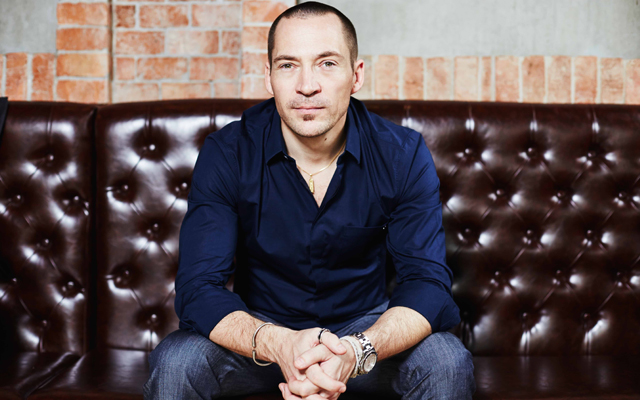
Hannes Bos

Radisson Hotel Group has named hotel professional and revenue leader Hannes Bos as its new vice president, commercial, Asia-Pacific.

Bos brings 18 years of global hospitality experience to Radisson Hotel Group. With expertise in revenue and project management, commercial operations, and sales and marketing, he will play a key role in the company’s future as it implements the ongoing five-year transformation strategy named “Destination 2022”.

Hannes Bos

He was educated in the Netherlands and Sweden before embarking on his hospitality career with AMS Hotel Group in Amsterdam. Specialising in revenue management, he also held senior management positions with Concorde Hotels in Paris and Millennium & Copthorne in London and Singapore.

He then joined InterContinental Hotels Group (IHG) in 2008, initially as director of revenue management for the Middle East & Africa based in Dubai, and later as senior director of revenue strategy & operations support in Greater China, where he was responsible for more than 200 hotels.

Following his time with HotelBeds in Singapore and RateGain in India, he joined Wyndham Hotels & Resorts in Dubai as director of revenue management, Middle East & Africa. Most recently, he worked for VinGroup, Vietnam’s leading tourism and hospitality conglomerate.

Based at Radisson Hotel Group’s regional head office in Singapore, Hannes will sit on the group’s Asia-Pacific executive committee.

NASA opens space station for commercial business and private astronauts

0
NASA International Space Station will open up for commercial use

NASA is opening the International Space Station for commercial business, which it hopes will open the gates to American innovation in the low-Earth orbit economy.

This comes as NASA pushes forth in its goal of sights landing the first woman and next man on the Moon by 2024.

NASA will continue research and testing in low-Earth orbit to inform its lunar exploration plans, while also working with the private sector to test technologies, train astronauts and strengthen the burgeoning space economy.

NASA International Space Station will open up for commercial use

In a statement NASA expressed that providing expanded opportunities at the International Space Station to manufacture, market and promote commercial products and services will help catalyse and expand space exploration markets for many businesses.

The agency’s ultimate goal in low-Earth orbit is to partner with industry to achieve a strong ecosystem in which NASA is one of many customers purchasing services and capabilities at lower cost.

More than 50 companies are already conducting commercial research and development on the space station via the International Space Station US National Laboratory, and their results are yielding great promise, NASA says.

In addition, NASA has worked with 11 different companies to install 14 commercial facilities on the station that support research and development projects for NASA and the ISS National Lab.

This effort is intended to broaden the scope of commercial activity on the space station beyond the ISS National Lab mandate, which is limited to research and development. A new NASA directive will enable commercial manufacturing and production and allow both NASA and private astronauts to conduct new commercial activities aboard the orbiting laboratory. The directive also sets prices for industry use of US government resources on the space station for commercial and marketing activities.

Pricing is specific to commercial and marketing activities enabled by the new directive, reflects a representative cost to NASA, and is designed to encourage the emergence of new markets.

As NASA learns how these new markets respond, the agency will reassess the pricing and amount of available resources approximately every six months and make adjustments as necessary.

To ensure a competitive market, NASA initially is making available five percent of the agency’s annual allocation of crew resources and cargo capability, including 90 hours of crew time and 175 kg of cargo launch capability, but will limit the amount provided to any one company.

NASA also is enabling private astronaut missions of up to 30 days on the International Space Station to perform duties that fall into the approved commercial and marketing activities outlined in the directive released Friday, with the first mission as early as 2020.

If supported by the market, the agency can accommodate up to two short-duration private astronaut missions per year to the International Space Station. These missions will be privately funded, dedicated commercial spaceflights. Private astronaut missions will use a US spacecraft developed under NASA’s Commercial Crew Program.

The commercial entity developing the mission will determine crew composition for each mission and ensure private astronauts meet NASA’s medical standards and the training and certification procedures for International Space Station crew members. Market studies identified private astronaut missions to low-Earth orbit as a key element to demonstrate demand and reduce risk for future commercial destinations in low-Earth orbit.

In the long-term, NASA’s goal is to become one of many customers purchasing services from independent, commercial and free-flying habitable destinations in low-Earth orbit. A robust low-Earth orbit economy will need multiple commercial destinations, and NASA is partnering with industry to pursue dual paths to that objective that either go through the space station or directly to a free-flying destination.

Wyndham to bring Ramada to South Australia

0
Ramada Playford, the brand's first in South Australia, will be located in Adelaide's booming north

Wyndham Hotels & Resorts’ Ramada brand will make its South Australia debut with the signing of Ramada by Wyndham Playford, a new property planned for Adelaide’s booming north.

Construction on the A$90 million (US$62.6 million) development is set to commence in October this year, with the hotel’s opening scheduled for the first quarter of 2021.

Ramada Playford, the brand’s first in South Australia, will be located in Adelaide’s booming north

The site is within walking distance of the Civic Centre and Shedley Theatre, Prince George Plaza, Grenville Hub and Playford Arena.

The hotel will operate as a Ramada under an agreement between Wyndham Hotels & Resorts and property owner, Playford City Hotel.

“Playford is emerging as the gateway city to the northern regional areas of South Australia and the hotel will play a role in city’s ongoing expansion,” said Joon Aun Ooi, president and managing director, South-east Asia and Pacific Rim, Wyndham Hotels & Resorts.

Upon opening, Ramada Playford will boast a collection of 205 rooms and facilities, including a swimming pool, gym, restaurant and sports bar, along with meeting and conference spaces.

“The development will set a benchmark for the planned infrastructure to take place across the city over the next five years,” said Andrew Russell-Price, managing director, Playford City Hotel.

Playford is tipped to become the CBD of Adelaide’s north, with the population expected to expand from 96,000 to 135,000 by 2036. The hotel’s launch will coincide with a significant expansion of Playford’s infrastructure, including the A$885 million Northern Connector Expressway and a A$40 million ice sport and recreation centre.

The hotel will operate under a license agreement with Wyndham Hotels & Resorts and be managed by Resort Management by Wyndham, an Australian hotel management subsidiary of Wyndham Destinations Asia Pacific.

Next Story Group names Patrick Imbardelli as chairman

0

Next Story Group has appointed Patrick Imbardelli as chairman of its board with immediate effect.

Imbardelli succeeds Luis Miranda who has retired from the board after more than six years in that role. Prior to this appointment, Imbardelli was a non-executive director and advisor to Next Story Group for the past three years.

With a hospitality career spanning more than 30 years, Imbardelli was formerly the chief executive Asia-Pacific of the InterContinental Hotels Group, and the chief executive and board member of Pan Pacific Hotels Group. His achievements extend from capital restructuring and investments in developing countries to integrating hotel management companies, businesses and brands.

He is also a director and advisor of IDEM Hospitality, advisory board member and advisor for Tionale Enterprises, director of The Goodnight Co, and previously a director and advisory board member of Symmons Industries in Boston.

Sri Lanka’s marketing campaign takes off to arrest tourist slump

0
Tourists trekking through tea plantations in Ella, Sri Lanka

Hopping on for new tourism business

0
Charnwit Kanchanawat

It’s possible for tourists to visit around 18 major sites within a day in attractions-filled Bangkok, but existing transport options are still not up to standard, driving Charnwit Kanchanawat to launch Amazing Bus Tour, the city’s first operator of a hop-on hop-off service in Bangkok last year.

Even though tourists visiting the Thai capital have many options to get around, few are ideal. Charnwit said riding tuk tuk can be expensive while taking taxi can take hours in the Bangkok traffic. There is also the risk of encountering unscrupulous drivers.

Charnwit Kanchanawat

Amazing Bus Tour was launched in September 2018, months ahead of another two rivals, including a tuk tuk hop-on hop-off. Before this, Charnwit had been in the business of exporting hydroponic vegetables for about 15 years.

“Inspired by my personal experiencing while studying in the UK and travels abroad, I (thought to myself that) Bangkok should have a good one-stop service for city tours, where customers can easily visit more attractions.”

“Overseas hop-on, hop-off do not have much onboard service but we do. We have travel experts on the bus to explain attractions and assist customers,” he said.

With a total investment of 48 million baht (US$1.5 million), the bulk of which went into importing 10 new and environmentally friendly buses.

The company currently uses half the fleet for its first route, departing from Siam Paragon to 17 major attractions including Chinatown, Chao Phrya River Walk, Giant Swing, Bang Lumpoo, Marble Temple Golden Mount, Silom, Little India and Khao San.

When asked if the city’s traffic congestion may present difficulties, Charnwit said the road conditions in Bangkok’s old town is not as bad compared to other areas.

The main proposition is greater convenience and better accessibility for the self-travelling, he said.

“Tourists spend less money but are able to visit up to 18 attractions within one day. This is only made possible by a city tour bus.”

It costs 850 baht for a 24-hour ticket, 1,150 baht for 48 hours, and 1,350 baht for 72 hours. Children rates are about half the adult fare.

For now, more than 80 per cent of demand is for the 24-hour option.

Months after Charnwit brought the concept to Bangkok, Giants City Tour rose to popularity among foreign tourists mainly from the UK, Italy, Germany, Spain, Australia, the US, Hong Kong, Malaysia, Singapore and Indonesia.

Giants City Tour currently penetrates the markets though online channels including OTAs. It also markets offline through distributing collaterals to hotels, coffee shops, restaurants and attractions.

The company plans to add one more route this year focusing on heritage sites. It will soon launch an application to reach more young tourists and FITs, as well as new markets through introducing foreign languages such as Japanese and Chinese.

Social enterprise rolls out edutainment programmes against child exploitation in tourism

0
Campaigning against forms of donating that perpetuate exploitation

Cambodia-based social enterprise Friends International (FI) has unveiled a swathe of new products as part of its recently-launched ChildSafe Academy, including an escape room, cookery classes and craft workshops.

FI’s ChildSafe is joining the movement to educate visitors to Cambodia about responsible tourism in innovative, fun ways. For example, its escape room game based on its ChildSafe seven tips for travellers.

Campaigning against forms of donating that perpetuate exploitation

Among the seven takeaways are ones centred on how children are not tourist attractions, driving home the dangers of volunteering with youngsters why it is not right to give to begging children.

ChildSafe Escape Room is located at FI’s new Futures Factory, a huge creative space in Phnom Penh centre that is home to a range of boutiques, small eateries, an art gallery and performance space.

The escape room programme is set in a ChildSafe office, with groups of three to six players given one hour to crack a series of clues based around the tips to successfully catch an offender.

“We want to raise awareness in a fun and interactive way that makes people think about and understand more of these important issues,” said gamesmaster Sreyneang Sum. “(The escape room) is a more fun and engaging way to spread our message.”

Sum added they are working with tourism partners, including hotels and tour operators, to promote the activity. ChildSafe currently partners tour operators to host informative workshops about its work.

Other recently-launched activities include cooking and mocktail-making classes with FI’s hospitality students and craft workshops to make tote bags and other items from recycled products.

Coralie Romano, branch manager at Diethelm Travel Cambodia, welcomed FI’s new programme to the capital’s activities, saying it will appeal to families, student groups and travellers spending more than a few days in the capital.

However, she pointed out that the tours may not gain easy traction in the mass market. “The majority of our clients stay in Phnom Penh for two days and want to see the history and culture of the country.”