Virtuoso has enhanced its leadership team with the appointment of Cheryl Cheney Bunker as senior vice president of global memberships and Cory Hagopian as senior vice president of global partnerships, continuing its focus on global expansion and luxury travel growth.
Cheryl Cheney Bunker has been appointed senior vice president, global memberships. She has been with Virtuoso since 2007 and most recently served as vice president of global member relations, overseeing more than 1,200 travel agencies and over 20,000 travel advisors in 58 countries. In her new role, she will lead global membership strategy and oversee engagement across all regions.
From left: Cheryl Cheney Bunker and Cory Hagopian
Cory Hagopian has taken on the role of senior vice president, global partnerships. He joined Virtuoso in 2022 and has overseen both member and partner relations. He will now focus on global partner sales and relationships across product areas including accommodation, cruises, tourism boards, transport, and insurance. His role includes expanding partnerships in new markets and managing the organisation’s ultra-high-net-worth segment.
Scenic Hotel Group has appointed Bernard Yong as international sales manager, a new role within the group. He will work with Steve Shearer, director of international sales and brand development.
Yong has experience in the hospitality industry, including eight years at Mitchell Corporation, where he was involved in business development and client relations. He has also worked in real estate and duty-free management.
Tourism industry stakeholders are cautiously assessing the long-term impact of the new tariffs announced by US president Trump on regional travel flows, corporate spending and outbound demand in the Middle East for the US.
“It is too early to say, but any uncertainty causes businesses to become a little bit more conservative in what they are doing. Anything which leads to a barrier to business can have an impact on business travel spend or where business spend is going,” said Catherine Logan, regional senior vice president for EMEA and APAC at the Global Business Travel Association (GBTA).
Industry leaders assess how the US tariffs could affect travel demand, business spending, and regional trade ties
Trump issued an executive order in April 2025, imposing a 10 per cent customs duty on goods imported into the US from all countries, with higher duties on imports from specific countries. Middle Eastern countries such as the UAE and Saudi Arabia will face a 10 per cent tariff, while others like Jordan and Iraq will face higher rates of 20 per cent, according to a report by PwC Middle East.
“We don’t see a direct impact of the tariffs announced by president Trump in the Middle East, but indirect. If the global economy is not doing well, nobody can escape. So, we hope the US can really understand what they are doing,” said Jane Sun, CEO of Trip.com Group.
Trump’s tariffs caused initial disruption in global financial markets before a 90-day suspension was implemented. Amid investor concerns, stock markets in the Middle East recorded their worst decline in five years when the new tariffs were announced, according to regional media.
Ciaran Kelly, managing director of Middle East & Africa at FCM Travel, said the current situation could lead to diversification in global trade and travel patterns, which may benefit the Middle East.
“There are phenomenal opportunities in the region like Jebel Ali in Dubai is a world-class logistics hub, Qatar is the largest LNG producer, Egypt has booming manufacturing. This could result in a shift of business via the Middle East into Africa or Asian markets,” he added.
Trump is scheduled to visit Saudi Arabia, Qatar and the UAE next month – a tour observers say could shape future diplomatic and economic discussions around the tariffs.
Australia’s largest tourism trade event concluded on May 1 in Brisbane, after four days of business meetings, marking a key moment in the city’s path toward becoming a major international destination.
The 2025 Australian Tourism Exchange (ATE25) was the largest yet, with 1,600 Australian tourism sellers and 726 global buyers, leading to about 60,000 appointments at the Brisbane Convention and Exhibition Centre.
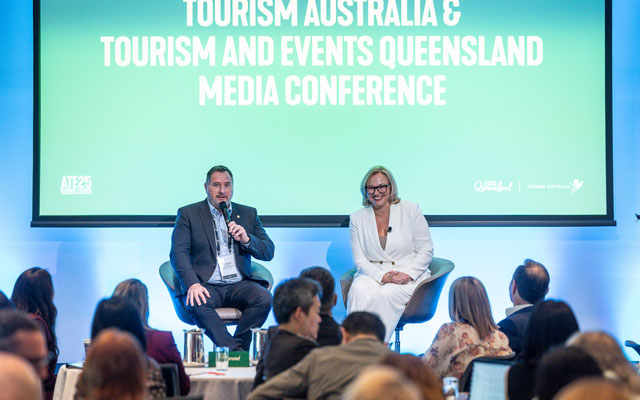
Andrew Powell and Phillipa Harrison spoke about Brisbane’s transformation and its growing influence in elevating Australia’s tourism industry globally during ATE25
“ATE is a chance for our tourism industry to meet face-to-face with key tourism decision makers from around the world and tell them about the incredible products and experiences Australia has to offer for international holidaymakers,” said Phillipa Harrison, managing director of Tourism Australia. “The 1,600 Australian sellers here in Brisbane will have access to buyers from 31 countries, and the connections they make will drive international travellers to their businesses in the months and years ahead.”
The return of ATE to Brisbane comes at a transformative time for the city. “Brisbane has changed significantly since the ATE was last here (17 years ago), and we’re so excited to showcase just how much our city and state have evolved over time,” said Andrew Powell, Queensland minister for the environment and tourism.
Notably, Queensland tourism operators occupy 191 booths, claiming over a quarter of the floor space.
“With the green and gold runway set for the Brisbane 2032 Olympic and Paralympic Games, we are determined to enhance our global appeal, and there is simply no better opportunity to showcase Queensland’s countless connections to sea, land, and culture than at ATE25,” Powell added.
“I love my sport, but (securing) the Olympics wasn’t about hosting the sport – (it was) about growing our infrastructure and our tourism legacy.”
The local economy is projected to grow by 68 per cent over the next 20 years. In the past year, Brisbane achieved an unprecedented tourism trifecta, with a record A$11.3 billion (US$7.27 billion) in visitor expenditure. “We had the most visitor nights ever in the region, and record domestic and international visitors,” said Fiona Cunningham, Brisbane’s deputy mayor.
Australia has seen 8.3 million arrivals, a nine per cent increase from last year and an 82 per cent rise from two years ago. Demand for Indigenous tourism experiences has grown by 16 per cent year-on-year.
ATE25 is delivered by Tourism Australia in partnership with Tourism Events Queensland, with support from the Brisbane Economic Development Agency.
Tropical North Queensland (TNQ) has launched a campaign to secure the United Nations Lifetime Achievement Award for the Great Barrier Reef, aiming to capture global attention.
If successful, it will be the first non-human recipient of the award, highlighting the reef’s significance and providing historic international recognition for Australia’s tourism industry.
Linton: when people experience the reef first-hand, they fall in love with it – and they want to protect it; photo by Adelaine Ng
The campaign, backed by federal funding and partners including Qantas, aims to give the reef the same recognition that has previously been awarded to conservation icons such as David Attenborough.
“The Great Barrier Reef has done so much not only for tourism, but for our state, our country, and the world,” said Georgia Linton, PR lead for Tourism and Events Queensland.
“It actually meets all the criteria for the award. Why not recognise such a remarkable entity with the UN Lifetime Achievement Award?”
The campaign, which is only days old, has already gained momentum. Over 2,600 signatures have been collected on a global petition, with plans to reach an estimated 50,000 supporters before the nomination deadline in November.
Key strategies include leveraging TNQ’s international networks, engaging celebrities and high-profile “Friends of Queensland”, and tapping into Qantas’ 30,000-strong staff as campaign advocates. Outreach will begin this week, and the campaign will span the US, the UK, Europe, and South-east Asia.
Speaking to TTG Asia at the Australian Tourism Exchange 2025 in Brisbane, Linton explained that the campaign to win the UN Environment Programme’s Champions of the Earth Lifetime Achievement Award also aims to dispel myths about the reef’s health and promote positive engagement.
“There’s a lot of misconception that the reef is dead or dying, and that you’re hurting the reef if you visit, when that couldn’t be further from the truth. When people experience the reef first-hand, they fall in love with it – and they want to protect it,” said Linton.
The campaign is being led by Lani Cooper, general manager of Marketing at Tourism Tropical North Queensland.
If successful, industry leaders anticipate significant returns in global recognition for Australia’s tourism, indigenous custodians, and environmental advocates.
“To have that scale of global recognition would be a pretty special moment,” Linton shared. “The Great Barrier Reef has been a healer, a teacher, a provider – and it continues to give birth through coral spawning. It has all the qualities that deserve this honour,” she added, noting that reef awareness and education are as important as the final result.
Nominations close in November, with the award presentation scheduled for March next year. Reef supporters can learn more or submit a nomination here.
Ascott is accelerating the global growth of its flagship brand under a new multi-typology strategy. In 2024, the company signed eight new properties – more than double the previous year’s total – and added three more in the first four months of 2025: Ascott Ortigas Manila in the Philippines, Ascott Shenton Way Singapore, and the brand’s first property in Wenzhou, China.
The Ascott brand now includes over 80 properties with more than 17,400 units, either operational or in the pipeline, across 43 cities. Across all 14 brands, Ascott’s global portfolio exceeds 990 properties and 170,000 units in 230 cities.
Ascott Shenton Way Singapore, the brand’s second CBD property, reinforces its presence in key gateway cities
Ascott Shenton Way Singapore will be the brand’s second property in Singapore’s CBD, offering 137 units, along with a lounge, meeting spaces, restaurant, café, gym, spa, swimming pool and garden terraces.
Other 2024 signings include properties in China’s Nanjing, Shenzhen, Suzhou, Wuhan, Wuxi, as well as Batam in Indonesia, and Nairobi in Africa. The brand concluded the year with the signing of Ascott Residences Batu Ferringhi Penang, its first branded residence, which is located along the coast between Tanjung Bungah and Batu Ferringhi in Penang, Malaysia. The development will feature 99 residential apartments and is scheduled for completion in 2028.
Ascott is also moving beyond serviced residences, with new typologies such as branded residences and hotels with MICE facilities.
Ascott CEO Kevin Goh said: “In the face of increasing economic uncertainty, Ascott’s flex-hybrid operating model is now reinforced with a multi-typology brand strategy. When strengthened by a multi-typology brand ecosystem, Ascott’s business model gains a unique competitive edge. This enables Ascott to respond dynamically to demand shifts not just by length of stay, but also by owner and guest profiles, and location offerings.
“For property owners, we offer flexible brand and typology combinations that optimise returns, supported by the strength and recognition of our portfolio for faster market traction. For guests, we deliver diverse accommodation options under the brands they know and trust, creating seamless and rewarding experiences.”
Under this strategy, Ascott is expanding its portfolio of branded residences and full-service hotels. New developments maintain the brand’s features such as interior design, curated lobby art and service by the Ascott Artisan. Programmes like Themed Suites and Ascott Soirée continue to be offered.
Ascott Villas Riyadh, opening in July 2025, will be Ascott’s first all-villa hotel in Saudi Arabia. Located near King Abdullah Financial Street, it will offer two- to four-bedroom villas, some with private pools, along with meeting rooms, a restaurant, gym, pool and tennis court.
Ascott Tay Ho Hanoi is set to open in 2026 with 618 rooms and apartments. It will include a convention centre with 14 event spaces, including a 2,000-person ballroom, plus a spa, gym, pool, yoga rooms and multiple dining options.
In March 2025, Ascott signed Ascott Ortigas Manila in the Philippines. Located in Metro Manila’s Ortigas business district, the renovated property will offer 232 units, 1,700m² of event space, a spa, gym, pool, lounge and dining outlets.
“Rather than creating separate brands for each market segment, we extend our well-established brands – including Ascott, Citadines, lyf, Oakwood, Somerset, The Crest Collection and The Unlimited Collection – across diverse accommodation types, ranging from limited select-service to luxury full-service operations… (offering) tailored global living solutions to address the diverse travel needs of our guests. By swiftly tailoring the brand presence and reallocating the service mix based on our multi-typology brand strategy, Ascott is honing our agility to meet the dynamic patterns in travel and guest behaviour,” shared Tan Bee Leng, chief commercial officer, Ascott.
Additionally, Ascott is launching a new edition of its annual Ascott Soirée programme, which brings art, culture and local collaborations into its properties. The initiative features live performances, visual art, fashion and food experiences, offering guests a cultural experience during their stay.
In Singapore, Ascott Orchard Singapore guests can attend a Mother’s Day concert by the Singapore Symphony Orchestra at the Botanic Gardens. In Tokyo, Ascott Marunouchi Tokyo is hosting an exhibition of Edo-period prints in collaboration with Tokyo Takahashi Kobo and the Traditional Woodblock Print Craftsmen’s Association. In Shenzhen, guests at Ascott Fengyishan can participate in tea-making workshops highlighting traditional techniques and culture.
Added Tan: “With the growing demand for experiential travel, today’s guests are looking for more than just a place to stay – they seek meaningful cultural connections. Through creative collaborations around the world, Ascott Soirée brings heartfelt, arts-inspired experiences that enrich every stay with authenticity and soul.”
Meliá Hotels International has strengthened its position in Vietnam with new agreements with BB Group Hospitality and Sapa Mountain Resort. These agreements add two properties to Meliá’s portfolio, increasing its presence to 22 hotels in operation and four in the pipeline in Vietnam.
BB Group Hospitality operates hotels in key tourist destinations, and this partnership brings Meliá to the scenic town of Sapa, known for its cultural heritage, terraced rice fields, and mountainous terrain popular with hikers.
Meliá Hotels takes over Sapa Mountain Resort, rebranding it as Meliá Sapa Mountain Resort
The BB Hotel Sapa and BB Sapa Resort & Spa will become Meliá’s northernmost properties in the country, now operating under the Affiliated by Meliá brand.
Under Meliá’s agreement with Sapa Mountain Resort, BB Sapa Resort & Spa will be rebranded as Meliá Sapa Mountain Resort after 12 months as an Affiliated by Meliá property. The resort has 77 rooms and suites, an expansive garden, wellness facilities, gym, indoor heated pool, and spa.
As part of the partnership with BB Group, BB Hotel Sapa will become Hotel Sapa Square, Affiliated by Meliá. Located near Central Square, the 57-room property boasts views from its rooftop sky lounge, terrace café, restaurant, and spa.
Meliá and BB Group also signed a hotel management agreement for Kobi Onsen Hue, a hot springs resort in Vietnam’s former imperial capital, now operating as an Affiliated by Meliá property.
“Through BB Group and Sapa Mountain Resort, we continue to grow our presence in the country with partners who share our commitment to building sustainable tourism in Vietnam,” said Gabriel Escarrer, CEO and chairman of Meliá Hotels International. “These agreements mark our first step in one of the most picturesque destinations in Vietnam.”
AirAsia MOVE has launched Easy Cancel, a new feature allowing travellers to cancel flights up to 48 hours before departure and receive a refund within ten days.
Exclusively available on the AirAsia MOVE app, Easy Cancel gives passengers the flexibility to cancel for any reason, offering 80 to 100 per cent refund coverage, including for add-ons such as baggage and meals. The feature must be purchased during booking and cannot be added later via the Manage Booking section.
The new Easy Cancel feature gives travellers the flexibility to cancel flights up to 48 hours before departure with a quick refund process
To add Easy Cancel, after selecting flights and entering passenger details, guests simply need to click ‘Continue to Add-Ons’ and select Easy Cancel from the options.
The feature is available on all AirAsia routes except South Korea and Indonesia domestic flights. For AirAsia X flights, Easy Cancel will be available by the end of May.
Sofitel Legend Metropole Hanoi is offering a Path of History tour for guests to learn about the US-Vietnam War as the world marks its 50th anniversary. The tour includes a visit to the hotel’s underground bomb shelter, where figures like Joan Baez and Jane Fonda took shelter during air raids.
The shelter, sealed after the war, was rediscovered during a 2011 renovation. The tour, led by a hotel historian, is available exclusively to guests twice daily at 17.00 and 18.00. It also features historical photos and vintage artefacts, including century-old room keys.
Guests can explore the hotel’s wartime bomb shelter and relive key moments from the US-Vietnam War
A highlight of the tour is experiencing the bomb shelter while listening to Joan Baez’s song Where Are You Now, My Son, inspired by the 1972 bombings.
The hotel also recently welcomed back Uzaki Makoto, a former reporter for Japan’s Nihon Denpa News, who stayed there while covering the war. During his visit, he reflected on his time in the shelter with Baez.
Road trips through Australia’s New South Wales are now more sustainable, thanks to improved electric vehicle infrastructure
New South Wales pushes sustainable road trips Australia’s Destination New South Wales (NSW) has launched a new marketing campaign, Recharge Here, that promotes electric vehicle (EV)-friendly road trips across the state in support of the sustainable growth of regional visitor economies.
The campaign features nine EV-friendly road trips in Greater Sydney and regional NSW. Some of these itineraries include Central Coast and Hunter Valley, a U-shaped 257km trip from Newcastle to Maitland; Grand Pacific Drive – a 200km journey along the coastline from Sydney to Jervis Bay; and Greater Blue Mountains Drive, a 283km round trip from Sydney to the Blue Mountains.
The itineraries also identify the locations of EV charging stations along the routes so that drivers can enjoy their journey without range anxiety.
Each road trip has its own webpage, which breaks the itinerary into stages and shows the EV charging options along the route, alongside visitor experience recommendations.
Recharge Here is developed as an extension of Destination NSW’s Feel New brand, and highlights the accessibility of the state’s stunning natural beauty and vibrant cultural experiences through EV infrastructure.
The NSW government is investing A$199 million (US$126 million) to support the installation of thousands of publicly available EV charge ports across the state. This includes ultra-fast charging stations, destination and kerbside chargers.
Funding has been awarded for more than 3,000 charge ports at more than 1,100 sites, with many more to come.
Minister for roads and tourism John Graham said: “NSW offers world-class road trips along magnificent coastlines, beautiful countryside and stunning alpine ranges. These new EV chargers will mean all drivers can enjoy these epic journeys.
“The installation of EV chargers across regional NSW ensures our regional visitor economies can attract the growing number of EV drivers.”
Minister for climate change and energy Penny Sharpe added: “We are committed to making the state a leader in electric vehicle adoption and sustainable tourism.
“Driving electric is not only better for the environment, but it’s also the most budget-friendly way to hit the road. Lower running costs means EVs offer significant savings for drivers.”
Marketing EV-friendly road trips aligns with a recommendation in the NSW Visitor Economy Strategy review to position NSW as a leader in sustainable tourism through initiatives such as the development and promotion of EV experiences. – Karen Yue
Orix encourages hotel guests to participate in upcycling projects
Orix focuses on responsible consumption Tokyo-based Orix Hotel Management Corporation, which operates a variety of onsen resorts, hotels and training facilities across Japan, promotes sustainable tourism at 22 of its directly operated properties.
Part of its Tsunagu-Hagukumu Tourism (Connecting Tourism) Project, the efforts aim to support the United Nations Sustainable Development Goals 8, 12 and 14: Decent Work and Economic Growth, Responsible Consumption and Production, and Life Below Water.
The long-term goal, according to Orix, is for the company’s actions to help “ensure that the world will remain a place where people can enjoy travel and tourism even 100 years from now”.
In 2024, under the project theme, Save the Sea, accommodation under the group served breakfast featuring fish skin and leftover kelp, which would normally be discarded, to highlight the importance of reducing food waste and food loss.
Properties also rolled out initiatives to promote recycling and upcycling of plastic waste. A collaboration was arranged with aquariums in Tokyo and Kyoto to accept marine plastic waste collected through their sustainable activities, which was added to plastic waste generated on premises to create decorative items in common areas. These creations included wall clocks, and pens that were used in conjunction with message boards designed to stimulate conversations among guests about sustainability.
Guests were also encouraged to donate caps from their PET bottles, which were in turn made into accessories and sold in the aquariums to raise awareness about the importance of protecting sea life.
Through guests’ involvement in the project, Orix hopes that “realisations gained will bring about even a small change in everyday awareness and behaviour, even after the trip is over and guests return to their daily life”. – Kathryn Wortley
Kuda Kepang dancers in Sabak Bernam
Selangor backs talent investment
The Selangor government, through Tourism Selangor, has allocated 500,000 ringgit (US$111,385) to train up to 80 individuals from the state this year as local tour guides.
The Selangor Community Host training programme, conducted in conjunction with the ongoing Visit Selangor Year 2025 campaign, is the first of its kind. It aims to equip local residents with the skills to share stories of their area’s history, heritage, and culture with both local and international visitors, said Tourism Selangor’s CEO, Chua Yee Ling.
It is designed to create job opportunities while boosting the local economy, particularly within the tourism sector.
In the long run, the Selangor state government seeks to build a strong network of well-trained community hosts across the state, reinforcing Selangor’s position as a leading destination for cultural and heritage tourism.
Chua shared: “This specialised programme equips participants with the skills needed to serve as tour guides in their respective hometowns, ensuring they can provide visitors with engaging and insightful experiences. With inclusivity as a core principle, the initiative supports sustainable tourism growth and development.
“The six-month training programme covers a range of essential topics, including tourist behaviour and consumption psychology, tourism market trends, fundamental tourism theories, on-site training at the destination on local culture, and heritage experiences and package development.”
Upon graduation, local guides will obtain a badge that allows them to earn an income by conducting guiding services in their district as well as to work closely with product owners and other stakeholders in their district.
This programme, which has the support of the Ministry of Tourism, Arts and Culture Malaysia, will be closely monitored by the Selangor state government to ensure its effectiveness in enhancing community-based tourism and generating economic opportunities for local residents.
Tourism Selangor will also work closely with Empire Putra College to assess the progress of participants, ensuring they acquire the necessary skills to deliver high-quality guided experiences. Regular evaluations and feedback sessions will be conducted to refine the training module and address emerging tourism trends.
Successful graduates will have opportunities to collaborate with tourism operators, heritage sites, and local businesses, further strengthening Selangor’s tourism ecosystem.
The initiative also aims to foster deeper engagement between tourists and local communities, providing authentic experiences that highlight Selangor’s diverse cultural and natural attractions. – S Puvaneswary
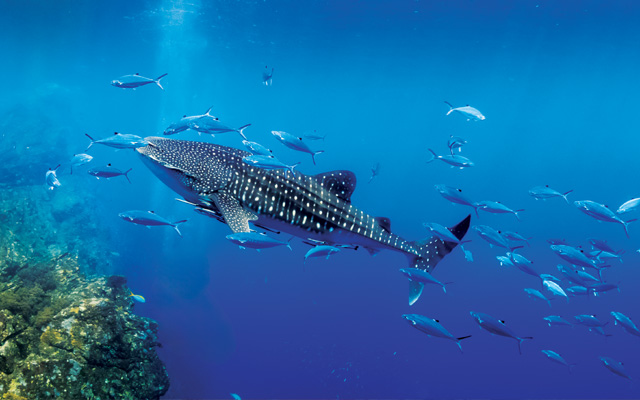
Better conditions for whale shark in the Maldives
Better protectors of whale sharks The Maldives’ government has updated its marine conservation regulations to enhance the experience for tourists interacting with whale sharks in the destination while safeguarding the vital ecosystem that supports whale sharks in their natural habitat.
Key provisions include maintaining a minimum distance of three metres from the body and four metres from the tail of whale sharks. Touching or swimming alongside them while holding on is strictly prohibited.
Additionally, interactions must be approached calmly and quietly, with movement limited to the sides of the whale sharks to avoid chasing or obstructing their natural path.
The regulation prohibits feeding whale sharks and restricts the use of flash photography, selfie sticks, and bright lights during interactions. Aerial photography guidelines dictate that drones must be operated at least 30m above sea level and within the operator’s line of sight. It also designates a 250m contact zone around whale sharks, allowing only three vessels at a time, enforcing a speed limit of five knots per hour, and reducing to two knots within 50m of the whale shark.
Furthermore, the government has enforced propeller guards on all excursion boats touring areas beyond South-Ari Marine Park (SAMPA), where whale shark activity is observed. SAMPA is a world-renowned for having whale shark sightings all year round.
Special speedboats patrol areas with whale shark activity to monitor vessels that take tourists to these sites.
Prior to these regulatory updates, minister of climate change, environment, and energy, Thoriq Ibrahim, said more than 100 tourists would swim after a single whale shark.
“(There was) no set policy – even speedboats ventured into this area,” he stated.
“By mandating propeller guards, we are taking a significant step towards ensuring the safety of both whale sharks and those who admire them. This measure reflects our commitment to sustainable tourism and the preservation of our marine environment,” added Ibrahim Shiuree, CEO and managing director of Visit Maldives.
Emergency protocols are also established for vessels now, ensuring that whale sharks are not obstructed or disturbed during their natural behaviours.
In the event of encountering an injured or entangled whale shark, the regulation provides clear directives to follow, including notifying the Environment Protection Agency and ensuring the whale shark’s safe release. – Karen Yue
A greener island Sentosa Development Corporation (SDC), which oversees the development, management, marketing, and promotion of Singapore’s resort destination Sentosa, attained the gold standard for sustainable tourism, the GSTC Destination Criteria (GSTC-D) of the Global Sustainable Tourism Council (GSTC), in 2022.
While this certification has a three-year lifespan, SDC has chosen to undergo comprehensive annual external audit to ensure that all criteria of the certification are met and maintained. It also regularly shares sustainability best practices and updates with members of the Sentosa Carbon Neutral Network (SCNN), a gathering of island businesses that work together on crucial impact projects, such as decarbonisation and curation of sustainable offerings and experiences, aimed at carbon neutrality by 2030.
Kelly Yoong, divisional director, corporate planning & development, SDC, said: “SDC recognises the transformative power of partnership and collective action in driving meaningful sustainability initiatives. The SCNN has become the key collaboration platform to galvanise sustainability actions on the island, such as the implementation of Sentosa Disposables Policy, Sentosa’s Solarisation Programme, and Sentosa Cares Week. By bringing on board businesses on the island and other industry players, SDC has been able to further hasten adoption and amplify the impact of its initiatives.”
These sustainability efforts are not only kept backstage. SDC has dedicated webpages to raise awareness of its sustainability initiatives and encourage its guests to Play Well, Eat Well, and Travel Well. A carbon calculator is available for Sentosa guests to track their carbon footprint and make conscious choices to reduce their environmental impact.
Sentosa is committed to continued responsible development, with upcoming initiatives encompassing education initiatives for students, the introduction of electric buses along with the necessary infrastructure to support sustainable transport, and creation of spaces for guests with different abilities.
To further encourage sustainable actions, Sentosa will leverage on technology to reward guests for making environmentally-conscious choices during their stay. – Karen Yue
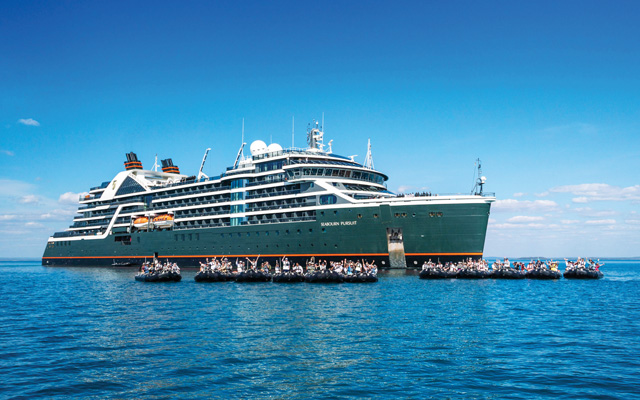
The Wunambal Gaambera Traditional Owners serve as godparents of the new Seabourn Pursuit ultra luxury expedition ship
Seabourn spotlights Kimberley’s Traditional Owners Seabourn Cruise Line has made a landmark contribution to the Wunambal Gaambera Aboriginal Corporation, Traditional Owners of Western Australia’s remote Kimberley region, becoming the first cruise line to name an Aboriginal group as godparents of a ship.
The naming of the Wunambal Gaambera people as godparents of the line’s newest ultra-luxury expedition ship, Seabourn Pursuit, which took place during the ship’s Kimberley voyage in June 2024, marked a symbolic gesture of environmental and cultural stewardship. In practical terms, it supports Wunambal Gaambera’s vision to create a self-sustaining tourism industry.
“It was important to us that our choice of godparent authentically aligned to our brand values and belief in the power of sustainable travel,” said a Seabourn spokesperson. “We’re fiercely committed to safeguarding their heritage for future generations while providing transformational travel experiences.”
Seabourn’s monetary donation, along with funding from Tourism Western Australia and the community’s Uunguu Visitor Pass income, supports the early stages of Ngula Jar Island’s tourism development and contributes to the supply of art materials for year-round commercial arts and craft initiatives for their artists and craft producers.
There are also plans to provide welcome and smoking ceremonies, rock art tours, junba song and dance, as well as art and stories from the Uunguu Rangers looking after the well-being of the country, once Wunambal Gaambera builds more facilities.
“We, the Wunambal Gaambera people, have a communal need and responsibility to look after and prosper from our country,” said Catherine Goonack, chairperson of the Wunambal Gaambera Aboriginal Corporation.
“Seabourn’s monetary contributions assist us to keep our land and sea country healthy, strengthen our Wanjina Wunggurr culture, and create economic opportunities for our people.”
While Seabourn is one of several tour operators cruising the Kimberley coast, it stands out for its public recognition and funding support of Traditional Owners. The cruise line also works with Dambimangari guides on board during its Kimberley voyages, enriching guest experiences with cultural insights.
Seabourn Pursuit now features Ngula Jar Island on all its Kimberley itineraries, ensuring regular visitation and cultural exchange. – Adelaine Ng
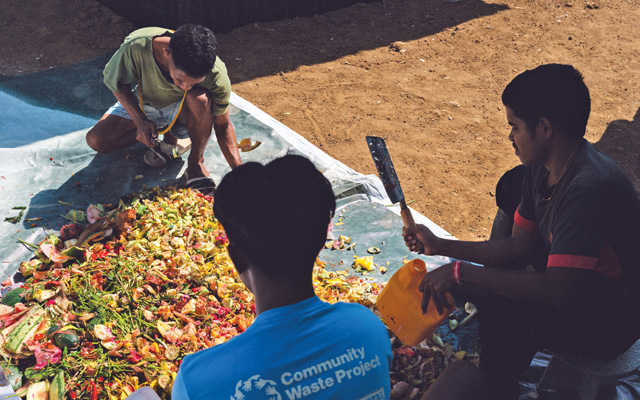
Waste management gets specific attention in Bali
Bali cleans up
A group of businesses in Bali, Indonesia have joined hands to form the Community Waste Project (CWP) last October, an initiative aimed at drastically reducing the island’s landfill waste and setting a new standard for sustainability in the country.
Waste management is particularly serious in Bali, where 1.6 million tonnes of trash is produced each year, including 330,000 tonnes of plastic waste. Hotels and businesses are estimated to contribute around 13 per cent of Bali’s total waste, much of which ends up in landfills.
Due to ineffective waste management, 52 per cent of Bali’s waste is mismanaged and significant amounts of it wind up in rivers and ultimately the ocean, threatening Bali’s ecosystem, the livelihood of its communities, and the tourism industry.
Spearheaded by Mexicola Group, Potato Head Family, and Total Bangun Persada in collaboration with Brunch Club, Finns, Kynd, Lemongrass, and Peppers Seminyak, a 2,000m² waste facility has opened adjacent to Bali’s largest landfill, Suwung, in Denpasar.
CWP creates a sustainable model for Indonesia’s hospitality sector, reducing environmental impact while transforming waste into valuable products for the industry.
With an initial investment of US$400,000, CWP processes organic, inorganic, and garden waste through advanced sorting, composting, recycling, and upcycling methods. By turning waste into practical products for the hospitality industry, such as compost and upcycled plastic panels, the facility aims to create a circular economy model that benefits both the environment and local businesses. – Mimi Hudoyo





 Yong has experience in the hospitality industry, including eight years at Mitchell Corporation, where he was involved in business development and client relations. He has also worked in real estate and duty-free management.