TTG Asia
Asia/Singapore Thursday, 2nd April 2026
Page 11

Asian carriers cancel flights, implement surcharges as fuel crisis intensifies

0

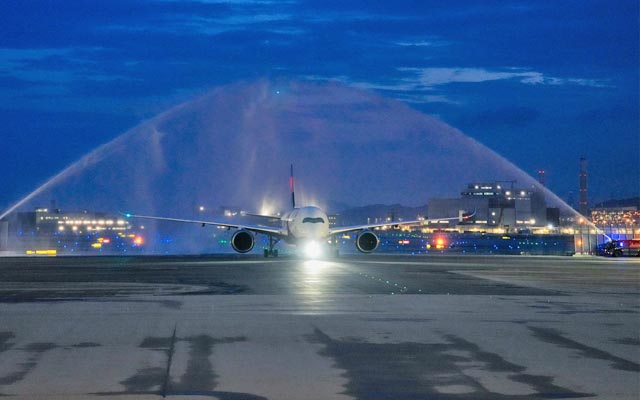
Airlines across the Asia-Pacific region have moved into an emergency defensive posture this week, implementing a wave of flight cancellations, steep fare hikes, and phased fuel surcharges.

The drastic measures come as the US-Israel-Iran conflict sends jet fuel prices toward a staggering US$200 per barrel, nearly tripling costs from earlier this year. Aviation fuel currently accounts for up to 40 per cent of an airline’s operating expenses.

Surging fuel prices are forcing airlines to adjust their flight schedules and raise fuel surcharges

Air New Zealand has taken the most aggressive action to date, announcing the cancellation of approximately 1,100 flights – roughly five per cent of its total schedule – through early May. The cuts primarily target off-peak domestic rotations to consolidate fuel use, affecting an estimated 44,000 passengers. The carrier has also implemented immediate fare increases, adding NZ$10 to domestic tickets and up to NZ$90 (US$52) for longhaul services. While the airline is heavily hedged against crude oil, it remains exposed to the cost of refining oil into jet fuel, which has spiked from US$22 to over US$115 per barrel in mere days.

Air India and Air India Express have introduced a three-phase surcharge expansion to combat rising costs and high domestic taxes. Starting March 12, a new Rs 399 (US$4.30) fee applies to all domestic routes, while surcharges to South-east Asia have risen to between US$40 and US$60. A second phase on March 18 will see longhaul surcharges jump to US$125 for Europe and US$200 for North America and Australia, with further adjustments for Hong Kong and Japan expected shortly.

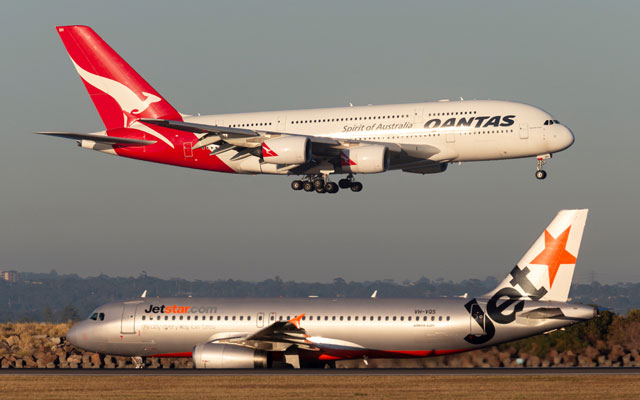
Both Cathay Pacific and Qantas are raising international fares while shifting capacity toward Europe. As travellers avoid Middle Eastern transit hubs, Qantas reported that its European flights are reaching over 90 per cent capacity. Cathay Pacific has suspended flights to Dubai and Riyadh through March, but is adding frequencies to London and Zurich to meet redirected demand. Qantas has flagged a general fare increase of approximately five per cent, warning that some routes may become uneconomical if prices stay at US$200 per barrel.

Across the rest of the region, Malaysia Airlines, Firefly, and Batik Air is set to implement phased rollouts of surcharges. Malaysia Airlines has extended the temporary suspension of its Doha services until March 20, but all other services including Jeddah Madinah, London and Paris continue to operate as scheduled. Malaysia Airlines is also increasing widebody capacity between Asia and Europe to support onward journeys, with flights operating on alternative routes that avoid affected regions.

Vietnam Airlines and VietJet have seen operating costs jump 60 to 70 per cent, leading the former to petition the government for waivers off environment taxes on jet fuel to remain viable.

Over in South Korea, Korean Air has entered discussions regarding significant increases to fuel surcharges for April. Surcharges for longhaul routes like Incheon–New York could triple, potentially reaching 325,000 won (US$220) per ticket.

Singapore Airlines (SIA) and its budget subsidiary Scoot have extended the suspension of their Middle East services. SIA flights between Singapore and Dubai are now cancelled through March 28, while Scoot has suspended its Jeddah services until March 17 at the earliest.

SIA is regarded as having one of the more robust fuel hedging programmes, providing some protection against the refined jet fuel price surge. TTG Asia has reached out to SIA for comments on potential network-wide surcharges, but a response was not provided at press time.

Middle East flight disruptions slow wellness travel to India

0

With the US-Iran conflict intensifying, its impact is increasingly being felt on inbound wellness travel from the Middle East to India. The tensions have disrupted international flight connectivity between the region and India, leading to cancellations, rerouted services and uncertainty in travel schedules.

Abhilash Ramesh, executive director of Kairali Ayurvedic Group, shared: “We regularly receive guests from the Middle East, with the UAE accounting for the largest share, followed by Jordan, Syria and Saudi Arabia. Over the next two weeks, we were expecting eight arrivals, three directly from the Middle East and five travelling via the region. While the three guests arriving directly from the Middle East have cancelled their trips, those travelling via the region may still reroute their journeys. Their plans are currently uncertain, and we are awaiting final communication from them.”

India’s Ayurvedic wellness retreats are monitoring travel disruptions as Middle Eastern arrivals face flight uncertainty

Ramesh also expects future enquiries to be affected due to travel restrictions, higher airfares and the limited availability of flights.

Sandeep Arora, director of Brightsun Travel, noted: “Yes, there has been a slight short-term impact on wellness bookings due to travel uncertainty and flight disruptions in the Middle East region. Some international travellers are postponing or reviewing their travel plans. However, interest in wellness retreats in India remains strong, especially from domestic travellers and neighbouring Asian markets.”

The Middle East has also been one of the most consistent source regions for India’s medical travel sector for many years. Patients from markets such as the UAE, Oman, Iraq, Iran, Saudi Arabia and Yemen have traditionally travelled to India for specialised treatments, particularly in areas such as cardiology, oncology, orthopaedics and complex surgeries. However, industry stakeholders say the segment remains relatively insulated from the current geopolitical developments.

“In medical travel, demand tends to behave differently from leisure tourism during periods of geopolitical uncertainty. In situations like the current tensions in the region, what we typically observe is a short-term pause or adjustment in travel timelines rather than a sharp drop in demand. Patients planning elective procedures may wait briefly until the situation becomes clearer, but those requiring treatment generally proceed once logistics such as flights and visas remain workable,” said Ishaan Dodhiwala, co-founder of Medijourn Solutions.

Singapore Tourism Board, Scoot unveil campaign reimagining the Merlion

0

The Singapore Tourism Board (STB) and Scoot have rolled out the third edition of the Singapore Superfans campaign, using the Merlion as the central character to promote travel to Singapore across several markets.

The campaign presents the Merlion as a character encouraging visitors to explore parts of the city beyond its most recognisable landmarks. Scoot supports the campaign by promoting travel to Singapore from its regional markets.

The Merlion takes centre stage in the latest Singapore Superfans campaign by Scoot and STB

The Singapore Superfans film takes the form of a rock-inspired music video directed by Singaporean filmmaker Peggy Goh, with music produced by Bumblebeat. In the film, the Merlion steps out of its usual role as a landmark and becomes the central figure encouraging travellers to discover the city from new perspectives.

Content linked to Singapore Superfans will appear on social media platforms including Instagram, Red Note and TikTok. The campaign also invites audiences to participate in an ongoing narrative through user-generated content.

The initiative aligns with STB’s broader We Don’t Wait For Fun campaign, which targets travellers aged 25 to 39 who seek spontaneous and culturally immersive experiences.

The campaign will run in Australia, China, India, Indonesia and Malaysia from March 12, 2026. It includes a creator-led social media challenge titled #MerlionMadeMeDoIt, in which key opinion leaders from each market invite audiences to suggest new photo locations in Singapore beyond the Merlion.

Selected entries will receive trips to Singapore valued at up to S$3,500 (US$2,600), including flights, accommodation and curated experiences.

Following the social media activation, Scoot will offer promotional fares to Singapore from March 20 to March 27, 2026 in the participating markets.

“Travellers today are looking for experiences that feel personal, expressive and connected to culture, rather than being postcard perfect. This campaign reflects that shift by reimagining a familiar icon as an active character people can engage with and respond to,” said Calvin Chan, chief commercial officer of Scoot.

“For early-career travellers in particular, fun doesn’t wait for perfect plans or ideal moments. Fun starts when curiosity strikes,” added John Conceicao, executive director of marketing partnerships, planning and capability development at STB.

Malaysia expands halal tourism strategy into spa and wellness sector

0

Malaysia has taken a strategic step to extend its leadership in the global halal ecosystem into the spa and wellness sector, with the recent signing of a memorandum of understanding (MoU) between the Islamic Tourism Centre (ITC) and the Association of Malaysian Spas (AMSPA) at ITB Berlin.

The collaboration will see ITC roll out a structured Muslim-Friendly Spa Guideline and Training Programme to 100 AMSPA members through dedicated training modules, capacity-building programmes and a formal recognition framework.

Malaysia’s Islamic Tourism Centre and the Association of Malaysian Spas sign an agreement at ITB Berlin to introduce Muslim-friendly spa guidelines and training for industry operators

A press release jointly issued by ITC and AMSPA stated: “The programme is conceived to introduce authentic Malaysian spa and wellness offerings to attract more tourists to Malaysia in conjunction with the Visit Malaysia 2026 campaign.

“It also signals Malaysia’s intent to strengthen standards within the halal wellness segment while positioning the country as a reference point for destinations seeking to tap into the growing Muslim travel market.”

The MoU was signed by ITC director-general Mohammad Faisal Abu Suaib Khan and AMSPA president Selinastein Mohd Rashid. Minister of tourism, arts and culture Tiong King Sing witnessed the signing, signalling his support for the development of Muslim-friendly spa and wellness offerings.

ITC formulated the spa and wellness guidelines jointly with the Islamic Science University of Malaysia and AMSPA, benchmarking them against the SMIIC Halal Spa Standards adopted at the Organisation of Islamic Cooperation level. It forms one of ITC’s key offerings under the Muslim-Friendly Tourism and Hospitality Assurance and Recognition programme, which also includes guidelines for Muslim-friendly tourist accommodation premises and travel operating businesses.

By introducing structured guidelines and training tailored specifically for spa operators, ITC aims to provide clear direction to the industry on service delivery and operational considerations. It also addresses privacy standards and guest experience enhancements that cater to Muslim travellers while remaining inclusive and commercially viable for the wider market.

Mohammad Faisal commented: “This collaboration marks an important milestone in strengthening Malaysia’s halal ecosystem through tourism.

“Wellness and spa services are part of the whole travel experience. By developing practical guidelines and training programmes, we are not only enhancing service quality but also building industry confidence in serving the Muslim market in a structured and professional manner.”

He said tourism plays a unique role within the halal economy as an integrator of multiple sectors.

“When travellers visit a destination, they engage with accommodation, retail, food services, financial services and wellness offerings. Ensuring that these components work cohesively strengthens the overall tourism experience,” he added.

Australia rolls out programme linking school leavers with travel industry jobs

0

A new programme linking school leavers with the travel industry has been launched in Melbourne to address workforce shortages while providing early career opportunities for young people.

The initiative, known as The Travel Gap, was developed through a partnership between employment platform My First Job and the Australian Travel Industry Association (ATIA). Organisers say the programme aims to provide practical exposure to the travel sector before participants commit to further study or career paths.

Participants in The Travel Gap programme during an industry visit with Hostplus as part of the programme’s introduction week in Melbourne

The programme provides a structured 29-week pathway combining paid placements with industry exposure across the travel sector.

Participants undertake four separate six-week placements with different travel businesses while receiving pay for a minimum of 20 hours of work per week. Between placements, participants travel within Australia to gain broader exposure to the sector.

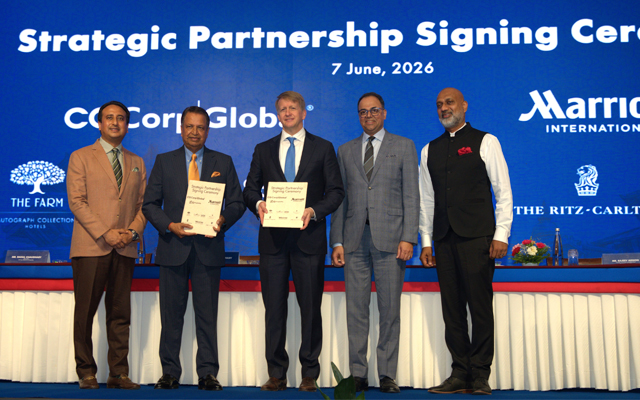
Virgin Australia has joined the programme as domestic airline partner, supporting travel between placements. Accommodation during the launch week in Melbourne was provided by Ascott’s lyf Collingwood, while Marriott hotels supported education sessions with meeting facilities.

The first group of participants completed an introduction week in Melbourne that included industry sessions and attendance at Entire Travel Group’s Travel Showcase & Soirée. The programme also includes sessions with companies such as Amadeus, Cover-More, CHT, Hostplus and Birdseye Consulting.

Over the next six months, participants will undertake placements with companies including Sonia Jones Travel, Connections Travel Group, Clean Cruising, RAA, CTM, Platinum Travel Group and Intrepid Travel.

“At My First Job, we focus on what happens before and beyond the hire. The first job isn’t the first step in a career – it’s the first step into the world of work. The Travel Gap gives young people a supported way to build confidence, understand expectations, and discover the range of roles travel can offer, while helping employers welcome and develop emerging talent,” said Cass Champion, founder of My First Job.

“Travel is one of Australia’s most dynamic service industries, but we need to do a better job of showing the next generation what’s possible. The Travel Gap helps make travel ‘real’ through structured, paid opportunities, practical learning and direct access to the people and businesses that power this sector,” added Dean Long, CEO of ATIA.

StarCruises launches five-night Hong Kong cruises to Okinawa, Vietnam and Sanya

0

StarCruises will introduce three five-night cruises from Hong Kong in 2026 aboard Star Voyager, expanding its regional itineraries to Japan, Vietnam and Sanya.

The sailings include two Okinawa Adventure cruises and one Enchanting Vietnam & Sanya Cruise. The Okinawa itineraries depart March 22, 2026 to Miyakojima and Naha, and May 3, 2026 to Ishigaki and Naha. The Vietnam and Sanya sailing departs April 26, 2026, calling at Halong Bay, Danang and Sanya.

Star Voyager will operate new five-night cruises from Hong Kong in 2026, calling at Okinawa in Japan, Halong Bay and Danang in Vietnam, and Sanya in China

The new cruises complement StarCruises’ existing short sailings from Hong Kong, which include two-night cruises to Xiamen or the high seas and three-night cruises to Sanya.

Passengers on the Okinawa cruises can visit coastal areas in Miyakojima and explore Naha, including sites such as Shurijo Castle. The Vietnam and Sanya itinerary includes stops at Halong Bay, known for its limestone formations, the coastal city of Danang and the resort destination of Sanya.

StarCruises continues to offer short cruises from Hong Kong, including the three-night Tropical Escape to Sanya departing Sundays, the two-night Cultural Discovery Cruise: Xiamen departing Wednesdays, and the two-night Weekend Sea Breeze Cruise departing Fridays.

Bookings for the two- and three-night cruises are open through travel agents and online. Reservations for the three new five-night cruises open from March 13, 2026.

For more information, visit Star Cruises.

Satair appoints new Asia-Pacific and China leaders

0

Satair has made three leadership appointments in Asia-Pacific and China, naming Andy Lee as managing director of Asia-Pacific, Liu Bo as managing director of Satair China and Mingyang Chen as general manager of Satair Chengdu.

Lee assumed the role on January 1, 2026, after previously serving as managing director of Satair China, where he led market growth and capability development. He succeeds Rene Frandsen, who has moved into a strategic advisory role.

From left: Andy Lee, Liu Bo and Mingyang Chen

Liu will take over as managing director of Satair China on June 1, 2026. He joins from Airbus, where he spent 14 years in roles across France and China covering engineering, procurement and programme management.

Chen was appointed general manager of Satair Chengdu in November 2025. The entity supports the company’s expansion of used serviceable material activities and strengthens local operations in the region.

The airline guy

0

You led AAPA as director general since 2020. How would you describe your journey with the association, and what accomplishments are you proudest of?
2020 was a critical year (due to the Covid-19 pandemic and lockdown of international borders) not only for the airline industry but for the whole world. When I took over the director general position at AAPA in 2020, the airlines were not doing well. Many were downsizing and considering retrenchments.

I think the most important thing then was to help the airlines go through the crisis. As an association, AAPA would face an existential threat if our members did not do well. So, I am very glad that we were able to ride that storm and come out on the other side in good shape and with our membership intact. Our airlines started to thrive within a matter of a year, which was a big achievement.

There is no better indication of this than the expansion of the association. We were 13 airlines then, and now 18. This provides a lot of satisfaction to me and the association.

The second achievement is being able to get our airlines together and commit to an aspirational goal of five per cent SAF (sustainable aviation fuel) usage by 2030. This is a big achievement because there is only one other trade association among airlines that is committed to a similar goal, and that is the Airlines for America. AAPA had to convince all our airline CEOs to move together on sustainability. That sent a demand signal to the fossil fuel majors to start producing SAF. It was also a signal to governments that we need policy and regulatory support to achieve our sustainability goal.

And now you are stepping down from your leadership role at AAPA at another critical juncture – amid the Middle East crisis. How do you hope the travel industry as well as your aviation industry colleagues will pull through? Are there lessons that they can take from the last crisis?
I joined AAPA in March 2020, after retiring from Singapore Airlines in December 2019. Now, I am retiring from AAPA, and there’s another major crisis.

This is not a good development for the industry. And in some ways, I think it is a more troubling crisis (than the pandemic). At the AAPA Assembly of Presidents last year, I identified two challenges that could stymie the ongoing development of the airline industry.

One is supply chain; the other is airspace closures due to conflict.

It is ominous that the second has happened so early in the new year.

This is a major conflict. The affected airspace is very critical for the airline industry because it is needed for overflights to the Western world from Asia-Pacific. At the same time, the Gulf region is a hugely developing region.

Well, you know, this industry has seen many crises and I have a lot of faith in the leaders of this industry, especially the CEOs, to be able to pull through.

The governments in Asia-Pacific realised during the pandemic how important the airline industry is. The governments here are very supportive compared to the west; they ensured very few retrenchments in the aviation industry during the pandemic because they wanted to make sure that when the borders reopen, there will be a healthy airline industry to support the economy.

So, from that point of view, with government support and the ability of airline CEOs and leadership in our region, I am hopeful that the industry will pull through in spite of this major crisis.

You have also been an airline guy through the decades, serving Singapore Airlines and SilkAir. What are the topmost memories – good and bad – you have from your career?
Well, most of them have been good. I’ve been very lucky to be part of this industry. It was always my dream to work for Singapore Airlines, and I did many enjoyable and meaningful things in the company.

The one thing that really stands out is my time at SilkAir. It isn’t around anymore, but during its existence, it was probably the best regional airline in Asia.

Leading SilkAir was a very enjoyable experience. Although we went through SARS (the outbreak lasted from 2002 to 2004), SilkAir was on expansion mode most of the time. It was a relatively small airline, so we were on a first-name basis with everyone. Everybody just chipped in to do what was necessary. Furthermore, I am a big fan of Asia, and my job allowed me to promote travel to the region.

Growing up, I have seen how people regarded an aviation career as a prestigious one, whether it is the job of a pilot or an officer at the airport. Does the industry still draw starry-eyed romantics these day, after having gone through several travel crises? How are such sentiments affecting the workforce and hiring exercises?
This is a good question. When the pandemic happened, the airline industry was most affected by the border closures. We thought that the airline industry would no longer be regarded as well by new entrants. But when the borders reopened, and we were trying to recruit people to build up resources, we had people flocking to the airline interviews.

I think it is still an aspirational job for many new graduates and job-seekers. One reason for this is that the airline industry is really focused on technology. When the Boeing 747 was introduced in 1969, everyone thought, ‘Oh my, this is the biggest deal that we have ever had!’. Then in the 1990s, Airbus came up with the A380, which was an even bigger deal.

So, technology has always been at the forefront of this industry. I always tell my colleagues that we are talking about SAF and things like that, but nothing would be better than if this industry could come up with an aircraft that could cut emissions by 50 per cent. This is actually within our means because this industry has got some of the best people in technology. This technology pursuit is attractive for young people – it shows that technology advancement is not only about AI and big tech.

What advice would you give to anyone looking to establish their career in aviation?
The best advice is to keep your eyes and options open. The airline industry has a few unique features. If you go into the Singapore Airlines canteen, you can easily find several people who have been with the company or the airline industry for more than 10 years. People tend to stay in this industry.

New joiners should tap into this, learn from the experts, but also not be tied down by the old ways. New people bring new perspectives, which will take the industry to the next level.

I think the airline industry needs to be modernised, especially in the area of gender equality. It continues to be male dominated, and it is taking a long time to reverse inequality in the industry. I hope that we can change with the new generation. Just imagine if we had more female pilots – we would not be so resource-constrained as we are now.

What challenges lie ahead for your member airlines and your industry colleagues?
The airline industry’s biggest challenge is that governments take it for granted. In general, the airline industry does not get a lot of help from governments. During the pandemic, governments just closed down the borders and expected airlines to know how to take care of themselves.

Not enough governments pay heed to the airline industry and recognise their contribution to socio-economic development.

Now, with this war and the closure of airspace, people are stranded abroad. Look at who is making arrangements to bring all these stranded people home – it is the airlines.

It is good to see Singapore sending military resources to bring back people stranded in the Middle East. More governments should consider doing the same because airlines and their crew are already very stressed by the situation in the Middle East. Governments should take some of that burden off the airlines. We are a very important industry, and I think it is time that governments pay attention to how their decisions can damage world citizens.

Do you think governments expect airlines to be able to deal with disruptions themselves because of the huge profits major airlines post every year?
Actually, airlines don’t make that much profit anymore. In 2025, profit margins are estimated to be about 3.4 per cent. With how things are going in 2026, we will be lucky to even hit three per cent.

People who really make huge profits are the oil and gas people, and the aviation manufacturers. Yet, the airline industry is the one that faces many of the crises.

I think that governments take this hands-off approach because the airline industry is quite united. We are able to devise solutions to problems, and have demonstrated our ability to go through crisis after crisis.

Look at the United Nations. There is the International Civil Aviation Organization (ICAO) within, and it is responsible for managing the administration and governance of international air navigation. Governments may think that with ICAO, we will be able to find our way through the crisis.

However, there are things that ICAO and airlines are not equipped to do. For example, we cannot keep tabs on intelligence during times of conflict. We need governments to be more understanding.

Last question, are you truly retiring now?
Well, this time, I really am. I will be moving to Australia where my family is. In my 35 years with Singapore Airlines, 21 of those years were spent overseas. I spent a lot of time away from the family. Now, I would like to spend more time with them.

Of course, I will never lose my interest in aviation. It’s always been a life’s passion, but I want to start taking interest in other things and do all that I was unable to do because of my work.

There are still a lot of places that I’ve not been to. There is nothing like travelling for pleasure. My wife is retired and I have three older brothers in Australia who are also waiting for me to retire, so that we can travel together.

I am not a spring chicken anymore. I want to do all these things while I am still fit as a fiddle.

South Asian destinations draw rising interest from Indonesian travellers

0

South Asian destinations are attracting increasing interest from Indonesian outbound travellers as demand shifts towards experience-led journeys and lesser-known locations.

Industry participants at the 43rd TTC Travel Mart in Jakarta said countries such as India, Sri Lanka, Bhutan and Nepal are gaining attention among both leisure travellers and corporate groups.

Bhutan, Nepal and India are seeing growing interest from Indonesian outbound travellers seeking cultural and nature-based experiences; photo by Dhini Oktavianti

Suneet Goenka, managing director of UAE-based Red Apple Travel, told TTG Asia that India continues to draw Indonesian leisure travellers, while Sri Lanka shows stronger potential for high-end MICE groups.

He noted that shopping and film tourism are key attractions for Indonesians visiting India. “India is very strong for textiles, clothing and jewellery shopping, and travellers also like visiting Bollywood shooting locations.”

Sri Lanka’s appeal, he added, centres on Colombo, Kandy and Bentota, which offer a mix of cultural attractions, hill country landscapes and beaches.

San Ni, Indonesian sales representative for MAGADH Travels & Tours, said Indonesian travel demand to South Asia currently leans more towards incentive travel and Buddhist pilgrimage.

“Leisure exists, but we see more incentive movements and temple-based pilgrimage. For incentive programmes to India, activities are still largely centred on sightseeing rather than technical visits,” she noted.

Outbound agents in Indonesia also report growing interest in Bhutan and Nepal. Yento Chen, CEO of Destination Tours Indonesia, said Bhutan currently leads the trend, followed by Nepal, Pakistan and the Maldives.

According to Chen, around 80 per cent of clients travelling to Bhutan choose luxury lodges such as Amankora and combine their stays with trekking and cultural excursions. In Nepal, demand for luxury travel is driven by Himalayan mountain flights and helicopter sightseeing.

The Maldives continues to attract couples travelling independently, while Pakistan sees seasonal leisure interest linked to landscapes in Hunza and Skardu.

Golden Rama Tours & Travel said India, Nepal and Bhutan are gaining attention for their cultural heritage and scenery.

Taj Mahal and Kashmir remain primary drivers for India, while Bhutan’s preserved cliffside monasteries offer a distinct appeal, shared Ricky Hilton, general manager of communication at Golden Rama Tours & Travel.

Industry players noted that limited air connectivity and hotel capacity constraints, particularly in Bhutan during peak periods, remain challenges for further growth. Agencies are responding by increasing market education on safety and travel infrastructure while promoting lesser-known destinations in the region.

Gardens by the Bay plans new five-hectare wetlands precinct with teamLab museum

0

Gardens by the Bay will develop a new space known as Wetlands by the Bay, a five-hectare precinct that will extend the existing Kingfisher Wetlands along the waterfront promenade near Gardens by the Bay MRT station.

The project will include a museum by international art collective teamLab featuring a multi-sensory experience that moves between indoor galleries and the surrounding landscape, allowing visitors to explore freshwater wetland habitats.

An artist’s impression of the upcoming teamLab museum at Wetlands by the Bay; photo by Gardens by the Bay

A cantilevered canopy boardwalk will extend above Kingfisher Wetlands, providing an elevated link between Gardens by the Bay MRT station and Bay South Garden’s main attractions. The pathway will allow visitors to move across the wetland area while offering views over the water and surrounding greenery. A new open space known as Glade Lawn will also host community activities.

Construction of Wetlands by the Bay is scheduled to begin in 1Q2027, with progressive opening expected by the end of 2028.

The project will complement the redevelopment of Bay East Garden, which is scheduled to open in 2027, with the Founders’ Memorial due to open in 2028. A new bridge linking Bay South Garden and Bay East Garden will provide access between the two areas and offer views of the Marina Reservoir and surrounding waterfront. Construction of the bridge is expected to begin in 2Q2026 and be completed in 2028.

Wetlands by the Bay will include more than 600 mangroves and coastal plants, three times the number currently found at the Kingfisher Wetlands precinct. In total, more than 50,000 plants are planned for the area, including species collected from equatorial regions such as Ecuador, Costa Rica, Sri Lanka and Timor-Leste.

The development will also include a 3,500m² Glade Lawn for events and community activities and an open garden of more than 8,000m² designed to support pollinators.

The teamLab museum will occupy a 12,000m² site and include indoor and outdoor installations. Visitors will also be able to travel along a controlled waterway using pedal kayaks as part of the experience.

“Wetlands by the Bay will strengthen Gardens by the Bay’s reputation as a must-visit destination in Singapore where people can enjoy one-of-a-kind nature-based experiences. Together with the upcoming Bay South-Bay East bridge, these new additions to the Marina Bay area contribute to a prime waterfront experience and are another step forward in Singapore’s City in Nature vision,” said Felix Loh, CEO of Gardens by the Bay.