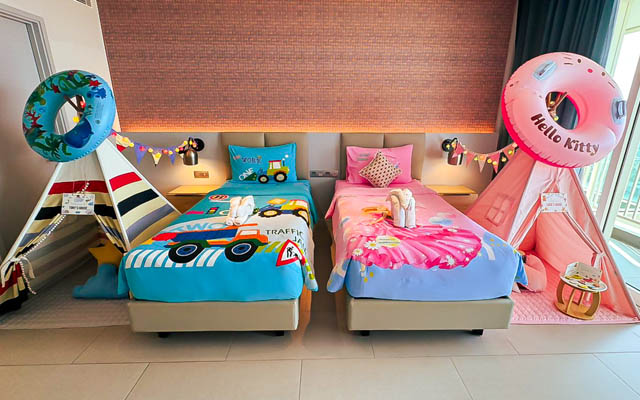
Alma Resort Cam Ranh has launched new kids’ themed rooms, adding colourful, personalised touches to its suites and pavilions to create a more engaging stay for young guests.
The themed set-ups are available as optional add-ons for both boys and girls, and feature welcome cards, decorated tents, cookies, bedding, towel art, and a float for use in the private or resort pools.
Personalised kids’ themed rooms add a playful touch to family stays at Alma Resort Cam Ranh
The themed rooms are priced at 600,000 dong (US$24) for the first night and 300,000 dong for each additional night.
The offering complements Alma’s existing family-friendly facilities, which include a science museum, kids and youth clubs, a cinema, and a 6,000m² water park.
Additional activities range from food workshops and kite-flying to virtual reality golf. A Little Hotelier tour also offers children a look behind the scenes of resort operations, including stops at the engineering, laundry, and pastry departments.
The Ritz-Carlton Maldives, Fari Islands has appointed Oscar Postma as general manager. He brings more than 25 years of experience in luxury hospitality across Asia, Europe and the US.
In his new role, Postma will lead all areas of resort operations and service delivery, working with the team to maintain the brand’s standards and enhance the guest experience.
He was most recently cluster operations general manager for Conrad Singapore Orchard and Conrad Centennial Singapore. He also served as general manager at Regent Singapore, where he led the hotel through a brand transition and achieved record food and beverage results.
Sabre has appointed Maneesh Jaikrishna as vice president and general manager, airline IT solutions, Asia Pacific.
With nearly 30 years of experience in airline and travel technology, Jaikrishna will lead Sabre’s airline IT operations across the region. He will focus on expanding Sabre’s presence in Asia-Pacific, driving the adoption of its technology solutions, and strengthening customer partnerships.
He has held senior roles at SITA and Vision-Box, and brings experience from both Asia-Pacificand wider markets including the Middle East and Africa.
TRAppe, a new travel platform focused on curated, lifestyle-forward sustainable travel experiences, is set to launch on June 17. The platform targets travellers who value sustainability but are frustrated by greenwashing and aggressive eco-marketing.
Gabriella Yan, solo founder of TRAppe, told TTG Asia: “Too many brands have either used sustainability as a buzzword or pushed it too hard, which created a negative reaction from consumers. This approach made people turn away instead of fostering genuine interest.”
Yan: we’ve tailored our criteria to reflect what matters most in each destination
TRAppe aims to bridge the gap between travellers’ desire for conscious choices and the fragmented, often confusing reality of the sustainable tourism market, according to Yan. Her goal is to encourage travellers to make decisions that directly support local communities and cultural integrity, with a strong focus on businesses reflecting genuine local ownership and ethical practices.
“Right now, if you’re looking for sustainable options, you could spend hours sifting through millions of tabs online,” Yan said. “The process is so fragmented and confusing that many give up. TRAppe aims to solve this with curated, verified listings that meet clear, locally relevant sustainability criteria.”
The platform’s initial offering is a digital e-guidebook focused on Bali, featuring more than 100 locally owned, community-minded, and sustainable hotels, restaurants, and tours. This phased launch will allow TRAppe to understand demand and gather insights before evolving into a full booking platform.
On choosing Bali for its launch, Yan shared: “Bali is one of the world’s most popular destinations, and one of the most affected by over-tourism. The island has seen tourism lead to overcrowding, environmental damage, and limited benefits to locals. Yet beneath this surface, there’s a vibrant network of local businesses doing incredible work, whether it’s in eco-tourism, sustainable dining, or community-driven initiatives.
“Since people are already planning to visit Bali, we want to encourage them to make better, more conscious choices in how they discover the island beyond the typical tourist spots.”
Once the model is proven, Yan expects to expand TRAppe to other destinations across South-east Asia within the next 12 to 18 months. Her long-term vision is to create a marketplace where travellers can confidently plan and book their entire journey, knowing they are making ethical and sustainable choices.
Targeting conscious travellers aged 18 to 45, predominantly millennials and Gen Z, TRAppe provides a curated space for those seeking to align their travel with their values.
Yan explained: “They prioritise transparency, authenticity, and aesthetics, desiring meaningful experiences without sacrificing comfort or discovery.”
TRAppe is also a platform for local and independent businesses who share these values but need better visibility.
“We want to connect them with a global audience that appreciates what they offer,” Yan said. “For the businesses, we ensure they meet our sustainability criteria, focusing on their commitment to local communities, environmental responsibility, and fair wages.”
Yan noted that sustainability differs by location. “For instance, in Indonesia, fair employment and cultural preservation are key priorities, whereas in Singapore, environmental sustainability might be more prominent. Many of the current sustainability badges don’t take these local nuances into consideration, which is why we’ve tailored our criteria to reflect what matters most in each destination.”
Verification of businesses involves personal experience, in-destination representatives, and a community-centric feedback loop.
Agoda, in partnership with the Global Sustainable Tourism Council (GSTC), has launched the Sustainable Tourism Academy, a free digital training platform aimed at providing hoteliers in Asia with practical tools and knowledge on sustainability.
The initiative responds to growing demand from travellers seeking sustainable accommodation and seeks to support transformation within the region’s hotel industry.
The new digital platform offers hospitality professionals practical tools to meet growing demand for sustainable travel options
The platform offers tailored content that addresses specific sustainability challenges faced across South-east Asia, with modules available in English, Vietnamese, Malay, Thai, and Indonesian.
Designed for busy hospitality professionals, the self-paced platform includes interactive exercises, case studies, assessments, and discussion boards to engage users. Topics cover how to attract sustainability-focused guests and develop effective sustainability strategies, drawing on examples from hotels throughout Asia.
Upon completing the training, participants receive a certificate jointly issued by GSTC and Agoda, formally recognising their knowledge and skills in sustainable tourism.
The curriculum is based on the GSTC Standard, the global benchmark for sustainability in travel and tourism, and covers sustainable management, socioeconomic, cultural, and environmental impacts. Content was developed by Agoda’s Sustainability Team in collaboration with GSTC and experts.
Damien Pfirsch, chief commercial officer at Agoda, shared: “Through the Sustainable Tourism Academy, Agoda and GSTC are equipping hoteliers to drive meaningful change within the industry. Agoda is committed to scaling up this initiative, and by offering this platform free of charge, we’re making sustainability education accessible, practical, and impactful for everyone in the Asian hospitality sector, from kitchen staff to general managers.”
GSTC CEO Randy Durband, added: “By providing free access to practical, localised sustainability training, GSTC and Agoda are empowering hoteliers to take meaningful steps toward a more sustainable future. This initiative reflects our shared commitment to making sustainability not just an aspiration, but a standard practice across the region.”
The platform launched on May 30 at an event in Bangkok attended by over 100 hospitality professionals, highlighting key trends and challenges in sustainable tourism. The Sustainable Tourism Academy is free and open to all, reflecting Agoda and GSTC’s commitment to advancing sustainability in the travel sector.
Pure at Niseko Village will introduce a new selection of outdoor activities for the 2025 summer season, running from July 1 to October 14.
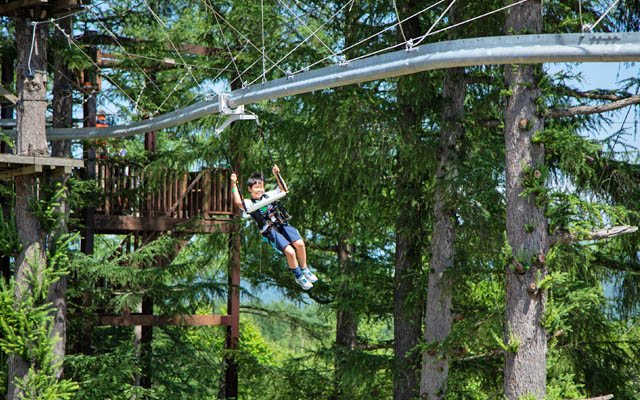
Located in Hokkaido, Japan, and set against the backdrop of Mount Yotei, the seasonal programme will include the launch of the Fuwa-Fuwa Adventure Zone alongside the return of established attractions such as tree trekking, zip-lining, a rail slider, and a controlled free fall.
New attractions at Pure offer outdoor challenges and nature-based play for children and families from July to October 2025
Aimed primarily at families and younger visitors, the expanded offering continues Pure’s development as a summer destination focused on outdoor physical activity.
At the heart of the new Fuwa-Fuwa Adventure Zone is a nature-themed quest for children. Mount Yotei is seeking a new guardian, and participants must complete a series of challenges set by four animal spirits. Success depends on qualities such as courage, agility, and curiosity, with the goal of collecting crystals to earn the title of guardian.
Opening in July 2025, the Fuwa-Fuwa Adventure Zone blends storytelling with physical play. Based on characters from the Niseko Village Kids Club, the course guides children through themed zones designed to encourage coordination, problem-solving, and confidence.
Pure’s Tree Trekking includes two courses suited to both beginners and experienced climbers. Participants navigate suspended bridges, nets, and ropes between tall trees, with professional guidance and safety systems throughout.
A 1.4-kilometre zip-line provides aerial views of the surrounding forested slopes. This guided activity offers a perspective of Niseko’s landscape from above, combined with the sensation of flight.
Pure also hosts Japan’s first Rail Slider. Participants ride a gravity-powered system along rails suspended by wires, with panoramic views of Mount Yotei. The experience merges speed and scenery in a format similar to a roller coaster.
The Quick Jump attraction allows visitors to experience a free fall from a height of seven or 10 metres. A braking mechanism ensures a controlled descent, offering a skydiving-style drop in a secure setting.
Pure continues to expand its summer activities, with the Fuwa-Fuwa Adventure Zone providing new opportunities for families and young visitors to engage with the outdoors during the 2025 season.
Tourism Tasmania has opened applications for its 2025 Winternships programme, offering 10 short-term tourism internships designed to attract visitors during the state’s off season period.
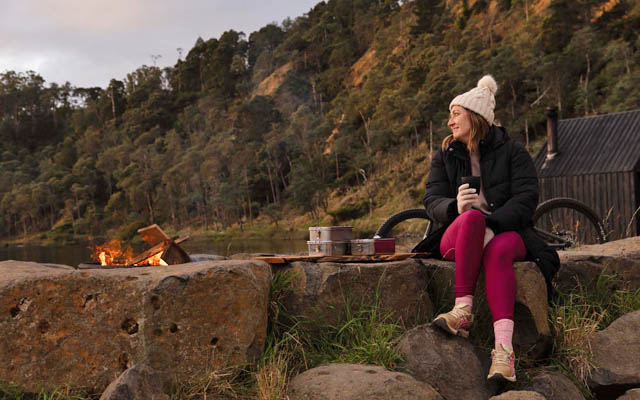
Open to Australians aged 18 and over, the programme includes return travel, accommodation, and a selection of locally made goods. Participants will take part in practical, winter-focused roles with Tasmanian tourism operators, from working in a floating sauna and caring for Tasmanian devils to assisting with farm work and artisan production.
Tourism Tasmania hopes to grow winter visitation by offering immersive, hands-on Winternships that highlight the state’s unique off season experiences
Applications are open until June 17 and require a short written submission of 50 words or fewer explaining why the applicant wants to become a “winter person” in Tasmania.
Each Winternship is hosted by a local operator and offers hands-on experience intended to challenge common attitudes toward winter. Roles include Sauna Skipper at Kuuma Nature Sauna, where participants help maintain a wood-fired sauna on North West Bay; Devil Sitter at Devils@Cradle, supporting the care of nocturnal Tasmanian devils; and Goat Doofer at Hideaway Farmlet, assisting with a small farm-based music event in the town of Penguin. Other placements include Trail Trialler with Blue Derby Pods Ride, involving guided mountain biking; Calf Concierge at Borradale Stanley, helping with new-born livestock care; and Scenic Seat-Warmer at the Cataract Gorge Chairlift in Launceston.
Additional roles include Tunnel to Table Taster at Tunnel Hill Mushrooms, where participants grow and prepare mushrooms in a former railway tunnel; Barrel Butler at McHenry Distillery, working alongside staff at Australia’s southernmost whisky distillery; Fragrance Forager with Undersong Perfumery, helping source and bottle seasonal scents; and Splinter Specialist at the Huon Pine Shop and Creative Paper Tasmania, learning traditional woodworking and paper-making.
The programme is part of a broader campaign by Tourism Tasmania to promote winter tourism and support regional operators through immersive visitor experiences. The Off Season, which runs from May to August, has grown in recent years as a way to encourage travel during Tasmania’s cooler months and expand the tourism calendar beyond summer peaks.
A separate international version of the programme is also being offered to one Singaporean resident and a guest, in partnership with Trip.com. The winners will receive flights, accommodation, and a curated six-night itinerary that includes highlights from the Winternship programme.
Further details and the application form are available on the Discover Tasmania website.
Hotel 101 Global has entered into a joint venture partnership agreement with Horizon Group, naming Horizon as the lead partner for Hotel 101’s expansion into Saudi Arabia.
The agreement outlines a plan to develop up to 10,000 hotel rooms across the country, with an estimated project value of US$2.5 billion. Initial sites have been identified in Medina, Riyadh, Jeddah, Abha and AlUla, with Medina expected to be the first location.
The partnership brings Hotel 101’s condotel concept to the Gulf region
Hotel 101, a brand known for its globally standardised one-room model, aims to offer uniform rooms worldwide. The company positions this standardisation as a way to improve operational efficiency and deliver a consistent experience to travellers, particularly in the value segment. Its asset-light condotel model is structured to scale quickly, allowing for both investor ownership and hotel guest use.
The partnership will combine Hotel 101’s standardised HappyRoom format and condotel funding system with Horizon’s local market knowledge and regional network. Hotel 101 has cited Saudi Arabia’s Vision 2030 as a strategic driver for the expansion and plans to offer properties averaging 500 rooms each to meet anticipated growth in tourism demand.
Hotel 101 global founder Edgar “Injap” Sia II said: “We are inspired by the leaders of Saudi Arabia and their sheer determination and will power to make things happen, as such, we are confident in the plans they have laid out for the region and we believe the Hotel 101 concept will be able to make a significant contribution in terms of room keys to complement the 2030 Vision for the Kingdom, and to form part of our global vision of one million Hotel 101 rooms worldwide.”
“With Hotel 101’s rapid-build model and Horizon’s local know-how, we will add 10,000 quality, affordable rooms across the Kingdom – supporting Vision 2030, creating Saudi jobs, and expanding options for pilgrims, tourists, and business travellers alike,” added Horizon Group CEO Abdulrahman Sharbatly.
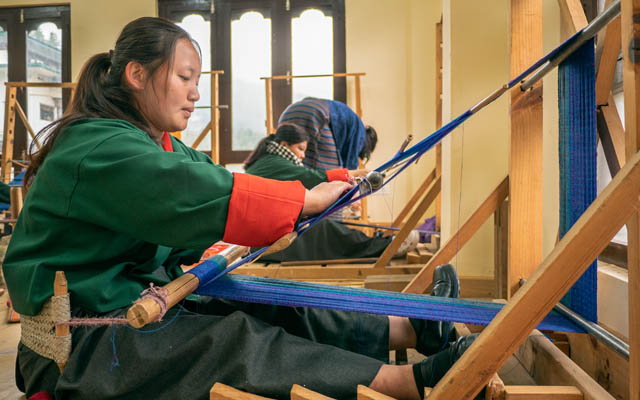
In Bhutan, where spiritual tradition shapes daily life and cultural preservation is a national priority, a new experience invites travellers to go beyond surface sightseeing. Inside a rarely opened 17th-century heritage building, visitors can take part in an immersive, guided journey that explores the country’s living heritage through hands-on workshops, sacred rituals and direct engagement with local artisans.
Curated by the Choki Traditional Art School (CTAS), the programme offers a rare opportunity to actively participate in Bhutan’s artistic and spiritual traditions, rather than observe them from a distance.
A three-hour guided experience offers rare access to Bhutan’s living traditions through art, ritual and craft inside a historic site seldom open to the public
The three-hour programme opens with a butter lamp lighting ceremony before a statue of Guru Rinpoche, an act symbolising peace and spiritual enlightenment. Guests are then introduced to the mission of the art school through a short documentary, followed by a serving of mint tea. CTAS is focused on training young Bhutanese artisans and preserving traditional craftsmanship.
A central part of the visit is a painting session, led by senior students. Participants are guided through traditional methods and are able to take their completed artwork with them. The programme also includes access to a 340-year-old structure, consecrated by Druk Desi Tenzin Rabgye. The building functions as a working museum and cultural site, offering a perspective on Bhutan’s historical and artistic practices.
During the visit, travellers observe artisans at work in various disciplines, including weaving, dyeing, wood carving, bamboo work, thangka painting and sculpting. The adjacent gallery offers a selection of handmade products, with proceeds supporting both the artists and the school’s ongoing work.
The experience concludes with a meal or drink at the CTAS café and restaurant, which overlooks rice terraces, the Wang River and the Changtagang cliff. Both Bhutanese and international dishes are served.
Langham Hospitality Group (LHG) has appointed Kevin Robinson as chief operating officer. Robinson returns to LHG after previously leading The Langham, Chicago during its pre-opening phase in 2011. He has over 30 years of experience in hospitality, including building working relationships with hotel owners internationally.
He will oversee daily operations across the group, support preparations for managing a larger portfolio, and be responsible for future hotel openings.
Robinson’s career includes leadership roles with Westin and Four Seasons Hotels and Resorts, where he gained operational and strategic experience in markets such as Egypt, the Caribbean, and the US.



 He was most recently cluster operations general manager for Conrad Singapore Orchard and Conrad Centennial Singapore. He also served as general manager at Regent Singapore, where he led the hotel through a brand transition and achieved record food and beverage results.







 Robinson’s career includes leadership roles with Westin and Four Seasons Hotels and Resorts, where he gained operational and strategic experience in markets such as Egypt, the Caribbean, and the US.