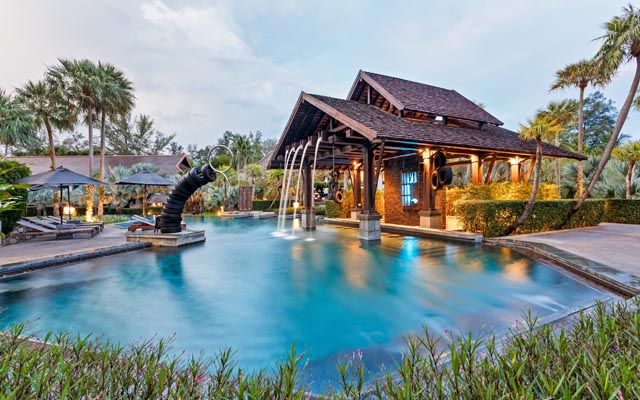
The Slate Phuket is offering the Energy Recharge package for guests to feel rested and restored during their stay.
The four-day Energy Recharge package starts from 30,000 baht (US$877) for a single, and 48,000 baht for a double, and includes daily breakfast, airport transfers, and discounts on wellness and spa treatments.
Guests can feel rested and restored with The Slate Phuket’s Energy Recharge package
There is also an option to extend the package for eight days, which includes additional benefits such as a health and wellness consultation with a doctor, two vitamin infusion therapy sessions, two energy booster shots and three private recreational activity sessions.
Close to Phuket International Airport, the resort offers three swimming pools and a beachfront club, as well as direct access to Nai Yang Beach.
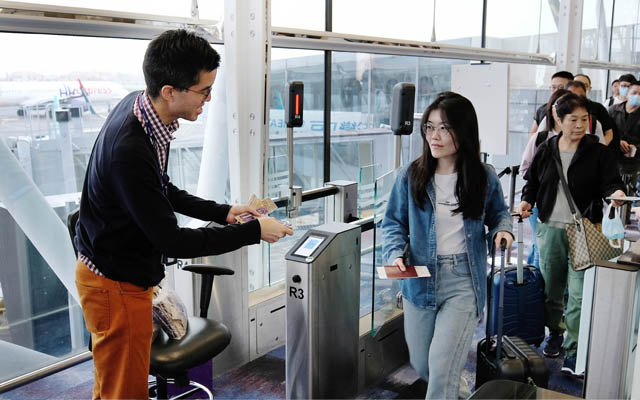
Eleven rural destinations in Japan, from Hokkaido to Okinawa, will receive intensive support this fiscal year to attract more luxury travellers. The move by the Japan Tourism Agency (JTA) is part of efforts to spread the consumption of high net worth inbound travellers, thereby contributing to regional regeneration.
Running from April 2023 to March 2024, this new project will develop 11 model destinations based on five aspects: sales, accommodation, local human resources such as guides, overseas networks such as agents, and transportation.
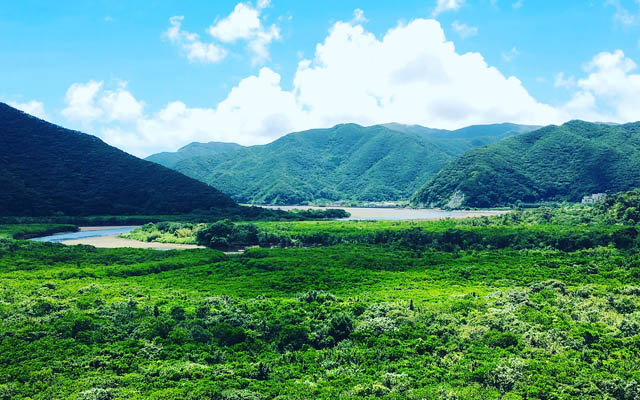
Amami Oshima is one of the 11 model destinations in Japan’s rural areas chosen to attract more luxury travellers
The most northerly destination is eastern Hokkaido, an area renowned for wild open spaces such as Kushiro Marsh, the largest marsh in Japan, and Shiretoko, a World Natural Heritage Site home to rare birds, whales and orcas. In the south, the volcanic regions of Kagoshima, Aso and Unzen (covering Kagoshima, Kumamoto and Nagasaki prefectures) were selected, along with the islands of Okinawa and Amami Oshima, which were named a World Natural Heritage Site in 2021.
Other sites include the mountainous areas of Nara and Wakayama prefectures near Kyoto, the Seto Inland sea area (covering the prefectures of western Honshu and northern Shikoku), and Hokusatsu, an area renowned in Japan for its 400 years of lacquerware history.
The selected areas, which were chosen following a pubic call for applications in August 2022, will be developed into “model tourist destinations offering high-value-added inbound tourist attractions” suitable for international arrivals who spend more than one million yen (US$7,478) per capita during their stay, according to the JTA.
Spending by this group accounted for 11.5 per cent, or 552.3 billion yen, of total expenditure by inbound visitors in 2019, despite the group making up only one per cent (290,000 pax) of all tourist arrivals. However, much of that expenditure was made in Tokyo and Osaka, particularly in shopping, reflecting the concentration of tourism spending in Japan’s urban areas.
Western Australia is literally Walking on a Dream – also the state’s global brand launched in September 2022 – with a record A$14 billion (US$9.3 billion) tourism spend, its highest ever.
Western Australia’s highest-ever injection into the state economy is partly attributed to the strength of the Singaporean outbound market.
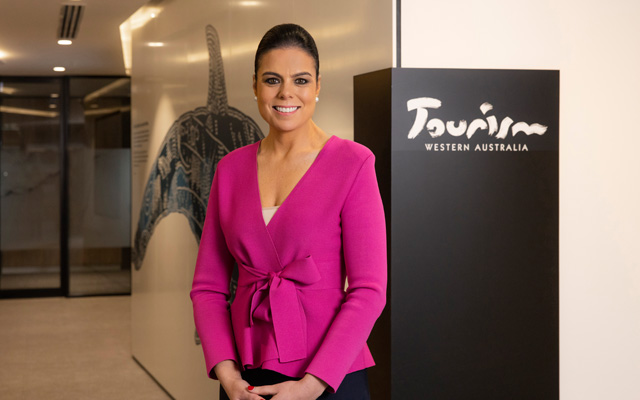
Turnbull: Singapore is a key contributor and influencer in our whole tourism international strategy
In an interview with TTG Asia during the Australian Tourism Exchange, Carolyn Turnbull, managing director, Tourism Western Australia, shared: “Singapore was one of the international markets that the Walking on a Dream brand was launched, and it was well received both by the media and trade partners. The Singapore market has rebounded really strongly, and I see it growing from strength to strength.”
Singapore was the second largest market before the pandemic, and it is staying firm as the second largest market post-lockdown. Meanwhile, travellers from the UK remain the top inbound market, while New Zealand and India take third and fourth place respectively. The India market also saw one of the “strongest recoveries”, Turnbull pointed out, with visitor numbers just five per cent behind pre-Covid levels.
Perth, the gateway to Australia, also benefits from the fact that Singapore’s Changi Airport is a well-connected hub. Turnbull added that the airlift between Singapore and Western Australia is “rebuilding very quickly”, and that “load factors are really strong”.
“We have 11 international markets globally, and whether you’re coming (to Perth) from Europe, London, or India, or even other parts of Asia, Singapore is the most preferred stopover point. Hence, the city-state is a key contributor and influencer in our whole tourism international strategy,” she elaborated.
Furthermore, with China recently scaling back on more Covid-related restrictions and more Chinese starting to travel, Turnbull opined that Singapore will continue to play an important role in connecting Chinese travellers to Western Australia, as there is currently a dearth of direct flights between Perth and China.
She shared that another key market in Asia is Japan, which will be buoyed by the return of ANA’s three-weekly-flights between Perth and Tokyo recommencing in October.
It was also interesting to find out that almost half of the record spend (around A$6.8 billion) was injected into Western Australia’s regions, buoyed by the Walking on a Dream campaign which heroes key regional locations such as the Ningaloo Reef, The Kimberley, and The Pinnacles of Nambung National Park.
Such regional dispersal is aided by escorted campervan tours run by Singapore-based travel agency Chan Brothers, a key distribution partner of Western Australia.
“This is one way of promoting Western Australia. Many Singaporeans have a driver’s license, but many don’t own a car. Plus, you can’t go very far in Singapore. Hence, we are promoting wide open spaces in Western Australia – road trips, caravans, and camping – as a unique experience for Singapore travellers.”
When asked how many tourists Tourism Western Australia is targeting this year, Turnbull said: “We have an ambitious strategy to double our tourism economy over the next 10 years, and it is tracking very well this year.”
She added that it was not all about “mass market numbers”, but ensuring that the state is attracting “high-yielding travellers” who are able to “spend longer and disperse further”, and to “embrace everything that Western Australia has to offer”.
Qatar is looking to target Indian travellers with health and educational tourism as it seeks to maintain momentum with tourism arrivals after hosting the FIFA World Cup.
The country welcomed more than 3.4 million visitors to watch the World Cup in November 2022, with international arrivals continuing to flock to Qatar. According to official figures, 559,063 people arrived by air alone on January 3, marking a 64.4 per cent increase compared to the previous year.
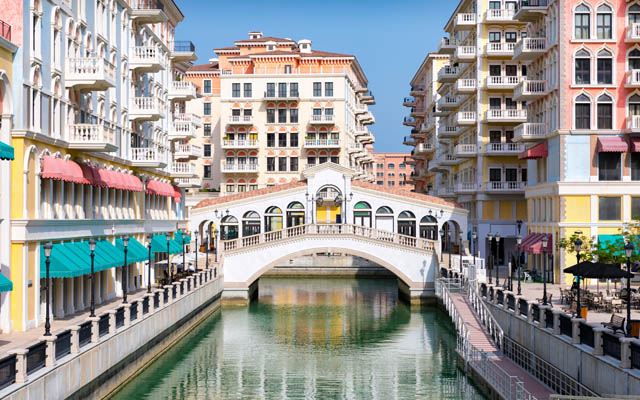
Qatar is targeting the Indian market with health and educational tourism, among other offerings; Qanat Quartier in Doha, pictured
At the Arabian Travel Market, Qatar Airways’ group CEO, Akbar Al Baker, remarked that Qatar remains relatively unknown to the Indian market at the moment, which presents huge potential for the nation.
“India is a huge market… unfortunately, many Indians have not yet discovered my country,” he said. “People who have come from the subcontinent to Qatar are so excited by it that they keep on coming, and we need to spread the word to the whole of India.”
Bakar shared that a famous Bollywood actor is currently filming in the country, which could be a draw to attract Indian tourists to Qatar. He anticipates the destination to be on Indian travellers’ radar once the film is released.
He opined that “Qatar has a value that India has not yet seen”, with golfing facilities, cultural, archaeological and historical sites, museums, beaches and nature, as well as its world-class medical and educational tourism offerings.
With the goal of encouraging more Indians to come for medical and educational tourism, Bakar noted: “We’re the only country in the region that has all of the major US educational institutions (as well as) world-class hospitals and medical facilities.”
In addition, he said that India sits close to Qatar, with a flight time of about three to four hours. Not only that, since December last year, Indian travellers enjoy a free 30-day visa-on-arrival.
The beloved Paddington bear has checked into The Langham hotels across Australia, China, Hong Kong, Indonesia, the US and the UK.
This summer, guests can enjoy an exclusive Paddington-themed stay, with specially-designed rooms featuring Paddington pillowcases, bed runners, cushion covers, tepee tents, children’s bathrobes, and slippers.
The Langham invites guests to check in with Paddington this summer
Guests will also receive gifts such as a Paddington plush, mug, porcelain diner set, a children’s raincoat and drawstring backpack, and more.
In addition, guests can indulge in a Paddington-themed afternoon tea, which combines The Langham’s afternoon tea set with a selection of Paddington-inspired delicacies and treats.
The offer is now available for booking until May 31, for stays between June 10 and December 31.
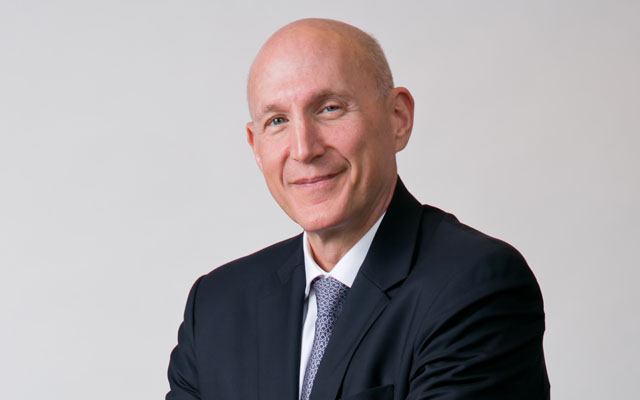
Hotelier Michael Issenberg has joined the Board of TFE Hotels, where he will assist the company with the next stage of its growth and evolution.
A 26-year veteran of Accor, where he helms as chairman and CEO of Accor Asia Pacific, Issenberg brings more than 42 years of international experience at executive management and Board level in the travel and hospitality industry to the table.
He is also the current chair of Tourism Australia and a director of the Star Entertainment Group.
Vishal Sanadhya has been named the new hotel manager for Four Seasons Hotel Jakarta.
With more than 16 years of experience with Four Seasons, he will take charge of day-to-day hotel operations.
He was previously part of the pre-opening team at Four Seasons Hotel Bangkok at Chao Phraya River, and has supported several Four Seasons properties in other locations, including Beijing, Maldives, Singapore and Mumbai.
The climate crisis was under the spotlight during the opening session of Arabian Travel Market (ATM) on Monday, with tourism and economy figureheads from across the Middle East discussing travel industry action plans.
According to Sustainable Travel International, tourism is responsible for approximately eight per cent of global carbon emissions from transport, food and beverage, accommodation, and related goods and services. The opening session looked at the industry’s crucial role in climate change – a particularly pertinent topic as the UAE prepares to host COP28 later this year.
Tourism and economy figureheads from across the Middle East discuss travel industry action plans at the opening of ATM 2023
The session featured Sujit Mohanty, regional division for the Arab States, United Nations Office for Disaster Risk Reduction (UNDRR); Abed Al Razzaq Arabiyat, managing director, Jordan Tourism Board; and Walid Nassar, tourism minister for Lebanon, with CNN anchor and correspondent Eleni Giokos as moderator.
Building a picture of the current situation, Mohanty said: “Globally, in the last 20 years, there have been US$2.97 trillion in economic losses due to disasters. Climate change is leading to more frequent and severe climate-related hazards such as floods, heatwaves, cyclones and hurricanes. In turn, the tourism industry loses enormous amounts of money due to these hazards. Therefore, the return on investment is clear – invest now to help protect the future.”
The UNDRR works closely with governments, the private sector and stakeholders across the globe, including 22 Arab nations, to reduce disaster risk.
Jordan is one of the highest-ranking countries in the region on The Euromonitor Environmental Sustainability Index and responsible tourism is now a key focus for the nation.
“Educating both businesses and travellers on how they contribute to the carbon footprint is one of our key priorities. In parallel with education, we are offering incentives to hotels, businesses and other stakeholders to encourage sustainable practices,” said Arabiyat.
Despite political and economic challenges, Lebanon has attracted a significant number of tourists since 2022. In summer 2022, Lebanon welcomed two million tourists, a quarter of which were international. As a result of the growth in visitor numbers, rural tourism has seen a boost, an area of tourism which is more sustainable and, therefore, more favourable to the issue of climate change.
Speaking on the growth of rural tourism, minister Nassar said: “The guesthouse sector has grown in the last two to three years in Lebanon, which has been a welcome trend. We have now established a syndicate of over 150 guesthouses, encouraging tourism in more remote areas.”
Agreeing that the issue of climate change is urgent now, Danielle Curtis, exhibition director ME for Arabian Travel Market, said the opening session “provided the perfect launchpad for ATM 2023 as we explore the future of sustainable travel under the theme: Working towards net zero.”
Asia’s hosting of two Winter Olympic Games – 2018 in PyeongChang, South Korea and 2022 in Beijing, China – has put the region on the world map for ski holidays, observes Rachael Harding, chief executive officer for East and South Asia & Pacific at Club Med.
In this episode of TTG Conversations: Five Questions, Harding discusses the growing interest in ski holidays, which has led ski business contributing to a third of total business at Club Med, up from just 10 per cent years before. She credits ski sports events for creating a new generation of sports enthusiasts and the emergence of ski sports associations for the spike in winter sports holidays.
She also talks about the importance of Asian source markets, what Japan’s declining domestic demand for snow sports mean to ski resorts in the country, what’s being done to convert travellers new to ski holidays, and how mountain resorts in beautiful locations lend naturally to the sustainable tourism model.



 He is also the current chair of Tourism Australia and a director of the Star Entertainment Group.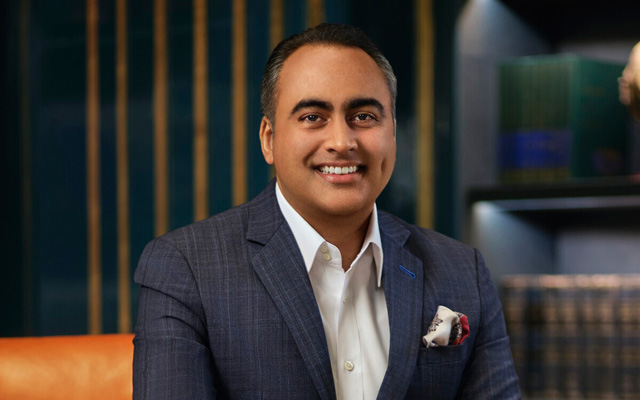
 He was previously part of the pre-opening team at Four Seasons Hotel Bangkok at Chao Phraya River, and has supported several Four Seasons properties in other locations, including Beijing, Maldives, Singapore and Mumbai.








The climate crisis was under the spotlight during the opening session of Arabian Travel Market (ATM) on Monday, with tourism and economy figureheads from across the Middle East discussing travel industry action plans.
According to Sustainable Travel International, tourism is responsible for approximately eight per cent of global carbon emissions from transport, food and beverage, accommodation, and related goods and services. The opening session looked at the industry’s crucial role in climate change – a particularly pertinent topic as the UAE prepares to host COP28 later this year.
The session featured Sujit Mohanty, regional division for the Arab States, United Nations Office for Disaster Risk Reduction (UNDRR); Abed Al Razzaq Arabiyat, managing director, Jordan Tourism Board; and Walid Nassar, tourism minister for Lebanon, with CNN anchor and correspondent Eleni Giokos as moderator.
Building a picture of the current situation, Mohanty said: “Globally, in the last 20 years, there have been US$2.97 trillion in economic losses due to disasters. Climate change is leading to more frequent and severe climate-related hazards such as floods, heatwaves, cyclones and hurricanes. In turn, the tourism industry loses enormous amounts of money due to these hazards. Therefore, the return on investment is clear – invest now to help protect the future.”
The UNDRR works closely with governments, the private sector and stakeholders across the globe, including 22 Arab nations, to reduce disaster risk.
Jordan is one of the highest-ranking countries in the region on The Euromonitor Environmental Sustainability Index and responsible tourism is now a key focus for the nation.
“Educating both businesses and travellers on how they contribute to the carbon footprint is one of our key priorities. In parallel with education, we are offering incentives to hotels, businesses and other stakeholders to encourage sustainable practices,” said Arabiyat.
Despite political and economic challenges, Lebanon has attracted a significant number of tourists since 2022. In summer 2022, Lebanon welcomed two million tourists, a quarter of which were international. As a result of the growth in visitor numbers, rural tourism has seen a boost, an area of tourism which is more sustainable and, therefore, more favourable to the issue of climate change.
Speaking on the growth of rural tourism, minister Nassar said: “The guesthouse sector has grown in the last two to three years in Lebanon, which has been a welcome trend. We have now established a syndicate of over 150 guesthouses, encouraging tourism in more remote areas.”
Agreeing that the issue of climate change is urgent now, Danielle Curtis, exhibition director ME for Arabian Travel Market, said the opening session “provided the perfect launchpad for ATM 2023 as we explore the future of sustainable travel under the theme: Working towards net zero.”