


With shopping on trips sliding out of favour among new-age travellers, Hong Kong has found power in its calendar of festivals and events to encourage travellers to stick around and spend while satisfying the growing appetite for unique experiences.
Speaking to TTG Asia, Dane Cheng, executive director of the Hong Kong Tourism Board (HKTB), said Hong Kong’s focus on creating outstanding festivals and events has shaped the destination’s reputation as a lively city.

Cheng said: “Hong Kong has many traditional festivals that remain genuine and celebrated by the locals. Hong Kong also has lively celebrations for other non-Chinese festivals such as Halloween and Christmas. Alongside these festivals are fascinating events like the Hong Kong Sevens rugby tournament and Art Basel.
“Many of these are organised in clusters, so that people who fly to Hong Kong to participate in them can also experience many other things. Therefore, while Hong Kong is not a new destination, people have come to recognise that Hong Kong still feels new because there is always something fresh and interesting to do.”
Cheng said HKTB teams are always looking to outdo themselves when it comes to delivering these popular festivals and events.
“Events in Hong Kong must do better every year, otherwise those in other destinations will catch up,” he remarked.
Citing the Hong Kong Wine & Dine Festival as an example, Cheng said efforts have been made to elevate the event throughout its 12-year existence.
“The team is constantly testing out new things. The festival does not only feature wine; it showcases different kinds of alcoholic beverages and we are introducing non-alcoholic drinks too. The event brings in a wide spectrum of cuisine and restaurants, not just the Michelin-star types. The team has recently added an entertainment element, so now the festival gets a carnival vibe,” he explained.
He expressed pride in the fact that Hong Kong’s festivals and events are supported by the local community.
“There’s nothing in this world that you can invent only for tourists. Experiences and events must be supported by the local community to be successful,” he emphasised.
He added: “With the exception of superstar concerts, which tend to attract 50 to 60 per cent of audience from outside of the host country, the majority of events must first gain the love of locals. Our Hong Kong Wine & Dine Festival enjoyed a fantastic turnout last year – the first one since Hong Kong’s reopening. It drew 140,000 visitors, out of which about 10 per cent were tourists from China, the US, Canada, the UK, Australia, Japan, South Korea and Singapore.”
Other high-profile festivals and events in Hong Kong attract a larger population of visitors. Overseas visitors tend to make up about 30 to 40 per cent of the attendance at the extravagant Chinese New Year parades while the tourist population stands at 40 per cent for the Hong Kong Sevens. Thirty per cent of attendees at both the Hong Kong Winterfest and the Hong Kong Cyclothon are from abroad.
Hong Kong’s festival and events potential will likely be elevated with the opening of the Kai Tak Sports Park next year. It has capacity for 50,000 people attending a sports event, and up to 60,000 people at a concert.
Cheng opined that Hong Kong’s festivals and events also add an interesting dimension to corporate event programmes, as attendees can join in during their free time. This corresponds with the trend of business travellers seeking quality leisure time during their trip.









 Having been with Minor Hotels since 1999, she most recently served as cluster general manager for Anantara Hua Hin Resort and Avani+ Hua Hin Resort.






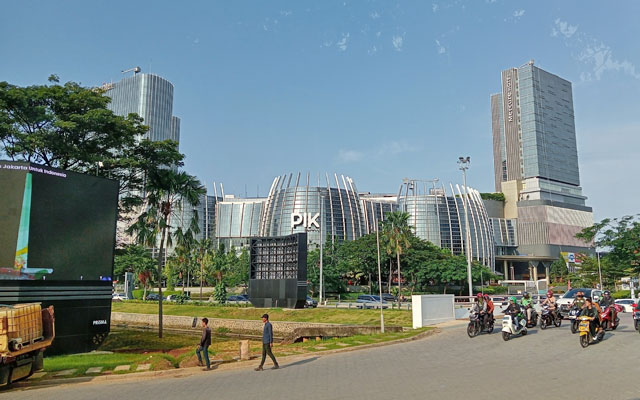
The Indonesia Tourism Industry Association (GIPI), with the support of the Ministry of Tourism and Creative Economy (MoTCE), will launch its inaugural Wonderful Indonesia Tourism Fair (WITF) 2024 from October 2 to 4 at Swissôtel PIK Avenue in Pantai Indah Kapuk 2 (PIK 2), North Jakarta.
Aimed to be a private-sector led annual event in Jakarta, WITF is set to serve as a marketplace for the tourism industry around the world to meet with their counterparts from across Indonesia.
Hariyadi Sukamdani, chairman of GIPI, commented: “By uniting all of Indonesia’s tourism potential in one event, we believe that WITF 2024 will make a significant contribution to national economic growth.”
In this first edition, WITF was able to achieve its target of 150 sellers, while international buyers totalled more than 190, surpassing the target of 150.
The buyers come from 38 countries in the US, Europe, the Middle East, Asia as well as South-east Asia, with some sponsored by Garuda Indonesia, Emirates Airlines and Turkish Airlines.
“We have also invited some corporate buyers to visit the show as some sellers also provide business events products,” he added.
According to data from the committee, sellers come from the western tip to the eastern-most province of the country, Papua.
Budi Tirtawisata, chairman of the WITF 2024 committee, shared that thanks to the GIPI members, who hail from 36 various travel related associations, along with the wide range of destinations represented, the event “presents a wide variety of products ranging from hotel and travel companies to recreational and theme parks, transportation companies and travel technology companies”.
As for the venue choice, Budi explained: “At PIK 2, there are several hotels nearby and some others near the airport. Besides, PIK 2 is also an upcoming destination (near) Jakarta.”
In addition, event delegates will get a chance to tour the facilities at PIK 2 before the opening dinner on October 2.
In parallel with WITF 2024, the MoTCE will also organise the 2nd South-east Asia Tourism Business Events Forum (SEABEF) on October 2-3 at the same location, of which about 400 participants are expected to attend. Under the theme The Transformative Impact of Sustainability on The Business Events Industry, SEABEF 2024 will bring up pressing issues like sustainability, human development, technological information and destination leveraging.
International speakers at the forum will include Waikin Wong, regional director of Asia Pacific at ICCA and Mark Cochrane, regional Asia Pacific director of UFI.