SINGAPORE Tourism Board (STB) has released its first TravelRave report recapping highlights from the annual travel trade festival held last year, underscoring talent, technology and the Asian millennial traveller as key areas needing address.
Travel and tourism leaders at TravelRave 2013 identified high turnovers, skill mismatches and employees unprepared for leadership roles as some of the challenges companies faced in the industry.
To attract, retain and develop high-quality talent at all levels in Asia, two working groups were formed out of the Asia Travel Leaders Summit.
The Executive Development Programme arose from the discussions, led by Marc Dardenne, CEO Patina Hotel and Resorts, in collaboration with Shatec and DePaul University. It will be inaugurated this month for mid-to-senior level hospitality executives. It comprises four modules over a period of eight months and covers topics such as leadership, finance and revenue management, among others.
Additionally, a joint study by STB, Visa and McKinsey & Company delved into the profile of Asian millennial travellers, revealed that over the next decade, this most educated and connected generation (born between 1981 and 1995) will enter their peak earning and spending years, presenting significant business opportunities for the travel industry.
As Asian economic powerhouses continue their growth trajectory, the Asian millennials’ expenditure on international travel is expected to increase by 1.6 times to US$340 billion by 2020.
With regards to technology’s continuing impact on the industry and the opportunities it would bring, according to The Constantly Connected Traveller, a Google study presented at TravelRave 2013, more than four-fifths of Asian travellers use the Internet to plan their hotel stays, using an average of four different sources of information.
The report also highlighted research presented by PhoCusWright, which projects that the Asia-Pacific travel market would maintain its growth of international tourist arrivals through 2015 to reach US$407.3 billion, with China accounting for a third of that. Travel Link Daily also noted the potential of the market, as only three per cent of China’s population is passport-holders.
TravelRave 2014 will take place in Singapore from October 27-31, 2014. It will see the return of anchor events such as the Asia Travel Leaders Summit, ITB Asia, Web In Travel, Aviation Outlook Asia, TravelRave Leaders Gala and Singapore Experience Awards.
THE Indonesian government has imposed new tariffs on parks and hunting grounds under the portfolio of the Ministry of Forestry, and the move is expected to result in an almost eight-fold increase in entry fees for foreign tourists.
The new regulation divides national parks, forest and natural parks tariffs into three rayon groups.
The entry fee for foreign tourists to the parks of Rayon 1 is 250,000 rupiah (US$22) per entry per day, 200,000 rupiah for Rayon 2, and 150,000 rupiah for Rayon 3. Tariffs for domestic tourists are 10 per cent of the above.
Monthly dues are also applied to the parks, payable to the national treasury for services in the parks, like tourism information, guides, transportation, travel, F&B and souvenirs.
Most of the natural tourism destinations popular with international tourists to Indonesia belong in Rayon 1. Some of the national Parks in Rayon 1 are Bromo-Tengger-Semeru, Komodo, Rinjani, Bali Barat, and Tanjung Putting, while natural parks in Rayon 1 are Mount Tangkuban Perahu, Mount Papandayan, Batimurung and Ijen Crater, among others.
The first national park announcing the new entry fee to apply as of May 1 is the management of Bromo-Tengger-Semeru National (TNBTS) in East Java.
The national media quoted TNBTS head, Ayu Dewi Utari, as saying the entry fee for domestic travellers would increase from 10,000 to 37,500 rupiah on weekdays and 67,500 rupiah on weekends and public holidays.
The entry fee for international tourists will increase from 72,500 to 267,500 rupiah on weekdays and 640,000 rupiah on public holidays.
The new ruling has shocked the travel industry, not only in East Java where Mount Bromo is the icon, but those doing Indonesia round trips.
“This (increase in Bromo’s entry fee) is really shocking …we are in the middle of a season (where package prices are already in place), and May is the beginning of the summer peak season. Contracts are fixed up to March 2015.”
He explained he is not anti-price hike as long as it is reasonable and timely: “If the government wants to increase (the fee) that high, it should plan and implement in stages.”
Yusak Anshori, chairman, Indonesia Tourism Council, East Java Chapter, pointed out: “With such an increase, what new and improved facilities does the management offer in Bromo? The government just doesn’t understand the politics of tourism. This will kill not only the industry but also the local people who live from Bromo tourism.”
Ada Travel Indonesia, Malang managing director, Supomo, revealed: “The Care for Bromo Society, which includes tourism-related associations and the groupings of Bromo Tengger societies, met yesterday and in principle, everyone rejects the regulation, and we are planning on movements of rejections, but have yet to decide on the format.”
Ayu Mandiri Tours and Travel Jogjakarta managing director, Aji Sutomo, said: “It is a big challenge for overland tour operators like us. Bromo is the icon of East Java, if we take that out of the programme, what else is there to offer (as the main draw to the destination)?”
Marintur Indonesia executive director, Ismail Ali, opined: “If it is only applied to Bromo, we can take it off the package and offer it as optional tour. But if all national parks’ entry fees are up so high, I think it will be back to square one, where everyone will only go to Bali again.”
Indonesia has seen the trend of international tourists travelling around Indonesia, beyond Bali, in the last few years.
From health-conscious wanderers to those travelling with little tots, tours are being created to meet needs of all kinds
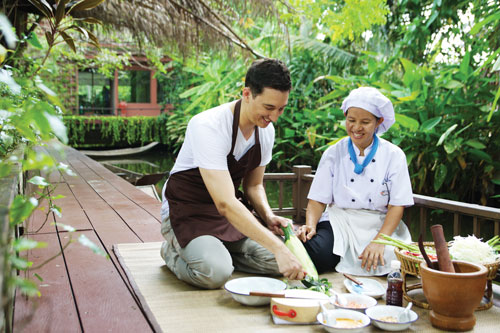
Tourism Authority of Thailand
Eat your way through Asia
Having found success in offering foodie experiences to visitors to Malaysia, Discovery Travel & Cuisine is now in the midst of developing outbound culinary tours to Laos, Cambodia, the Philippines, South Korea, Japan and China.
“The strategy to tweak our inbound travel business with food and culinary experiences has worked profitably for us, recording an increase in demand and sales from year to year,” said director Lee Choon Loong, who claims the tour and travel company is the first and only licensed one in Malaysia to have ‘Travel & Cuisine’ as part of the company name.
“We are applying for an outbound licence to market outbound culinary tours targeted at the youths in the 18-35 age group, who are more adventurous and Internet savvy. This provides us with the opportunity to tap social media,” he said.
“We are currently developing our website with enticing images of food and compelling stories about food culture, culinary styles and gourmet destinations with the help of national tourism offices in Thailand, Laos, Cambodia and the Philippines.”
On why the above countries were chosen, Lee explained: “We prefer to develop culinary tours around destinations which are rich in culture and food resources but somehow lacking in built attractions. Food culture then becomes the unique selling point of the destination.”
Clients will get to discover local produce and learn how to savour exotic food like raw prawns with pepper-calamansi sauce on the banks of the Mekong River in Laos or enjoy stir-fried flower crabs with Kampot pepper, which originated from a local fishing village in Cambodia.
He added: “Food is not fun without the right company, and we only develop customised tour programmes for like-minded travellers with the same interest and passion for food culture. – S Puvaneswary
Chan Brothers Travel
Kids can have fun, too
Introduced last year, the Little Tots Can Fly programme by Chan Brothers Travel Singapore incorporates child-friendly itineraries for families with children as young as two years old.
Currently available for itineraries in Hong Kong, Taiwan, South Korea and Japan, these programmes are designed around fulfilling the requirements of toddlers from two to six years old. Arrangements include more conducive daytime flights, later morning calls, extended meal duration at kid-friendly restaurants, a more relaxed pace of travel and family photography sessions by professionals.
Jane Chang, marketing and communications manager, said: “This series helps to plug the market gap for parents of young toddlers who wish to travel but have their own set of unique travel requirements. Response for this series is encouraging and we are expecting significant growth this year.” – Paige Lee Pei Qi
In tip-top shape
Panorama Tours Indonesia launched medical tourism packages in 2013, with Malaysia as its initial destination.
Hellen Xu, managing director of travel management, said: “Medical Check Up is a new product we launched last year and the result so far is so-so. This year we are planning to promote it well as we believe the market is there; we just need to tap it. Our target market is A- and B-class clients above 35 years old.”
Starting with basic check-up programmes, Panorama works with hotels and hospitals in Kuala Lumpur and Penang.
A three-day package in Kuala Lumpur starts at US$289 and US$285 for Penang. This excludes airfare but includes two-night accommodation, a medical check-up at Gleneagles Hospital and airport transfers.
The medical check-up in Kuala Lumpur includes a physical examination, ECG, lung function test, chest X-ray, blood and urine test, as well as review of reports. In Penang the package includes physical examination, visual acuity test, chest X-ray, ECG, body fat measurement and a laboratory test.
Asked if more extensive medical packages would be offered, Xu said that these are available on request, but could be developed into ready-made products should the market grows.
“Indonesians usually look for references from friends when it comes to treatments – which doctor, which hospital – and they go to travel agencies for hotel and transport arrangements, and sometimes optional tours,” she said. – Mimi Hudoyo
Make the most of weekends
Long weekend holidays are usually planned late and the runway within which all bookings need to be firmed up are excruciatingly short. Most of such requests come from clients who are well travelled and usually decide on the spur of the moment, or are unaware if they will be available on a specific date and so cannot plan ahead.
In response, Thomas Cook India launched 48H holiday packages a year ago, where the entire trip from ticketing and hotel bookings to ground transportation and excursions can be booked and delivered to the client within 48 hours of receiving the request.
“Many clients used to ask for domestic destinations as they thought that we had too little time to offer outbound holidays within such a short time frame,” said Madhav Pai, COO of leisure travel (outbound).
A range of destinations are offered, including Ireland, Jordan, Ecuador, Cyprus, Mexico, Seychelles, Thailand, Indonesia, Turkey, Hong Kong and Macau.
Ankur Khanna, managing director, India-based Tristar Holidays, said: “It is easy to create and confirm these packages if the destination offers visa on arrival to Indians.” He added that the price of these holidays could be 10-20 per cent more than usual as the bookings are last minute, but this did not faze any of his clients. – Shekhar Niyogi
Connecting agencies to customers
Attempts have been made to bridge the divide between one-on-one travel consultation and the lack of customisation available on online portals.
Hello Travel in India, for example, analyses the requirements of online travellers and finds travel agencies whose expertise will match their requests. Clients then get multiple itineraries and personalised suggestions from travel consultants.
Such websites allow companies to enrol with them, then purchase leads and execute itineraries. These leads are paid for on a unitary basis and the contract may be for a set duration.
However, according to trade players, any such model leaves gaps in credibility and durability of such contacts.
Anil Guptaa, managing director, Anjali Tours & Travels India, said: “This sort of market intelligence does not give me the connections I need. Moreover, it is possible that the same leads may go to my competitors too, diluting my sales effort.”
Other companies like Internet Moguls are trying to close this chasm in a more holistic manner by offering turnkey solutions. It has created a website that will enable B2B as well as B2C interface, management of social media to get more responses, execution of the marketing plan and realistic projections of outcomes.
If the travel consultant signs up for a three-year contract, Internet Moguls works for zero retainer and charges a 15 per cent commission on incremental business beyond US$1 million based on a performance guarantee of its marketing plan.
Avijit Arya of Internet Moguls said: “Long-lasting connection with consumers is not a simple task. We advise, plan and guide our clients to end solutions that result in a much larger client base for them, helping their clients perform and stay with them if they are satisfied with the service.” –Shekhar Niyogi
Customers want holidays to be hassle free from start to finish. Mimi Hudoyou, Paige Lee Pei Qi, Shekhar Niyogi and S Puvaneswary look at how agencies are achieving this
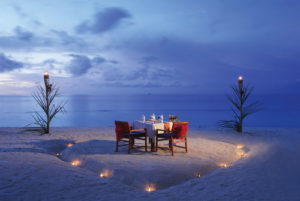
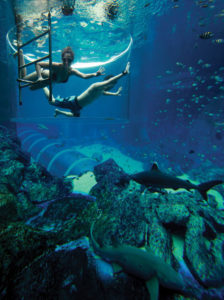
The client wants to watch the sunrise from the 110th floor of Burj Khalifa when it is not open yet. Another wants to exchange rings underwater among the corals in Great Barrier Reef. A third wants to be photographed with the sharks in an aquarium without it being apparent that it is an aquarium. Such requests are increasingly de rigueur for travel companies, whether an owner-driven boutique agency or a large tour operator.
To cater to special interest customers seeking customised travel programmes, outbound agencies are investing more time to tailor their offerings according to requests.
Anthony Chan, group managing director, Chan Brothers Travel Singapore, said: “Planning, sourcing and quoting for customised tours can be extremely resource draining and time consuming.
“The complexity of customisation, which usually requires detailed and lengthy elaboration from a face-to-face personnel, makes this a challenging product to be offered online.”
Likewise for Clifford Neo, managing director of Singapore-based Dynasty Travel, the challenge lies in having to manage variable components such as airfares and hotels.
He said: “We are able to work on economies of scale for special hotel rates as we do have volumes for certain hotels with our big groups and incentive tours as well.”
Promotional airfares are also utilised to keep costs down. Neo explained: “For us to enjoy higher profits, we may suggest to customers to travel during low season. We will work out the cost savings and value-adds for customers when they choose to travel during low season.”
For Panorama Tours Indonesia, groups of small sizes are booked through the GDS at rates offered, while requests for group rates are made to suppliers for bigger numbers, said its managing director, travel management, Hellen Xu.
She added: “The advantage of being a big company is that we can negotiate prices based on total production as a group in a year; this way, we can keep prices down.
“To ensure profitability, we mark up the price to cover operational costs and get some profit, and in cases of big volume, we obtain kickbacks when we achieve a certain target.”
Centara Grand Island Resort and Spa Maldives
High expectations come at a price
Dynasty Travel’s Neo pointed out that a customised tour package can be up to 40 per cent dearer than run-of-the-mill products. They usually include private car transfers, minimal shopping stops, and exclusive food and tourist attractions based on client preferences.
Thus these high-end programmes are often sought by those with deeper pockets.
Valmiki Hari Kishan, managing director, India-based Valmiki Travel & Tourism Solutions, said: “Clients who request customisation of tour itineraries are frequent travellers who want experiential holidays that are off the beaten track and will cater to their preferences in every way. They are affluent and have sufficient time to indulge themselves.”
However, not all travellers may be realistic in their demands, say agencies.
Apple Vacations & Conventions Malaysia’s MICE manager, Queenney Lew, observed: “Clients may have a small budget but expect to stay in a five-star hotel and eat at fine-dining outlets. To prevent misunderstanding, we always get them to sign an agreement before departure for the tour details we proposed based on their budget.
“For best tour package fares, the client should give us a lead time of at least three months. If it is a last-minute booking, we will not be able to negotiate with hotels and airlines for the best prices.”
“We do our best to accommodate the clients’ needs, which sometimes can be complicated, but they are not always ready to pay a high price,” added Panorama’s Xu.
Staff knowledge is key
As such, it is crucial for travel consultants to give the right advice to clients, Xu pointed out.
Sanjay Kothari, managing director, Just Holidays India, said: “I have demarcated my staff as per their expertise, e.g. island holidays, where they are expected to know the difference between beaches in Seychelles and those in the Maldives.
“I also train my staff region-wise and based on the character of the destination. For instance one person for Australia and New Zealand, another for Turkey and Greece and yet another who knows the difference between different game reserves in Africa.”
Smailing Tours Indonesia also has dedicated staff for its Signature Products division, which offers customised travel programmes with culinary, sports and shopping themes.
Signature specialists go on fam trips and participate in trainings on upmarket travel products organised by NTOs, said spokesperson Putu Aristyadewi.
“The specialists will then conduct training for travel consultants on the products, so that they are aware and can give preliminary information to customers and refer interested clients to the specialists,” she explained.
At Apple Vacations, its customised travel team often holds regular meetings where tour leaders share with the operations team about their recent experiences. Frontliners who are new to the industry will also accompany senior tour leaders on tours to gain experience, said Lew.
Travel consultants selling customised programmes must have passion, patience and persistence in order to successfully create unique tour packages, opined Valmiki Travel’s Kishan.
Dynasty Travel’s Neo added: “This is a personalised service that requires in-depth destination product knowledge. The Internet is a base for customers to get information and, as a travel agency, we need to assist to sieve out the information and advise them accordingly.”
Others like Ankur Khanna, managing director, Tristar Holidays India, believe in interacting with his high net worth clients personally for all their customisation needs. “They trust my experience and my knowledge. Often I tell them not to go somewhere with good reason and they take my advice. With such clients, the interaction is relationship-based.”
Resorts World Sentosa Marine Life Park
Reliable partners needed
Strong support from ground operators is critical in helping agencies meet their customers’ demands.
“We value knowledgeable and innovative operators who are willing and able to go beyond off-the-shelf programmes to offer bespoke experiences and unchartered territories despite the smaller group sizes,” said Chan Brothers’ Chan.
Tristar’s Khanna added: “My relationship with my suppliers is dependent upon mutual understanding that we are providing exclusive concierge services to very select clientele whose continued relationship with us is crucial for our success. Word of mouth is invaluable.”
Besides having the right expertise, overseas land operators also “need to have ‘muscle’ or connections in negotiating good rates”, said Dynasty Travel’s Neo.
“We need suppliers to be more flexible in their policy and also help us by giving suggestions on how to maximise clients’ time and money,” said Panorama Tours’ Xu.
Timeliness is also crucial. Apple Vacations’ Lew said: “Clients wish for a really hassle-free holiday. Our customised tours are also flexible with our driver and guide on stand-by. Based on experience, we know there will always be clients who will make last-minute changes to their bookings and tour itineraries.
“Our customers expect us to respond quickly to their requests. Hence it is imperative that we establish a good working relationship with our suppliers.
“Operation wise, suppliers such as hotels, ground operators and airlines should respond quickly when we request for change of dates and alternative arrangements…We filter our ground operators and work with those who give us good support.”
Additional reporting from Paige Lee Pei Qi, Shekhar Niyogi, S Puvaneswar
THE Singapore government’s recent move to raise liquor excise duties by 25 per cent will add to the F&B bill for corporate functions but DMCs in the city-state said it is still early days to determine how this will impact the way clients conduct their events.
The 25 per cent hike means a litre of beer than once cost S$48 (US$38) will now be S$60.
6
World Express’s managing director Darren Tan, said: “This will definitely increase the expenditure of MICE events if organisers are budgeting for wine and beer in the programme.”
Tan explained that alcohol usually made up 25 per cent of the total dinner bill.
“However it is still too early to assess the real impact and, anyway, Singapore has been known to be an expensive destination for alcohol all along,” he added.
Dynasty Travel’s marketing communications director, Alicia Seah, believes that Singapore’s pricier alcohol will not affect clients much “as they are looking at an entire budget for MICE events”.
David Donald, general manager of Parkroyal on Beach Road, who estimates alcohol consumption to make up at least 15 per cent of the MICE event cost, also downplayed the impact of the tax hike.
“The increase is translated to approximately S$0.40 per glass of wine or S$0.20 per glass of beer,” he pointed out.
Having said that, Donald told TTGmice e-Weekly that the hotel intends to absorb any additional cost resulting from the higher liquor excise duties.
For clients who are concerned about heavier event bills as a result of the tax hike, World Express’ Tan suggested: “Go on consumption basis for small groups, and reduce the beverage package duration for larger groups.”
Seah also offered this advice: “We can look for cost savings in other areas such as complimentary meeting spaces, reduced room rates or free upgrades for VIP delegates.”
THE Philippine Retailers Association (PRA) has trounced its counterparts in Thailand and Australia in bidding for the 17th Asia Pacific Retailers Convention and Exhibition (APRCE) next year.
Asked what’s PRA’s winning formula, assistant secretary general, Ana Marie Miranda, said: “We showcased why it’s More Fun in the Philippines – both in the retail business side (since attendees are retailers, we highlighted our world class shopping centres), as well as the tourism side. We made them want to come to the Philippines both for business and leisure.”
APRCE is the main activity of the Federation of Asia-Pacific Retailers Associations, which has 17 association members from 17 countries. It is the longest running regional retail conference in Asia, held every two years. The 2013 edition was held in Istanbul, Turkey.
About 1,500 foreign delegates and 2,000 locals are expected during the three-day APRCE at SMX Convention Centre Manila in 2015. The date in September or October is yet to be determined, to ensure it will not clash with APEC Summit.
To boost delegate numbers, Miranda said PRA will “use all forms of media to connect and engage them to make them interested to come and attend. We will utilise both traditional marketing efforts (ads in local and regional publications, TV, radio, etc.) as well as social media and digital/mobile marketing”.
PRA is in the process of preparing the event programme.
“We aim to make APRCE 2015 another world-class regional event to benchmark on so we will be inviting world-class and global leaders in retail. We will also promote pre- and post-event tours,” said Miranda, adding that destinations are still being finalised.
When PRA last hosted APRCE in 1993, it won the Kalakbay Award for Event of the Year
DESTINATION Resorts & Hotels (DRH) has disbanded its hotel management arm Archipelago Hotels & Resorts but its plans to export “the art of Malaysian hospitality” lives on through Datai Hotels & Resorts.
The brand, whose roots lie in the sole Datai property in Langkawi, will soon enter Johor as part of DRH’s integrated development Desaru Coast, which comprises four hotels, two golf courses, two ocean themeparks, a waterfront retail and lifestyle village and a hospitality, tourism and culinary arts school.
General manager of The Datai, Langkawi, Anthony Sebastian, has been seconded to oversee the opening of two Datai hotels in Desaru Coast – the five-star Datai Desaru and four-star family-oriented theme hotel, Anak Datai. The Daily understands a new GM is being sought for The Datai, Langkawi. The other two hotels in Desaru Coast are an Amanresort and a Sheraton, the latter with an adjoining convention centre.
But tour operators said it is debatable if The Datai, Langkawi, with its unique architecture, secluded beach and lush rainforest, can be replicated and if the name Datai has enough recall beyond its loyal following to be a global brand. Sixty per cent of The Datai, Langkawi’s clientele are upmarket UK visitors.
Sebastian, who is also DRH’s senior vice president-hotel management, said: “Datai’s DNA is not difficult to transport. The Datai, Langkawi is not just about location. Its core value actually is the staff – they make the resort what it is today. I’ve seen this for myself and I’ve heard this feedback from every single guest. So, it’s a question of transporting the service culture (to other Datai resorts) through having the right people and through training, so that there is consistency.
“Of course Datai Desaru will not have the same setting as The Datai, Langkawi but clients will find the same peacefulness and tranquility as in The Datai, Langkawi, and the same treatment by staff who know how to care for them and make them feel they are at home.”
Sebastian added he has been helping to set up policies and procedures for the two properties, while training and trial runs have started. Apart from the two Datai hotels in Desaru Coast, DRH is looking at other destinations, including London and Dubai, for potential expansion of the brand.
Asked why there are so few Malaysian hotel brands with regional or global footprint, Sebastian said it might be due to a lack of confidence and difficulty in finding talent.
DRH, owned by Khazanah Nasional, the investment arm of the Malaysian government, seeks to redress that with Datai Hotels & Resorts and by being the catalyst for the development of premier integrated resorts such as Desaru Coast. The project will open in phases, beginning with the golf courses in April, up to 2016.
OLD rivals Bali and Phuket are seeing that their competition for Australian travellers is now not one another but longhaul destinations such as Hawaii and South Africa.
“Bali and Phuket are usually competitors when it comes to attracting the Australian market, but due to aggressive marketing by the US and competitive promotions from Hawaii, we are seeing more Australians heading to Hawaii instead,” said Allamanda Laguna Phuket general manager, Femke Beekers, who sustained a 20 per cent drop in Australian business last year.
The Samaya Bali still sees “good” business from Australia, with increasing traffic from Melbourne and Perth although business from Sydney and Brisbane dipped slightly by three to four per cent last year, said general manager Ray Clark.
“For a few years in the past, we were running head to head with Thailand, but it’s no longer the case now – competition (for the Australian market) is no longer regional but worldwide,” said Clark. “Australians are getting more adventurous and travelling further afield to Europe, plus with more flight connections such as South African Airways, more Australians are heading to South Africa too.”
Likewise, Ron Nomura, director of marketing at Grand Hyatt Bali, said: “We are seeing more meetings and incentives from Australia heading to Hawaii; planners will often reveal they are considering Hawaii too.
“Australians have been to Bali too many times, plus they want to make use of the current favourable exchange rate of the Australian dollar versus the US dollar. Longhaul destinations always pick up (in demand) among the Australians when the Aussie dollar is strong,” he said.
Bali’s proximity to Australia is a double-edge sword as it is typically viewed as a “common” destination among Australians, opined Dewi Trisnawati, vice president sales & marketing of Waka Hotels & Resorts. “Australians look at Bali as their own backyard,” she said.
“Hence it’s more important for Bali to maintain its uniqueness and novelty for the Australians.”
Asked if longhaul destinations will lose its appeal among Australians, Nomura quipped: “When China stops buying raw materials from Australia.”
THAILAND’S protracted political turmoil is throwing 2015 contracting out of the windows, with hoteliers bracing for pressure on rates the moment some stability is in sight.
Some European buyers are said to be delaying contracting in order to swoop in on lower rates later – although all tour operators interviewed by the Daily said they are not doing so.
Premier Holidays UK, head of longhaul product, David Carlaw, said: “Due to the changing nature of our business, we are pretty much negotiating all the time on tactical promotions so (delaying contracting) is irrelevant to us.”
But as fresh bookings slow down, hoteliers are expecting the worst.
“Past experience would suggest that some operators will try to use the current Bangkok situation as a means to negotiate better deals for the whole country,” said Duncan Webb, chief commercial officer of Onyx Hospitality Group.
“The longer this political impasse continues, the harder operators will push for lower rates. To do effective contracting at this juncture will be challenging.”
Likewise, Centara Hotels & Resorts’ senior vice president sales and marketing, Chris Bailey, is bracing for rate pressure to set in later.
“I expect (rate) pressure to come when stability returns” he said. “The Tourism Authority of Thailand will have comeback campaigns and that’s when there will be expectations for Bangkok to ‘buy business back’. We just don’t know when that period will be.”
Already, buyers show they do harbour those expectations. David Kevan, partner, Chic Locations UK, said: “Once the situation is resolved, I think Bangkok will have to look at a short-term discount plan to restore client confidence.
“But I don’t think there will be countrywide discounts, unless the political (turmoil) spreads beyond Bangkok.”
Nyhavn Rejser Denmark’s direction of production (leisure), Jakob Ro Jorgensen, does not rule out pushing Bangkok hotels for lower rates, although he will “try to close contracts as soon as possible” due to the high number of requests for next season and “if needed renegotiate at a later stage”.
But Hans van den Born, managing director of Diethelm Travel Thailand, said the onus should not just be on Bangkok hotels to reduce rates, urging other stakeholders to play a part to drive longhaul traffic to Bangkok.
“Airlines are key too. Right now, I’m only seeing fare promotions for Thai outbound travel to European destinations. Airlines need to lower rates from Europe to Bangkok too,” he said.
INDIA has lost ground in the German market as a result of the rape cases which have tarnished the destination’s image.
Marco Polo Reisen suffered a 15 per cent drop to India last year, with managing director Holger Baldus saying “the drop has not reached the bottom yet”. Michael Frese, CEO of REWE Touristik, reported a “substantial decrease”. Thomas Tischler, president, Tischler Reisen, said on average, India is down 25 per cent for German tour operators.
Said Frese: “This is the sort of issue that spoils the reputation of a country. It’s a disaster.”
“The (negative) image people have right now of India is unfair as India is a super country, its people very welcoming. India should do something,” he said.
Frese said German travellers to India are a different clientele from the beach holiday market to places such as Bali and Thailand. “They go on roundtrips for the culture and for education. I don’t think they are afraid (of being raped). They are not comfortable or do not want to support the destination. It’s all about perception,” Frese said.
Making matters worse, departures cannot be done when the minimum number of pax is short even by a few. “If 10 people are secured and 15 is the minimum number, you can’t run the tour. A retail agency then tells his client, well, the last tour was cancelled, so there is no guarantee if this one would go, I recommend you go somewhere else.”
Baldus said: “Sales are down despite a weak rupee and lower hotel rates. Prices are down at least 10 per cent; India is such fantastic value for money, yet travellers feel it’s not the right time. They don’t feel safe.”
India’s DMCs are feeling the impact even though, as Ashish Sehgal, senior general manager-sales, Creative Travel, said: “In our history, not a single customer of ours has faced this because we use licensed guides, reputable hotels and drivers.” The DMC is doing an education series with partners on guidelines for travelling in India and inviting them on fam trips.
Amaresh Tiwari, managing director of AT Seasons & Vacations Travel Delhi, said: “India Tourism should do more. It needs to hire PR companies and engage the international media to write about India as a destination. It is poor in handling the media and PR; it should consider PR not as an expense but an investment to improve the image of the country.”
Girish Shankar, additional secretary, Ministry of Tourism, Government of India, said reported decreases in tourists are “abberations”, pointing out that there has been a four per cent or more increase in arrivals, with female travellers comprising 40 per cent of total visitor numbers.
He said India is working to dispel perceptions of the country as unsafe for women under the ongoing Incredible India campaign by addressing queries of tourism partners at its roadshows, increasing the number of ladies invited on fam trips to India and issuing a general advisory on the Incredible India website with guidelines for travellers to follow. A press conference on Tuesday also saw a German travel writer brought in to share her experiences travelling in India. “Is that not enough?” he asked.