TTG Asia
Asia/Singapore Sunday, 8th February 2026
Page 2244

Hong Kong lifts travel ban on the Philippines after 4 years

0

HONG Kong has rescinded its travel ban on the Philippines after four years, paving the way for Hong Kong tour groups to resume travel to the South-east Asian country within the next few weeks.

The scrapping of the ban on April 23 followed the Philippines’ apology and compensation to the victims and families of Hong Kong tourists who were embroiled in a hostage-taking incident in Manila in August 2010.

Philippine Travel Agencies Association president, John Paul Cabalza, said the lifting of the travel ban “will have very good effects” on inbound. “The calm is already there so the next move for us is to bring more arrivals from Hong Kong, which is one of the potent sources of tourists because of its proximity to Manila,” Cabalza explained.

Said Rowena Espino, operations supervisor, Kenstar Travel: “Having resolved the conflict with Hong Kong which everyone is waiting for, there should be a surge in tourists from Hong Kong.”

The lifting of Hong Kong’s travel ban is a shot in the arm for the Philippines whose total international arrivals in January and February grew by a mere 3.5 per cent to 884,014, the slowest growth recorded in the last five years. In January and February, arrivals from Hong Kong plunged 8.4 per cent to 21,160.

Royal Brunei Airlines revives Bali service

0

NATIONAL flag carrier Royal Brunei Airlines will resume flights to Bali from July 26 with four weekly departures.

Flights will depart the capital Bandar Seri Begawan on Tuesday, Wednesday, Saturday and Sunday every week while the return flights will run every Monday, Wednesday, Thursday and Sunday. The flights will be operated with Airbus A319 aircraft.

Royal Brunei Airlines deputy chairman, Dermot Mannion, said in a press statement: “The commercial team does regular route studies for ways to develop and increase connectivity for our markets. In their latest studies, Bali had emerged a frontrunner in providing connections to key markets in London and Dubai and also for regional destinations like Hong Kong and Shanghai.”

According to the Brunei Times, Royal Brunei Airlines terminated direct flights to Bali in 2008 due to “schedule changes” made in response to an increase in regional competition.

It’s chow time

0

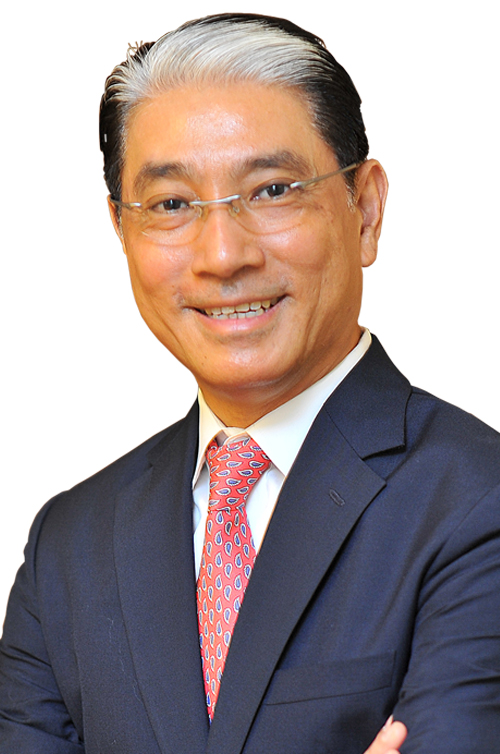
Lucas Chow never bites off more than he can chew. The group CEO and MD of Far East Orchard Singapore tells Raini Hamdi how he’s digesting the two-at-one-go merger and acquisition of Toga and Straits Trading 
25-april-lucas

Why did Far East Orchard (formerly Orchard Parade Holdings), a residential developer, branch into hospitality (Far East Hospitality) and healthcare real estate?

Real estate is still the major line of business and the most profitable, but we want to diversify.

With real estate, it’s feast and famine – good years if we have project completion, drought years if we don’t. Hospitality gives us a good recurring income although arguably it is also cyclical, affected by global events, epidemics, etc. But under normal circumstances it gives us a steady income based on projected yields.

Healthcare is needed, regardless of economic situation in the world, thus this further helps us to balance the portfolio.

We want to create shareholder value and now there is a story, growth, future.

You were appointed CEO of Far East Orchard in July 2012 and went straight into not one, but two M&As at once – The Straits Trading Company and Toga Group – which were completed last year.

Yes, it was a stretched goal. We’re blessed to have accomplished so much in that timeframe. It’s beyond my own personal expectations.

What’s the vision behind the two JVs?

It was obvious to me we needed critical mass. What we had – 18 hotels and serviced residences in Singapore – were neither here nor there. We’re better off now with more than 80 properties and 13,000 rooms in eight countries as a result of  the joint ventures with Toga and Straits Trading. Chains like Accor or Starwood Hotels & Resorts are of course much bigger but we don’t need to get to their size.

In order to achieve scale, we could build or buy. The former would take a long time, thus organic growth had to be the strategy.

My team and I looked at the gateway cities in South-east Asia – Vietnam, Thailand, Myanmar, etc – but while there’s fantastic upside in a country like Myanmar, the risk was equally high. We wanted something more stable and Australia was mature, with stable laws and regulations, a high domestic market volume and a different travel cycle (that would complement the cycle in Asia).

Why Toga and Straits Trading?

Toga caught my eye because it was among the top 10 (in Australia, in terms of room count) and there was a real alignment of values, vision, management processes and discipline in driving performance between us. Like us, they were an owner-operator and were looking for like-minded partners beyond Australia. That’s the most important thing; the rest was pricing and valuation.

We acquired five of Toga’s properties. At the same time, I also liked the revenue coming out of the three properties of Straits Trading in Australia, but we didn’t have the people or infrastructure to manage hotels in Australia. So I thought why not strike with both, then use Toga to manage the Straits Trading properties? It was a daunting thought as the amount of work in due diligence and integration for one M&A alone was already difficult, let alone two.

What’s in it for Toga  and Straits Trading?

For Straits Trading, although its share is now 30 per cent, it comprises a much larger, global portfolio, not just an Australia and New Zealand focus. Its operation also becomes much more effective in Australia.

Toga climbs a few notches in room count – I believe they are now number four in Australia. The deal also gives them the opportunity to manage a larger portfolio and gain international exposure.

For us, it puts Far East Hospitality on the map. We’re now seen as a serious player from Asia-Pacific.

So now that you have critical mass, what’s next? 

The immediate priority is to digest what we have and integrate the three companies well, as we need to deliver to the business case we presented to the shareholders when we proposed the M&A.

There is a lot to be done. The low-hanging fruits – central booking, combined marketing, database sharing, cross-referrals – have started. Then we need to look at deriving operational efficiencies from it by benchmarking and implementing our best practices. If we want to build an awesome hospitality company, our practices must not only be the best, but consistent across our group and brands.

Third is the use of technology and innovation. Perhaps because of my previous background (Hewlett-Packard, SingTel Mobile and MediaCorp), I find that the hotel product has not evolved much.

Do elaborate.

When I look at technology, it’s not just the consumer-facing aspects, e.g. enabling the guest’s emails, entertainment, etc, to pop up seamlessly on the big screen in-room. There is, for example, energy recycling technology. I’m tired of hotels that put a card on my pillow asking me to save the environment. This puts the guilt on the customer. I would rather tell my guests that I’m using biodegradable detergent and environment-friendly shampoo, that this percentage of my room is made up of recycled material yet is presentable, that 99 per cent of the room has been clinically disinfected before his arrival. I’d rather the hot water in the shower comes instantly, instead of seeing water run and run before there is hot water, which is such a waste of a precious resource.

I am forming a small team, led by Arthur (Kiong, CEO, Far East Hospitality), to look at the future product. Now we have to cook with what we have but all hotels at some point will need renovation, so I hope by this year we could come up with some interesting concepts that we could use in our new-builds or renovations. Thinking outside the box is a given. What we want is to find another box altogether.

Give me an example of finding another box.

Why do you need bathtubs? If the Japanese still want them, what if I build a beautiful Japanese bath, like the onsen, which they can use? Isn’t it easier to clean that bath in one place than 250 bathtubs on various floors?  Why can’t we evolve, especially when we have a labour shortage, which is only going to get worse with an ageing population?

Mirror and glass give the illusion of bigger space but it takes a lot of cleaning time. Carpets are terrible. You may need them in cold countries but you can do away with them in the tropics. Why not rugs, which are cheaper to clean and replace than an entire carpet? Again, these are just the low-hanging fruits.

I have a lot of respect for hospitality people. They work hard. But if you ask, how much changes have they made to the product in the last 20 years, the answer is not much. The product has gone through an evolution, not revolution. Airlines, on the other hand, have revolutionised their product. You can now lie flat in business class and aircraft technology enables you to fly nonstop longhaul.

Does coming from outside the industry give you an edge in changing the product, i.e. having fresh perspectives?

Maybe the hoteliers are too close to it. Most have grown up doing things in the same way, are focused on RevPAR, ADR, services, have enough things occupying their minds in running the business, so there is very little time to think about the future. That’s why I want a separate group that’s not bothered by the day-to-day and can focus on a future product for me.

At MediaCorp, did you really reward people with ice cream if they do well?

Yes. Regardless of rank, you will get ice cream if you meet your target on a quarterly basis and we deliver it to you no matter where you are, at home, doing outside filming, etc. The idea is to let you pause for a moment and enjoy the success together. And to communicate about performance. When they get ice cream each quarter, they know the year-end bonus is assured. No ice cream, it’s a signal they have to work harder!


10 NEED TO KNOWS ABOUT LUCAS CHOW

Who is in your family? One wife, one son

What do you do for fun? Music, movies, golf

Ideal vacation? Onsen

How do you book your own leisure trips? Online

What are you reading? The Bible and One Man’s View of the World by Lee Kuan Yew, Singapore’s Minister Mentor

How do you stay healthy? Exercise daily, eat a balance diet and walk

Favourite food? Everything!

A bad habit you can’t kick? None

Something that never fails to annoy you? Airline loses my luggage

Most people don’t know you can do… Chinese calligraphy

UK, Australia issue travel advisories against Sri Lanka

0

SRI Lanka’s travel trade is bristling at the travel advisories issued by the UK and Australia, saying these would hamper the country’s efforts to grow tourism.

The UK released a travel advisory yesterday after a female tourist was arrested and ordered to be deported for sporting an allegedly offensive Buddha tattoo. “The mistreatment of Buddhist images and artefacts is a serious offence and tourists have been convicted for this. British nationals have been refused entry to Sri Lanka or faced deportation for having visible tattoos of Buddha,” warned the advisory.

It also said there have been reports of drinks being spiked with drugs in bars and restaurants in southern beach resorts.

Australia’s travel advisory released earlier on April 9 urged visitors to “… exercise a high degree of caution in Sri Lanka at this time because of the unpredictable security environment”, and advised its citizens to avoid political rallies in Sri Lanka that could turn violent.

Local travel consultants TTG Asia e-Daily spoke to reported no overseas queries or cancellations as a result of the travel warning, but were nevertheless concerned.

Vasantha Leenananda, head of the DMC segment at John Keells Holdings, said: “Anything negative about a country (promoting tourism) puts that country in a vulnerable position. In that context these advisories don’t help (the industry).”

The UK is Sri Lanka’s second largest source market while Australia is its seventh, though mainly for visiting friends and relatives.

Firefly Airlines flight turns back after landing gear malfunction

0

A FLIGHT by Malaysian carrier Firefly Airlines departing Penang this morning was forced to make a U-turn after the aircraft’s landing gear was unable to retract mid-air.

FY1002, a codeshare flight with Malaysia Airlines’ MH9948, was bound for Kota Bharu and took off from Penang International Airport at 06.55.

The aircraft landed safely in Penang at 07.30.

A media release issued by Firefly past noon today stated: “As safety is of utmost priority to Firefly Airlines, the aircraft was required to turn back to Penang. This was a normal landing, therefore Airport Fire Rescue Services was not required to be deployed.

“All 64 passengers and four crew members on board have disembarked from the aircraft.”

The flight was retimed and left Penang at 08.50 today and arrived in Kota Bharu at 09.50.

Amadeus unveils new-generation hotel distribution marketplace

0

TRAVEL solutions provider Amadeus has announced a new hotel distribution marketplace that integrates content from hotel sources into one standardised format, allowing users easier comparison between prices.

The system thus gives users access to all their favourite providers through a single interface. The marketplace can also be toggled to reflect the user’s choice of business model from commission-based, service charge or net-rate/mark-up to negotiated rates.

It can be accessed via Amadeus’ travel agency retail platform, its corporate online booking tool and by third-parties through Amadeus’ web services.

Peter Waters, director, hotel distribution for Amadeus, commented: “Amadeus has responded to the clear industry need of providing all types of hotel content – to suit both leisure and business travellers – in a single marketplace. This hotel content can then be distributed, with integrated booking capabilities, through all online and offline channels.”

Indonesia’s travel businesses neglect booming mobile market

0

USE of mobile devices to access the Internet and purchase goods is surging in Indonesia but businesses have not maximised their mobile content to capture this market.

This was the observation made by speakers at WIT Indonesia in Jakarta yesterday that brought together technology and travel industry experts.

Speaking at the event yesterday, Oon Arfiandwi, chief technology officer, 7langit.com, said: “People in Indonesia use the mobile phone for almost every activity. Travellers take pictures, record movies and ‘check in’ at their locations using them.

“Mobile devices can serve not only as (a platform) for social media use but also as a communication channel for brands, but not many brands in Indonesia have taken steps to create mobile content,” Oon noted.

Fery Unardi, managing director Traveloka and Gaery Undarsa, managing director and co-founder of Tiket.com, observed a significant rise in online bookings last year and believes that suppliers need to develop mobile-friendly content to grow the market faster.

Google research on Indonesian travellers’ behaviour last year showed that 47 per cent of respondents planned their last hotel stay using mobile technology, and 61 per cent of them want the freedom to make bookings wherever and whenever.

Hengky Prihatna, head of Travel Google Indonesia, emphasised that in doing so, suppliers must ensure information is simple yet customised. Users seek personalised things and 31 per cent want to have personal travel consultancy, he said.

However the era of desktop computers is far from over.

Said Hengky: “Our research showed that 35 per cent of respondents said it is easier to use a computer for booking, 32 per cent pointed out at the low signal and slow connections (as obstacles to mobile use), while 19 per cent do not trust online payment systems.”

Thai AirAsia X zooms in on South Korea and Japan

0

THAI AirAsia X has officially gotten off the ground with the announcement for its first service to Seoul that will begin on June 17, with flights to Tokyo-Narita and Osaka also in the offing.

Flights to Seoul-Incheon will be operated daily out of Bangkok’s Don Mueang Airport with Thai AirAsia’s Airbus A330-300 aircraft. Flights depart Bangkok at 08.05 to touch down at 15.25, while return flights leave at 16.50 and arrive in Bangkok at 20.40.

Nadda Buranasiri, CEO of Thai AirAsia X, said he was “very confident that there is enormous demand for this route”.

“Last year, visitors from South Korea ranked in the top five nationalities of visitors to Thailand at 1.3 million people. This year, we look forward to positive growth for South Korean visitors and we are very proud to contribute to the increased number of available seats for visitor arrivals to Thailand,” Nadda said.

The visa exemption agreement for Thai passport holders would also boost Seoul’s appeal as an accessible and affordable destination for Thais, he said.

Flights to Tokyo and Osaka are in the pipeline and details will be announced in the near future, according to a Thai AirAsia X press release.

In the meantime, the LCC has launched special fares on the Bangkok-Seoul route. Fares begin at 1,990 baht (US$61.50) one-way, including taxes and fees.

Tickets must be booked on www.airasia.com between April 23 and May 3 and are valid for travel from June 17, 2014 to April 30, 2015.

New beach wave

0
raini-photoEach appears to be heeding lessons on sustainable development learnt from their predecessors…And all of them seem to have a firm idea of their identity and their niche. So coming in second has its advantages.

A new wave of beach destinations is unfurling in South-east Asia, giving outbound tour operators  much-needed fresh options as the older-generation beach haunts become tried-and-tested, visited and revisited many times over by clients.

For me, there are two special aspects of these emerging new Asian beach resorts.

First, they are neither ‘new’ nor ‘emerging’.  Names like Desaru, Langkawi, Lombok and Bintan (see our Beach Holidays guide, pages 12 to 14) can hardly be described as new. Their foray into tourism dates back to decades. However, they have all been overshadowed by the Balis and Phukets of the region. Now their time in the sun has come. Every dog has its day – even beaches.

Secondly, what’s special is each appears to be heeding lessons on sustainable development learnt from their predecessors, in terms of both the environment and the business bottomline. And all of them seem to have a firm idea of their identity and their niche. So coming in second has its advantages.

For instance, mindful that neighbouring Bali is famous for its culture and for its capacity to host MICE, Lombok’s Mandalika resort wants to differentiate itself by being an eco- and events-based destination (i.e. contemporary concerts and performances, not conferences and incentives). That’s smart. There is no way Lombok’s less colourful culture can compete with Bali’s exotic one; besides, who wants another Bali or a Bali copycat?

Langkawi shudders at the idea of building theme parks, saying ‘that’s not who we are’. Rather, what they are about is Naturally Yours. The island, blessed with age-old tropical rainforests, can be a world-class playground for adventure and eco-tourism, which is exactly the path Langkawi Development Authority (LADA) wishes to pursue. Because of limited carrying capacity, LADA is also seizing the opportunity to develop more luxury products that bring in the high-yield tourism dollar.

All these years, the four resorts have tried so hard to come into their own. The difference this time is the presence of political will and some serious backing. Take Desaru Coast, for instance, which is being developed by Destinations Hotels & Resorts (DRH). DRH is established by the Malaysian government’s investment arm, Khazanah Nasional, in 2010. Its mission is “to transform Malaysia’s tourism landscape, by delivering commercially sustainable resort destinations which fulfil the needs and desires of an increasingly discerning global tourism market”. So far, its Legoland in Nusajaya, Johor, and the way it is catalysing the development of Desaru Coast with its own luxury hotels, ocean-related theme parks, golf courses – even a hospitality school that will develop the manpower needed for these projects –  shows its mission is not a mere pipe dream.

Let’s hope all these re-emerging beach destinations in South-east Asia will turn out to be best practices that may shine a light for other virgin beach destinations in the region that may sprout up in the future.

Tourism Malaysia reshuffles top positions

0

TOURISM Malaysia has assigned two senior officials to new positions within the NTO, effective since April 1.

Current deputy director general (planning), Azizan Noordin, now heads the promotion portfolio consisting of advertising, South-east Asia, North and East Asia, America/Europe/Oceania, South Asia/West Africa/Africa, and communication and publicity.

Azizan joined Tourism Malaysia in 1978.

On the other hand, the former deputy director general (promotion), Chong Yoke Har, now handles the planning portfolio. This includes domestic promotions, research, information technology, finance, industry development and promotion support.

Chong has been with Tourism Malaysia since 1983.