TTG Asia
Asia/Singapore Sunday, 8th February 2026
Page 2234

WHO dismisses need for travel restrictions due to MERS

0

THE escalating number of fatalities from the Middle East respiratory syndrome (MERS) has set alarm bells ringing through the tourism community in the Middle East, with Muslim travellers performing the haj a concern.

As of Sunday night, the World Health Organization (WHO) has reported 133 deaths out of the 493 cases. MERS has reared its head mostly in Saudi Arabian cities including Jeddah, Medina and Makkah, but also in Dubai and Abu Dhabi.

However, WHO concluded after a five-day mission in Saudi Arabia recently that there has not been a “significant change in the transmissibility of the virus”. The majority of human-to-human infections had happened in healthcare facilities and a quarter of the newly afflicted were healthcare workers, WHO elaborated.

WHO stated in a media release: “WHO does not advise any special screening at points of entry with regard to this event nor does it currently recommend the application of any trade or travel restrictions including for upcoming pilgrimage travel to Saudi Arabia.”

Another WHO team is currently in UAE to assess and assist with the health situation here.

Moiz Joher, managing director, Dubai-based Joher Travel & Tourism, said: “With our past experiences of avian flu and SARS, a close wait-and-watch approach is necessary. No one is hitting the panic button yet, but such situations can spiral into an epidemic and cause long-term havoc in the travel and tourism canvas in the region.”

Jumeirah announces expansion plans for Asia

0

JUMEIRAH Group has announced massive expansion plans to build 4,300 hotel rooms spread over 11 countries globally by 2017, with a dedicated warchest of eight billion Emirati dirhams (US$2.2 billion).

The group revealed at a press conference in Dubai that hotels currently under construction include hotels and resorts in Guangzhou, Sanya, Hangzhou (two properties) and Macau (TTG Asia e-Daily, June 13, 2012); Mumbai; Bali; and Bangkok.

In the Middle East and North Africa region, hotels to be commissioned soon include Jumeirah Dubai Towers in Doha, Qatar; Jumeirah Marrakech Golf and Polo Resort in Morocco; and Jumeirah Gamsha Bay Resort, Egypt.

The company will also wrap up Madinat Jumeirah’s final phase of expansion by 2016. Overlooking the Burj Al Arab Hotel in Dubai, the project comprises a five-star hotel, F&B outlets and a shopping mall.

Jumeirah has also signed an agreement to manage a luxury hotel in Saint Petersburg in Russia, housed within Wavelberg House, which was built in 1912.

Gerald Lawless, president and CEO of Jumeirah Group, said: “Jumeirah’s hotels and resorts in Dubai have always been so popular with Russian visitors that we are delighted now to be able to bring the brand to Russia itself.”

Virgin, Tourism Australia commit extra funds for NZ, US promotions

0

VIRGIN Australia and Tourism Australia have doubled the investment for their ongoing marketing partnership directed at travellers from the US and New Zealand for FY 2014/2015 by A$8 million (US$7.5 million).

Announced at the opening of the Australian Tourism Exchange (ATE) 2014 show this morning, this new injection takes the total value of the three-year partnership to A$16 million, according to Tourism Australia managing director, John O’Sullivan.

This year also marks the first time Virgin participates as platinum airline sponsor for ATE, a position traditionally held by Qantas.

Virgin chief customer officer, Mark Hassell, said: “I see creativity going from strength to strength. We can really take marketing in a different direction,” he said. “The additional funds are about extending our marketing presence, marketing footprint and our ability to promote Australia in the most positive way.”

O’Sullivan said: “The markets that are tied to this particular (collaboration) will be the US and the New Zealand markets. But where there are logical opportunities, the partnership is flexible enough to look at those particular areas.

“This increase in funding recognises the opportunity for further growth from some of our highest volume and most valuable markets,” he added.

He pointed to Tourism Australia’s successful and largest-ever airline partnership in the US with Virgin Australia and Delta Air Lines on the Someday competition, which allowed prospective visitors to explore Australia on the website for a chance to win a trip.

The US-based campaign attracted close to half a million entries, O’ Sullivan said.

SriLankan Airlines adds Chongqing charters

0

SRILANKAN Airlines is extending its presence to south-west China with the launch of scheduled charter flights to and from Chongqing in Sichuan province.

From July 1, the airline will be operating a weekly flight to and from Colombo, through Bangkok. The charter is in collaboration with Beijing-based travel operator Chongqing Huapont International Travel Service.

An agreement between the Chinese firm and SriLankan Airlines was signed in Colombo on May 8, said airline officials.

The national carrier currently operates a total of 15 weekly flights to Beijing, Shanghai and Guangdong in China, and Hong Kong.

China is a growing source market for Sri Lanka with 54,288 visitors in 2013, and numbers are expected to double this year. Between January and April 2014, Chinese visitors numbered 36,803 or a 135.9 per cent increase over the same period last year.

However, India and the UK are still Sri Lanka’s biggest source markets.

SriLankan Airlines joined the Oneworld alliance on May 1 (TTG Asia e-Daily, March 10, 2014).

Swiss-Belhotel arrives in Kuantan in 2017

0

SWISS-BELHOTEL International will open Swiss-Belhotel Kuantan, Malaysia in 4Q2017, the latest in a string of launch announcements from the Hong Kong-based company.

The 334-room property will be part of a mixed waterfront development that will include retail spaces, a commercial district and a business park. Hotel guests can expect restaurants, ballroom and meeting facilities, a business centre, as well as a swimming pool and water park, sky deck and lounge, gym, spa and Jacuzzi.

Emmanuel Guillard, senior vice president operations and development Indonesia, Malaysia, Vietnam and Philippines, said the four-star hotel is ideal for both business and leisure guests.

“Business travellers will be drawn by the strong presence of industrial companies in Kuantan. Its proximity to Kuala Lumpur, just three and a half hours by road and five hours’ drive from Singapore, will ensure that MICE will play a major role as a business driver to the hotel. For leisure, it will be domestically focused due to the excellent shopping and water park facilities that the destination offers,” he said.

In Asia, Swiss-Belhotel is growing its footprint in Indonesia, China, Vietnam and the Philippines. It operates 39 hotels in Indonesia, with 15 more coming online this year. In China, it will add to its existing three hotels with three properties next year. Two new properties will also open in Vietnam – one in 2015 and another in 2016 – and two in the Philippines – one in Makati in 2015 and another in Quezon City in 2016.

Swiss-Belhotel is also continuing to expand in the Middle East.

Swiss-Belhotel Seef in Bahrain, Swiss-Belinn Ghubrah Muscat in Oman will open this year and join the existing Swiss-Belhotel Plaza in Kuwait and Qatar’s Swiss-Belhotel Doha. In 2015, Swiss-Belhotel Erbil in Iraq and Saudi Arabia’s Swiss-Belhotel Riyadh will open.

NSW promises Indian visitors a Jhappi Time

0

DESTINATION NSW’s Jhappi Time campaign has found fans among Indians in Australia, who have been beckoning family and friends to visit New South Wales following its launch in February.

The campaign features a series of short Bollywood-style video ads that encourage relatives of Indians living in the state to visit for a jhappi, or hug in Hindi, with their loved ones in Sydney and NSW.

Given that the Indian diaspora is one of the fastest growing communities in Australia, and familial ties one of the main motivators for Indian tourists visiting Australia, the campaign aims to leverages these connections, said NSW’s CEO, Sandra Chipchase.

According to International Visitor Survey by Tourism Research Australia 2012-13, 40 per cent of tourists from India identified visiting friends and relatives as their main reason to visit Australia.

Speaking to TTG Asia e-Daily, Chipchase said: “The campaign has been officially released across all the Indian cities – we are on cinema, online and print.

“We can see that Indians in Australia are really responding well to this because our website can track that many of them are emailing and sending the links to their family and friends in India,” she said.

Chipchase said: “We have tied up with travel agencies (with presence in India) like Yatra, Easytogo and Kuoni Travel who would offer travel packages and destination advice, and now we are in the talks with a number more because it is important to extend the reach.”

The campaign offers tourists a variety of Jhappi Time Deals, which include visits to Hunter Valley, Blue Mountains and Sydney and the South Coast.

According to Chipchase, NSW welcomed over 77,000 visitors from India last year and with this campaign, the state is expecting a 10 per cent increase within the next 12 to 18 months.

She said: “Indians are among the top 10 international tourists for the state, among the top 10 for visitor nights and among the biggest spenders.”

Indian arrivals grew 4.8 per cent year-on-year in 1Q2013.

Air India also commenced daily flights to Sydney and Melbourne on August 29, 2013, connecting New Delhi with Australia after a 16-year hiatus (TTG Asia e-Daily, July 16, 2013).

Panacea Koh Samui marks launch with opening offer

0

THE newly open Panacea Koh Samui is celebrating with an introductory offer giving guests who book three nights an extra night’s stay for free.

The deal is available until July 31.

Panacea Koh Samui consists of five private villas ranging from 1,200-4,000m2 set amid tropical gardens designed by Bill Bensley and overlooking the Gulf of Samui. Each villa comes with its own infinity lap pool.

Praana Residence, the heart of the estate, offers guests outdoor tennis courts overlooking green hills, a Muay Thai boxing ring, a 10m plunge pool, a fully equipped gym with seven different cardio machines, free weights, cable rack, kettle bells, and a dedicated massage room, sauna and steam room.

Entertainment needs are also covered through an in-house cinema, karaoke lounge, billiards room, bar with aquarium, and dedicated video game room.

More information is available at www.panacea-retreats.com.

Smooth succession

0

Laurent Kuenzle fills the big shoes of Luzi Matzig as the new CEO of Asian Trails Group. But apart from the new title, nothing has changed at the regional DMC – or will change
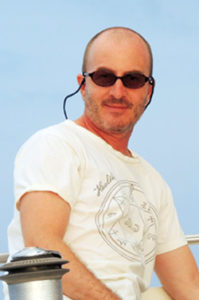
9-maylaurent-kuenzle_72

How did you feel when you stepped into the office as the CEO  on January 1?

I felt no difference. I’ve been with the company and grew with the people for 25 years. Luzi employed me to work with Diethelm Cambodia in 1995. We co-founded Asian Trails in 1999 (with Roger Haumueller, MD, Asian Trails Thailand).

So we think as entrepreneurs would. We don’t always agree, but we discuss it with one another, make a decision and find the best way forward for the company.

If I were coming from the outside, I might feel a difference. But we’ve worked together for years and the succession had been in the planning for a while. Many of our people had thought that it would be natural for me to take over one day, and now that has happened.

Are you driving the company or is Luzi still driving it?

Luzi is now chairman of Asian Trails. As CEO, I drive and run the company, with goals set by the chairman and the board. Obviously as chairman, he is still my boss. But I run the day to day. As chair, he is not always in the company and he plays an advisor role, which is important for me. As much as I like to listen to young people who bring in new ideas and inspirations, I also like to listen to people with a wealth of experience.

So what’s changed?

Not a lot. Before, I was running our offices outside Thailand – Vietnam, Cambodia, Laos, Myanmar, China, Malaysia and Indonesia – as group MD reporting to Luzi. Now, Thailand is under my wings as well, along with corporate responsibilities such as finance, which Luzi used to do.

It’s interesting to have the whole company under my wings.

But as CEO, surely you want to make your own mark? At 45, surely you have your own ideas? 

What I want is continued success of what we have achieved so far. I don’t want to revolutionise the company but I do want us to adapt to changes that are happening everywhere, whether it is our source markets that are changing, or tour operators and travel agencies.

So I have to anticipate change and lead the organisation towards a future goal. Today everything is moving faster. More than ever, I have to ask myself, am I still doing the right things? Am I asking myself the right questions for the organisation?

So your dream is only continuity – how boring!

(Laughs) You look disappointed! You thought I was going to tell you how I would revolutionise the company, that I would be changing everything, close this, open that. No.

We are a top quality, well-managed DMC with offices throughout South-east Asia and China. We’ve gone with the times and with new source markets, some more successfully than others. We’ve always had a pioneering spirit and a spirit of risk-taking in business. So there is no need to reinvent.

I also do not have plans to expand. I don’t believe we need to open an office in, for example, Singapore, because that’s commodity travel. What does it take to give two airport transfers and a half-day city tour in Singapore?

It would be different if it were MICE or events (i.e. more value add) but we don’t want to open in Singapore just for the MICE business. Same for Hong Kong, which I can handle out of my office in Beijing with suppliers in Hong Kong.

Have you seen the best days of the business, considering how competitive everyone says it is?

If we were a travel agency I will tell you, probably. But we’re not. We are a real DMC which provides a service at a destination and sells it either as FIT, package or tailormade tours. There is no money to be made if we’re simply handling point-to-point or repeat business.

What would you do if you were a travel agency?

It depends on the source market. In source markets such as Switzerland or France, where the client goes into the agency armed with information he’s got from the Internet, the travel agency should know his client like the back of his hand, take apart the information he has – often too much information – and be able to recommend what is perfect for him.

The agency has to build up the trust factor and the value of the relationship with the client. If you’re a travel agency that does that, you may be smaller than before with fewer clients, but you have a distinct client base.

And as a DMC, I have to anticipate how the tour operators and the travel agencies are changing so I am able to give them the new services they need.

What about the tour operating business? Are the best days over?

I don’t think so. Again, it depends on the source market. If you are a tour operator in a fast-moving source market, such as India or Brazil, and you don’t adapt to the trends of that source market – how it books, what service it demands, what niches have appeared, such as weddings and honeymoons in India – then I doubt if you would be able to survive in the long term.

How do you compete with the likes of Exotissimo, Diethelm, etc?

Exotissimo is strong in France, while we are strong in Brazil, Germany or Switzerland. Destination Asia is stronger in the UK.

Aside from different source markets, you try to compete based on product differentiation, although admittedly that is becoming difficult. There are new possibilities, such as border openings between Myanmar and Thailand, and when one DMC picks up on it, another follows suit, so where do you stand?

You compete on getting the trust of the client. A tour operator who trusts me will know that if I say, ‘This product is the right one for your source market’, it is indeed the right one. If he does not have that trust, he’ll be asking a lot of questions.

You went on a one-year sabbatical before assuming the CEO role. How did that help? 

It’s one of the best things I’ve done in my life, on both the personal and business level.

I took the time to meet so many friends and family members, and it’s marvellous that they also took the time for me. I travelled to so many countries and made so many observations. I enjoyed starting conversations with people again. When you’re in business, the last thing you want to do when you get into a plane is to socialise with other people. But when you have time on your hands, you start to be more proactive and have conversations with people about everything under the sun, including travel – what they think about travel today, what are their dreams in travel, and so on.


10 NEED TO KNOWS ABOUT LAURENT KUENZLE

• Who is in your family? My partner Noom and my dog Flory

• What do you do for fun? Travel

• Your ideal vacation? My boat

• How do you book your own leisure trips? With or through friends

• What are you reading right now? The hundred-year-old man who climbed out the window and disappeared by Jonas Jonasson

• How do you stay healthy? Gym

• Favourite food? Thai

• A bad habit you cannot kick? Chocolate

• Your pet peeve, something that never fails to annoy you? People who are always right

• Most people don’t know that you can… cook

A complicated relationship

0

What happens when OTAs turn into jealous lovers, seeking to control whom hotels work with and the rates that surface online?

may9-jealous-lover

OTAs have grown to become a significant distribution channel for many Asian hotels, but it’s a precarious relationship that can require a lot of tiptoeing around.

An allegation circulating is that some OTAs use their market dominance to prohibit hotels from working with competitors.

A Bangkok-based distribution director, who requested for anonymity, said: “Among the OTAs, it’s pretty much Agoda who’s more upset about hotels working with alternative booking channels whereas the others are not too concerned.

“The main challenge with Agoda is also maintaining rate parity. This has been going on for many years; it’s not unusual for Agoda to call, email or Skype us to seek an explanation. We try to solve rate parity on a regular basis.”

Rate parity agreements, which require hotels to guarantee that room rates on their own websites are not below that offered by OTAs, remain a divisive issue.

Chetan Patel, vice president, strategic marketing & e-commerce, Onyx Hospitality Group, said: “At times it is quite difficult to manage (OTAs’) expectations on rate parity as some wholesale rates inevitably end up on online channels where they are not supposed to. OTA partners therefore expect us to resolve such issues immediately, but identifying the intermediaries is not always that easy.”

The same director who did not want to be named explained: “Sometimes due to factors out of our control like time differences or currency fluctuations, there will be a bit of rate difference, say, five to 10 baht, between our own website and OTAs.”

On the other hand, hotels have unwittingly ended up in OTAs’ all-inclusive promotions, which, as the result of bundling various travel components, could make rooms appear cheaper than was supplied, ruffling the feathers of other intermediaries, added the director.

“(If OTAs) purchase the rooms at wholesale price and then make a mark-up, the prices will be lower than our website – this has happened before and we stopped working with such partners,” said Kiatiphong Phatarakulbaramee, director of sales at Rembrandt Hotel & Towers Bangkok, which also does not offer inventory on bed banks.

“We try to be friends with everyone. We will marry people who want to be married with us – it must be a win-win relationship for everyone,” he remarked, while at the same time reminding all hotels to be “careful” of OTAs. “You have to keep monitoring what’s being posted on these sites, whether they are promoting your hotels according to agreements, for instance.”

When asked to comment, an Agoda.com spokesperson insisted there is no problem with the relationship between OTAs and hotels. He stated: “We work very hard to make sure the rate (customers) pay is the best rate we can get from the hotel. Our hotel partners understand this and value the material production they get.

OTAs clearly use hoteliers’ lack of understanding and usage of digital media to their advantage…However, if you have the leverage of scale, brand and your own marketing prowess, it is easier to deal with them.
Chetan Patel
Vice president, strategic marketing & e-commerce, Onyx Hospitality Group

“They also work very hard, and they support us with great deals and access to hard-to-find rooms, which helps us keep our large customer base happy. We are extremely thankful for the unique support we get from hotels in our region.”

The broad sentiment is that the onus is on hotels to manage their relationships with OTAs or take active steps to prevent any bullying.

Enrico Wibawa, director of e-commerce, Compass Hospitality, said: “Getting online or being listed online is becoming more expensive. If a hotel has enough budget, it is less likely to be less dependent on OTAs; but for smaller properties, OTAs offers a conducive partnership for global marketing.”

Onyx’s Patel opined that hotels are largely to blame for their dependency on OTAs. “OTAs clearly used hoteliers’ lack of understanding and usage of digital media to their advantage. Hotels tend to see OTAs as a channel that does not charge fees upfront and therefore ignore the distribution costs that add up in the long run,” he said.

“Furthermore, many hotels do not focus on building their presence online, often disregarding digital marketing completely as a complicated and expensive endeavour. In our experience, the cost of digital marketing is far lower than the distribution costs paid out to third parties. If hotels do not want to pay for these then dependency on OTAs is the result.”

Recognising this, Rembrandt Hotel & Towers Bangkok recently changed its hotel booking engine to SiteMinder to allow for more efficient rate updates across distribution channels, shared Kiatiphong.

Said Patel: “We acknowledge the role (of OTAs) and therefore spread our business among several channels while maintaining good relationships. That is not to say that we do not have our challenges with them. However, if you have the leverage of scale, brand and your own marketing prowess, it is easier to deal with them.”

Grand Mercure Singapore Roxy appoints new GM

0

GRAND Mercure Singapore Roxy now has a new general manager in Klaus Gottschalk.

In his new position, Gottschalk is responsible for the hotel’s overall operations, overseeing and managing the day-to-day operations and providing leadership and guidance to the team.

The German national has over 35 years of experience in the hospitality industry, having started his career in Germany and taking on a host of senior management positions in Europe, the Middle East, Australia, New Zealand, Indonesia, China and Malaysia.

He joined Accor in 1994, and was in charge of the pre-opening and opening of Pullman Kuala Lumpur Bangsar before this appointment.