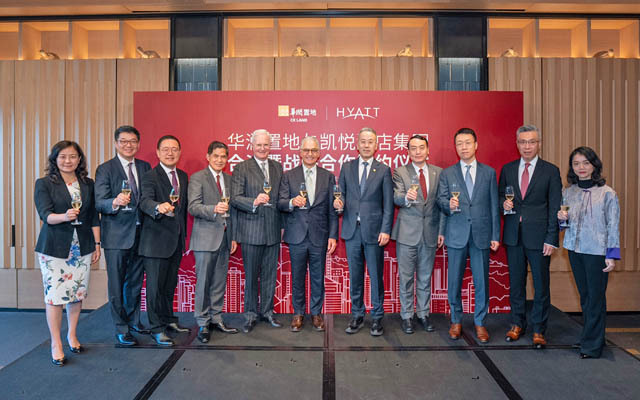
Hyatt and China Resources Land have signed a strategic collaboration agreement that will see the establishment of Yuen Kai Holdings to develop and manage hotels under The Unbound Collection by Hyatt and JdV by Hyatt brands across several cities in China. This is part of Hyatt’s asset-light expansion of its brands in its second largest market.
Richard Li will lead Yuen Kai Holdings as chief executive officer. Under initial plans, the firm will develop and manage hotels including six existing Mumian hotels in Beijing, Shenzhen, Chengdu, Hangzhou, and Rizhao as well as two new Mumian hotels in Shaoxing and Shanghai.
Hyatt and China Resources Land are taking their partnership further with two new engagements
Additionally, Hyatt and China Resources Land have entered a strategic agreement for the development of more Hyatt-branded hotels, and have signed agreements for key projects such as Park Hyatt Xi’an and Andaz Dongguan.
This joint venture is an extension of an existing relationship between Hyatt and China Resources Land. They first worked together in 2009 on the opening of Grand Hyatt Shenzhen. China Resources Land continues to own Hyatt-managed properties across China, including Grand Hyatt Shenzhen, Grand Hyatt Dalian, Grand Hyatt Shenyang, Park Hyatt Hangzhou, Grand Hyatt Hefei, Andaz Xiamen, and Andaz Shenzhen Bay.
By combining China Resources Land’s expertise in investment, construction, and local commercial real estate management with Hyatt’s global proficiency in luxury hotel management and extensive experience in premium hospitality, the new joint venture intends to increase Hyatt’s portfolio in Greater China by bringing new experiences to domestic and foreign travellers.
The formation of Yuen Kai Holdings and the signing of the strategic collaboration agreement signify deeper collaboration between both parties in terms of strategy and resources, which is intended to foster mutual growth, continuous innovation, and create enduring value in the Chinese market.
Stephen Ho, president of growth and operations, Asia Pacific, Hyatt, said: “We are interested in building long-term, fruitful relationships with our owners that showcase a desire to grow together. This collaboration will help us continue our commitment to expand in China through asset-light growth and lean into caring for the high-end traveler as a differentiator to our competition.”
Hyatt’s portfolio in Greater China spans more than 50 years, with more than 165 open properties across 60 markets as of June 30, 2024.
Sojern’s latest travel data ahead of the holiday season and beyond – pulled as of October 1 – shows that travellers are eager to hit the road or skies, but economic concerns and inflation are widening the wealth gap and influencing how travel decisions are made.
Compared to 2023, more consumers are opting for road trips over air travel, if they are travelling at all. Sojern data shows upscale and luxury hotel prices have risen by 1.7% and 1.4%, while economy lodging remains steady, reflecting growing demand for higher-end accommodation.
Demand for Asia is up among travellers from the US and Europe this holiday season; El Nido, Palawan, the Philippines pictured
“Unlike the pandemic where travellers chose less crowded destinations, those who are travelling are going back to more popular and expensive cities – and they’re willing to pay a premium,” said Noreen Henry, chief revenue officer at Sojern.
“We saw this with Taylor Swift’s Eras Tour where booking interest traffic to European cities spiked 65% and hotel room prices were up 154%. This holiday season, we’re seeing the same trends. From events to festive outings, travellers want immersive adventures, and the travel brands that deliver personalised, magical experiences will win.”
US travel spikes for Thanksgiving and Christmas With an estimated 4.7 million people flying over the Thanksgiving holiday, Sojern data shows that domestic flight bookings are up 4% in 2024 compared to the same time period in 2023, with Orlando taking the top spot as the Thanksgiving flight destination of choice.
Meanwhile, domestic travel during Christmas is down 15%, while travel to Europe is up 2% and Asia up 9%. Top destinations internationally are Mexico, the UK, Canada and Dominican Republic.
European cities delight international travellers while Europeans flock to Asia Europe’s festive flair and array of Christmas markets have long attracted travellers from around the world – and this year is no exception. However, while travellers from around the world are packing their bags and jetting off to major European cities, Europeans have other plans. Currently, domestic flight bookings are down 26% and bookings within Europe are down 5%. Fflight bookings to Asia (14%), Latin America (3%), and non-conflict countries within the Middle East and Africa (3%) are all up, indicating that Europeans either prefer to drive for their holiday experiences or embark on long-distance adventures.
London, with its charming pubs and festive holiday displays, stands as Europe’s top destination this season, capturing 79.1% of flight bookings and 89.7% of hotel reservations.
With bustling Christmas markets, Germany and Austria have long been popular destinations. International travel to Germany is up 7% while travel to Vienna is scooping up 80% of Austria’s holiday flight bookings.
Paris is still riding high off the 2024 Summer Olympics as one of the most in-demand destinations in Europe. Overall, domestic travel within France is down 41%, but international travel is only down 1%. Much like other European destinations, domestic travel within Italy and Spain is down, but international travel is up 13% and 11%, respectively, with visitors choosing major cities, such as Rome, Milan, Florence, Venice, Madrid, and Barcelona.
Abu Dhabi and Saudi Arabia gain favour ahead of major events and travel peak Formula One events attract significant crowds. The UAE is gearing up for the Abu Dhabi Grand Prix (December 6 to 8), with flight bookings from the past 30 days showing a 9% overall increase for December. Regional bookings are up 13%, and international travel is up 4% compared to 2023. Meanwhile, Saudi Arabia is experiencing rising demand as it enters peak travel season, with international flight bookings up 15% and regional travel surging by 38%.
Travellers skirt traditional ski destinations in favour of Japan
Preferences for holiday skiing are changing. American and Canadian ski destination hotel bookings are down between 9% and 18%, and European ski tourism is seeing similar patterns. Japan is emerging as a top ski destination, with hotel bookings up 417% compared to last year.
Chinese New Year bookings are down
Chinese New Year in 2025 runs from January 28 to February 3, and is driving travel across Asia-Pacific. Singapore is typically a huge draw, but current hotel bookings are down 11.55% overall compared to the same period in 2024, with domestic bookings down 26%.
Singapore is China’s top destination for the holiday, capturing 14.8% of non-intra-regional Asia-Pacific travel. While some Chinese travellers are flying for the holiday, flight bookings are down 18.82%. Hotel bookings are up 10.41% compared to 2023, indicating a higher demand for domestic travel, but likely by rail or car.
2025 and beyond Sojern observes that today’s travellers are more experience-driven than ever, investing heavily in attending concerts, events, and major sports like the FIFA World Cup. In 2022, Qatar hosted the FIFA World Cup, spiking international lodging searches by 541% worldwide. Next up, Canada, Mexico, and the US will host the 2026 FIFA World Cup, drawing travellers from around the world to cheer for their teams.
As travellers increasingly seek out experiences, they are willing to spend more, driving up both costs and expectations. In response, the travel industry is embracing innovative solutions, such as Generative AI, to better understand guests and deliver personalised experiences at scale. This year marks just the beginning, as the adoption of these cutting-edge tools is set to grow well into 2025 and beyond.
Proposed tourism developments, which include a light railway, high-end hotel and convention facilities, at Mount Fuji will soon make Japan’s most famous peak an even more accessible and welcoming destination.
Ambitious plans are underway to construct a light railway to around half-way up Mount Fuji. Blueprints show a terminus at the Fifth Station on the south flank of the mountain. The Fifth Station is at 2,305 metres above sea level and can presently be accessed by road, serving as the most popular starting point for hikers planning to ascend to the 3,776-metre peak.
The lack of accommodation facilities at Mount Fuji’s Fifth Station has discouraged visitors from exploring the area in depth
The Yamanashi prefectural government also announced the construction of a 40-room, high-end hotel close to the Fifth Station, and an international conference centre and other accommodation and infrastructure options close to the mountain. There are plans to collaborate with other local tourist facilities, such as the Fuji-Q Highland amusement park.
The government expects to charge 10,000 yen (US$67) for a round-trip ticket on the railway and anticipates that the line could generate around 1.56 trillion yen in the four decades after completion.
“We are considering the development of the base of the mountain and the Fifth Station in harmony with the surrounding natural environment,” said Katsuhiro Iwama, promotion director in the Yamanashi government’s Fuji-san Conservation and Tourism Ecosystem Promotion Division.
“Particularly at the Fifth Station, there is a lack of accommodation facilities for visitors to fully enjoy their stay,” he said. “Although there are activities such as watching the sun rise and taking walks without climbing to the summit, many visitors leave without realising this due to their short stay. We believe that building a hotel can be a tool to enhance the appeal of the Fifth Station.”
The prefecture also hopes that a regular train service will help to limit numbers of visitors to the UNESCO-listed mountain, which has experienced significant problems with overtourism since Japan reopened to tourists after the pandemic.
AirAsia has ambitious plans of growing its network into Africa and Europe, and making its foray into North America in the coming years, shared Capital A CEO, Tony Fernandes. This will ultimately solidify Kuala Lumpur as the world’s leading low-cost carrier megahub.
The airline was recently recognised by OAG’s 2024 Megahubs Index as the leading contributor to Kuala Lumpur International Airport’s status as the top global low-cost carrier megahub.
Fernandes: AirAsia plans to cover the world by 2030
By 2025, AirAsia plans to increase its operational fleet from 63 to 73 aircraft, supporting growth in daily flights from 230 to 258, and boosting its network by adding eight new destinations, thus expanding its current network from 98 to 106 destinations.
Fernandes shared that AirAsia also plans to strengthen its presence in existing markets while exploring opportunities to open new secondary airports across key regions in Asia by next year.
The focus for 2026 and 2027 will be on expanding into strategic markets in the Pacific, East Asia and Africa. In 2028, AirAsia aims to expand its network in the Middle East and to Europe and North America by 2030.
“By 2030, we should be covering the world,” said Fernandes at a press conference.
Its newest service expansion on the cards will be four weekly direct flights from Kuala Lumpur to Nairobi on November 15, marking its entry into Africa. Fernandez shared plans to connect Tanzania with Kuala Lumpur in the near future.
At an extraordinary general meeting on October 14, 99.97 per cent of Capital A shareholders voted in favour of the proposed disposal of its aviation business to AirAsia X, thus paving the way for Capital A’s restructuring and exit from PN17 status.
PN17 stands for Practice Note 17/2005 and is issued by Bursa Malaysia relating to companies that are in financial distress. Companies that fall within the definition of PN17 will need to submit their proposal to the Approving Authority to restructure and revive the company in order to maintain the listing status.
Capital A shareholders approved a proposed plan to overhaul the airline business, which includes consolidating the group’s short- and long-haul operations under a new company, AirAsia Group.
Fernandes told reporters that the restructuring makes “so much sense as we combine the strengths of both airlines to create one global airline”.
Approval from shareholders enables Capital A to sharpen its focus on its four strategic pillars – Capital A Aviation Services, MOVE Digital, Teleport, and the Brand AA company (also known as AirAsia brand co.) – while unlocking synergies between short- and long-haul operations for greater growth and shareholder returns.
The final approval being sought from AirAsia X shareholders on October 16 will further cement these plans, positioning both companies for stronger growth as they work toward a combined airline group by the end of the year.
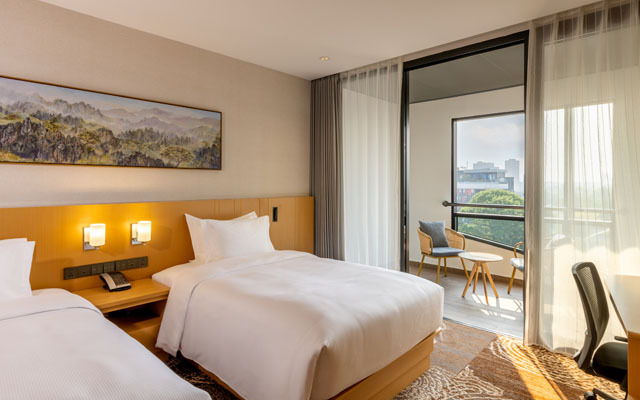
DoubleTree by Hilton Vientiane’s twin guest room with balcony
DoubleTree by Hilton Vientiane, Laos
The 188-key DoubleTree by Hilton Vientiane is about a 15-minute drive from Wattay International Airport and a half-hour drive from the high-speed Vientiane Railway Station.
The hotel features three dining outlets, rooftop pool, fitness centre, and over 550m2 of event spaces.
The hotel is ideal for accessing various attractions such as That Dam, an iconic stupa in the heart of the city centre, the Presidential Palace, and Sisaket Temple. It is also near the financial district.
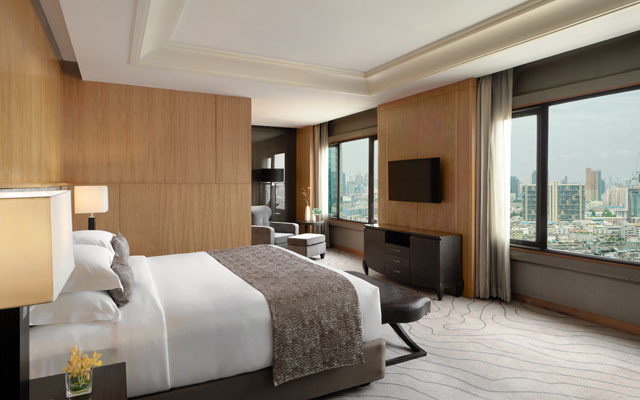
Avani Ratchada Bangkok’s presidential suite
Avani Ratchada Bangkok, Thailand
Avani Ratchada Bangkok features 402 rooms, and a 169m2 presidential suite which includes a dining room that seats eight guests, a cocktail bar, and a private sauna.
Within the hotel are restaurants, lounge, grab-and-go outlet, pool bar, swimming pool, gym, spa, and 11 versatile event venues.
Just steps away is the vibrant Ratchada district, known for its night markets, including the Jodd Fair Market and Huai Kwang Market, as well as Thailand Cultural Centre, Muangthai Rachadalai Theatre, Fortune IT Lifestyle Mall, and Central Rama 9.
Avani Ratchada Bangkok offers seamless connectivity with the city via Phra Ram 9 MRT Station and proximity to the Airport Rail Link and BTS Skytrain.
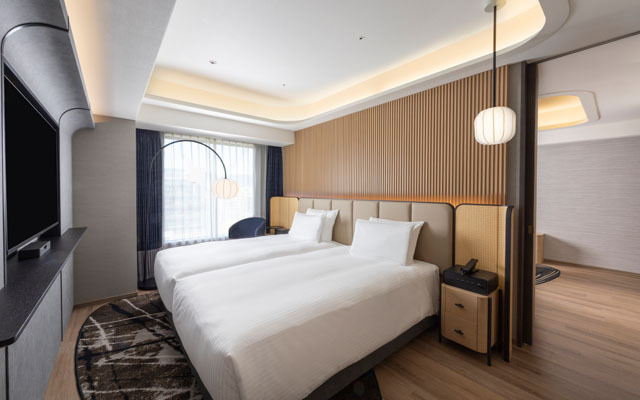
Novotel Nara
Novotel Nara, Japan
Situated along the Saho River, known for its cherry blossom trees, Novotel Nara is just an eight-minute walk from Shin-Omiya Station and a five-minute cab ride from Nara Station.
There are 264 guestrooms, including executive suites, all-day dining restaurant that features organic and locally sourced dishes, a social lounge, rooftop terrace, fitness centre, two banquet spaces, and a wellness lounge with a children’s area.
The hotel is also close to the city’s UNESCO World Heritage sites.
Dorsett Changi City Singapore
Dorsett Changi City Singapore, Singapore
Dorsett Changi City Singapore takes over the former Capri by Fraser, Changi City, located in Changi Business Park. The hotel is adjacent to the Expo MRT Interchange station and guests can look forward to seamless connectivity to both Changi Airport and the city.
Dorsett Changi City Singapore offers 313 rooms ranging from 32m2 to 70m2. Each room features a kitchenette, an integrated living area, and an en-suite bathroom. Amenities include an outdoor swimming pool, gym, restaurant and laundrette facilities.
Disney Cruise Line will open Disney Adventure for bookings on December 10, 2024, with the maiden voyage set for December 15, 2025. These voyages will be three- and four-night cruises to nowhere, allowing guests to make full use of facilities and entertainment onboard.
While further details on sailing dates and pricing will be released on November 14, Sarah Fox, vice-president and regional general manager for South-east Asia, Disney Cruise Line, shared in a grand reveal event this afternoon that the “ship itself is the destination” and “there is more than enough content on this amazing ship” to encourage guests to combine three- and four-night voyages into a single, bigger adventure.
From left: Disney Cruise Line’s Stephen Cloete; Disney Signature Experiences’ Jenny Weinbloom; Walt Disney Imagineering’s Laura Cabo; Disney Cruise Line’s Sarah Fox, Daniel Cowan and Lisa Picket at the media Q&A session; photo by Rachel AJ Lee
The grand reveal event took guests through the seven themed areas planned for Disney Adventure: Disney Imagination Garden, Toy Story Place, San Fransokyo Street, Town Square, Wayfinder Bay, Disney Discovery Reef, and Marvel Landing.
In a first for Disney Cruise Line, Disney Adventure alone will house three all-new attractions on the upper decks in an adventure zone that celebrates the larger-than-life personalities from the Marvel Universe. One of the attractions will be Ironcycle Test Run – the longest rollercoaster at sea at 250m long.
There will also be “dazzling stage shows” across multiple venues on Disney Adventure, such as the Disney Imagination Stage, where the Avengers Assemble live entertainment show will play out with stunts and special effects. There will also be a show centred around Moana, and another around Captain Jack Sparrow, as well as an all-new musical spectacular, Remember, developed exclusively for the ship.
“This ship is absolutely brimming with entertainment at every turn, from bow to stern,” said Jenny Weinbloom, vice president live entertainment, Disney Signature Experiences. “Everywhere you look, there will be chances to meet and play with our characters; to hear live music, watch a performance, (or go for) karaoke, game shows and first-run films.”
More light was also shed on accommodation options. Disney magic will be infused into every stateroom – from the lead-in cabins up to the Royal Suites – with striking artwork that celebrates the spirit of Disney, Pixar, or Marvel stories. All rooms will boast complimentary 24-hour room service.
Although the ship will hold approximately 6,700 passengers, Disney Cruise Line has yet to announce the number of staterooms available.
Meanwhile, international flavours can be found onboard, with dishes inspired from the region. There will even be a bubble tea café. Disney Adventure will also offer rotational dining, Disney Cruise Line’s signature dining concept where guests will enjoy three distinctly Disney dining experiences during their voyage, with a preset dining schedule included with each booking.
Overall, Fox anticipates a positive reception for Disney Adventure in Asia-Pacific, and expects “fluctuating seasonal factors in different countries to influence demand throughout the year”.
When asked how Disney Cruise Line will support travel agents, Fox told TTG Asia that its sales team has been “actively engaged with the community, and really trying to understand what creative materials they need”.
“We look forward to a really robust relationship with them,” she remarked.
Ascott’s lyf brand unveiled yesterday afternoon the start of a travelling art showcase that reflects its ambitions to venture into new destinations and commitment to offering innovative experiences for guests. The showcase was presented at lyf Funan Singapore, the brand’s first property that opened in 2019.
The event was also a celebration of the brand’s fifth year in the business.
Ascott leadership with Jahan Loh, creator of The Door of Cosmic Dreams (far right)
The art installation, titled The Door of Cosmic Dreams, is created by Singaporean contemporary artist, Jahan Loh, who is recognised as one of Asia’s most successful street artists credited with introducing street art to galleries in both Singapore and China.
Drawing inspiration from a quote by French author and playwright Guy de Maupassant emphasising the mysterious and boundless possibilities that lie beyond the familiar, The Door of Cosmic Dreams serves as a metaphor for a gateway to different worlds, depicting how travel, much like dreams, acts as a passage from the real world into a realm that has yet to be discovered.
The Door of Cosmic Dreams is open free to the public from October 15 to 26, 2024.
After Singapore, it will journey to lyf properties around the world, including Tokyo, Paris and Penang, where the showcase may be expanded to include other local artists, shared Glenn Koh, lyf partner, brand.
Serena Lim, chief growth officer, Ascott, told TTG Asia that the travelling showcase is a first-of-its-kind by a hospitality brand, and is a creative way for the lyf team to communicate its unique brand story around the world.
Addressing guests at the launch party, Lim said the lyf brand is advancing from its original concept as a co-living space to one that is defined as “experience-led social living”.
“We like to do things differently, stay ahead of the game, and break boundaries,” she remarked.
Adeline Phua, managing lyf partner and vice president, business development, Ascott, explained the new concept: “lyf offers a distinctive accommodation experience designed for a social generation eager to connect within a community. By transcending traditional hospitality concepts, lyf has created a vibrant stay-work-play environment that fosters a new way of social living.”
There are now 34 lyf properties in 24 cities across Australia, East Asia, Europe and South-east Asia, boasting over 6,200 units in operation and under development.
“This year, we will open five lyf properties with about 900 units in total, and mark the debut of the brand in three cities Cebu, Frankfurt and Penang. From 2025 to 2028, lyf will begin operations in more destinations – from resort locations like Bali and Danang to cities such as London, Glasgow, Manchester, Sydney, Paris and Ho Chi Minh City,” shared Lim.
India’s travel market is poised for unprecedented growth, driven by soaring passport ownership and significant investments in personalised and immersive travel experiences.
The country is on track to become the third largest world economy in the next three to four years, from its current fifth position. It presently has some 80 million passport holders desiring travel.
Chhatwal: the current generation of Indians just wants to spend and experience life in the now; photo by WTTC
“The post-Covid demand for travel has been very high, especially among younger travellers. The generations (before) were always saving for the future and for the unknown, creating a reserve, but the current generation just wants to spend and experience life in the now,” said Puneet Chhatwal, managing director and CEO of Indian Hotels Company, addressing the 24th WTTC Global Summit in Perth last week.
To underscore this point, Chhatwal noted that Coldplay’s upcoming concert in India sparked much discussion after its “very steeply” priced tickets sold out within seconds of going on sale, crashing the website, and prompting the band to schedule a second concert to meet demand.
Chhatwal said India is becoming one of the largest source markets for outbound travellers, especially in Asia. Indian travellers tend to prefer destinations that are closer to home, with the exception of the US. One third of Indians travel to Dubai and the Middle East, followed closely by Indonesia, Thailand, and Vietnam, which are “on a big rise”.
“India has become the second largest international source market for travel to the US, setting a new record with almost one million arrivals between January and May this year. This places India just behind the UK, and the number of Indian visitors to the US represents a 37 per cent increase over 2023,” said Chhatwal.
India’s outbound tourism is expected to reach US$18 billion in 2024 and keep growing at a CAGR of 11 per cent, reaching US$55 billion in the next decade.
“Travel for Indians is very personalised, with immersive experiences, whether they’re cultural, culinary tours, or adventures. There’s a lot of focus on heritage, local culture, ecotourism and a very strong rise in wellness tourism, as has the rest of the world post-Covid. That is because India is also the land of yoga, Ayurveda, and holistic wellnesses,” he added.
Underlying this growth is the country’s economic expansion, with its contribution to global GDP more than doubling from three per cent at the time of independence in 1947 to seven per cent today.
The country’s literacy rate has also surged from 23 per cent to beyond 85 per cent in that time. Additionally, its number of airports is set to double from 150 airports currently to 300 in the next few decades.
Meanwhile, India’s domestic tourism markets are also benefiting from its citizens’ higher disposable income, with growth in shorter and more frequent trips being recorded.
The Global Sustainable Tourism Council (GSTC) will host the GSTC2024 Global Sustainable Tourism Conference in Sentosa, Singapore from November 13 to 16, providing a connection and learning platform for global and local tourism professionals who are committed to promoting and advancing sustainable travel and tourism.
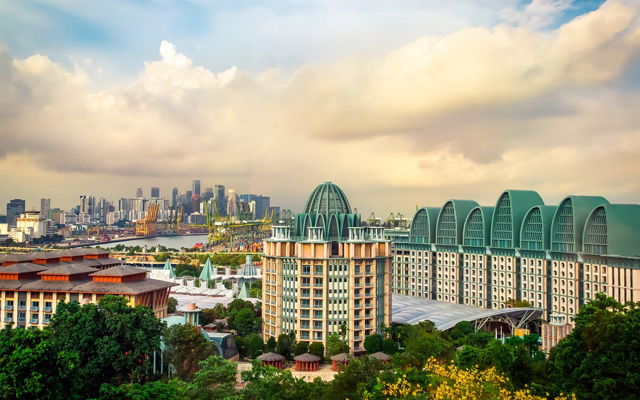
The conference will be held at the Equarius Hotel, which is certified against the GSTC Industry Criteria for Hotels. The hotel is part of Resorts World Sentosa, the first tourism destination in the world to be certified against both the GSTC Destination Criteria and GSTC Industry Criteria for Hotels in 2021. Additionally, both Sentosa and Singapore are also certified as sustainable destinations, further enhancing the credentials of the event’s setting.
GSTC2024 Global Sustainable Tourism Conference will be held at Resorts World Sentosa, the first tourism destination in the world to be certified against both the GSTC Destination Criteria and GSTC Industry Criteria for Hotels in 2021
The event will have four core themes: Driving Sustainable Urban Tourism; Sustainable Hospitality; Integrating Sustainability across the Value Chain; and Preserving Culture, Heritage and Communities.
Through these themes, the conference aims to equip participants with the knowledge and practical skills needed to drive progress in their sustainability journey.
Participants can expect pre-conference training, interactive panels, workshops, meetings, networking opportunities as well as tailored post-conference tours across two days.
There are also opportunities to explore Sentosa’s sustainability initiatives through curated tours. According to Lee Shi Ruh, president, Resorts World Sentosa, there would be a guided tour that takes delegates behind the scenes of the integrated resort, highlighting innovations such as its district cooling plant and cloud-based building management system.
Ong Huey Hong, chief sustainability officer, Singapore Tourism Board, said: “Hosting the GSTC2024 Global Sustainable Tourism Conference highlights Singapore’s appeal as a global-Asia node for quality events and underscores our commitment to sustainable tourism. Guided by the Singapore Green Plan, our sustainable tourism strategy aims to build a city in nature, where large experiences come with small footprints. We are committed to supporting the tourism industry in their sustainability journey, including pushing boundaries in innovation by leveraging technology, and enhancing the green skills of our workforce such as in certification and reporting, and carbon management. This conference will serve as a crucial platform for global leaders to convene, exchange insights, and collaboratively forge new partnerships in sustainable tourism, inspiring meaningful impact worldwide.”
Lee Cheh Hsien, assistant chief executive, corporate and sustainability, Sentosa Development Corporation, said: “Being the first destination in Asia to be certified to GSTC’s destination standards, we are honoured to host GSTC’s first global conference in South-east Asia and look forward to the learnings and exchanges among global experts and participants. We welcome them to immerse themselves in Sentosa’s lush nature and heritage sites and experience first-hand the sustainability initiatives championed by the businesses across our island ecosystem.”
Booking.com, in partnership with Accenture, has released the second edition of its annual report, How India Travels 2024 – The Inbound Edit, which projects inbound travel to India to surpass 2019 levels by 2025 due to improved infrastructure, new source markets, and rising tourism expenditure.
Speaking at a press conference on report findings on October 9, Santosh Kumar, country head, Indian subcontinent & Indonesia at Booking.com, said India’s infrastructure improvements are enhancing the overall travel experience for international visitors.
Kumar:India’s source markets are evolving, presenting a valuable opportunity to diversify and expand its inbound tourism
“In 2019, India recorded 10.9 million inbound tourist arrivals. We estimate that this year, international tourist arrivals will approach 10.1 million. India will surpass 2019 inbound numbers by 2025,” he remarked.
Earlier, countries like China, Bangladesh and Canada led in terms of searches on Booking.com for travel to India. However, this year, Australia, Italy and the Netherlands are among new markets that have entered in the top 10 source markets by searches.
“We are also observing increased search interest from Central Asia for travel to India, driven by improved direct connectivity. This indicates that India’s source markets are evolving, presenting a valuable opportunity to diversify and expand its inbound tourism,” added Kumar.
Quoting statistics from the ministry of tourism, Booking.com highlighted foreign exchange earnings from tourism have increased, reaching US$15.3 billion in the first half of 2024, a 17.6 per cent increase from 2023 and a 5.5 per cent jump from 2019.
“Across the Asia-Pacific region, India is among the leaders in the recovery of tourism spending, nearing pre-pandemic levels. While we have not fully bounced back yet, 94 per cent of inbound tourism spending has returned to pre-pandemic figures. In comparison, countries like Thailand, Japan, and Indonesia are still trailing behind in terms of tourism spending recovery,” said Kumar.
The study was conducted with a sample of 2,000 adult respondents across 19 countries and territories who intend to travel to India in the next 12-24 months.